



What to Put Under a Swing Set Besides Mulch: 5 Safer Surface Options
What should you put under a swing set besides mulch? The best choice isn’t necessarily the surface that feels softest or looks neatest. It needs to suit the equipment, the yard conditions, and the way your family uses the play area.
If mulch scatters outside the play zone, compacts underfoot, or needs frequent topping up, you may be ready for an alternative. Compare each option for fall-protection suitability, drainage, upkeep, comfort, and appearance. A tidy yard surface isn’t automatically designed for play.
This guide compares five alternatives: engineered wood fiber, rubber surfacing, pea gravel, poured-in-place rubber, and artificial turf. It explains what to consider for each, including maintenance and site conditions. EverTurf Play is a purpose-designed synthetic grass option for a more consistent, finished look without loose material scattered around the yard. Use the guidance below to narrow your choices and assess whether a surface fits your play space and routine.
Key Takeaways
- To decide what to put under a swing set besides mulch, compare artificial turf, engineered wood fiber, rubber surfacing, pea gravel, and poured-in-place rubber by more than appearance.
- Start with the equipment’s fall height and fall zone to understand what protective surfacing needs to address.
- Consider drainage, accessibility, and the upkeep each surface may require before choosing what fits your yard.
- For artificial turf, assess the complete surface system and its supporting safety documentation, not the turf fibers alone.
- Explore EverTurf Play as a playground-surface option, using the same criteria of system design, fall height, drainage, and upkeep.
What matters under a swing set besides mulch? Start with fall height and use
Choose a play surface for the equipment above it and the falls it may need to cushion, not appearance alone. A surface that feels soft underfoot isn’t automatically protective. Impact performance depends on how the complete surfacing system responds to a fall, so you can’t judge it by material name or touch.
Critical fall height is the greatest fall height at which a surface is designed and tested to reduce the risk of a life-threatening head injury. Compare the equipment’s fall height with the performance documented for the surface system. The U.S. Consumer Product Safety Commission’s Public Playground Safety Handbook provides playground guidance, while ASTM F1292 addresses impact attenuation for playground surfacing. Required surfacing depends on equipment fall height and tested system performance.
How swing height changes the surface decision
Begin with the swing-set manufacturer’s documentation. Look for the stated fall height and any surfacing or clearance instructions. The height of the seat or frame alone may not tell you what you need to know. If instructions are unclear, consult applicable current safety guidance for the relevant measurements and clearances.
Next, distinguish the fall zone from the overall play area. The fall zone is the area around equipment where a child could land after falling. A swing also moves through an arc, so the space in front of and behind it needs to remain clear of obstacles. Plan the surface and layout around that movement, not just the frame’s footprint. Follow the equipment instructions and applicable guidance for the swing’s required clearances.
What to compare before choosing a mulch alternative
Compare each option using evidence as well as day-to-day needs. Review:
- Tested impact performance: Look for documentation tied to the complete system and the relevant fall height. ASTM F1292 addresses impact attenuation, but a material label alone doesn’t establish system performance.
- Surface continuity: Consider whether the area stays even underfoot or whether material can shift, separate, or leave exposed spots.
- Drainage: Assess how water moves through or away from the surface and whether the site tends to hold water. The full surface build-up and ground conditions affect drainage.
- Upkeep: Account for the care needed to keep the surface usable, including checks of high-traffic areas beneath and around the swing.
- Accessibility: Consider whether the finished surface provides a stable route for the people using the play space.
Keep comfort and safety evidence separate. A surface may feel pleasant, look tidy, or seem resilient, but those qualities don’t prove impact protection. There is no universal safest material without comparable test results and the equipment’s fall height. Use these criteria to narrow down what to put under a swing set besides mulch, then compare the options below.
Five mulch alternatives for a swing set, compared by practical trade-offs
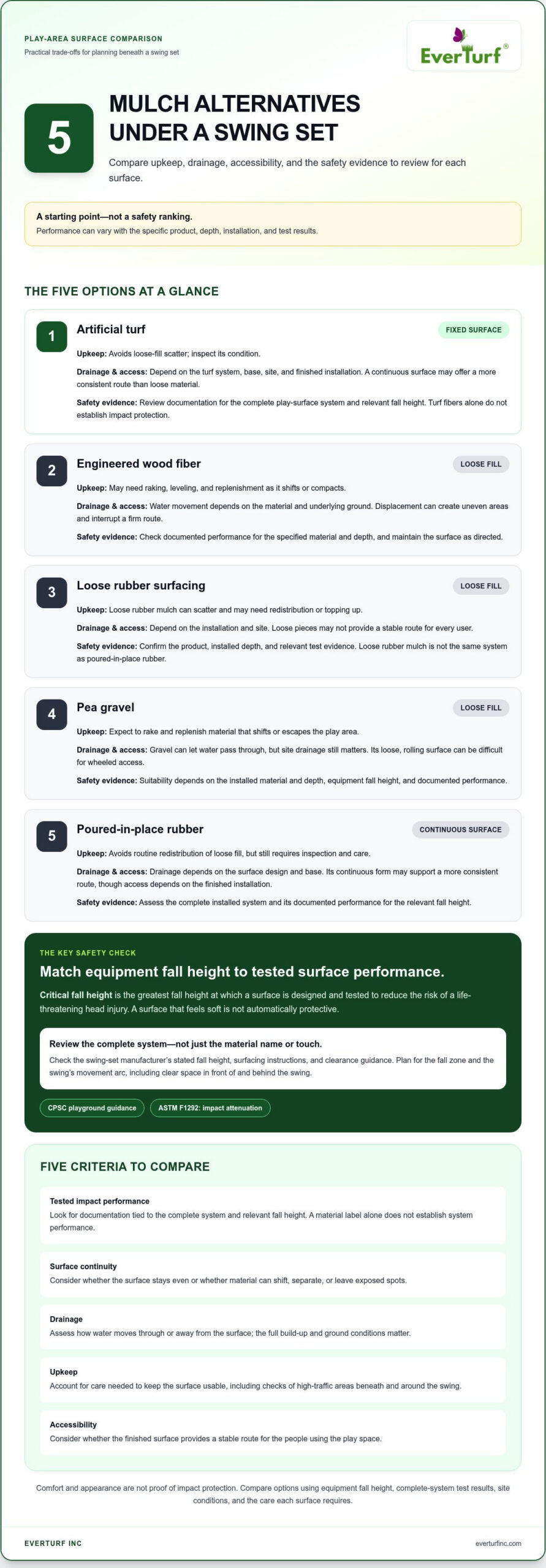
Every surface balances appearance, access, and ongoing care differently. This comparison is a starting point, not a safety ranking: performance can vary with the specific product, depth, installation, and test results. For guidance on protective surfacing and maintenance, read the CPSC guidelines for playground surfacing alongside the play equipment’s instructions.
| Surface | Upkeep | Drainage and accessibility | Safety evidence to review |
|---|---|---|---|
| Artificial turf | A fixed surface avoids loose-fill scatter, but its condition still needs inspection. | Drainage depends on the turf system, base, and site. A continuous surface may provide a more consistent route than loose material, but accessibility depends on the finished installation. | Look for performance documentation for the complete play-surface system and the relevant fall height. Turf fibers alone don’t establish impact protection. |
| Engineered wood fiber | This loose-fill material may need raking, leveling, and replenishment as it shifts or compacts. | Water movement depends on the material and underlying ground. Displacement can create uneven areas and interrupt a firm route. | Check documented performance for the specified material and depth, and maintain the surface as directed. |
| Loose rubber surfacing | Loose rubber mulch can scatter and may need redistribution or topping up. | Drainage and ease of movement depend on the installation and site. Loose pieces may not provide a stable route for every user. | Confirm the product, installed depth, and relevant test evidence. Loose rubber mulch is not the same system as poured-in-place rubber. |
| Pea gravel | Expect to rake and replenish material that shifts or escapes the play area. | Gravel can allow water to pass through, but site drainage still matters. Its loose, rolling surface can be difficult for wheeled access. | Suitability depends on the installed material and depth, equipment fall height, and documented performance. |
| Poured-in-place rubber | A continuous surface avoids routine redistribution of loose fill, but still requires inspection and care. | Drainage depends on the surface design and base. Its continuous form may support a more consistent route, though accessibility depends on the finished surface. | Review test documentation for the installed system, including its specifications and suitability for the equipment’s fall height. |
Artificial turf and engineered wood fiber
Turf offers a continuous, finished look and keeps loose material from scattering, but appearance doesn’t establish fall protection. Look for evidence covering the complete tested play-surface system. Engineered wood fiber has a natural, loose-fill character, but swing use can shift the material, so plan to check its level and replenish it as needed. Neither option is universally better. The right fit depends on verified performance and the upkeep your household can manage.
Rubber, gravel, and unitary rubber surfacing
Loose rubber mulch and poured-in-place rubber aren’t interchangeable. One is loose fill; the other forms a continuous surface, and each needs evidence for its own installation. Pea gravel may suit some site conditions, but drainage alone doesn’t make it accessible or appropriate for every play area. Compare documentation, maintenance, and access needs before deciding what to put under a swing set besides mulch. For a finished play-space option, explore EverTurf Play playground surfaces using the same system-level criteria.
Is artificial turf safe under a swing set? Check the complete system
Artificial turf can create a neat, continuous-looking play area, but the fibers alone don’t prove that the surface protects against fall impacts. That depends on the performance of the complete surfacing system and its suitability for the equipment’s fall height. A product’s appearance, pile, or softness to the touch can’t replace test documentation.
A playground turf system may combine the turf, a shock-attenuation layer, the prepared base, and installation details. Together, these components affect performance. If the pad, base, or installation changes, the result may no longer match the tested system. Assess safety at the system level, not by looking at one layer in isolation.
What a tested playground turf system should document
Look for records that identify the tested system and its critical fall height, then compare that height with the play equipment’s documentation. The ASTM F1292 standard for impact attenuation addresses playground-surfacing impact performance. Consult the applicable current edition and relevant CPSC guidance before making a safety claim. A result for one turf-and-pad combination doesn’t automatically apply to another. The components and installation need to match the documented system.
Check which components were included in testing and the conditions the results apply to. If a claim refers only to turf without identifying the supporting layer or tested setup, it may not tell you whether the complete surface suits your swing set. Keep the equipment’s fall-height information beside the system documentation so you can compare them directly.
Where artificial turf may fit in a family play area
For families considering what to put under a swing set besides mulch, turf may appeal if a consistent, finished appearance and less loose-material scatter are priorities. Its visual continuity can help define a play zone within the yard. These are practical and aesthetic considerations, not guarantees of fall protection, drainage, accessibility, or reduced maintenance. Those depend on the system, installation, and site.
EverTurf Play is EverTurf’s playground-surface offering. Assess it as you would any option: identify the complete system, review the fall-height documentation, consider how the site handles water, and understand the upkeep the surface needs. Don’t infer a performance rating from the product category alone.
For a broader overview of turf materials and their landscape uses, explore this guide to artificial grass. If you’re also planning how the play zone fits into the wider yard, a backyard turf guide can offer landscape-planning context. Keep design questions separate from the safety decision: a cohesive look is valuable, but tested system performance and equipment fall height determine whether the surfacing is appropriate for play.
How to choose a swing-set surface: a five-step planning checklist
Start with the equipment and yard, then narrow your options to a surface you can maintain and assess using relevant performance documentation. Work through these steps in order, following the play-equipment instructions and applicable current safety guidance.
- Check the equipment’s fall height. Use the manufacturer’s documentation to identify the fall height and any surfacing instructions. Keep this information handy as you compare options. A material’s reputation or soft feel can’t tell you whether a particular system suits the equipment.
- Map the fall zone and swing path. Mark the fall zones and the area the swing travels through, using the equipment instructions for clearances. Note trees, fences, edging, hard surfaces, slopes, and routes caregivers and children use to reach the play space. Follow equipment-specific instructions rather than relying on a generic dimension.
- Assess drainage and the site. Observe where water flows and collects after rain. Note low spots, slopes, and areas that stay wet, since the base and ground conditions can affect how a surface performs. Consider how the surface will meet surrounding paths and yard features without creating awkward transitions.
- Compare upkeep and everyday use. List the likely care for each option, such as raking, leveling, replenishment, cleaning, or repairs. Think about who will use the play area, including children with different mobility needs, caregivers, and people using mobility devices. Pets and their routines may also affect what feels practical for your household.
- Verify documentation before deciding. Match the surface-system documentation to the equipment’s fall height and installation details. Review relevant current safety guidance and applicable testing information. A description of turf, rubber, or another material isn’t proof of the complete system’s impact performance.
Map the play zone and evaluate the site
Walk the proposed layout before choosing a finish. The swing’s travel path needs clear space, while the broader fall zones and access routes shape the area to be surfaced. Consider circulation, drainage patterns, and nearby obstacles together. A surface that seems to fit the frame may not suit the full play zone. Use the equipment instructions and applicable guidance rather than assuming one layout works for every yard.
Balance safety evidence with daily upkeep
Write a brief decision summary, such as: “Our priority is documented impact performance for this fall height, predictable access, and a finished appearance. We can manage periodic checks but want to limit loose-material redistribution.” This turns preferences into criteria you can compare across surface types without mistaking appearance or convenience for safety evidence.
If turf is on your shortlist, remember that turf infill basics explain a component of turf construction, not proof of playground impact protection. For a purpose-designed play-surface option, explore EverTurf Play using the same fall-height, site, upkeep, and documentation criteria.
Explore EverTurf Play as a mulch alternative for a finished play space
A play area can feel like a natural extension of the backyard rather than a separate patch of equipment and loose fill. EverTurf Play is EverTurf’s playground-surface offering for families considering synthetic grass as an alternative to mulch. Its consistent appearance may suit a design that connects the swing area with the rest of the yard, and a fixed surface can help contain loose-material scatter. These qualities relate to appearance and layout, not verified impact protection.
Consider turf as one option to assess, not an automatic substitute for protective surfacing. The right choice still depends on the play equipment, complete surface system, site conditions, and documented performance. A tidy finish matters, but it can’t replace evidence that the proposed system is appropriate for the equipment’s fall height.
When a synthetic playground surface may suit the project
Turf may appeal if you want a more visually continuous play zone and prefer not to have loose material spread into nearby planting beds or paths. Consider how the surface boundary will meet the rest of the yard, where children and caregivers will walk, and whether the overall layout is easy to navigate. Artificial grass for dogs is a separate consideration; it doesn’t establish playground impact performance or pet-specific suitability for a play surface.
What to review before finalizing a surface choice
Before settling on what to put under a swing set besides mulch, bring the practical and safety questions together. Review the proposed system’s documentation alongside the playset’s instructions, and make sure the information applies to the complete configuration. Don’t assume a report for one combination of surface, cushioning layer, base, and installation covers another.
- Fall-height fit: Compare the equipment’s stated fall height with relevant documentation for the complete proposed system.
- Drainage: Consider the site’s slopes and water flow, along with how the surface and base are designed to handle those conditions.
- Upkeep: Plan for routine checks and the care the chosen surface requires. A finished appearance doesn’t mean no maintenance.
- Boundaries: Include swing travel, fall zones, access routes, and transitions to nearby yard surfaces in the layout.
Ground the decision in evidence and everyday use. A surface that complements the yard can make the play space feel considered and welcoming, while clear documentation helps you assess its suitability. To compare a purpose-designed playground-surface option as you plan a tidy, inviting play area, explore EverTurf Play.
Make room for play that feels at home in your yard
Choosing what to put under a swing set besides mulch is also a chance to shape how the whole play area feels, from the first step onto the surface to the view from the patio. Think beyond the material: consider where children will enter, how the swing zone connects to the yard, and what kind of upkeep fits your routine. A considered layout can feel welcoming without letting appearance stand in for safety.
If synthetic grass is on your shortlist, explore EverTurf Play and consider how a playground surface could fit into your backyard. Let the equipment’s requirements and the proposed system’s documentation guide your decision, then choose a finish that suits the way your family uses the space.
Explore EverTurf Play for a more finished backyard play space.
Frequently Asked Questions
Can I put artificial grass under a swing set?
Yes, artificial grass can be considered, but ordinary lawn turf isn’t automatically protective surfacing. Check whether the complete proposed system, including any shock-attenuation layer and base, has test documentation applicable to the swing set’s fall height. A turf sample or a test of a different pad combination doesn’t establish how your installed setup performs. Follow the equipment instructions and keep the documentation with your project records.
Is pea gravel a safe surface under a swing set?
Pea gravel may be used as playground surfacing in some applications, but it isn’t automatically suitable for every swing set or user. Its loose, shifting texture can make it difficult for wheelchairs and other mobility devices to cross, and gravel can migrate beyond the play area. CPSC guidance includes a minimum depth for loose-fill materials, but suitable depth and impact performance depend on equipment fall height and proper upkeep.
How deep should a swing-set surface be?
There isn’t one depth that works for every surface and fall height. CPSC guidance lists minimums of 9 inches for loose-fill materials such as engineered wood fiber, wood chips, sand, and pea gravel, and 6 inches for shredded or recycled rubber mulch. These figures don’t replace equipment instructions or system-specific requirements. Check current guidance, account for material settling or displacement, and maintain the depth across the impact area.
Does artificial turf need a shock pad under a swing set?
Not every turf installation uses the same components, so don’t assume a shock pad is always required or that turf alone provides adequate impact protection. The relevant question is whether the complete system proposed for your swing set has appropriate test documentation for its fall height. That documentation should identify the components tested. Adding or changing a layer can alter the configuration, so don’t apply results from a different setup without verification.
Can I install a swing set over concrete or a patio?
A swing set over bare concrete or a hard patio doesn’t provide a protective landing surface if a child falls. Don’t treat a thin covering or nearby lawn as a substitute for a suitable surfacing system across the required play area. Check the swing-set manufacturer’s placement and anchoring instructions, and plan for a protective surface that fits the equipment. If the patio can’t be changed, consider relocating the play structure.
What is the lowest-maintenance alternative to mulch under a swing set?
Unitary surfaces, such as properly specified poured-in-place rubber or a complete playground turf system, generally avoid the repeated raking and topping up associated with loose fill. They still need inspection and care, and performance depends on the installed system. When deciding what to put under a swing set besides mulch, compare routine cleaning and repair needs alongside fall-height documentation rather than assuming a fixed surface needs no maintenance.
How far should a safety surface extend around a swing set?
Extend surfacing across the fall zones and swing travel area specified by the equipment manufacturer and applicable current playground guidance. The required footprint depends on the structure and swing configuration, so a generic measurement may leave exposed ground where a child could land. Map the seat’s travel path, nearby equipment, and obstacles, then check the layout against the playset instructions before installing edging or placing furniture nearby.