



Sourcing Turf Installation Accessories Wholesale: A Complete Buyer’s Guide
What if you could prevent turf installation delays by planning every accessory around the project? When you’re sourcing turf installation accessories wholesale, a low unit cost means little if the components don’t suit the turf, surface, or installation method. A mismatch can lead to extra orders, avoidable rework, and materials that don’t fit the job.
It’s easy to feel unsure about what each installation requires. A residential lawn, pet area, putting green, roof deck, and sports surface can call for different plans. Comparing suppliers is easier when you start with a project checklist and match each accessory to the turf system, layout, and installation method.
This guide shows you how to build a project-specific accessory list, assess product fit, and plan repeat purchases. You’ll learn what to consider when evaluating infill, staples, glue, and pavers, and how to compare a supplier’s range with your actual needs. EverTurf supplies accessories alongside turf for residential, pet, play, roof and deck, putting green, and sports applications, giving you a practical starting point for planning a complete installation.
Key Takeaways
- Start with the project plan, then list accessories based on the surface, installation method, and layout instead of buying in bulk by default.
- Choose each accessory for its specific role and project requirements, and follow product-specific application guidance.
- When sourcing turf installation accessories wholesale, compare suppliers by relevant product range, clear information, system fit, and ordering workflow.
- Build quantities from measured areas, seams, and product coverage guidance, then organize the order around the jobsite plan.
- Consider how EverTurf Infill, EverTurf Staples and Glue, and EverTurf Pavers fit into a coordinated turf installation plan.
Sourcing turf installation accessories wholesale starts with the project plan
A bulk order can look efficient on paper but create problems if its accessories don’t match the turf, installation method, or surface. Start by defining the job, not by chasing a volume threshold. Installation accessories can support the turf system, join sections, secure edges, or create transitions between turf and other materials. Each item has a purpose, but the right selection depends on the complete installation.
Begin with the application. A residential lawn may have long edges and several borders to plan around. A pet area calls for a plan suited to its intended use and turf system. A putting green has different performance goals from a sports surface. Roofs and decks have their own surface and transition details, while playgrounds and athletic areas need planning around the intended activity. For general background on turf construction and uses, Artificial turf offers a broad overview. Base project decisions on the selected product’s guidance.
Project-matched wholesale sourcing means planning accessory purchases around the turf, surface, installation method, and measured requirements of a specific job. This keeps the order focused on fit instead of an assumed bulk threshold.
Map the project before building a wholesale order
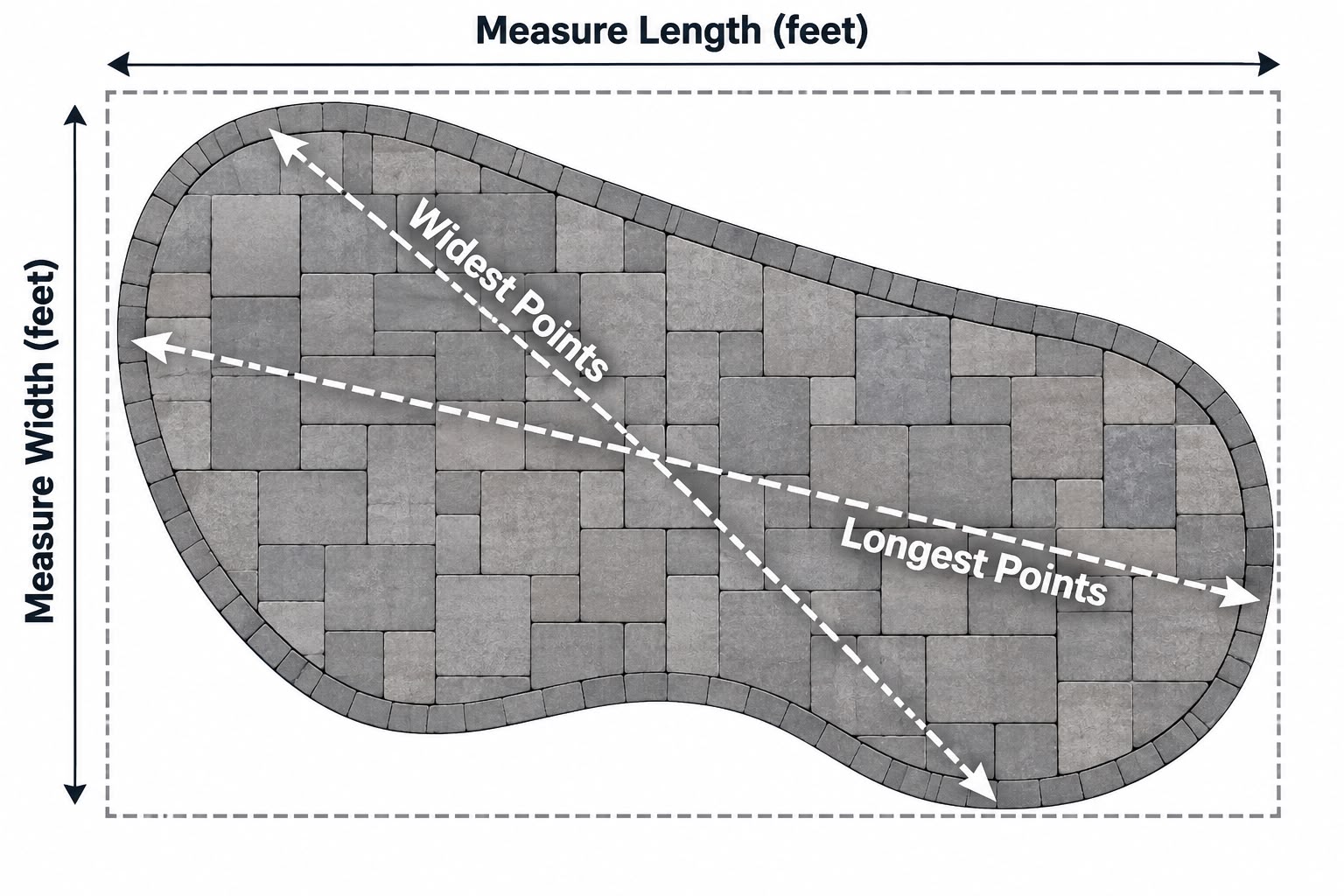
Before listing accessories, record the application, measured area, intended turf product, and installation stages. Sketch or mark edges, seams, obstacles, drains, borders, and transitions to other surfaces. These details can affect where joining or securing components are needed, so two projects with similar areas may still call for different order lists.
Separate confirmed requirements from possibilities. A seam or edge detail shown in the layout belongs on the working list. An item included only because it was used on another job should remain optional until the project layout and product guidance support it. This helps teams explain each line in an order and avoid purchasing by habit.
What wholesale buying changes, and what it does not
Planning for multiple jobs or a larger project calls for clear forecasting and inventory organization. Track accessories by project, application, and installation stage so materials for one surface or turf system don’t get mixed into another job’s allocation. A consolidated plan can reduce fragmented purchasing, but its value depends on the project schedule and ordering process.
Bulk procurement does not automatically mean lower costs. Any savings depend on specific purchasing terms, so don’t assume order size guarantees them. The practical value of planning is control: teams can review quantities, identify project-specific needs, and coordinate purchases before work begins. Let the scope, turf type, installation method, and surface conditions shape each job’s list. This gives you a more reliable basis for selecting compatible components and organizing orders.
Match each turf accessory to its installation role
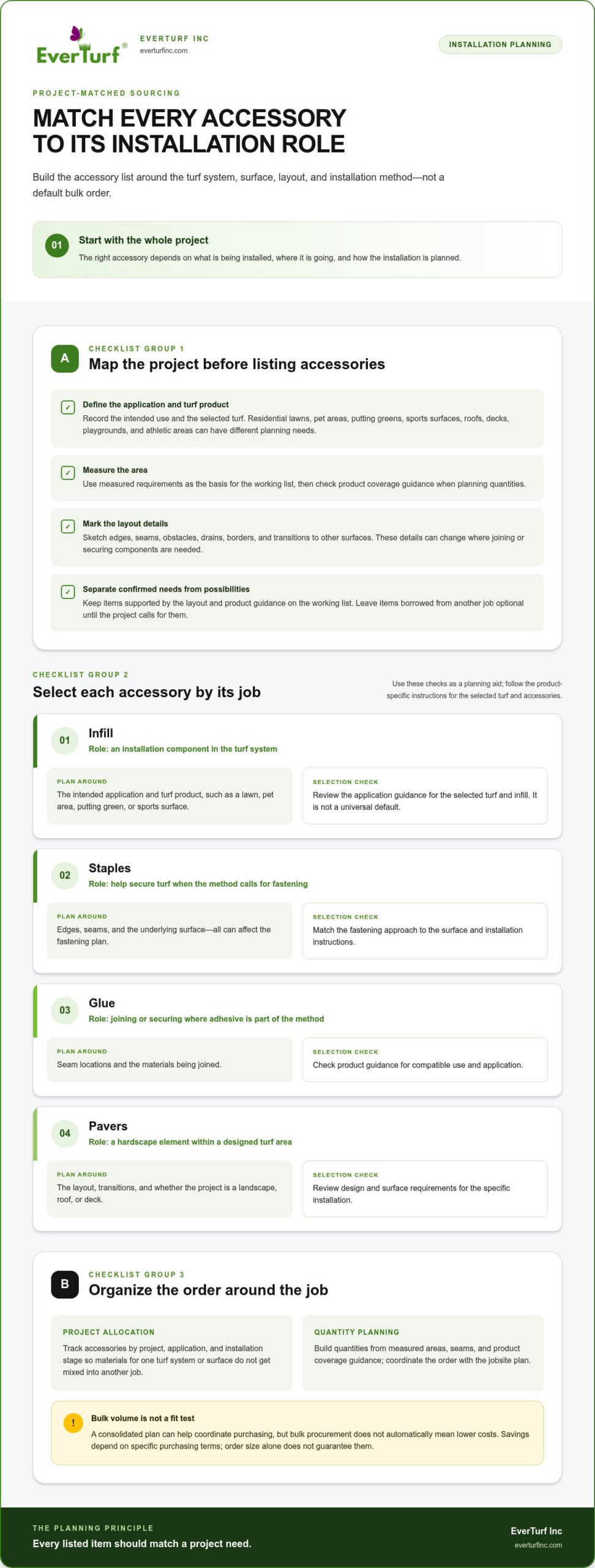
Once the project is defined, match each accessory to a specific task rather than treating every category as a standard part of every order. Infill, joining materials, fasteners, and pavers serve different purposes. Their suitability depends on the turf system, surface, layout, and installation approach. This role-based approach makes sourcing turf installation accessories wholesale more precise: every item on the list has a reason to be there.
Use this comparison as a planning aid, then follow the product-specific instructions for the turf and accessories selected.
| Accessory category | Primary role | Project considerations | Selection checks |
|---|---|---|---|
| Infill | Supports the turf system as an installation component. | Consider the intended application and turf product, such as a lawn, pet area, putting green, or sports surface. | Review the application guidance for the selected turf and infill. |
| Staples | Help secure turf where the installation method calls for fastening. | Edges, seams, and the underlying surface affect the fastening plan. | Match the fastening approach to the surface and installation instructions. |
| Glue | Supports joining or securing where adhesive is part of the installation method. | Seam locations and the materials being joined shape the plan. | Check product guidance for compatible use and application. |
| Pavers | Offer a hardscape element within a designed turf area. | Consider the layout, transitions, and whether the project is landscape, roof, or deck. | Review design and surface requirements for the specific installation. |
When to consider infill, staples, and glue
Infill isn’t a universal default. Select it based on the intended surface and turf system rather than assuming one option suits every application. For more detail on infill considerations, consult The Essential Guide to Turf Infill. Staples and glue address different securing or joining needs. The location of seams and edges can help determine where each may fit, while the surface and installation method guide the choice. EverTurf Infill and EverTurf Staples and Glue are categories to consider when planning the system.
Where pavers and transitions shape accessory planning
Pavers can be part of a design that combines synthetic grass with hardscape, so include them in the plan where the layout calls for them. Ground-level landscapes differ from roofs and decks, where the underlying surface and transitions require project-specific planning. For landscape inspiration, Backyard Turf: The Definitive Guide to a Maintenance-Free Outdoor Oasis offers design context. EverTurf Pavers are another category to consider as the layout takes shape.
Infill supports the turf system, staples and glue address securing or joining, and pavers contribute to selected hardscape designs. No project automatically needs every category. To see how these accessories fit alongside turf options, visit EverTurf turf and accessories and use your project plan to guide your choices.
Compare wholesale turf accessory suppliers by fit, not just volume
A large order is useful only when its components match the work ahead. Compare suppliers by whether their accessory range, product information, and ordering process fit your project mix. That matters whether you’re sourcing for residential lawns, pet areas, putting greens, roofs, decks, or sports surfaces. Each application can call for a different combination of turf and installation materials.
Use a simple scorecard to compare suppliers consistently. Rate each area as a strong fit, partial fit, or gap, based on your project requirements rather than an assumed promise of savings.
- Accessory categories: Does the range cover the items your planned jobs require, such as infill, staples, glue, or pavers? A category is relevant only when it fits the project.
- Project range: Can the product offering support the applications you actually handle, from landscape and pet uses to putting greens, roof and deck installations, or sports surfaces?
- Product information: Are accessory roles and application instructions clear enough to help you match components to the turf system and installation method?
- Ordering workflow: Can you organize planned and repeat requirements with project-specific lists that keep one job’s materials separate from another’s?
Clear product information and system fit are more useful comparison points than an unverified “lowest price” claim. Wholesale terms vary, so don’t treat bulk purchasing as an automatic discount. Its value depends on whether the quantity reflects actual demand and the selected components suit the work.
Questions a useful supplier comparison should answer
Check whether the accessory range covers the categories your project plan calls for and whether product information explains their roles and application guidance. Consider whether the ordering workflow can accommodate planned repeat needs without relying on assumed minimums, discounts, or other commercial terms. This keeps the comparison grounded in practical purchasing fit.
Avoid common wholesale sourcing mismatches
Don’t select infill on appearance alone. Use the turf-system and application guidance to inform the choice. Likewise, account for the layout, including seams and edges, when estimating glue or fasteners. Components aren’t automatically interchangeable across turf types or surfaces. A roof or deck, for example, has different surface conditions from a ground-level landscape, so the accessory plan should reflect those differences.
Bulk purchasing works best when it follows a forecast based on actual projects. Ordering more than planned jobs can use may tie up inventory, while an incomplete order can leave a team short of needed components. A measured, application-based list helps balance those risks without assuming every job needs the same materials.
EverTurf supplies EverTurf Infill, EverTurf Staples and Glue, and EverTurf Pavers alongside turf for residential, pet, putting green, roof and deck, and sports applications. Compare these categories with your scorecard and the needs of each job. For broader contractor purchasing context, Wholesale Artificial Grass: A Contractor’s Guide complements this accessory-focused comparison.
Plan quantities, purchasing, and storage around each turf job
Accurate accessory orders begin with the installation layout, not a rough guess based on turf area alone. Seams, edges, transitions, and the selected installation method can all affect what the job requires. A clear plan also separates materials used across multiple projects from accessories tied to a particular surface or design. That makes sourcing turf installation accessories wholesale more organized without assuming fixed consumption or ordering terms.
A practical accessory quantity-planning workflow
Build the order in sequence. Measure the work, map details that affect accessory use, then apply current product documentation for coverage and application guidance. If a figure isn’t available, mark it for review rather than estimating from a different product or job.
- Measure and map: Record the project area and note seams, edges, transitions, obstacles, and other layout details that may affect accessory needs.
- Group by installation stage: Sort planned materials by when they’ll be needed, such as preparation, joining, securing, or finishing. This makes the list easier to compare with the installation sequence.
- Apply product guidance: Use current manufacturer documentation for coverage rates and application instructions. Keep unverified figures visible as open items rather than treating them as confirmed quantities.
- Review the scope: Compare the accessory list with the intended turf product, surface, method, and layout. Remove items without a defined role, and flag unresolved requirements before consolidating purchases.
This method ties quantities to measured areas and layout details. A project with more seams or transitions, for example, may need a different accessory plan from a similarly sized, simpler layout.
Keep orders and materials organized from purchase to installation
Separate shared core materials from project-specific accessories, and track replenishment as its own category. This helps teams identify what supports recurring work and what belongs to a particular job. It also makes repeat planning more reliable without assuming every installation uses the same amount.
Label materials by project and installation stage as they’re organized for the jobsite. Keep product instructions with the relevant materials, and follow each item’s current handling, storage, and safety guidance. Use each product’s own documentation rather than applying another product’s storage assumptions.
A simple reorder record can capture the project, accessory category, planned amount, amount actually used, and remaining stock. Over time, those records help buyers identify recurring needs while keeping each new order tied to its own scope. Review the record alongside updated measurements and product guidance instead of copying an old quantity without checking whether the next job is comparable.
For a project-based starting point, explore EverTurf turf accessories, including infill, staples and glue, and pavers. Match each category to the installation plan, then use the relevant product guidance to shape the order.
Source turf installation accessories wholesale through EverTurf
A well-planned order connects the project requirements to the products and checks that each component fits the intended installation. EverTurf supplies synthetic turf and accessory categories for residential, pet, play, putting green, roof and deck, and sports applications. Buyers can consider turf and accessories together while keeping the final selection specific to the project, rather than assuming one setup suits every surface.
When sourcing turf installation accessories wholesale, use a project-first sequence: define the application, identify the turf system and installation layout, assign each accessory a role, plan quantities from measurements, and review current product guidance. This keeps purchasing decisions grounded in the job instead of habit or an assumed bulk threshold.
Build a project-matched EverTurf accessory list
Begin with the surface and intended use. A pet area, putting green, roof deck, and sports installation have different project demands, so identify the turf application and layout before considering accessories in isolation. Map the installation stages and note the details that shape material needs, including seams, edges, transitions, and surface conditions.
Then connect each category to a task. EverTurf Infill, EverTurf Staples and Glue, and EverTurf Pavers are distinct offerings, not a package every installation automatically requires. Consider them in light of the project’s purpose and design, and use product-specific guidance to determine how each fits the planned system. Make clear which items address a defined installation need and which depend on the final design or product guidance.
- Application: Identify the setting and intended use, such as landscape, pet, play, putting green, roof and deck, or sports.
- Turf system: Record the selected turf product and its relevant installation guidance.
- Accessory role: Note why each category is included and the installation stage it supports.
- Quantity and review: Base quantities on the measured layout, then check current product instructions before finalizing the list.
Move from sourcing research to a confident next step
Before placing an order, review the application, turf system, accessory roles, measured quantities, and product guidance. If a quantity or application detail is unclear, mark it for review instead of relying on an assumption. This keeps the order aligned with the actual work and makes repeat planning easier to organize.
For broader project-budget context, Artificial Turf Installation Cost: The 2026 Buyer’s Guide to Synthetic Grass Pricing addresses the wider installation picture. When you’re ready to take the next step, explore EverTurf turf and installation accessories and build your planned purchase around the job requirements.
Make your next turf order easier to plan
Use each project to improve the next one. After installation, record which purchasing assumptions held up, where the layout changed, and which product guidance helped clarify decisions. Keep those observations with your project records, but revisit them for every new job instead of copying an old order unchanged. This creates a practical learning loop while keeping each purchase tied to its own requirements.
That’s the lasting value of sourcing turf installation accessories wholesale with a project-first mindset: a clearer path from planning to purchasing, without letting volume dictate what belongs on the list. Choose an upcoming installation and use it to refine your process, keeping the intended use and current product guidance at the center.
Explore EverTurf turf and installation accessories to plan your next project around its specific requirements.
Frequently Asked Questions
Can I buy turf installation accessories wholesale without buying the turf?
Accessories can be sourced separately from turf. EverTurf supplies accessory categories including infill, staples, glue, and pavers, as well as synthetic turf products. If you’re sourcing turf installation accessories for a repair or a project using turf purchased elsewhere, identify the exact turf system and installation method first. That context helps you select components for the work instead of assuming an accessory fits every product.
How do I estimate how much turf infill I need?
Use the measured turf area and current coverage guidance for the specific infill and turf system. Check whether the product instructions provide an application rate, then calculate from that figure rather than using a general estimate from another project. A pet area and a putting green, for example, may have different product guidance. If the instructions don’t provide enough information to calculate the amount, mark the figure for review before ordering.
Are turf staples and glue interchangeable?
No. Staples and glue are different accessory categories and shouldn’t be treated as substitutes by default. The appropriate securing or joining method depends on the installation design, surface, and product instructions. A planned seam may call for a different approach from an exposed perimeter. Review the system’s guidance for the specific application, and don’t combine methods or replace one with another unless the instructions support that choice.
Is wholesale turf accessory sourcing worthwhile for a small installer?
It can be useful when the purchasing plan reflects actual jobs and repeat needs. A small installer handling varied work, such as residential lawns and pet areas, may benefit from tracking common accessory categories while keeping each project’s requirements distinct. Compare planned demand with the inventory you can organize and use. Don’t assume a larger order automatically reduces costs; assess the purchasing terms and product fit for your business before committing.
What should I include on a wholesale turf accessory checklist?
Include the project application, turf product, measured area, installation method, surface, and layout details such as seams, edges, obstacles, and transitions. Add each accessory category with its intended purpose, the source of its quantity, and any product guidance that still needs review. For example, note whether an infill figure comes from current coverage instructions or remains unresolved. This gives your team a clear basis for checking the order and preparing materials.
How should I store turf installation accessories before a project?
Follow the current handling, storage, and safety instructions for each product instead of applying one rule to every accessory. Keep product labels and documentation available so your team can identify materials and review directions before installation. When materials arrive, record the project allocation and note any packaging or condition concerns for follow-up. Don’t rely on storage methods carried over from a different product unless its instructions support them.
Do roof and deck turf projects need different accessories from lawn installations?
They can, because surface and design conditions differ from those of a ground-level lawn. A roof or deck plan may involve distinct edges, transitions, and constraints around the existing surface, so lawn installation assumptions may not apply. Identify the surface and intended turf system before selecting accessories, then follow the application-specific product guidance. Treat pavers or securing components as project-dependent choices, not universal requirements for every roof, deck, or landscape.