Signs You Hired the Wrong Company for Turf Installation: A Homeowner’s Checklist
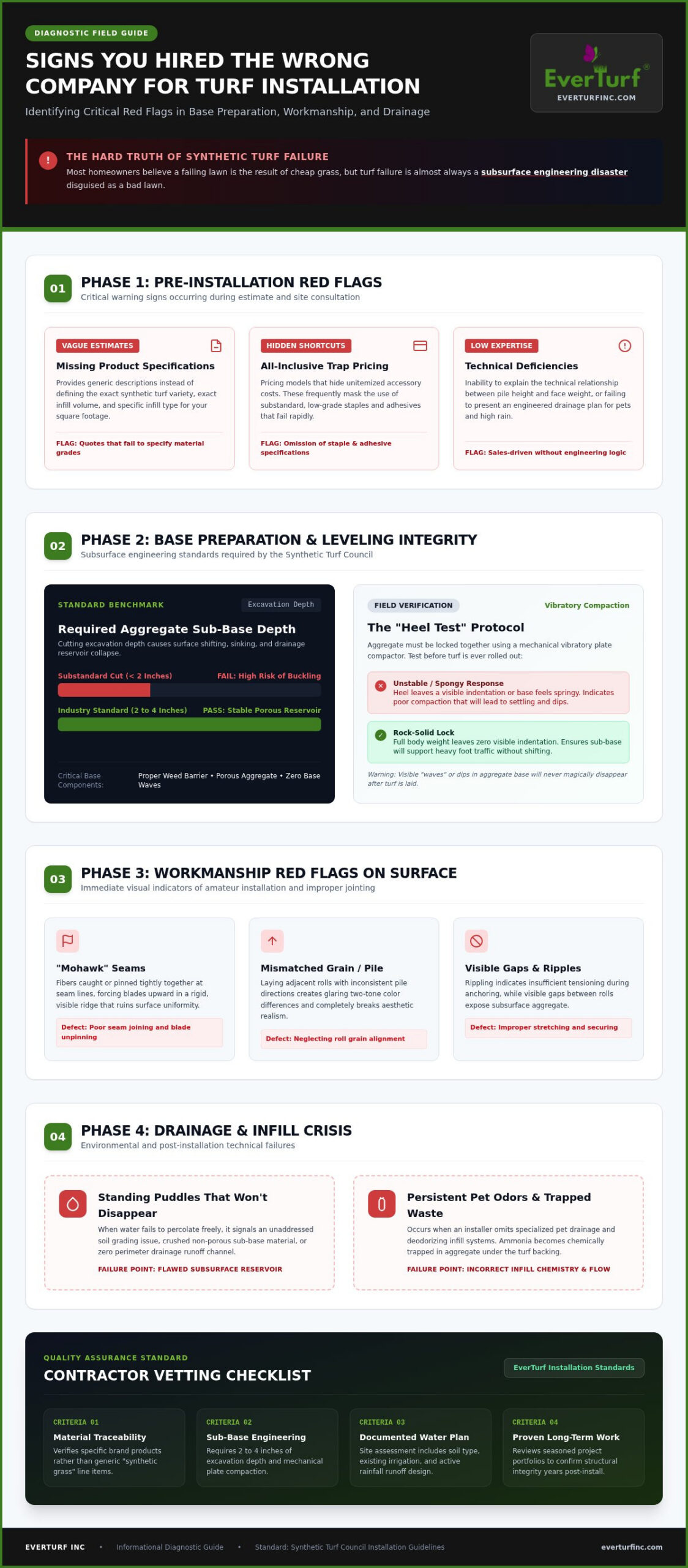
Most homeowners believe a failing lawn is the result of cheap grass, but the truth is far more expensive; turf failure is almost always a subsurface engineering disaster disguised as a bad lawn. When you notice ripples, visible gaps, or puddles that won’t disappear, these are immediate signs you hired the wrong company for turf installation. You invested in a sophisticated, low-maintenance lifestyle, yet you’re now facing the same frustrations you tried to leave behind.
It’s natural to feel anxious when a significant financial investment starts to show cracks. You deserve a permanent solution that enhances your home’s beauty and restores your precious personal time. In this checklist, we’ll identify the critical red flags of poor workmanship, from improper base preparation to the use of sub-par materials. By learning to spot these technical failures early, you can hold your contractor accountable and secure the professional result you paid for, ensuring your outdoor space remains a stress-free sanctuary for years to come.
Key Takeaways
- Identify missing contract details and vague estimates that signal a lack of professionalism before the first roll of turf is ever laid.
- Learn the technical red flags of improper base preparation, such as excavation depths less than the industry standard of 2-4 inches, which compromise long-term durability.
- Recognize the immediate visual signs you hired the wrong company for turf installation, including prominent “mohawk” seams and inconsistent pile directions that ruin your lawn’s aesthetic.
- Protect your investment by spotting post-installation drainage failures and persistent odors that indicate a flawed system for pets or high-rainfall climates.
- Discover how to vet your next contractor by verifying their use of premium EverTurf Inc products and reviewing long-term project portfolios.
Pre-Installation Red Flags: Signs of the Wrong Turf Company
The transformation of your backyard into a year-round sanctuary begins long before the first roll of synthetic grass hits the dirt. It starts with the consultation. One of the earliest signs you hired the wrong company for turf installation is a lack of transparency during the discovery phase. A true professional acts as a Reliable Visionary, assessing your site’s specific challenges like soil composition, existing irrigation, and sun exposure. If an installer prioritizes a quick signature over a thorough site assessment, they’re likely overlooking the engineering required for a lasting result. Artificial turf is a complex system, not just a green carpet you roll out; treating it as a simple commodity is the first step toward a failed project.
Vague Estimates and Missing Material Specifications
A professional quote should be a blueprint for success, not a one-page mystery. If your estimate lacks a detailed breakdown of materials, you’re at risk. A reputable installer will specify the exact variety of EverTurf Artificial grass being used, rather than relying on generic terms. They must also define the specific volume and type of EverTurf Infill required for your square footage. Beware of “all-inclusive” pricing models that fail to itemize accessory costs. These often hide the use of low-grade staples or adhesives that compromise the system’s integrity within months. You deserve to know exactly what is going into your ground.
Lack of Specialized Product Knowledge
You should feel confident that your installer understands the science behind the surface. Ask them to explain the relationship between pile height and face weight. If they can’t articulate how these factors affect durability or why a specialized drainage plan is non-negotiable for pet-heavy areas, they aren’t the right partner. While it’s tempting to focus solely on the artificial turf installation cost, remember that value is found in longevity. A contractor who can’t provide technical specifications for their products is likely using generic materials that won’t withstand the local climate.
Professionalism is found in the details. A clear drainage plan is essential, especially in regions prone to high rainfall or for homeowners seeking EverTurf Artificial grass pets solutions. Without a documented strategy for water runoff and odor control, you’re inviting future repairs that could cost thousands. Trust your instincts. If the sales process feels high-pressure and avoids technical logic, it’s one of the clearest signs you hired the wrong company for turf installation. A partner who values your time will provide the logical evidence needed to justify a premium investment.
Warning Signs of Improper Base Preparation and Leveling
Visualize your lawn as a high-performance system rather than just a decorative surface. The most stunning EverTurf Artificial grass will eventually fail if the foundation beneath it is flawed. One of the most telling signs you hired the wrong company for turf installation is a crew that rushes the excavation process. A professional installation requires removing existing soil to a depth of 2 to 4 inches to make room for a stable, porous aggregate base. If you notice your installer skipping the weed barrier or using a thin, low-quality landscape fabric, they’re compromising the long-term tranquility of your outdoor space for a short-term shortcut.
Inadequate Excavation and Sub-Base Depth
Excavation isn’t merely about clearing space; it’s about engineering a drainage reservoir. Cutting corners on depth leads to surface shifting, sinking, and uneven textures that ruin the aesthetic of your property. Adhering to the Synthetic Turf Council installation guidelines ensures that the sub-base can handle heavy foot traffic and local weather patterns without buckling. Before the turf is even unrolled, look for visible “waves” or dips in the aggregate. A level, consistent base is the logic behind a premium investment; if it looks sloppy now, it won’t magically improve once the grass is laid.
Poor Compaction and Unsteady Foundations
Compaction transforms loose stone into a rock-solid foundation. A reliable contractor will always use a vibratory plate compactor to lock the aggregate together, preventing future settling. You can perform a simple “heel test” to verify their work. Step firmly onto the prepared base with your full weight; if your heel leaves a visible indentation or the ground feels even slightly spongy, the compaction is insufficient. A soft base eventually creates tripping hazards and allows water to pool in low spots, undermining the durability of your EverTurf Artificial grass.
Your home deserves a sophisticated, permanent solution that stands the test of time. Identifying these technical red flags during the “invisible” phase of the project can save you thousands in future repairs. A seasoned expert understands that a great installation requires both a skilled crew and premium distributor-grade products. To better understand the integrated systems required for a flawless result, you can view our full range of pro-grade materials at everturfinc.com. Don’t let a rushed foundation turn your dream landscape into a high-maintenance headache.
Workmanship Red Flags: Visible Installation Failures
While the foundation is the engine, the surface is the aesthetic promise of your property. If the final result looks like a series of disjointed carpets rather than a seamless meadow, these are clear signs you hired the wrong company for turf installation. Quality craftsmanship ensures that every transition is invisible, creating a tranquil environment that invites you to step outside without noticing the seams of the construction. When an installer rushes the finish, they transform a premium lifestyle upgrade into a visual frustration.
Visible Seams and Incorrect Pile Direction
The most glaring errors often involve the grain of the turf. Every blade of EverTurf Artificial grass has a specific direction. Professional installers ensure every roll faces the same way to maintain a consistent color and texture across the entire lawn. If different sections reflect light differently, it creates a patchy, unnatural appearance. Visible seams that look like mohawk ridges or wide gaps are unacceptable. Expert crews use a specialized S-cut technique to blend edges together so they disappear to the naked eye. Visible lines aren’t a result of the turf settling; they’re the result of poor seam alignment during the initial layout.
Improper Securing and Edging Techniques
A secure perimeter is vital for safety and long-term satisfaction. Lazy installers often leave edges loose or perform rough, jagged cuts around pavers and garden beds. A Reliable Visionary uses techniques like tucking the turf under the border for a clean, professional finish. This requires the precise application of EverTurf Staples and Glue to prevent edges from lifting during heavy wind or foot traffic. Poorly secured edges lead to fraying, which significantly shortens the lifespan of your investment. Beyond aesthetics, improper material selection and sloppy securing can lead to negative environmental impacts of artificial turf, such as increased microplastic runoff or chemical leaching from exposed backing.
You should also keep an eye out for visible fasteners. If you see shiny metal heads poking through the grass, the installer didn’t distribute the EverTurf Staples and Glue correctly or failed to brush out the fibers to hide the hardware. This is more than just an eyesore; it’s a safety hazard for pets and children. A sophisticated installation should feel effortless and permanent, with no visible evidence of how it was secured to the earth.
The Post-Installation Crisis: Drainage and Infill Issues
The true quality of a project often reveals itself only after the first major storm or a few weeks of intense activity. While visible seams are frustrating, functional failures like poor drainage and improper infill are often more expensive to rectify. If your backyard feels more like a swamp than a sanctuary, you’re likely seeing the most common signs you hired the wrong company for turf installation. A professional system should remain pristine and dry, regardless of the weather. You shouldn’t have to worry about the ground beneath your feet when you’re trying to enjoy your outdoor space.
Standing Water and Ineffective Drainage Systems
A sophisticated lawn requires an integrated drainage strategy that moves water away from the surface instantly. If standing water remains visible for more than a few minutes after a downpour, the system has failed. This usually stems from two critical errors: a lack of proper slope in the sub-base or the selection of low-grade materials. High-quality artificial grass features a perforated backing designed to handle heavy rainfall. Improper slope in the sub-base is the silent killer of turf lawns. When an installer ignores the local climate’s demands, the result is a lawn that traps moisture, leading to mold growth and a saturated foundation that eventually shifts and sinks.
Improper Infill Application and Pet Odor Management
Infill is the logical evidence of a durable installation. It provides the ballast needed to keep the turf in place and the support to keep blades upright. A major red flag is the use of generic silica sand, particularly in artificial grass for dogs. Silica sand is porous and absorbent; it traps pet waste and bacteria, creating persistent odors that no amount of rinsing can remove. Instead, a Reliable Visionary insists on specialized EverTurf Infill designed specifically for odor control and antimicrobial protection. It’s a non-negotiable component for any home with four-legged family members.
Insufficient turf infill also leaves the backing exposed to thermal expansion. As temperatures rise, the turf can bubble or wrinkle because it isn’t properly weighted down. You might also notice ‘crunchy’ spots where infill was dumped unevenly, or areas where the blades are already matting down. These aren’t minor aesthetic quirks; they’re symptoms of a rushed job that will eventually require a full tear-out. To protect your home’s beauty and long-term value, invest in pro-grade EverTurf Infill systems today to ensure a worry-free outdoor space.
Vetting Your Next Turf Professional: The EverTurf Standard
Vetting is about restoration, restoring your confidence and your personal time. While the signs you hired the wrong company for turf installation often manifest as physical flaws like puddles or visible seams, the root cause is frequently a lack of specialized expertise. A general landscaper might treat synthetic grass like natural sod, but a true professional understands the engineering required for a permanent outdoor oasis. You deserve a partner who views your property as a lifestyle enhancer, not just another job site. Choosing a company that specializes exclusively in synthetic solutions ensures your project receives the technical focus it requires.
Demand to see a portfolio of projects that are at least 3 years old. New turf almost always looks pristine on day one; the real test is how it handles three cycles of local weather and foot traffic. A Reliable Visionary will also provide a comprehensive written warranty that covers both the high-performance materials and the installation labor. This transparency ensures that your investment is protected against the technical failures discussed in previous sections, moving you away from the frustration of repairs toward the tranquility of a perfect lawn.
Essential Questions for Your Turf Installer
Before any soil is moved, interview your contractor with technical precision. Ask specifically what aggregate they use for the sub-base. A standard 2 to 4 inch depth of crushed stone is the industry benchmark for stability and drainage. Inquire about their method for seam integration in high-traffic areas. Do they use S-cuts to ensure an invisible transition? Finally, request a technical data sheet for the infill and glue. A reputable company should be proud to show they are using pro-grade EverTurf Staples and Glue alongside specialized EverTurf Infill to secure your lawn’s integrity.
Why Quality Materials Make the Difference
A flawless result requires a perfect marriage between a skilled crew and premium distributor-grade products. High-performance systems like EverTurf Putting Green Pro offer an athletic precision that generic alternatives simply cannot replicate. Premium materials are engineered to be more forgiving. They handle minor site variations and temperature fluctuations without buckling or fraying. By choosing a specialist who sources materials exclusively from EverTurf Inc, you are investing in a backyard turf oasis designed to last decades, not just a few seasons. This commitment to quality is what separates a temporary fix from an everlasting result, providing the peace of mind you deserve.
Secure Your Everlasting Outdoor Sanctuary
Your outdoor space should be a source of tranquility, not a recurring checklist of expensive repairs. By identifying the technical signs you hired the wrong company for turf installation, from insufficient excavation depth to visible seams and poor infill distribution, you can take control of your property’s long-term health. A premium result is only possible when you combine a meticulous crew with distributor-grade materials engineered for durability in any climate. You deserve the peace of mind that comes with a permanent, sophisticated solution.
As a national distributor of high-performance EverTurf systems, EverTurf Inc provides the logical evidence needed for a successful landscape transformation. We offer specialized solutions for pets, play areas, and pro-level putting greens that stand the test of time. Don’t settle for a high-maintenance headache when a stress-free, beautiful version of your property is within reach. Trust in a system that prioritizes quality and your personal time above all else.
Connect with a Reliable Visionary at EverTurf Inc for a flawless installation today. Your journey toward a worry-free, year-round sanctuary starts with choosing the standard of excellence your home deserves.
Frequently Asked Questions
What is the #1 sign of a bad turf installation?
The primary indicator of a failed project is poor drainage or an uneven surface shortly after completion. When water pools or the ground feels spongy, it usually means the contractor cut corners on sub-base preparation. A professional installation requires a meticulously compacted aggregate layer. If your lawn looks like a series of waves rather than a flat sanctuary, it’s the most common sign you hired the wrong company for turf installation.
Is it normal to see seams in my new artificial grass?
Visible seams aren’t a normal part of the settling process. While all turf projects require rolls to be joined, those lines should be virtually invisible to the naked eye. If you notice wide gaps or “mohawk” ridges where the grass meets, it indicates poor alignment or improper securing with EverTurf Staples and Glue. Expert installers use specialized S-cut techniques to blend sections, ensuring your lawn remains a seamless, sophisticated retreat for years.
Why does my artificial turf smell like dog urine even after cleaning?
Persistent odors are typically caused by trapped bacteria in the wrong type of infill. If your installer used generic silica sand in pet areas, that material absorbs waste rather than letting it drain. To maintain a pristine environment, you need specialized EverTurf Infill designed for antimicrobial protection and odor control. This high-performance solution allows moisture to flow through the system, keeping your outdoor space fresh and safe for four-legged family members.
How deep should a contractor dig before installing turf?
A reliable contractor should excavate your soil to a depth of 2 to 4 inches. This standard depth creates enough volume for a stable aggregate base that facilitates proper drainage and prevents surface shifting. Rushing this invisible phase is one of the clearest signs you hired the wrong company for turf installation. Without this foundational depth, your EverTurf Artificial grass won’t have the structural support needed to withstand the local climate or heavy foot traffic.
Can a bad turf installation be fixed without starting over?
Minor issues like uneven infill distribution or loose edges can often be corrected with professional maintenance. However, fundamental failures in the sub-base or drainage system usually require a full tear-out and restart. Fixing a soft foundation or a missing weed barrier involves removing the turf rolls entirely. It’s always more cost-effective to invest in a Reliable Visionary from the start rather than paying for expensive repairs to rectify a generalist’s mistakes.
What happens if a contractor skips using turf infill?
Skipping infill leaves your lawn vulnerable to thermal expansion and premature wear. Without the weight of specialized EverTurf Infill, the backing can expand and contract with temperature changes, leading to unsightly wrinkles and bubbles. Infill also acts as a support system for individual blades, preventing them from matting down under foot traffic. A lawn without infill feels flat, looks unnatural, and lacks the durability required for a long-term landscape investment.
How do I verify if my installer is using high-quality EverTurf products?
You should always request a technical data sheet or material manifest before the crew begins work. A professional installer will be transparent about their sourcing and should confirm they are using pro-grade EverTurf Staples and Glue alongside our high-performance turf varieties. You can also look for branded packaging on-site during the delivery phase. Verifying these materials ensures you’re receiving the integrated system needed to achieve a sophisticated, permanent outdoor environment.
Why is my artificial grass bubbling or wrinkling?
Bubbling usually occurs when the turf isn’t properly secured or lacks sufficient infill to weight it down. As the sun heats the surface, the backing material naturally expands. If the installer didn’t use enough EverTurf Staples and Glue or failed to distribute infill evenly, the excess material has nowhere to go but up. These ripples ruin the aesthetic of your property and indicate that the installation crew rushed the critical final securing phase.