



Creating a Professional Turf Installation Proposal Template: The Contractor’s Guide
Most synthetic turf contractors believe they lose bids strictly on price. In reality, you don’t lose lucrative projects to lowball competitors; you lose them because standard estimates fail to showcase the systematic craftsmanship beneath the surface. Mastering the process of creating a professional turf installation proposal template transforms your bidding workflow from a fragile line-item quote into an authoritative presentation of engineering, precision, and enduring quality.
It’s frustrating to watch unqualified crews undercut your bids simply because a client cannot distinguish between a rushed surface scrape and a properly excavated, multi-layered aggregate base. You deserve a presentation system that communicates that distinction immediately. This guide shows you how to construct a comprehensive proposal framework that protects your profit margins, shields your business from costly scope creep, and closes high-value residential and commercial projects. Ahead, we break down the plug-and-play architecture, technical specifications, and crucial site disclaimers that establish instant credibility and protect your operational bottom line.
Key Takeaways
- Master the architecture of creating a professional turf installation proposal template to eliminate estimating delays, project an authoritative brand image, and consistently protect your profit margins.
- Detail sub-base excavation, soil evaluation, and aggregate compaction depth to educate property owners on structural durability and eliminate unbilled ground preparation surprises.
- Specify advanced turf system categories, specialized infill selections, and high-performance securing hardware to clearly justify your professional labor rates over lowball bidders.
- Safeguard your business against unexpected liabilities by establishing distinct boundaries between manufacturer warranties, workmanship guarantees, and subsurface utility risks.
- Assemble a polished visual hierarchy featuring scope breakdowns, clear project timelines, and transparent signature blocks that inspire client confidence and accelerate contract approvals.
Essential Sections of a Winning Turf Installation Proposal Template
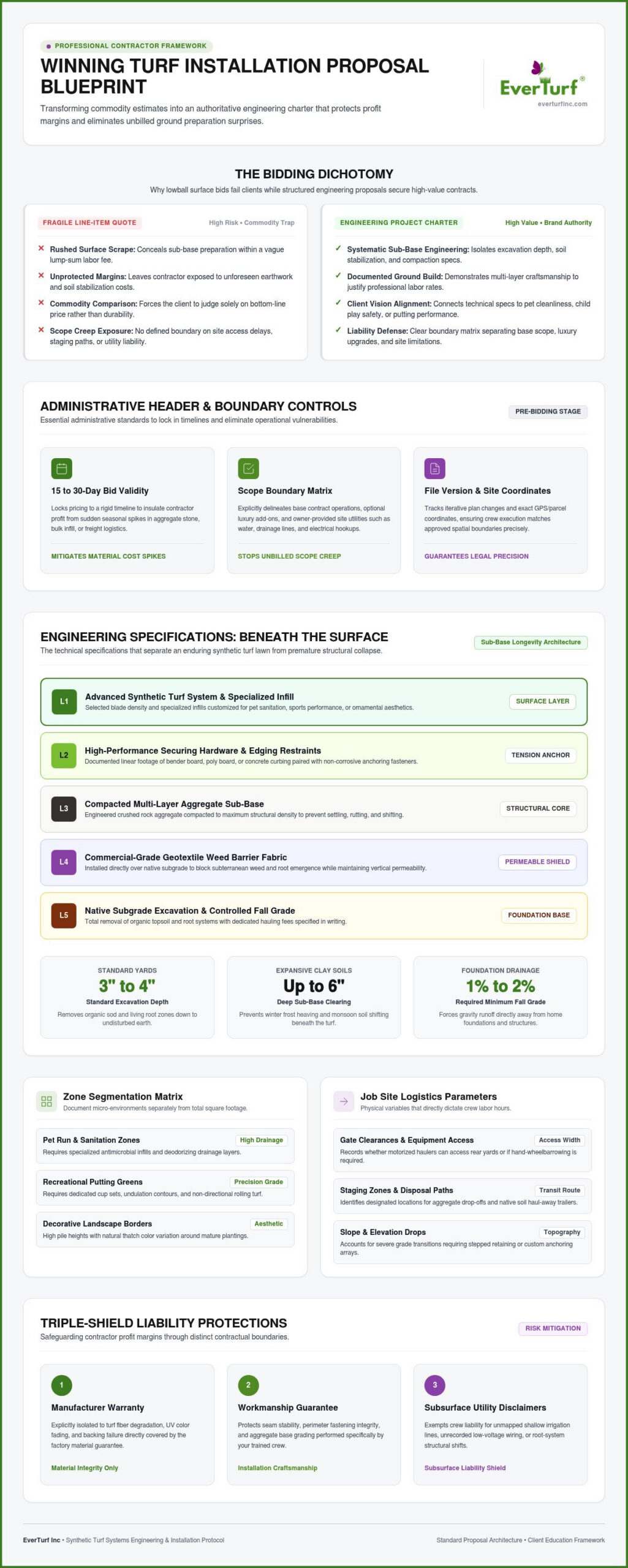
Generic estimate sheets lose high-value landscape projects. When contractors submit a single-line price quote, property owners instinctively treat the installation as a commodity, comparing your comprehensive ground build against a lowball competitor’s rushed surface scrape. Standardizing your workflow by creating a professional turf installation proposal template changes this dynamic immediately. It elevates your initial bid into a strategic project charter that justifies premium craftsmanship, accelerates client decision-making, and safeguards operational margins.
Every high-converting proposal begins with a structured administrative header. Beyond standard customer contact details and exact project site coordinates, your template must establish firm administrative boundaries:
- Proposal Date and File Version: Tracks revisions cleanly during scope modifications.
- Bid Validity Window: Establishes a standard 15- to 30-day window to protect against seasonal spikes in aggregate material or freight logistics.
- Scope Boundary Matrix: Clearly divides base contract operations, optional luxury upgrades, and owner-supplied site utilities like water or power access.
Project Overview and Client Vision Alignment
Transform the introductory section from a mechanical estimate into an executive summary of the client’s outdoor transformation. Frame their practical requirements, such as pet cleanliness, play yard safety, or precision backyard putting performance, within an enduring lifestyle narrative. To guide clients through the structural benefits of modern synthetic systems, point them toward the ultimate guide to artificial grass during the review phase. Educating property owners on how advanced artificial turf replaces weekend maintenance chores with worry-free leisure builds immediate trust before they even view the final pricing.
Comprehensive Site Specifications and Area Measurements
Precision documentation eliminates costly field surprises. While standard templates rely on aggregate square footage, creating a professional turf installation proposal template demands segmented spatial data that captures actual job site logistics:
- Zone Segmentation: Itemize distinct micro-environments, such as high-traffic pet runs, decorative landscape borders, or recreational putting surfaces.
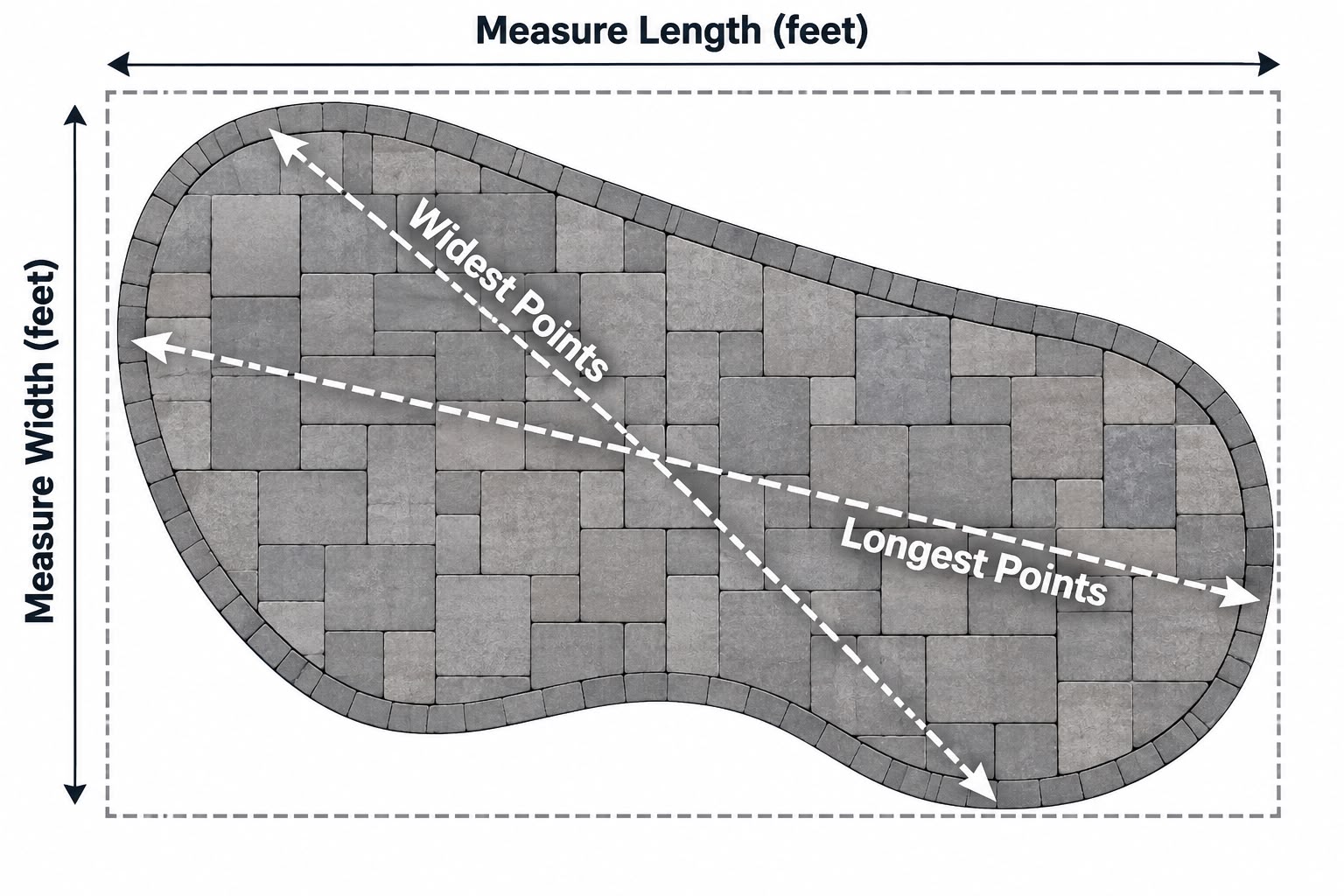
- Perimeter and Linear Edging: Record exact edge linear footage to accurately calculate bender board, poly board, or concrete curbing requirements.
- Access and Logistical Parameters: Detail gate clearance widths, equipment staging zones, native soil disposal paths, and slope elevation drops that directly dictate crew labor hours.
Documenting Ground Preparation and Engineering Specifications
Sub-base engineering serves as the foundational structural system that determines synthetic turf longevity, drainage performance, and long-term surface stability. Budget contractors often conceal site preparation inside a vague, single-line labor fee, which exposes their business to severe financial risk whenever subsurface complications arise. In contrast, creating a professional turf installation proposal template allows you to isolate and detail every phase of site engineering. Specifying your excavation parameters and base aggregates demonstrates technical expertise, instantly differentiating your proposal from low-quality installers.
Excavation, Soil Removal, and Grading Requirements
Detailing site excavation eliminates disputes over unforeseen earthwork. Your template should specify standard clearing depths, which typically range from three to four inches for standard yards and extend up to six inches in expansive clay soils. Clearly state the removal of organic topsoil, root systems, and existing ground cover alongside dedicated hauling fees. Outline the installation of commercial-grade geotextile weed barrier fabric directly over the native subgrade to block subterranean growth while maintaining vertical permeability. Finally, stipulate a minimum one to two percent fall grade away from home foundations to guarantee positive surface runoff in compliance with STC technical guidelines.
Sub-Base Compaction and Permeable Drainage Layering
Surface perfection begins beneath the backing. Document your aggregate recipe directly within the proposal scope, defining layers of crushed aggregate base topped with finely graded decomposed granite for smooth contouring. Specify mechanical vibratory plate compaction executed in damp two-inch lifts to achieve a firm 90 to 95 percent compaction rating. This level of structural precision is especially critical when planning intricate backyard turf projects against swimming pool coping, patio pavers, or concrete retaining walls. Contractors seeking proven consistency for demanding client specifications can source complete installation accessories and base systems directly through EverTurf Inc.
Specifying Turf Systems, Infill, and Installation Hardware
Precision continues above the ground line. Vague line items such as “synthetic turf roll” invite price comparisons against low-grade discount materials. When creating a professional turf installation proposal template, break down the complete surface assembly into specific architectural components. Detail the face weight, pile height, yarn profile, and backing design. This technical transparency shows property owners why high-grade polyethylene turf delivers superior resilience, UV stability, and natural aesthetic beauty compared to budget alternatives.
Defining Turf Selection and Application Purpose
Align the specified turf system directly with how the property owner intends to use their outdoor living space. Detail specialized characteristics, such as extra-permeable backing for rapid pet waste drainage or shock-absorbing thatch layers for children’s play zones. For clients seeking private recreation, outline cup placement, subgrade contouring, and ball-roll speeds when specifying an EverTurf Putting Green. Customizing each scope around genuine lifestyle enhancements reassures clients that your team is building a tailored outdoor sanctuary.
Detailing Specialty Infill and Fastening Hardware
Infill acts as the foundational ballast that anchors synthetic turf, supports upright blade recovery, and shields backing materials from degradation. Your proposal should specify the exact infill media, whether coated round silica sand or antimicrobial acrylic granules, alongside calculated ballast distribution ratios. Referencing standard ballast formulas from a comprehensive turf infill guide reinforces your engineering rigor. Pair this with dedicated fastening standards, itemizing high-tensile anchor staples and industrial seaming adhesives to guarantee seams remain invisible under heavy traffic.
Integrating Edging, Borders, and Paver Transitions
Clean borders define luxury installations. Outline your perimeter retention hardware, including commercial bender board, concrete curbing, or polyboard nailer systems that lock sub-base materials in place. For mixed-material landscapes, describe flush transitions connecting turf blades to adjacent stone pathways or interlocking concrete pavers. Specifying these clean geometric borders in your template assures clients that their finished lawn will blend seamlessly with their home’s surrounding architecture.
Establishing Project Timelines, Warranties, and Scope Protections
Unclear project terms destroy contractor profitability faster than bad weather. When site boundaries remain undefined, minor ground complications quickly evolve into bitter payment disputes. Crucial risk disclosures and milestone schedules form the protective backbone of your business when creating a professional turf installation proposal template. Documenting these parameters upfront shields your company from hidden site hazards and preserves the trust you have built with the property owner.
Milestone-Based Payment Schedules and Deposit Structures
Cash flow stability requires clear billing phases tied to tangible installation progress. Structure your proposal around three predictable milestones: an initial deposit upon contract execution to reserve scheduling, a progress payment upon heavy equipment mobilization and base delivery, and a final balance due upon completed punch-list sign-off. When clients inquire about the broader investment variables that shape high-end landscape quotes, direct them to this comprehensive guide on artificial turf installation cost factors. Clearly define accepted payment methods, net terms, and explicit walkthrough inspection procedures to guarantee frictionless project closeouts.
Change Orders, Access Contingencies, and Hidden Site Hazards
Site conditions can change the moment an excavator bucket penetrates the soil. Protect your operating margins by inserting explicit subsurface risk disclosures into your template:
- Unmarked Private Utilities: Clarify that homeowners remain responsible for identifying private low-voltage lighting, drip lines, and secondary gas connections not marked by public utility locators.
- Subterranean Obstacles: Establish formal hourly change-order rates for removing buried boulders, caliche shelves, or abandoned concrete footings.
- Solar Glare Disclosures: Include a standard waiver addressing thermal melting caused by magnified Low-E window reflections from neighboring structures.
Workmanship Warranties vs. Manufacturer Product Guarantees
Distinguish your company’s installation craftsmanship from factory material warranties. In your proposal, clarify that your business guarantees labor-driven items, such as seam cohesion, edge pinning, and sub-base grading integrity, typically across a one- to three-year workmanship period. Meanwhile, factory warranties provided by manufacturers protect against UV fading, tensile backing failure, and fiber degradation for ten to fifteen years. Clearly separating these coverages manages client expectations and reinforces your reputation as an accountable contractor. To equip your crews with proven materials backed by premier industry standards, partner with EverTurf today.
Assembling and Presenting Your Professional Turf Proposal Template
Visual presentation carries equal weight to technical precision. Even the most rigorous aggregate calculations fall flat if they arrive as an unformatted plain-text estimate. Structuring your delivery when creating a professional turf installation proposal template establishes an immediate sense of luxury, craftsmanship, and organized efficiency. A winning layout moves smoothly through an engaging cover page, an itemized engineering scope, high-resolution past project case studies, and a legally binding e-signature portal.
Customizing the Standardized Template for Residential vs. Commercial Clients
Tailor your template modularly to match the decision criteria of different client profiles:
- Residential Properties: Emphasize everyday comfort, pet sanitation, aesthetic year-round lushness, and the relief of reclaimed family weekends free from lawn maintenance.
- Commercial Developments: Center the proposal on ASTM surface standards, ADA accessibility compliance, severe foot-traffic wear ratings, and water-conservation tax initiatives.
- Specialty Applications: Attach dedicated engineering addenda for elevated rooftops, playground safety shock pads requiring impact attenuation ratings, or community sports venues.
Professional Digital Presentation and Client Onboarding Protocols
Ditch static, uninspiring email attachments. Deliver your proposals through responsive cloud software that allows prospects to review scope sections interactively, select optional system upgrades, and authorize work with instantaneous digital signatures. Schedule a quick ten-minute screen-share or an in-person consultation to walk through the line items together. Guiding them through your excavation depth and base engineering reinforces why your team commands premium rates over lowball installers. Reinforce this commitment to uncompromised quality by specifying tested, commercial-grade systems supplied nationwide by EverTurf Inc, reassuring property owners that their outdoor transformation is backed by proven industry leadership.
Close out your presentation by locking in scheduling windows. Establish a structured three-touch follow-up cadence over ten business days to address technical questions, confirm crew availability, and secure initial project deposits before production calendars fill.
Transform Your Bidding Standards to Win High-Value Projects
Mastering the strategy behind creating a professional turf installation proposal template elevates your contracting business from an everyday tradesperson into a trusted exterior authority. When your proposals clearly articulate sub-base engineering, system-matched components, and transparent scope boundaries, clients recognize the true value behind your pricing. You eliminate unbilled site surprises, establish predictable cash flow through milestone billing, and give property owners lasting peace of mind.
Delivering on a world-class proposal requires dependable, high-performance materials that uphold your promises season after season. To ensure exceptional results across pet zones, family lawns, and precision putting greens, source premium synthetic turf and accessories from EverTurf Inc. Take advantage of an extensive product catalog backed by nationwide distribution, commercial-grade adhesives, specialty infills, and securing hardware engineered for longevity. Equip your crews with the right systems today, and approach every upcoming client presentation with total confidence in your craft.
Frequently Asked Questions
What should be included in a professional turf installation proposal template?
A comprehensive proposal must contain administrative project parameters, exact square footage with site schematics, clear sub-base engineering specifications, and defined product data covering face weight and backing. When creating a professional turf installation proposal template, you must also incorporate milestone payment schedules, subsurface risk disclaimers, and separate sections distinguishing labor craftsmanship from factory warranties. This complete framework ensures total transparency and protects your profit margins.
How do I calculate square footage and waste percentage on a synthetic turf bid?
Calculate total square footage by dividing irregular areas into measurable geometric shapes and adding a standard 10 to 15 percent cutting waste buffer. Synthetic turf comes in fixed roll widths, typically 15 feet, meaning seams and roll orientation dictate material consumption. Accounting for roll direction and cutoffs prevents unexpected material shortages on site and ensures your quote accurately reflects real roll ordering requirements.
Why is it important to itemize the sub-base excavation in a turf proposal?
Itemizing sub-base excavation separates essential structural ground preparation from routine surface placement, showing clients exactly where their investment goes. This itemization justifies your professional labor rates over low-cost competitors who merely scrape topsoil. It also protects your crew financially by establishing baseline soil depths so that extra grading or unexpected waste removal can be billed transparently as an approved change order.
What is the difference between a workmanship warranty and a turf material warranty?
A workmanship warranty covers contractor installation tasks, such as seam security, mechanical fastening, and base stability, usually lasting one to three years. In contrast, a manufacturer warranty covers the physical turf assembly against UV degradation, excessive blade fading, and backing delamination, often extending ten to fifteen years. Clarifying this division prevents clients from expecting installers to service factory defects or expecting manufacturers to fix settling base aggregate.
How should a contractor handle unmarked underground pipes or tree roots in proposals?
Include an explicit subsurface liability disclaimer that requires property owners to disclose or mark private utilities, irrigation lines, and wiring before excavation starts. State clearly that unforeseen subterranean obstructions, including dense root systems or buried concrete, require a formal written change order with pre-set hourly labor rates. This language shields your business from repair costs and prevents surprise friction during ground clearing.
How do I explain the need for specialized turf infill to a prospective client?
Explain that specialized infill provides the crucial ballast that keeps turf flat, upright, and protected against UV degradation. Describe it as an essential operational component rather than an optional add-on, highlighting specific benefits such as antimicrobial protection for pet yards or cooling properties for outdoor living spaces. Clients appreciate knowing that the correct infill protects their long-term investment and keeps their yard fresh and comfortable.
Can one turf proposal template work for both residential lawns and putting greens?
Yes, a single modular framework works for both when creating a professional turf installation proposal template, provided you include dynamic scope addenda. While landscape lawns focus on pet sanitation, perimeter securing, and natural aesthetics, golf systems require technical line items for cup placement, specialized short-pile turf, and multi-layered subgrade contouring. Modular addenda let your sales team adjust technical details quickly without redesigning core contract terms.