

Hypoallergenic Lawn Alternatives for Allergy Sufferers
The obvious choice for reducing grass-related yard work isn’t automatically the best fit for every allergy concern. Hypoallergenic lawn alternatives for allergy sufferers can change what grows in your yard, but no surface can keep airborne pollen from nearby trees, weeds, or other landscapes from reaching it.
If grass pollen, weeds, or time spent mowing seem to make outdoor days less comfortable, it’s understandable to look for a simpler surface. Artificial turf may reduce routine lawn care, but it isn’t an allergy treatment, and debris, drainage, heat, and everyday comfort still matter. Hardscape, mulch, and planted groundcovers bring their own trade-offs, too.
This guide compares those options by potential allergen exposure, upkeep, and how well they support the way your household uses the yard. You’ll learn which sources each surface may address, which can remain, and what to consider for cleaning, drainage, appearance, and comfort. With a clearer picture of the trade-offs, you can choose an outdoor space that feels inviting and manageable, not just different.
Key Takeaways
- Hypoallergenic lawn alternatives for allergy sufferers may reduce some yard-based triggers, but no surface can block pollen drifting in from nearby plants.
- Compare synthetic turf, hardscape, mulch or gravel, and selected groundcovers for pollen production, upkeep, comfort, drainage, and how you use your yard.
- Artificial grass removes living lawn growth and mowing, but settled pollen, dust, leaves, and cleaning needs still deserve consideration.
- Start by identifying suspected triggers, then weigh household needs such as play, pets, entertaining, accessibility, and green space.
- Explore EverTurf artificial grass as one non-living lawn option, and assess its maintenance and drainage needs against your preferences.
Hypoallergenic Lawn Alternatives: What Can a Yard Change?
A lawn can be one part of your outdoor allergen picture, but it isn’t the whole picture. Some grasses produce pollen that becomes airborne, and weeds growing in or beside a lawn may add their own pollen. Other possible outdoor triggers include mold spores and dust. Which exposures cause symptoms varies from person to person, so a grass lawn won’t affect everyone in the same way.
A lower-allergen yard is a landscape designed to reduce selected sources of exposure, not a pollen-proof space or a guarantee of allergy relief. That distinction matters: changing the surface may reduce living grass or weed growth in one area, but it won’t remove pollen drifting in from nearby trees, plants, or properties. Wind can carry pollen across property boundaries, then leave it on outdoor surfaces.
Which outdoor allergens can a lawn contribute?
Some grass species release airborne pollen, while weeds can grow among lawn edges, in cracks, or in neglected patches. A yard may also collect dust and plant debris, and damp conditions can support mold growth. These are possible exposure pathways, not a prediction that every lawn will trigger symptoms. A groundcover planting, for example, uses low-growing ground cover plants instead of a conventional grass surface, but the plants themselves still need to suit the site and household.
Even a carefully maintained yard can receive pollen from beyond its boundaries. A non-living surface may change what grows directly underfoot, but it can’t control surrounding vegetation or airborne particles carried in by wind. Consider both the source and where exposure happens before choosing a replacement.
What does a lower-allergen yard realistically mean?
For homeowners considering hypoallergenic lawn alternatives for allergy sufferers, the practical goal is to reduce specific, manageable exposures while preserving the outdoor space they want to use. Replacing a living lawn may mean less grass growth to manage, for instance, but it doesn’t treat allergies or prevent pollen from settling on surfaces. Each alternative also has its own upkeep and comfort considerations.
Keep a simple record of when symptoms occur and what’s happening outdoors, such as mowing, weeding, or particular plants flowering. Patterns can help you identify questions to raise with a qualified clinician or allergy professional. They can help assess suspected triggers and discuss appropriate care; a landscaping change is not a substitute for medical advice.
Four Lawn Alternatives for Allergy Sufferers, Compared
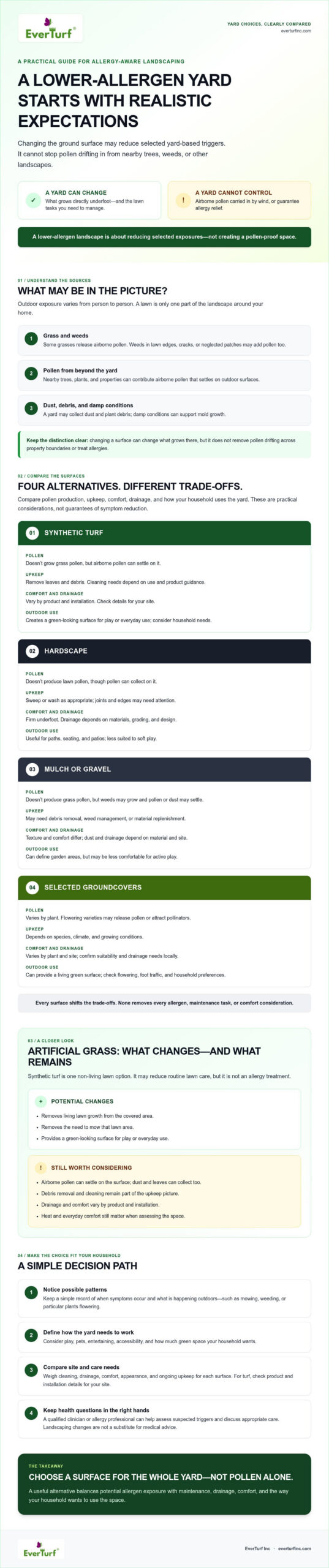
No single surface is best for every yard. Compare what each option may change at ground level, then weigh maintenance, comfort, drainage, and how your household plans to use the space. These are practical trade-offs, not guarantees of reduced symptoms.
| Surface | Likely pollen production | Upkeep | Comfort and drainage | Outdoor use |
|---|---|---|---|---|
| Synthetic turf | Doesn’t grow grass pollen, but airborne pollen can settle on it. | Remove leaves and debris; cleaning needs depend on use and product guidance. | Comfort and drainage vary by product and installation. Check details for your site. | Creates a green-looking surface for play or everyday use; consider household needs. |
| Hardscape | Doesn’t produce lawn pollen, though pollen can collect on it. | Sweep or wash as appropriate; joints and edges may need attention. | Firm underfoot. Drainage depends on materials, grading, and design. | Useful for paths, seating, and patios; less suited to soft play. |
| Mulch or gravel | Doesn’t produce grass pollen, but weeds may grow and pollen or dust may settle. | May need debris removal, weed management, or material replenishment. | Texture and comfort differ; dust and drainage depend on material and site. | Can define garden areas, but may be less comfortable for active play. |
| Selected groundcovers | Varies by plant. Flowering varieties may release pollen or attract pollinators. | Depends on species, climate, and growing conditions. | Varies by plant and site; confirm suitability and drainage needs locally. | Can provide a living green surface; check flowering, foot traffic, and household preferences. |
Every surface shifts the trade-offs; none removes every allergen, maintenance task, or comfort consideration. A patio or path can reduce planted lawn area, but it won’t prevent pollen from nearby plants from arriving. Mulch and gravel also differ in texture, potential dust, weed control, and how well they fit your intended use, so assess the specific material and site rather than assuming one works everywhere.
Synthetic turf versus living alternatives
Synthetic turf doesn’t grow grass pollen, but windblown pollen, leaves, and dust can settle on it. Plan for routine debris removal, and check product-specific guidance for cleaning and drainage rather than assuming those needs are identical across installations. For broader landscape planning, see this guide to artificial grass and landscape planning.
Hardscape, mulch, gravel, and low-growing plants
Groundcovers can keep a yard green while reducing traditional lawn area, but plant choice matters: flowering varieties may attract pollinators, and weeds can still emerge. The University of Florida IFAS shares examples of lawn alternatives; check whether a plant suits your location and household before choosing it. If a non-living green surface is on your shortlist, explore EverTurf artificial grass as one option.
Is Artificial Grass Better for Allergies? Benefits and Trade-Offs
Artificial grass may suit homeowners who want a green outdoor surface without growing a living lawn, but it isn’t automatically pollen-free or hypoallergenic. The distinction is simple: synthetic turf doesn’t produce grass pollen through flowering, yet it can still collect particles carried in from the surrounding landscape. Whether it fits your needs depends on the exposure you’re trying to reduce, how you use the yard, and the upkeep you’re comfortable with.
What synthetic turf may help change
Because synthetic turf is not a living grass plant, it doesn’t release grass pollen through flowering. Replacing a lawn may also remove the need to mow that area, which could reduce contact with grass and disturbed debris during mowing. Those are changes to the yard and its routine, not proof of an allergy benefit.
Nearby trees, weeds, and other plants remain pollen sources beyond the surface’s control. Wind can carry pollen onto turf, where it may settle alongside dust, leaves, and other outdoor debris. So a non-living lawn changes what grows underfoot, not what arrives from the air.
What synthetic turf cannot guarantee
Think of it as a surface choice, not a medical treatment. No synthetic lawn can guarantee symptom relief or prevent exposure to every outdoor trigger. If you’re unsure what causes your symptoms, track when they occur and speak with a qualified clinician or allergy professional about diagnosis and treatment.
Everyday use matters, too. A space for children or pets may need more frequent debris removal than a lightly used area. Before choosing turf, review product-specific instructions for cleaning and ask how the proposed installation is designed to handle drainage. Requirements can vary, so avoid relying on broad claims about how every synthetic surface performs.
Comfort and material details deserve the same scrutiny. Surface temperature can vary with conditions and product design; ask for applicable product information rather than assuming turf stays cool. If material composition is a concern, review the available documentation for the specific product. These checks help set realistic expectations without turning landscape decisions into medical promises.
For homeowners comparing hypoallergenic lawn alternatives for allergy sufferers, the useful question isn’t whether artificial grass eliminates allergens. It’s whether a non-living surface, its cleaning routine, drainage, and comfort suit your household better than the alternatives. A careful review of those details can help you choose a yard that’s easier to manage and enjoyable to use.
How to Choose an Allergy-Aware Lawn Alternative for Your Home
Choose a surface by working through four questions: What might be triggering symptoms? How does your household use the yard? Which surfaces fit the site? What upkeep can you realistically manage? This turns a search for hypoallergenic lawn alternatives for allergy sufferers into a practical landscape decision, without treating any material as an allergy solution.
Match the surface to triggers and daily activities
Start with patterns, not assumptions. Record when symptoms occur and note activities such as mowing, weeding, gardening, or spending time near flowering plants. Discuss suspected triggers with an allergist or other qualified clinician; a symptom log can help guide that conversation, but it doesn’t diagnose an allergy.
Next, picture an ordinary week outdoors. Children may need a comfortable play area, pets may affect cleaning needs, and entertaining may call for a patio or clear walking routes. Consider whether you want space for lounging, gardening, walking, or active play. Hardscape, mulch or gravel, synthetic turf, and living groundcovers each support different activities, so decide how the yard should function before narrowing the options.
Look beyond the lawn itself. Nearby trees, planting beds, shaded corners, drainage patterns, and places where leaves collect can affect both plant choices and routine upkeep. Groundcover species depend on climate, soil, sun, and intended use; ask a qualified local landscape professional to check suitability and identify plants that fit your needs.
Plan maintenance before choosing a material
Every surface has a care routine. A living lawn may involve mowing and managing weeds. Non-living surfaces still need debris removal and, depending on the material and use, cleaning. Mulch or gravel may need attention as weeds emerge or material shifts. Compare the tasks you’re moving away from with those you’ll take on, and check product-specific guidance rather than assuming any option is maintenance-free.
Include access and drainage in that comparison. Can you comfortably reach the areas that need sweeping or cleaning? Does the site have shaded spots or water-flow concerns that need a professional’s attention? Resolve those practical questions before choosing a material. For more planning considerations, see this guide to backyard turf design and upkeep.
Once you’ve weighed triggers, activities, site conditions, and care, you can compare options against real household needs rather than an allergy-free promise. If artificial grass is on your shortlist, explore EverTurf artificial grass as one non-living surface option.
Explore EverTurf Artificial Grass as One Lawn Alternative
EverTurf supplies synthetic grass nationally for residential and other applications. For homeowners comparing hypoallergenic lawn alternatives for allergy sufferers, artificial grass may be worth considering as a non-living lawn surface. It doesn’t grow grass, but it isn’t an allergy treatment or a promise of an allergen-free yard. The right choice still depends on how you plan to use the space and what care it will need.
Questions to ask before selecting synthetic grass
Start with the project itself. Describe how the area will be used, whether for everyday access, play, or a place to relax. Ask how the proposed surface and installation are suited to the site’s drainage needs, and what routine maintenance the product guidance recommends. Be specific about pollen, dust, and leaf debris: ask how you should remove them and what cleaning methods are appropriate for the product.
Request applicable product documentation before deciding. Confirm which installation components are needed for your project, and clarify details directly with the supplier rather than assuming that every turf option or installation uses the same materials. EverTurf’s catalog includes artificial grass and accessories such as infill, staples, and glue. Ask which components apply to your intended use and what care instructions accompany the selected materials.
Take the next step with an informed comparison
Put artificial grass beside the alternatives you’ve considered, including hardscape, mulch or gravel, and carefully selected plants. Compare more than appearance: note what each option means for upkeep, comfort, drainage, and how your household wants to use the yard. If you have pets, include their habits and your cleaning expectations in the discussion; a product’s suitability should be based on its documentation and your needs.
A short list of questions can keep the conversation focused:
- Does this option suit the activities planned for the space?
- What product and installation details should I review for drainage and ongoing care?
- How will I manage pollen, dust, leaves, and other debris that may settle outdoors?
- Which components are appropriate for this project, and what instructions apply?
Taking time to compare the details can help you choose with confidence, without expecting any landscaping material to control every outdoor allergen. If synthetic grass remains a fit for your plans, explore EverTurf artificial grass and review the available information as part of your decision.
Shape a Yard That Fits Your Life
The best hypoallergenic lawn alternatives for allergy sufferers aren’t allergy-free guarantees. They’re thoughtful choices that may reduce selected exposures while making the yard easier or more enjoyable to use. Synthetic turf doesn’t grow grass pollen, but pollen and debris can still settle on it. Hardscape, mulch, gravel, and planted groundcovers each bring different considerations for comfort, drainage, appearance, and upkeep.
Start with suspected triggers and your household’s routines. Consider how children, pets, guests, and gardeners will use the space, then weigh the maintenance each surface requires. For help identifying allergy triggers, consult a qualified clinician; for site-specific design questions, speak with a landscape professional.
EverTurf supplies synthetic grass for residential and other applications, along with installation accessories. If a non-living lawn surface suits your plans, explore EverTurf artificial grass and review product details as part of your comparison. With clear expectations and a surface chosen for your home, you can create a more manageable outdoor space that invites you to spend time outside.
Frequently Asked Questions
Is artificial grass hypoallergenic?
No. Artificial grass is a non-living surface, so it doesn’t grow or release grass pollen through flowering, but it isn’t allergy-proof. Pollen carried by wind, dust, leaves, and other particles can settle on it. Triggers vary from person to person, and changing a lawn surface can’t diagnose or treat symptoms. If symptoms persist or feel severe, speak with a qualified healthcare professional.
Can artificial grass reduce allergy symptoms?
It may reduce contact with living grass and remove the need to mow that area, which some households may find helpful. But it can’t prevent airborne pollen from entering the yard or settling on the surface. Whether a change makes a difference depends on personal triggers, nearby plants, and maintenance habits. Consider turf as a landscape choice, not a medical solution, and ask an allergist about symptom management.
What is the best lawn alternative for people with grass allergies?
There’s no single best option for everyone seeking hypoallergenic lawn alternatives for allergy sufferers. Synthetic turf, hardscape, gravel, mulch, and selected groundcovers differ in upkeep, comfort, drainage, and suitability for play or relaxing. First consider the suspected trigger and how your household uses the yard. A qualified clinician can help assess allergy concerns, while a landscape professional can evaluate site conditions and suitable materials or plants.
Does artificial grass collect pollen?
Yes. Wind can carry pollen onto synthetic turf, just as it can onto other outdoor surfaces. Leaves, dust, and other debris may collect there, too, depending on the yard’s surroundings and use. Cleaning needs vary by product, so check the care guidance instead of assuming the surface will stay allergen-free. Nearby trees, weeds, and other plants may remain pollen sources even after a lawn is replaced.
Are clover lawns better for allergy sufferers?
Not necessarily. Clover is a living plant, and flowering groundcovers may not suit every person or household. Reactions depend on individual sensitivities, the plants present, and local growing conditions. Before choosing clover or another groundcover, discuss suspected triggers with a healthcare professional. Then ask a qualified landscape professional whether the specific plant suits your site, climate, and intended use, including how much foot traffic the area will receive.
How can I make my yard more comfortable during allergy season?
Start by discussing suspected triggers with a qualified healthcare professional. Then review the plants, lawn-care routines, and surfaces near the places where your household spends time. Reducing mowing or changing part of the landscape may suit your needs, but airborne pollen can still enter the yard. Keep the space practical to maintain, and follow clinical advice for managing symptoms rather than relying on a surface change alone.
Is mulch or gravel a good alternative to grass for allergies?
Mulch or gravel can reduce the area of living lawn, but neither blocks pollen carried through the air. Their suitability depends on site drainage, dust, upkeep, comfort, and how you plan to use the space. Compare the particular material and yard conditions before choosing. For allergy concerns, consult a qualified clinician about suspected triggers instead of assuming that mulch or gravel will prevent symptoms.