



How to Manage Seasonal Demand in the Turf Installation Business
A full spring schedule can look like success until inquiries outpace crew capacity and material plans start slipping. Then the busy season gives way to quieter weeks, and the next challenge is keeping projects moving. Managing seasonal demand in the turf installation business means planning for both sides of that cycle, not simply trying to fill every available day.
If seasonal swings make scheduling, staffing, and cash planning harder to predict, your own business records can help. Demand patterns offer useful clues, but last year’s calendar is not a guarantee of this year’s workload. Build a clearer forecast by reviewing historical sales and bringing sales and operations perspectives together before making commitments.
This article explains how to anticipate busy periods, coordinate bookings with crew capacity, and plan turf and installation materials without guessing about availability or delivery timing. It also covers practical ways to build a steadier project pipeline beyond peak installation months by considering different customer needs and project types throughout the year. Earlier planning helps you make measured decisions, protect project quality, and create a more reliable rhythm for your business.
Key Takeaways
- Seasonal demand varies by customer type, climate, and business history, so use your own records rather than a fixed calendar.
- For managing seasonal demand in the turf installation business, compare inquiries, bookings, cancellations, and completed jobs to build a grounded forecast.
- Separate confirmed projects from promising leads and speculative inquiries before allocating crew time, equipment, or materials.
- Use each season as a flexible planning checkpoint, adjusting your workflow as conditions and project readiness change.
- Confirm product specifications, availability, and delivery timing before making project commitments. A supplier with varied turf and accessory categories can support material planning.
Why seasonal demand challenges turf installation businesses
Seasonal demand is the recurring change in customer inquiries, project bookings, and installation workload over the course of a year. For a turf installation business, those shifts affect more than how busy the phone feels. They influence estimating schedules, crew utilization, material readiness, and the customer updates needed as projects move toward installation.
There’s no universal calendar that predicts every contractor’s busy months. Climate and local conditions can shape when customers are ready to start outdoor projects, while residential, pet, playground, putting green, and sports-field projects may follow different decision timelines. A contractor’s own history matters, too. The useful starting point for managing seasonal demand in the turf installation business is to identify patterns in your records, not assume another company’s peak season will match yours.
Which parts of the turf installation pipeline fluctuate?
Track each stage separately: new inquiries, site assessments, signed projects, material orders, and completed installations. These counts represent different kinds of demand. An increase in inquiries doesn’t necessarily mean a similar increase in confirmed work, and a signed project may not be ready for installation right away.
For example, a customer might inquire in one season, complete a site assessment later, and schedule installation once the site is ready and materials are confirmed. That gap can shift workload into a different period. Before changing staffing or purchasing plans, map how projects move through your pipeline and note where delays or cancellations commonly occur.
Why busy months can still create business pressure
A full calendar can hide operational risk. When several projects are booked close together, crews may have little room for schedule changes, material needs can overlap, and customers may expect dates the business can’t reliably meet. Compare the work on the calendar with available labor, equipment, confirmed project scope, and site readiness. A schedule is dependable only when those pieces align.
Seasonal demand management means planning capacity around recurring workload changes, not simply filling every open date. The aim isn’t to eliminate seasonal fluctuations. It’s to prepare for them with clearer estimates, realistic scheduling, timely material checks, and honest customer communication. Reviewing records and learning basic demand forecasting methods can help frame the process, while your own pipeline shows which signals matter most to your operation.
How to forecast seasonal demand before the turf installation rush
A useful forecast starts with your own project history, not a generic busy-season calendar. Review records by month or comparable period, then separate inquiries, estimates, signed bookings, cancellations, and completed installations. This shows where interest is building and how often it becomes scheduled work. Past patterns can guide decisions, but they don’t guarantee that the next season will unfold the same way.
Build a useful seasonal demand forecast from business records
Organize the information you have by project type and lead source. Residential, pet, recreation, and commercial inquiries may move through the sales process differently. A referral and a web inquiry may also have different outcomes. Track how many inquiries lead to estimates and how many estimates turn into bookings. Calculate conversion rates from your own records, and flag missing or inconsistent entries rather than treating incomplete data as fact.
Compare similar periods where your records allow, and look for changes in both volume and timing. A rise in early inquiries, for instance, may matter less than whether estimates are converting and projects are reaching the schedule. Record cancellations and postponements, too, so a high inquiry count doesn’t disguise a smaller pool of work that is ready to proceed.
Turn the forecast into capacity and materials scenarios
Translate expected bookings into workload by considering project scope, site readiness, realistic installation schedules, and confirmed crew availability. Build conservative, expected, and high-demand scenarios. These are planning cases, not certain outcomes. Each helps you consider what may need adjusting if fewer estimates convert, bookings hold steady, or demand rises beyond expectations.
Use a rolling forecast rather than setting it once and leaving it untouched. Update it as estimates convert, customers change schedules, cancellations occur, and project details become clear. Before confirming start dates, check material specifications and verify product availability and delivery timing with the supplier. This keeps a promising forecast from becoming a schedule built around unconfirmed materials.
For managing seasonal demand in the turf installation business, the forecast works best as a shared operating view. Sales can update opportunity status, while operations assesses crew capacity and project readiness. Review the forecast regularly and adjust commitments before small changes ripple through the calendar. When planning materials for residential, pet, recreation, or commercial projects, you can also explore synthetic turf and installation accessories from EverTurf Inc, a national product supplier. Confirm product availability and timing directly.
How to balance crews, turf materials, and project mix
A forecast becomes useful when it changes what you book, schedule, and order. Start by separating work into three groups: confirmed bookings, likely opportunities with estimates underway, and speculative leads that haven’t reached a firm commitment. Use confirmed projects to anchor crew schedules and material plans. Treat less-certain work as potential demand, not a reason to promise dates or buy materials prematurely.
Project mix matters, too. A residential yard, pet area, putting green, and sports-field project can differ in scope, equipment needs, sequencing, and product requirements. Review each project’s specifications and site readiness before assigning labor. A crew may have time available on paper but still lack the right equipment, preparation window, or materials for the next job.
| Demand level | Operational risk | Suitable planning response |
|---|---|---|
| Confirmed work is below planned capacity | Available crew time may go unused | Review qualified opportunities and keep scheduling flexible without treating leads as bookings. |
| Confirmed work fits planned capacity | Site changes or delays can disrupt sequencing | Check readiness, scope, materials, and schedule buffers before finalizing the sequence. |
| Likely and speculative work exceeds capacity | Overbooking can strain crews, supplies, and customer expectations | Prioritize confirmed projects, communicate realistic timelines, and avoid committing resources based on uncertain leads. |
Schedule crews around confirmed work and realistic capacity
Set weekly installation capacity using the labor and equipment actually available, along with realistic project durations. Leave room for site preparation, weather disruption, and schedule changes instead of packing every day to its limit. If a project’s readiness or timing changes, update customers promptly. A clear revised timeline is more dependable than a start date based on unconfirmed demand.
Plan turf and accessory purchasing without overcommitting
For booked projects, list the required turf category and accessories before placing orders. Depending on the project, that may include infill, staples, glue, or pavers. Compare order timing with supplier-confirmed availability and delivery timing, while considering storage space and cash-flow needs. Don’t assume products can be held indefinitely or will arrive by a preferred date. For a closer look at one project-specific material, see this turf infill guide.
Careful coordination is central to managing seasonal demand in the turf installation business: align crew commitments and purchasing decisions with work that’s genuinely ready to proceed, then revise the plan as bookings and project details change.
A seasonal workflow for managing demand throughout the year
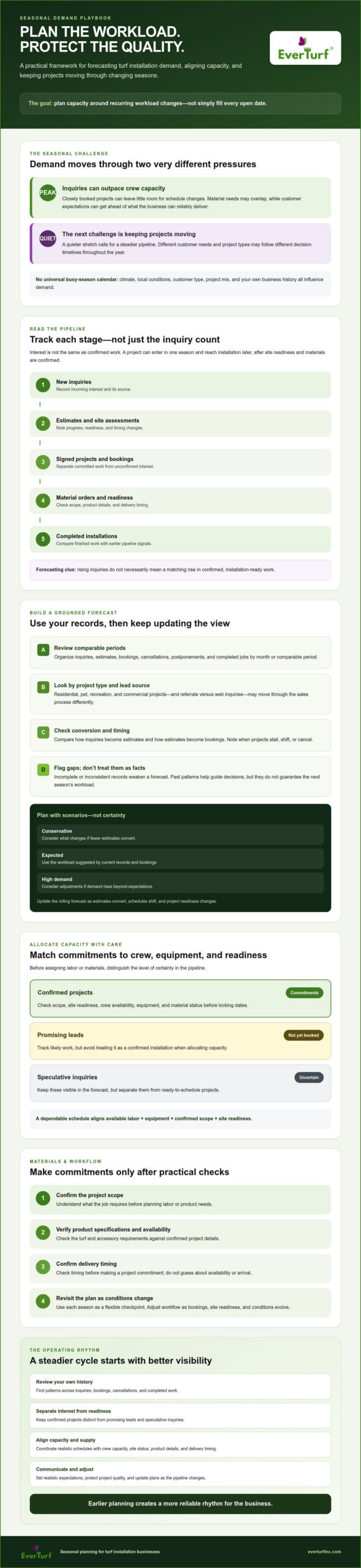
Use the seasons as review points, not as a universal calendar for when turf work must rise or slow. Let your records, customer mix, and operating conditions determine the timing. At each checkpoint, review a small set of indicators: backlog, estimate-to-booking conversion, cancellations, and crew utilization. Together, these show whether demand is turning into work that’s ready to proceed and where the plan needs attention.
- Before a busier period: Review crew and equipment readiness, supplier communication, open estimates, and follow-up tasks. Set booking limits based on realistic installation capacity, not inquiry volume alone.
- During a busier period: Recheck the schedule regularly, confirm project specifications and site readiness, and update customers promptly if dates shift.
- During a slower period: Review completed projects, feedback, cancellations, and estimates that didn’t convert. Use what you learn to improve future planning and customer follow-up.
- At every checkpoint: Compare current indicators with your own comparable periods, then adjust the forecast instead of assuming demand will follow last year’s pattern.
Prepare for higher-demand periods before inquiries peak
Get operating details in order before the schedule fills. Check which crew members and equipment will be available, give estimate follow-ups clear next steps, and speak with suppliers about product requirements and confirmed availability. Before scheduling an order, verify the turf specifications and accessories required for each project. Then set a booking limit that leaves room for site preparation and schedule changes, rather than treating every promising lead as ready-to-install work.
Use slower periods to strengthen the next project pipeline
Quieter stretches can reveal where projects stall. Review completed work and customer feedback, then examine why estimates converted, remained open, or were declined. Use those insights to make educational content and follow-up messages more useful, with clear information about project types and planning considerations rather than unsupported discount claims. For broader context to share with customers, refer to this artificial grass guide.
Keep the routine simple enough to repeat. A short, consistent review of backlog, conversion, cancellations, and crew utilization can help you spot a capacity mismatch before it becomes a scheduling problem. As you plan materials for upcoming projects, explore EverTurf’s synthetic turf products and installation accessories, then confirm product availability and delivery timing before making project commitments.
How a dependable turf supply plan supports seasonal demand
A schedule is only as dependable as the materials behind it. Clear product specifications and early availability checks help you plan purchases around booked work, identify potential supply questions, and avoid setting project dates before key materials are confirmed. This matters as demand shifts: several projects may be ready at once, but each can call for a different turf category and set of accessories.
EverTurf supplies synthetic turf products and installation accessories for residential, pet, playground, putting green, roof and deck, and sports-field applications. That range can support project planning, but it doesn’t mean one turf product or accessory suits every site. Match product choices to the project scope and specifications.
Coordinate product selection with each project’s requirements
Start with the intended use and documented project requirements. A pet area, putting green, playground, roof or deck, and sports field may call for different product considerations. Confirm the selected turf category against the project specification before planning an order. Then check whether the scope calls for infill, staples, glue, or pavers. Treat each as a project-specific decision, not an automatic addition to every materials list.
For managing seasonal demand in the turf installation business, connect material planning to the schedule in stages. Identify requirements for confirmed projects first, then review likely opportunities separately. Before committing to dates, verify product availability and delivery timing directly. Don’t rely on assumptions about stock or lead times, and consider storage capacity and cash-flow needs when deciding when to order.
Make the next planning step easier
Before discussing a project with a supplier, prepare a concise brief. Include the intended application, project scope, selected product requirements, accessories under consideration, and desired schedule. Note any open questions about specifications or site readiness. This gives the conversation a practical focus and helps you check whether material timing aligns with your installation plan.
If you’re building a project budget, consult the artificial turf installation cost guide for broader cost-planning context. Keep that research separate from a supplier’s product quote, and confirm project-specific details directly before setting a budget or schedule.
A well-prepared materials plan can make busy periods easier to coordinate and help keep projects moving. To review product categories and accessories for your project, explore EverTurf synthetic turf and accessories.
Build a More Predictable Turf Project Pipeline
Seasonal swings may be part of the business, but they don’t have to dictate every decision. Use your own inquiry, booking, cancellation, and completion records to anticipate changes. Then align confirmed work with realistic crew capacity, project readiness, and material requirements. A rolling plan helps you adjust as estimates convert and schedules shift, rather than relying on a fixed seasonal calendar.
That’s the practical value of managing seasonal demand in the turf installation business: better preparation, clearer customer communication, and more deliberate decisions about when to schedule work and confirm materials. Review your pipeline regularly, and let each planning checkpoint sharpen the next one.
For project planning, EverTurf supplies synthetic turf options for residential, pet, playground, putting green, roof and deck, and sports-field applications, along with installation accessories such as infill, staples, glue, and pavers. Review the available options and identify products relevant to your project: Explore EverTurf synthetic turf and accessories.
Frequently Asked Questions
How can a turf installation business forecast seasonal demand?
Forecast seasonal demand by reviewing your own historical inquiries, bookings, cancellations, and completed projects. Compare similar periods where records allow, then separate results by lead source and project type so residential, pet, recreation, and commercial work aren’t blended together. Track how inquiries become estimates and bookings, then update the forecast as schedules change. Past patterns guide planning, but they don’t guarantee next season’s results. This supports managing seasonal demand in the turf installation business.
When should turf installers prepare crews and materials for peak season?
Prepare crews and materials before your records suggest inquiries may rise, rather than relying on a standard peak-season date. Review confirmed bookings, likely projects, staff availability, equipment, and realistic installation durations. For materials, verify product specifications, supplier-confirmed availability, and delivery timing before placing orders or promising start dates. Keep speculative leads separate from booked work, and revisit the plan as estimates convert or customer schedules shift.
What should a turf installer track to manage seasonal demand?
Track backlog, inquiry-to-estimate and estimate-to-booking conversion, cancellations, crew capacity, and material readiness. Together, these indicators show whether customer interest is turning into scheduled work and whether your team can deliver it. Review them consistently and compare similar periods in your own records. If cancellations rise or crew utilization is already tight, adjust scheduling and customer updates before adding more commitments.
Can turf installation businesses stay busy during slower seasons?
You can use slower seasons to strengthen the project pipeline, but no planning method can guarantee steady demand. Follow up on open estimates, review why past prospects booked or declined, and share useful project information with potential customers. Use completed-job feedback to improve your process and consider which project types fit your customer base. These steps can support future interest while keeping bookings and staffing decisions grounded in actual demand.
How can installers avoid overordering artificial turf during seasonal peaks?
Base orders on confirmed project scopes and documented material requirements, not on inquiry volume alone. Identify the turf category and accessories each booked job calls for, then check supplier-confirmed availability and delivery timing before ordering. Consider storage limits and cash-flow needs as you decide when and how much to purchase. Keep materials for likely opportunities separate from confirmed requirements, and reassess orders if project scope or schedules change.
What happens if seasonal demand exceeds a turf installation crew’s capacity?
If demand exceeds crew capacity, an overfilled schedule can lead to rushed planning, shifting start dates, and unclear customer expectations. Set booking limits based on available labor, equipment, project durations, and site readiness. Leave reasonable schedule buffers for preparation and disruptions. If timelines change, communicate updates promptly and clearly. A realistic schedule may mean booking work further out, but it helps protect installation quality and customer trust.
Is seasonal demand the same for every type of turf installation?
No. Demand timing can differ by project type, customer mix, climate, and a business’s own historical patterns. Residential, pet, playground, putting green, roof and deck, and sports-field projects may attract different customers and follow different decision timelines. Track inquiries and bookings by category to see what’s true for your business. Avoid assuming one project type’s busy period predicts demand across your entire pipeline.