

Understanding Line Items on a Synthetic Turf Quote: What to Check
A lower total can look like the obvious choice, until you discover that an important part of the work wasn’t included. Understanding line items on a synthetic turf quote helps you see what each proposal actually covers, not just what it costs. Contractors and suppliers may use different labels for similar tasks, bundle items together, or leave assumptions and exclusions unclear.
A quote might list turf, infill, base preparation, removal, grading, drainage, and cleanup without explaining what each item involves or whether it applies to your project. To compare proposals fairly, look at the scope behind each line rather than treating the total as the whole story.
This guide explains common quote items and how to compare materials, inclusions, assumptions, and exclusions. It also provides practical questions to ask about the specified turf and infill, site preparation, drainage plans, and the work covered before you approve a proposal. With the details clarified, you can make a more informed decision about the products and work that suit your space.
Key Takeaways
- Treat a turf quote as a proposed scope of work, and ask what each line includes when labels or groupings differ.
- Understanding line items on a synthetic turf quote helps you distinguish product materials from site work and optional additions.
- Compare proposals using the same project area, product specifications, and task list so differences in scope are easier to spot.
- Separate included work from allowances, optional items, exclusions, and assumptions before comparing totals.
- Get unclear quantities, changes, and scope details explained in writing, then choose the clearest proposal for your intended use.
What a Synthetic Turf Quote Covers, and Why Line Items Matter
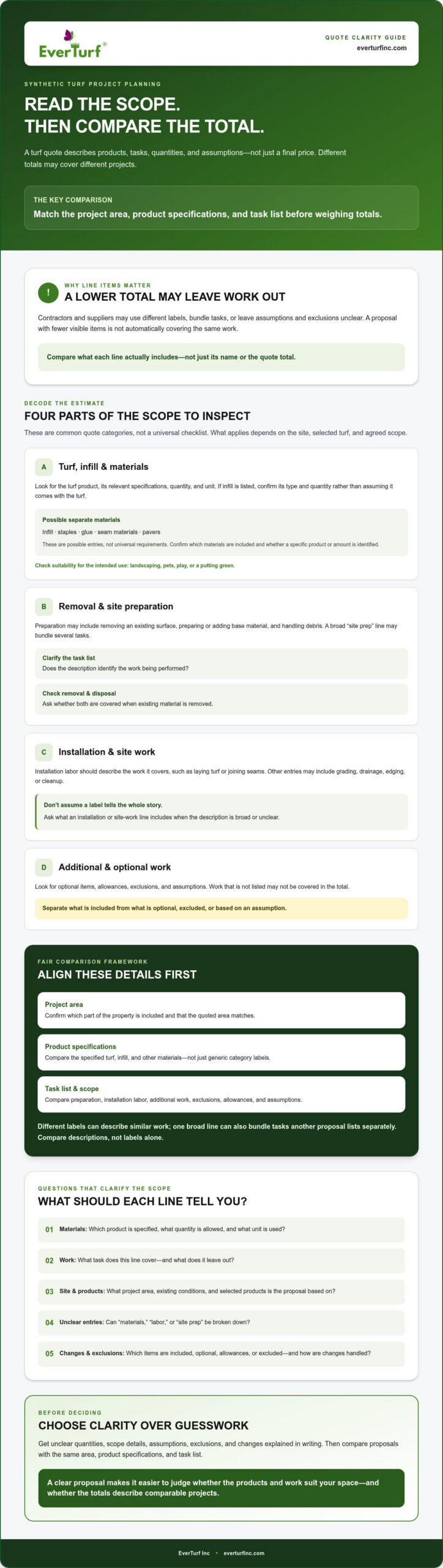
A synthetic turf quote is a proposed project scope: it describes the products, tasks, quantities, and assumptions behind a project, not simply its final total. Scope is what makes quotes comparable. Without matching inclusions and exclusions, the totals may describe different projects.
One proposal may cover turf products only, while another may also include site preparation, installation labor, or additional work. A materials proposal might list turf, infill, staples, glue, or pavers as separate entries. An installation estimate may group some products with labor or preparation. Neither format tells the full story until you know what each line includes. For background on the material and its uses, see Artificial turf.
How to read the structure of a turf estimate
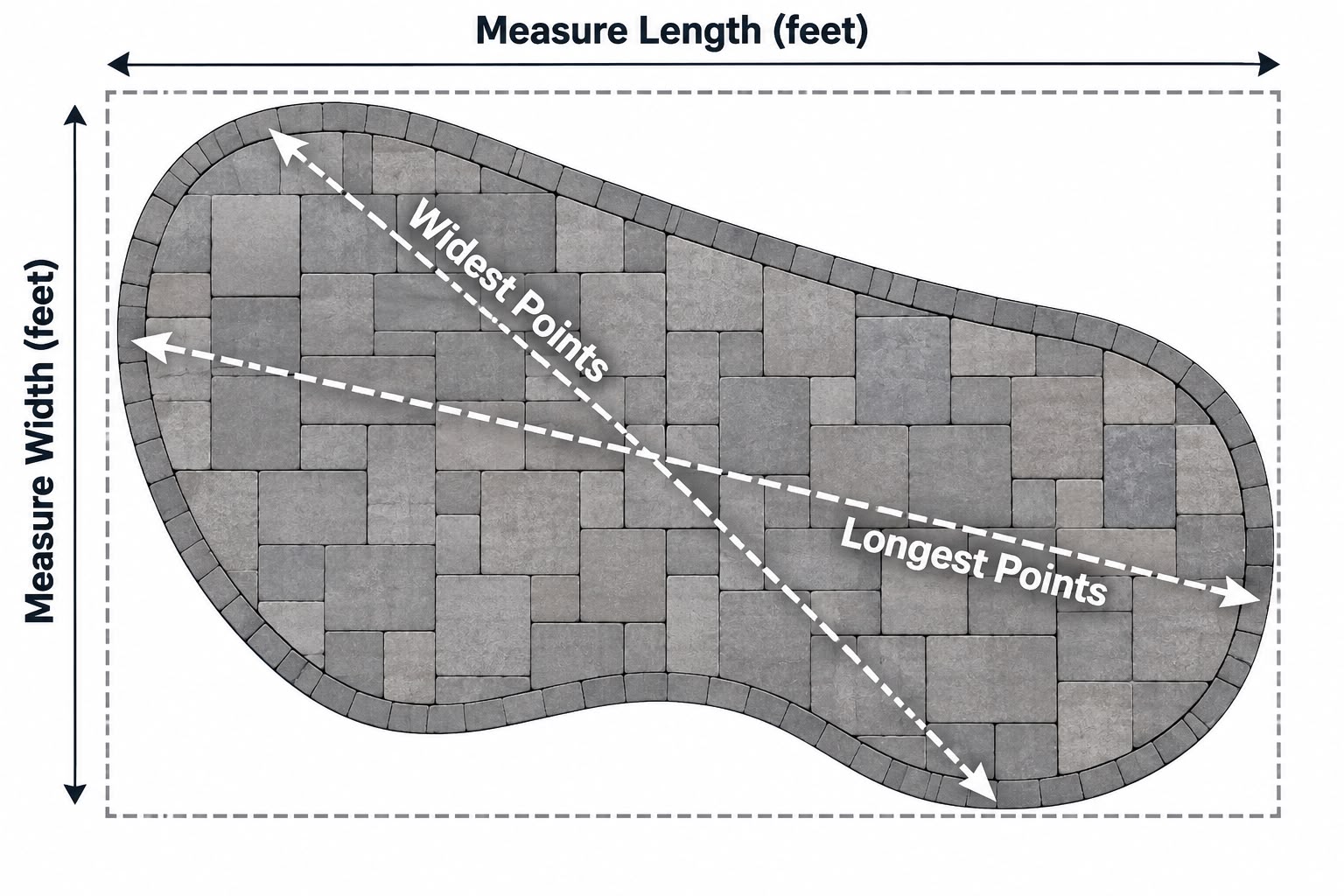
First, scan for sections that separate materials, site preparation, installation labor, and additional work. Then check each item’s description, quantity, and unit. A material listed by area should identify the product and the area that quantity refers to. A task should describe the work it covers. If an entry says only “materials,” “labor,” or “site prep,” ask for a breakdown.
Check the stated project area and the assumptions used to prepare the proposal. Does it identify which part of the property is included? Does it say what existing conditions or selected products the scope is based on? If the answers aren’t clear, ask for clarification before comparing totals. This is a practical first step in understanding line items on a synthetic turf quote.
Why two quotes may describe different scopes
Quotes may use different names for similar tasks or bundle related work under one heading. One proposal might list preparation as a single line, while another separates the tasks involved. Compare the descriptions, not just the labels, and ask what each entry includes.
Site conditions and product selections can also affect a proposal’s scope. Turf and accessories may appear as separate material entries, while site work may depend on the conditions stated in the quote. Look for exclusions, allowances, optional work, and assumptions that could affect what’s included. Work that isn’t listed may not be covered in the total.
That’s why the lowest figure isn’t automatically the fairest comparison. Before weighing totals, align the project area, product descriptions, and task list. If one proposal leaves work undefined or excludes an item another includes, ask for the scope to be clarified in writing. A clear proposal makes it easier to see whether you’re comparing like with like and whether the specified products and work suit your space.
Decode Common Synthetic Turf Quote Line Items
There’s no universal checklist of charges. The items in a proposal depend on the site, selected turf, and agreed scope. To make understanding line items on a synthetic turf quote easier, sort them into materials, preparation, installation work, and optional additions. Then check that each quantity and unit relates to the area being quoted.
A useful line-item description identifies the material supplied or work performed, with enough detail to understand its quantity and scope. If an entry just says “materials” or “labor,” ask what it covers and what it leaves out.
Turf, infill, and accessory materials
A turf entry should identify the product clearly enough to distinguish it from other options and state the quantity and unit. Ask for the relevant specifications and check that they suit the intended use, whether that’s landscaping, pets, play, or a putting green. If infill is listed, check its type and quantity rather than assuming it’s included with the turf.
Other materials may appear separately, depending on the design and installation plan. Staples, glue, seam materials, and pavers are possible entries, not universal requirements. Confirm which are included, how much is allowed for, and whether the proposal names a specific product. The Synthetic Turf Council’s Synthetic Turf Council installation guidelines can provide helpful background on installation methods and materials, but the quote should still explain its own scope.
Preparation, installation labor, and site work
Preparation entries may cover removing an existing surface, preparing or adding base material, and handling debris. Check whether the description identifies each task and whether both removal and disposal are covered. A broad “site prep” line may bundle several steps, so request a breakdown if you’re comparing it with a proposal that lists those tasks individually.
Installation labor should name the work it covers, such as laying turf or joining seams, rather than leaving the process under an unclear label. Edging, drainage work, and extra effort for difficult access may be included, excluded, or optional, depending on the site and proposal. Confirm their status instead of assuming they’re part of the total. Understanding line items on a synthetic turf quote means checking what each charge actually covers.
As you review material choices, you can also explore artificial turf and accessory options from EverTurf Inc. Keep product selection distinct from installation scope: the quote should make clear which materials are specified and which project tasks, if any, are included.
Compare Turf Quotes by Scope, Not Just by Total
A fair comparison starts with matching inputs. Put the proposals side by side and check that they describe the same project area, turf specifications, and tasks. A generic product label may hide differences, so compare the stated details rather than assuming two entries called “turf” refer to equivalent products.
Next, mark each item as clearly included, an allowance, optional, or excluded. An allowance may depend on an assumption or need clarification, so ask what it covers and how changes would be handled. Missing quantities or broad descriptions are reasons to ask questions, not automatic proof that a proposal is incomplete or poor quality.
Check quantities, specifications, and assumptions
Check how each proposal defines the area being measured and whether material quantities correspond to it. Compare the turf type and listed specifications, not just a broad label such as “landscape turf.” Then ask what project details the scope assumes, such as existing surface conditions or access, and what could change the stated work. Clear answers make it easier to compare proposals accurately.
Spot exclusions and possible scope gaps
Review whether removal, disposal, base preparation, drainage, edging, and cleanup are included, optional, or excluded. Check accessory materials and transitions too. A blank line doesn’t necessarily mean the work is omitted; it may be bundled elsewhere or not apply. Ask the provider to explain ambiguous allowances or conditions before drawing conclusions from the total.
Use a simple table to record what each proposal says. Add a row for each relevant material or task, and note unresolved questions rather than filling gaps with assumptions.
| Line item | Stated scope | Quantity | Clarification needed |
|---|---|---|---|
| Turf product | Product name or description and specifications | Area and unit shown in quote | Are the product details and measured area clear? |
| Base preparation | Tasks specifically listed | Quantity or area, if stated | What preparation is included or excluded? |
| Drainage or edging | Included, optional, excluded, or not stated | Quantity or unit, if applicable | Does the proposal assume this work is unnecessary? |
| Cleanup and disposal | Debris handling described in the proposal | Quantity, if stated | Is removal included as well as disposal? |
This organized review is the practical value of understanding line items on a synthetic turf quote: it helps you see which differences concern products, which concern work, and which need an answer. Compare totals after you’ve clarified the rows that matter to your project.
Questions to Ask Before Approving a Synthetic Turf Quote
A short review can turn an unclear estimate into a scope you can assess: confirm the project details, clarify each line, document changes, then compare the revised proposal with others. Asking for clarity is a normal part of reviewing a quote. Different project conditions can call for different work, so a variation isn’t automatically a warning sign.
Questions about materials and project scope
Start with the products and tasks the proposal names. Ask for written answers to questions such as:
- Which turf product and specifications are included, and what project area and quantity does the quote use?
- What does each material line cover? Are infill, staples, glue, pavers, or other accessories listed separately or included in a grouped item?
- Which preparation tasks are included, and does the scope cover removal, debris disposal, or base work if applicable?
- What installation labor and cleanup tasks are specifically covered?
- Are drainage, edging, or other site-specific tasks included, excluded, or dependent on conditions?
These questions connect each charge to your actual project rather than assuming every estimate should contain the same items. A roof or deck application, for example, may have a different scope from a yard or play area. Ask the provider to explain how the proposed work relates to your site and intended use.
Questions about changes and responsibility
Before agreeing, clarify how the provider will handle conditions that differ from the quote’s assumptions. Ask how a change will be explained, whether it could affect quantities or tasks, and how approval will be documented. A written record gives you a clear reference if the scope changes.
- If the proposal separates products from labor, who supplies each material?
- What assumptions could change the listed work or quantities?
- How will proposed changes be described and approved?
- If an answer changes what’s included, can the provider issue a revised written scope?
Keep the answers with the proposal. Then compare the clarified documents, not just the original totals. This is a practical step in understanding line items on a synthetic turf quote: you’ll know what each provider proposes and where differences remain.
Once you’ve clarified the scope, explore synthetic turf and accessory options from EverTurf to help identify products that suit your project. Keep product selection and installation responsibilities clearly distinguished in your proposal.
Choose a Turf Quote That Fits Your Project and Next Steps
The right proposal is the one that clearly meets your project requirements, not necessarily the one with the most line items or the lowest total. Match the specified product and scope to how you plan to use the space. A clear proposal helps you see whether the materials and tasks align with that purpose.
Use case determines which line items deserve attention
Focus on the details most relevant to the application. For a pet area, check whether the proposal identifies the turf and infill selections, whether infill is included, and what the listed materials cover. For a putting green or sports surface, confirm that the stated product specifications match the intended use instead of relying on a broad turf label.
Roof and deck projects may involve different materials and conditions than a ground-level area. Ask which products and tasks the proposal includes for that setting, and clarify any assumptions about the surface. The goal isn’t to expect identical line items across every project. It’s to understand how the listed scope supports your intended use.
From quote review to a confident product conversation
Before discussing product options, gather the project dimensions, intended use, and descriptions from the quote. This context makes it easier to identify which details are settled and which need clarification. If proposals specify different turf products or accessories, note those differences rather than treating them as interchangeable.
Use a straightforward decision rule: favor the clearest scope that covers the requirements you’ve identified. A longer list doesn’t automatically mean better coverage, and a lower total doesn’t tell you whether the listed products and tasks fit your project. Ask for missing details in writing, then assess the proposal based on what it specifies.
Understanding line items on a synthetic turf quote can also make your product conversation more focused. Explore EverTurf’s synthetic turf options and, where relevant, infill, staples, glue, or pavers as you consider the materials described in your proposal. Explore EverTurf synthetic turf options and use your project details to guide what you review.
Make Your Next Turf Decision With Clarity
A synthetic turf quote is more than a total. It describes products, quantities, tasks, assumptions, and exclusions. Understanding line items on a synthetic turf quote helps you compare proposals by matching their scope and specifications, then asking for written clarification wherever details are unclear.
Before you decide, confirm that the listed turf suits your intended use and that you understand which materials and tasks are included. The clearest choice isn’t automatically the longest quote or the lowest total. It’s the proposal that plainly addresses your project requirements.
Ready to explore product options? EverTurf supplies synthetic turf for residential, commercial, and athletic uses, along with infill and installation accessories such as staples, glue, and pavers. Review the options that may fit your project, then use your quote details to guide your next conversation.
Explore EverTurf synthetic turf options and take your next step with greater confidence.
Frequently Asked Questions
What should be included in a synthetic turf quote?
A synthetic turf quote should clearly describe the project area, specified turf, quantities, and any materials or work covered. For an installation estimate, look for descriptions of preparation, labor, and additional tasks that apply to the project. The proposal should also identify assumptions, optional items, and exclusions. There’s no universal list of required line items, so ask for clarification if you can’t tell what the quoted scope includes.
Is turf installation labor usually included in a synthetic turf quote?
Not always. A quote may cover turf products only, or it may include installation labor as part of a broader project scope. Check whether labor appears as a separate line, is grouped with other work, or isn’t included. Ask which tasks the labor covers and who supplies the materials. EverTurf supplies synthetic turf and related products, but product supply should not be mistaken for installation work.
What does site preparation mean on a turf quote?
Site preparation refers to work listed to ready the project area for the proposed turf. Depending on the site and scope, it may include removing an existing surface, preparing a base, or handling debris. The phrase alone doesn’t explain which tasks are covered. Ask for a written description of the preparation work, any assumptions about current site conditions, and whether disposal or other related tasks are included.
Why is infill listed separately on a synthetic turf quote?
Infill is a distinct material, so a proposal may identify it separately from the turf. This can make the selected infill type and stated quantity easier to review, especially when comparing product scopes. But infill may be grouped with other materials or treated differently across proposals, so don’t assume it’s included or required. Check whether it applies to your project, what the line describes, and how much is specified.
Can I compare synthetic turf quotes by total alone?
No. Understanding line items on a synthetic turf quote means comparing the scope behind each total: the project area, turf specifications, listed materials, tasks, allowances, and exclusions. A lower total may reflect a different scope, but it isn’t proof that work has been omitted. Ask providers to clarify unclear descriptions and assumptions, then compare the proposals once you can see what each one covers.
What questions should I ask about exclusions on a turf quote?
Ask which materials or tasks are excluded, whether any work depends on site conditions, and who is responsible for arranging excluded items. For example, clarify the status of removal, disposal, preparation, drainage, edging, and cleanup if they’re relevant to your project. Ask whether listed allowances or optional work could change the scope. Request written clarification, and ask for a revised proposal if the answers materially change what’s covered.
What does a quantity or measurement line mean on a turf estimate?
A quantity line states how much material or work the proposal covers, often with a unit such as area, length, or count. Check that the unit is clear and that the quantity relates to the project area described in the quote. If the measured area or amount doesn’t make sense, ask how it was determined and whether it includes every part of the space you expect the proposal to cover.