
How to Clean Stains Off Synthetic Turf: The Definitive Homeowner’s Protocol
What if the secret to an everlasting lawn isn’t avoiding life’s little messes, but mastering the surgical precision required to erase them? You’ve invested in a premium outdoor space to reclaim your personal time and enjoy a beautiful environment; it’s natural to feel a surge of anxiety when a spill or pet accident threatens that perfection. Many homeowners feel frustrated by generic advice that doesn’t account for the technical complexity of modern drainage and infill systems. This definitive protocol explains exactly how to clean stains off synthetic turf without compromising the integrity of your EverTurf Artificial grass.
We believe your outdoor sanctuary should remain a source of tranquility, not a list of chores. You’ll learn how to neutralize stubborn substances and eliminate pet odors using professional techniques that protect your investment for the long term. This guide provides a clear, repeatable routine to restore your lawn’s pristine aesthetic, covering everything from emergency spot cleaning to the essential maintenance that keeps your property looking its best in any season. By the end of this article, you’ll have the confidence to maintain a spotless, odor-free landscape that looks as vibrant as the day it was installed.
Key Takeaways
- Discover why the non-porous nature of high-quality polyethylene fibers ensures that most spills remain surface-level for effortless removal.
- Master the essential two-step universal protocol on how to clean stains off synthetic turf to protect your lawn’s drainage and aesthetic integrity.
- Learn professional-grade techniques for neutralizing diverse contaminants, from common food spills to difficult substances like chewing gum and tree sap.
- Implement a proactive maintenance routine of regular cross-brushing and debris removal to prevent mold growth and preserve the lush, everlasting look of your landscape.
- Understand how the advanced engineering of EverTurf systems facilitates superior flushing of liquids to maintain a hygienic, odor-free outdoor environment.
Understanding Synthetic Turf Stains: Why Resilience is Built-In
Modern Artificial turf is an engineering marvel designed to withstand the rigors of active family life. Unlike natural grass, which absorbs liquids into its cellular structure, high-end products like EverTurf Artificial grass are crafted from non-porous polymers like polyethylene or polypropylene. This material choice is intentional. It ensures that when a spill occurs, the substance remains on the surface of the fiber rather than penetrating the core. Understanding how to clean stains off synthetic turf begins with this fundamental shift in perspective; you aren’t removing a deep-set blemish, you’re simply clearing a surface adherence.
The resilience of your lawn is further supported by sophisticated drainage systems. These integrated backings allow liquids to pass through the turf and into the sub-base, preventing the stagnant pooling that often leads to mold or persistent odors. Our EverTurf philosophy centers on this marriage of material science and luxury. We provide a permanent solution that replaces the constant toil of traditional lawn care with a stress-free, year-round aesthetic.
A Severity Scale for Turf Contaminants
To manage your property effectively, it helps to categorize spills on a severity scale. This prevents the frustration of using the wrong cleaning method for a specific mess. Identifying the “why” behind the stain is the first step to a perfect result, and mastering how to clean stains off synthetic turf requires knowing which level of intervention is necessary.
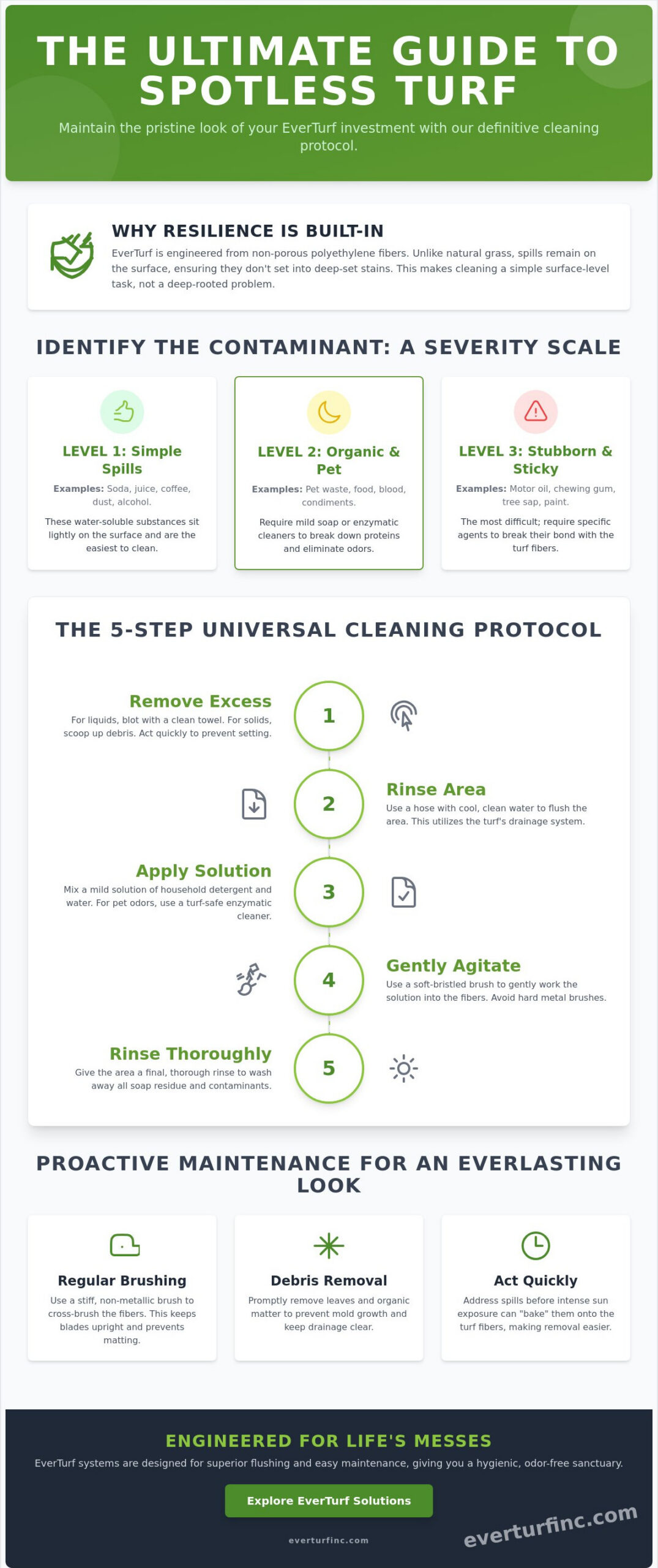
- Level 1: Water-Soluble. These include dust, soda, or juice. They sit lightly on the surface.
- Level 2: Organic and Protein-Based. This includes pet waste or food spills. They require enzymatic action or mild soap.
- Level 3: Oil and Adhesives. These are the most stubborn, requiring specific agents to break their bond with the fiber.
Water-Based vs. Oil-Based Spills
Not all messes are created equal. Water-based spills, such as soda or wine, are generally easy to manage because they don’t bond strongly with the synthetic fibers. Dilution with water is often enough to flush these away. Oil-based substances, like motor oil or certain condiments, present a different challenge. These require a mild degreaser to break the surface tension and lift the residue. Acting quickly prevents these substances from caking onto the EverTurf Infill, which could complicate the cleaning process later.
The Role of UV Exposure in Stain Setting
The sun plays a significant role in how a spill behaves on your lawn. Intense UV exposure and heat can act as a catalyst, essentially “baking” organic matter or sticky residues onto the blades. This bonding makes the cleaning process more labor-intensive if left unattended. Rinsing spills before the sun has a chance to set the residue ensures a much smoother restoration process. Fortunately, premium turf is engineered with advanced UV stabilizers that resist color fading. This allows you to use effective cleaning solutions without fearing for your lawn’s vibrant hue or the longevity of your investment.
The Universal Protocol for Cleaning Synthetic Turf Stains
Restoring your lawn to its original luster doesn’t require complex machinery or harsh chemicals. It requires a disciplined, surgical approach that respects the engineering of the fibers. While the resilience of the material is remarkable, the speed of your response determines the ease of restoration. Mastering how to clean stains off synthetic turf involves a repeatable, five-step sequence designed to lift contaminants without disturbing the infill or drainage layers.
The moment a spill occurs, your first action should be to blot the area immediately. Use a clean, white towel to soak up excess liquid; the white fabric allows you to see exactly how much of the substance is being transferred off the lawn. Once you’ve removed the bulk of the spill, rinse the area with cool, clean water. This step utilizes the integrated drainage holes to flush the remaining substance into the sub-base. Aligning your home care with professional maintenance guidelines ensures that you’re treating your property with the same rigor as a high-performance athletic facility.
For organic or water-based residue, apply a mild, pH-neutral detergent solution. Gently agitate the fibers with a synthetic-bristle brush to break up any stubborn particles. This motion should be firm but careful to avoid pulling at the backing. Conclude with a final, thorough rinse. This step is vital to ensure no soapy film remains on the blades, which could otherwise attract dust and dull the everlasting aesthetic of your EverTurf Artificial turf. If you are still in the planning phase of your landscape transformation, searching for artificial turf installation near me is the first step toward a worry-free outdoor lifestyle.
Choosing the Right Cleaning Tools
The tools you select are just as important as the solutions you apply. Never use wire brushes or metal rakes; these can fray the polyethylene blades and cause permanent damage to the texture. For large-scale maintenance, a specialized power brush can revitalize the upright position of the fibers while clearing debris. For the refined, high-density surface of an EverTurf Putting Green Pro, opt for microfiber cloths for delicate spot-cleaning to maintain a perfect ball roll.
Safe Cleaning Solutions for Your Home
You don’t need a cabinet full of specialized products to maintain a pristine environment. A simple mixture of equal parts white vinegar and water acts as a natural, non-toxic disinfectant that is safe for both children and pets. Avoid bleach or caustic cleaners at all costs. These aggressive chemicals can degrade the turf backing and void your long-term satisfaction. For biological messes, look for “turf-safe” commercial enzyme cleaners that specifically target odors without leaving a chemical residue behind.
Tackling Specific Culprits: From Wine Spills to Pet Waste
While the universal protocol handles daily dust and light spills, certain substances require a more surgical touch. Whether it’s a glass of red wine during a twilight gathering or a sticky mess from a nearby tree, knowing how to clean stains off synthetic turf with specificity is what separates a standard lawn from a pristine sanctuary. For food and beverage spills like coffee or sauces, immediate dilution is your most effective tool. Flushing the area with water before the pigments can settle ensures the non-porous blades of your EverTurf Artificial grass remain vibrant and untarnished.
Sticky situations like chewing gum or tree sap can feel like a disaster, but they’re manageable with a simple temperature trick. Apply ice directly to the substance until it becomes brittle. Once frozen, you can gently scrape it away with a plastic putty knife. This method avoids the need for harsh solvents that might damage the fiber’s texture. By following established synthetic turf maintenance protocols, you protect the long-term integrity of your property while maintaining its aesthetic perfection.
The Pet Owner’s Sanitization Strategy
Maintaining a hygienic environment for four-legged family members is a top priority for modern homeowners. Solid waste should be removed promptly to prevent residue from drying on the fibers. However, urine requires a deeper level of care because it can leave behind uric acid crystals. For a deep dive into creating a healthy environment, consult the complete guide to artificial grass for dogs. Specialized enzyme cleaners are essential; they break down these crystals at a molecular level. Regular flushing of pet areas prevents ammonia buildup, ensuring your lawn stays fresh and odor-free for every family member.
Oil, Grease, and Industrial Stains
Occasionally, your lawn might face “heavy” stains like grease from a barbecue or paint from a home project. These require careful handling to avoid melting or degrading the synthetic material. It’s about balance. You can use mineral spirits sparingly on a clean cloth to dab at grease spots. It’s vital to rinse the area thoroughly afterward to prevent any chemical residue from affecting the drainage layer or the EverTurf Infill. If you encounter a severe chemical spill, reaching out to an expert in artificial turf installation is the safest way to ensure a restorative result. Taking these precise steps preserves the tranquility of your outdoor space and protects your premium investment from permanent damage.
Beyond the Spot Clean: Proactive Maintenance for an Everlasting Result
Mastering how to clean stains off synthetic turf is a vital skill, but the true secret to a pristine landscape lies in proactive care. Transitioning from reactive spot cleaning to a consistent maintenance routine ensures your lawn remains a tranquil sanctuary rather than a source of stress. Regular cross-brushing is the foundation of this effort. By using a synthetic-bristle brush against the grain of the fibers, you prevent matting and keep the blades upright. This simple action keeps debris trapped on the surface where it can be easily removed, preventing it from migrating deep into the system where it might cause friction or drainage issues.
Organic matter is the primary enemy of a spotless aesthetic. Leaves, twigs, and grass clippings left to rot on the surface can lead to mold growth and stubborn tannin stains. While your backyard turf is engineered for durability, allowing nature to take its course can complicate your cleaning routine. We recommend an annual deep-clean for high-traffic areas to flush the entire system and reset the vibrant look of your property. This level of care restores the “everlasting” quality that makes synthetic grass such a sophisticated lifestyle choice.
Replenishing and Cleaning Your Turf Infill
Many homeowners overlook the critical role of the infill layer. High-quality turf infill acts as a sophisticated filter for spills, keeping contaminants away from the primary backing. If you notice water pooling or a slight dip in the lawn’s resilience, it’s a sign that your infill needs to be topped up or professionally cleaned. Maintaining the correct infill depth is directly related to the ease of surface cleaning; the better the infill supports the fibers, the easier it is to understand how to clean stains off synthetic turf without damaging the underlying structure.
Seasonal Maintenance Checklist
Your lawn’s needs shift with the rhythm of the seasons. A structured approach ensures you spend less time working and more time enjoying your environment.
- Spring: Clear winter debris and check for drainage clogs. Ensure the spring rains can flow freely through the base.
- Summer: Rinse the lawn occasionally with cool water. This reduces surface temperatures and prevents dust accumulation during dry spells.
- Fall: Practice aggressive leaf removal. Wet leaves left to sit can bleed tannins, creating dark spots that require extra effort to remove.
Investing in the right foundation is the best way to minimize future labor. If you’re ready to transform your property into a low-maintenance masterpiece, explore our options for artificial turf installation to begin your journey toward a stress-free outdoor lifestyle.
The EverTurf Advantage: Engineered for Life’s Messes
Elevate your expectations of what a landscape can provide. While the protocols shared in this guide offer a masterclass in maintenance, the ease of your experience is ultimately dictated by the quality of the system beneath your feet. EverTurf Artificial grass isn’t just a surface; it’s a high-performance environment engineered with superior fiber resilience and advanced stain-resistant coatings. These technical specifications ensure that the vibrant, lush aesthetic you fell in love with remains intact, even when life’s inevitable spills occur. When you understand how to clean stains off synthetic turf, you realize that a premium product makes the process almost effortless.
The true brilliance of our system lies in its integrated drainage technology. While standard products might allow liquids to linger, our backing is designed to flush away spills and pet waste with remarkable efficiency. This rapid transit of moisture prevents the stagnation that leads to microbial growth and persistent odors. By choosing a professional-grade system, you significantly reduce long-term maintenance time and eliminate the anxiety associated with accidental damage. We invite you to explore our curated range of installation accessories, each designed to bolster the durability and cleanliness of your outdoor sanctuary.
Why Quality Installation Matters for Cleanliness
A pristine lawn starts long before the first blade is brushed. The integrity of the base layer is the most critical factor in how well your turf flushes away potential stains. Without a professionally prepared foundation, even the best cleaning techniques can be hampered by poor drainage. Our team utilizes specialized EverTurf Staples and Glue to create a seamless, stable surface that resists shifting and facilitates easy cleaning. To better understand the investment required for a high-performance setup, you can review our guide on artificial turf installation cost.
Restoring Your Time with EverTurf
Our mission is to move you away from the frustrations of traditional lawn care and toward the tranquility of a perfect, year-round outdoor space. Imagine replacing hours of weekend mowing, weeding, and fertilizing with a simple 15-minute rinse. This shift in lifestyle is the ultimate reward for choosing a sophisticated, permanent solution. You’ve mastered the art of how to clean stains off synthetic turf; now it’s time to enjoy the peace of mind that comes with a lawn designed to handle life’s messes without losing its luster. Whether you’re envisioning a new play area or a professional-grade putting green, we’re here to help you transform your property. Contact EverTurf Inc for a consultation on your next synthetic turf project.
Secure Your Everlasting Landscape
You’ve now mastered the definitive protocol for maintaining a flawless outdoor environment. By understanding the non-porous nature of your lawn and acting with precision, you protect both the aesthetic and the structural integrity of your property. A consistent routine of cross-brushing and seasonal rinsing prevents minor spills from becoming permanent frustrations. Mastering how to clean stains off synthetic turf ensures your lawn remains a source of relief rather than a list of chores, allowing you to reclaim your personal time for what truly matters.
For those seeking the ultimate in stress-free living, the foundation of your landscape makes all the difference. Our systems feature high-performance polyethylene fibers and advanced rapid-flow drainage technology that work together to flush away contaminants effortlessly. With specialized antimicrobial infill options, your sanctuary stays fresh and inviting for the long term. Upgrade to an EverTurf system designed for easy maintenance and lasting beauty. Your journey toward a more beautiful and worry-free version of your home starts today. Enjoy the tranquility of a perfect lawn that stands the test of time.
Frequently Asked Questions
Can I use a pressure washer to clean stains off my synthetic turf?
You can use a pressure washer, provided you maintain a safe distance of at least 12 inches from the turf surface. Use a wide-angle spray tip to prevent the concentrated force from dislodging the infill or fraying the polyethylene blades. This tool is highly effective for refreshing large areas, but excessive pressure on a single spot can compromise the backing or the drainage system’s integrity.
Will dog urine permanently stain or discolor artificial grass?
High-quality synthetic fibers won’t permanently stain or discolor from pet urine because they are non-porous. The liquid passes through the drainage system rather than soaking into the material. However, uric acid crystals can linger in the infill and cause odors if you don’t flush them properly. Learning how to clean stains off synthetic turf caused by biological waste ensures your lawn remains fresh and hygienic for your family.
How do I remove chewing gum or sticky sap from turf fibers?
Freeze the substance with ice cubes or an aerosol freezing spray to make it brittle. Once the gum or sap is hardened, gently scrape it away with a plastic putty knife or a dull spoon. This method prevents the sticky residue from spreading or bonding further with the synthetic blades. It allows for a clean removal without damaging the turf’s texture or pulling the fibers from the backing.
Is it safe to use bleach on artificial turf for deep sanitization?
Bleach isn’t recommended for your synthetic lawn as it can degrade the backing material and potentially damage the fiber coatings over time. Instead, opt for a mixture of white vinegar and water or a specialized, pH-neutral enzymatic cleaner. These alternatives provide effective sanitization and odor removal without the risk of chemical breakdown or compromising your product’s long-term satisfaction.
What should I do if my turf develops a localized mold or mildew spot?
Treat localized mold or mildew with a solution of one part white vinegar to one part water. Spray the affected area thoroughly and let it sit for several minutes before rinsing with clean water. This issue usually points to a drainage blockage or trapped organic debris. Ensure the underlying system is clear to prevent the spot from returning and to maintain a healthy outdoor environment.
Can I use a vacuum cleaner to pick up dry debris on my synthetic lawn?
Standard household vacuums aren’t suitable for synthetic turf because they can suck up the essential infill layer along with the debris. Use a leaf blower, a plastic rake, or a specialized turf sweeper designed for outdoor use. These tools effectively clear leaves and dust while leaving the stabilizing infill and drainage systems undisturbed, protecting the lawn’s upright aesthetic.
Will spilled gasoline or motor oil melt the artificial grass blades?
Spilled gasoline or motor oil won’t typically melt the blades instantly, but these petroleum-based substances can degrade the polymer and backing if left to sit. Blot the spill immediately with a clean cloth and use a mild degreaser or mineral spirits sparingly to lift the residue. Prompt action prevents the chemical from compromising the durability of your premium investment and ensures a restorative result.
How often should I rinse my turf if I have multiple large dogs?
Rinse the designated pet areas at least once a week to prevent ammonia buildup and maintain a pristine environment. If you have multiple large dogs, a bi-weekly deep rinse with an enzymatic cleaner is the most effective way to manage heavy usage. This routine is a key part of how to clean stains off synthetic turf and ensures your outdoor space remains a stress-free sanctuary for every family member.