
Fixing Matted Down Artificial Grass: A Professional Restoration Guide
That flattened, lifeless look on your lawn isn’t a sign of permanent failure; it’s simply a case of “pile memory” that needs a professional reset. It’s frustrating to watch your premium investment lose its lush texture under the weight of summer foot traffic, but fixing matted down artificial grass is a science, not a mystery. You likely worry that once those fibers lay flat, the vibrant, “just-installed” beauty you fell in love with is gone for good. We understand that your outdoor space is a sanctuary, and seeing it lose its luster can feel like a loss of the tranquility you worked so hard to create.
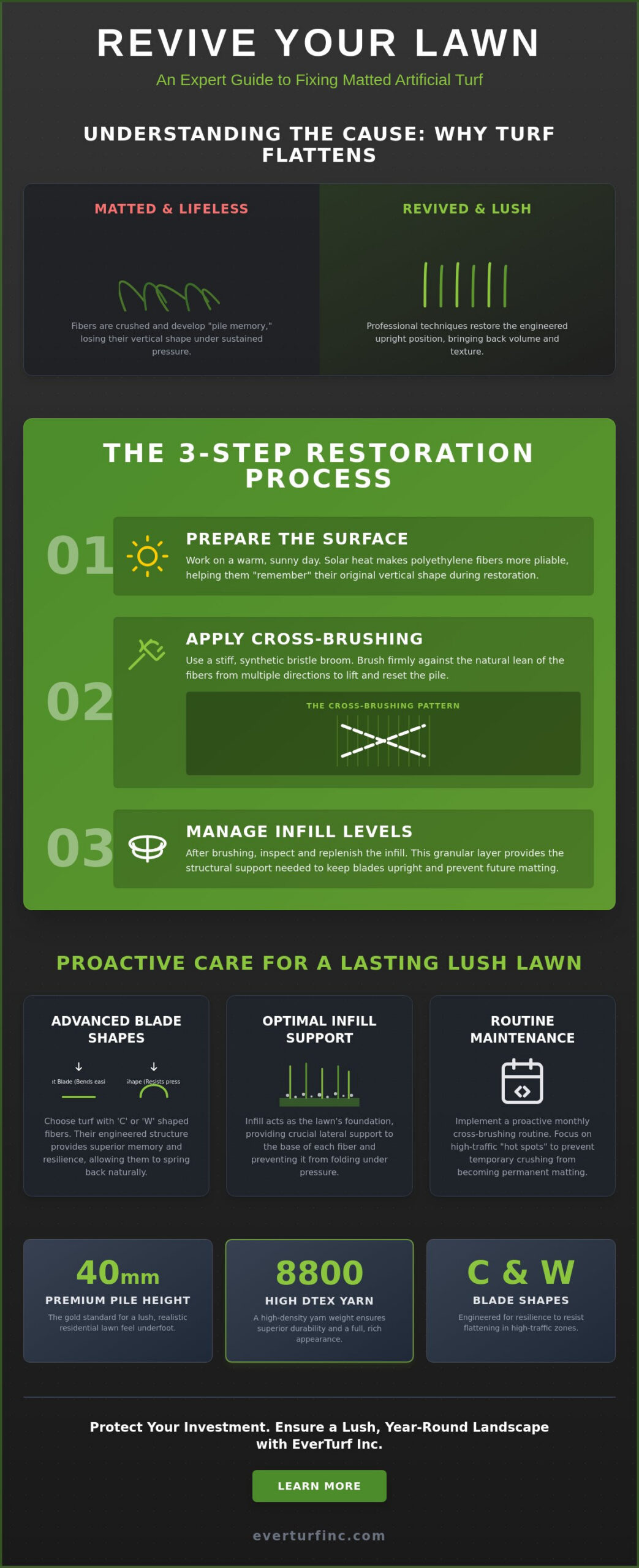
In this guide, you’ll learn the expert techniques to revive flattened fibers and restore that signature upright appearance. We’ll explore how high-density 8800 dtex yarn and a premium 40mm pile height respond to professional-grade cross-brushing. You’ll also discover how proper EverTurf Infill management can extend the lifespan of your turf, moving you away from maintenance frustrations and back toward the stress-free lifestyle you deserve. It’s time to restore the lush, year-round perfection of your EverTurf landscape with a sustainable maintenance routine that protects your investment for the long term.
Key Takeaways
- Understand the science of pile memory and how synthetic fibers are engineered to return to their manufactured, upright shape.
- Master the professional “cross-brushing” technique for fixing matted down artificial grass to effectively reset the pile and restore lost volume.
- Explore how EverTurf Infill acts as the structural foundation of your lawn, providing the lateral support necessary to prevent fibers from folding.
- Shift your focus toward proactive monthly maintenance strategies that safeguard your investment and ensure an everlasting, lush aesthetic.
- Learn how advanced blade shapes and high-performance materials can naturally resist flattening, even in the busiest areas of your yard.
Why Artificial Grass Mats Down: Understanding Pile Memory
Imagine the serene beauty of a perfectly manicured lawn that never requires a mower. To maintain this aesthetic over the long term, you must understand the architecture of your turf. Pile height refers to the length of the synthetic blades from the backing to the tip. A premium 40mm pile height is the current gold standard for residential luxury, providing a soft, realistic feel underfoot that mimics a well-tended natural lawn. However, the true secret to a lawn’s longevity lies in pile memory. This is the engineered ability of the fibers to spring back to their upright position after being compressed. When homeowners begin the process of learning what is artificial turf and how it functions, they often focus on color, but the physics of fiber resiliency is what truly preserves the landscape’s value.
Distinguishing between temporary crushing and permanent matting is vital for any homeowner. Crushing occurs when fibers are pressed down by heavy objects or concentrated foot traffic; it’s a surface-level issue that is usually reversible. Matting, however, is a deeper structural concern. It happens when fibers are neglected for so long that they develop a permanent crease at the base. While fixing matted down artificial grass is possible through professional restoration, catching the early signs of crushing prevents the need for more intensive repairs. Heavy furniture and high-traffic pathways are the primary culprits, but a lack of EverTurf Infill often accelerates this decline by leaving the base of the blades unsupported and vulnerable to folding.
The Role of Fiber Quality in Resiliency
The shape of the blade dictates how well it stands up to daily pressure. Advanced C-shape or W-shape fibers are specifically engineered to disperse weight more effectively than traditional flat blades. High-performance polyethylene is the preferred material for these structures because it offers superior flexibility without becoming brittle over time. Additionally, UV stabilization ensures that the sun’s rays don’t degrade the molecular structure of the plastic. This protection keeps the fibers supple, allowing them to maintain their pile memory for years rather than months, even in the harshest climates.
Identifying ‘Hot Spots’ in Your Landscape
Certain areas of your property naturally endure more stress than others. Walkways, pet runs, and the spaces beneath heavy patio chairs are classic “hot spots” where fibers are most likely to flatten. Keep a close eye on these zones for early signs of leaning or a loss of luster. When fibers lay flat, they don’t just lose their aesthetic appeal; they also trap more heat and can impede the vertical drainage system of your lawn. Recognizing these patterns early allows you to implement a proactive maintenance routine, ensuring your outdoor sanctuary remains both beautiful and functional for the lifetime of the product.
Restoring Your Lawn: A Step-by-Step Guide to Fixing Matted Turf
Resetting your lawn’s appearance is a rewarding process that restores the tranquility of your outdoor space. Most homeowners fear that flattened fibers are ruined, but with the right approach, fixing matted down artificial grass is a straightforward restoration. You don’t need to replace entire sections of your landscape to regain that lush, upright look. By utilizing the professional standard of cross-brushing, you can lift compressed blades and breathe new life into your yard. This process not only improves the aesthetic but also ensures the longevity of your investment by preventing permanent creasing at the base of the fibers.
Timing plays a critical role in the success of your restoration efforts. Plan your maintenance for a warm, sunny day. Synthetic fibers, typically made from high-quality polyethylene, become significantly more pliable when they absorb natural solar heat. This warmth makes the blades easier to manipulate and helps them “remember” their original vertical shape. For larger properties or areas with severe compaction, you might consider using a motorized power broom. These professional tools use rotating synthetic bristles to lift the pile and redistribute infill more efficiently than manual brushing alone. Maintaining a pristine lawn requires a commitment to regular synthetic turf upkeep, particularly in high-traffic zones where fibers endure the most stress.
The Cross-Brushing Technique
Cross-brushing is the most effective manual method for fixing matted down artificial grass. Follow these steps to ensure a professional result:
- Step 1: Clear the surface of all organic debris, such as leaves or twigs, using a leaf blower. This prevents small particles from being ground into the backing during the brushing process.
- Step 2: Select a specialized synthetic turf rake or a stiff-bristled push broom. It is vital to avoid metal bristles, as these can snag the turf fibers or damage the protective UV coating on the blades.
- Step 3: Identify the “grain” of the grass—the direction the blades are currently leaning. Brush firmly against this grain to pull the fibers into an upright position. Work in small, manageable sections to ensure every blade is lifted.
Using Heat and Moisture for Stubborn Areas
When dealing with stubborn areas, such as those under heavy patio furniture, the sun acts as your best ally. If the fibers remain resistant, a light irrigation of the lawn can help. A quick spray with a garden hose cleans the dust off the fibers, reducing friction and allowing the brush to glide more effectively. However, you must exercise caution with artificial heat. Never use high-heat tools, steam cleaners, or blow dryers on your lawn. Excessive heat can permanently melt the polyethylene fibers or damage the backing, leading to costly repairs. If you find your current lawn struggles to bounce back even after these steps, upgrading to a resilient EverTurf Artificial grass product can provide the superior pile memory needed for a worry-free outdoor lifestyle.
The Science of Support: How Infill Prevents Future Matting
While brushing provides an immediate aesthetic lift, the long-term secret to a resilient lawn lies beneath the surface. Infill serves as the functional “soil” of your synthetic system, providing the essential lateral support that keeps every blade standing tall. Without this foundational layer, synthetic fibers lack the structural reinforcement needed to resist the downward pressure of footsteps and furniture. This lack of support is the primary reason homeowners find themselves repeatedly fixing matted down artificial grass; without infill, the blades inevitably fold at the base, leading to permanent creasing and a loss of that lush, vibrant texture.
Properly distributed infill ensures that weight is evenly dispersed across the entire turf system. When infill levels drop or become uneven, you may notice “potholes” in your lawn’s texture where the blades appear flatter than the surrounding areas. Maintaining a consistent depth is the most effective way to preserve the “just-installed” look you love. For a deeper dive into how this component transforms your landscape, explore the essential guide to turf infill, which explains why this often-overlooked material is the backbone of any high-performance yard. It’s the difference between a lawn that looks good today and one that remains everlasting.
Choosing the Right Infill for Your Needs
Selecting a high-quality material like EverTurf Infill makes a significant difference in the longevity of your property. Unlike standard silica sand, which can be abrasive and trap heat, specialized granules are designed to provide superior cushioning and cooling properties. For families with active companions, antimicrobial infill options are indispensable. These specialized products prevent odor buildup in pet-heavy areas, ensuring your sanctuary remains fresh and inviting. The weight of the infill also plays a vital role; it acts as a ballast, securing the turf to the ground and preventing the ripples or shifts that can lead to premature matting.
Replenishing Infill: A Critical Maintenance Task
Protecting your investment requires a proactive approach to infill levels. You can spot low infill by looking for visible backing material or noticing that the lawn feels unusually hot under the sun. If you find yourself fixing matted down artificial grass more frequently in specific zones, it’s a clear signal that the support system has been depleted. Topping up is simple: lightly spread new material and brush it into the fibers until the blades are supported but not buried. Most homeowners find that a quick check every six to twelve months is enough to maintain the tranquility and beauty of their EverTurf landscape without adding stress to their daily routine.
Strategic Maintenance for High-Traffic Zones
Transform your perspective on lawn care by shifting from reactive repairs to proactive stewardship. While fixing matted down artificial grass is a reliable solution for existing issues, preventing the problem altogether is the hallmark of a savvy homeowner. By identifying high-impact zones early, you can implement subtle adjustments that preserve the lush, upright aesthetic of your landscape indefinitely. This strategy ensures your outdoor sanctuary remains a place of rest rather than a source of maintenance anxiety, giving you back the personal time you deserve.
Strategic weight distribution is one of the simplest ways to protect your investment. Consider rotating your patio furniture seasonally or utilizing wide-base protectors under heavy planters. These small shifts prevent the concentrated pressure that causes fibers to crease at the base over long periods. To master the full scope of property care and enjoy a truly worry-free yard, consult our backyard turf maintenance guide. Implementing these professional habits early on will keep your lawn looking “just-installed” for years to come.
The Monthly Maintenance Checklist
A dedicated monthly “health check” takes less than fifteen minutes but adds years to your turf’s lifespan. Focus your attention on the primary walking paths and areas where children or pets play most frequently. A quick routine includes:
- Visual Inspection: Look for early signs of leaning fibers or uneven EverTurf Infill distribution.
- Hygiene Check: Spot-clean any areas affected by pet waste to maintain fiber flexibility and prevent organic buildup.
- Targeted Brushing: Perform a brisk 10-minute cross-brush of high-traffic zones to lift the pile before it has a chance to mat.
Managing Pet Areas and Play Zones
Pet turf and play areas endure the most concentrated activity on any property. Constant running and pivoting can cause fibers to lean more quickly than in ornamental sections of the yard. Regular rinsing is essential in these zones; it removes fine dust and salts that can “glue” fibers together, making them more susceptible to matting. For those managing a busy household with furry family members, our artificial grass for dogs resource provides specialized insights into keeping pet-heavy zones pristine and odor-free. By treating these areas with specific care, you ensure the entire landscape remains a harmonious, everlasting environment.
If your current lawn has reached a point where manual restoration no longer yields the results you desire, it may be time to consider a professional upgrade. Our team specializes in high-durability artificial turf installation designed to withstand the most active lifestyles while maintaining a sophisticated, natural appearance.
Long-Term Solutions: Choosing High-Performance Synthetic Grass
While fixing matted down artificial grass is a successful strategy for most, there comes a point where the material itself can no longer recover its original posture. Not all synthetic products are engineered with the same level of resiliency. If you find that your lawn requires constant intervention to remain upright, you might be dealing with a product that lacks the internal structural integrity required for your lifestyle. Upgrading to a high-performance system is often the most sustainable path to reclaiming your personal time and ensuring your property remains a source of tranquility rather than a maintenance burden.
Professional installation serves as the foundation for any low-maintenance landscape. A masterfully installed yard accounts for soil compaction, base stability, and precise tensioning, all of which work together to prevent the premature sagging of fibers. When you choose a premium solution, you’re investing in advanced engineering that works silently in the background. EverTurf’s specialized blade shapes are designed to resist matting automatically by utilizing geometric reinforcements that provide a natural spring-back effect. This technical edge allows your lawn to withstand the rigors of daily life while maintaining its sophisticated, lush appearance without constant manual labor.
When Restoration Isn’t Enough
Sometimes, the fibers themselves reach a state of “fiber fatigue.” This occurs when the molecular structure of the polyethylene has been compromised by extreme heat or low-quality manufacturing, causing the blades to lose their internal memory. Additionally, poor-quality latex backing can become brittle or lose its grip on the yarn, leading to a total collapse of the turf system. If your fibers feel limp even after a professional brushing, it’s a clear sign that the structural limits of the material have been reached. Conducting a cost-benefit analysis often reveals that a one-time upgrade to an EverTurf system is more economical than the ongoing expense and effort of reviving a failing, low-grade lawn.
The EverTurf Advantage
For those seeking the pinnacle of durability, the EverTurf Putting Green Pro offers an ultra-dense surface that is virtually immune to traditional matting. This level of performance is achieved through specialized drainage systems and high-density backings that keep every fiber perfectly aligned. Because we understand that environmental factors vary, our national distribution network ensures you receive a product specifically suited to your local climate. Whether you’re managing a high-traffic pet area or a serene backyard retreat, our technology provides a permanent solution to the frustrations of traditional turf ownership. We invite you to explore the EverTurf product line to discover how a professional-grade upgrade can transform your landscape into an everlasting, worry-free sanctuary.
Preserving Your Everlasting Outdoor Sanctuary
Your lawn is more than just a surface; it’s the backdrop to your life’s most tranquil moments. By mastering the art of cross-brushing and prioritizing the structural integrity of your turf system, you ensure that your property remains a sophisticated haven for years to come. Fixing matted down artificial grass is often a simple matter of restoring “pile memory” through proper technique and high-quality support materials. Expert-grade EverTurf Infill provides the essential lateral foundation that keeps fibers upright, while our durable, high-memory fiber technology naturally resists the pressure of daily activity.
Whether you need professional installation accessories or a complete system upgrade, our national supply network is ready to support your vision of a perfect yard. Restore your landscape with EverTurf’s high-performance solutions. Embrace the relief of a low-maintenance lifestyle and spend your time enjoying the beauty of a perfectly resilient environment. You deserve a stress-free version of your property that stays lush and inviting regardless of the season.
Expert Insights: Frequently Asked Questions
Can I use a power washer to stand up matted grass?
You should avoid using a power washer to lift flattened fibers. While the water pressure might temporarily move the blades, it often dislodges your EverTurf Infill and can potentially damage the turf’s backing or seams. A specialized synthetic turf rake or a motorized power broom is a much safer and more effective choice for restoring the lawn’s vertical posture without risking structural damage.
How often should I brush my artificial turf to prevent matting?
You should aim to brush high-traffic zones at least once a month to maintain the lawn’s lush appearance. For ornamental sections that don’t see much activity, a quarterly refresh is usually enough to keep the fibers from settling. Consistent brushing reinforces the pile memory of the blades, ensuring your outdoor space remains a stress-free sanctuary that looks “just-installed” throughout every season.
Will heavy patio furniture permanently ruin my synthetic lawn?
Heavy furniture won’t cause permanent damage if you take a proactive approach to weight distribution. Use wide-base protectors under legs to spread the load and try to shift the furniture’s position by a few inches every few months. This prevents the fibers from developing a permanent crease at the base, which is the most common challenge when fixing matted down artificial grass.
Does the type of infill I use really matter for flat grass?
The quality of your infill is the most critical factor in preventing your lawn from laying flat. High-performance EverTurf Infill acts as the structural foundation for your blades, providing the lateral support they need to remain upright under pressure. Standard silica sand can be too abrasive or pack too tightly, which actually hinders the fibers’ ability to spring back after being stepped on.
Is it possible to over-brush artificial grass and damage the fibers?
It’s very difficult to over-brush your lawn if you’re using the correct equipment. However, using a brush with metal bristles or applying extreme, unnecessary force can lead to fiber fraying or “splitting.” As long as you use a synthetic-bristled broom and a gentle cross-brushing motion, you can maintain your lawn as often as you like without compromising the durability of the polyethylene blades.
What is the best type of brush to use for fixing matted turf?
A synthetic turf rake or a stiff-bristled nylon push broom is the professional standard for fixing matted down artificial grass. These tools are engineered to lift the pile from the base without snagging the fibers or scratching the protective UV coating. Avoid any brushes with metal or wire bristles, as these are far too aggressive and will cause premature wear to your premium landscape.
How do I know if my grass is matted or just dirty?
You can identify matting by looking closely at the direction of the blades. Dirty turf usually looks dull or loses its vibrant green color but the fibers often still point upward. Matted turf features blades that are visibly folded over or flattened against the backing. A quick rinse with a garden hose often clears the dust, making it much easier to see if the fibers need a professional brush.
Can heat from the sun help or hurt matted artificial grass?
Natural heat from the sun is actually a helpful ally in the restoration process. Warmth makes the polyethylene fibers more pliable and easier to manipulate back into their manufactured shape. However, you must never use artificial heat sources like blow dryers or steam cleaners. These can exceed the melting point of the synthetic material, causing permanent damage to the fibers and the backing system.