


Drainage for Artificial Grass on Concrete Patio: The Complete 2026 Guide
Installing artificial turf directly onto a concrete slab without a dedicated drainage system is essentially inviting mold and persistent odors to live under your feet. You deserve a pristine, year-round sanctuary where you can host sunset dinners or let the dogs play without the frustration of standing water. Achieving this level of tranquility requires a strategic approach to drainage for artificial grass on concrete patio that moves beyond simple absorption. It’s about creating a high-performance hydraulic environment that flushes clean and dries instantly.
We’ll show you how to transform your non-porous surfaces into a sophisticated, self-cleaning landscape using the latest 2026 industry standards. You’ll learn why advanced air-gap membranes like AirDrain can handle over 171 inches of rain per hour, far exceeding any storm nature might throw your way. This guide covers everything from the technical precision of EverTurf Roof & Deck systems to the antimicrobial infills that keep your space smelling fresh. By the end, you’ll have the logical evidence and technical roadmap needed to invest in a permanent, worry-free outdoor lifestyle that restores your personal time.
Key Takeaways
- Understand why traditional installation fails on hardscapes and how to create a “lift and drain” system that ensures long-term structural integrity.
- Master the technical steps for optimizing drainage for artificial grass on concrete patio by selecting between interlocking tiles and advanced air gap membranes.
- Learn the critical preparation techniques, including surface leveling and grid orientation, to prevent water pooling and ensure a perfectly smooth finish.
- Discover the chemistry behind pet odor management and how a vertical drainage layer prevents liquid waste from sitting against your concrete slab.
- Extend the life of your EverTurf installation with seasonal maintenance routines and cooling infill solutions designed for the 2026 climate.
Why Concrete Patios Require Specialized Drainage Systems
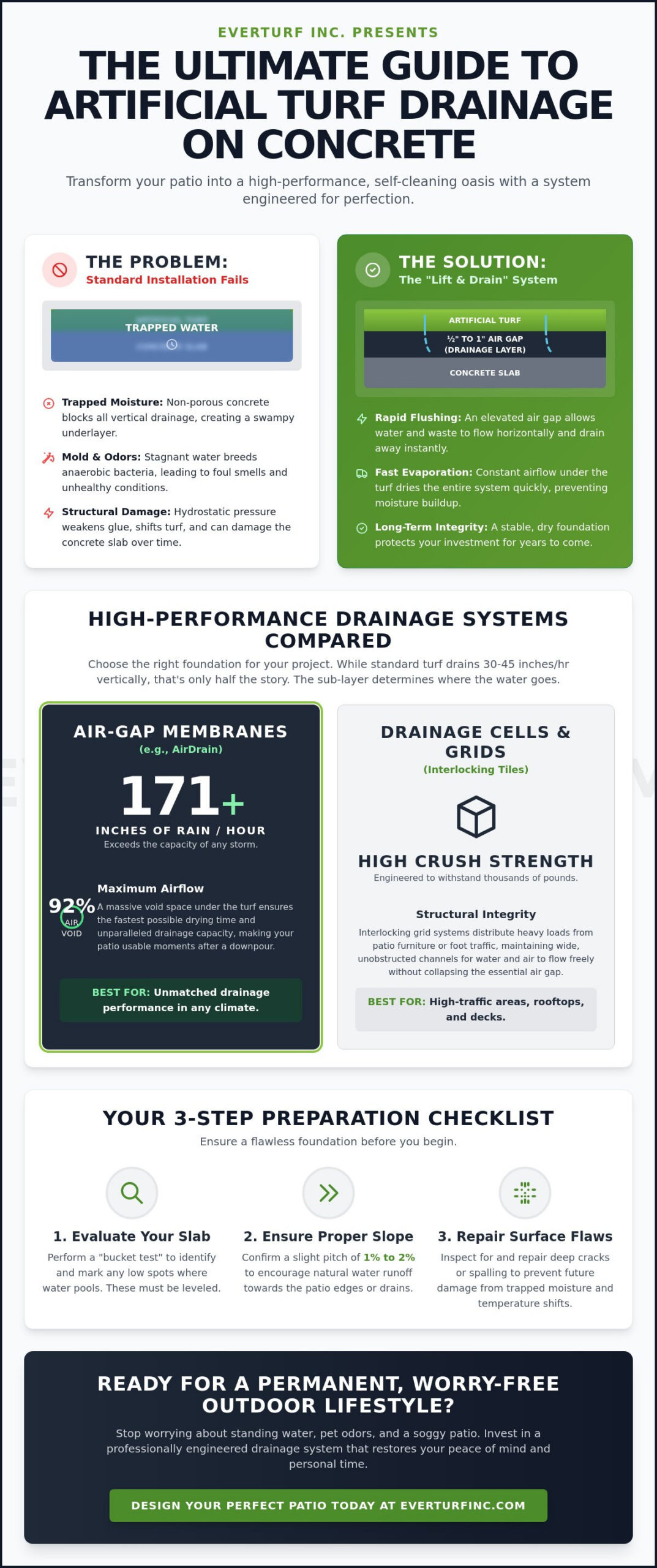
Installing artificial turf over a solid slab isn’t as simple as rolling out a green carpet. Concrete acts as a non-porous barrier, completely halting the natural percolation of water into the earth. While high-quality systems like EverTurf Artificial grass are designed to drain 30 to 45 inches of water per hour vertically, that liquid has nowhere to go once it strikes the concrete. This creates a bottleneck where rainwater and pet waste are forced to move horizontally across the slab to find an exit.
Unlike permeable paving systems that facilitate natural filtration, a concrete slab acts as a hard stop for every drop of moisture. Without a dedicated system for drainage for artificial grass on concrete patio, water becomes trapped. This leads to hydrostatic pressure, a subtle but powerful force that can gradually weaken the bond of EverTurf Staples and Glue or cause the turf to ripple and shift. Relying solely on the perforated backing of the turf is a common mistake that often results in a soggy, uninviting surface rather than the tranquil sanctuary you envisioned.
The Science of Surface Tension and Trapped Moisture
Surface tension causes water droplets to cling stubbornly to the underside of the turf backing and the smooth top of the concrete. Capillary action then pulls this moisture into tiny crevices, keeping the sub-surface damp long after the sun comes out. Trapped moisture creates a stagnant, oxygen-deprived environment where anaerobic bacteria and mold thrive, leading to the sour odors many homeowners fear. This hidden dampness doesn’t just smell; it actively degrades the structural integrity of your turf’s primary backing over several years.
Evaluating Your Existing Concrete Slab
Before beginning your artificial turf installation, you must understand how your patio currently handles water. Perform a simple bucket test by pouring water over various sections of the slab and marking any areas where the water stands still with chalk. These low spots require leveling to prevent permanent puddles under your new grass. An ideal patio should have a slight pitch of 1% to 2% to encourage natural runoff toward the edges. You should also inspect the surface for deep cracks or spalling. Moisture trapped under the turf can seep into these imperfections and expand during temperature shifts, turning minor surface issues into significant structural damage that could compromise your entire outdoor space.
Evaluating Drainage Solutions: Drainage Tiles vs. Air Gap Membranes
Professional installers move beyond the “just lay it down” myth by utilizing a Lift and Drain philosophy. This strategy treats your patio as a high-performance environment where turf is elevated to allow for rapid evaporation and hydraulic flushing. By creating a 1/2-inch to 1-inch air gap between the concrete slab and the turf backing, you ensure that liquid is never trapped. This mechanical separation is the most effective way to manage drainage for artificial grass on concrete patio, turning a non-porous surface into a system that can reduce runoff by infiltrating rain water toward your patio’s existing drainage points.
Durability in high-traffic areas depends heavily on the crush strength of your chosen drainage layer. If the sub-layer collapses under the weight of heavy patio furniture or frequent social gatherings, the essential air gap vanishes. High-quality drainage cells are engineered to withstand thousands of pounds of pressure per square foot without deforming. To maintain this flow over time, pair your drainage layer with EverTurf Infill. This specialized material is designed to stay suspended within the turf blades, preventing fine particles from migrating downward and clogging the drainage channels below.
Drainage Cells and Grid Systems
Interlocking grid systems are the gold standard for complex installations like EverTurf Roof & Deck projects. These tiles distribute weight across the concrete while maintaining wide, unobstructed channels for water and air. Advanced geocell membranes, such as AirDrain, provide a 92% air void under the turf. This allows the system to manage over 171 inches of rain per hour on nearly flat surfaces. This level of performance ensures your patio remains dry and usable even minutes after a tropical downpour, providing the logical evidence needed to justify a premium drainage investment.
Perforated Foam Underlays and Pads
When comfort is your top priority, perforated foam shock pads offer a luxurious feel that mimics the “give” of a natural lawn. These pads are excellent for play areas, though they come with a trade-off in drainage speed compared to rigid grids. In spaces frequently used by animals, foam can occasionally retain moisture and micro-particles. For homeowners prioritizing a pristine, scent-free environment, exploring our EverTurf Artificial grass pets systems will help you balance the desire for a soft surface with the technical necessity of a high-flow drainage system.
How to Install Artificial Grass on Concrete with Perfect Drainage
Transforming a rigid slab into a soft, verdant retreat requires a precise installation sequence that respects the laws of hydraulics. While the problems with impermeable surfaces often include runoff and heat retention, a structured approach solves these issues before the first roll of turf is ever cut. Success depends on maintaining the “lift and drain” philosophy at every layer. By following these professional steps, you ensure your drainage for artificial grass on concrete patio performs flawlessly for decades, providing a dry and inviting space for your family.
Step 1: Surface Remediation and Leveling
Begin by meticulously cleaning the concrete surface to remove oils, dust, or old debris that could interfere with adhesives. Inspect the slab for “bird baths,” which are shallow depressions where water naturally pools. Use a high-quality self-leveling compound to fill these areas, ensuring a perfectly smooth transition toward your patio’s exit points. This preparation prevents the sub-surface dampness that leads to anaerobic bacteria. Once the surface is level and dry, verify that the intended exit path for water is entirely clear of obstructions, allowing for the rapid hydraulic flushing your system is designed to provide.
Step 2: Perimeter Fastening and “Weep Holes”
Securing the edges of your EverTurf Artificial grass requires a strategic touch to avoid creating a “dam” effect. Many amateur installations fail by applying a continuous bead of adhesive around the entire perimeter, which traps water underneath the turf. Instead, use a professional spot-glue technique. Apply EverTurf Staples and Glue in four-inch segments, leaving two-inch gaps between each bond. These gaps act as essential “weep holes,” allowing water to flow freely out from the drainage layer and off the slab. For complex patio shapes, use a sharp utility knife to trim the turf precisely, ensuring the edges sit flush against the perimeter without bunching.
Finalizing with Ballast and Air Flow
Once the turf is positioned and seamed, applying EverTurf Infill is the final critical step. This material provides the necessary ballast to keep the turf weighted evenly against the drainage tiles, preventing shifting or rippling. More importantly, the right infill supports the grass blades in an upright position, which facilitates better air circulation down to the drainage layer. This airflow is your best defense against lingering moisture and heat. A well-infilled lawn doesn’t just look better; it functions as a breathable, self-drying ecosystem that significantly enhances your outdoor lifestyle.
Managing Pet Odors and Liquid Waste on Concrete
For homeowners with pets, the primary concern with any hardscape installation is the lingering scent of urine. While soil allows liquids to naturally percolate and dissipate, concrete introduces a distinct chemical complexity. When pet waste reaches a non-porous slab, the water content evaporates, leaving behind concentrated uric acid crystals that bond stubbornly to the surface. These crystals are the source of that persistent ammonia smell, which only intensifies under the warmth of the sun. Implementing a professional system for drainage for artificial grass on concrete patio solves this by ensuring liquids are carried away immediately, preventing them from ever crystallizing on the slab.
A high-performance drainage layer acts as a hydraulic barrier, lifting the turf so that liquid waste can flow freely toward the patio’s perimeter. This system works in tandem with antimicrobial infills, which serve as the first line of defense. These specialized materials neutralize odors at the surface before they can even reach the sub-structure. By integrating artificial grass for dogs into your patio design, you transform a potential maintenance headache into a pristine, odor-free sanctuary for your four-legged companions.
The Hydraulic Flush Routine
Maintaining a fresh environment requires more than just a quick spray with a garden hose. You should use enzymatic cleaners specifically formulated to break down the uric acid trapped under the turf. Use the “Deep Flush” method every few weeks: apply a high volume of water at low pressure to thoroughly clear the drainage grid of any organic residue. For households with large breeds or multiple pets, a weekly flush ensures that the drainage for artificial grass on concrete patio remains unobstructed and sanitary. This simple routine protects your investment and restores your personal time by eliminating the need for constant scrubbing.
Choosing the Right Pet-Specific Turf Backing
The type of backing on your EverTurf Artificial grass pets determines how effectively waste moves through the system. While traditional hole-punched backing is common, “flow-through” or edge-to-edge permeable backing is the superior choice for concrete patios. This advanced design allows liquid to pass through every square inch of the turf rather than waiting to find a specific drainage hole. This rapid permeability prevents urine from puddling in high-use pet spots and ensures a consistent hydraulic flow across the entire slab. If you’re ready to upgrade your outdoor experience, explore our professional artificial grass installation options to see how we can customize a pet-friendly solution for your home.
Maximizing Longevity: Maintenance and Next Steps for Your Patio
Your transition from a sterile concrete slab to a lush, evergreen retreat is more than a home improvement; it’s a commitment to a stress-free lifestyle. While the technical foundation of your drainage for artificial grass on concrete patio is now firmly in place, preserving that pristine aesthetic requires minimal but strategic stewardship. High-quality synthetic systems can last between 15 and 25 years when maintained with the same level of care used during installation. By following a few seasonal routines, you ensure your patio remains a tranquil, high-performance environment that restores your personal time and enhances your home’s value.
Sunlight and debris are the two primary factors affecting your turf’s longevity. Surface temperatures can exceed 160 degrees Fahrenheit in peak summer sun, making the use of cooling EverTurf Infill essential for maintaining a comfortable environment. Seasonally, you should inspect the perimeter of your patio to ensure that the “weep holes” and drainage exits remain free of organic debris like fallen leaves or dust. A quick rinse once a month helps maintain the hydraulic flow, ensuring that the system continues to function with the same efficiency it did on day one.
Furniture and Heavy Loads on Patios
Modern outdoor living often involves heavy dining sets or lounge chairs that can compress turf fibers over time. To prevent permanent matting, use wide furniture coasters to distribute weight more evenly across the EverTurf Artificial grass. If you notice flattened areas after a season of heavy use, simply use a medium-bristled synthetic brush to “bloom” the fibers back to their upright position. When moving heavy items, always lift rather than drag to protect the underlying drainage grid from shifting or tearing, preserving the structural integrity of your entire backyard turf paradise.
Professional Consultation vs. DIY
While many homeowners find success with a DIY approach for standard rectangular slabs, complex patio geometries or multi-level decks often benefit from a professional eye. EverTurf Inc provides the logical evidence and technical support needed for both ambitious contractors and homeowners. If you encounter persistent pooling or structural concrete issues, calling a seasoned expert ensures your drainage for artificial grass on concrete patio is optimized for the local climate. As you finalize your transformation, use this checklist for long-term satisfaction:
- Verify that all perimeter drainage exits are clear and unobstructed.
- Apply EverTurf Infill annually to maintain ballast and support fiber bloom.
- Perform a “deep flush” of the drainage layer after heavy pollen or dust seasons.
- Inspect the bond of EverTurf Staples and Glue along high-traffic edges.
Your journey from a grey, non-porous slab to a vibrant outdoor oasis is complete. Enjoy the relief of a maintenance-free lawn that stays lush, dry, and beautiful through every season.
Step Into Your Perfect Outdoor Sanctuary
Mastering the technical requirements of your patio transformation ensures that your new landscape remains as functional as it is beautiful. By prioritizing the “Lift and Drain” philosophy, you’ve moved beyond simple aesthetics to create a high-performance environment that handles heavy rain and pet waste with ease. Perfecting the drainage for artificial grass on concrete patio is the key to maintaining a dry, scent-free environment that stands the test of time. These strategic choices prevent the stagnant moisture and odors that often plague lesser installations, leaving you with nothing but a pristine space to enjoy.
Achieving this level of tranquility is a rewarding investment in your home’s value and your personal time. Whether you’re a DIY enthusiast or looking for professional guidance, having access to commercial-grade drainage systems and specialized antimicrobial pet infills is essential. EverTurf Inc provides national distribution for pro-level turf, giving you the logical evidence and high-quality materials needed for an everlasting result. Explore EverTurf’s Premium Patio and Deck Solutions to find the perfect system for your unique space. It’s time to leave behind the frustrations of traditional maintenance and embrace the beauty of a worry-free, year-round retreat.
Frequently Asked Questions
Can I install artificial grass on concrete without a drainage layer?
You shouldn’t install turf directly on concrete without a dedicated drainage layer. Doing so creates a non-porous trap where water and bacteria thrive. A professional system for drainage for artificial grass on concrete patio lifts the turf, allowing air to circulate and moisture to evaporate. This prevents the mold and sour smells that occur when liquids are locked between the backing and the slab.
How does water get out from under the turf if the patio is surrounded by walls?
Water moves horizontally along the concrete’s pitch toward existing drains or exit points. If your patio is enclosed, you must ensure the concrete has a 1% to 2% slope and that the turf perimeter isn’t sealed shut. Using a spot-glue technique creates small channels that allow water to escape under the edges of the EverTurf Artificial grass rather than pooling against the walls.
Will artificial grass on concrete make my patio hotter in the summer?
Artificial turf can reach surface temperatures over 160 degrees Fahrenheit in direct summer sun. Concrete underneath also holds heat, which can intensify this effect. To keep your space comfortable, use specialized EverTurf Infill designed for cooling. This material helps dissipate thermal energy, making your outdoor oasis much more inviting during peak afternoon hours.
How do I stop my dog’s urine from smelling on a concrete turf installation?
Preventing pet odors starts with an antimicrobial infill and a high-flow drainage grid. These tools neutralize bacteria before they bond to the concrete. For ongoing care, use enzymatic cleaners to break down uric acid crystals. Regular flushing keeps the drainage for artificial grass on concrete patio clear, ensuring your space remains a fresh and sanitary sanctuary for your pets.
What is the best way to clean the concrete underneath the artificial grass?
The most effective way to clean the sub-surface is through a high-volume hydraulic flush. You don’t need to pull up the turf; instead, apply water and enzymatic cleaners directly to the surface. The liquid travels through the permeable backing and across the drainage layer, clearing out organic residue and dust that might have settled on the concrete slab over time.
Can I use a pressure washer on turf installed over a drainage grid?
You can use a pressure washer, but you must be cautious with the settings. Use a wide fan tip and keep the pressure low to avoid driving infill into the drainage channels or damaging the turf fibers. A gentle, high-volume wash is usually more effective at clearing the drainage grid than a high-pressure stream, which can disturb the ballast of your EverTurf installation.
Do I need to glue the entire turf surface to the concrete?
You don’t need to glue the entire surface; in fact, doing so would block the very drainage channels you’ve worked to create. Only the perimeter and seams require EverTurf Staples and Glue. By securing the edges in segments, you leave essential gaps for water to flow out from under the turf. This method provides a stable surface without sacrificing the system’s hydraulic performance.
How long does artificial grass last when installed on a concrete patio?
High-quality turf like EverTurf typically lasts between 15 and 25 years on a concrete patio. Its lifespan depends largely on the quality of the drainage system and regular maintenance. By preventing water from sitting against the backing and using UV-stabilized materials, you protect the structural integrity of the fibers. This ensures your patio remains a beautiful, stress-free environment for decades.