
The Ultimate Guide to Turf Seam Tape: Professional Secrets for Invisible Seams in 2026
You can invest in the most luxurious synthetic grass on the market, but your landscape’s beauty ultimately lives or dies by the quality of its hidden infrastructure. It’s a common frustration to spend time and money on a transformation only to be haunted by visible “Mohawk” lines or turf seam tape that fails after a single summer. You want the tranquility of an evergreen space, not a constant reminder of where one roll ends and the next begins. With the global artificial turf market projected to reach $7.8 billion in 2026, more homeowners are seeking that flawless, professional finish than ever before.
This guide will empower you to master the art of the invisible joint by selecting the right materials for a bond that defies both heat and high traffic. We’ll break down the technical differences between self-adhesive and glue-down options, show you how to ensure chemical compatibility with professional-grade products like EverTurf Staples and Glue, and share the secrets used on high-stress sports fields to ensure your lawn remains a permanent masterpiece. By the end, you’ll have the confidence to create a seamless, stress-free outdoor sanctuary that stands the test of time.
Key Takeaways
- Understand why high-quality turf seam tape acts as the structural backbone of your lawn, preventing unsightly gaps caused by seasonal temperature changes.
- Learn to distinguish between peel-and-stick and glue-down methods to choose the most durable bonding technology for your specific project.
- Discover the professional trimming and centering techniques that eliminate the “Mohawk effect” for a truly invisible factory-to-factory match.
- Identify the common causes of seam peaking and gapping so you can avoid visible ridges and maintain a smooth, evergreen surface.
- Ensure long-term performance and warranty compliance by pairing your turf with a chemically compatible system of EverTurf Staples and Glue.
What is Turf Seam Tape and Why is it Critical for Your Lawn?
Think of your artificial lawn as a high-performance tapestry. While the lush, vibrant blades of EverTurf Artificial grass capture the eye, the true integrity of the installation lies beneath the surface. Professional turf seam tape acts as the structural bridge that unites separate rolls into a single, cohesive landscape. It’s the silent protector of your investment, ensuring that your outdoor space remains a tranquil retreat rather than a collection of shifting panels. For a comprehensive overview of artificial turf and its complex construction, understanding how these seaming layers interact with the base is essential.
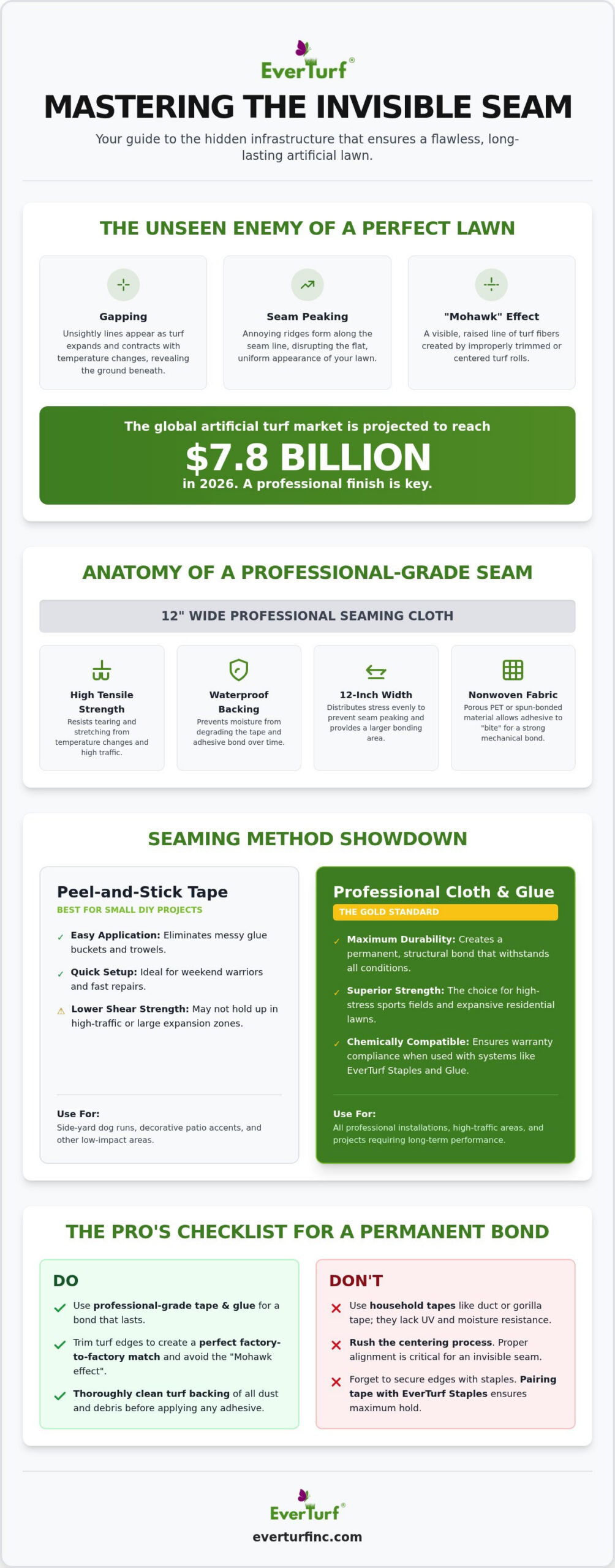
High tensile strength is the most important technical specification for any turf seam tape you choose. As temperatures fluctuate throughout the year, synthetic materials naturally expand and contract. Without a robust tape to anchor the edges, this movement leads to “gapping,” where unsightly brown lines appear between rolls. A waterproof backing is also vital; it prevents the tape from degrading in wet climates, ensuring your seams remain permanent through every season of use.
The Anatomy of a Professional Seam
A professional-grade seam isn’t just a simple piece of fabric. The backing is typically made from nonwoven PET or spun-bonded fabrics, which offer the stability needed to resist tearing under pressure. This layer provides a porous surface designed for high-performance adhesives to “bite” into, creating a mechanical bond that is far stronger than a simple surface stick. We recommend a 12-inch width for most residential projects. This extra surface area distributes stress more evenly across the joint, which effectively prevents “seam peaking,” that annoying ridge that can ruin the look of a perfectly flat lawn.
Seam Tape vs. Household Adhesives
It’s tempting to reach for a roll of duct tape or gorilla tape, but these household items are not designed for the harsh realities of the outdoors. They lack the UV resistance and moisture barriers required to survive years of sun and rain. More importantly, they don’t offer the necessary shear strength to keep turf edges from sliding apart when kids or pets run across the yard. Spun-bonded fabric is a textile material made by bonding together extruded synthetic fibers, providing a high-strength, dimensionally stable foundation that ensures your turf stays exactly where you placed it. By using professional-grade products like EverTurf Staples and Glue, you guarantee that your seams will handle the logic of the local climate while maintaining the beauty of your property.
Comparing Turf Seaming Methods: Adhesive vs. Non-Adhesive Tape
Success in artificial turf installation depends on selecting a joining method that aligns with your property’s specific demands. You generally choose between two technologies: self-adhesive “peel-and-stick” products or the professional standard of non-adhesive cloth paired with a high-performance liquid bond. While both aim for a seamless look, their performance under environmental stress varies significantly. Adhering to STC installation guidelines ensures that whichever path you take, the result remains secure and aesthetically pleasing for years. Preparation is everything.
Peel-and-Stick Tape: Best for Small DIY Projects
Self-adhesive turf seam tape offers an accessible entry point for weekend warriors. It eliminates the need for messy glue buckets, notched trowels, or complex mixing processes. This makes it an excellent choice for smaller, low-traffic zones such as a side-yard dog run or a decorative patio accent. To ensure a permanent grip, you must meticulously clean the turf backing of all dust and debris before application. However, keep in mind that these tapes may lack the extreme shear strength required for high-impact zones or expansive EverTurf Sports Fields, where constant lateral movement is the norm.
Professional Seaming Cloth and Glue: The Gold Standard
Industry veterans almost exclusively rely on a 12-inch non-adhesive seaming cloth paired with a dedicated adhesive like EverTurf Staples and Glue. This method is the gold standard. This “wet” method provides a critical advantage known as “open time,” a window that allows you to perfectly adjust the turf edges. This flexibility ensures the fibers align without being trapped in the bond. A professional glue-down method creates a monolithic structure that easily survives 15 to 20 years of intense foot traffic and extreme weather shifts.
True durability comes from a “system approach” where the turf seam tape, the liquid adhesive, and the heavy infill work in harmony to weigh down and stabilize the joint. This integrated strategy prevents the turf backing from expanding at a different rate than the tape itself, which is the primary cause of seam failure. If you’re ready to transform your landscape with professional-grade materials, exploring our complete installation kits can simplify the process while ensuring a flawless finish. Both methods require a dry environment during installation, as moisture can compromise the initial bond before it fully cures.
Step-by-Step Guide: How to Seam Artificial Grass Like a Pro
Transforming your lawn from a series of rolls into a unified emerald carpet requires a professional’s eye for detail and a methodical approach. Achieving that invisible finish isn’t about luck; it’s about the precision you apply before the first drop of adhesive hits the turf seam tape. Imagine the relief of looking out at a lawn that appears to have grown naturally in place, completely free of the distracting lines that plague amateur installations. This process begins with meticulous preparation and ends with a bond that stands up to years of family gatherings and playful pets.
Start by removing the “selvage” edge, which is the un-tufted backing strip found on the sides of most rolls. You must trim this back to the first or second row of tufts to ensure a factory-to-factory match. Once trimmed, lay the two sections side-by-side and check the pile direction meticulously. The “grain” of the grass must face the same way on both pieces, or the light will reflect differently off each side, making the seam painfully obvious even if the physical joint is perfect. After you’re satisfied with the alignment, fold back the edges and lay your turf seam tape directly over the center of the gap, securing it with a few staples to prevent shifting during the next phase.
Pre-Seaming: The Importance of the “Gauge” Line
Precision at the seam depends on maintaining the “gauge,” which is the distance between the tufted rows of grass. When you bring two rolls together, the gap between the last row of Roll A and the first row of Roll B should exactly match the spacing found within the rest of the turf. If the rolls are too far apart, you’ll see a visible gap; if they’re too close, the blades will crowd together and create a “Mohawk” ridge. A carpet kicker allows you to nudge the turf into the perfect position before the adhesive sets, ensuring the rows align with microscopic precision. This small adjustment often makes the difference between a DIY project and a professional-grade landscape.
Setting the Bond: Pressure and Drying Time
Once the edges are aligned, apply your adhesive to the tape in a consistent S-pattern using a notched trowel. This technique creates peaks and valleys in the glue that maximize the surface area for the bond. Close the seam using the “zipper” technique, working slowly from one end to the other and pulling any trapped grass blades out of the adhesive as you go. After the seam is closed, run a weighted lawn roller over the area to force the adhesive deep into the turf backing for a permanent grip. Allow the bond to cure for at least 24 hours before adding EverTurf Infill, as premature foot traffic or the weight of the infill can cause the edges to shift while the chemical bond is still forming. Keep in mind that high humidity or extreme heat can alter these cure times, so patience is your best ally in achieving a flawless result.
Avoiding the ‘Mohawk’: Pro Tips for Invisible, Durable Seams
The most common fear for any homeowner embarking on a synthetic lawn project is the dreaded “Mohawk” effect. This unsightly ridge, also known as seam peaking, occurs when the edges of the turf are pushed too tightly together or when an excessive amount of adhesive is applied to the turf seam tape. Instead of a flat, continuous surface, the blades crowd and stand straight up, revealing exactly where the rolls meet. You can prevent this by leaving a tiny gap, roughly the width of a nickel, between the backing of the two rolls. This small allowance gives the fibers room to breathe and blend naturally.
Gapping is the opposite problem, where rolls pull away from each other to reveal a visible brown line. This typically happens when the turf seam tape isn’t properly anchored or the sub-base hasn’t been adequately prepared. To ensure a permanent bond in high-stress areas, reinforce your seams with EverTurf Staples. These staples provide mechanical stability while the adhesive cures, preventing lateral movement. If you notice grass blades caught in the bond, use a specialized seam tool or a simple flathead screwdriver to gently tease them out before the glue sets. This “grooming” step is the secret to a truly invisible joint.
The Dye Lot Dilemma
Even the most perfect seaming technique can’t hide the difference between two different manufacturing runs. Synthetic turf is produced in “dye lots,” and slight variations in color or blade texture can occur between batches. To avoid a mismatched look, always order your turf in a single batch and plan your layout to minimize seams in high-visibility areas. We recommend a “dry fit” of the entire project before you even open a glue container. This allows you to visualize how the grain flows across the property and ensures every piece belongs to the same aesthetic family.
Environmental Factors: Heat and Expansion
Synthetic materials are dynamic. They expand when the sun hits them and contract as the evening air cools. Your seaming system must be flexible enough to handle this thermal expansion without buckling or snapping the bond. Moisture is another silent enemy; if your sub-base is damp during installation, it can trap mold beneath the surface or prevent the adhesive from reaching full strength. The ideal weather window for seaming turf is a dry day with moderate temperatures between 60 and 80 degrees Fahrenheit, which allows the adhesive to cure at a steady, predictable rate. Secure the longevity of your landscape by choosing professional-grade installation tools designed for a permanent, invisible finish.
Selecting the Right Accessories for Your EverTurf Installation
Achieving a professional-grade landscape requires more than just a steady hand; it demands a unified system where every component is designed to work in harmony. By choosing a complete EverTurf solution, you aren’t just buying synthetic grass. You’re investing in a chemically optimized ecosystem. Using our specific turf seam tape alongside EverTurf Staples and Glue ensures that the adhesive bond remains compatible with the turf backing. This is a critical factor for maintaining your long-term warranty compliance and ensuring the structural integrity of your lawn for decades.
For golf enthusiasts, the stakes are even higher. When installing EverTurf Putting Green Pro, the seam must be practically non-existent to ensure a true ball roll. Any slight ridge or dip caused by inferior tape will deflect a putt, turning a relaxing afternoon into a frustrating exercise. A 12-inch wide tape provides the flat, stable foundation necessary for these precision surfaces. Once the adhesive has cured, perform a “walk test” by stepping firmly along the length of every seam. This allows you to feel for lifting edges or soft spots that might require an extra staple before the final infill is applied.
The EverTurf Accessory Ecosystem
Our EverTurf Staples and Glue are specifically engineered to “bite” into our nonwoven backing fabrics, creating a bond that resists the lateral shear forces of running pets or active children. Because we utilize a national distribution network, you can trust that you’re receiving fresh, high-quality materials that haven’t lost their efficacy sitting in a humid warehouse. Once your seams are secure, our specialized EverTurf Infill serves as the final touch of camouflage. It provides the necessary weight to keep the turf seam tape flat while simultaneously hiding the backing material for a lush, evergreen appearance.
Planning for Success: A Pre-Purchase Checklist
Before you place your order, calculate your needs based on the linear feet of your seams rather than just the total square footage of the project. A standard 15-foot wide roll often requires more tape than expected once you account for perimeter overlaps and complex corners. Choosing between 6-inch and 12-inch tape widths depends on the scale of your project; while 6-inch tape works for small decorative borders, we recommend 12-inch tape for all main lawn areas to provide maximum bonding surface. For more layout inspiration and tips on creating your dream space, explore our Backyard Turf Guide. Taking the time to measure twice and select the right accessories will transform a simple installation into a permanent, stress-free sanctuary.
Secure Your Everlasting Outdoor Sanctuary
Mastering the intricacies of turf seam tape is the final step in transitioning from a high-maintenance yard to a worry-free, evergreen retreat. You now understand that invisible seams aren’t a product of chance; they’re the result of precise trimming, careful alignment, and the “system approach” of matching high-quality components. By prioritizing tensile strength and chemical compatibility, you ensure your landscape remains a monolithic masterpiece that defies the elements and the passage of time.
We provide the same professional-grade durability for residential use that’s trusted by pro sports field contractors nationwide. Whether you’re refining a backyard putting green or creating a lush play area for your family, having the right tools makes all the difference. Enjoy the peace of mind that comes with national shipping on all installation accessories, ensuring you have fresh, high-performance materials delivered directly to your door.
Browse EverTurf Staples, Glue, and Seaming Accessories to find everything you need for a flawless finish. Your vision of a tranquil, maintenance-free property is just a few clicks away. Step into the future of your home with confidence and reclaim the personal time you deserve.
Frequently Asked Questions
Can I use regular outdoor double-sided tape for my turf seams?
No, you should avoid standard outdoor double-sided tape because it lacks the necessary tensile strength and chemical resistance to withstand the expansion of synthetic turf. Professional-grade turf seam tape is specifically engineered with a nonwoven backing that provides a permanent bond and resists degradation caused by UV exposure and soil moisture. Standard tapes will likely fail during the first seasonal temperature shift, leading to visible gaps and tripping hazards.
How long does turf seam tape take to dry and cure?
Adhesives typically achieve an initial set within 2 to 4 hours, but a full chemical cure requires 24 hours of dry weather. You should avoid walking on the seams or applying infill during this window to prevent the edges from shifting while the bond is still forming. Environmental factors like high humidity or cooler temperatures can extend this curing time, so it’s best to check the manufacturer’s specifications for your specific climate.
How much turf glue do I need per roll of seam tape?
A one-gallon container of adhesive generally covers approximately 30 to 50 linear feet of 12-inch wide tape when applied with a 3/16-inch notched trowel. This coverage varies based on the thickness of your S-pattern application and the texture of the tape’s backing fabric. Ensuring a consistent layer of glue is vital for a monolithic bond, so we recommend having a slight surplus on hand to avoid inconsistent patches mid-seam.
Is it better to use staples or tape to join artificial grass?
We recommend using a combination of both for the most durable and aesthetically pleasing results. While turf seam tape creates the structural bridge that prevents rolls from pulling apart, staples provide essential mechanical reinforcement at high-stress points and corners. This dual-layer approach ensures your lawn remains perfectly flat and secure even in high-traffic residential areas or professional athletic environments.
What happens if I get turf glue on the grass blades?
You should act quickly to remove wet adhesive from grass blades using a cloth dampened with a small amount of mineral spirits. If the glue has already dried, you can often gently tease it off the fibers using a fine-toothed comb or a flathead screwdriver without damaging the pile. Meticulous care during the “zipper” phase of installation is the best way to maintain the soft, natural texture of your EverTurf Artificial grass.
How do I seam turf around curved edges or flower beds?
You can achieve seamless curves by using shorter, overlapping segments of tape rather than attempting to bend a single long strip. Meticulously trim the turf backing to follow the contour of your garden bed and secure the edges with additional staples to prevent lifting. This segmented approach allows the tape to lay flat against the sub-base, maintaining a consistent bond along the entire perimeter of your landscape.
Does pet urine affect the strength of the seam tape adhesive?
Professional-grade adhesives are specifically formulated to be chemically resistant to pet urine and common household cleaning agents. When you use a high-quality turf seam tape, the bond remains secure and waterproof, preventing degradation of the structural joint over time. For households with active pets, this chemical stability is essential for maintaining a pristine, odor-free sanctuary that stands up to daily use.