
How to Remove Pet Urine Smell from Artificial Grass: A Professional Guide
Imagine hosting a summer evening soirée on your beautiful lawn, only to have the conversation cut short by a sharp, lingering scent that no amount of hose-water can hide. It’s a common frustration for homeowners who love their pets but hate the olfactory consequences. Learning how to remove pet urine smell from artificial grass is about more than just surface cleaning; it’s about reclaiming your outdoor sanctuary. You’ve likely tried the hardware store sprays that only mask the problem, leaving you worried about both the odor and the safety of harsh chemicals near your furry friends.
We understand that a truly luxurious backyard should be as hygienic as it is beautiful. This guide will help you master the science of odor neutralization, moving beyond temporary fixes to professional-grade results. You’ll discover how to eliminate uric acid crystals at their source and why structural choices, like EverTurf Artificial grass pets with its edge-to-edge permeable backing, are the foundation of a fresh environment. From the power of enzymatic cleaners to the role of EverTurf Infill, we’re providing the repeatable routine you need for a permanent, worry-free outdoor lifestyle.
Key Takeaways
- Identify the hidden role of uric acid crystals and how environmental factors like heat reactivate dormant ammonia molecules in your turf.
- Master the professional protocol for how to remove pet urine smell from artificial grass by using enzymatic cleaners that neutralize organic matter at the source.
- Evaluate the critical importance of specialized infill and why standard silica sand often contributes to moisture retention and recurring odors.
- Implement a simple, repeatable maintenance routine that ensures your outdoor space remains a fresh and inviting sanctuary for both guests and pets.
- Discover how upgrading to high-performance systems like EverTurf Artificial grass pets provides a permanent, rapid-drainage solution for long-term lawn hygiene.
Understanding the Chemistry: Why Artificial Grass Retains Pet Odors
To truly master how to remove pet urine smell from artificial grass, you have to look beneath the surface. While Artificial turf offers a stunning, evergreen aesthetic, it’s a non-porous material that interacts with organic waste differently than natural soil. In a traditional lawn, microbes in the earth break down nitrogen. In a synthetic environment, those same elements have nowhere to go. They become trapped within the weave of the fibers and the layers of the infill, creating a persistent olfactory challenge that requires a scientific solution.
Most homeowners think pet urine is a simple liquid that washes away with a garden hose. It’s actually a complex cocktail of urea, proteins, and uric acid. While water might dilute the urea, it won’t touch the uric acid crystals. These crystals are insoluble and act like a microscopic glue, bonding to the synthetic blades and the drainage layers beneath. This is why a simple rinse often fails; you’re essentially just moving the odor-causing agents deeper into the base layers rather than eliminating them.
Ammonia vs. Uric Acid: The Two-Headed Monster
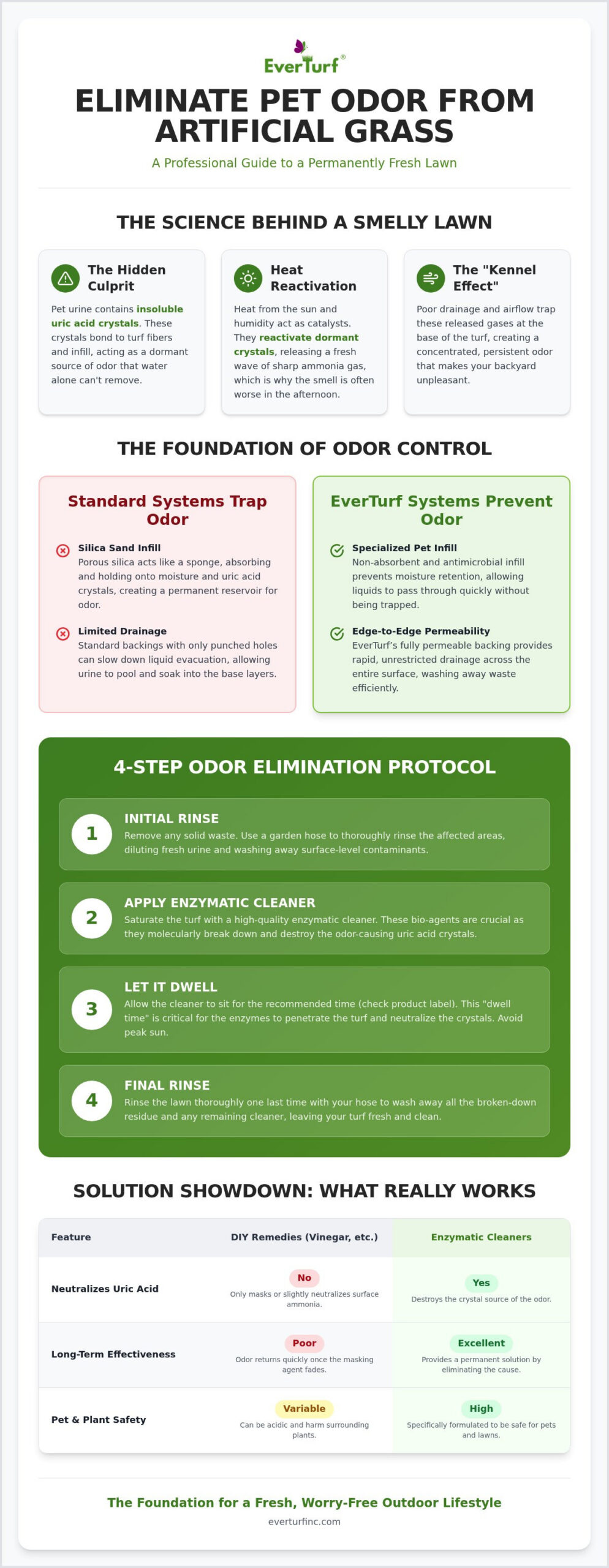
The persistent scent that plagues many backyards isn’t just one problem; it’s a chemical cycle. When your pet uses the lawn, the urea immediately converts into ammonia gas, creating that sharp, instant odor. However, the uric acid crystals remain behind as a dormant reservoir. Even after a heavy rainstorm, these crystals stay tucked away in the thatch. When the sun comes out, the moisture and heat reactivate these crystals, releasing a fresh wave of ammonia. This cycle of reactivation is why surface-level cleaners often feel like a losing battle.
UV rays also play a complicated role. While sunlight can help kill some surface bacteria, the intense heat can actually “bake” these crystals into the turf’s backing, making them even harder to dislodge. You aren’t just dealing with a smell; you’re dealing with a chemical bond that requires a molecular intervention to break.
The ‘Kennel Effect’ in Warm Climates
High temperatures and humidity act as a powerful catalyst for these chemical reactions. In warmer regions, synthetic fibers can reach significant temperatures, which accelerates the breakdown of urea into gas. Without proper airflow at the base level, these gases become trapped, creating a concentrated “kennel effect” that can make your backyard unbearable during the peak of summer.
Off-gassing is the process where trapped ammonia and volatile organic compounds are released from the turf’s infill and fibers into the air as the material heats up. This phenomenon explains why a lawn might smell perfectly fine in the cool morning but becomes overwhelming by mid-afternoon. Understanding this distinction between bacterial growth and chemical ammonia buildup is the first step toward a permanent, professional solution for your outdoor space.
The Foundation of Odor Control: Infill and Drainage Systems
Successful odor management begins long before you reach for a bottle of cleaner. While surface treatments address the immediate scent, the true solution involves a system that prevents ammonia from settling in the first place. Many homeowners find themselves researching how to remove pet urine smell from artificial grass only to realize their lawn’s foundation is working against them. If the internal structure doesn’t facilitate rapid liquid evacuation, you’re fighting an uphill battle against chemistry.
The choice of infill is perhaps the most overlooked factor in this equation. Standard silica sand is frequently used in general landscaping, but it’s a poor choice for pet zones. Because silica is naturally porous, it absorbs moisture and traps uric acid crystals within its grains. This turns your lawn into a giant, subterranean sponge for pet waste. Transitioning to a specialized, non-absorbent infill ensures that urine moves quickly through the turf profile rather than lingering at the base of the fibers.
The Role of EverTurf Infill in Pet Areas
EverTurf Infill provides the structural support your lawn needs while maintaining a high level of hygiene. It’s specifically designed to keep synthetic blades upright and resilient without retaining moisture. For pet owners, this means that liquid waste passes directly into the drainage system. It’s a proactive way to manage your environment and restore your personal time. For a deeper dive into these technical advantages, explore The Essential Guide to Turf Infill to see how the right materials protect your investment.
Optimizing the Sub-Base for Maximum Drainage
The sub-base is the engine of your lawn’s drainage system. A professional installation utilizes a crushed stone base, which creates large voids that allow liquid to flow freely away from the surface. Soil or sand bases often compact over time, leading to stagnant pockets where bacteria can thrive. You can identify drainage issues by looking for areas where water lingers after a light rain; these are the spots where pet odors will be most concentrated.
Pet-friendly systems like EverTurf Artificial grass pets prioritize this evacuation process with a specialized, rapid-drain backing. This technology ensures that urine doesn’t pool mid-layer. If you’re planning a new space, choosing a high-performance artificial turf installation with these drainage specs will save you countless hours of maintenance later. This structural integrity is what transforms a high-maintenance yard into a worry-free sanctuary.
Enzymatic Cleaners vs. DIY Remedies: Which Works Best?
Choosing between a specialized cleaner and a pantry staple is often the first decision homeowners make when the backyard scent becomes noticeable. While the internet is full of quick fixes, mastering how to remove pet urine smell from artificial grass requires choosing the right chemical agent for the job. You aren’t just looking for a fragrance that covers the odor; you’re seeking a solution that dismantles the source of the problem. Understanding the difference between masking and neutralizing is what separates a temporary reprieve from a truly fresh environment.
Many people reach for household detergents or bleach, but these can be counterproductive. Harsh soaps often leave a sticky residue that attracts more dirt, while bleach can damage the UV stabilizers in your turf fibers or weaken the backing of systems like EverTurf Artificial grass pets. Professional-grade solutions are designed to be effective without compromising the structural integrity of your lawn, ensuring your investment remains as beautiful as the day it was installed.
The Science of Enzymatic Breakdown
Enzymatic cleaners are the gold standard for pet-friendly turf because they use biological catalysts to trigger a “lock and key” chemical reaction. These enzymes specifically target the proteins and urea in pet waste, breaking them down into carbon dioxide and water. Unlike many retail descriptions that suggest an instant fix, true enzymatic action requires a sustained “wet” phase. The enzymes are only active while the solution is damp; once it dries, the biological process stops. This is why professional application often involves saturating the area and covering it or applying it during the cooler evening hours to prevent rapid evaporation.
These cleaners offer a superior safety profile for your family. Once the treatment has finished its work and the area is dry, it is completely safe for pets and children to resume their play. It’s a sophisticated, non-toxic approach that aligns with the goal of maintaining a healthy, stress-free home environment.
When to Use DIY Vinegar Solutions
If you’re dealing with a mild scent or need an immediate rinse, a white vinegar solution can be a helpful tool. A 1:1 ratio of distilled white vinegar and water acts as a natural disinfectant and is particularly effective at neutralizing the alkaline ammonia in fresh urine. However, vinegar is a surface-level remedy. It lacks the molecular strength to dissolve the stubborn uric acid crystals discussed earlier, meaning the smell will likely return as soon as the temperature rises.
When using vinegar, be mindful of your surrounding landscape. While it’s safe for your EverTurf Artificial grass, the runoff can be harmful to live vegetation or delicate garden borders. Always rinse the area thoroughly with water after a vinegar treatment to ensure no acidic residue lingers on the blades or affects the pH of the soil beneath your drainage layer. For a permanent result, best practices for how to remove pet urine smell from artificial grass often involve professional-grade enzymatic concentrates that offer a better cost-benefit ratio over time than frequent grocery store fixes.
Step-by-Step Maintenance Protocol for an Odor-Free Lawn
Consistency is the hallmark of a pristine outdoor space. While understanding the underlying chemistry is vital, the practical application of that knowledge determines whether your yard remains an inviting retreat or a source of frustration. When homeowners ask how to remove pet urine smell from artificial grass, the answer lies in a proactive maintenance protocol that targets waste before it has the chance to bond with the fibers. By establishing a rhythm that balances daily vigilance with weekly deep cleaning, you can enjoy a lawn that stays fresh regardless of your pet’s activity level.
The most critical rule of maintenance is the immediate removal of solid waste. Liquid neutralizers and enzymatic cleaners are designed to penetrate the infill, but they can’t work effectively if blocked by organic debris. Once solids are cleared, a quick water rinse helps dilute fresh urea. However, to truly eliminate odors, you must move beyond surface rinsing. Effective flushing involves using enough water volume to push liquid through the backing and into the sub-base, preventing the pooling effect that leads to stagnant smells. This restoration of personal time is the greatest benefit of a well-maintained yard.
The Weekly ‘Deep Flush’ Technique
Once a week, dedicate time to a more intensive cleaning process to ensure no uric acid crystals are building up in the thatch layer. This routine restores the hygiene of your lawn and protects your long-term investment. It’s a simple, repeatable process that yields professional results.
- Step 1: Clear the surface of all loose solids and organic debris like leaves or twigs using a specialized turf rake or a leaf blower.
- Step 2: Saturate high-traffic “potty spots” with a professional-grade pet-safe neutralizer. Focus on areas where your pet naturally gravitates.
- Step 3: Agitate the solution. Use a power brush or a stiff synthetic-bristle broom to work the cleaner deep into the infill. This physical movement dislodges trapped particles that a simple spray would miss.
Long-Term Refreshing and Re-Infilling
Designing for Success: Choosing EverTurf Artificial Grass for Pets
While the cleaning protocols described in previous sections are essential for any synthetic lawn, the most effective way to manage your environment is to start with a foundation engineered for the task. The ultimate secret to a fresh backyard lies in the structural design of the turf itself. When you choose a system specifically designed for animals, such as EverTurf Artificial grass pets, you’re fundamentally changing the chemistry of your yard care. This strategic investment reduces the long-term need for expensive cleaning concentrates by addressing the root causes of odor retention from day one.
A primary technical advantage of this specialized system is the edge-to-edge permeable backing. Unlike standard turf that may only have punched drainage holes every few inches, this rapid-drain technology allows liquid to move through the entire surface area of the lawn. This ensures that urine doesn’t have the opportunity to pool or settle mid-layer. Additionally, antimicrobial agents are often integrated directly into the blades during the manufacturing process. This provides a constant second line of defense against the microbes that contribute to ammonia buildup, simplifying how to remove pet urine smell from artificial grass and keeping the environment hygienic for your entire family.
Aesthetic Appeal Meets Functional Durability
EverTurf products are crafted to withstand the high-traffic demands of active dogs without sacrificing the soft, realistic feel that makes a backyard feel like an extension of the home. You don’t have to choose between a lush, green aesthetic and a lawn that can handle daily pet usage. These systems maintain their resilience and vibrant color even in the face of heavy use and frequent rinsing. The psychological benefit of looking out onto a clean, pristine sanctuary cannot be overstated; it transforms your property into a stress-free retreat. For a deeper look at creating this type of environment, see The Complete Guide to Artificial Grass for Dogs.
The EverTurf Advantage: A National Standard for Pet Owners
Homeowners across the US trust EverTurf because we offer a sophisticated, permanent solution to the challenges of traditional lawn maintenance. Our national distribution ensures that professional-grade products are available to every homeowner who values their time and the beauty of their outdoor space. Transitioning from a high-maintenance situation to a worry-free one is an obvious and rewarding choice that restores your personal freedom. If you’re ready to envision a more beautiful version of your property, the journey starts with selecting the right materials. Explore EverTurf Pet-Friendly Solutions today and discover the tranquility of a perfect, year-round outdoor space.
Embrace a Fresh and Everlasting Outdoor Lifestyle
Mastering how to remove pet urine smell from artificial grass is the final step in transitioning from a high-maintenance yard to a worry-free sanctuary. You now understand that neutralizing odors requires more than a surface rinse; it demands a molecular approach that dismantles uric acid crystals and a structural foundation built for rapid drainage. By combining a consistent maintenance protocol with professional-grade enzymatic cleaners, you can ensure your backyard remains a fresh, inviting space for hosting guests and playing with your pets.
The most effective way to eliminate these frustrations permanently is to invest in a system engineered for the task. With specialized EverTurf Infill for moisture management and high-performance drainage backings, our solutions provide a sophisticated aesthetic with professional-grade durability. You don’t have to choose between a beautiful lawn and a hygienic home. It’s time to stop masking odors and start enjoying the tranquility of a pristine, year-round environment.
When preparing a property for the rental market, ensuring the interior is as immaculate as the lawn is key; Endeavor Turnover LLC provides the professional deep scrubbing and wall refinishing services needed to get units ready for new tenants.
Upgrade to an Odor-Resistant Sanctuary with EverTurf Artificial Grass and rediscover the joy of your outdoor living space. Your dream of a stress-free, evergreen landscape is well within reach.
Frequently Asked Questions
Is vinegar safe to use on all types of artificial grass?
Distilled white vinegar is safe for high-quality synthetic fibers and serves as an effective natural disinfectant. It works well for neutralizing the alkaline nature of fresh ammonia, but it’s a temporary solution that lacks the molecular strength to dissolve stubborn uric acid crystals. Always rinse the area thoroughly with water after application to prevent any acidic residue from affecting the pH of the soil beneath your drainage layer.
How often should I clean my artificial turf if I have multiple dogs?
You should implement a weekly deep flush of high-traffic zones if you have multiple pets. Daily rinsing of frequented spots helps dilute fresh urea before it has the chance to bond with the fibers. For households with several dogs, applying an enzymatic cleaner once a month ensures that organic matter doesn’t accumulate within your EverTurf Infill, keeping your outdoor sanctuary smelling fresh year-round.
Do enzymatic cleaners work on old, dried-in urine smells?
Enzymatic cleaners are specifically engineered to dismantle the uric acid crystals found in older, dried-in waste. These biological catalysts physically break down the proteins that cause the odor. To achieve the best results on an old installation, you must saturate the turf and keep it damp for several hours. This extended contact time allows the enzymes to remain active and fully neutralize the source of the scent.
Can I use a pressure washer to remove pet odors from my turf?
You should avoid using high-pressure washers and instead opt for a steady, high-volume flow from a standard garden hose. Excessive pressure can dislodge your infill or potentially damage the backing of the turf system. A thorough flush with a hose is much more effective at moving liquid waste through the drainage profile and into the sub-base, preventing the stagnant pooling that leads to recurring odors.
Will pet urine eventually ruin or discolor my artificial grass?
Premium products like EverTurf Artificial grass pets are engineered to be non-porous and resistant to staining or fading. The high-performance polyethylene fibers won’t discolor from contact with pet waste. While the turf itself remains durable, the odor can become a permanent nuisance if left untreated. Following a professional maintenance routine is the key to protecting your investment and ensuring your lawn looks and smells pristine for years.
What is the best infill to prevent odors in a pet area?
Non-absorbent materials like EverTurf Infill are the gold standard for preventing odors in animal environments. Standard silica sand is naturally porous and tends to trap moisture and bacteria, which leads to a persistent “kennel smell.” Choosing a specialized infill ensures that liquid waste passes directly into the drainage system rather than being absorbed. This structural choice is the most important factor in maintaining a hygienic, odor-free backyard.
How long do I need to wait for the grass to dry before letting my pet back on it?
Pets can safely return to the lawn as soon as the surface is dry to the touch, which typically takes an hour or two. If you’ve applied a pet-safe enzymatic cleaner, the area is safe for paws once the solution has finished its biological work and evaporated. High-performance drainage backings help accelerate this drying process, allowing you to restore your personal time and get back to enjoying your outdoor space quickly.
Is it possible to completely remove the ‘kennel smell’ from an old installation?
You can successfully restore an older lawn by performing a series of intensive enzymatic treatments and agitating the base. Mastering how to remove pet urine smell from artificial grass often requires reaching the crystals trapped deep within the thatch. If a deep clean doesn’t solve the problem, it may indicate that the original installation lacks sufficient sub-base drainage, which might require a professional structural refresh to achieve a permanent result.