


The Professional Toolkit for Artificial Grass Installation: Engineering an Everlasting Landscape
What if the secret to a lawn that stays flawless for two decades isn’t the grass itself, but the specialized machinery used before a single blade touches the soil? Most homeowners start with a standard garden rake and a sense of hope, yet the specific tools needed for artificial grass installation are what truly separate a sagging DIY attempt from a professional-grade sanctuary. It’s understandable to feel anxious about your investment sinking or bubbling over time if the foundation isn’t engineered with the same precision as the turf itself.
You deserve the tranquility of a perfectly flat, resilient lawn that drains flawlessly after every summer storm. This article will help you identify the professional equipment required to transform your yard into a high-performance landscape that restores your personal time. We’ll explore the essential toolkit, from base-compacting powerhouses to the precision seaming instruments used for EverTurf Inc products, ensuring your outdoor space remains a beautiful and everlasting masterpiece for years to come.
Key Takeaways
- Professional precision prevents common failures like visible seams or turf creep that compromise your landscape’s longevity.
- Identifying the specialized tools needed for artificial grass installation, such as motorized sod cutters and vibratory plate compactors, ensures a perfectly flat and stable foundation.
- Learn the master techniques for stretching and seaming turf to eliminate expansion wrinkles and create an invisible, seamless finish.
- Engineered drainage solutions, including screed bars and specific grade levels, protect your investment from puddles and odors.
- Proper grooming with power brooms and drop spreaders blooms the synthetic fibers, revealing the true aesthetic beauty of your maintenance-free sanctuary.
The Essential Toolkit: Why Professional Tools Define Long-Term Performance
Achieving a flawless, year-round green space isn’t just about the quality of the turf. It’s about engineering the ground beneath it. The collection of tools needed for artificial grass installation functions as a precision kit for site architecture, ensuring your yard remains stable and beautiful for decades. Without the right equipment, even the most expensive synthetic grass is vulnerable to “turf creep,” which is the slow shifting of fibers that creates unsightly ripples. By utilizing professional-grade instruments, you eliminate the risks of visible seams and drainage failure before the first roll is even unfurled.
This technical foundation is what allows you to transition from the constant labor of traditional lawn care to a truly maintenance-free lifestyle. Using the correct tools provides the deep emotional relief of a “one-and-done” installation. You won’t spend your future weekends fixing sunken spots or clearing puddles. Instead, you’ll enjoy the tranquility of a perfectly executed landscape. For those interested in the history and technical evolution of these materials, this comprehensive overview of artificial turf explains why modern engineering is so critical to long-term performance.
The Investment in Quality: Renting vs. Buying
Not every tool requires a permanent place in your garage. High-impact machinery like vibratory plate compactors and power brooms are ideal for short-term rentals. A plate compactor is non-negotiable for achieving the 95% compaction rate required for a stable, resilient base. While budget alternatives might seem tempting, they often lack the weight and force needed to prevent future sinking. Identifying the specific tools needed for artificial grass installation allows you to allocate your budget toward high-quality rentals that ensure structural integrity without the long-term storage costs.
Safety and Precision in Synthetic Landscaping
Precision is the difference between a lawn that looks artificial and one that looks like a natural sanctuary. Even small errors in measurement can lead to costly wrinkles in your artificial grass. Specialized turf shears are essential here; they cut through tough structural backing without damaging the delicate fibers on top. Don’t overlook personal protective equipment (PPE). Sturdy gloves and eye protection are necessary when handling heavy base materials and industrial-strength adhesives. Every cut and every measurement contributes to a resilient, high-performance finish that stands the test of time.
Excavation and Site Clearance: Tools for a Clean Slate
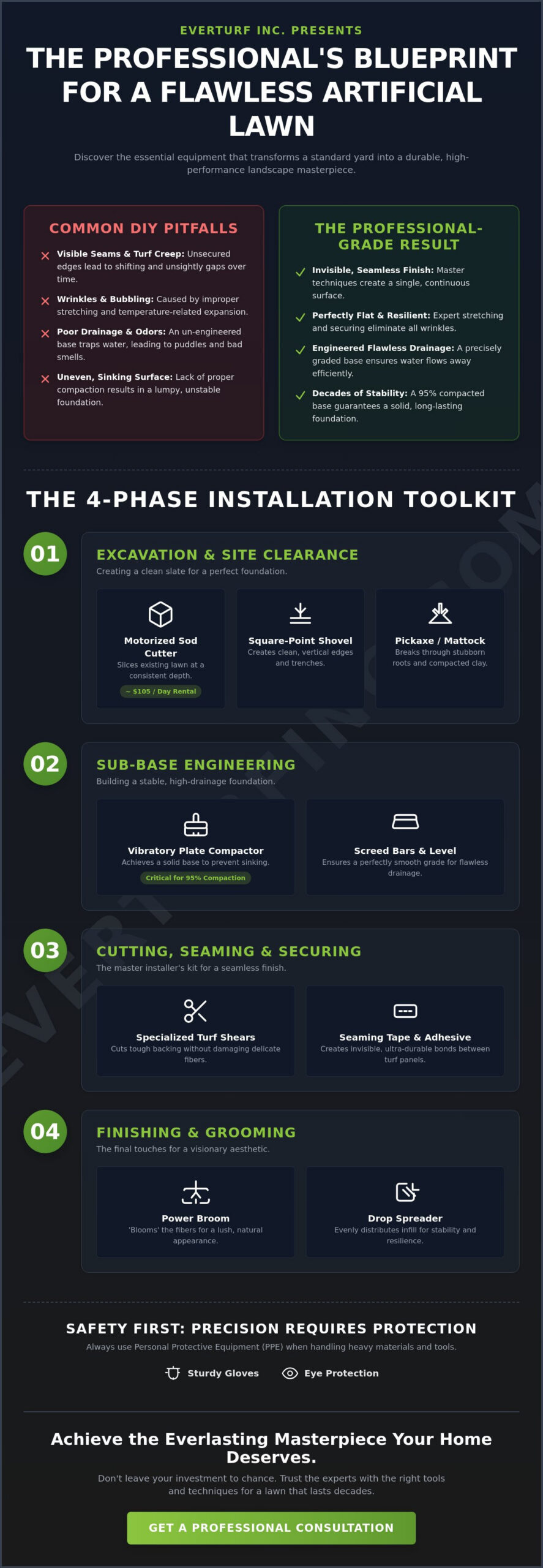
Beginning your landscape transformation requires more than just enthusiasm; it demands a surgical approach to the existing terrain. Identifying the high-performance tools needed for artificial grass installation starts with the heavy lifting of site clearance. To achieve that coveted, perfectly level finish, you must first remove the past. This means stripping away organic matter with precision rather than brute force. A motorized sod cutter is the undisputed champion of this phase, allowing you to slice through existing lawn at a consistent depth. Research indicates that a sod cutter can be rented for approximately $105.00 per day, a small investment that saves hours of grueling manual labor and ensures your new foundation is uniform from the start.
While machinery handles the bulk of the work, manual excavation essentials provide the finesse required for a professional result. A square-point shovel is indispensable for creating clean, vertical edges along walkways and garden borders. Unlike a rounded digging shovel, the flat blade allows you to trench with accuracy, preventing the base material from migrating later. For those dealing with stubborn roots or the compacted clay substrates common in many regions, a heavy-duty pickaxe or mattock becomes your best ally. These tools break through the resistance that would otherwise leave your future lawn with hidden bumps or drainage-blocking obstacles.
Managing the resulting debris is a logistical challenge that many homeowners underestimate. Organic waste is surprisingly heavy; a standard wheelbarrow has a limited load capacity, so calculating the volume of soil and sod you’ll remove is vital. You’re not just digging; you’re engineering a void that will soon be filled with high-performance aggregates. If the logistics of heavy machinery and waste removal feel overwhelming, exploring professional artificial grass installation can turn this labor-intensive phase into a seamless transition toward your new sanctuary.
The Motorized Advantage: Using a Sod Cutter
Consistency is the primary benefit of a motorized sod cutter. By adjusting the blade depth, you can tailor your excavation to your specific soil type. Clay soils often require a deeper cut to ensure enough room for a robust drainage base, while sandy loam might allow for a shallower profile. Operating this machinery requires focus; always clear the area of large stones or hidden irrigation heads before you begin. This step ensures the sub-grade is perfectly level before you ever introduce the first layer of crushed stone.
Clearing the Path for Drainage
A landscape rake is the final tool for a clean slate, used to remove the small pebbles and debris that cause “lumps” under the turf. This is also the time to cap or relocate existing irrigation lines to the perimeter. By ensuring a clean capillary break, you prevent future weed growth and moisture traps. This meticulous preparation sets the stage for a lawn that doesn’t just look beautiful but performs flawlessly through every season.
Engineering the Sub-Base: Precision Tools for Compaction and Drainage
Build a foundation that defies the elements by focusing on the invisible architecture beneath the surface. While basic guides often suggest a simple hand tamp is sufficient, professional-grade results require the mechanical force of a vibratory plate compactor. This is among the most critical tools needed for artificial grass installation because it achieves the 95% compaction density necessary to prevent future dipping, shifting, or “turf creep.” Without this level of engineering, your lawn remains susceptible to the “spongy” sensation that characterizes amateur projects. Achieving this density requires a methodical approach, moving beyond surface-level aesthetics to ensure long-term structural integrity.
Precision in the sub-base is what guarantees the high-performance drainage your property deserves. By engineering a slight 1% grade, you ensure that water moves efficiently toward designated runoff areas rather than pooling in the center of your yard. This meticulous attention to detail is what transforms a standard backyard into a resilient, backyard turf sanctuary that stays dry and usable regardless of the weather. The right tools don’t just make the job easier; they make the results permanent.
Mastering the Plate Compactor
Success with a vibratory plate compactor depends on your technique. Always operate in overlapping passes, much like mowing a lawn, to eliminate hidden air pockets and soft spots. Commercial-grade compaction is the only way to ensure the ground won’t settle unevenly over the next twenty years. You can test the density by attempting to drive a screwdriver into the compacted base; if it resists or only penetrates slightly, you’ve achieved the rock-solid foundation required for a professional finish.
Grading for Perfection
Utilizing a 10-foot screed bar is the most effective way to identify and fix subtle low spots before the turf is laid. Combine this with a string level stretched across the site to maintain a consistent slope away from your home’s foundation. This phase concludes with the application of a final “dust-to-rock” ratio, which fills the tiny voids in the aggregate to create a billiard-table finish. A simple garden hose is an essential moisture control tool here; keeping the base “moist-not-wet” during compaction allows the fine particles to lock together, creating a surface that feels as firm as concrete but drains as naturally as soil.
The Master Installer’s Kit: Tools for Cutting, Seaming, and Securing
Once your sub-base is engineered to perfection, the focus shifts from heavy machinery to the artisan instruments of the master installer. This phase is where the vision truly takes shape. The tools needed for artificial grass installation during this stage are designed to handle the delicate balance between structural durability and aesthetic grace. You’ll start with a high-quality retractable utility knife. Unlike amateur methods that cut through the green fibers, a professional always cuts from the backing. This technique, often called “stitch-row” cutting, ensures you don’t decapitate the blades, leaving a lush edge that hides the seam perfectly.
Precision doesn’t stop at the cut. For detailed trimming around curved garden beds or sophisticated EverTurf Pavers, “duckbill” shears are your best ally. Their unique offset handle allows the blades to sit flat against the surface, providing a clean, surgical snip that standard scissors can’t match. This level of detail is what separates a simple yard from a high-performance sanctuary. Every snip and tuck contributes to a landscape that feels intentional and permanent.
Invisible Seams and The Carpet Kicker
The secret to a lawn that never ripples is tension. A carpet kicker is a non-negotiable tool for stretching the turf across the base. By applying consistent pressure, you eliminate the expansion wrinkles that often plague DIY projects during temperature shifts. Once the turf is stretched, seaming tape and industrial adhesive create a permanent, invisible bond. Use a seam roller to ensure maximum contact between the backing and the glue, preventing “mohawk” seams where the fibers stand up unnaturally at the join. This meticulous alignment is what creates the illusion of a single, continuous carpet of green.
Securing the Perimeter
Finality comes with securing the edges to prevent shifting over time. A rubber mallet and EverTurf Staples and Glue are essential for high-traffic zones or areas where pets play. A proper nailing pattern, typically every 6 inches along the perimeter, prevents edge-lifting and tripping hazards. For a truly polished look, integrate a bender board to create a crisp “capillary break” between your turf and mulch beds. If you’re ready to upgrade your property with professional-grade materials, explore our full range of artificial turf installation solutions today. This final step ensures your investment remains anchored and beautiful regardless of how much activity it sees.
Finishing and Grooming: Tools for the Visionary Aesthetic
The final phase of your landscape transformation is where technical engineering meets artistic vision. After the rolls are secured and the seams are invisible, the lawn often looks flat and industrial. The specialized tools needed for artificial grass installation during this finishing stage are what breathe life into the fibers, turning a synthetic product into a lush, vibrant sanctuary. This process isn’t just about looks; it’s about protecting the structural integrity of the blades and ensuring the surface remains resilient underfoot for years to come.
Precision grooming requires a shift from heavy excavation to refined surface management. While manual brushes have their place for small touch-ups, a mechanical power broom is the visionary tool that truly “blooms” the turf. This equipment uses high-speed rotating bristles to lift the fibers and settle the turf infill deep into the thatch layer. By addressing the surface with professional-grade grooming tools, you ensure that every blade stands tall and reflects light naturally, mimicking the complexity of a well-tended organic lawn.
The Power Broom: Revealing the Landscape
Mechanical brushing is the secret to a professional finish. By running a power broom against the grain of the turf, you force the flattened fibers to stand upright, revealing the multi-tonal beauty of the blades. This action also serves a functional purpose; it helps the infill granules migrate past the dense thatch to the very base of the turf. This weight provides the necessary ballast to keep the lawn from shifting or wrinkling during seasonal temperature changes. It’s a satisfying final step that marks the transition from a construction site to a serene outdoor living space.
Infill Management and Final Inspection
Achieving a uniform surface requires the right distribution method. A drop spreader is the superior choice for applying infill because it ensures a consistent weight across every square inch of the lawn. Hand-tossing infill often leads to “clumping,” which can trap moisture and create uneven drainage patterns. Once the infill is spread and broomed, perform a “walk test” across the entire area. Use your feet to detect any subtle base imperfections or soft spots that might need a final adjustment before you declare the project complete.
Maintaining this visionary aesthetic is remarkably simple once the installation is finished. A stiff-bristled landscape brush and a standard leaf blower are all you need for long-term care. Blowers allow you to remove organic debris like leaves or twigs without disturbing the infill or damaging the delicate fiber tips. This minimal maintenance routine is the ultimate reward of your hard work, finally restoring your personal time and allowing you to enjoy a perfect, stress-free version of your property throughout every season.
Secure Your Vision for a Flawless Outdoor Sanctuary
Transforming your property from a high-maintenance burden into a tranquil retreat requires more than just a roll of synthetic turf. It demands a commitment to precision engineering. By mastering the tools needed for artificial grass installation, from the mechanical force of a vibratory compactor to the artistic touch of a power broom, you ensure a foundation that resists sinking and an aesthetic that stays vibrant. You’ve learned how specialized equipment prevents common issues like turf creep and how meticulous seaming creates an invisible, professional-grade finish.
Choosing the right partner for your project is just as vital as the tools you use. With national distribution of high-performance synthetic turf systems, we provide the specialized EverTurf Infill required for superior drainage and fiber protection. Our professional-grade EverTurf Staples and Glue ensure a permanent bond that withstands the tests of time and climate. Design your maintenance-free oasis with EverTurf high-performance solutions. You’re now equipped with the knowledge to build a landscape that restores your personal time and enhances your lifestyle for years to come.
Frequently Asked Questions
What is the single most important tool for artificial grass installation?
The vibratory plate compactor is the most critical tool for ensuring the long-term structural integrity of your landscape. It provides the mechanical force necessary to achieve 95% compaction in the sub-base, which prevents the ground from shifting or dipping over time. Without this rock-solid foundation, your lawn will eventually develop low spots that collect water and ruin the perfectly flat aesthetic you’ve worked to achieve.
Can I install artificial turf using only standard garden tools?
You shouldn’t attempt a professional-grade installation using only basic garden tools if you want the results to last. While a shovel and rake are helpful for initial clearing, the specialized tools needed for artificial grass installation, like carpet kickers and power brooms, are essential for proper tension and grooming. Relying on standard tools often leads to visible seams and expansion wrinkles that compromise the beauty of your investment.
Why do I need a plate compactor instead of a hand tamp?
A plate compactor delivers thousands of pounds of centrifugal force that a manual hand tamp simply cannot replicate. Hand tamping only settles the top inch of aggregate, leaving hidden air pockets deeper in the sub-base that will eventually collapse under foot traffic or rain. Utilizing a motorized compactor ensures a stable foundation that prevents your EverTurf installation from feeling “spongy” or becoming uneven after a few seasons.
What kind of knife is best for cutting synthetic turf?
A heavy-duty retractable utility knife with a constant supply of fresh, sharp blades is the best choice for precision cutting. Professionals always cut from the backing side to avoid slicing through the green fibers on the surface. This technique preserves the lush look of the blades and allows for the precise “stitch-row” trimming required to create invisible joins and clean edges around sophisticated stone pavers.
Is a power broom necessary, or can I use a regular push broom?
A power broom is highly recommended because it uses high-speed mechanical rotation to “bloom” the fibers and settle infill deep into the thatch. While a regular push broom can stand up the blades temporarily, it lacks the power to distribute infill evenly for weight and stability. The mechanical action of a power broom creates a lush, natural look that manual brushing cannot achieve on a large residential scale.
How do I prevent seams from showing using professional tools?
Preventing visible seams requires a combination of a carpet kicker for tension and a seam roller for maximum adhesive contact. You must trim the factory edges precisely and align the grain of both turf sections in the exact same direction. These specialized tools ensure the two pieces merge into a single, continuous surface that looks as though it grew naturally in place rather than being joined together.
What tools are needed specifically for pet-friendly turf installations?
Pet-friendly projects depend on specific tools needed for artificial grass installation, particularly a drop spreader for antimicrobial EverTurf Infill. This ensures a consistent layer that manages odors and supports superior drainage in high-use areas. Using a landscape rake helps maintain the precise grade of the sub-base, preventing moisture traps that can lead to long-term hygiene issues for your pets and your family.
Do I need specialized tools to install turf on a balcony or deck?
Installing turf on a balcony or deck eliminates the need for excavation machinery but requires specialized EverTurf Staples and Glue for securing the perimeter to hard surfaces. You’ll primarily use a utility knife for detail trimming and a weighted roller to ensure the turf bonds securely to the underlying waterproof membrane. This creates a sophisticated green retreat on elevated spaces without the weight or mess of a traditional soil sub-base.