

Silica Sand vs. Rubber Infill for Turf: The 2026 Comparison Guide
The most affordable infill choice for your lawn might actually be the one that costs you the most in comfort and peace of mind. When weighing silica sand vs rubber infill for turf, many homeowners quickly realize that the material hidden beneath those lush green blades dictates the entire experience of their outdoor sanctuary. You want a space that feels like a natural extension of your home, yet it’s common to worry about heat retention, strange chemical odors, or that unsettling “crunchy” sound underfoot. It’s frustrating to invest in a beautiful landscape only to find it’s too hot for your family to enjoy by mid-afternoon.
We’re here to help you navigate these choices so your artificial turf stays cool, safe, and pristine for decades. This 2026 comparison guide breaks down the critical differences between these materials, including the impact of new Colorado laws regarding PFAS and nonfunctional turf. You’ll learn how to balance initial costs with long-term maintenance requirements to ensure your new lawn provides the tranquility and safety your family deserves. We will explore everything from pet-friendly drainage to the latest innovations in cooling technology to help you maximize your investment’s ROI.
Key Takeaways
- Recognize how infill acts as the structural foundation of your lawn, preventing fiber matting and preserving that lush, upright aesthetic for years.
- Evaluate the thermal and sensory differences of silica sand vs rubber infill for turf to ensure your garden remains a cool, tranquil retreat even in peak summer.
- Assess the specialized impact attenuation of rubber infill for high-traffic zones versus the natural, stable feel of traditional silica sand.
- Secure a fresh, odor-free environment for your family and pets by choosing antimicrobial EverTurf Infill to neutralize ammonia buildup effectively.
- Gain clarity on the perfect infill combinations that balance upfront costs with the long-term restoration of your personal time and property value.
The Structural Role of Infill: Why Your Turf Cannot Survive Without It
Imagine your artificial lawn as a precision-engineered system where the blades you see are only half the story. The real work happens deep within the fibers, where a layer of particulate material known as infill provides the structural integrity necessary for a lifetime of use. When homeowners compare silica sand vs rubber infill for turf, they’re often looking at surface-level benefits; however, the primary role of these materials is to act as the foundation that keeps your investment from failing. Beyond structural support, infill serves as a crucial ballast. Its sheer weight prevents the turf from shifting, bunching, or developing unsightly wrinkles as the ground settles or temperatures fluctuate. Additionally, it provides a vital layer of UV protection by shielding the turf’s primary backing from direct sun exposure, which would otherwise lead to brittleness and degradation over time.
The history of artificial turf infill demonstrates how these materials have evolved from simple fillers to high-performance components that define the safety and feel of your yard. Without this layer, your synthetic grass would be little more than a green carpet prone to slipping and rapid wear. By choosing the right material, you ensure that every square inch of your property remains stable, beautiful, and resilient against the elements.
Protecting Your Investment: The Fiber Longevity Factor
Synthetic grass fibers are designed to be resilient, but they aren’t invincible. Without the lateral support provided by infill, foot traffic would quickly crush the blades against the backing, leading to a permanent “matted” look that no amount of brushing can fix. High-quality EverTurf Infill acts as a microscopic shock absorber; it cushions the base of each blade and ensures they spring back into a vertical position after every step. By distributing the weight of activity, infill prevents the friction that eventually shreds synthetic fibers. Skipping this critical component often leads to premature turf replacement, turning a premium landscape into a costly frustration within just a few years.
Drainage and Aeration: The Invisible Benefits
A common misconception is that infill blocks water flow. In reality, it does the exact opposite. Without these particles, the turf backing would sit flush against the sub-base, creating a vacuum seal that traps moisture. This stagnant environment is a breeding ground for mold and mildew. Proper infill creates a porous layer that allows water to migrate efficiently toward the drainage system. The specific grain size and shape of the material you choose will dictate how quickly your lawn dries after a heavy storm, ensuring your outdoor space remains a safe, dry, and inviting environment for your family.
Silica Sand Infill: The Traditional Standard for Landscape Turf
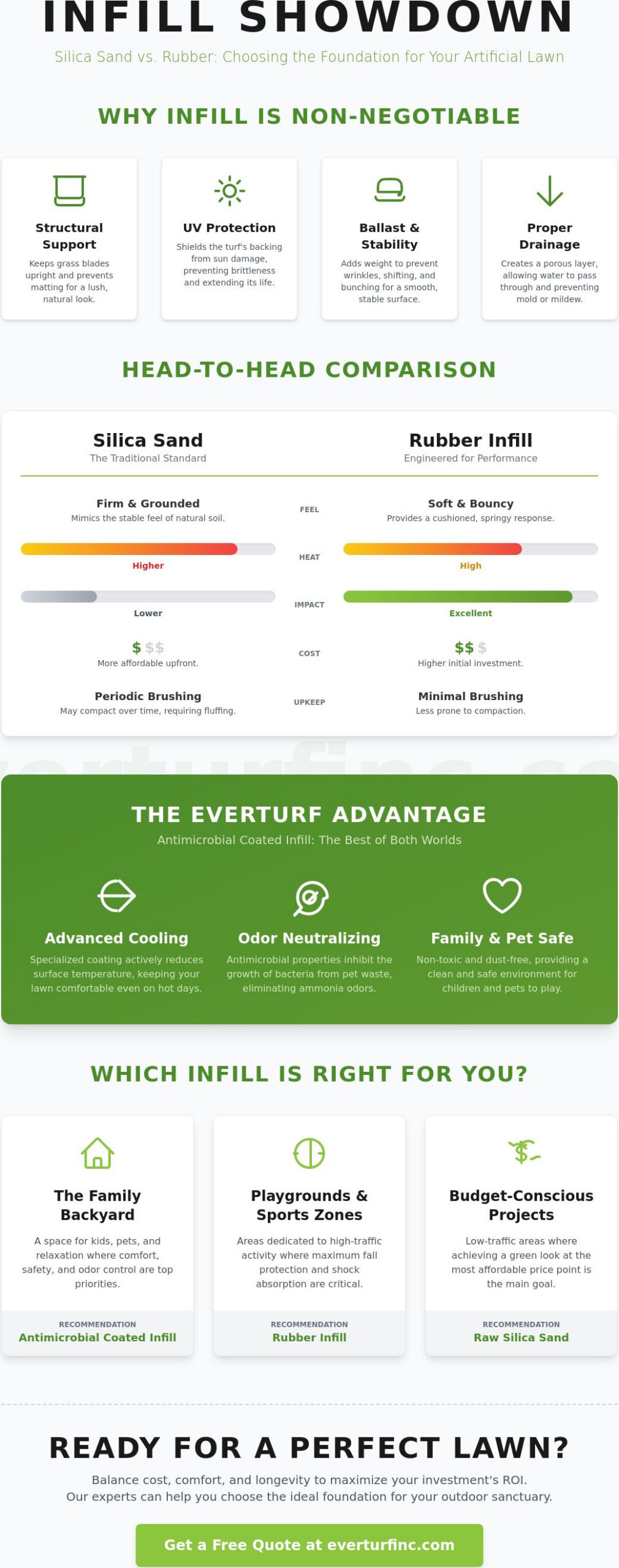
Silica sand remains the most frequent choice for residential lawns and meticulous putting greens, prized for its ability to mimic the firm, grounded feel of a natural sod lawn. When you compare silica sand vs rubber infill for turf, sand stands out as a high-stability option that keeps synthetic blades standing tall while offering a level of affordability that appeals to many homeowners. It provides a dense, heavy ballast that ensures your yard stays exactly where it was installed, creating a predictable and reliable surface for daily life. However, raw sand does have its limitations. Without proper treatment, it can retain significant heat during summer months and may eventually compact, leading to a harder surface that requires occasional brushing to maintain its inviting texture.
To ensure your lawn remains soft to the touch, we always recommend using sub-angular sand grains. Unlike jagged, sharp-edged particles, sub-angular grains are slightly rounded, which prevents them from acting like tiny saws that could tear your synthetic fibers from the inside out. This technical detail is often overlooked, but it’s essential for anyone seeking a truly permanent outdoor solution. An academic study on turf infill performance highlights how material shape and composition directly impact the longevity and safety of the system, reinforcing why the right sand choice is a foundational decision for your property’s value.
Raw vs. Coated Silica: A Critical Distinction
The choice between raw and coated silica is where many homeowners find the most relief. Raw silica sand can produce fine dust during installation or heavy play, which has raised concerns regarding long-term inhalation risks like silicosis. To eliminate this worry, we focus on polymer-coated sand. This advanced material is virtually dust-free and features an antimicrobial coating that prevents the growth of bacteria and mold. It’s also engineered to stay significantly cooler than raw alternatives. This makes it the preferred choice for artificial grass for dogs, as it effectively neutralizes odors while providing a safe, temperate surface for your pets to enjoy year-round.
Ideal Applications for Sand-Based Systems
If you’re envisioning a professional-grade practice area, silica sand is the gold standard for EverTurf Putting Green Pro installations. It allows for precise control over ball speed and roll, giving you a tour-quality experience in your own backyard. While sand is perfect for ornamental lawns, some homeowners notice a subtle “crunch” sound when walking on it. This is easily managed by choosing a high-quality, coated grain that settles deeply into the thatch. For those who prioritize a serene, low-maintenance aesthetic, our team can help you select the best artificial turf installation options to match your lifestyle and local climate needs.
Rubber Infill: Engineered Performance for High-Impact Spaces
Crumb rubber, technically known as SBR (Styrene-Butadiene Rubber), is a performance-driven material derived from recycled tire processing. It’s engineered to provide a level of resilience and “bounce” that other materials simply can’t match. When you’re comparing silica sand vs rubber infill for turf, you’ll find that rubber is the undisputed champion of shock absorption. It offers unmatched impact attenuation, making it a staple for environments where physical activity is the primary focus. However, this high performance comes with trade-offs. Black crumb rubber is known for significant heat absorption and can emit a distinct odor during peak summer temperatures. Additionally, the lightweight nature of the granules means they can occasionally “track” into your home on the bottom of shoes or paws.
For homeowners seeking a more premium experience, EPDM (Ethylene Propylene Diene Monomer) serves as a sophisticated alternative. Unlike recycled SBR, EPDM is a virgin synthetic rubber that is color-stable and stays notably cooler. It provides the same mechanical advantages as crumb rubber but with a more refined aesthetic and improved thermal performance. Whether you choose SBR or EPDM, you’re investing in a system designed to transform your property into a dynamic, high-performance environment.
The Safety Standard: Impact Attenuation and G-Max
Safety isn’t just a feeling; it’s a measurable metric known as a G-max rating. This score quantifies the shock-absorbing properties of a surface, and maintaining a low G-max is vital for preventing concussions and joint injuries. This is why rubber is the preferred choice for EverTurf Play systems and high-traffic sports environments like soccer or football fields. While sand can compact over time and lose its cushioning, rubber infill maintains its elasticity for years, even under the stress of constant activity. It acts as a permanent safety net for your family, ensuring that your outdoor space is as secure as it is beautiful.
Managing the Heat: The Black Rubber Challenge
The science behind the heat is straightforward: black surfaces absorb more solar radiation, converting light into thermal energy. In intense climates, this can make the turf uncomfortably warm. You can mitigate this through light irrigation or by opting for lighter-colored EPDM granules that reflect more sunlight. Environmental safety is another common concern for families. A comprehensive California government study on turf safety conducted by CalEPA examined these materials extensively, providing homeowners with the logical evidence needed to feel confident in their choice. By understanding these factors, you can design a space that prioritizes both peak performance and long-term comfort.
Head-to-Head: Silica Sand vs. Rubber Infill Comparison
Choosing between silica sand vs rubber infill for turf often depends on how you envision using your outdoor sanctuary during the peak of summer. Thermal performance is a primary differentiator; silica sand stays significantly cooler than traditional black rubber granules. While rubber can transform your lawn into a heat-sink, sand reflects more solar energy, keeping the surface temperate for bare feet and paws. If you have pets, odor management becomes your next priority. Antimicrobial silica sand is specifically engineered to neutralize ammonia, whereas rubber can sometimes trap odors and emit a distinct scent when the sun is at its zenith. It’s a choice between a cool, fresh retreat and a high-performance, resilient surface.
Aesthetics also play a vital role in your long-term satisfaction. Sand settles deeply into the thatch to provide a natural, weighted feel that mimics a firm sod lawn. Rubber, being lighter and more buoyant, has a tendency to “splash” or migrate during heavy downpours, which might require more frequent tidying of your hardscapes. While sand is the more traditional choice for a manicured look, it does require occasional top-offs to counter natural compaction. These small maintenance steps are a minor trade-off for the tranquility of a perfect, year-round landscape.
The Drainage Debate: Which Material Flows Better?
Efficiency in water management is what separates a world-class installation from a soggy disappointment. Rubber granules are naturally hydrophobic and allow water to pass through the system with ease. In contrast, raw sand can sometimes clump when saturated, potentially slowing down your turf drainage systems if the material isn’t high-quality. Using a premium, sub-angular sand or a coated variety ensures that water continues to reach the sub-base. This prevents standing pools and mold growth, keeping your environment healthy and dry.
Cost Analysis: Initial Investment vs. Long-Term Value
From a budgetary perspective, silica sand is generally the more accessible entry point for most homeowners. It offers a high degree of stability without the premium price tag of specialized engineered rubber. However, you should consider the frequency of maintenance. Sand requires more regular brushing to alleviate compaction, while rubber’s resilience means it stays “fluffy” longer. Ultimately, the right infill choice protects the 15 to 20 year lifespan of your EverTurf Artificial grass, ensuring your investment pays dividends in both property value and personal time. To find the perfect balance for your specific project, explore our professional artificial turf installation services today.
Making the Right Choice: Use-Case Recommendations for Your Project
The final decision in the silica sand vs rubber infill for turf debate depends entirely on how you intend to live in your new outdoor space. While technical specifications provide the logical evidence for a purchase, the true value lies in how the material supports your daily rhythm. For the typical residential lawn, a polymer-coated silica sand or a balanced sand and rubber mix often serves as the “sweet spot.” This combination offers the sophisticated, grounded feel of a traditional yard while maintaining a temperate surface that remains inviting even during the warmest months of the year. It’s about creating a stress-free environment where you can host a summer evening gathering without worrying about heat or aesthetics.
Specific environments require more specialized solutions to ensure long-term satisfaction. If your property includes dedicated pet areas, antimicrobial EverTurf Infill is a non-negotiable addition. It actively prevents the buildup of ammonia and bacteria, ensuring your lawn stays fresh and hygienic for your family. For EverTurf Sports Fields or high-impact play areas, rubber remains the undisputed leader in safety due to its superior shock absorption. Conversely, EverTurf Roof & Deck projects often benefit from lightweight, high-flow infills that prioritize drainage and structural load limits over pure impact attenuation. Matching the material to the specific lifestyle need is the key to a permanent, rewarding result.
The EverTurf Approach: Hybrid and Specialized Infills
We believe in moving beyond the binary choice of raw sand or crumb rubber. The evolution of turf technology has introduced specialized coated infills that combine the cooling properties of sand with the resilient softness of rubber. These hybrid systems offer a sophisticated solution for homeowners who refuse to compromise on either comfort or durability. Our team carefully calculates infill depths based on the specific pile height of your grass to ensure optimal performance. Achieving this perfect balance requires professional installation, as even distribution is what prevents the common frustrations of bunching or uneven surfaces. This meticulous attention to detail is what transforms a standard service into a genuine lifestyle enhancement.
Final Checklist: 5 Questions to Ask Before You Buy
Before finalizing your installation plan, walk through these essential questions to ensure your choice aligns with your long-term vision for the property:
- Who will use the space most? Prioritize antimicrobial sand for pets or high-cushion rubber for active children and athletes.
- Is the area in direct, all-day sunlight? Opt for coated silica sand or light-colored EPDM to maintain a comfortable temperature.
- What is your primary goal? Decide if you value the firm, natural aesthetic of sand or the bouncy, athletic performance of rubber.
- What is your local climate? Consider high-flow rubber granules if you live in an area prone to heavy, sudden downpours.
- Does the material meet local regulations? Ensure your choice complies with the latest 2026 standards regarding PFAS and synthetic materials.
Choosing the right foundation is the most important step in protecting your investment. For a tailored analysis of your property and a customized recommendation that fits your unique needs, connect with the experts at EverTurf Inc. today.
Secure Your Forever Lawn with the Perfect Foundation
Your journey toward a tranquil, low-maintenance outdoor space begins with the realization that the material beneath the surface is just as vital as the grass itself. Whether you prioritize the cooling, antimicrobial properties of sand for your family pets or the high-impact resilience of rubber for a backyard sports field, your choice defines your property’s comfort for years to come. The decision between silica sand vs rubber infill for turf isn’t just about initial cost; it’s about matching professional-grade materials to your unique lifestyle. By selecting the right foundation, you ensure a lush, upright aesthetic that withstands the elements and provides a safe haven for those who matter most.
With over 15 years of industry-leading expertise and specialized antimicrobial EverTurf Infill solutions, our team is dedicated to helping you achieve a permanent landscape transformation. We provide national distribution for both residential and commercial projects, ensuring every installation meets our rigorous standards for quality and durability. Transform your landscape today with EverTurf Artificial Grass and reclaim your personal time in a beautiful, worry-free environment. You deserve an outdoor sanctuary that stays as perfect as the day it was installed.
Common Questions About Artificial Turf Infill
Is silica sand infill safe for dogs and children?
Yes, silica sand is a safe and non-toxic choice for family environments, especially when you opt for polymer-coated varieties. Coated sand is virtually dust-free, which eliminates the inhalation concerns sometimes associated with raw silica. It provides a stable, clean surface that doesn’t harbor bacteria, making it an ideal foundation for children’s play areas and pet-friendly lawns.
Does rubber infill smell like tires in the summer heat?
Standard crumb rubber (SBR) can emit a noticeable rubber scent when it’s exposed to direct, intense sunlight for long periods. This occurs because the material is derived from recycled tire processing. If you’re sensitive to odors or live in an exceptionally hot climate, choosing a virgin EPDM rubber or a coated silica sand will provide a more neutral sensory experience for your outdoor space.
Can I install artificial turf without any infill at all?
You shouldn’t install synthetic grass without infill because it serves as the essential ballast and structural support for the entire system. Without this material, your turf will likely shift, wrinkle, and mat down under normal foot traffic. Infill is what keeps the blades standing upright and protects the backing from UV degradation, ensuring your lawn stays beautiful for decades.
How often do I need to add more infill to my artificial lawn?
Most residential lawns only require a minor infill top-off every 2 to 5 years to maintain optimal performance. High-traffic zones or areas where pets frequently play may need more regular attention to counter natural compaction. Brushing your turf once or twice a year helps redistribute the material and keeps the fibers resilient and vertical.
Which infill is best for preventing pet urine odors?
Antimicrobial silica sand is the most effective material for neutralizing pet urine odors. It features a specialized coating designed to prevent ammonia buildup, which is the primary cause of unpleasant smells in pet areas. While rubber can sometimes trap moisture and odors, antimicrobial sand keeps your yard fresh and hygienic for both you and your pets.
Will silica sand wash away during heavy rainstorms?
No, silica sand is a heavy, dense material that settles deep into the turf thatch, making it highly resistant to washing away. Even during significant downpours, it remains a stable ballast that supports your drainage system. In contrast, lighter rubber granules are more prone to “splashing” or migrating during extreme weather events, though proper installation minimizes this risk.
Does rubber infill get hotter than real grass?
Yes, all synthetic surfaces and infills will retain more thermal energy than natural, moisture-filled sod. However, when comparing silica sand vs rubber infill for turf, sand stays much cooler than black rubber. Black granules absorb solar radiation quickly, while sand reflects more light, keeping the surface temperate and more comfortable for bare feet during the summer months.
What happens if I use the wrong type of sand for my turf?
Using the wrong material, such as jagged builder’s sand, can cause permanent damage by prematurely shredding your synthetic fibers. The sharp, irregular edges of common sand act like microscopic saws that cut through the blades as you walk on them. It’s vital to use sub-angular silica sand vs rubber infill for turf to ensure the longevity and softness of your investment.