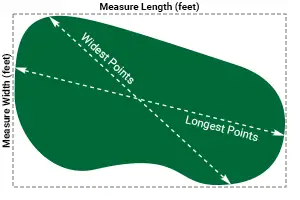




How Much Infill Do I Need for My Turf? The 2026 Calculation Guide
The longevity of your synthetic lawn isn’t determined by the quality of the blades alone, but by the precision of the foundation hidden beneath them. You’ve likely spent hours selecting the perfect EverTurf style, only to find yourself staring at a calculator wondering how much infill do I need for my turf without overspending or under-supporting your investment. It’s a common worry; under-filling leads to matted, flat grass, while over-purchasing expensive materials like silica or zeolite can strain your budget unnecessarily.
We understand that you want a yard that offers tranquility, not a math headache. This 2026 guide simplifies the process by providing the precise formulas required to balance your specific pile height with the right material weight. You’ll gain the confidence to order exactly what your project demands, ensuring your installation remains durable and resilient for years to come. We will cover everything from standard residential ratios of one to two pounds per square foot to specialized high-traffic requirements. This breakdown gives you a clear shopping list for a stress-free transformation of your outdoor space.
Key Takeaways
- Calculate exactly how much infill do I need for my turf using our precise weight formula to avoid over-purchasing while ensuring complete structural support.
- Discover why infill is essential for protecting the turf backing against UV exposure and providing the weight necessary to keep your lawn perfectly in place.
- Learn how to adjust your material volume based on specific pile height and density to maintain a resilient, freshly-manicured look year-round.
- Master professional application techniques, such as the cross-brush method, that guarantee even distribution and prevent common issues like matting.
- Understand how the right infill ratio enhances the longevity and beauty of your EverTurf system, safeguarding your investment for the long term.
The Science of Stability: Why Infill Volume Is Critical for Your Turf
Think of infill as the hidden engine of your synthetic lawn. While the lush green blades capture the eye, it’s the ballast material tucked between them that does the heavy lifting. This material, known as turf infill, serves as the critical anchor for your entire installation. Understanding The Science of Stability: Why Infill Volume Is Critical for Your Turf helps you realize that this isn’t just about weight; it’s about engineering a surface that feels as good as it looks. When homeowners ask, how much infill do I need for my turf, they’re really asking how to safeguard the structural integrity of their long-term investment.
Infill performs three indispensable tasks that determine the daily performance of your yard:
- Vertical Support: It acts like a corset for each individual blade, keeping them standing tall and upright.
- UV Protection: It shields the primary backing from direct sun exposure, preventing the heat from degrading the foundation of your lawn.
- Ballast Weight: It provides the necessary mass to keep the turf from rippling, shifting, or expanding during extreme temperature fluctuations.
EverTurf Infill is specifically designed to fulfill these roles, ensuring your lawn doesn’t succumb to the dreaded “carpet look” where blades lie flat and matted after just a few months of use. Determining exactly how much infill do I need for my turf is the difference between a professional-grade sanctuary and a project that fails prematurely.
Preventing Premature Blade Fatigue
Infill acts as the primary shock absorber for your lawn. Without enough material, the base of the blades takes the full force of every footstep, leading to permanent creases and “fatigue” in the synthetic fibers. There’s a direct relationship between infill height and blade resilience; the material should typically fill the bottom half to two-thirds of the pile height. This isn’t just sand for weight. High-quality EverTurf Infill creates a cushioned matrix that allows blades to spring back into place, preserving that freshly-manicured aesthetic for years rather than weeks.
Thermal Regulation and Drainage Benefits
Proper volume is also a functional necessity for climate control and hygiene. A well-calibrated layer of infill aids in moisture management by creating a porous structure that directs water toward the drainage holes in the backing. If you under-fill, you risk creating “dead zones” where water pools, leading to potential odor traps or bacterial growth. Additionally, certain infill types use evaporative technology to keep the surface temperature comfortable in the sun. Getting the calculation right ensures your yard remains a cool, inviting space even during the peak of summer.
Factors That Dictate Your Infill Requirements
Determining exactly how much infill do I need for my turf requires looking beyond the surface. While a generic estimate might seem convenient, the specific architecture of your chosen synthetic grass dictates the volume of material necessary to achieve that professional, high-end finish. Not all turf styles are built the same; a dense, short-pile putting green has vastly different spatial requirements than a lush, two-inch residential lawn designed for family play.
Pile height stands as the primary driver of volume. A taller blade naturally needs a deeper base of ballast to prevent it from folding under its own weight. However, density and face weight are equally influential. A high-density turf with a heavy face weight occupies more physical “room” at the base of the fibers, leaving less space for infill material. Conversely, a lower-density turf requires more infill to provide the necessary support and prevent a sparse, unnatural appearance. Research from the National Center for Health Research suggests that Factors That Dictate Your Infill Requirements often extend to safety and impact absorption, which are directly influenced by the weight and type of material used.
Specialized applications also shift the calculation. For example, EverTurf Putting Green Pro requires specific fine-grain volumes to ensure a true ball roll and consistent speed. Environmental factors shouldn’t be ignored either. If your property is prone to heavy winds or sits on a slope, increasing the ballast weight is a strategic move to ensure the installation remains anchored and smooth. If you’re feeling overwhelmed by these variables, consulting an expert in artificial turf installation can help you calibrate the perfect amount for your unique landscape.
Pile Height vs. Infill Depth
Professional installers often follow the “Rule of Thirds” to ensure peak performance. Ideally, one-half to three-quarters of the blade should be supported by infill. For a 1.5-inch pile, this usually translates to roughly 1 to 1.5 pounds per square foot. A 2-inch pile, however, might require 2 pounds or more to prevent the blades from matting. Over-filling can hide the beautiful grass fibers you’ve invested in, while under-filling leaves the backing vulnerable to the elements and results in a flat, lifeless lawn.
Application-Specific Needs
Your lifestyle determines your material needs. Pet-heavy areas benefit from higher volumes of specialized antimicrobial infill to manage moisture and prevent odor traps. High-traffic walkways demand increased ballast to resist the constant pressure of footsteps and maintain a resilient “spring-back” effect. For rooftop and deck installations, weight becomes a critical safety consideration; you must balance the need for stability with the structural load limits of your building, often requiring lighter, specialized materials designed for elevated spaces.
Calculating Your Needs: The EverTurf Infill Weight Formula
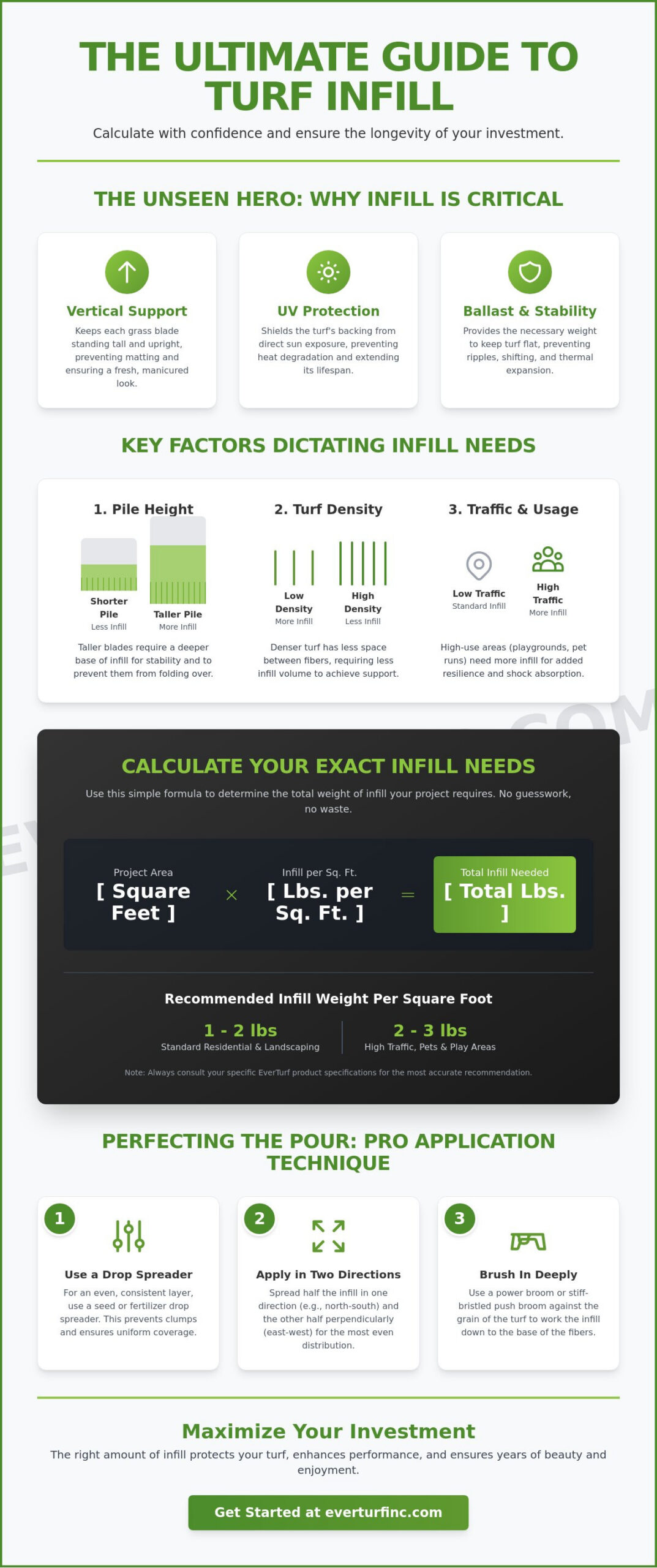
Precision is the hallmark of a professional installation. While guesswork might suffice for a small garden bed, your synthetic lawn requires a more disciplined approach to ensure it remains a pristine retreat for years. To answer the question, how much infill do I need for my turf, you simply need to apply a basic mathematical principle: multiply your total square footage by the recommended pounds per square foot for your specific turf style. This simple calculation transforms a complex project into a clear, manageable plan.
The resulting figure represents the total weight of material required to stabilize the fibers and protect the backing. However, the density of your chosen material plays a significant role in the final volume. Silica sand, the industry standard, is quite dense and occupies less physical volume per pound compared to alternatives like Zeolite. If you’re prioritizing odor control for a pet-friendly space, you might select Zeolite, but you must account for its lighter, more porous nature when ordering. For a deeper dive into which material suits your lifestyle, consult The Essential Guide to Turf Infill.
Always include a 10% buffer in your final order. This extra material accounts for the initial settling into the turf’s thatch layer and provides a small stockpile for future top-offs after heavy rain or intense foot traffic. It’s a small step that ensures you won’t be left with exposed backing during the final stages of your project. When you consider how much infill do I need for my turf, think of this buffer as an insurance policy for the longevity of your outdoor sanctuary.
Infill Weight Guide by Turf Type
Your specific choice of EverTurf Artificial grass determines the required volume. Taller, plusher styles naturally demand more ballast to keep the long fibers standing proud.
- Standard Residential (1.5″ to 1.75″ pile): Plan for 1.5 to 2.0 lbs per sq. ft.
- Lush/Premium (2″+ pile): These taller fibers require 2.5 to 3.5 lbs per sq. ft. for adequate support.
- Putting Greens: EverTurf Putting Green Pro installations need 2.0 to 3.0 lbs of specialized fine-round sand per sq. ft. to ensure that perfect, tournament-speed roll.
Converting Pounds to Bags
Most high-quality infill materials are packaged in 50-pound bags, making it easy to translate your total weight into a manageable shopping list. For instance, a 500-square-foot lawn requiring 2 pounds of infill per square foot totals 1,000 pounds of material. Dividing that by 50 results in exactly 20 bags. This clarity removes the anxiety of over-purchasing while ensuring you have every pound needed for a flawless finish. For larger estates, bulk ordering often proves more efficient, allowing you to focus on the beauty of your property rather than the logistics of the installation.
Perfecting the Pour: How to Distribute Infill for Even Performance
Knowing the math behind your project is only half the battle. Once you have calculated how much infill do I need for my turf, the focus shifts to the art of distribution. A rushed application can leave your lawn looking lumpy or uneven, defeating the purpose of your premium investment. Professional results require a systematic approach that ensures every fiber is supported from the base up. Before you begin the pouring process, ensure your lawn is perfectly tensioned and secured. Using EverTurf Staples and Glue to lock the perimeter and seams is a non-negotiable first step. If the turf moves during infilling, you risk permanent wrinkles that are difficult to correct later.
The secret to a flawless finish lies in the “cross-brush” technique. This involves brushing the grass against the grain to open up the thatch layer, making room for the material to settle deeply. Avoid the temptation to dump the entire bag in one spot. Instead, use a drop spreader to apply the material in multiple thin, uniform layers. This method prevents the weight from trapping blades underneath and allows for a more natural, upright appearance.
The Layering Technique
Achieving a professional-grade density requires patience. Follow these three steps for a resilient result:
- Step 1: Use a power brush or stiff nylon broom to stand the fibers perfectly upright. This creates the necessary pockets for the infill to enter.
- Step 2: Spread a light, even layer of material across the surface. Immediately brush it down so it reaches the primary backing rather than sitting on top of the blades.
- Step 3: Repeat this layering and brushing process. This incremental approach ensures the ballast is packed tightly at the base, providing maximum stability and shock absorption.
The Visual ‘Reveal’ Test
Consistency is key to the longevity of your landscape. Use a simple ruler or depth gauge to check for high and low spots across the yard. This step is where you verify if your answer to how much infill do I need for my turf translates correctly to the physical space. In a standard installation, approximately 1/2 inch of the blade tip should remain visible above the infill line. This reveal provides the lush, green texture you desire while keeping the base protected from UV rays. If you see material piling up or the grass looks like a sandy beach, you’ve over-filled. This beach effect not only looks unnatural but also creates a slippery surface. If you want to ensure your project meets these high standards without the DIY stress, consider booking a professional artificial grass installation to handle the technical details for you.
Maximizing Your Investment with EverTurf Inc Solutions
Choosing the right partner for your landscaping transformation ensures that your initial vision matures into a lasting legacy of tranquility. EverTurf Inc positions itself as a comprehensive source for high-performance systems, providing the logic and materials needed to move beyond the frustrations of traditional yard work. While we have detailed the technical answer to how much infill do I need for my turf, the quality of that material is what ultimately secures the ROI of a synthetic turf investment. High-grade EverTurf Inc Infill remains resilient against the scorching heat and unexpected freezes of 2026, protecting your property from the premature wear that plagues inferior installations.
Investing in precision-engineered ballast does more than just keep the grass upright. It creates a stable, safe environment that withstands extreme weather conditions without shifting or washing away. For specialized projects like sports fields, which often require three to five pounds of material per square foot for peak safety, or intricate rooftop decks, consulting with a seasoned expert is vital. Our team understands that every pound of material serves a purpose, from moisture management to impact absorption, ensuring your outdoor space remains a stress-free sanctuary year-round.
Tailored Solutions for Pet and Play Areas
Modern homeowners demand environments that are as safe as they are beautiful. EverTurf Inc Infill integrates seamlessly with artificial grass for dogs, utilizing non-toxic, antimicrobial properties to keep your lawn hygienic. When calculating how much infill do I need for my turf in a play zone, remember that children require a consistent, cushioned surface. To maintain this performance, we recommend a light annual grooming and top-off to counteract the natural settling of materials. This simple maintenance routine keeps the infill clean and ensures the blades continue to offer the soft, sensory appeal of a natural lawn without the mud or allergens.
Professional-Grade Putting Green Finishes
For the golf enthusiast, the margin for error is non-existent. EverTurf Putting Green Pro relies on specialized infill to achieve a true, tournament-quality ball roll. Unlike standard silica sand, which can have irregular shapes that cause friction, our rounded green sand allows the ball to glide across the surface with predictable speed. This technical distinction is what separates a backyard hobby from a professional-grade training ground. To complete your sanctuary with the finest materials available, we invite you to Shop EverTurf Inc Infill and Accessories through our curated product catalog, where every component is selected to enhance your lifestyle and restore your personal time.
Secure Your Everlasting Outdoor Sanctuary
Your journey toward a perfect, year-round outdoor space depends on the details hidden beneath the surface. By mastering the relationship between pile height and material weight, you ensure your lawn remains as resilient as it is beautiful. Calculating exactly how much infill do I need for my turf is the final step toward a worry-free landscape that restores your personal time and enhances your home’s value. We’ve explored how the right formula and layering techniques prevent premature blade fatigue, giving you the confidence to enjoy your investment for years.
EverTurf Inc provides the high-performance synthetic systems and national distribution required to bring this vision to life. Whether you need specialized solutions for pets, play zones, or professional-grade sports fields, we offer the logic and materials to guarantee success. Don’t leave your installation to guesswork. Order Your EverTurf Inc Infill and Installation Accessories Today and take the first step toward a more beautiful, stress-free property. Your dream landscape is within reach, and we’re here to help you anchor it for a lifetime of satisfaction.
Frequently Asked Questions
Can I use regular play sand as infill for my artificial grass?
No, you shouldn’t use play sand because its irregular, jagged shapes can damage the turf fibers and lead to compaction. This prevents proper drainage and creates a hard, uncomfortable surface over time. Instead, use a kiln-dried, rounded silica sand or a specialized product like EverTurf Infill. These materials are designed to flow easily between the blades and settle at the base without clumping or trapping harmful moisture.
What happens if I don’t put enough infill in my turf?
Insufficient infill causes your turf blades to mat down and lose their upright, natural appearance. Without the structural support provided by the material, the synthetic fibers lack the resilience to spring back after being stepped on. Additionally, an under-filled lawn leaves the primary backing vulnerable to UV degradation, which can significantly shorten the lifespan of your investment. It also lacks the weight needed to prevent shifting during temperature changes.
How often do I need to top off or replace my turf infill?
Most residential lawns require a minor top-off every two to three years to maintain peak performance. While the material doesn’t disappear, it can settle deeper into the thatch or be slightly displaced in high-traffic zones. If you’ve been wondering how much infill do I need for my turf over the long term, a light grooming and a small amount of fresh material will restore the lush look and feel of your yard.
Will heavy rain wash away my turf infill?
Heavy rain will not wash away your infill if it has been properly brushed into the thatch layer. The material is designed to sit deep within the fibers, acting as a ballast that holds the turf in place. Because the infill is heavier than water and tucked beneath the grass blades, it stays securely at the base while the water filters through the drainage holes in the backing, ensuring your lawn stays perfectly level.
Is turf infill safe for dogs and children to play on?
Modern infill materials are specifically engineered to be non-toxic and safe for both children and pets. High-quality options like EverTurf Infill are free from harmful chemicals and heavy metals, providing a clean environment for daily activities. For pet owners, antimicrobial infills like Zeolite offer an added layer of safety by neutralizing odors and preventing the growth of bacteria, ensuring your outdoor space remains a healthy sanctuary for the whole family.
Does the color of the infill matter for the look of my lawn?
The color of your infill plays a subtle but important role in the final aesthetic of your lawn. Most homeowners choose a green or tan material because it blends seamlessly with the natural-looking thatch at the base of the grass blades. This helps to create a deep, lush appearance. Using a contrasting color can make the material visible on the surface, which might detract from the realistic, year-round beauty you want to achieve.
How do I know if I’ve overfilled my artificial grass?
You’ll know you’ve overfilled if the material begins to cover the tips of the grass blades, creating what professionals call the “beach effect.” When this happens, the lawn loses its soft, grassy texture and starts to look like a sandy surface. Overfilling can also make the turf feel slippery and less stable underfoot. Ideally, about half an inch of the blade should remain visible above the infill line to ensure a natural and resilient look.
Should I use a different amount of infill for a putting green versus a lawn?
Yes, putting greens require a different volume and type of material compared to standard residential lawns. While a lawn focuses on fiber support and cushion, a putting green needs a specific amount of fine-round sand to ensure a consistent ball roll. When calculating how much infill do I need for my turf for a golf area, you’ll typically use 2 to 3 pounds per square foot of specialized sand to achieve professional-grade speed and accuracy.