
Pro-Level Performance: The Ultimate Guide to Artificial Turf for Batting Cages in 2026
Choosing the thickest turf you can find for your facility might actually be the fastest way to watch your investment crumble under a batter’s cleats. High-performance training demands more than just a green floor; it requires artificial turf for batting cages that’s engineered for the specific, repetitive friction of the box. You likely already know the frustration of watching premium nets paired with a floor that develops ruts and bald spots within a single season. It’s exhausting to manage a space where the ball bounce is unpredictable and your athletes complain about joint fatigue after every session.
We’re here to help you move toward a more permanent, professional solution. Discover how to select and install high-durability synthetic turf that protects your players and stays pristine for a decade or more. This guide explores the critical differences between resilient nylon and polyethylene fibers, the necessity of shock-absorbent padding, and the specific installation techniques required to transform your facility into a pro-level environment. We will walk you through the technical specifications that ensure your surface withstands elite-level practice while restoring your time through reduced maintenance.
Key Takeaways
- Distinguish between nylon and polyethylene to ensure your surface survives the intense friction of repetitive hitting drills.
- Evaluate the critical role of integrated foam padding in reducing impact force and protecting athlete joints during long practice sessions.
- Discover why specialized artificial turf for batting cages prevents the rapid thinning and bald spots typical of standard residential-grade products.
- Learn professional installation strategies, including how to use EverTurf Staples and Glue for a seamless and permanent bond.
- Transform your training environment into a pro-level facility that balances elite performance with a sophisticated, low-maintenance aesthetic.
Why Standard Turf Fails in a Batting Cage Environment
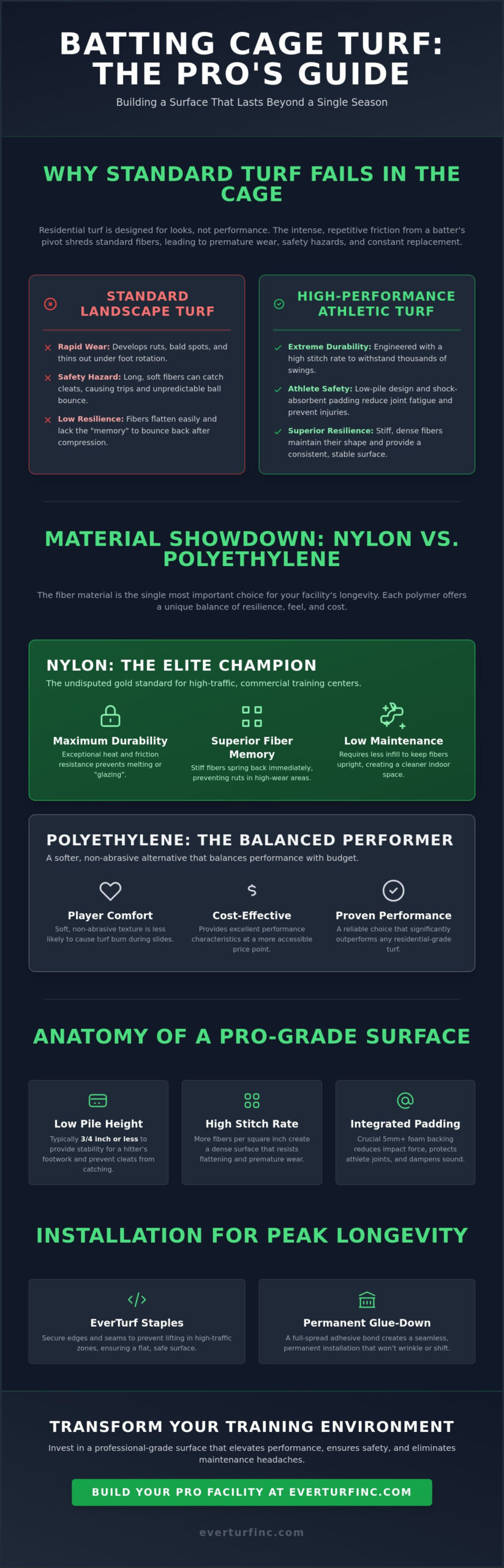
High-performance training environments require more than just a green aesthetic. Professional artificial turf for batting cages is a specialized, high-density, low-pile surface engineered specifically to handle intense lateral movement. Unlike standard lawn products, these surfaces prioritize fiber resilience over soft textures. When a hitter enters the box, their back foot engages in a powerful digging motion. This rotational force creates extreme friction that would shred residential-grade grass within weeks. By choosing a surface designed for sport, you ensure the ground remains stable and intact through thousands of swings.
Beyond durability, high-quality turf acts as a critical safety and acoustic tool. It offers significant sound dampening, which is essential for indoor facilities where the crack of the bat can become deafening without proper absorption. It also provides friction resistance to prevent turf burn on both the balls and the athletes’ equipment. Understanding the history and development of artificial turf helps us appreciate how modern materials have evolved from simple carpets into these sophisticated, multi-layered systems. Choosing the right artificial turf for batting cages isn’t just about the floor; it’s about the longevity of your entire training program.
The Anatomy of High-Impact Athletic Turf
The secret to a long-lasting cage lies in the stitch rate and fiber density. A high stitch rate ensures there are more fibers per square inch, which prevents the surface from flattening under pressure. We recommend a low pile height, typically 3/4 inch or less, because it provides the necessary stability for a hitter’s footwork. If the pile is too long, the foot slides; if it’s too short, the impact is too jarring. The backing material is equally important. High-grade athletic turf uses multi-layered backing systems to prevent stretching or wrinkling, ensuring the surface stays flat and safe for years.
Landscape Turf vs. Athletic Turf: The Critical Differences
Residential turf focuses on aesthetics, using soft, thin fibers that mimic the look of a lush lawn. While beautiful for a backyard, these fibers lack the memory needed to bounce back after being crushed by a cleat. Athletic turf uses resilient fibers that maintain their shape under stress. Safety is the primary concern here. Using the wrong turf type can lead to tripping hazards if cleats catch on long, decorative fibers. Additionally, while outdoor cages need rapid drainage, indoor cages focus on a permanent bond to the subfloor. Choosing the right product ensures you aren’t replacing your floor every two years.
Material Science: Choosing Between Nylon and Polyethylene
Selecting the right material is the most consequential decision you’ll make for your facility. While various options exist, the industry standard for professional artificial turf for batting cages centers on two primary polymers: Nylon and Polyethylene. Each material offers distinct advantages depending on your facility’s traffic volume, athlete age, and budget. Understanding the molecular resilience of these fibers ensures you don’t overspend on unnecessary features or underspend on a surface that fails prematurely.
The “memory” of a fiber refers to its ability to stand back up after being compressed. This is vital in a cage where footwork is repetitive and localized. High-quality materials also require robust UV stability. For outdoor cages, this prevents the sun from making the fibers brittle; for indoor cages, it ensures the vibrant green doesn’t fade under harsh overhead lighting. Choosing the correct polymer is about more than just the initial look. It’s about how the surface performs during the thousandth hour of practice.
Nylon: The Elite Choice for Commercial Facilities
Nylon remains the undisputed gold standard for high-traffic training centers. Its primary strength lies in its incredible heat resistance and high melting point. When players pivot or slide, the resulting friction generates significant heat. Nylon withstands this thermal stress without melting or “glazing,” which maintains the surface texture over time. Because nylon fibers are naturally stiff, they don’t require heavy infill to remain upright. This creates a cleaner, low-maintenance environment that’s perfect for indoor spaces. In the high-wear area of the batter’s box, nylon’s superior memory allows it to recover its shape quickly, preventing the premature thinning that plagues lesser materials.
Polyethylene: Balancing Performance and Budget
Polyethylene (PE) provides a softer, non-abrasive alternative that’s particularly well-suited for youth facilities and home-based artificial turf for batting cages. If your primary goal is a surface that’s gentle on skin during sliding drills, PE is the ideal choice. However, because PE fibers are more flexible, they typically require turf infill to provide structural support and keep the blades standing tall. This material is highly UV stable, making it a fantastic option for outdoor cages exposed to direct sunlight. While it may not offer the same decades-long lifespan as nylon in a commercial setting, it provides an excellent balance of beauty and functionality for residential use.
Choosing between these two depends on your specific vision for your property. If you’re building a legacy training space that needs to withstand high-velocity swings, the investment in nylon pays dividends in longevity. For those looking to create a beautiful, safe practice area for the family, polyethylene offers a lush, inviting result. If you’re ready to transition from a high-maintenance yard to a professional training zone, exploring artificial turf installation near me can help you determine which material fits your unique climate and usage needs.
Padded vs. Unpadded Turf: Protecting Athletes and Subfloors
The foundation of a high-performance training facility often lies in what you cannot see from the batter’s box. While the top fibers handle the friction of the swing, the backing determines how the surface interacts with the athlete’s body. Most professional artificial turf for batting cages features an integrated foam backing, typically ranging from 5mm to 8mm in thickness. This isn’t just about comfort; it’s a critical safety specification. This layer significantly reduces the G-max, or the impact force, transferred to a player’s joints during explosive movements. Without this cushion, the repetitive stress of practice on hard subfloors can lead to premature fatigue and avoidable injuries.
Protecting your subfloor is just as important as protecting your players. When you’re installing over concrete, padding becomes mandatory. It acts as a structural buffer that prevents the turf from grinding against the stone, which would otherwise lead to internal wear and fiber loss. A padded system effectively mimics the natural “give” of well-maintained dirt. It provides that familiar, reassuring feel underfoot that allows hitters to focus on their mechanics rather than the hardness of the floor. This transition from a rigid surface to a responsive one is what separates a standard cage from an elite training environment.
When to Choose Padded Turf Rolls
Padded rolls are the premier choice for indoor commercial facilities where player longevity is a top priority. These systems simplify the installation process by combining the turf and underlayment into a single product, which eliminates the need for separate padding layers. In the echo-prone environment of a large gym, foam-backed turf serves as an excellent acoustic dampener. It absorbs the sharp sound of ball impact and footwork, creating a more focused and professional atmosphere. For facility owners, this means a faster setup and a surface that remains stable without shifting over time.
The Case for Unpadded Turf and Infill
Unpadded turf still has a vital role, particularly in outdoor environments. When you install over a crushed stone base, unpadded turf allows for natural drainage that keeps the cage usable even after heavy rain. These systems rely on heavier loads of EverTurf Infill to provide the necessary weight and cushion. This setup allows you to customize the “speed” of the surface by adjusting the infill depth, which is a major advantage for large-scale multi-lane facilities. While it requires more initial labor for infill distribution, unpadded turf often provides significant cost savings for expansive outdoor projects.
Installation Strategies for Peak Longevity
Even the highest quality artificial turf for batting cages will struggle to perform if the foundation underneath is flawed. Success begins with meticulous subfloor preparation that addresses the unique needs of your environment. For indoor facilities, this involves cleaning and leveling concrete to ensure a perfectly flat, secure bond. For outdoor setups, the process mirrors the precision of a professional backyard turf installation. It requires a stable, compacted base that won’t shift or develop ruts during heavy use, ensuring your facility remains a high-performance zone for years to come.
A permanent, seamless result depends entirely on the quality of your adhesives and seaming techniques. We recommend using EverTurf Staples and Glue to create a bond that resists the high rotational forces of a hitter’s back foot. Pay close attention to “turf direction” during the layout phase. Every roll must face the same way to ensure a uniform appearance and consistent ball bounce across the entire cage. To further extend the life of your primary investment, consider placing portable hitting mats in the batter’s box. These mats absorb the most intense daily wear, keeping your main rolls pristine.
Indoor Installation: Adhesives and Layout
Achieving a pro-level finish indoors often requires a full glue-down method for maximum stability. While perimeter-tape methods work well for temporary setups, permanent training centers benefit from the security of a total adhesive bond. When managing multi-lane cages, position your seams away from high-traffic zones to prevent tripping hazards. Use a sharp commercial rotary knife for precise cuts around cage poles and netting anchors. This ensures the turf lays flat without bunching, creating a clean, organized look that reflects the quality of your program.
Outdoor Installation: Drainage and Base Layers
Outdoor cages face environmental challenges that require a 3-4 inch compacted aggregate base for long-term stability. This layer provides the structural integrity needed to prevent sinking while facilitating rapid drainage after heavy rain. Even in high-traffic sports areas, a weed barrier is essential to prevent invasive growth from compromising the backing material. Secure the edges of your artificial turf for batting cages with heavy-duty stakes or a concrete curb. This prevents wind-lift and ensures a safe, trip-free perimeter for your athletes and coaches.
Ready to transform your training space with a professional touch? Explore our expert artificial turf installation services to ensure your project is handled with visionary precision and care.
EverTurf Sports Fields: The Professional Advantage
Choosing EverTurf Sports Fields means investing in more than just a surface. It’s about securing a legacy for your training facility. We act as a Reliable Visionary, guiding you through the technical nuances of artificial turf for batting cages to ensure your property reflects your commitment to excellence. Our products undergo rigorous durability testing to withstand the exact cleat-driven friction discussed in our earlier sections. We don’t just provide materials; we offer a sophisticated, permanent solution that transforms your environment into a professional-grade sanctuary.
Selecting the right face weight and padding density requires a consultative partner who understands the specific demands of high-velocity practice. A higher face weight provides the dense, resilient feel that protects your athletes, while the right padding ensures long-term joint health. This tailored approach allows you to build a space that feels as good as it looks. You’re not just buying a product. You’re reclaiming your personal time by eliminating the tedious maintenance and constant repairs associated with inferior surfaces. Our diamond-shaped monofilament fibers are engineered to stay upright, providing a consistent, high-performance experience for years.
Why EverTurf is the National Leader in Synthetic Solutions
EverTurf Inc. maintains a robust national distribution network, ensuring that elite-level materials are accessible wherever you’re building. Many of our clients choose to integrate multiple high-performance zones to maximize their property’s potential. For instance, you can pair your batting facility with an EverTurf Putting Green Pro. This creates a multi-sport backyard design that enhances property value and provides endless opportunities for skill development. By choosing a leader in synthetic solutions, you gain the peace of mind that comes with deep industry expertise and a passion for lasting results.
Ready to Transform Your Training Facility?
It’s time to move away from the frustrations of temporary fixes and toward the tranquility of an everlasting training space. We invite you to explore our full athletic catalog at everturfinc.com to see the range of possibilities for your facility. Whether you’re upgrading a commercial center or building a private oasis, our team is ready to provide a customized project quote that fits your specific vision. Invest in professional artificial turf for batting cages today and experience the rewarding transition to a worry-free, high-performance environment. Let’s build something that lasts together.
Elevate Your Training Environment Today
Building a professional training space requires a commitment to quality that transcends basic aesthetics. You now understand how the right material choice, whether it’s resilient nylon or soft polyethylene, dictates the lifespan of your facility. By prioritizing elite shock-absorption padding, you aren’t just protecting your subfloor; you’re safeguarding the physical health and longevity of every athlete who enters the box. This strategic approach ensures that your investment remains as functional as the day it was installed.
Selecting the proper artificial turf for batting cages is the final step in moving away from the stress of constant repairs toward a permanent, high-performance solution. EverTurf provides the commercial-grade nylon fibers and specialized padding options needed to withstand the most intense practice schedules. With our national shipping and distribution, professional-grade results are within reach regardless of your location. Our team is ready to help you visualize a more beautiful and stress-free version of your property.
Explore EverTurf Sports Field Solutions for Your Batting Cage and take the first step toward a more beautiful, maintenance-free facility. Your athletes deserve a surface that matches their dedication. Let’s create a training environment that stands the test of time and delivers rewarding results for years to come.
Frequently Asked Questions
What is the best type of turf for a batting cage?
Nylon is the premier choice for professional artificial turf for batting cages due to its high melting point and resilience. It withstands the intense friction of a hitter’s pivot better than any other polymer. While polyethylene is a softer alternative, nylon’s ability to stay upright without heavy infill makes it the standard for elite training facilities that value longevity and performance.
Do I need padding under my batting cage turf?
Padding is highly recommended for any batting cage installation, particularly those on concrete or asphalt. A 5mm to 8mm foam backing absorbs the shock of repetitive footwork, which significantly reduces the risk of joint fatigue for your players. It also acts as a protective buffer that prevents the turf backing from wearing down against the hard subfloor over time.
How long does artificial turf last in a batting cage?
High-quality synthetic turf typically lasts between 8 and 15 years in a batting cage environment. The actual lifespan depends on the fiber type and the frequency of use in the batter’s box. Choosing a commercial-grade nylon and using hitting mats in high-traffic areas can help you reach the upper end of that 15-year life expectancy while maintaining a professional look.
Can I use regular landscape turf for my backyard batting cage?
Landscape turf is not designed for the specific lateral stresses of baseball or softball training. Its longer, thinner fibers will quickly flatten and tear under the rotational force of a batter’s cleats. For a result that lasts, you need a high-density, low-pile product specifically engineered for athletic performance and friction resistance rather than just aesthetic beauty.
How do you clean and maintain batting cage turf?
Maintenance involves regular debris removal and periodic brushing to keep fibers upright. Use a leaf blower for loose dirt and a stiff-bristled synthetic broom to lift the pile in high-traffic zones. Unlike natural grass, this routine only takes a few minutes a week, restoring your personal time and keeping the training facility looking pristine and organized year-round.
Is it better to use turf rolls or hitting mats?
Using a combination of full turf rolls and portable hitting mats offers the most professional and cost-effective solution. The rolls provide a seamless, high-performance floor for the entire length of the cage. Placing a hitting mat in the batter’s box allows you to replace only the small, high-wear section every few seasons instead of the entire artificial turf for batting cages.
Can cleats be worn on batting cage turf?
Turf shoes and molded cleats are the preferred footwear for these synthetic surfaces. Metal cleats should generally be avoided because they can slice through the fibers and damage the backing material over time. Many professional facilities prohibit metal cleats on synthetic surfaces to maintain the integrity of the floor and ensure the safety of the athletes.
How much does it cost to turf a standard 70-foot batting cage?
The total investment for a 70-foot cage depends on the material grade and whether you choose professional installation. Industry material costs for batting cage turf typically range from $1.40 to $5.00 per square foot. Factors like integrated padding and fiber density will influence the final amount, so checking current localized labor rates is essential for an accurate project budget.