
How to Get Dog Pee Smell Out of Artificial Turf: The Definitive 2026 Guide
What if the true value of your backyard isn’t measured in its vibrant green hue, but in the invisible freshness of the air? You likely chose a synthetic lawn to enjoy a sophisticated, low-maintenance lifestyle, yet a lingering ammonia scent can quickly turn a private sanctuary into a source of social embarrassment. It’s a common frustration to feel that your investment was a mistake or that you’re simply throwing money at products that fail to deliver. Learning how to get dog pee smell out of artificial turf is the final step in reclaiming the tranquility and beauty of your outdoor living space.
The good news is that achieving a completely odorless environment is entirely possible with the right technical approach. This definitive 2026 guide reveals the professional secrets to neutralizing urea crystals at the source rather than just masking them. You’ll discover the logic behind high-performance drainage and the molecular power of EverTurf Infill. We provide a clear, repeatable maintenance routine that ensures your lawn remains a pristine, stress-free retreat for your family and pets. By moving away from temporary fixes, you can finally enjoy the long-term satisfaction of a beautiful, sanitary property.
Key Takeaways
- Understand why uric acid crystals resist standard rinsing and how they bond to synthetic fibers to create persistent odors.
- Learn the precise saturation method for how to get dog pee smell out of artificial turf to ensure cleaners reach the underlying sub-base.
- Compare the effectiveness of bio-enzymatic cleaners against common household remedies to achieve a truly sanitary, odorless result.
- Identify the role of EverTurf Infill in neutralizing ammonia at the molecular level for long-term odor prevention.
- Discover how engineered drainage in EverTurf Artificial grass pets transforms your backyard into a stress-free, year-round sanctuary.
Understanding Why Dog Urine Odors Linger in Synthetic Grass
Many homeowners transition to synthetic lawns for the promise of a pristine, year-round backyard, yet find themselves battling a persistent, pungent scent. Understanding the root cause of these smells is the first step in learning how to get dog pee smell out of artificial turf. While Artificial turf is engineered for durability and aesthetic appeal, its synthetic nature creates a unique environment where organic waste behaves differently than it does in natural soil. Without the natural microbes found in earth to break down waste, urine requires a more sophisticated management strategy.
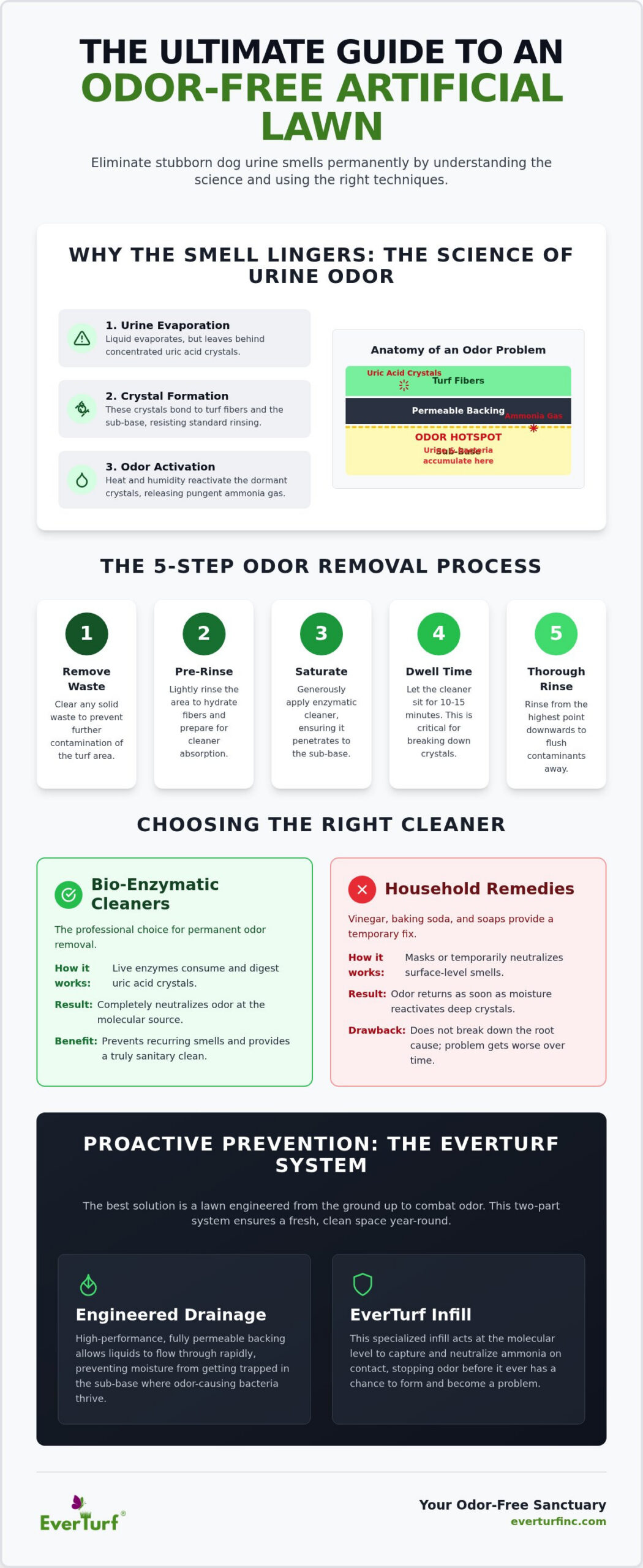
When dog urine hits the turf, the liquid component eventually evaporates under the sun. This process leaves behind highly concentrated uric acid crystals. These crystals aren’t easily washed away by a standard garden hose. In fact, simple rinsing often spreads these microscopic salts across a larger surface area, inadvertently making the problem worse by distributing the odor source. Heat and humidity act as catalysts, triggering a chemical reaction that releases ammonia gas into your outdoor sanctuary. This off-gassing is what creates that sharp, unpleasant smell that can make hosting guests a source of anxiety.
The Urea Crystal Problem
Urea crystals possess a remarkable ability to bond with synthetic fibers and the primary backing of your lawn. These crystals can remain dormant during dry spells, only to be reactivated the moment they encounter moisture from rain or high humidity. This explains why a lawn might seem fresh one afternoon and smell intensely the next morning. Urea crystallization is the primary cause of recurring turf odors that frustrate even the most diligent pet owners. Without a cleaner designed to break these bonds, the salts will continue to accumulate, creating a stronger scent over time.
Ammonia and the Sub-Base
The challenge often lies beneath the surface. Urine seeps through the perforated backing and settles into the aggregate sub-base, where bacteria thrive in the dark, damp environment. Standard turf systems vary in their drainage capabilities; non-permeable backings can trap pockets of moisture that harbor odor-causing microbes. Even high-quality installations require a proactive approach to manage this buildup. The idea that a pet lawn is entirely maintenance-free is a myth. Integrating a professional-grade solution like EverTurf Infill is essential to neutralize ammonia before it reaches the sub-base, ensuring your lawn remains a sanitary and inviting space for your family.
Step-by-Step Guide to Removing Pet Odors Immediately
Restoring your backyard to a fresh-smelling sanctuary requires more than a casual spray of the hose. If you’ve been wondering how to get dog pee smell out of artificial turf, the secret lies in a systematic approach that addresses the sub-base rather than just the surface. Begin by removing any solid waste to prevent further contamination. Perform a light initial rinse to hydrate the area; this prepares the fibers to absorb your chosen cleaning solution effectively and prevents the liquid from simply running off the top.
Once the area is prepped, apply your enzymatic or oxygenated cleaner generously. Don’t just mist the surface. You must saturate the turf completely so the liquid travels through the backing and into the specialized infill layer below. This ensures the active ingredients reach the trapped uric acid crystals discussed earlier. The most critical secret used by professionals is dwell time. Allow the cleaner to sit for at least 10 to 15 minutes. This gives the enzymes or oxidizing agents time to break down organic bonds. If you rinse too early, you’re essentially washing away the cure before it can work.
The Professional Rinsing Technique
Effective rinsing follows a top-down strategy. Start at the highest point of your lawn’s grade and work toward the drainage exits. This prevents you from simply pushing contaminants into clean areas. While it’s tempting to use a high-pressure washer, use extreme caution. Excessive pressure can dislodge the infill or even damage the turf backing. Instead, focus your efforts on “hot spots.” These are the specific corners or edges where your pet prefers to go. These areas require double the saturation for a truly odorless result.
Agitation and Fiber Maintenance
Agitation is the bridge between chemical cleaning and mechanical restoration. Use a synthetic turf rake to brush the fibers upright. This motion helps break up stubborn, crystallized urea deposits that have bonded to the base of the blades. Unlike standard metal garden rakes, which can tear the synthetic grass, a turf rake is designed to be gentle yet effective. Brushing also improves airflow to the backing, which speeds up the drying process and discourages bacterial growth. For homeowners seeking a permanent, low-maintenance solution, choosing a professional artificial grass installation ensures your drainage system is optimized from day one.
The Science of Enzymatic Cleaners vs. Traditional Methods
Choosing the right solution is about chemistry, not just scrubbing. While many homeowners reach for household staples, understanding how to get dog pee smell out of artificial turf requires a shift from masking odors to eliminating them at a molecular level. Bio-enzymatic cleaners are the gold standard for this task. These solutions contain live bacteria that produce enzymes specifically designed to “eat” the organic matter in pet waste. This biological process ensures that the source of the scent is physically removed rather than just covered by a floral perfume.
Safety should always be your top priority when maintaining a family environment. High-quality enzymatic cleaners are non-toxic, biodegradable, and safe for both children and pets once dry. When comparing professional concentrates to grocery store solutions, the value becomes clear through cost-per-use analysis. A professional-grade concentrate might seem like a larger upfront investment, but it typically yields dozens of gallons of effective cleaner. This efficiency makes it a more sustainable choice for those committed to a long-term, odorless sanctuary.
How Enzymes Work on Uric Acid
Enzymes act as biological catalysts, accelerating the breakdown of complex proteins and uric acid found in dog urine. While water or soap might move the waste around, enzymes physically dismantle the urea crystals that bond to your turf. This is the only reliable way to truly dissolve the stubborn salts that cause recurring odors. Enzymatic action provides a permanent solution by neutralizing the odor-causing compounds instead of temporarily hiding them behind a chemical scent.
Why Vinegar and Bleach Fail
It’s tempting to use vinegar or bleach, but these common items often do more harm than good. Bleach is particularly aggressive; it can strip the UV-protective coating from your artificial grass, leading to premature fading and brittle fibers. Vinegar’s acidic nature can actually preserve certain odor-causing bacteria, locking the scent into the sub-base rather than removing it. Additionally, harsh chemicals pose a risk to local groundwater as they wash through your drainage system. A professional-grade approach is the most effective way to address how to get dog pee smell out of artificial turf while protecting your investment and the environment.
Preventing Future Smells: The Role of Drainage and Specialized Infill
While routine cleaning is vital, the long-term solution for how to get dog pee smell out of artificial turf lies beneath the synthetic blades. Many homeowners make the mistake of using standard silica sand as an infill. This material is naturally porous, meaning it acts like a microscopic sponge that absorbs and holds uric acid crystals. Over time, this creates a permanent odor reservoir that no amount of surface scrubbing can reach. To maintain a truly fresh-smelling backyard, you must address the foundation of the turf system itself.
Engineering a pristine pet area requires a shift toward non-porous, ammonia-trapping materials. EverTurf Infill is specifically designed to neutralize odors at a molecular level. Its unique structure captures ammonia ions before they can turn into a gas, effectively preventing the sharp scent of urine from ever reaching your nose. For areas with heavy pet use, applying 1 to 2 pounds of infill per square foot is the professional standard. This specific density ensures that the turf remains upright and the drainage pathways stay clear, providing a sophisticated and permanent solution to pet waste management.
The Power of Antimicrobial Infill
Specialized infill does more than just manage odors; it actively inhibits the growth of bacteria that thrive in damp environments. Unlike traditional rubber crumb, which can trap heat and emit its own chemical scent, professional-grade infill provides significant cooling benefits. Data shows that using the right infill can reduce surface temperatures by up to 30%, making the yard more comfortable for sensitive paws. Choosing an antimicrobial option ensures your lawn remains a sanitary sanctuary rather than a breeding ground for microbes, protecting both your investment and your family’s health.
Sub-Base and Drainage Systems
A high-performance lawn is only as good as its drainage. A proper installation utilizes a crushed stone base to facilitate rapid vertical drainage, allowing liquid waste to pass through the turf backing and into the earth below. You can check your existing installation by performing a saturation test. If water pools for more than a few seconds, your drainage may be compromised. For a deeper look at industry-leading installation standards, refer to The Complete Guide to Artificial Grass for Dogs to ensure your foundation is built for longevity. Ready to transform your backyard into a worry-free retreat? Explore our premium artificial turf installation services to see how we engineer every layer for maximum freshness.
Designing an Odor-Free Sanctuary with EverTurf Solutions
Achieving a truly odorless backyard starts with selecting a foundation designed for the specific demands of pet ownership. While knowing how to get dog pee smell out of artificial turf involves effective cleaning, the most sophisticated approach is to prevent the issue through superior engineering. EverTurf Artificial grass pets provides a high-performance solution that moves beyond the limitations of standard synthetic lawns. By integrating advanced drainage and antimicrobial materials, you transform your property into a stress-free environment. Beauty and hygiene coexist effortlessly. This logic ensures your investment remains a source of pride rather than a maintenance burden.
EverTurf’s Pet-Specific Engineering
The secret to a fresh landscape is the rapid-drainage backing technology found in our specialized products. This system allows liquid waste to exit the surface instantly. It prevents the pooling that leads to bacterial growth and persistent scents. When customizing your sanctuary, selecting the right density and pile height is crucial. For large breeds or high-traffic dog runs, a shorter, denser pile facilitates easier waste removal and stands up to vigorous play. This durability ensures your EverTurf landscape maintains its lush, emerald appearance without the hidden frustration of trapped odors. Professional installation further guarantees that the sub-base and drainage gradients are optimized for your specific environment, providing a permanent solution to traditional lawn problems.
The ROI of a High-Performance Turf System
Investing in a premium turf system offers significant long-term returns. You’ll save considerable time and money on cleaning products by utilizing a system that naturally resists odor buildup. A pristine, low-maintenance backyard also serves as a powerful asset, increasing your property’s value and appeal. To keep your lawn in peak condition, follow a simple maintenance schedule. Perform a quick rinse weekly and use a mechanical power brush monthly to aerate the EverTurf Infill. This routine is the most effective way to manage how to get dog pee smell out of artificial turf while preserving the life of your synthetic grass. This logical progression restores your personal time and provides peace of mind. Contact EverTurf Inc for a professional pet turf consultation and discover the tranquility of a perfect, year-round lawn.
Reclaiming Your Outdoor Sanctuary
Mastering how to get dog pee smell out of artificial turf is about more than just surface cleaning; it’s about investing in a system that works with you. By moving away from temporary DIY masks and embracing professional-grade enzymatic solutions, you address the root cause of odors at a molecular level. We’ve explored how urea crystals require specific biological breakdown and why specialized EverTurf Infill is essential for consistent ammonia control. When you combine these practices with a landscape engineered for rapid vertical drainage, you eliminate the frustration of recurring smells for good.
Your backyard is an extension of your home and deserves to be a pristine, inviting retreat for your entire family. Transitioning to a sophisticated, pet-focused installation restores your personal time and ensures your property remains a sanctuary year-round. Don’t let maintenance hurdles stand in the way of your ideal outdoor lifestyle. A professional approach provides the logical evidence needed to justify a premium investment in your property’s future. Upgrade to EverTurf Pet-Friendly Grass and Say Goodbye to Odors. Take the first step toward a beautiful, worry-free environment today and enjoy the tranquility you’ve earned.
Frequently Asked Questions
Can I use bleach to clean dog pee off my artificial turf?
Bleach is not recommended for any synthetic lawn. While it’s a powerful disinfectant, its harsh chemical composition can strip the UV-protective coating from your turf fibers. This leads to premature fading and makes the blades brittle over time. Instead, choose a biodegradable, non-toxic cleaner that targets uric acid without compromising the integrity of your investment. This ensures your backyard remains a lush, vibrant sanctuary for years to come.
How often should I clean my artificial grass if I have a dog?
Maintaining a fresh environment requires a simple, repeatable routine. You should perform a light water rinse once a week to move liquid waste through the system. For households with multiple pets, a monthly deep clean with an enzymatic solution is essential. This frequency helps you master how to get dog pee smell out of artificial turf by preventing the accumulation of urea crystals that cause persistent odors.
Will vinegar really get rid of the ammonia smell in my fake grass?
Vinegar acts as a temporary deodorizer but fails as a permanent solution. Its acidic nature can mask scents for a few hours, yet it lacks the biological components necessary to dismantle uric acid crystals. These microscopic salts remain trapped in the backing and sub-base, reactivating the moment humidity rises. For a truly odorless result, professional-grade enzymatic cleaners are the only effective way to neutralize the source of the smell.
What is the best infill for dog urine odor control?
EverTurf Infill is the industry standard for managing pet-related odors. Unlike standard silica sand, which absorbs and holds moisture, this specialized infill is engineered to trap ammonia at a molecular level. It prevents the gas from escaping into the air, keeping your yard smelling fresh. Additionally, applying 1 to 2 pounds per square foot provides a cooling effect that makes the surface more comfortable for your pets’ paws.
Does the type of artificial grass I choose affect how much it smells?
The design of your turf system is a critical factor in odor management. EverTurf Artificial grass pets is engineered with a high-flow, rapid-drainage backing that prevents liquid from pooling. Standard turf products often lack the drainage capacity needed for heavy pet use, leading to bacterial growth and trapped waste. Choosing a pet-specific product from the start ensures your landscape remains a sanitary and inviting environment for your family.
Is enzymatic cleaner safe for my dogs to play on immediately?
Most professional-grade enzymatic cleaners are non-toxic and biodegradable, making them safe for pets and children. However, you should allow the area to dry completely before letting your dogs back onto the lawn. This dwell time is not only for safety but also for effectiveness. It gives the enzymes the necessary time to break down organic matter. Once dry, your backyard is ready for worry-free play in a pristine, fresh-smelling space.
Why does my turf smell worse when it gets hot outside?
Rising temperatures accelerate the chemical process of ammonia off-gassing. When the sun heats your lawn, it reactivates dormant urea crystals and turns trapped liquids into gas, which then rises to the surface. This is why a yard that smells fine in the morning can become overwhelming by mid-afternoon. Utilizing EverTurf Infill helps mitigate this by capturing those ammonia ions before the heat can release them into your outdoor living area.
Can I install pet turf myself, or do I need a professional to ensure it doesn’t smell?
Professional installation is the most reliable way to guarantee long-term odor control. A seasoned expert understands how to build a crushed stone sub-base that facilitates rapid vertical drainage. DIY projects often overlook the subtle grading and specialized materials required to prevent liquid waste from settling. Investing in a professional artificial turf installation ensures your drainage system is optimized, protecting your property value and providing a permanent, sophisticated solution for your home.