



How to Fix Standing Water on Synthetic Turf: A 2026 Drainage Guide
You stepped outside expecting the crisp, resilient surface of your EverTurf, but instead, you found a lingering puddle and that unmistakable scent of trapped moisture. It’s a frustrating sight that makes your premium outdoor sanctuary feel suddenly unusable and messy. We understand that a soggy backyard is exactly what you sought to avoid when moving away from the muddy reality of traditional maintenance. You want to protect your investment and regain your personal time without the looming fear of a total lawn replacement.
The good news is that standing water is rarely a sign of turf failure; it’s usually a system blockage that you can reverse with the right approach. This guide will show you how to fix standing water on synthetic turf by diagnosing whether the issue stems from compacted infill, sub-base shifts, or outdated drainage tech. We’ll walk through clear DIY restoration steps, the benefits of modern fully permeable backings that drain hundreds of inches per hour, and how to ensure your lawn remains a dry, puddle-free retreat for years to come.
Key Takeaways
- Pinpoint the source of pooling by distinguishing between minor surface dips and widespread system failures with a professional-grade “Percolation Test.”
- Discover how to fix standing water on synthetic turf through targeted surface maintenance, including power brushing to restore permeability to compacted infill.
- Address structural concerns with tactical guides on re-leveling sinking areas and installing subsurface drainage solutions tailored for heavy-clay soils.
- Protect your investment with a proactive “Drainage Health” schedule and the selection of high-performance, non-compacting infill materials.
- Understand the EverTurf Multi-Layer philosophy to ensure your property remains a sophisticated, stress-free environment regardless of the weather.
Diagnosing the Root Cause of Standing Water on Your Synthetic Turf
Before you can determine how to fix standing water on synthetic turf, you must first identify where the system is failing. Not all puddles are created equal. A small, localized pool often indicates a minor sub-base shift, while widespread saturation suggests a more systemic drainage issue. Start by observing your lawn during a rainstorm. If the water vanishes everywhere except for one specific “bowl,” you’re likely dealing with soil settling. If the entire surface remains soggy for hours, the problem lies deeper within the backing or the base material itself. During your inspection, also consider if roof runoff is the culprit; ensuring your home’s drainage is handled by experts like uecroofing.com can help manage the volume of water hitting your lawn.
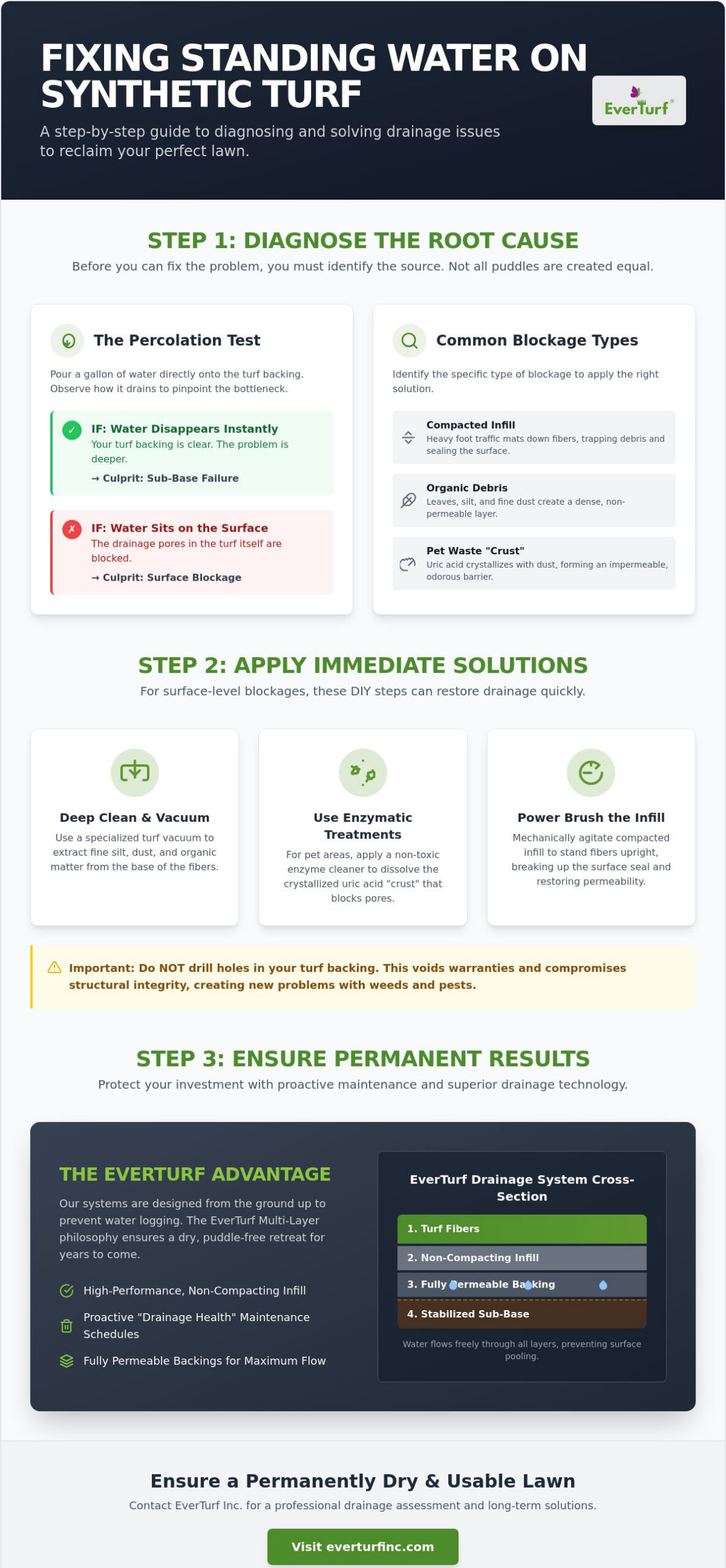
To pinpoint the exact bottleneck, conduct a simple “Percolation Test.” Clear a small patch of EverTurf Infill and pour a gallon of water directly onto the turf backing. If it disappears instantly, your backing is clear and the sub-base is the culprit. If the water sits on the surface, the drainage pores are blocked. This diagnostic step is vital because it prevents you from investing in expensive base repairs when a simple deep clean might suffice.
Surface Blockage vs. Sub-Base Failure
Surface blockages often result from a buildup of organic matter. Leaves, silt, and fine dust particles migrate into the turf fibers, creating a dense layer that acts like a lid. This is especially common in areas with heavy tree cover. To distinguish this from sub-base failure, look for “dips” or “valleys.” Over time, the ground beneath the crushed stone base can settle, especially if the original soil wasn’t stabilized. Using a garden hose to flood a suspected area can confirm if the water is escaping through the base or simply sitting in a structural depression, which is a key step in learning how to fix standing water on synthetic turf without unnecessary excavation.
The Role of Pet Areas in Drainage Issues
Pet owners face a unique challenge that many general guides overlook. Uric acid in pet waste can crystallize within the infill and the drainage pores of the turf backing. When mixed with fine dust, these crystals form an impermeable “crust” that both traps odors and stops water flow. You’ll often recognize this by a “mushy” or “spongy” sensation underfoot that lingers long after the rain stops. Understanding What is Artificial Turf? and its porous construction helps clarify why standard rinsing isn’t enough. The blockage is a physical barrier at the base of the fibers that requires more than just a surface spray to dissolve and clear.
Immediate Solutions for Surface-Level Drainage Blockages
Revitalize your outdoor sanctuary by focusing on the most accessible fixes before considering major renovations. Many homeowners feel a sense of dread when they see pooling, but learning how to fix standing water on synthetic turf often starts with removing physical barriers that prevent water from reaching the sub-base. Unlike natural grass, where water can eventually soak into the earth, synthetic systems rely on clear pathways. While some online forums suggest drilling holes into your turf backing to improve flow, we strongly advise against this; it compromises the structural integrity of the material and creates entry points for weeds and pests.
Start your restoration with a deep clean using a specialized turf vacuum. This tool doesn’t just pick up leaves; it extracts the fine silt and dust that settle at the base of the fibers. If your lawn serves as a pet area, apply a non-toxic, enzymatic chemical treatment to break down crystallized uric acid. These specialized cleaners dissolve the organic “crust” that often seals the turf’s drainage pores. Finally, inspect your perimeter drainage channels. Mulch from garden beds or stray gravel often migrates into these edges, creating a dam that holds water back from its intended exit route.
Power Brushing to Restore Permeability
Matted fibers are more than just an aesthetic issue; they act like a thatched roof, shedding water across the surface rather than letting it sink through. Over time, heavy foot traffic compresses the grass blades, which then trap dust and debris against the backing. Using a professional power brush agitates the EverTurf Infill and stands the fibers upright. This mechanical action breaks up the “sealing” effect caused by compaction, instantly restoring the lawn’s vertical drainage capacity. It’s a simple step that is a cornerstone of long-term turf maintenance, ensuring your lawn stays as functional as it is beautiful.
Refreshing Your Turf Infill
Infill is the lifeblood of a high-performing lawn, but it can become contaminated over several years. When old infill mixes with organic matter, it can turn into a mud-like substance that chokes the drainage holes. If your infill feels hard or “caked,” it’s time for a refresh. Carefully remove the top layer of contaminated material and replace it with high-quality EverTurf Infill. This new layer provides a fresh, porous medium that allows water to flow freely to the sub-base. Distribute the material evenly to prevent low spots where water might collect, helping you regain your personal time and a perfectly dry yard.
Addressing Sub-Base and Structural Drainage Failures
Sometimes, the challenge lies deeper than a simple surface blockage. If your initial diagnostics confirmed that water passes through the turf but stalls at the base, you’re dealing with a structural failure. Learning how to fix standing water on synthetic turf in these scenarios requires looking beneath the beautiful green fibers at the foundation itself. Over time, even the most meticulously prepared ground can experience minor shifts, especially in regions with heavy seasonal rains or expansive clay soils that naturally resist moisture absorption.
While addressing sub-base issues, it’s also important to consider the impact of roof runoff; for those in the Austin area, Transition Roofing offers professional assessments to ensure your home’s drainage system is working in harmony with your landscape.
One effective strategy for localized pooling is the sub-base aeration technique. This involves using a thin steel probe to carefully penetrate the crushed stone layer and reach the native soil beneath. By creating narrow drainage channels, you can break up the surface tension of compacted clay without compromising the stability of your lawn. Additionally, inspect your perimeter. If your edging was installed without a slight gap for runoff, it might be acting as a dam, holding water at the edges of your property and preventing it from escaping to a lower point.
Tactical Land Drains and French Drains
For yards with widespread drainage failure, a French drain offers a sophisticated, permanent solution. Identify the lowest point of your yard by observing water flow during a storm. Digging a narrow, gravel-filled trench equipped with a perforated pipe allows you to redirect significant volumes of water away from your lawn. This tactical approach is the Reliable Visionary’s choice for heavy-clay soils, as it provides a dedicated exit route for moisture that the ground simply cannot absorb. It restores the tranquility of your outdoor space by ensuring that even the heaviest downpours don’t result in a soggy, unusable backyard.
Lifting and Re-leveling Localized Depressions
When “ditches” or dips appear, you don’t need to replace the entire system. Instead, focus on a targeted restoration of the sinking area. Start by carefully peeling back the turf, which involves the professional removal of EverTurf Staples and Glue to gain access to the sub-base. Once the base is exposed, add new crushed stone material, such as CMB or limestone, and compact it thoroughly to match the surrounding grade. Re-securing the turf afterward ensures a seamless, puddle-free finish that preserves the aesthetic integrity of your property while eliminating the risk of standing water.
Long-Term Prevention: Maintaining a Permeable Turf System
Establishing a quarterly “Drainage Health” schedule ensures your outdoor sanctuary remains pristine and functional year-round. While initial repairs address immediate concerns, a proactive mindset prevents the return of soggy patches. This routine isn’t just about preserving the aesthetic beauty of your lawn; it’s about protecting the technical integrity of the entire drainage system. Every three months, verify that your infill hasn’t migrated or compacted. High-performance, non-compacting infill is the secret to a long-lasting, porous surface that resists the “crusting” effect common in lower-quality installations. Establishing this routine is the most effective way to understand how to fix standing water on synthetic turf before it becomes a costly structural failure.
Special consideration is required for pet owners. A 2025 survey indicated that 58% of homeowners with pets reported improved yard cleanliness after upgrading to antimicrobial turf, but this success depends on drainage. When designing a yard for pets, you must adopt a different drainage mindset. Liquids need to pass through the system instantly to prevent odor buildup and saturation. Choosing specialized artificial grass for dogs ensures your system is equipped with the necessary flow-through technology to handle higher liquid volumes without compromise.
Managing External Runoff
Your turf doesn’t exist in a vacuum. It’s part of a larger ecosystem that includes your home’s roof, gutters, and surrounding flower beds. A single gutter downspout can dump hundreds of gallons of water onto a small area during a storm, quickly overwhelming standard drainage capacities. To manage this, consider using EverTurf Pavers to create elegant, permeable pathways that divert heavy runoff away from your main turf zones. For high-volume water management, “dry creek beds” made of river rock can serve as beautiful, functional channels that guide water toward safe exit points, keeping your lawn dry and firm.
Because your landscaping depends on how well your home sheds water, maintaining your roof is just as important as maintaining your turf. For homeowners in the Oklahoma area, a professional roof replacement tulsa ok from Rescue Roofing Tulsa ensures that water is efficiently directed away from your property’s foundation and yard.
The Role of High-Performance Materials
The science of permeability distinguishes premium systems from “budget” alternatives. Many entry-level products use hole-punched backings that only drain at a rate of 20 to 30 inches per hour. In contrast, the advanced engineering in EverTurf Artificial Grass utilizes fully permeable, flow-through backings. These modern systems can achieve drainage rates of hundreds of inches per hour, ensuring that even the most intense 2026 weather patterns won’t leave you with a flooded yard. Investing in high-performance materials is the ultimate answer to how to fix standing water on synthetic turf permanently. If you’re ready to upgrade to a system that works as hard as you do, explore our professional artificial grass installation services to secure your property’s future.
The EverTurf Advantage: Professional Solutions for Permanent Results
While understanding how to fix standing water on synthetic turf empowers you to manage minor surface issues, a professional installation remains the most robust defense against systemic drainage failure. We view your lawn as a sophisticated piece of engineering rather than just a surface treatment. Our “Multi-Layer” drainage philosophy ensures that every component, from the native soil to the final fiber, works in harmony to move water away from your living space. This approach transforms a high-maintenance headache into a tranquil, year-round sanctuary where you never have to worry about the next storm.
Our experts customize every project based on your specific local environment. If you live in an area with heavy clay, we implement deep-drainage strategies that a standard DIY kit simply cannot provide. Conversely, for sandy soils, we focus on stabilization to prevent the shifting that causes localized pooling. By tailoring the solution to your property’s unique geology, we provide a permanent fix that restores your personal time and enhances your lifestyle. It’s about creating a system that adapts to your environment, not the other way around.
Engineering the Perfect Sub-Base
The foundation of a dry lawn is the sub-base. We use a precise mixture of crushed stone and “fines” to create a base that is both structurally stable and highly porous. A critical element of our process is establishing a 1-2% grade across the surface. This subtle slope is invisible to the eye but essential for guiding surface runoff toward designated drainage zones. Combined with our high-flow backing technology, this engineering ensures that water is managed both vertically through the turf and horizontally across the base; this leaves you with a firm, dry surface within minutes of a downpour.
Investing in Long-Term Satisfaction
When evaluating your options, you’ll find it helpful to consider the artificial turf installation cost against the potential for recurring repair expenses. A “cheap” installation often leads to compacted bases and failed backings that require expensive excavation just a few years later. Choosing a Reliable Visionary for your project means investing in peace of mind. You aren’t just buying grass; you’re securing a stress-free version of your property that remains beautiful and functional for decades. Ready for a lawn that stays dry? Connect with EverTurf Inc today and let us help you design your perfect outdoor oasis.
Secure a Puddle-Free Future for Your Landscape
Standing water doesn’t have to be the end of your maintenance-free dream. By distinguishing between simple surface blockages and deeper structural shifts, you’ve taken the first step toward a permanent solution. Whether you’re loosening compacted layers with a power brush or installing tactical French drains for heavy clay, the goal is always the same: restoring the tranquility of your year-round outdoor space.
Mastering how to fix standing water on synthetic turf is as much about prevention as it is about repair. Utilizing high-performance EverTurf Infill ensures superior vertical drainage, while our specialized pet-friendly turf systems manage high liquid volumes with ease. With expert national distribution and installation support, you don’t have to navigate these technical challenges alone. You deserve an outdoor environment that remains perfect regardless of the weather.
Restore your lawn’s beauty with EverTurf Inc’s professional solutions and reclaim your personal time. It’s time to trade the frustration of a soggy backyard for the lasting satisfaction of a pristine, dry sanctuary.
Frequently Asked Questions
Is standing water on artificial grass normal?
It is not normal for water to linger on the surface once a rainstorm has passed. Modern turf systems are engineered for rapid permeability; many can handle hundreds of inches of rainfall per hour. If you see persistent puddling, it’s a clear signal that your system has a blockage or a sub-base issue. Addressing these signs early is the best way to understand how to fix standing water on synthetic turf before it impacts your outdoor lifestyle.
Will standing water damage my artificial turf over time?
Yes, persistent moisture can degrade the structural integrity of your lawn and the sub-base beneath it. Trapped water creates a breeding ground for mold and mildew, which leads to unpleasant odors and a slippery surface. Over time, poorly drained water can even wash away portions of the crushed stone base. This results in uneven “dips” that make your beautiful sanctuary look neglected and feel unstable underfoot.
Can I just drill holes in my turf to help it drain?
You should avoid drilling holes in your turf backing because it causes permanent structural damage. While it might seem like a quick fix, these holes create weak points where the backing can tear or fray. They also provide an easy pathway for weeds to push through from the soil below. It’s much better to restore the system’s natural flow by cleaning the infill or addressing the grading of the sub-base material.
Why does my turf smell like dog urine after it rains?
The smell occurs because rainwater activates crystallized uric acid that has become trapped within the drainage pores. When your lawn doesn’t drain properly, these organic crystals sit in a “mushy” layer at the base of the fibers rather than washing away. This is a common sign of a surface-level blockage. Using an enzymatic cleaner alongside a deep-cleaning vacuum can dissolve these crystals and restore the fresh scent of your outdoor space.
How much does it cost to fix drainage issues on synthetic grass?
The cost to resolve drainage problems depends entirely on whether the fix is a simple surface cleaning or a full structural restoration. Minor maintenance, such as power brushing and refreshing the infill, is a modest investment in your property’s longevity. More complex fixes, like installing French drains or re-leveling the sub-base, require more resources. A professional assessment is the most reliable way to determine the specific needs of your local soil and terrain.
Does the type of infill I use affect how my lawn drains?
The quality of your infill is critical to maintaining a porous and resilient surface. High-performance options like EverTurf Infill are specifically designed to resist compaction over time. Cheaper, lower-quality sands often break down into a fine dust that mixes with moisture to create an impermeable “crust.” This crust acts like a seal over the drainage holes, preventing water from reaching the base and causing the very puddles you’re trying to avoid.
What is the best way to clean debris that is blocking my turf drainage?
A specialized turf vacuum or a professional power brush is the most effective way to clear deep-seated blockages. While a leaf blower is great for surface maintenance, it can’t extract the fine silt and organic matter that settles deep between the fibers. These machines agitate the infill and pull out the debris that chokes the drainage pores. This process restores the lawn’s vertical flow and keeps your yard looking pristine and dry.
Can I fix a sinking spot in my turf myself?
You can fix minor localized depressions if you’re comfortable peeling back the turf and re-securing it with EverTurf Staples and Glue. This process involves adding new crushed stone base material and compacting it to match the surrounding grade. However, if you’re dealing with widespread sinking across the entire lawn, professional help is recommended. This ensures the 1-2% grade is maintained correctly, which is a vital step in how to fix standing water on synthetic turf permanently.