
Comparing Turf Backing Systems: The Homeowner’s Guide to Lasting Performance
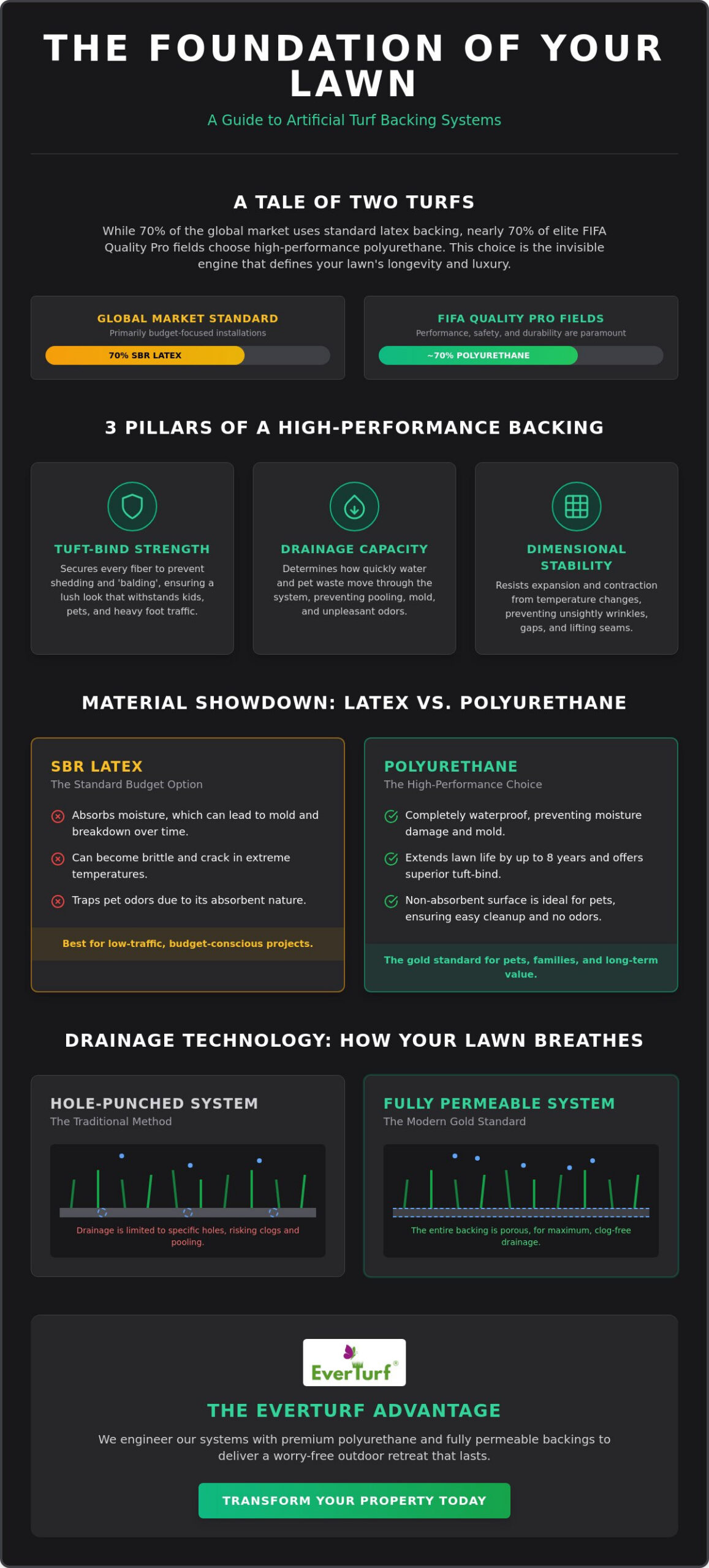
Did you know that while 70% of the global market relies on standard latex backing, nearly 70% of FIFA Quality Pro fields opt for polyurethane instead? It’s a striking gap that highlights a simple truth: what’s underneath your grass matters just as much as the vibrant green blades on top. When you’re comparing turf backing systems, you aren’t just looking at technical specs; you’re choosing the invisible engine that determines your home’s long-term tranquility and curb appeal.
It’s common to feel a sense of hesitation when faced with jargon like tuft-bind or permeability, especially if you’re worried about trapped pet odors or blades shedding. You want a yard that feels like an extension of your home’s luxury, not a source of maintenance anxiety. This guide provides the framework you need to choose a system that ensures superior drainage and blade security. We’ll explore how advanced materials can extend your lawn’s life by up to eight years and help you navigate new 2026 industry standards with ease. By the end, you’ll have the confidence to justify a high-quality investment that restores your personal time and transforms your property into a permanent retreat.
Key Takeaways
- Understand why the backing serves as the critical structural foundation of your lawn, securing every synthetic fiber to prevent shedding and ensure a lush appearance.
- Gain professional clarity when comparing turf backing systems by weighing the budget-friendly nature of SBR latex against the superior moisture resistance and longevity of polyurethane.
- Discover why modern fully permeable drainage is the gold standard for pet-friendly spaces, effectively eliminating odors and managing heavy rainfall without the limitations of traditional hole-punched systems.
- Learn how to select the ideal backing for specific lifestyle needs, from high-traffic family play areas to the precision required for an EverTurf Putting Green.
- Identify the technical benchmarks of a premium investment, including high tuft-bind strength and UV stability, which define the EverTurf Advantage for a worry-free outdoor retreat.
What is Artificial Turf Backing and Why Does It Matter?
Think of your artificial lawn as a luxury home. While the vibrant green blades are the beautiful facade, the backing is the invisible foundation that keeps everything standing. When you begin comparing turf backing systems, you’re looking at the structural integrity of your investment. It isn’t just a plastic sheet; it’s a sophisticated fabric designed to secure every single blade of grass while allowing your yard to breathe.
A common mistake is viewing the backing in isolation. In reality, it’s the heart of a three part system. It must work in perfect harmony with the crushed stone sub-base below and the infill material sprinkled between the blades above. If the backing doesn’t flex correctly with the ground or allow for rapid drainage, the entire landscape can fail. This synergy is what creates that tranquil, maintenance free environment you’re looking for, restoring your weekends for relaxation rather than labor.
Primary vs. Secondary Backing Layers
Most high quality turf consists of a two part construction. The primary layer is a woven grid, often made of durable polypropylene, where the grass fibers are first tufted. Think of this as the canvas for an artist. The secondary layer is the coating, typically latex or polyurethane, applied to the underside to permanently lock the blades. Leading industry examples, such as FieldTurf backing systems, often utilize multiple primary layers or specialized coatings to ensure the grass remains resilient under heavy use. This multi layered approach prevents the turf from stretching or losing its shape over time.
The Role of Tuft-Bind Strength
Tuft-bind is a technical term for a very practical benefit: it’s the measure of how much force it takes to pull a single blade out of the backing. For homeowners with active children or large dogs, this is non negotiable. High tuft-bind prevents your lawn from “balding” over time, ensuring it looks as full in year ten as it did on day one. This level of durability is essential for high stress environments like EverTurf Sports Fields, where the grass must withstand intense foot traffic and sudden movements without shedding.
When you’re comparing turf backing systems, keep these three performance pillars in mind:
- Tuft-bind strength: This keeps your lawn lush and full by securing the fibers against pulling and wear.
- Drainage capacity: This determines how quickly water and pet waste move through the system to prevent pooling.
- Dimensional stability: This ensures the turf remains flat and uniform, preventing the unsightly wrinkles or gaps that occur when materials expand and contract in the heat.
Material Showdown: SBR Latex vs. Polyurethane Backing Systems
Choosing the right material is the pivot point between a decade of beauty and a few years of frustration. When you are comparing turf backing systems, you’ll encounter two primary rivals: Styrene-Butadiene Rubber (SBR) latex and polyurethane (PU). While SBR latex currently accounts for approximately 70% of the global market due to its lower production cost, the industry is seeing a significant shift toward polyurethane for high-end residential and professional applications. This choice determines how your lawn handles the weight of your daily life, from summer heatwaves to the playful energy of family pets.
To ensure your investment meets the highest quality benchmarks, it’s helpful to reference the Synthetic Turf Council guidelines. These standards emphasize that the secondary backing material is responsible for the overall dimensional stability of the turf. Selecting the wrong material can lead to unsightly ripples or premature wear, turning your dream landscape into a maintenance headache. Understanding the chemistry behind these options allows you to make a choice that prioritizes long-term satisfaction over short-term savings.
SBR Latex: The Standard Budget Option
SBR latex is the traditional, heavy black coating found on many entry-level turf products. While it provides a solid initial feel, it’s inherently susceptible to moisture. Over time, latex can absorb water and environmental pollutants, which leads to a “crunchy” texture as the material degrades. In regions with extreme freeze-thaw cycles, this absorbed moisture expands and contracts, eventually causing the backing to crack or peel. This degradation shortens the lifespan of the lawn and can compromise the security of the grass blades.
Polyurethane (PU): The Premium Performance Standard
Polyurethane is a non-absorbent, inert material that acts as a shield for your landscape. It’s the preferred choice for approximately 64% to 70% of FIFA Quality Pro fields worldwide because it offers superior tuft-bind and weather resistance. For homeowners, this means a lawn that won’t shrink, expand, or hold onto pet odors. Because PU doesn’t react to moisture, it provides a stable foundation that can increase the lifespan of your artificial turf by 5 to 8 years compared to latex alternatives. It’s a sophisticated solution for those who value their time and want a yard that remains pristine year-round.
Beyond these two, modern innovations have introduced 100% recyclable polyolefin backings. These eco-friendly systems offer a fully circular lifecycle while maintaining the high performance of premium coatings. If you’re ready to see how these advanced materials feel underfoot, you can explore the resilient options available through EverTurf artificial grass installation services to find your perfect match.
Ultimately, the cost-to-value ratio favors polyurethane for most modern homeowners. While the upfront investment may be higher, the reduction in potential repairs and the extended years of peak performance justify the choice. You aren’t just buying grass; you’re securing a stress-free outdoor sanctuary that stands up to the local climate with poise.
Drainage Technology: Hole-Punched vs. Fully Permeable Systems
Visualize a sudden summer downpour transforming your yard. While a natural lawn might become a muddy obstacle, the right synthetic system remains a pristine sanctuary. When you are comparing turf backing systems, the drainage mechanism is the silent hero of your landscape’s health. It determines whether moisture lingers or disappears instantly, directly impacting everything from the scent of your yard to the longevity of the fibers. Choosing between traditional hole-punched methods and modern permeable technology is a decision that defines your daily comfort.
To truly understand these differences, consulting a comprehensive guide to turf backing reveals how engineering has evolved to meet the needs of modern homeowners. High-performance landscapes now demand drainage rates that far exceed natural soil capacities. Most premium systems are rated to handle over 30 inches of water per hour. To put that in perspective, even the most intense rainstorms rarely drop more than two or three inches in an hour. This massive capacity ensures your lawn remains dry and usable, but the method of exit is what prevents long-term issues like mold or trapped odors.
Hole-Punched Backing: How It Works
Traditional turf utilizes a “punch-hole” system, where half-inch perforations are added every few inches during manufacturing. While this method is widely used, it has a distinct limitation: water must travel horizontally across the backing to find the nearest exit point. This slight delay can allow moisture to pool briefly on the surface. Over time, these small holes are also susceptible to clogging from fine silt, dust, or debris, which can gradually slow down the drainage process and require more frequent maintenance to keep the system flowing freely.
Permeable ‘Flow-Through’ Backing
Modern flow-through technology eliminates the need for holes by making the entire backing surface porous. This non-perforated design allows liquid to pass through every square inch of the material instantly. For families with pets, this is a transformative advantage. Urine doesn’t sit on the backing or travel across it; it drains straight into the sub-base, significantly reducing the risk of ammonia buildup and bacteria. This innovation is why flow-through backing is the cornerstone of successful artificial grass for dogs, creating a hygienic environment that smells fresh year-round.
Maintaining these high drainage rates requires a holistic approach to your lawn’s construction. Even the most advanced permeable backing can be hindered if the surface is not supported correctly. Integrating a high-quality turf infill is essential to keep the drainage paths clear and prevent the backing from becoming compacted. When comparing turf backing systems, remember that the goal is a worry-free retreat that handles whatever the climate, or your pets, can throw at it.
Choosing the Right Backing for Your Specific Application
Selecting the perfect foundation for your landscape is a personal decision that hinges on how you intend to live in the space. When you are comparing turf backing systems, you’re essentially matching advanced engineering to your daily lifestyle. A yard designed for a quiet afternoon retreat requires different specifications than one built for high-energy pets or a professional-grade short game. By aligning your choice with your primary activity, you ensure the tranquility of your outdoor space remains undisturbed for years to come.
High-traffic areas, such as family playgrounds, demand a focus on tuft-bind strength and cushioning. You need a backing that locks fibers securely enough to withstand the constant friction of running feet. Conversely, roof and deck installations require a lighter, more flexible approach. These systems must be easy to handle and adaptable to the unique contours of elevated surfaces without adding unnecessary structural weight. This thoughtful selection process moves you away from the frustrations of a “one size fits all” lawn and toward a bespoke environment.
The Pet Owner’s Checklist
Non-absorbent backing is your first line of defense against lingering odors. While standard latex can soak up liquids and trap bacteria, a polyurethane (PU) system repels moisture entirely. When you combine PU backing with a fully permeable flow-through design, pet urine is whisked away instantly. This prevents the “puddling” that often attracts pests or encourages ammonia buildup. For a truly sanitary sanctuary, we recommend pairing this advanced backing with an antimicrobial infill, ensuring your lawn remains fresh and inviting for the whole family.
Athletic and High-Traffic Considerations
A professional-grade short game starts with the surface beneath the blades. An EverTurf Putting Green requires exceptional dimensional stability to maintain a true ball roll. Without a high-quality backing that resists expansion and contraction in the sun, your green could develop subtle ripples that ruin your accuracy. The EverTurf Putting Green Pro utilizes a specialized backing thickness that prevents matting even under heavy use. This structural integrity also contributes to the overall lush feel of a backyard turf project, providing that satisfying, premium density underfoot that characterizes a luxury landscape.
If you are ready to design a landscape that perfectly matches your lifestyle, connect with the experts at EverTurf to explore our customized installation options.
The EverTurf Advantage: Engineered for Resilience
When you’re comparing turf backing systems, the technical details can feel overwhelming, but the desired result is always simple: a perfect lawn that stays perfect. EverTurf Artificial grass is designed to move you away from the anxiety of “will this last?” and toward the relief of a permanent solution. We don’t just provide a product; we offer a fully engineered landscape where the backing, the resilient fibers, and the EverTurf Infill work as one cohesive unit to handle your local climate’s unique challenges. This holistic approach ensures that your outdoor space remains a stress-free sanctuary for years to come.
While the initial artificial turf installation cost is a significant factor in your decision, the value of a high-performance system pays dividends in restored personal time and long-term satisfaction. Cheaper alternatives often fail when the backing degrades, leading to unsightly wrinkles or loose fibers that require premature replacement. By investing in a resilient foundation today, you’re securing a decade or more of tranquility and beauty for your property.
Quality Control and Testing Standards
Choosing a distributor that prioritizes high-spec materials is the most effective way to protect your investment. Every roll of EverTurf undergoes rigorous testing to ensure it meets strict permeability and strength requirements before it ever reaches your yard. We verify that our backing materials can withstand intense UV exposure and heavy foot traffic without compromising their structural integrity. Tuft-bind strength is the primary indicator of a turf’s resistance to heavy use and playful pets, and our systems are engineered to exceed industry benchmarks for fiber retention. This commitment to quality means you can let the kids and dogs play without a second thought about the lawn’s durability.
Your Next Steps to a Perfect Lawn
The best way to appreciate the difference in quality is to experience it firsthand. We encourage homeowners to request samples, allowing you to feel the weight and flexibility of different backing materials under your own touch. Seeing the thickness and density of a premium polyurethane system compared to standard options often makes the choice clear. Once you’ve felt the quality, our experts can help you match specific backing specs to your local climate and intended usage, from high-drainage pet areas to precision-engineered putting surfaces.
Don’t settle for a temporary fix when you can have a permanent transformation. Explore the full range of EverTurf high-performance systems today and take the first step toward a more beautiful, worry-free version of your home.
Secure a Lifetime of Outdoor Tranquility
Choosing the right backing is about more than just technical specifications; it’s about reclaiming your weekends and ensuring your property remains a pristine retreat for years to come. When you’re comparing turf backing systems, remember that the choice between polyurethane and standard latex determines whether your lawn resists odors and stays resilient through every season. By prioritizing advanced flow-through drainage technology and industry-leading tuft-bind strength, you eliminate the common anxieties of fiber shedding or poor sanitation. You aren’t just installing grass; you’re building a foundation for long-term satisfaction.
Your investment deserves a structural foundation that matches your lifestyle. Whether you’re designing a high-energy play area for pets or a professional-grade putting green, selecting UV-stabilized materials ensures maximum color retention against the harsh afternoon sun. You’ve done the research to understand the invisible engine beneath the blades. Now, it’s time to enjoy the results of a truly engineered landscape that restores your time and enhances your home’s beauty.
Transform your landscape with EverTurf’s high-performance synthetic grass systems.
Take the next step toward a more beautiful and worry-free version of your property today. Your perfect, year-round sanctuary is just a foundation away.
Frequently Asked Questions
Is polyurethane backing better than latex for artificial grass?
Polyurethane is superior for most residential applications because it’s non-absorbent and chemically stable. Unlike latex, it won’t become brittle or expand when exposed to moisture. This stability makes it the gold standard when comparing turf backing systems for long term performance. It provides a permanent foundation that keeps your lawn looking lush through every season.
Does artificial turf backing affect how hot the grass gets?
While the fibers and infill are the primary factors in surface temperature, the backing can influence heat retention. Some advanced backing systems are engineered with materials that don’t absorb as much thermal energy as traditional black coatings. Choosing a high quality system ensures that your yard remains a comfortable retreat even during the peak of summer heat.
How do I know if my turf backing has good drainage?
You can verify drainage by looking for a high permeability rating, typically measured in inches of water per hour. A premium system should handle at least 30 inches per hour, ensuring that even heavy storms don’t leave puddles. Testing a sample by pouring water over the backing is a simple way to visualize how quickly moisture disappears into the sub-base.
Can pet urine damage the backing of my synthetic turf?
Pet urine won’t damage a polyurethane backing, but it can cause standard latex to degrade over time. Polyurethane is an inert material that resists the ammonia found in pet waste, preventing it from soaking into the foundation. This resistance is a key factor when comparing turf backing systems for a pet friendly sanctuary that stays fresh and hygienic.
What is the difference between hole-punched and permeable backing?
Hole-punched systems feature specific drainage points every few inches, while permeable backings allow water to pass through every square inch of the material. Permeable or flow-through technology is more efficient for pet owners because it drains liquid instantly. This prevents the horizontal travel of moisture that can lead to bacteria buildup and lingering odors in your landscape.
Why is my artificial grass backing turning white or flaky?
Flaking or a white, powdery appearance usually indicates that a latex backing is beginning to break down due to age or moisture exposure. This degradation happens when the binder in the latex loses its integrity over time. In some cases, it could also be a buildup of calcium or minerals from hard water irrigation, which can be addressed with specialized cleaning.
Does the weight of the turf backing matter for installation?
Backing weight is a significant indicator of tuft-bind strength and overall fiber density. A heavier backing generally suggests a more robust secondary coating, which provides better security for the grass blades. However, for specialized projects like roof decks, you may need a lighter, more flexible system that balances durability with the structural load limits of your home.
How long should a high-quality turf backing system last?
A high-quality backing system should provide a foundation for your lawn that lasts 15 to 20 years. While the fibers themselves may show wear over time, the backing’s role is to maintain dimensional stability and drainage throughout the product’s life. Investing in premium materials ensures that your landscape remains a tranquil, maintenance-free environment for the long haul.