
Can You Pressure Wash Artificial Grass? A Pro’s Guide to Safe Cleaning
Your garden hose is failing your artificial lawn, and it’s time to stop settling for a surface that smells like last week’s pet accidents. It’s natural to feel a bit of hesitation when considering heavy equipment for your investment. You’ve likely heard horror stories of melted fibers or displaced infill, and the last thing you want to do is void a warranty that should protect your property for over 15 years. Many homeowners find themselves asking, can you pressure wash artificial grass without causing permanent damage?
The answer is a resounding yes, provided you follow a professional sequence that prioritizes the integrity of your EverTurf installation. We understand that you want a pristine, odor-free environment where you can relax without the stress of constant maintenance. This guide will walk you through the exact steps to restore your turf’s lush, upright appearance while protecting your infill. You’ll learn the specific PSI settings and spray distances needed to hit the “reset button” on your lawn, ensuring your outdoor space remains a beautiful, worry-free sanctuary for years to come.
Key Takeaways
- Confirm that you can pressure wash artificial grass safely by sticking to a “Safe Zone” of under 1500 PSI to protect your investment.
- Identify the critical risks of high-pressure cleaning, such as infill blowout and seam lifting, and how to avoid them with correct nozzle distance.
- Learn the importance of pre-wash preparation, including debris removal and checking for loose staples, to ensure a smooth cleaning process.
- Discover why “cross-brushing” after your lawn dries is the essential final step for lifting flattened fibers and restoring a lush, natural look.
- Understand how the high-density backing of EverTurf products provides the structural integrity needed to withstand deep cleaning cycles for decades.
Can You Pressure Wash Artificial Grass? The Short Answer
Yes, you can pressure wash artificial grass, but you must approach it with the precision of a professional rather than the brute force of a demolition crew. While a standard garden hose is excellent for a quick weekly rinse, it often lacks the necessary volume and focused pressure to penetrate the dense layers of a modern synthetic lawn. Pressure washing serves as a vital restoration tool, clearing away the microscopic dust and environmental allergens that settle deep within the thatch. This process doesn’t just clean the surface; it clears the drainage pores, ensuring your lawn remains a high-performing, puddle-free sanctuary even after a heavy downpour.
The primary goal of this maintenance is a deep, restorative rinse that removes embedded particles without disturbing the stable base beneath. If you’ve wondered if can you pressure wash artificial grass to fix flattened areas, the answer is a resounding yes. The controlled water pressure acts as a mechanical lift, helping to “reset” matted fibers that have been compressed by foot traffic or heavy patio furniture. It’s the most efficient way to maintain the aesthetic integrity of your property while extending the lifespan of the material.
Success depends entirely on your technique. You must distinguish between a “jet blast,” which is the narrow, high-pressure stream used to strip paint or clean concrete, and a “wide-fan rinse.” A jet blast is dangerous for your lawn because it can slice through the grass blades or tear the backing. Conversely, a wide-fan setting distributes the pressure over a larger area, providing enough force to dislodge dirt while remaining gentle on the polyethylene fibers. It’s a sophisticated balance that protects your investment while delivering a level of cleanliness a hose simply can’t match.
When to Choose a Pressure Washer Over a Hose
A garden hose is your go-to for light dust, but a pressure washer is necessary when you’re facing heavy organic buildup. Fine pollen, tree sap, and wind-blown silt can create a sticky film that eventually clogs the drainage system. If you notice water lingering on the surface longer than usual, it’s time for a deeper clean. This method is also the most effective way to neutralize deep-seated pet odors by flushing out the bacteria that hide in the lower layers of the turf. Additionally, a thorough cleaning is the ideal preparation step before applying a fresh layer of EverTurf Infill, ensuring the new material settles into a perfectly sanitized environment.
Safety First: The “Golden Rules” of Turf Washing
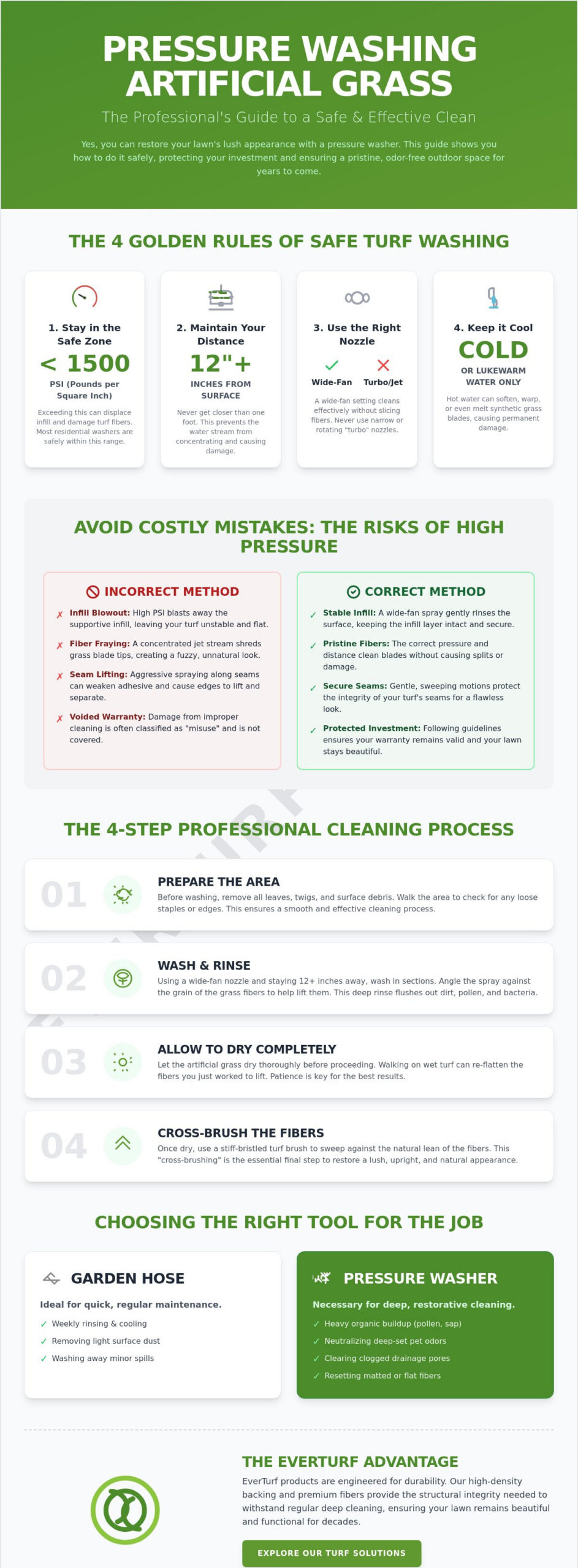
To keep your lawn looking pristine, you must follow a few non-negotiable safety rules. First, never use a “turbo” or rotating nozzle; these are designed for hardscapes and will easily shred Artificial turf fibers. Always keep the wand at least 12 inches away from the surface to prevent the pressure from concentrating on a single point. Finally, use only cold or lukewarm water. High-heat settings on industrial machines can soften or even warp the synthetic fibers, leading to a permanent loss of the grass’s natural, upright texture. By respecting these boundaries, you ensure your lawn remains a beautiful, stress-free asset for your home.
The Risks: Why You Can’t Just “Blast” Your Lawn
While power washing is a transformative tool for your outdoor space, treating your lawn like a concrete driveway is a recipe for disaster. The sheer force of a high-pressure stream can turn a restorative cleaning session into a costly repair project if you aren’t careful. Understanding the mechanics of how water interacts with synthetic materials is the first step toward maintaining a landscape that stays beautiful for the next two decades. Many homeowners wonder, can you pressure wash artificial grass without ruining the seams or fibers? The answer depends entirely on your respect for the turf’s structural limits.
One of the most subtle yet permanent forms of damage is fiber fraying. When water is forced against synthetic blades at excessive speeds, it can cause the tips of the grass to split or “bloom” unnaturally. This ruins the realistic texture and creates a dull, fuzzy appearance that can’t be brushed away. Beyond aesthetics, there’s the concern of your investment’s protection. Most manufacturers encourage regular cleaning but exclude damage caused by neglect or improper equipment use from their coverage. Using a high-PSI stream at close range is often classified as “misuse,” which is why sticking to professional guidelines is essential for long-term peace of mind.
Displacing Your Turf Infill
Infill is the ballast of your lawn system, providing the weight and vertical support needed to keep blades standing tall. When you “blast” the turf, you risk an “infill blowout,” where the stabilizing sand or pellets are physically washed out of the thatch. This creates uneven pockets across your yard, leading to unsightly wrinkling or slumping of the surface. If you’ve noticed your turf starting to shift or lose its bounce, it might be time to consult with an expert on artificial turf installation to ensure your base and infill levels are properly restored and secured.
Seam Integrity and Adhesive Stress
The most vulnerable parts of any installation are the seams and edges where the turf sections meet. Directing a high-pressure nozzle at a join can force water underneath the backing, putting immense stress on the turf glue and staples. Over time, this hydraulic force can lift the edges, creating trip hazards and allowing weeds to penetrate the gaps. Before you start, identify “weak spots” such as corners, high-traffic transitions, or areas where the turf meets a hardscape. Keeping the spray angled away from these joints preserves the structural bond and keeps your lawn looking like a single, seamless carpet of green.
Step-by-Step: How to Pressure Wash Artificial Grass Safely
Transforming your outdoor space from a dusty surface back to a lush sanctuary requires more than just water; it requires a structured workflow. While you now know that you can you pressure wash artificial grass, the success of the project lies in the calibration of your tools. A professional finish begins by setting your machine to the “Safe Zone,” which is strictly under 1500 PSI. This provides enough force to dislodge stubborn silt without compromising the integrity of the polyethylene fibers. Coupling this pressure with a 40-degree wide-angle fan tip ensures even distribution, preventing the concentrated “drilling” effect that causes damage.
Working in manageable sections, roughly five feet by five feet, ensures thorough coverage without excessive overlapping. This methodical approach prevents you from missing spots and keeps the water flowing efficiently toward the drain. Once the entire area is rinsed, allow it to dry completely. The final, essential step is re-grooming the lawn with a power brush or a stiff synthetic broom. This lifts the fibers back into their natural, upright position, giving your property that brand-new, professionally installed look that defines a high-end outdoor lifestyle. Learning the nuances of how can you pressure wash artificial grass effectively allows you to take full control of your home’s curb appeal.
Pre-Wash: Clearing the Path
Before introducing water, you must clear the area of large organic matter. Use a leaf blower or a plastic rake to remove twigs, leaves, and pet hair that could otherwise be driven deeper into the thatch by the water stream. If you have pets, spot-treat high-traffic areas with a bio-enzymatic cleaner to break down odors at the source. This is also the ideal moment to inspect the perimeter for any exposed EverTurf Staples and Glue. Secure any loose edges now to prevent water from getting trapped beneath the backing during the wash.
The “Sweep and Spray” Method
Effective cleaning is a rhythmic process that mimics the motion of a broom. Hold the wand at a 45-degree angle to the ground, using the water to “push” dirt and debris toward your lawn’s designated drainage exit. You must maintain a constant, sweeping motion to prevent heat buildup or pressure concentration in a single spot. For safety and fiber protection, always maintain a 12-inch minimum distance between the nozzle and the grass blades. This distance allows the fan spray to bloom fully, providing a thorough rinse that reaches the base of the thatch without disturbing the underlying infill.
Beyond the Water: Brushing and Infill Maintenance
Washing your lawn is a major milestone in restoration, but the transformation isn’t complete until the fibers are groomed. If you’ve been asking can you pressure wash artificial grass, you likely want that “day one” look back. Water alone can sometimes leave the grass looking flat or clumped while it’s wet. True restoration happens through the “re-blooming” effect, where mechanical brushing works in tandem with the deep clean to lift every blade. This ensures your EverTurf Artificial grass retains the lush, resilient texture that makes it a premium landscape choice.
Deep cleaning with a pressure washer isn’t a weekly chore. For most residential lawns, a professional-grade rinse and groom once or twice a year is sufficient. High-traffic homes with multiple pets may benefit from a quarterly schedule to keep odors at bay and drainage pores clear. This routine serves as a vital “reset button” for your property, moving you away from the frustrations of a tired-looking lawn and back toward the tranquility of a perfect, year-round outdoor space.
The Art of Cross-Brushing
The secret to a professional finish is cross-brushing, which involves brushing against the grain of the turf fibers. You must wait until the lawn is 100% dry before starting this process. Brushing wet turf is ineffective and can actually cause the blades to stick together. For smaller areas, a specialized synthetic turf rake with nylon bristles works beautifully to pull the fibers into a vertical position. For larger expanses, a power broom provides the mechanical advantage needed to achieve a uniform, “bloomed” appearance across the entire property. This step restores the logical evidence of quality that you expect from a premium installation.
Replenishing EverTurf Infill
A deep pressure wash can occasionally shift your infill, especially if you used a slightly higher pressure than recommended. Once the lawn is dry, walk the perimeter and high-traffic zones to identify any “bald spots” where the backing is more visible or the blades feel unsupported. Infill acts as the structural support for the grass blades and protects the backing from UV exposure. If you notice low areas, simply broadcast a fresh layer of EverTurf Infill and brush it into the thatch. Maintaining proper infill depth is directly linked to the health of your drainage system, as it prevents the backing from shifting and keeps the drainage pores accessible. If you need help calculating how much material your lawn requires, contact our team for expert guidance on turf maintenance.
The EverTurf Advantage: Durability Meets Easy Maintenance
Choosing a high-caliber surface like EverTurf changes the conversation around maintenance from a chore to a simple restoration. When you invest in professional-grade materials, the question of can you pressure wash artificial grass becomes less about fear and more about routine care. Our products are specifically engineered to withstand rigorous cleaning cycles without the fiber degradation common in lower-quality alternatives. This structural resilience is anchored by our high-density backing, which maintains superior seam strength even when subjected to the hydraulic forces of a pressure washer.
A professional-grade lawn makes your DIY maintenance sessions faster and safer. Because the fibers are designed to recover their shape, you spend less time grooming and more time enjoying your property. To ensure your lawn remains a pristine sanctuary for the next 15 years or more, keep this final checklist in mind:
- Inspect the perimeter for secure staples before every deep clean.
- Stick to the 1500 PSI “Safe Zone” and maintain a 12-inch distance.
- Use a wide-fan nozzle to prevent concentrated pressure on the backing.
- Always replenish your EverTurf Infill if you notice low spots after washing.
- Cross-brush only when the turf is completely dry to achieve a full “bloom.”
Engineered for Real Life
Life happens on your lawn, and your turf should be ready for it. Whether it’s the high-performance EverTurf Putting Green Pro or our lush residential styles, every fiber is UV-stabilized to prevent fading and brittleness. Our backing systems offer superior drainage rates, allowing water from a pressure wash to move through the system rapidly. This prevents the stagnation that leads to odors or mold. You gain the peace of mind that comes from knowing your lawn can handle the energetic play of kids and pets while remaining easy to sanitize and refresh at a moment’s notice.
Ready to Upgrade Your Outdoor Space?
If you’re tired of battling persistent odors or flattened fibers on an aging lawn, it might be time for a permanent solution. Discover how specialized products like EverTurf Artificial grass for dogs can transform your backyard into a clean, worry-free environment. We provide national distribution for all essential turf accessories, ensuring you have the tools needed for a flawless result. We invite you to contact EverTurf Inc for a professional consultation and quote to begin your journey toward a more beautiful, low-maintenance lifestyle.
Master Your Maintenance for Everlasting Beauty
Maintaining a flawless landscape shouldn’t be a source of stress. By mastering these safe techniques, you’ve moved beyond the limitations of a garden hose and toward a professional standard of care. We’ve established that while you can you pressure wash artificial grass, your success relies on respecting the 1500 PSI limit and prioritizing post-wash grooming. These simple steps ensure your fibers remain upright and your drainage system stays clear of environmental debris. As a national supplier of professional-grade turf, we provide the specialized EverTurf Infill and expert-approved maintenance guides for 2026 needed to protect your investment for the long haul.
You deserve a property that offers tranquility and pride without the burden of traditional lawn care. Transform your lawn with EverTurf high-performance synthetic grass today and reclaim your personal time in a space that stays vibrant and pristine year-round. We’re here to help you envision the perfect version of your home and provide the logical evidence you need to make a rewarding and sophisticated choice for your property’s future.
Frequently Asked Questions
Can I use detergent in my pressure washer for artificial grass?
Yes, you can use mild, pH-neutral detergents or specialized turf cleaners designed specifically for synthetic materials. Avoid bleach or harsh acidic chemicals that could degrade the UV-stabilized fibers over time. For the best results, apply the cleaner using a low-pressure soap tip before switching to your wide-fan rinse to ensure a residue-free finish.
What PSI is safe for cleaning synthetic turf?
A safe PSI for artificial turf is strictly under 1500 to protect the structural integrity of the blades. Using a higher setting risks tearing the backing or permanently fraying the polyethylene fibers. When homeowners ask can you pressure wash artificial grass effectively, the secret is combining this low pressure with a consistent 12-inch distance from the surface.
How do I remove pet urine odors with a pressure washer?
Eliminate stubborn odors by pre-treating the area with a bio-enzymatic cleaner before using your pressure washer. The enzymes break down the uric acid crystals that cause the smell, while the pressure washer flushes the residue deep through the drainage system. This dual approach ensures your outdoor sanctuary remains fresh and inviting for your family and guests.
Will pressure washing my turf void the manufacturer warranty?
Pressure washing typically does not void your warranty if you follow the manufacturer’s recommended maintenance guidelines. Most residential warranties encourage regular cleaning but prohibit damage caused by misuse or neglect. Sticking to low-pressure settings and wide-fan nozzles protects your investment and ensures your coverage remains intact for the full duration of its life.
Can I use a pressure washer on a backyard putting green?
Yes, you can use a pressure washer on an EverTurf Putting Green Pro surface, but you must be extremely cautious with the infill. Putting greens utilize a very fine sand to maintain consistent ball roll speed. Use a lower pressure than usual and be prepared to top off and re-level your infill after the surface has dried to maintain professional performance.
How long does it take for artificial grass to dry after a deep wash?
Artificial grass typically dries within one to three hours depending on the direct sunlight and wind speed in your area. Because the backing is designed for high-speed drainage, you won’t deal with the muddy puddles associated with natural sod. Wait until the fibers are completely dry before you begin the final cross-brushing process to restore the lawn’s lush appearance.
Should I pressure wash my turf in the winter or summer?
Spring and summer are the ideal seasons for a deep wash because the warmth and sunlight aid in the drying and “blooming” of the fibers. Avoid pressure washing in freezing temperatures, as ice can form within the drainage pores or the infill. A mid-summer rinse is particularly effective for removing the heavy dust and pollen that accumulate during the peak season.
What is the best nozzle tip for washing fake grass?
The 40-degree “white” nozzle tip is the professional choice for synthetic turf maintenance. This wide-fan pattern distributes water pressure evenly across the blades, preventing the concentrated force that causes fiber damage or infill displacement. Never use a “turbo” or 0-degree nozzle tip, as these are designed to strip hard surfaces and will easily ruin your synthetic lawn.