

Artificial Putting Green Cost: The 2026 Complete Pricing & Value Guide
A professional-grade putting green is not merely a landscaping addition; it’s a precision-engineered sports surface that happens to reside in your backyard. When you envision your ideal practice space, you aren’t just looking for green grass. You’re looking for a true ball roll, consistent stimp speeds, and a sanctuary where you can shave strokes off your game. However, determining the actual artificial putting green cost can feel like navigating a hazard, especially when you’re worried about hidden drainage issues or subpar materials that won’t stand the test of time.
It’s natural to feel some anxiety about the technical details of site preparation and base construction. You want to ensure your investment creates a lasting legacy for your property rather than a maintenance headache. This guide provides total clarity on the 2026 pricing landscape, from foundational aggregate layers to the high-performance fibers of the EverTurf Putting Green Pro system. We’ll examine how choosing professional-grade components protects your ROI and elevates your daily lifestyle. You’ll soon have a clear roadmap to building a world-class practice facility that looks as beautiful as it performs.
Key Takeaways
- Understand why an artificial putting green cost is calculated differently than a standard lawn due to the specialized base and precision engineering required.
- Discover how project scale affects your budget, including why larger installations often offer a better per-square-foot value despite minimum project fees.
- Learn why the invisible components, like the crushed aggregate base and specialized EverTurf Infill, account for most of your green’s performance and longevity.
- Explore how performance upgrades like fringe turf and sand bunkers transform a simple practice area into a professional-grade backyard retreat.
- Identify how the EverTurf Putting Green Pro system ensures a consistent stimp speed and a true ball roll for a lifetime of golf at home.
The Variables Behind Artificial Putting Green Costs
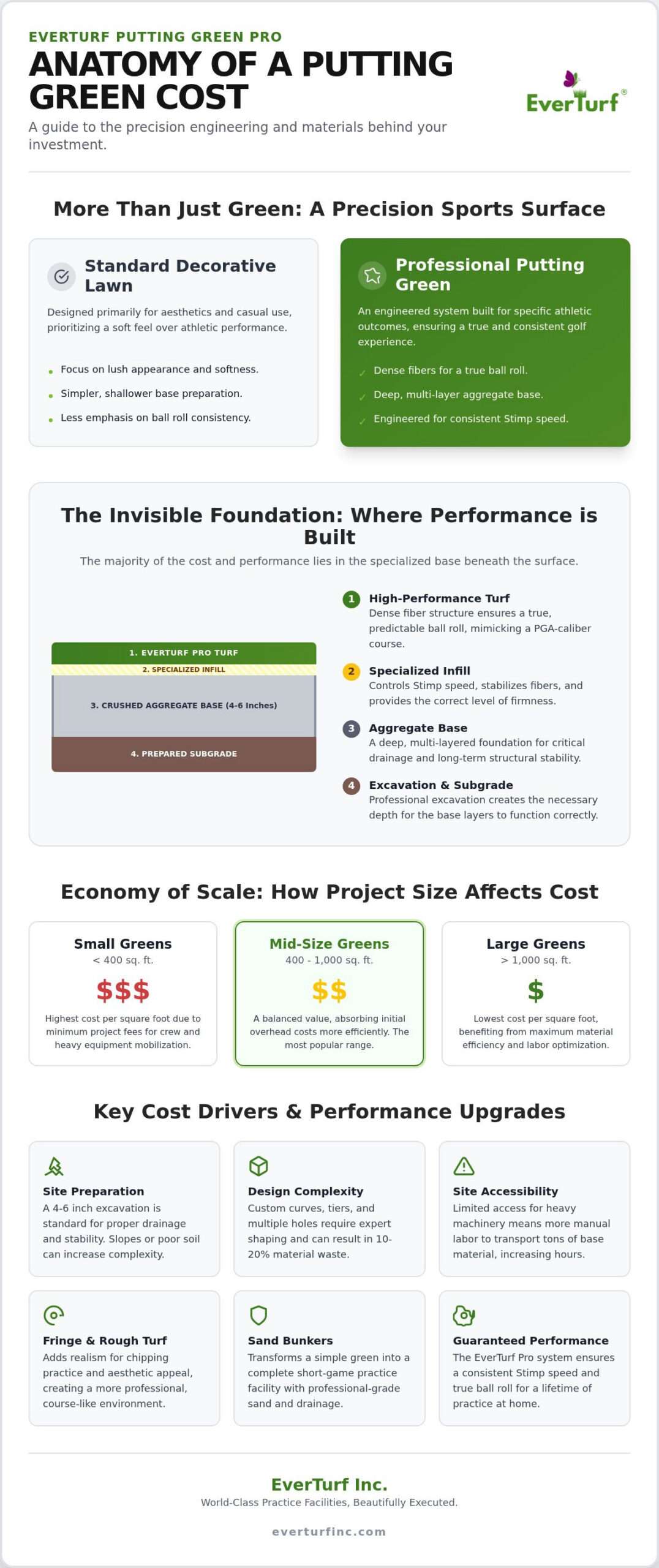
Think of a backyard putting green as a high-performance engine rather than a simple floor covering. While standard synthetic grass prioritizes softness and a lush appearance for bare feet, a professional-grade green is a precision instrument designed for specific athletic outcomes. This distinction is the primary reason why the artificial putting green cost per square foot typically exceeds that of a standard decorative lawn. To understand the technology involved, one can look at the history of artificial turf and how it evolved from basic utility surfaces into the sophisticated, stimp-rated systems we use today. A true performance green, such as the EverTurf Putting Green Pro, requires a dense fiber structure and a specialized installation process to ensure the ball reacts exactly as it would on a PGA-caliber course.
Environmental factors and site logistics also dictate the final investment. If your property features significant slopes or unstable soil, your installation team must implement advanced retaining solutions or soil stabilization techniques to prevent the surface from shifting over time. Accessibility remains a silent budget driver; if installers cannot reach the site with heavy machinery like skid steers, they must rely on manual labor to transport tons of base material. These logistical hurdles increase the project’s duration and the overall labor hours required to reach a perfect finish.
Site Preparation and Excavation Requirements
The integrity of your green depends entirely on what lies beneath the surface. Professional standards dictate an excavation depth of 4 to 6 inches, creating a cavity that is far deeper than what is required for a traditional lawn. This space is filled with a multi-layered, crushed aggregate base that provides the necessary drainage and structural rigidity. Removing existing sod and disposing of several tons of debris is a labor-intensive first step. Skipping this phase or opting for a shallower base often leads to drainage failures and an uneven surface that ruins the ball roll within just a few seasons.
The Complexity of the Design
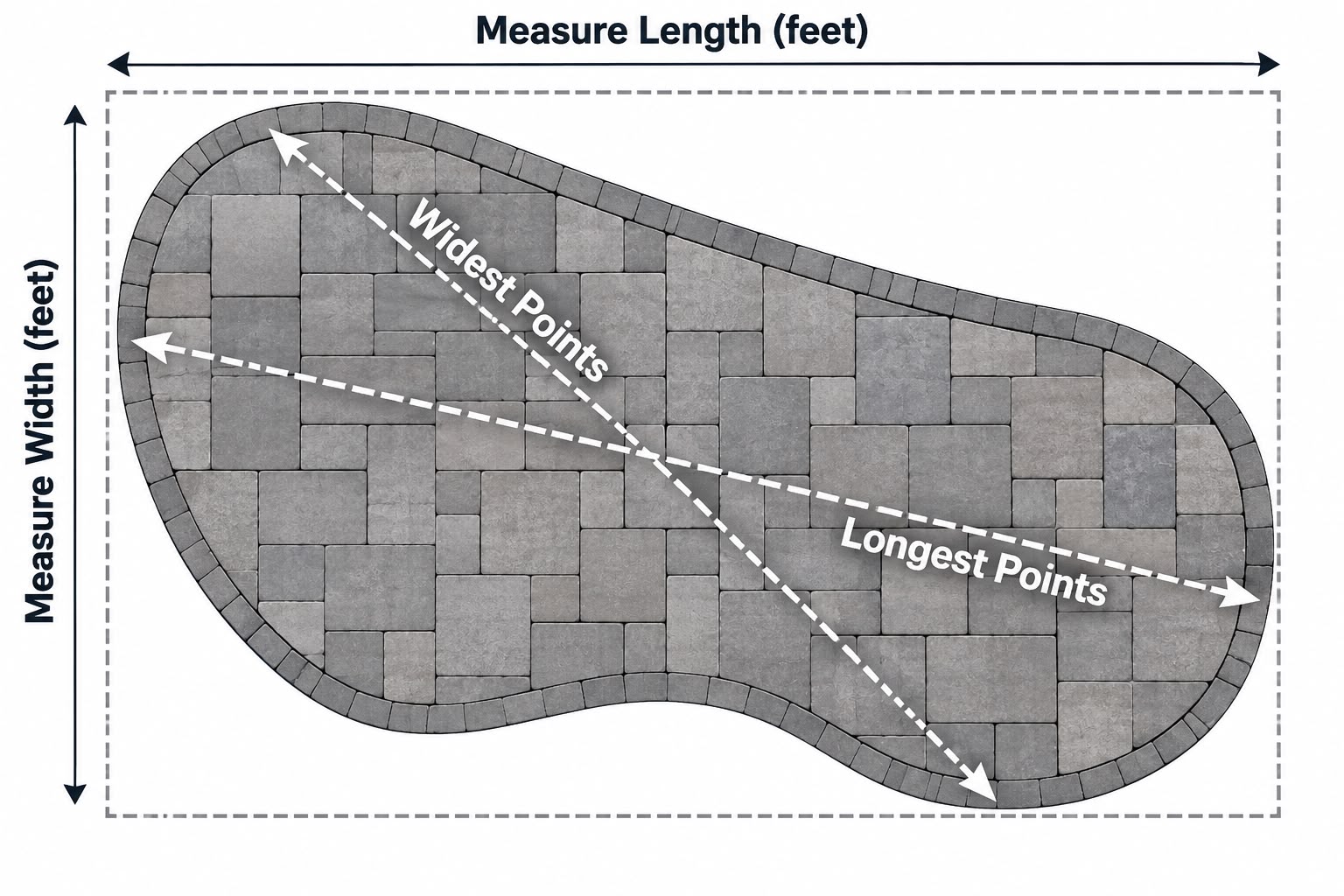
Your design vision transforms a flat space into a strategic practice area, but complexity adds to the bottom line. While a basic rectangle is efficient, most homeowners prefer organic, undulating shapes that mimic the natural flow of a golf course. Each custom curve requires meticulous hand-shaping of the sub-base to ensure the breaks are challenging yet fair.
- Breaks and Tiers: Crafting subtle breaks or multi-level tiers requires expert-level grading to ensure the ball moves predictably across the entire surface.
- Material Waste: Intricate, curved designs often result in 10% to 20% more material waste, as premium turf rolls must be custom-cut to fit the perimeter accurately.
- Multiple Cup Placements: Each hole location involves specialized cutting, sleeve setting, and leveling to ensure the cup sits perfectly flush with the turf.
Square Footage Breakdown: Economy of Scale
Understanding the artificial putting green cost requires a look at how project size influences the bottom line. Professional installers typically operate with a minimum project fee. This fee covers the essential logistics of moving heavy excavation equipment, transporting tons of aggregate, and mobilizing a specialized crew. Whether your green is 200 or 800 square feet, the initial overhead of getting the team and machinery to your property remains relatively constant. This is why smaller projects often carry a higher per-square-foot price than expansive installations.
Material efficiency also improves as the footprint grows. Premium turf rolls typically come in 15-foot widths. When designing a small, intricate green, installers often face higher waste percentages as they trim the turf to fit specific curves. In larger projects, these off-cuts are more easily integrated, reducing the scrap you pay for but never use. Beyond the financial math, homeowners must consider the environmental and monetary costs of artificial turf when planning their space. Investing in a larger, multi-functional area can actually provide a better long-term return by consolidating landscaping needs and maximizing the utility of your outdoor square footage.
Small Greens (Under 400 Sq. Ft.)
Small greens are perfect for indoor practice pods or compact patio corners. However, they are the most expensive on a per-foot basis. Industry data suggests that for these boutique installs, you might see costs at the higher end of the $15 to $40 per square foot range. The fixed costs of insurance, fuel, and equipment rental are spread over a smaller area, driving up the unit price. Despite the premium, these high-precision spaces offer a dedicated sanctuary for those focused on the money range of their short game.
Mid-Size and Large Greens (500 – 1,500+ Sq. Ft.)
The sweet spot for residential projects usually falls between 500 and 800 square feet. At this scale, you achieve a significantly better value through volume material purchasing and reduced labor inefficiencies. These mid-sized greens allow for multi-distance putting and even short chips from the surrounding fringe. If you have the space, a large-scale short game complex exceeding 1,500 square feet becomes a true lifestyle enhancer. These projects often include multiple cuts of grass, bunkers, and varying stimp speeds, providing a comprehensive training environment. If you’re ready to visualize how a professional-grade green fits your property, you can explore the technical specs of EverTurf Putting Green Pro to see how quality scales with size.
The Invisible Costs: Base Materials and Infill
While the lush green surface captures the eye, the true engine of your golf experience lies beneath the blades. When calculating your total artificial putting green cost, realize that the base materials often represent over half of the total project investment. This foundation is responsible for the vast majority of the surface’s performance. It ensures that your ball doesn’t bounce erratically or settle into low spots after a heavy rain. A professional installation utilizes multiple layers of aggregate, starting with larger crushed stone for structural integrity and drainage, followed by fine screenings that are meticulously smoothed to create a professional-grade putting surface.
To protect this investment, experts employ high-quality geotextile fabrics. These layers act as a permanent barrier between the native soil and your clean aggregate base. They prevent contamination where mud or silt could migrate upward and compromise the drainage or level of your green. This invisible engineering is what separates a backyard toy from a serious practice facility that maintains its integrity for over 15 years.
Engineered Base Construction
Achieving a rock-hard surface requires heavy-duty compaction equipment and a steady hand. Installers must reach specific density levels to ensure the ground won’t settle over time, which would ruin the breaks you’ve carefully designed. While manual contouring creates the subtle undulations golfers love, laser-leveling is often used on flatter sections to guarantee absolute precision. Once the turf is laid, the addition of specialized turf infill becomes the final tuning step. Using a high-performance product like EverTurf Infill allows you to adjust and control the stimp speed, mirroring the conditions of your favorite local course.
Hardware and Adhesives
The longevity of your green is only as strong as its weakest joint. Professional-grade EverTurf Staples and Glue are essential components that prevent the turf from shifting, expanding, or contracting with temperature changes. Cutting corners on seaming technology often leads to visible ridges or gaps that interfere with ball roll. To ensure a crisp, permanent edge, installers use bender boards or nailer boards around the perimeter. These securing methods keep the turf taut and the edges flush with your surrounding landscape, providing a manicured look that enhances property value. Investing in these premium hardware solutions ensures your artificial putting green cost translates into a lifetime of worry-free practice.
Performance Features: Fringe, Bunkers, and Stimp Speed
Elevating a backyard space into a professional-caliber training facility requires more than a single roll of synthetic grass. To achieve a realistic golf experience, you must consider the performance features that dictate how the ball reacts. The artificial putting green cost is influenced significantly by these upgrades, which transform a flat surface into a multi-dimensional short-game complex. One of the most sought-after additions is the “Second Cut,” or fringe. This taller, denser turf surrounds the putting surface, providing a realistic texture for chipping practice. Without a fringe, you’re limited to flat putts; with it, you can master the delicate bump-and-run shots that save pars.
Material selection is the primary driver of ball velocity, commonly measured as stimp speed. While casual greens might offer a slower, more forgiving roll, serious golfers often opt for high-density nylon or specialized poly-blends that can be “tuned” with infill to reach stimp speeds of 10 to 12. For those seeking the ultimate aesthetic, incorporating sand bunkers adds a breathtaking visual element. These require specialized drainage systems and dedicated maintenance to keep the sand from migrating onto your putting surface, but the ability to practice sand saves at home is an incomparable luxury. Advanced features like LED cup lighting and custom flag sets provide the final touch, ensuring your green is functional and inviting long after the sun sets.
Multi-Turf Designs
Creating a seamless transition between different turf heights is a labor-intensive process that requires a master installer’s touch. Integrating EverTurf Putting Green Pro with a taller landscape turf creates a visually stunning and functional “apron” for approach shots. This multi-turf approach involves intricate hand-cutting and seaming along organic curves. Each joint must be perfectly flush to ensure the ball doesn’t hop or deviate when rolling from the fringe onto the green. While this increases the initial labor hours, the result is a sophisticated, tiered look that mirrors the complexity of a private club.
Long-Term ROI and Maintenance
A professional green is a permanent lifestyle enhancement that pays dividends in both personal time and property value. When evaluating the total artificial turf installation cost over a 15-year lifespan, the investment often proves more economical than the endless cycle of watering, mowing, and fertilizing natural sod. Maintenance for a premium synthetic green is minimal but essential. Periodic brushing and rolling keep the fibers upright and the stimp speed consistent, while occasional infill top-offs ensure the surface remains receptive to lofted shots. Beyond the practice benefits, a well-executed green serves as a high-end landscaping feature that can significantly boost residential resale value. If you are ready to transform your property with a custom-engineered golf retreat, contact our team to begin your design consultation.
Choosing EverTurf Putting Green Pro for Your Project
Selecting the right material is the final, most critical decision in your journey toward a professional-grade practice space. While we’ve explored the logistical side of artificial putting green cost, the actual performance of your investment comes down to the fiber technology you choose. EverTurf Putting Green Pro isn’t just a surface; it’s a specialized athletic system designed for golfers who demand a “stimp-rated” experience. Professional installers across the country prefer this system because it provides a predictable, tour-quality roll that remains consistent year after year, regardless of your local climate’s intensity.
By choosing a complete system that includes EverTurf Infill, Glue, and Staples, you ensure that every component is engineered to work in harmony. This holistic approach protects your long-term investment by preventing the shifting or surface degradation often seen in “aesthetic-only” turf products. When you prioritize performance-grade materials, you move away from the frustrations of uneven rolls and toward the tranquility of a perfect, year-round outdoor sanctuary.
Material Superiority
The technical specifications of EverTurf Putting Green Pro set it apart from standard synthetic options. One major advantage is the use of UV-stabilized polymers. These advanced materials prevent the “speed-up” effect common in lower-quality turf, where sun exposure causes fibers to become brittle and unnaturally slick over time. You can choose between textured nylon and high-performance polyethylene based on your specific playing style. Nylon offers incredible heat resistance and a crisp feel, while polyethylene provides a slightly softer reception for longer chips. A high stitch rate is also vital; it creates the surface density required for a true ball roll, ensuring your ball stays on its intended line without “wobbling” through sparse fibers.
Next Steps for Your Installation
Moving from the planning phase to the construction phase requires a clear roadmap. To ensure your artificial putting green cost translates into a pro-level result, your first step should be finding a certified installer who has experience with the EverTurf system. These experts understand the nuances of base compaction and laser-leveling that a standard landscaper might overlook. We recommend requesting material samples so you can feel the density and test the ball roll in your own space before committing. As you finalize your backyard turf design, consider how the green will integrate with your existing landscape to maximize both playability and property value. Once you’re ready, reach out for a customized quote that covers the specific needs of your national installation project, ensuring every detail of your vision is captured with precision.
Elevate Your Home with a Master-Planned Practice Green
Reflecting on the journey from base excavation to the final stitch of high-performance fiber, it’s clear that your backyard project is a significant lifestyle upgrade. While the initial artificial putting green cost reflects the precision engineering required for a true ball roll, the long-term rewards are measured in strokes saved and years of maintenance-free enjoyment. You now understand that the secret to a professional-grade experience lies in the invisible details, specifically the specialized aggregate base and the dense, stimp-rated fibers of the EverTurf Putting Green Pro system.
Choosing a system engineered for a 15+ year lifespan ensures your investment remains a source of tranquility and pride for decades. With national distribution and support, we’re here to help you bridge the gap between a standard lawn and a world-class training facility. It’s time to reclaim your personal time and perfect your game in the comfort of your own environment. Request a Quote for EverTurf Putting Green Pro today and take the first step toward a more beautiful, stress-free property. Your dream practice space is closer than you think.
Frequently Asked Questions
How much does a 10×10 backyard putting green cost?
A 100-square-foot installation typically falls within the higher end of the $15 to $40 per square foot industry range. This is due to mobilization costs and minimum project fees that contractors apply to smaller footprints. While the material cost is lower for small areas, the labor and equipment transport remain constant. You’ll likely find that boutique 10×10 spaces require a higher per-foot investment to ensure the site is properly excavated and laser-leveled.
Does an artificial putting green add value to my home?
A professionally installed green significantly enhances your property’s marketability and aesthetic appeal. It transforms underutilized space into a high-end amenity that appeals to golf enthusiasts and luxury homebuyers. Beyond the financial ROI, the primary value lies in the restoration of your personal time and the elimination of traditional maintenance costs. It serves as a permanent landscaping feature that maintains its pristine, lush appearance throughout every season regardless of the local climate.
Can I install a backyard putting green myself to save money?
You can certainly choose a DIY path to reduce the artificial putting green cost, with self-installation materials typically ranging from $5 to $15 per square foot. However, the performance of a green is 90% dependent on the base construction. Achieving a “rock-hard” surface and precise undulations requires specialized compaction equipment and laser-leveling expertise. Most homeowners find that professional installation is necessary to ensure the ball rolls true without erratic bounces.
What is the average stimp speed of an EverTurf Putting Green Pro?
The EverTurf Putting Green Pro is engineered to provide a professional-grade experience that mirrors your favorite club. Depending on the amount of EverTurf Infill used during the finishing process, these greens are often tuned to reach stimp speeds between 10 and 12. This level of precision allows you to practice on a surface that matches the velocity and feedback of a tournament-ready course, providing a significant advantage for your short game.
How long does a synthetic putting green last before it needs replacing?
A high-quality synthetic putting green is built to last approximately 15 years with proper care. The durability of the UV-stabilized polymers used in premium systems prevents the fibers from becoming brittle or fading under intense sun exposure. While the surface might require a refresh of infill every few seasons to maintain its stimp speed, the foundational aggregate base and geotextile layers are designed to provide a permanent, stable practice environment for decades.
Is the cost of a putting green higher than a standard artificial lawn?
Yes, the artificial putting green cost is generally higher per square foot than standard synthetic lawns. This is because greens require a deeper, more complex excavation and a multi-layered aggregate base to ensure a perfectly level surface. Additionally, the turf itself is denser and heavier to support a consistent ball roll. The precision labor involved in hand-shaping breaks and setting cups also adds to the total investment compared to a standard decorative install.
What kind of maintenance is required for a professional-grade green?
Maintenance is remarkably minimal compared to natural sod, focusing on preserving the surface’s performance rather than keeping it alive. You’ll need to occasionally brush the fibers to prevent matting and roll the surface to maintain your desired stimp speed. Periodic infill top-offs ensure the green remains receptive to chips. Most homeowners spend just a few hours a year on these tasks, allowing them to focus entirely on their practice rather than endless yard work.
Does the type of infill affect the total installation cost?
The choice of infill is a critical performance variable that can influence the final budget. While basic sand is an option, professional-grade projects utilize specialized products like EverTurf Infill to protect the fibers and control ball velocity. These premium infills are designed to resist compaction and provide better drainage, which helps maintain the green’s integrity over its 15-year lifespan. Investing in high-quality infill is essential for achieving a stimp-rated surface that mimics a real golf course.