


Artificial Grass vs. Pavers for Patio: The 2026 Ultimate Comparison Guide
What if your outdoor sanctuary could actually give you time back instead of stealing your Saturday mornings with constant weeding and scrubbing? You want a space that feels like a natural extension of your home, but the reality often involves battling stubborn weeds in paver cracks or managing muddy patches after a heavy summer storm. Deciding between artificial grass vs pavers for patio isn’t just about picking a material; it’s about choosing the lifestyle you want to lead. We understand that you’re looking for a permanent solution that balances sophisticated beauty with the practical needs of a modern household.
This 2026 guide provides the definitive breakdown of comfort, cost, and longevity to help you choose between the plush, year-round green of an EverTurf lawn or the structured elegance of a stone patio. You’ll discover how to maximize your property’s value while eliminating the heat retention and maintenance headaches of the past. We’ll preview the latest trends in tactile zoning and drainage systems that ensure your backyard remains a tranquil, worry-free retreat regardless of the weather.
Key Takeaways
- Identify your primary use case, such as a high-traffic dining area or a soft play zone, to determine which material best serves your family’s daily routine.
- Compare the long-term lifestyle benefits of artificial grass vs pavers for patio to balance the soft, barefoot comfort of EverTurf with the structural stability required for heavy outdoor kitchens.
- Evaluate critical technical performance metrics like drainage efficiency and surface temperature to ensure your outdoor space remains usable even during the peak of the 2026 summer heat.
- Explore the sophisticated Tactile Zoning trend by integrating EverTurf Artificial grass inlays within large-format pavers for a modern aesthetic that defines functional outdoor rooms.
- Discover how selecting the right surface can virtually eliminate repetitive maintenance tasks like weeding and sealing, allowing you to reclaim your personal time for relaxation.
The Patio Dilemma: Aesthetics, Functionality, and Your Lifestyle
The modern home doesn’t end at the back door. It flows outward, making the patio the most critical transition zone in your property’s design. This space serves as the connective tissue between your controlled interior environment and the wilder elements of nature. When you weigh the choice between artificial grass vs pavers for patio, you’re essentially deciding how that transition feels underfoot and how it functions during your most precious moments of downtime. It’s a decision that balances the immediate desire for beauty with the long-term need for a functional, stress-free environment.
Think about your typical weekend. Is your backyard a high-energy arena for children and pets, or is it a sophisticated gallery for evening dinner parties? The psychological impact of your choice is profound. Lush greenery triggers an immediate relaxation response that hard surfaces simply cannot replicate. Conversely, a structured stone patio offers a sense of permanence and architectural order that feels grounded and secure. Viewing this as a ten-year investment helps clear the fog of short-term trends; you’re building a foundation for a decade of memories, and every square foot should earn its keep.
Defining Your Patio Goals
Your decision starts with an honest look at your lifestyle. High-intensity social use, such as hosting large gatherings with heavy furniture and outdoor kitchens, naturally favors the stability of EverTurf Pavers. If your priority is a soft-touch sanctuary for bare feet and paws, EverTurf Artificial grass becomes the clear frontrunner. Local climate factors in 2026, including intensifying summer heat and unpredictable rainfall, also dictate material choice. A well-designed space must drain perfectly and remain comfortable to the touch, regardless of the forecast. Maintenance tolerance is the final piece of the puzzle. You must assess how much of your Saturday you’re willing to sacrifice to weeding or power washing.
The Evolution of Outdoor Materials in 2026
Innovation has blurred the lines between the natural and the engineered. Modern synthetic fibers have finally closed the realism gap, offering textures that mimic the cooling properties and visual depth of natural sod. Understanding the history and composition of artificial turf reveals how far these materials have come from their industrial origins. Today, EverTurf Artificial grass provides a sensory experience that rivals nature without the mud or chemicals. Meanwhile, advancements in EverTurf Pavers have introduced superior permeability and slip-resistance, addressing the common complaints of standing water and slick surfaces. It’s helpful to remember that “maintenance-free” is a spectrum. While both options drastically reduce your workload, they each require a distinct, minimal rhythm of care to stay pristine for years to come.
Artificial Grass: The Soft-Touch Solution for Modern Patios
Imagine stepping outside on a crisp morning and feeling a plush, emerald surface beneath your feet without reaching for your shoes. This “Barefoot Factor” is often the deciding element when homeowners weigh artificial grass vs pavers for patio installations. While stone offers undeniable elegance, EverTurf Play provides a tactile softness that transforms a standard patio into a high-comfort living zone. For families with young children, this surface acts as a permanent cushion, absorbing the impact of stumbles and falls while providing a clean, allergen-free environment for daily play.
The visual appeal of a synthetic lawn remains unrivaled in its consistency. Whether you’re facing a scorching 2026 summer drought or a sudden winter frost, EverTurf Artificial grass maintains its vibrant, deep green hue. It eliminates the seasonal cycle of brown, dormant patches and muddy spring thaws, ensuring your outdoor space looks professionally manicured every day of the year. This year-round vibrancy creates a permanent “green view” from your interior windows, effectively extending your living space’s aesthetic boundaries regardless of the weather.
Versatility is another hallmark of modern synthetic surfaces. Unlike heavy stone materials that require intensive ground preparation, EverTurf Roof & Deck can be installed on elevated balconies, rooftop terraces, or even uneven terrain where traditional hardscaping might struggle. This flexibility allows you to bring the tranquility of a lawn to unconventional spaces, creating “sky gardens” or soft-touch accents on existing wooden decks. If you’re ready to elevate your outdoor experience, you can explore our professional installation services to see how these materials adapt to your specific architecture.
Pet-Friendly Patio Perks
For pet owners, the patio must be more than just beautiful; it must be resilient. EverTurf Artificial grass pets is engineered with a high-performance backing that allows for rapid drainage, preventing the puddling that leads to muddy paws. Odor control is managed through the science of EverTurf Infill, which neutralizes ammonia on contact to keep your space smelling fresh. These systems are designed to withstand active digging and heavy “zoomies” without thinning or tearing. For those seeking a truly maintenance-free pet zone, The Complete Guide to Artificial Grass for Dogs offers deeper insights into specialized cleaning protocols and hygiene standards.
Cooling Technology and Heat Mitigation
Modern innovation has directly addressed historical health and environmental concerns regarding surface temperatures. In 2026, high-density blades and advanced EverTurf Infill systems work together to facilitate airflow and reduce heat retention. By choosing products with specific pile heights and blade shapes, you encourage evaporative cooling that keeps the surface significantly more comfortable than older synthetic models. When paired with strategic shade structures or light misting, your synthetic patio remains a cool sanctuary even during the peak of the afternoon sun, proving that you don’t have to sacrifice comfort for a beautiful, low-maintenance aesthetic.
Traditional Pavers: Timeless Structure and Enduring Stability
EverTurf Pavers represent the gold standard for homeowners seeking architectural permanence and a grounded, sophisticated aesthetic. While the soft appeal of synthetic turf provides a unique comfort, the structural integrity of stone is essential for specific outdoor functions. If your vision includes a heavy-duty outdoor kitchen, a massive stone fireplace, or a sprawling dining area with substantial furniture, pavers provide the unyielding foundation required. This stability ensures your investment remains level and secure, supporting thousands of pounds without the risk of surface compression or fiber matting.
The aesthetic range available in 2026 is truly vast, allowing for complete creative control over your environment. You can select ultra-modern porcelain for a sleek, minimalist look or rustic tumbled stone for a more traditional, weathered feel. Beyond the visual appeal, fire safety is a critical differentiator. When you’re weighing artificial grass vs pavers for patio design, remember that stone is the only safe choice for areas immediately surrounding fire pits or wood-burning ovens. A correctly installed paver system can easily exceed a 25-year lifespan, offering a legacy of durability that provides long-term peace of mind.
The Reality of Paver Maintenance
Owning a stone patio involves a commitment to ongoing preservation. The battle against weeds is a constant factor; while polymeric sand helps stabilize joints initially, it isn’t a permanent fix against persistent seeds. Shifting and settling can occur over time if the sub-base layer isn’t perfectly engineered, leading to potential tripping hazards. Keeping stone looking new also requires a recurring rhythm of professional cleaning and sealing. These hidden tasks are essential to prevent staining and fading, but they do require a portion of your personal time or a recurring budget for professional care.
Permeability and Environmental Impact
Managing water runoff is a primary concern for modern property owners looking to protect their home’s foundation. Traditional hardscapes can contribute to runoff, but choosing permeable EverTurf Pavers allows rain to filter back into the ground naturally. This helps mitigate the heat island effect, especially if you opt for light-colored stones that reflect solar energy rather than absorbing it. While the carbon footprint of transporting heavy stone is a factor to consider, the multi-decade longevity of the material often balances its environmental impact. Deciding between artificial grass vs pavers for patio use ultimately requires balancing these ecological factors with your specific site conditions and drainage needs.
The Technical Showdown: Side-by-Side Performance Analysis
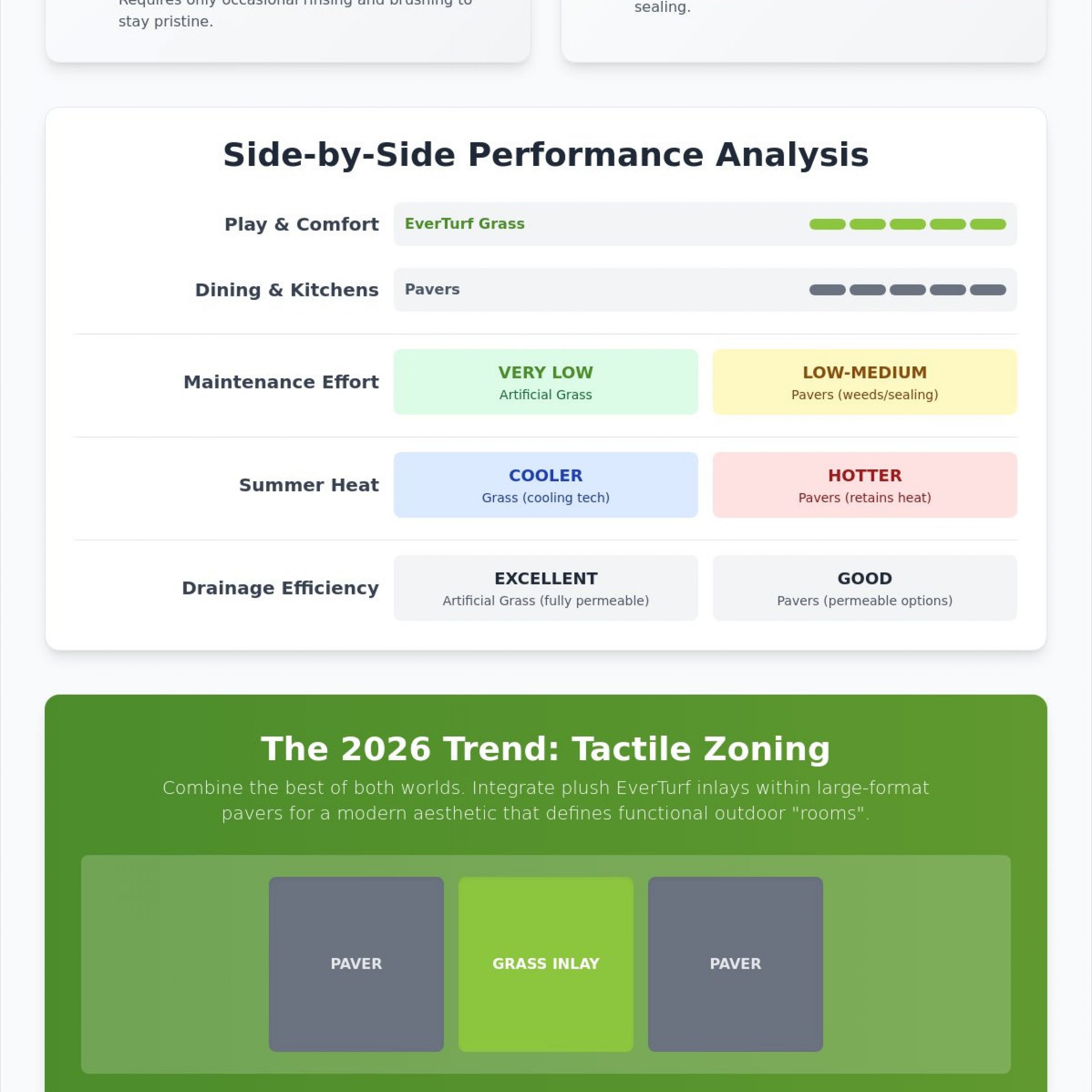
Evaluate the technical backbone of your outdoor space by looking past the surface textures. When comparing artificial grass vs pavers for patio performance, the metrics of drainage, heat management, and long-term financial commitment reveal the true winner for your specific environment. A high-end patio isn’t just a visual asset; it’s an engineered system designed to handle the stresses of the 2026 climate. While both materials offer distinct advantages, their behavior under pressure determines whether your backyard remains a sanctuary or becomes a maintenance burden.
Installation complexity often dictates the initial timeline and budget. Professional EverTurf Pavers installation requires intensive excavation and precise grading to ensure a level surface that won’t shift. Similarly, EverTurf Artificial grass requires a sophisticated multi-layer base to facilitate airflow and moisture migration. While some homeowners consider a DIY approach, the specialized equipment and technical knowledge required for these permanent structures usually justify a professional investment. Choosing the right material means looking at the Total Cost of Ownership (TCO) over a ten-year period, balancing the upfront price against the inevitable costs of weekend labor and supplies.
Drainage: The Silent Patio Killer
Water management is the most critical factor in patio longevity. EverTurf systems are engineered to achieve drainage rates of over 30 inches per hour, ensuring that even the most intense tropical storms leave your yard dry and usable within minutes. This rapid percolation prevents the muddy runoff and standing water often associated with traditional lawns. In contrast, non-permeable paver surfaces carry the risk of pooling water, which can eventually seep toward your home’s foundation or cause the stone to heave during freeze-thaw cycles. Regardless of your choice, the sub-base preparation remains the most important factor; a perfectly graded foundation is the only way to protect your property from moisture damage.
Longevity and ROI
The financial narrative of your backyard changes when you look at depreciation and resale value. Pavers offer a classic appeal that can last for decades, but they do require a consistent schedule of sealing and joint repair to maintain their value. Conversely, high-quality synthetic turf provides an immediate “turn-key” aesthetic that modern homebuyers in 2026 find increasingly attractive. For a detailed budget breakdown, you can review our Artificial Turf Installation Cost guide. Ultimately, the best return on investment comes from a space that you actually use. If you’re ready to transform your landscape into a high-performance retreat, explore our artificial turf installation near me to find a local expert who can bring your vision to life.
The Hybrid Patio: Designing with ‘Tactile Zoning’
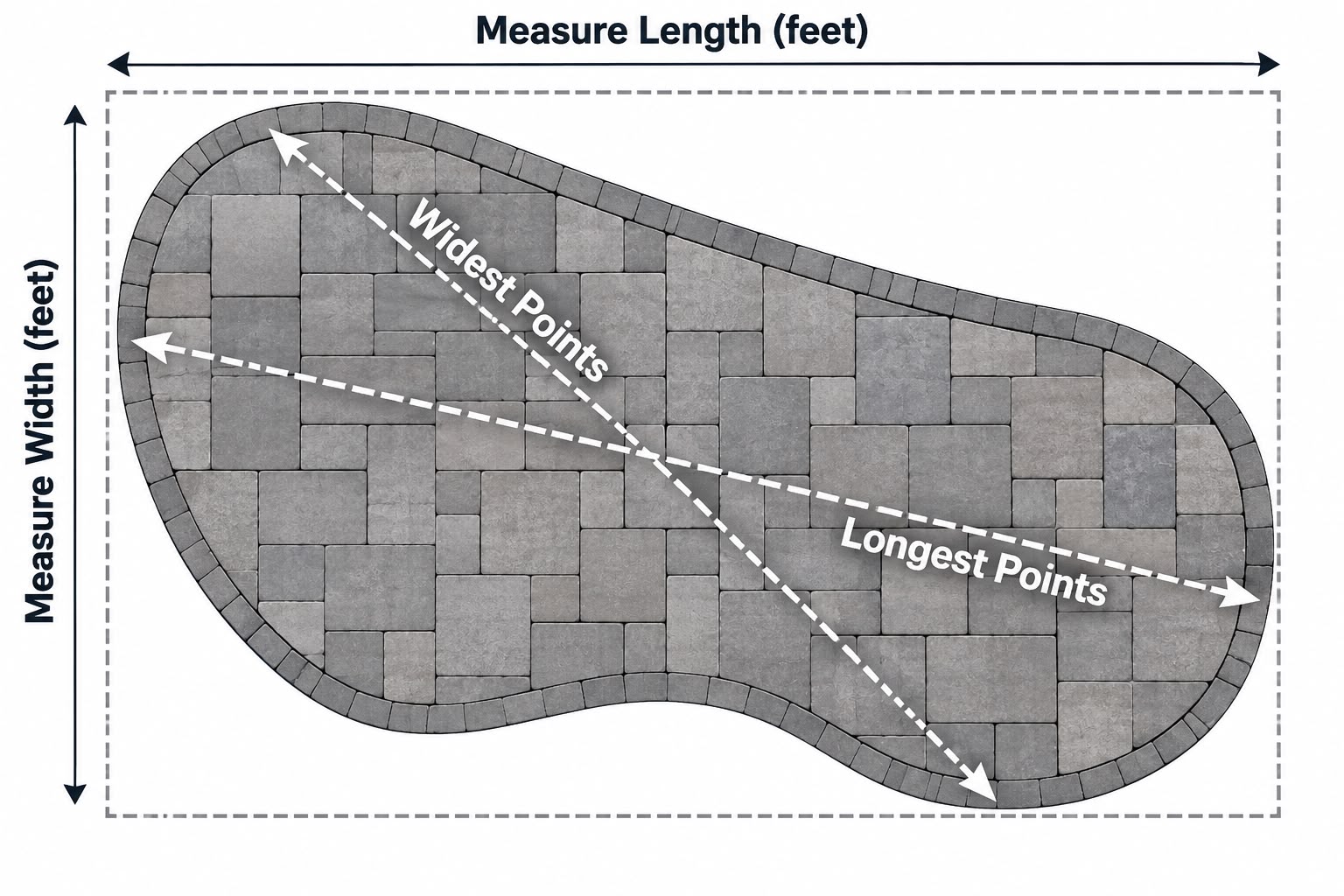
Deciding between artificial grass vs pavers for patio use often feels like a binary choice. The most sophisticated 2026 designs reject this “either-or” mentality in favor of integration. Tactile Zoning is the practice of using material transitions to define functional “rooms” without the need for physical walls. By blending the soft, inviting texture of EverTurf Artificial grass with the structural permanence of EverTurf Pavers, you create a space that is both architecturally grounded and sensorially rich. This approach allows you to enjoy the barefoot comfort of a lawn exactly where you lounge, while maintaining a solid, level foundation for your dining and grilling stations.
The “Turf Inlay” trend has become a hallmark of modern luxury. This involves integrating strips of synthetic turf between large-format pavers to create a geometric, high-contrast floor that feels like a living tapestry. Beyond aesthetics, pavers serve as a permanent structural border for your lawn. They prevent edge lift and provide a clean, crisp line that never needs trimming. Most balanced designs aim for a 60/40 ratio, where the “hard” surfaces anchor high-traffic zones and “soft” surfaces define the relaxation areas. This balance ensures your patio feels expansive yet cozy, offering enough stability for furniture without sacrificing the psychological benefits of greenery.
Executing the Perfect Transition
Safety and longevity depend on technical precision at the point of contact. A flush-mount installation is non-negotiable to prevent tripping hazards where the stone meets the grass. You must also ensure that the sub-base is engineered to manage drainage at these intersections, preventing water from trapped between the materials. We use EverTurf Staples and Glue to secure these intricate inlays, ensuring the turf remains perfectly tensioned within the paver patterns even under heavy foot traffic. This meticulous attention to detail prevents the shifting or “bunching” that can plague less professional installations.
Visual Harmony and Color Palettes
Successful hybrid designs require a keen eye for color theory to ensure the materials complement rather than clash. You should match the specific green tones of your turf with the underlying hues of your stone. Cool, gray-toned pavers pair beautifully with deep, forest-green fibers, while warmer, sandy stones require turf with subtle olive or tan thatch to maintain a natural look. Creating a “Green Island” for your lounge area can serve as a lush focal point that draws guests into a dedicated relaxation zone. For more design inspiration, explore Backyard Turf: The Definitive Guide to see how these elements come together in a maintenance-free oasis.
Design Your Forever Sanctuary
Deciding on artificial grass vs pavers for patio design isn’t just a choice of materials; it’s a commitment to your future lifestyle. You’ve discovered how modern engineering has solved the traditional pains of heat and drainage, allowing for a seamless blend of structure and soft-touch comfort. By choosing a solution that fits your specific needs for play zones or dining areas, you’re investing in a space that remains vibrant and functional for decades. It’s about restoring your personal time and moving away from the cycle of constant maintenance.
Our professional-grade EverTurf Infill and industry-leading drainage technology ensure that your investment stays beautiful regardless of the weather. We provide pet-safe, antimicrobial turf options that keep your sanctuary clean and inviting for everyone. If you’re ready to stop dreaming and start living in your ideal backyard, transform your patio with EverTurf’s premium synthetic solutions today. We’re here to help you turn your property into a sophisticated, worry-free retreat that you’ll enjoy for years to come.
Frequently Asked Questions
Is artificial grass hotter than pavers in the summer?
Artificial grass generally absorbs more heat than light-colored stone pavers but less than dark materials like asphalt or brick. While synthetic fibers can become warm in direct sunlight, you can manage surface temperatures effectively by using EverTurf Infill designed for heat mitigation. A brief rinse with water or the strategic use of shade structures ensures the area remains comfortable for bare feet even during the peak of a 2026 summer afternoon.
Can you install artificial turf directly over an existing paver patio?
You can install EverTurf Artificial turf over existing pavers if the surface is level and has adequate drainage. It’s essential to use a specialized drainage mat or padding layer between the stone and the turf backing. This prevents the “paver lines” from showing through the grass blades over time and ensures that moisture doesn’t pool between the two surfaces, protecting the structural integrity of your patio.
Which is better for drainage: turf or pavers?
EverTurf Artificial grass typically offers faster drainage than standard non-permeable pavers because the entire surface is engineered to percolate water. Our systems achieve drainage rates of over 30 inches per hour, moving rain quickly into the sub-base. While permeable stone options are available, traditional pavers often rely on surface slope to move water, which can lead to pooling if the grading isn’t perfectly executed.
How do you clean dog urine off a patio that has both turf and pavers?
Cleaning a hybrid patio involves a simple rinse with water and the occasional use of an enzyme-based cleaner on the synthetic sections. For the EverTurf Artificial grass pets areas, the specialized infill works to neutralize odors on contact while the liquid drains through the backing. Rinsing the surrounding pavers at the same time prevents urine salts from building up on the stone, keeping the entire transition zone fresh and hygienic.
Do pavers or artificial grass last longer?
EverTurf Pavers generally offer a longer physical lifespan, often lasting between 25 and 50 years when correctly installed. Artificial grass typically provides 10 to 20 years of vibrant, high-performance use before the fibers show signs of aging. When choosing between artificial grass vs pavers for patio longevity, consider that while stone lasts longer, it requires more frequent maintenance like sealing and weeding to keep it looking its best.
Will weeds grow through my artificial grass if it’s next to pavers?
Weeds shouldn’t grow through the primary backing of your turf, but they can occasionally appear in the joints where the grass meets the stone. You can prevent this by using a high-quality weed barrier during installation and ensuring a precise, tight fit at the borders. Maintaining proper levels of EverTurf Infill also makes it difficult for wind-blown seeds to find a home in the synthetic blades, preserving your maintenance-free aesthetic.
Is artificial grass cheaper to install than a paver patio?
Artificial grass installation is often more cost-effective upfront than installing a high-end natural stone or porcelain paver patio. The intensive labor required for stone masonry and the high cost of premium materials often make traditional hardscaping a larger initial investment. When you compare artificial grass vs pavers for patio costs over a decade, synthetic turf also saves money by eliminating the need for recurring stone sealants and professional power washing, much like how modern Product Sales via E-commerce Storefront help homeowners save on high-end interior upgrades by offering direct access to specialized bathroom fixtures.
What is the best way to secure turf in between pavers?
The most reliable method for securing thin turf inlays is using EverTurf Staples and Glue specifically formulated for outdoor transitions. These professional-grade adhesives bond the turf backing to the sub-base, preventing the edges from curling or shifting under foot traffic. This technique ensures a flush-mount finish that looks like a seamless living tapestry, providing a safe and sophisticated look that withstands the elements without losing its tension.