
Recyclable Artificial Turf Options: A 2026 Guide to Sustainable Landscapes
What if your lush, emerald lawn could eventually become a brand-new surface instead of taking up space in a landfill for centuries? Many homeowners crave the tranquility of a perfect outdoor space but feel a lingering sense of environmental guilt over the plastic components involved. You shouldn’t have to choose between a pristine aesthetic and your commitment to the planet. It’s common to feel overwhelmed by the technical jargon surrounding recyclable artificial turf options, especially when trying to distinguish between products that are merely “recycled” and those designed for a truly circular economy.
We’re here to bridge that gap and restore your peace of mind. This guide reveals how to identify high-performance synthetic grass that prioritizes single-material engineering without sacrificing the durability or softness you expect. You’ll learn about the latest industry shifts, including the 2026 legislative push for producer responsibility and PFAS-free materials. We will break down exactly what makes a turf system circular, helping you select a sophisticated, permanent solution that honors your time and your values. Discover how your next landscape project can contribute to an evergreen future while providing a beautiful, low-maintenance sanctuary for your family.
Key Takeaways
- Distinguish between repurposed materials and high-performance recyclable artificial turf options to ensure your landscape supports a true circular economy.
- Identify the specific polymer-based backing systems and UV-stabilized fibers that provide superior durability while remaining fully processable at the end of their lifespan.
- Evaluate the environmental impact of your project by calculating significant water savings and the long-term benefits of choosing materials with an extended life expectancy.
- Explore how to pair sustainable synthetic grass with professional-grade EverTurf Pavers to design a sophisticated, low-maintenance outdoor sanctuary.
- Master the technical requirements for modern turf selection to achieve a hyper-realistic aesthetic that aligns with the highest quality standards of the industry.
The Evolution of Sustainable Artificial Turf in 2026
The landscape of synthetic grass has undergone a radical transformation. True sustainability now means designing products that never have to see a landfill. Recyclable artificial turf refers to synthetic grass systems engineered with compatible polymers that allow for seamless end-of-life processing. This shift is driven by a growing awareness of the circular economy, where every component of your lawn is viewed as a future resource rather than eventual waste. It’s a sophisticated approach that ensures your outdoor sanctuary remains a source of pride, not environmental concern.
In the past, the evolution of artificial turf focused primarily on aesthetics and raw durability. While those factors remain vital, 2026 technology has finally solved the “multi-material separation” problem that once plagued the industry. Homeowners are increasingly choosing recyclable artificial turf options to align their desire for a pristine, year-round yard with their personal environmental goals. This transition marks the end of the “disposable lawn” era and the beginning of a truly permanent, eco-conscious solution that restores your time without compromising your values.
The Problem with Traditional “Multi-Material” Turf
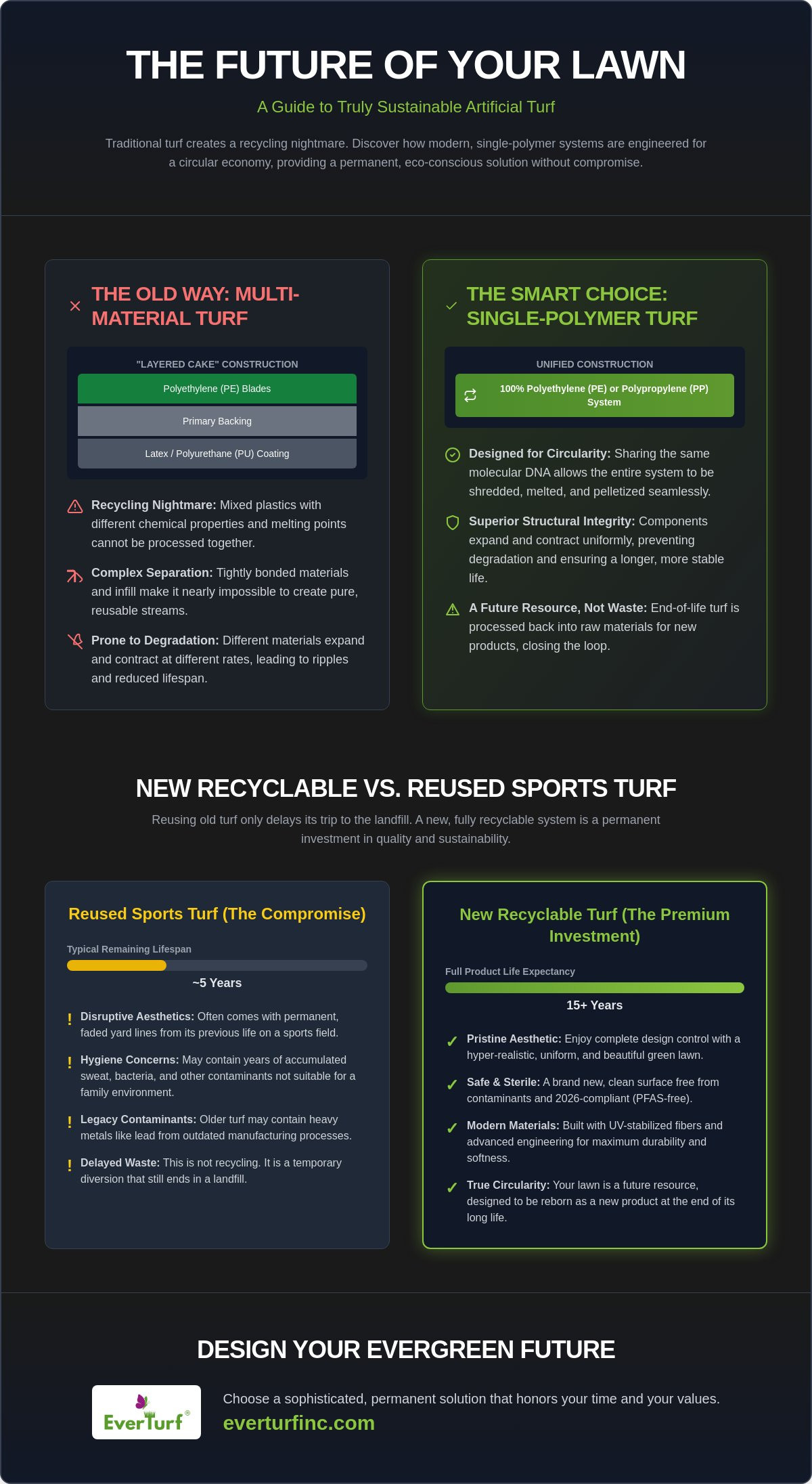
For decades, manufacturers created a “layered cake” of materials. They stitched polyethylene blades into a heavy polyurethane or latex backing. While this provided a sturdy feel, it created a recycling nightmare. These materials have different melting points and chemical properties, meaning they cannot be processed together. Separating the sand and rubber infill from these tangled fibers adds another layer of complexity that most recycling facilities simply aren’t equipped to handle. Contamination occurs when these distinct chemical compounds are bonded so tightly that they cannot be separated into pure, reusable streams for secondary manufacturing.
The Move Toward Single-Polymer Engineering
Comparing Recyclable New Turf vs. Reused Sports Turf
Selecting the right foundation for your home requires more than just a green surface. It’s about choosing between a temporary fix and a permanent legacy. While some homeowners consider repurposed materials to save costs, it’s vital to understand the difference between reused products and true recyclable artificial turf options. Reusing old turf simply delays its arrival at a landfill. In contrast, circular products are designed from the start to be broken down and reborn. This distinction is central to the future of synthetic turf recycling, moving the industry toward a zero-waste model that prioritizes long-term environmental health.
Used sports turf often carries the scars of its former life. You might find permanent white or yellow yard lines cutting through your garden, disrupting the tranquil aesthetic you’ve worked hard to create. More importantly, hygiene is a major concern. Sports fields accumulate years of sweat, bacteria, and sometimes heavy metals like lead from older manufacturing processes. New recyclable systems provide a sterile, safe environment for your family. When you weigh a new product’s 15-year life expectancy against the remaining 5 years typically left on a used field, the long-term value of a fresh installation becomes clear.
Recyclable New Turf: The Premium Eco-Choice
Investing in new material allows for complete design control. You can select the perfect pile height and lush color profile to complement your architecture. When you design your backyard turf, you’re getting a product with a full manufacturer’s warranty and the latest UV-stabilization technology. This ensures your lawn stays vibrant and structurally sound for decades. While manufacturing new turf requires energy, the ability to fully recycle the system at the end of its life creates a much smaller total carbon footprint than repeatedly replacing short-lived, used materials.
Reused Sports Turf: The Budget Alternative
Used turf typically comes from high school or professional stadiums after it no longer meets rigorous athletic safety standards. It serves well for low-visibility areas like erosion control or temporary dog runs where aesthetics aren’t the priority. However, the “sports line” problem is a significant hurdle for residential use. Field markings are often inlaid with different colored fibers, meaning they can’t be washed away or removed. For a primary living space, the visual distraction of a partial 40-yard line rarely aligns with the goal of a sophisticated retreat. If you’re ready to see how a premium, sustainable lawn can transform your property, you can explore our installation services to find the perfect fit for your lifestyle.
Key Features of a High-Performance Recyclable Turf System
High-performance landscapes require a perfect synergy between aesthetic grace and mechanical engineering. When you look beyond the vibrant green blades, the true value of a sustainable system lies in its structural composition. Evaluating recyclable artificial turf options requires an eye for technical specifications that ensure the product can be processed easily at the end of its life. A critical factor is the relationship between the fibers and the primary backing. In a circular system, these components must be made from the same polymer family to allow for direct recycling without the need for complex chemical separation.
Durability and sustainability go hand in hand. High-quality systems utilize advanced UV stabilization to prevent eco-friendly fibers from breaking down prematurely under the harsh sun. This ensures your lawn remains resilient and lush for its entire 15 to 20-year lifespan. Additionally, modern designs incorporate integrated thatch layers. These curly fibers provide natural support and density, effectively replacing the need for non-recyclable secondary components that were common in older turf generations. It’s a cleaner, smarter way to build a beautiful yard.
Advanced Polyolefin Backing Technology
Polyolefin has emerged as the gold standard for backing technology in 2026. Unlike traditional latex or urethane coatings, which are heavy and nearly impossible to recycle, polyolefin is lightweight and 100% circular. This material creates a non-absorbent, highly permeable surface that allows water and liquids to flow through at incredible speeds. This superior drainage makes it the ideal choice for artificial grass for dogs, as it prevents moisture from trapping odors or bacteria. By eliminating heavy chemical coatings, manufacturers have created a product that is easier to install and even easier to reclaim decades later.
The Role of Recyclable Infill
Your choice of infill determines the ultimate recyclability of the entire system. Traditional crumb rubber can complicate the reclamation process because it’s difficult to separate completely from the grass fibers. For a truly eco-conscious project, selecting the right turf infill is vital. Options like round-grain silica sand or organic, plant-based alternatives are preferred because they can be easily vacuumed out and reused or safely returned to the earth. Most professional installers now adhere to the latest turf recycling and reuse guidelines to ensure every part of the installation remains environmentally responsible. Investing in these premium recyclable artificial turf options ensures your outdoor retreat remains a pristine sanctuary that respects the planet’s resources.
Evaluating the Environmental ROI of Your Turf Investment
Choosing a sustainable landscape is a strategic investment in both your property’s value and the earth’s future. Achieving this vision often requires expert sustainable landscape design and installation, where companies like Alma Gardening Company focus on creating residential spaces that are both beautiful and eco-friendly. When you evaluate the environmental return on investment (ROI), you’re looking at a holistic picture of resource conservation. By selecting high-performance recyclable artificial turf options, you effectively eliminate the need for thousands of gallons of water every year. In a typical residential setting, this can result in saving tens of thousands of gallons of water over the product’s lifespan. Beyond water, you’re removing the carbon footprint associated with gas-powered mowers and the chemical runoff from fertilizers and pesticides. It’s a shift toward a cleaner, quieter, and more responsible way of living.
Planning for end-of-life logistics is the final piece of the ROI puzzle. A truly circular product ensures that when the time finally comes to refresh your space, the old material becomes the raw ingredients for new innovations. This reclamation process prevents thousands of pounds of plastic from entering the waste stream, solidifying your legacy as a steward of the environment. This logical progression from a high-maintenance situation to a worry-free, eco-friendly one is an obvious and rewarding choice for the modern homeowner.
Longevity as a Sustainability Metric
The most sustainable product is the one you only have to install once. Replacing a low-quality synthetic lawn every few years creates multiple times the manufacturing waste and transportation emissions of a single premium installation. You should view the artificial turf installation cost over a 20-year horizon to understand the true financial and ecological savings provided by a permanent solution. High-quality UV inhibitors are essential here; they protect the molecular structure of the fibers, ensuring they don’t become brittle or lose their vibrant color. This durability is what makes a landscape truly everlasting.
Certifications to Look For
Transparency is the hallmark of a reliable visionary in the turf industry. To ensure your lawn meets the highest standards, look for products that adhere to the Synthetic Turf Council (STC) sustainability guidelines. These certifications verify that the manufacturer has a clear plan for end-of-life processing. In 2026, it’s also non-negotiable to demand lead-free and PFAS-free guarantees. These third-party certifications provide the logical evidence needed to justify a premium investment, giving you the peace of mind that your sanctuary is safe for your family. If you’re ready to calculate the potential savings for your own property, you can request a personalized quote to explore our sustainable collections.
Sustainable Luxury: Implementing Recyclable Options with EverTurf
EverTurf positions itself as more than a provider; we’re your partner in creating an everlasting retreat. We understand that true luxury isn’t just about how a lawn looks on day one, but how it performs over two decades. By focusing on high-performance, long-lasting synthetic solutions, we help you step away from the endless cycle of mowing and fertilizing. Our curated selection of recyclable artificial turf options represents the pinnacle of modern landscape engineering. Integrating these surfaces with EverTurf Pavers creates a complete, permeable eco-system that manages drainage beautifully while elevating your property’s visual appeal.
Professional installation is the secret to this longevity. Our teams ensure the base and edging are perfectly prepared to support a multi-decade lifespan. This meticulous attention to detail prevents shifting and ensures that your investment remains as pristine as the day it was installed. Transitioning to a maintenance-free, sustainable outdoor space starts with a vision of tranquility, and we’re here to provide the logical evidence and technical expertise to make it a reality. It’s time to reclaim your weekends and enjoy a sanctuary that aligns with your values.
Designing for the Future
A sophisticated landscape often blends textures to create depth and interest. You can combine EverTurf Artificial Grass with drought-tolerant native plants to build a yard that thrives in your local climate. This approach allows for multi-functional zones, from resilient dog runs to professional-grade EverTurf Putting Greens. You achieve a lush, hyper-realistic look without the environmental cost of traditional sod. It’s about crafting a space that serves your lifestyle while honoring your commitment to a circular economy.
The EverTurf Advantage
We offer more than just material; we provide a Reliable Visionary’s perspective on your property. Our experts offer consultative guidance on material selection, ensuring you understand the nuances of circularity and single-polymer technology. Through our national network of installers, you gain access to professionals trained in sustainable best practices. This ensures every project involving recyclable artificial turf options meets our rigorous standards for quality and environmental responsibility. We value your time and your property, offering a sophisticated solution that transforms your environment into a worry-free sanctuary for years to come.
Design Your Everlasting Sustainable Sanctuary
You now have the technical blueprint to transform your property into a model of modern sustainability. By choosing single-polymer engineering and prioritizing long-term durability, you ensure your landscape remains a resource for the future rather than a burden on the planet. True environmental ROI comes from selecting recyclable artificial turf options that provide hyper-realistic beauty today and seamless circularity tomorrow. This shift isn’t just about aesthetics; it’s about the profound relief of reclaiming your personal time in a space that aligns with your highest values.
As a national leader in synthetic turf distribution, EverTurf offers specialized solutions tailored for pets, active play, and pro-level putting greens. We focus on 2026-grade durability and aesthetic excellence to ensure your outdoor space is as resilient as it is breathtaking. Explore EverTurf’s High-Performance Sustainable Options and take the first step toward a worry-free, permanent landscape. Your perfect, year-round sanctuary is closer than you think, offering a sophisticated environment where you can finally relax and enjoy the results of a truly responsible investment.
Frequently Asked Questions
Is artificial grass actually recyclable in 2026?
Yes, artificial grass is fully recyclable if it is engineered with a circular lifecycle in mind. Modern 2026 standards, such as the proposed legislation in New York, now require producers to participate in collection and reuse programs. To ensure your lawn doesn’t end up in a landfill, you must choose a system made from compatible polymers that can be melted down together without chemical separation.
What is the difference between recycled turf and recyclable turf?
Recycled turf refers to products made from previously used materials, such as repurposed sports fields or plastic bottles. Recyclable turf is a forward-looking solution designed for a circular economy. While recycled options give a second life to old materials, only recyclable artificial turf options ensure that the product can be processed and reborn as a new resource once its 20-year lifespan concludes.
How do I find a recycling facility for my old artificial grass?
Start by contacting your original producer or installer. Under current 2026 regulations, many manufacturers are now mandated to offer collection programs for their products. You can also consult the Synthetic Turf Council directory to find specialized reclamation centers. These facilities are equipped to handle single-polymer systems, ensuring your old lawn is pelletized for secondary manufacturing rather than discarded.
Does recyclable turf cost more than traditional synthetic grass?
Premium recyclable artificial turf options may require a higher initial investment due to advanced single-polymer engineering. However, this cost is offset by superior durability and the elimination of future disposal fees. When you view the investment over a 20-year horizon, the environmental ROI and longevity of a circular product often make it a more financially sound choice than cheaper, multi-material alternatives.
How long does a recyclable artificial lawn typically last?
A high-performance recyclable lawn typically lasts between 15 and 20 years. Because these systems use uniform materials, they often possess better structural integrity than traditional turf. The components expand and contract at the same rate during temperature shifts, which prevents the ripples and fiber degradation often seen in older, latex-backed products. This longevity is a core pillar of true landscape sustainability.
Can pet-friendly turf be recycled if it has been used for dogs?
Yes, pet-friendly systems are fully recyclable if they utilize non-absorbent polyolefin backing. This technology prevents the accumulation of odors and bacteria within the backing itself. Once the infill is professionally vacuumed out during the reclamation process, the clean polyethylene or polypropylene fibers are ready for industrial recycling. This allows you to maintain a pristine, hygienic yard while supporting a zero-waste future.
What materials make artificial turf difficult to recycle?
Traditional latex and polyurethane coatings are the primary barriers to recycling. These materials are chemically incompatible with the polyethylene blades, creating a “contamination” issue that prevents them from being melted down together. Additionally, older systems using crumb rubber infill are difficult to process because the rubber particles are hard to separate completely from the synthetic grass fibers during the recycling phase.
Is used sports turf a safe option for residential backyards?
Used sports turf is generally not recommended for residential spaces where children and pets play. These repurposed materials often carry bacteria, sweat, and residues from their previous life in a stadium. They may also contain traces of lead or PFAS that don’t meet modern 2026 safety standards. Investing in a new, certified recyclable system ensures a hygienic, toxin-free sanctuary for your home.