

Best Artificial Grass for Hot Climates: The 2026 Cooling Technology Guide
Can you actually walk barefoot on your lawn when the thermometer hits 100 degrees? For many homeowners, the dream of a low-maintenance yard often ends at the first sign of a summer heatwave, leaving you with burned paws, skyrocketing water bills, or synthetic blades that melt under intense window reflections. You deserve a pristine, year-round outdoor space that provides tranquility rather than a heat-induced headache.
Finding the best artificial grass for hot climates in 2026 means looking beyond simple aesthetics to the sophisticated science of comfort. We’ll show you how advanced IR-reflective polymers and evaporative cooling infills now allow premium turf to withstand temperatures up to 200 degrees hotter than standard polyethylene materials. This guide previews the latest innovations in fiber geometry and UV stabilization, ensuring your investment remains a lush, barefoot-friendly sanctuary even in the most intense sun. From understanding the April 2026 regulatory changes in Florida and Colorado to mastering drainage rates of 1,200 inches per hour, you’re about to reclaim your weekends and your backyard for good.
Key Takeaways
- Master the physics of blade geometry to identify specific shapes that create micro-shadows, effectively reducing heat absorption across your lawn’s surface.
- Evaluate the best artificial grass for hot climates by prioritizing advanced IR-reflective pigments and heat-resistant polymer blends that remain comfortable under the midday sun.
- Explore how EverTurf infill systems utilize hydro-chilled technology to provide active evaporative cooling, mimicking the refreshing feel of natural sod.
- Secure your long-term investment with professional installation strategies designed to manage thermal expansion and maximize airflow through specialized sub-base materials.
The Science of Heat: Why Standard Artificial Grass Gets Hot
Stepping onto a traditional synthetic lawn in the peak of July often feels like walking on a stovetop. This discomfort isn’t a flaw in your lifestyle; it’s a result of basic physics. Traditional polyethylene polymers, the building blocks of early synthetic turf, are remarkably efficient at absorbing solar radiation. Unlike natural grass, which uses transpiration to release heat, these plastic fibers store energy. This creates a localized “Heat Island” effect, where your backyard becomes a micro-climate significantly warmer than the surrounding street. Understanding The Science of Heat: Why Standard Artificial Grass Gets Hot is the first step in choosing a permanent solution that remains comfortable year-round.
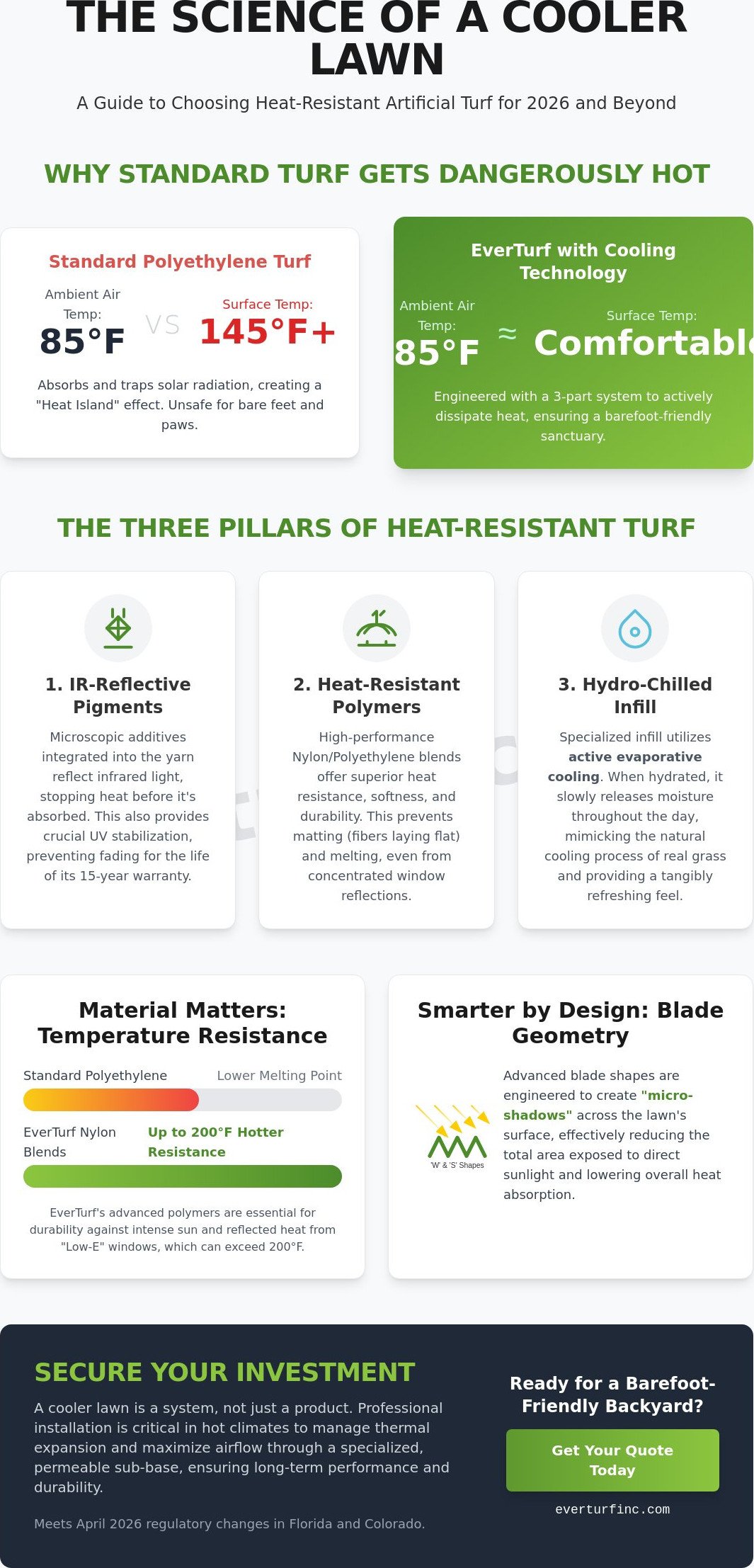
By April 2026, industry standards have shifted away from these first-generation “heat traps.” Homeowners now recognize that ambient air temperature is a poor indicator of turf comfort. While the air might be a pleasant 85 degrees, the surface of standard synthetic grass can easily soar to 145 degrees or higher. This 60-degree delta is exactly why selecting the best artificial grass for hot climates requires a focus on advanced polymer science rather than just a pretty shade of green. You need a lawn that reflects energy instead of hoarding it.
Thermal Conductivity and Synthetic Fibers
Dark green pigments are aesthetically pleasing, but they function as magnets for solar energy. In standard turf, the dense molecular structure of the blades and the thick black urethane backing work together to trap this heat. This thermal mass ensures the lawn stays hot long after the sun begins to set. High-performance systems avoid this by utilizing IR-reflective additives that bounce energy away from the surface. Without these innovations, your lawn remains a source of frustration rather than a lush sanctuary for your family and pets.
The ‘Low-E’ Reflection Threat
Modern energy-efficient windows, while excellent for your utility bills, pose a unique risk to traditional synthetic lawns. These “Low-E” windows act as massive magnifying glasses, reflecting concentrated beams of sunlight onto specific areas of your yard. These reflections can reach temperatures exceeding 200 degrees, which is well above the melting point of standard polyethylene. High-performance nylon or modified polyethylene blends are essential in these “hot spots” to prevent permanent damage. When seeking the best artificial grass for hot climates, identifying these reflection points during the design phase ensures your evergreen space survives the most intense UV exposure without fading or warping.
The Three Pillars of Heat-Resistant Turf Technology
Achieving a barefoot-friendly sanctuary in 2026 requires more than a simple product choice; it demands a holistic system. While competitors often focus on a single feature, the best artificial grass for hot climates relies on a synergy of three critical pillars. These components work in unison to manage thermal energy, ensuring your lawn remains a vibrant, usable extension of your home rather than a dormant heat trap. EverTurf integrates these technologies to provide a permanent solution that stands up to the most punishing summer days.
IR-Reflective Technology: Bouncing Heat Away
IR-reflective pigments are the first line of defense against solar gain. These microscopic additives are integrated directly into the yarn during the manufacturing process to reflect infrared light away from the fibers. This prevents the primary cause of heat buildup before it can penetrate the polymer core. Beyond temperature control, these additives provide essential UV stabilization. This protection ensures your lawn maintains its lush, pristine appearance for the duration of its 15 year warranty, preventing the brittleness and fading common in lower-quality alternatives.
Nylon vs. Polyethylene: Which Material Wins?
Material composition dictates how your lawn handles extreme exposure. While polyethylene is prized for its soft, realistic feel, it has a lower melting point than its counterparts. High-performance nylon, such as that found in the Fusion line, can withstand temperatures up to 200 degrees hotter than standard polyethylene without compromising its structural integrity. EverTurf utilizes sophisticated blends that capture the softness of polyethylene while leveraging the resilience of nylon in high-traffic zones. This prevents “matting,” where heat causes blades to lose their memory and lay flat. Scientific studies, such as the one exploring Blade Geometry: How Shape Influences Surface Temperature, highlight how these material choices directly impact the micro-climate of your property.
The Cooling Infill Synergy
The final pillar is the infill system, which acts as the lawn’s internal thermostat. In 2026, the gold standard is evaporative cooling technology like HydroChill. This specialized infill stores moisture from rainfall or a quick rinse and releases it slowly as temperatures rise. This process mimics the natural transpiration of real grass, cooling the surface through evaporation. When you combine IR-reflective fibers with a hydro-chilled base, you create an outdoor environment that stays significantly cooler than the surrounding pavement. If you’re ready to transform your backyard, you can explore our heat-resistant turf collections to find the perfect fit for your lifestyle.
Blade Geometry: How Shape Influences Surface Temperature
Visualize your lawn as a collection of millions of tiny cooling fins rather than a flat plastic carpet. In the search for the best artificial grass for hot climates, the physical structure of the blade is just as vital as the chemical makeup of the polymer. Flat, rectangular blades act like miniature solar collectors, absorbing direct sunlight across their entire surface area and trapping heat against the ground. By contrast, engineered blade shapes are designed to redirect energy and encourage airflow, fundamentally changing how your backyard handles a 100-degree afternoon.
Modern turf architecture utilizes geometry to create micro-shadows. When a blade is curved or ridged, only a fraction of its surface faces the sun at any given moment. This structural innovation leaves the rest of the blade in its own shadow, significantly lowering the overall thermal load of the lawn. Beyond temperature control, these specialized shapes provide a low-sheen, matte finish. This eliminates the “plastic glare” common in first-generation products, providing a lush and realistic aesthetic that remains pristine even under the harsh exposure of a desert or coastal sun.
Airflow within the “thatch zone” serves as another critical cooling mechanism. High-performance turf designs ensure that the dense layer of curly fibers at the base remains breathable. This allows heat to dissipate upward rather than becoming trapped against the backing material. By 2026, premium installations prioritize these high-airflow configurations to prevent the “thermal blanket” effect that often characterizes lower-quality synthetic alternatives.
The ‘W’ and ‘U’ Shape Advantage
W-shaped and U-shaped blades represent the pinnacle of heat-dissipation engineering. These shapes function like engine cooling fins, providing a larger surface area for heat to escape while minimizing the amount of material that actually touches your feet or your pet’s paws. Because the blades stand upright with greater resilience, they don’t “mat” down into a solid, heat-retaining mass. This structural integrity ensures your sanctuary remains vibrant and comfortable, even after heavy use during a summer gathering.
Color Selection for Arid Climates
Total Solar Reflectance (TSR) is the scientific benchmark for how much solar energy a color reflects. In 2026, homeowners are moving toward specific hues like “Field Green” over darker “Olive Green” tones to maximize these TSR ratings. Choosing a lighter, more vibrant pigment can reduce surface temperatures by an additional 10 to 15 percent. Balancing this thermal performance with the natural look of local Florida or Southwestern grasses allows you to enjoy a beautiful, evergreen space without the high water bills required to keep natural sod alive during a drought.
EverTurf Infill: The Secret to Evaporative Cooling
While the blade geometry and polymer science we discussed earlier provide a foundation for heat resistance, the infill acts as the true internal engine of your lawn. In the search for the best artificial grass for hot climates, the infill is often the deciding factor between a surface that is merely tolerable and one that is genuinely refreshing. High-performance systems in 2026 utilize hydro-chilled technology to mimic the natural transpiration process found in real sod. This isn’t just about weight or stability; it’s about creating an active cooling system beneath your feet.
Superior drainage is the silent partner of evaporative cooling. Premium pet-friendly turf now features drainage rates exceeding 1,200 inches per hour, ensuring that moisture doesn’t just sit on the surface but is absorbed and stored within the infill particles. This high-capacity drainage prevents the stagnant conditions that cause odors while providing the reservoir needed for long-lasting cooling. It’s a permanent solution that addresses both the physical comfort and the hygiene of your outdoor sanctuary.
How Evaporative Cooling Works in Synthetic Turf
The cooling process follows a sophisticated cycle of moisture absorption, storage, and slow release. When you give your lawn a quick morning rinse or when it rains, the specialized infill particles trap water molecules within their porous structure. As the sun rises and surface temperatures climb, this stored moisture evaporates slowly, creating an “air conditioning” effect that can reduce surface temperatures by up to 30 degrees. Unlike basic sand infills that lose moisture in minutes, these advanced materials are engineered to retain hydration for extended periods. Ultimately, EverTurf Infill is the engine of the cooling system.
Pet-Friendly and Cool: A Dual Challenge
Pet owners face the unique challenge of managing both heat and hygiene in a confined space. High temperatures can often amplify pet odors if the lawn isn’t properly ventilated and cooled. Choosing artificial grass for dogs requires a non-absorbent, antimicrobial cooling infill that prevents bacteria buildup while staying comfortable for sensitive paws. This dual-action approach ensures your backyard remains a pristine sanctuary for every member of the family, regardless of how high the summer mercury climbs. If you’re ready to see how these systems work in person, you can request a cooling technology sample kit to feel the difference for yourself.
Long-Term Protection: Maintenance and Installation for High-Heat Areas
Investing in the best artificial grass for hot climates is a commitment to long-term tranquility and aesthetic perfection. While the fibers and infill provide the cooling foundation, the installation process determines if your lawn remains pristine for its 15-year warranty or succumbs to the stresses of thermal expansion. In 2026, professional standards have evolved to address record-breaking heat waves, ensuring your evergreen sanctuary stays anchored and beautiful regardless of the temperature. You’ve moved past the frustrations of traditional maintenance and into a more beautiful, stress-free version of your property.
A sophisticated installation begins well below the surface. Sub-base materials like crushed granite or clean stone do more than facilitate a 1,200-inch-per-hour drainage rate; they act as a thermal buffer between the earth and your turf. This prevents the ground from radiating trapped heat back into the synthetic fibers. Because the national average artificial turf installation cost currently ranges from $8 to $20 per square foot, choosing an expert who understands these climate-specific nuances is essential to protecting your investment.
Installation Secrets for Hot Climates
Thermal movement is a physical reality for any synthetic material. On a 100-degree day, a 50-foot run of turf can expand significantly, leading to ripples or seam failures if not handled correctly. Professional installers use specialized techniques to secure perimeters and seams, allowing the lawn to breathe without shifting. Using high-grade EverTurf Staples and Glue creates a permanent bond that resists this movement. This level of precision is why the Florida Department of Environmental Protection issued a Notice of Proposed Rule on January 20, 2026, to establish statewide installation standards for residential properties. Similarly, Colorado’s law effective January 1, 2026, underscores the shift toward regulated, high-quality synthetic landscapes.
The ‘Reliable Visionary’ Maintenance Protocol
Maintaining your sanctuary is remarkably simple, allowing you to finally reclaim your weekends from the drudgery of mowing and fertilizing. To keep your cooling system at peak performance during the hottest months, follow these steps:
- The 2-Minute Reset: A quick rinse with a hose during extreme heat waves reactivates the evaporative cooling in your infill, instantly dropping surface temperatures by up to 30 degrees.
- Strategic Brushing: Use a power brush or stiff broom twice a year to keep blades upright. This maintains the micro-shadows we discussed earlier and maximizes airflow through the thatch zone.
- Infill Top-Offs: Every 24 to 36 months, check your infill levels. Maintaining the proper depth ensures your hydro-chilled system continues to mimic the natural cooling of real grass.
By adhering to these professional standards, your lawn remains a lush, vibrant environment that survives intense UV exposure without fading or warping. You’ve successfully transformed your outdoor space into a permanent, barefoot-friendly retreat that serves your lifestyle for decades to come.
Embrace a Cooler, Evergreen Future
Choosing the best artificial grass for hot climates is no longer about settling for a heat-trapping surface; it’s about investing in a sophisticated climate-control system for your home. You’ve discovered how the synergy of IR-reflective polymers and W-shaped blade geometry creates a lush, barefoot-friendly environment that stays up to 30 degrees cooler than traditional turf. By integrating pet-safe evaporative cooling infill and expert installation techniques, you ensure your yard remains a pristine sanctuary that survives the most intense 2026 summer heat waves without fading or warping. It’s a permanent transformation.
The transition to a worry-free lawn means finally reclaiming your weekends from the endless cycle of irrigation and maintenance. With advanced UV-stabilized polymers and a 15-year warranty, your outdoor space becomes a permanent asset that enhances your lifestyle. You deserve a backyard that invites you to step outside, even when the thermometer peaks. Design your heat-resilient oasis with EverTurf today and experience the long-term satisfaction of a perfect, year-round landscape. Your tranquil, stress-free retreat is just one decision away.
Frequently Asked Questions
Does artificial grass really melt from window reflections?
Yes, standard synthetic turf can melt when subjected to concentrated sunlight from energy-efficient Low-E windows. These reflections act like magnifying glasses, focusing solar energy into “hot spots” that reach temperatures exceeding 200 degrees. To protect your investment, premium installations in 2026 utilize heat-resistant nylon or modified polyethylene blends that maintain their structural integrity even under these extreme conditions.
How much cooler is heat-resistant turf compared to standard turf?
Modern heat-resistant systems typically remain 30 to 50 degrees cooler than first-generation polyethylene products. When you choose the best artificial grass for hot climates, you’re investing in a combination of IR-reflective pigments and specialized blade shapes that prevent energy absorption. This thermal management ensures your lawn remains a barefoot-friendly sanctuary rather than a heat trap during the peak of summer.
Is cooling infill safe for pets and children?
The cooling infills used in 2026 are 100% non-toxic and specifically engineered for family environments. Most hydro-chilled options are antimicrobial and eco-friendly, preventing the growth of bacteria while managing surface heat. These systems provide a pristine, pet-friendly surface that doesn’t rely on harsh chemicals to maintain its refreshing temperature or vibrant appearance.
Can I use a sprinkler system to keep my artificial grass cool?
A quick 2-minute rinse with a sprinkler is the most effective way to activate your lawn’s evaporative cooling system. The specialized infill absorbs this moisture and releases it slowly as the day gets hotter, mimicking the natural transpiration of real grass. This simple maintenance step can drop surface temperatures significantly for several hours, providing immediate relief during record-breaking heat waves.
Will the cooling technology wear off over time?
The cooling properties are a permanent part of the turf’s molecular structure and won’t wash away or degrade. IR-reflective additives are integrated directly into the fibers during manufacturing, while the cooling infill is designed to last for the duration of your 15-year warranty. You don’t have to worry about the technology losing its effectiveness as the years pass; it’s an everlasting solution for your property.
Does the color of the turf significantly affect how hot it gets?
Color choice impacts thermal performance because different pigments have varying Total Solar Reflectance (TSR) ratings. Lighter hues, such as vibrant “Field Green” or “Lime Green,” reflect more solar energy and stay 10 to 15 percent cooler than darker “Olive” or “Forest” tones. Balancing your aesthetic preference with these TSR ratings helps ensure your evergreen space remains comfortable in intense UV exposure.
What is the best material for turf in desert-like climates?
High-performance nylon is the superior choice for desert-like environments due to its exceptionally high melting point. While polyethylene is softer, nylon withstands temperatures up to 200 degrees hotter without matting or losing its blade memory. Many homeowners in arid regions prefer a hybrid blend that combines the realistic feel of polyethylene with the thermal resilience of a nylon thatch for a perfect balance of beauty and durability.
How do I know if my turf has IR-reflective technology?
You can verify IR-reflective technology by reviewing the manufacturer’s technical specifications and UV stabilization warranties, which typically span 8 to 15 years. Reliable visionary providers will offer documentation showing the product’s ability to reflect infrared light. If you’re unsure, a professional installer can demonstrate the difference using a thermal camera during a site consultation to show how the technology manages heat in real-time.