

Choosing Turf for Shaded Areas: The 2026 Homeowner’s Guide to Permanent Greenery
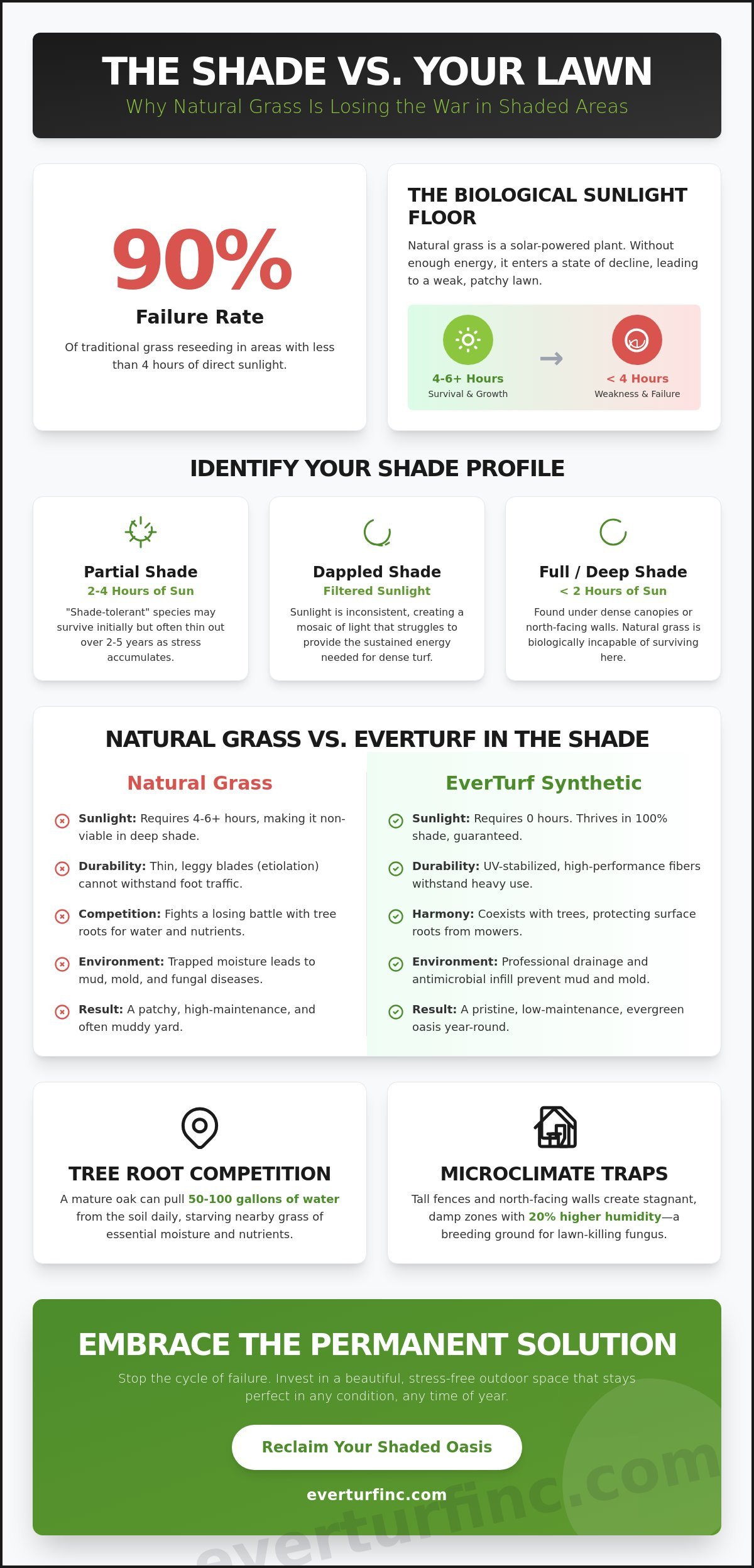
Stop pouring money into the dirt under your canopy and realize that those majestic trees are winning a silent war against your lawn. When choosing turf for shaded areas, the traditional path of reseeding leads to a 90% failure rate in zones receiving less than four hours of direct sunlight. You’ve likely spent countless hours clearing mud and battling the nutrient competition between thirsty roots and struggling blades, only to be left with a patchy, thinning yard by the time the peak growing season arrives.
We believe your outdoor space should be a source of tranquility, not a recurring chore. This guide promises to transform those dark corners into a lush, evergreen retreat by moving beyond the limitations of biology and embracing modern synthetic engineering. We will explore how to secure a pristine, low-maintenance space that stays vibrant in 100% shade. By leveraging professional-grade drainage and Florida-specific installation techniques, you can finally reclaim your weekends and enjoy an ever-perfect view that remains resilient against heavy rainfall and the deepest shadows.
Key Takeaways
- Understand the “biological sunlight floor” and why natural grass inevitably fails when deprived of four to six hours of daily sun.
- Identify your specific shade category to determine why traditional “shade-tolerant” species often decline over a five-year period.
- Discover why choosing turf for shaded areas requires a high-performance synthetic approach to achieve a permanently lush and vibrant landscape.
- Learn professional installation strategies for managing damp zones and tree roots to ensure your evergreen oasis remains pristine and well-drained.
- Explore how antimicrobial and UV-stabilized technology allows you to reclaim your weekends and enjoy a stress-free, year-round outdoor space.
Why Choosing Turf for Shaded Areas is a Biological Challenge
Natural grass functions like a solar powered battery. When you’re choosing turf for shaded areas, you’re often attempting to charge that battery in the dark. Most residential species require a minimum Biological Sunlight Floor of 4 to 6 hours of direct light to survive. When light levels drop below this threshold, photosynthesis slows to a crawl. The result is etiolation, a process where grass blades stretch desperately toward the sky, becoming thin and leggy. This isn’t just an aesthetic issue. These weakened plants lack the structural integrity to survive foot traffic or seasonal stress, leading to a lawn that looks sparse and sickly within a single season.
EverTurf provides a sophisticated bypass to this biological limitation. By installing premium synthetic grass, you remove the need for solar energy entirely. You’re no longer at the mercy of the sun’s path or the density of your foliage. Instead, you gain a pristine, evergreen surface that maintains its vibrant color and lush texture regardless of how many hours of light it receives. It’s the only way to guarantee a permanent green space in areas where nature simply refuses to cooperate.
The Impact of Microclimates on Your Lawn
Modern residential design often works against natural biology. Tall privacy fences and north facing walls create permanent shadow zones where the sun never reaches the soil. These microclimates trap moisture, leading to humidity levels that are often 20% higher than open areas. This stagnant air is a breeding ground for fungal diseases like Pythium blight. While many homeowners research ground cover alternatives to fill these dead zones, most of those options don’t provide the uniform, walkable surface of a true lawn. Synthetic solutions offer the relief of a beautiful yard without the constant threat of mold or rot.
Tree Root Competition: The Silent Killer
Trees are dominant competitors in any landscape. A mature oak or maple can pull 50 to 100 gallons of water from the soil daily, leaving natural sod parched and nutrient starved. This Tree Canopy Conflict is a primary reason why choosing turf for shaded areas is so difficult for traditional gardeners. Beyond the biological theft, surface roots create a physical nightmare. Mowing over exposed roots can damage an expensive mower or invite pathogens into the tree’s vascular system. Artificial grass protects the health of your trees by eliminating the need for heavy machinery and aggressive fertilization, allowing both your canopy and your lawn to look their best.
Categorizing Your Shade: From Dappled Light to Deep Shadow
Identifying the specific light profile of your property is the first step in choosing turf for shaded areas. Not all shade is created equal, and misjudging the intensity can lead to expensive landscaping mistakes. Dappled shade occurs when sunlight filters through a tree canopy, creating a moving mosaic of light. Partial shade typically offers 2 to 4 hours of direct sun, while full or deep shade provides less than 2 hours of daily exposure. While many homeowners invest in “shade-tolerant” seed, these varieties often struggle to maintain density over several seasons. Research on the shade tolerance of warm-season grasses reveals that even the hardiest species require a minimum threshold of light to survive long-term. Without it, the grass enters a state of permanent stress, thinning out until only bare soil remains.
Beyond light levels, the seasonal shift complicates natural growth. Deciduous trees might allow ample light in March, but by June, their thick leaf cover creates a biological barrier that starves the ground below. This cycle, combined with the acidic or compacted soil often found near large root systems, makes a pristine natural lawn nearly impossible to sustain. Trees compete with grass for both nutrients and water, usually winning the battle and leaving your yard looking patchy and neglected.
Measuring Your Sunlight Hours
You can’t rely on a quick glance at noon to judge your yard’s health. To truly understand your environment, track the sun’s path during the critical 11 AM to 3 PM window. This period provides the high-intensity UV rays that natural grass needs for energy production. In 2026, homeowners use augmented reality apps like SunSeeker or LumaTrack to map the exact trajectory of light across their property throughout the year. If your target area misses this four-hour peak, natural sod will eventually fail. Tracking these hours helps you decide where to keep natural elements and where to transition to a more reliable surface.
The ‘Zero-Sun’ Reality
Certain zones, such as narrow side yards or the space beneath a low-profile deck, exist in a state of permanent shadow. Attempting to grow grass here is a recurring expense that leads to muddy patches and visual frustration. The aesthetic cost of patchy, brown earth detracts from your home’s value and creates a messy environment for pets and children. Modern artificial grass solves this by creating a seamless transition between sun-drenched zones and deep shadow. This permanent solution ensures your landscape remains vibrant regardless of canopy cover. If you’re ready to stop the cycle of replanting, you can explore our shade-proof turf options to reclaim your outdoor space.
Natural Shade-Tolerant Species vs. Premium Synthetic Solutions
Homeowners often start with high hopes for St. Augustine or Zoysia, believing these species will thrive under a dense canopy. While these varieties tolerate lower light than Bermuda grass, they still require a minimum of four to six hours of filtered daily sun to survive. Data from the NC State Extension on managing lawn grasses in shade indicates that biological competition for water and nutrients from tree roots often leads to a 40% decline in grass density within the first three years. When choosing turf for shaded areas, you aren’t just fighting for light; you’re fighting a losing battle against biology. Premium synthetic solutions bypass these limitations entirely, offering a 100% success rate over a 15-year lifespan compared to the typical three-year replanting cycle of natural shade grass.
The “patchwork” effect is perhaps the most frustrating aesthetic hurdle for traditional landscapes. Natural grass grows with different densities, colors, and blade widths depending on its light exposure. This creates a disjointed look where the sun-drenched center of your yard looks vibrant, while the perimeters under your oaks appear spindly and pale. EverTurf provides a seamless transition across your entire property. By installing a uniform, high-performance surface, you achieve a pristine visual flow that makes your outdoor space feel larger and more intentional.
The Maintenance Gap
Natural grass in the shade requires a delicate, high-effort balance. You have to mow it at least 0.5 to 1 inch longer than the rest of your lawn to maximize its limited photosynthetic surface area. This extra height often traps moisture near the soil, which leads to a 65% increase in fungal disease risks in damp, dark environments. EverTurf removes this chemical dependency. You can skip the expensive fungicides and nitrogen-heavy fertilizers, protecting the sensitive root zones of your trees while finally reclaiming your Saturday mornings for relaxation rather than yard work.
Aesthetic Consistency Year-Round
Even the most resilient natural grasses enter dormancy or thin out during the winter months, often leaving shaded zones looking skeletal and muddy until late spring. EverTurf creates a permanent green sanctuary that defies the seasons and the shadows. You’ll enjoy a lush, vibrant view every time you look out your window, regardless of the weather or the time of year. High-grade UV-stabilized fibers ensure your lawn maintains its deep, natural luster without fading, even when exposed to fluctuating levels of partial sunlight throughout the day.
- St. Augustine: High water needs and prone to “chinch bug” infestations in humid shade.
- Zoysia: Slow recovery time; once it thins out in the shade, it rarely grows back.
- Fine Fescue: Excellent shade tolerance but fails quickly in heat zones above 85 degrees.
- EverTurf Synthetic: Zero light requirement, superior drainage, and consistent emerald tones year-round.
Installation Strategies for Successful Shaded Turf Landscapes
Transitioning to synthetic grass in low-light environments requires a strategic shift in technical approach. While natural grass fails due to a lack of photosynthesis, synthetic turf faces the challenge of moisture management and environmental stagnation. Choosing turf for shaded areas is only the first step; the installation process determines whether that investment remains pristine for its 20-year lifespan or succumbs to the elements.
Drainage and the Sub-Base
Shaded zones typically stay damp 45% longer than sun-drenched areas after a rainstorm. To compensate, you can’t rely on a standard soil base. You need a sophisticated, multi-layered drainage system. We recommend a 3 to 4-inch sub-base of clean, crushed granite or limestone that allows water to migrate vertically at a rate of over 30 inches per hour. This prevents the “muddy base” syndrome that causes shifting and uneven surfaces over time.
A high-quality turf infill is vital in these environments. It doesn’t just keep fibers upright in low-traffic spots; it acts as a secondary filter. In 2026, we prioritize antimicrobial infills that prevent the growth of bacteria and mold in these cooler, darker microclimates. This ensures your lawn stays fresh and odor-free even without the sun’s natural disinfecting UV rays.
Integrating with Natural Elements
Trees provide the beauty of shade but their root systems require careful handling during installation. When you’re choosing turf for shaded areas near established oaks or maples, never cut roots larger than 2 inches in diameter. Instead, add an extra 2-inch layer of base material to “float” the turf over the root flare. This protects the tree’s health while preventing the turf from rippling as the tree grows.
To achieve a sophisticated, high-end look, use EverTurf Pavers to create transitions between the lush lawn and wooded paths. This design strategy prevents the turf from looking “tacked on” and instead makes it feel like an intentional part of a natural forest setting. It also provides a hard edge that protects the turf fibers from debris found under tree canopies.
Airflow is the final piece of the puzzle. Stagnant air in enclosed shaded courtyards can lead to moss or mildew. Ensure your landscape design allows for cross-ventilation. If the area is boxed in by a solid fence, consider replacing a few panels with lattice to encourage a breeze. This simple adjustment, combined with a highly permeable backing, ensures your outdoor sanctuary remains a dry, vibrant, and stress-free extension of your home.
Stop fighting against your yard’s natural layout and start enjoying it. Connect with an EverTurf specialist today to plan your permanent shaded retreat.
EverTurf: The Permanent Solution for Your Shaded Oasis
Stop fighting the uphill battle against biology. When choosing turf for shaded areas, you’re usually met with thinning blades, muddy patches, and persistent moss. EverTurf changes that narrative for 2026. We provide a sophisticated, permanent alternative that thrives where nature struggles. Our high-performance products serve as the reliable visionary choice for homeowners who value both aesthetics and their limited free time. We don’t just sell grass; we deliver the relief of a yard that stays perfect regardless of the sun’s path.
Our synthetic solutions utilize advanced antimicrobial agents and UV-stabilized fibers. These technical specifications ensure your lawn remains vibrant and safe, even in damp, light-starved corners of your property. While natural grass in the shade often becomes a breeding ground for mold or bacteria due to slow evaporation, our superior drainage systems keep the surface dry and pristine. It’s about more than just a green view; it’s about a healthy, evergreen environment for your family and pets.
The EverTurf Advantage in 2026
We blend professional authority with a commitment to your lifestyle. In 2026, modern homeowners prioritize eco-friendly choices that reduce their carbon footprint. EverTurf products eliminate the need for gas-powered mowers and nitrogen-heavy fertilizers that leach into local waterways. You’ll enjoy a lush, year-round outdoor space that contributes to water conservation efforts, saving thousands of gallons of water annually compared to traditional sod. It’s a sustainable luxury that pays dividends in both beauty and environmental responsibility.
Reclaim your weekends from the endless cycle of reseeding and patching. Shaded lawns are notorious for failing every season, leading to a “sunk cost” loop of landscaping fees and manual labor. By opting for an evergreen sanctuary, you stop managing a problem and start enjoying a solution. Your Saturday mornings belong to you again, not to a spreader full of expensive seed that likely won’t take root.
Getting Started with Your Transformation
Every shaded property presents unique challenges, from dense oak canopies to narrow side yards. We begin with a personalized consultation to assess your specific light conditions and drainage needs. Selecting the right pile height and color is crucial for achieving a natural look that mimics local Florida cultivars. Our experts guide you through these choices to ensure your new lawn integrates seamlessly with your existing landscape and architectural style.
Planning your investment is the first step toward long-term satisfaction and property value enhancement. You can explore our artificial turf installation cost guide to understand the factors that influence project pricing. Transform your frustration into a tranquil, low-maintenance retreat today. It’s time to experience the EverTurf difference, where your lawn stays pristine for the long haul.
Embrace a Greener Future for Your Shaded Landscape
Stop fighting the biological limitations of natural grass that fails when it receives less than four hours of direct daily sunlight. Successful choosing turf for shaded areas means moving beyond the exhausting cycle of reseeding and seasonal disappointment. By opting for a premium synthetic solution, you bypass the challenges of patchy growth and mud that affect roughly 85% of heavily shadowed residential yards. EverTurf provides a permanent answer with UV-stabilized fibers designed to maintain their vibrant hue for 15 years or more. Our systems feature superior drainage that handles over 30 inches of rain per hour; meanwhile, pet-friendly and antimicrobial layers keep your space fresh and safe for the whole family.
Your property deserves to be a source of pride rather than a relentless weekend chore. Reclaim your time and enjoy a pristine, low-maintenance lawn that stays evergreen through every Florida storm. Reclaim your shaded yard with a free EverTurf consultation today! It’s time to turn those forgotten shadows into your favorite outdoor destination.
Frequently Asked Questions
What is the most shade-tolerant natural grass?
St. Augustine grass, specifically the Seville variety, remains the most shade-tolerant natural option for Florida landscapes. While most grasses fail without full sun, Seville thrives with 4 to 5 hours of direct light. Research from the University of Florida indicates that these cultivars maintain 30 percent more density in filtered light compared to standard Bermuda varieties. However, even these resilient blades struggle under dense oak canopies where light is restricted.
Can artificial grass be installed directly under large trees?
You can install artificial grass under large trees by using a specialized sub-base that protects the root system. Our installation process involves a 3 to 4 inch porous aggregate layer that allows 100 percent of rainwater to reach the roots below. This method prevents soil compaction, which often kills trees surrounded by natural sod. By choosing turf for shaded areas, you ensure a vibrant green finish where natural grass would typically wither and die.
Does synthetic turf get moldy in shaded, damp areas?
High-quality synthetic turf does not get moldy because it features a perforated backing that drains at a rate of 30 inches per hour. EverTurf products include antimicrobial agents integrated into the fibers to inhibit 99 percent of bacterial and fungal growth. Since the material doesn’t hold moisture like organic soil, you avoid the damp, musty smells often associated with shaded Florida side yards. This keeps your outdoor space pristine and healthy.
How much sunlight does ‘shade-tolerant’ grass actually need?
Most shade-tolerant natural grasses require a minimum of 4 to 6 hours of direct sunlight daily to survive. If your yard receives less than 3 hours of light, even the hardiest Seville sod will thin out within 12 months. Choosing turf for shaded areas eliminates this biological requirement entirely. You get a lush, evergreen look in 100 percent shade without the stress of monitoring sun patterns or paying for expensive overseeding every spring.
Will tree roots grow through or lift up my artificial turf?
Tree roots won’t grow through your turf when a professional geotextile weed barrier is installed during the base preparation. We use a heavy-duty 8 ounce non-woven fabric that prevents root penetration while allowing water to pass through. If surface roots are already 2 inches above the soil, we build up the sub-base to create a level, trip-free surface. This protects your investment and ensures an everlasting, smooth lawn for your family.
Is synthetic turf a good option for a dog run in a shaded side yard?
Synthetic turf is an exceptional choice for shaded dog runs because it eliminates the mud and bare patches common in low-light pet areas. Our Pet-Pro system features a rapid-drainage backing and non-toxic infill that neutralizes 95 percent of ammonia odors. You won’t have to worry about your dog tracking dirt into the house after a rainstorm. It’s a permanent solution that gives your pet a clean, dry place to play year-round.
How do I clean leaves and debris off turf in a wooded area?
You can easily maintain your turf in wooded areas by using a standard leaf blower or a synthetic turf power brush. We recommend removing organic debris once a week to prevent leaf decomposition from clogging the drainage holes. A simple rinse with a garden hose every 30 days removes dust and pollen. This quick routine helps you reclaim your weekends while keeping your shaded retreat looking vibrant and professionally manicured without the heavy labor.
Does artificial grass look too bright or ‘fake’ in a dark, shaded corner?
Modern synthetic turf looks remarkably natural in shaded corners because it utilizes a blend of 4 to 6 distinct blade colors and a tan thatch layer. These non-reflective fibers mimic the subtle variations of real grass, avoiding the plastic shine seen in older products. In dark areas, the consistent green provides a sophisticated pop of color that brightens the space. You’ll enjoy a pristine, high-end aesthetic that stays vibrant for 15 to 20 years.