



Artificial Turf with Best Drainage Properties: The 2026 Buyer’s Guide
Did you know that artificial turf with a fully permeable backing can drain over 400 inches of water per hour, while traditional hole-punched versions often choke at just 30 inches? You likely envisioned a lush, evergreen escape when you decided to upgrade your lawn, not a swampy mess that harbors mold and pet odors after a typical afternoon downpour. It’s a common frustration, but it doesn’t have to be your reality. We understand that your outdoor space is a lifestyle investment, and you deserve the tranquility of a yard that stays dry and pristine regardless of the weather.
This 2026 buyer’s guide will show you how to identify the artificial turf with best drainage properties to prevent standing water and protect your property’s structural integrity. You’ll learn how to navigate new 2026 PFAS regulations in states like Colorado and New York while choosing high-flow systems that keep your space safe for kids and pets. We’re diving into the engineering behind 900-inch-per-hour flow rates and the essential sub-base layers that help you reclaim your weekends for relaxation rather than lawn maintenance.
Key Takeaways
- Master the technical differences between traditional perforated backing and the non-perforated “flow-through” revolution to avoid lawn saturation and bacterial growth.
- Identify the specific characteristics of artificial turf with best drainage properties to ensure an odor-free, antimicrobial environment for your pets and family.
- Learn why a high-performance sub-base of crushed stone and decomposed granite is the secret to maintaining structural integrity and rapid water runoff.
- Explore how drainage cells and trays provide essential protection for rooftop and deck installations, keeping your building envelope safe from moisture.
- Understand how to combine premium aesthetics with industry-leading flow rates to create a stress-free, evergreen sanctuary that’s ready for use immediately after a storm.
Why Drainage is the Critical Factor for Artificial Turf Performance
Imagine walking onto your lawn minutes after a heavy summer downpour. Instead of soggy shoes and muddy paws, you step onto a lush, dry surface that feels as pristine as it looks. This experience depends entirely on your choice of Artificial turf and its ability to manage water efficiently. Drainage isn’t just a technical specification; it’s the circulatory system of your outdoor space. It defines the precise rate at which moisture moves through the turf backing and into the soil below. When this system fails, the tranquility of your yard is replaced by the frustrations of traditional lawn maintenance.
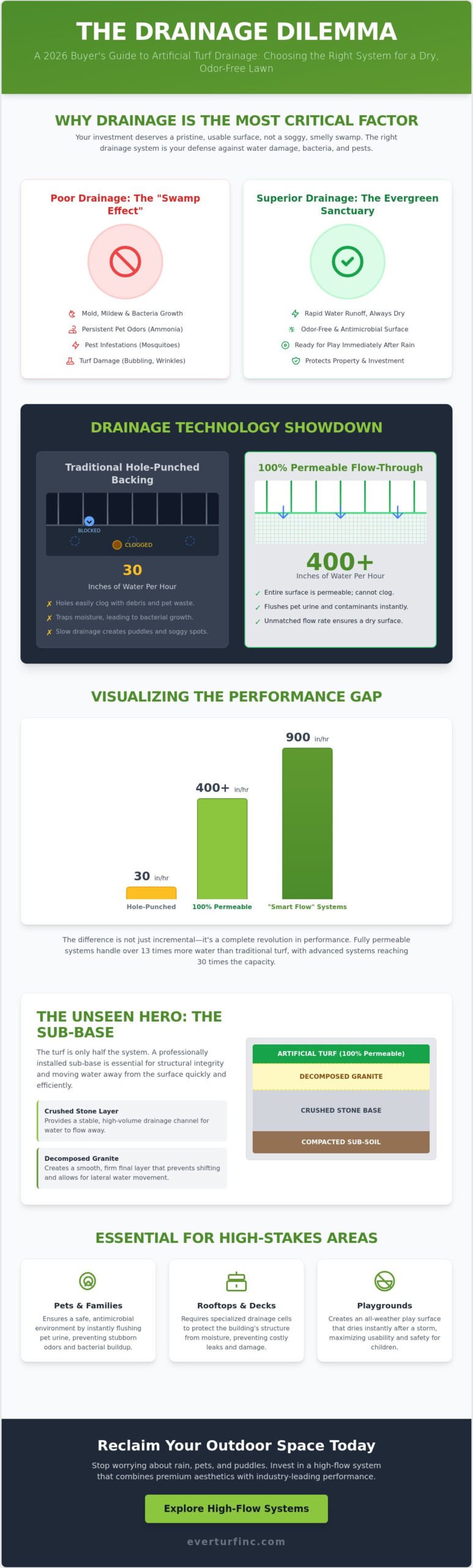
Selecting the artificial turf with best drainage properties is your primary defense against the “swamp effect.” This occurs when water becomes trapped on the surface, creating a stagnant environment that invites bacterial growth and mosquitoes. For pet owners, high-flow drainage is even more vital. It serves as the only effective way to manage pet urine. If liquid can’t flush through the system immediately, it lingers, leading to ammonia odors that are difficult to eliminate. Beyond daily hygiene, superior drainage protects the structural integrity of your property. During freeze-thaw cycles, trapped water expands as it turns to ice. This expansion can cause your turf to “bubble,” shift, or develop permanent wrinkles that ruin its professional finish.
The Hidden Costs of Poor Turf Drainage
Inadequate water management does more than just create temporary puddles; it actively devalues your investment. Poorly drained lawns often suffer from mold and mildew growth that can spread to nearby decking or home foundations. These health risks are a significant concern for families with young children or pets. Stagnant water also attracts pests, turning a beautiful sanctuary into a breeding ground for insects. Additionally, constant moisture weakens the bond between synthetic fibers and the backing material. This degradation shortens the lifespan of your lawn, potentially forcing a costly replacement years before it should be necessary.
Visual Signs of High-Performance Drainage
High-performance systems are easy to identify if you know what to look for. In 2026, look for “high-flow” labels that emphasize vertical movement rather than just surface runoff. Vertical drainage rate is measured as the volume of liquid, typically expressed in gallons per minute per square yard, that passes through the turf backing into the aggregate base. While surface runoff simply moves water to the edges of your yard, true vertical drainage ensures the entire lawn stays dry. Choosing the artificial turf with best drainage properties means opting for a system that can handle over 400 inches of rain per hour. This level of engineering ensures your outdoor space remains a stress-free, evergreen retreat regardless of the weather.
Comparing Drainage Technologies: Hole-Punched vs. 100% Permeable Backing
Choosing the artificial turf with best drainage properties starts with understanding what happens beneath the vibrant blades. For decades, the industry relied on perforated backings. These products feature small holes punched into a solid layer of latex or polyurethane at regular intervals. While functional for basic landscaping, they often fail to keep up with intense rainfall or high-use pet areas. Modern engineering has introduced a superior alternative: the 100% permeable, flow-through backing. This technology allows water to pass through every square inch of the material rather than forcing it through specific points.
The difference in performance is staggering. Traditional hole-punched turf typically offers a drainage rate of roughly 30 inches per hour. In contrast, fully permeable systems can handle over 400 inches per hour. This massive disparity is a critical factor in stormwater management for synthetic turf, as it ensures your lawn remains usable even during the most severe storms. Consider these benchmarks for your project:
- Standard Hole-Punched: 30 inches per hour capacity.
- Advanced Permeable: 400 to 450 inches per hour capacity.
- Proprietary “Smart Flow” Systems: Up to 900 inches per hour capacity.
The Mechanics of Hole-Punched Turf
Most perforated turf uses a 4×6 inch hole spacing. Over time, these holes can clog with fine debris, infill, or pet waste, which significantly reduces efficiency. The material itself matters too. Polyurethane backings are generally more durable than latex because they don’t expand or contract as much with temperature changes. Perforated turf might be sufficient for an arid climate with sandy soil, but it rarely provides the long-term relief Florida homeowners need during a tropical downpour.
The Science of Fully Permeable (Flow-Through) Backing
Flow-through technology uses a woven or non-woven permeable layer that acts like a sieve. It’s the gold standard for pet owners. Because urine can pass through the entire surface instantly, it doesn’t get trapped in “dead zones” between holes. This prevents the buildup of ammonia and bacteria. If you’re designing a space for your furry friends, check out The Complete Guide to Artificial Grass for Dogs for deeper insights into odor management.
Beyond drainage, these permeable backings offer exceptional “tuft bind” strength. This refers to how securely the grass blades are attached to the backing. High-quality permeable systems use advanced manufacturing to ensure the fibers won’t pull out during vigorous play or heavy foot traffic. When you invest in the artificial turf with best drainage properties, you’re buying more than just a dry lawn; you’re securing a permanent, high-performance foundation for your outdoor life. Feel free to explore our high-flow turf collections to see these technologies in action.
Specialized Drainage for High-Stakes Areas: Pets, Rooftops, and Playgrounds
Standard landscaping requires reliable water management, but certain environments demand an even more sophisticated engineering approach. Whether you’re designing a high-traffic dog run, a sophisticated urban rooftop, or a safe backyard play area, the stakes for moisture control are significantly higher. In these scenarios, simply having a green surface isn’t enough. You need a system specifically designed to handle heavy biological loads or protect the structural integrity of your building. Choosing the artificial turf with best drainage properties ensures these specialized spaces remain hygienic, safe, and durable for years to come.
For those looking to overhaul their entire property, The Ultimate Guide to Artificial Grass provides a broader perspective on how these systems integrate into a total home transformation. However, in high-stakes zones, the focus narrows to how effectively the system flushes away contaminants and prevents moisture buildup.
The Pet Owner’s Drainage Checklist
Pet urine is the primary cause of artificial grass odors, but the right drainage system acts as your first line of defense. High-performance pet turf combines a 100% permeable backing with antimicrobial fibers that inhibit the growth of odor-causing bacteria. It’s a mistake to think that drainage only applies to liquids. A truly effective system allows for rapid rinsing, ensuring that fine particles are flushed through the turf and into the aggregate base before they can settle. When you’re evaluating products, look for these essential features:
- Antimicrobial Protection: Built-in agents that fight mold and bacteria at the molecular level.
- Total Permeability: A backing that allows water to flow through every square inch, preventing “ammonia pockets.”
- Rinse-Ready Texture: Fibers designed to shed moisture quickly, making weekly maintenance a five-minute task.
Rooftop Drainage: Protecting Your Structure
Installing turf on a balcony or rooftop requires a different strategy than a ground-level yard. Here, the priority is protecting the building envelope. Using drainage cells or specialized trays creates an essential air gap between the turf and the roof surface. This gap allows air to circulate, preventing mold growth on concrete or wood decks while guiding water directly to existing roof drains. This setup is a cornerstone of any Backyard Turf Guide for urban dwellers. Without this secondary drainage layer, water can pool against the structure, leading to leaks and expensive repairs.
Playgrounds also require a balanced approach. Safety is paramount, which is why many installations include thick fall-height safety pads. However, these pads must be just as porous as the turf itself. If the safety layer isn’t permeable, it will act like a giant sponge, trapping water and creating a slippery, unstable surface for children. By selecting artificial turf with best drainage properties and pairing it with high-flow safety cushions, you create a play area that’s dry and ready for action immediately after the clouds clear.
Beyond the Turf: How Base Preparation Dictates Drainage Success
Even if you purchase the artificial turf with best drainage properties, its performance relies entirely on the foundation below. A high-flow system capable of moving 90 gallons per minute is rendered useless if it sits on a compacted clay base that acts like a bathtub. True drainage is an engineered system where the turf, infill, and sub-base work in perfect harmony. When these elements align, you achieve that stress-free, year-round outdoor space that EverTurf is known for providing.
The ideal foundation begins with a carefully curated mix of crushed stone, decomposed granite, and fines. This combination provides the structural stability needed for a pristine, level lawn while maintaining the porous channels necessary for rapid water transit. A subtle 1% to 2% grade is also essential. This slight slope ensures that gravity assists the vertical drainage, moving excess water toward designated runoff areas or French drains before it has a chance to pool.
Step-by-Step Sub-Base Construction for Max Flow
Excavation is the first step in reclaiming your weekend from a swampy yard. For sandy Florida soils, a 3-inch excavation is often sufficient. However, heavy clay environments require a deeper 4-to-6-inch cut to allow for a thicker aggregate layer. Once the soil is removed, a permeable geotextile fabric is laid down. This layer is critical; it prevents weeds and keeps your expensive aggregate from sinking into the mud without blocking water flow. Compaction follows, using a vibratory plate compactor to create a stable surface. The goal is a firm base that remains porous enough to breathe and drain.
Infill’s Impact on Vertical Drainage
The final piece of the drainage puzzle sits nestled between the blades. Infill isn’t just for aesthetics; it keeps the drainage channels open within the turf backing. Rounded silica sand is far superior to angular construction sand. The smooth, spherical grains allow water to slip past easily, whereas angular grains can pack together and clog the system over time. We recommend using a specialized product like EverTurf Infill to ensure maximum water transit and antimicrobial protection. You can learn more about choosing the right materials in The Essential Guide to Turf Infill.
Ready to build a foundation that lasts? Schedule a consultation with our installation experts to ensure your project starts with the right base for your local climate.
Reclaiming Your Outdoor Space with EverTurf’s High-Flow Systems
Transforming your backyard shouldn’t just be about changing the color of your ground; it’s about fundamentally upgrading how you live. EverTurf combines breathtaking aesthetics with the artificial turf with best drainage properties to ensure your sanctuary remains as functional as it is beautiful. We don’t just sell grass; we provide a permanent solution to the muddy paws and stagnant puddles that have likely dictated your outdoor schedule for too long. Our high-flow systems are engineered to let you enjoy a vibrant, lush environment that’s ready for hosting or play immediately after a storm clears.
Our commitment to quality is evident in every fiber we produce. We use UV-stabilized, eco-friendly materials that resist the harsh sun, ensuring your lawn stays evergreen without fading or degrading. As a Reliable Visionary in the industry, we offer a consultative approach that considers your specific local climate and soil composition. We understand that a home in a high-rainfall zone requires a different engineering strategy than an arid landscape. We’re here to guide you through those technical choices with transparency, ensuring your investment in artificial turf with best drainage properties pays dividends in peace of mind for years to come.
Custom Solutions for Every Environment
Whether you’re looking for the precision of our Putting Green Pro series or a rugged, pet-friendly landscape, we have a system tailored to your needs. We bring professional-grade sports field drainage technology to residential backyards, offering a level of performance that was once reserved for elite stadiums. This is the EverTurf promise: a high-quality installation that lets you reclaim your weekends. You’ll spend less time worrying about drainage issues and more time enjoying the tranquility of your pristine outdoor space with family and friends.
Getting Started with Your High-Flow Lawn
We encourage homeowners to be hands-on with their selection process. Request a set of samples and perform your own “pour test” to see our flow-through technology in action. While the material is essential, the longevity of your system depends on expert execution. Professional installation ensures the sub-base is graded perfectly and the infill is applied correctly to maintain those vital drainage channels. To plan your project accurately, check out our guide on Artificial Turf Installation Cost. This resource provides a clear breakdown of what to expect for your investment in 2026, helping you move toward a stress-free, evergreen future with total confidence.
Secure Your Everlasting Green Sanctuary Today
Building a pristine outdoor space is about more than just aesthetics; it’s about investing in long-term tranquility. You now understand that the secret to a dry, odor-free lawn lies in the synergy between a high-performance aggregate base and 100% permeable backing. By prioritizing artificial turf with best drainage properties, you eliminate the risks of stagnant water and mold, ensuring your yard remains a safe haven for your family and pets regardless of the weather. These advanced systems are designed to handle the most intense rainfall while maintaining their vibrant beauty for over a decade.
Our industry-leading systems offer flow rates exceeding 400 inches per hour, paired with antimicrobial fibers that keep your environment fresh and hygienic. Every square inch is UV-stabilized to ensure 15+ years of permanence, providing a durable solution that stands up to the elements. It’s time to stop worrying about maintenance and start enjoying your property to its fullest potential. Reclaim your weekends with a high-flow EverTurf lawn, get your free quote today! We look forward to helping you envision a more beautiful, stress-free version of your home.
Frequently Asked Questions
How fast should artificial turf drain during heavy rain?
High-performance systems should handle at least 30 inches per hour; however, the artificial turf with best drainage properties often manages over 400 inches per hour. This speed prevents surface pooling during extreme weather events. Quick drainage is essential for maintaining a dry, usable space immediately after the rain stops, ensuring your weekend plans aren’t ruined by a soggy lawn.
Does artificial turf get moldy if it doesn’t drain well?
Yes, mold and mildew thrive in stagnant water trapped beneath the turf fibers or within the backing. When moisture can’t escape, it creates an environment where bacteria and fungi flourish. Choosing a high-flow system ensures your lawn stays dry and hygienic, protecting your family from allergens and the unpleasant odors associated with fungal growth.
What is the difference between permeable and perforated turf backing?
Perforated backing features small holes punched at regular intervals, while permeable backing allows water to flow through the entire fabric surface. Flow-through technology is significantly more efficient than traditional hole-punched methods. It prevents the “puddle and drain” effect seen in older turf models, making it the superior choice for high-moisture areas and pet owners.
Can I install high-drainage turf over concrete or a deck?
You can definitely install turf on hard surfaces like concrete or wood decks. To do this properly, you must use a drainage cell system that creates a 0.5-inch to 1-inch air gap. This gap allows water to travel underneath the turf to your existing drains, preventing rot and mold on the building structure while keeping the surface dry.
How do I clean artificial turf if my dog uses it as a bathroom?
Simply remove solid waste and rinse the area with a garden hose to flush away liquids. The artificial turf with best drainage properties will move urine through the backing and into the base reservoir instantly. For long-term freshness, we recommend using an antimicrobial infill to keep the environment odor-free and safe for your pets and children.
Will a weed barrier affect the drainage of my synthetic grass?
A professional-grade, non-woven geotextile weed barrier won’t hinder drainage. It’s engineered to be highly porous, allowing water to transit to the soil while keeping the aggregate base separate from the native dirt. Avoid using cheap plastic liners, as these will trap water and cause your lawn to feel spongy or develop stagnant puddles.
What happens if my sub-base is made of clay?
Clay soil acts like a seal and prevents vertical water movement, which can lead to a “swamp effect.” If your yard has heavy clay, you’ll need to excavate at least 4 inches deep and install a robust aggregate base of crushed stone. This creates a porous reservoir that holds water while it slowly dissipates into the ground over time.
How often should I check my turf’s drainage system?
You should perform a quick visual inspection after every major storm to ensure water isn’t pooling in low spots. A more thorough check of the drainage perimeter every six months is a good habit to maintain. Clearing debris from the edges helps maintain the high-flow performance that keeps your lawn pristine and evergreen year-round.
Pingback: Master Artificial Fields: Essential Tips for Kansas Homeowners – Hall Turf | Artificial Turf Installation Kansas City KS & MO
Pingback: How Does Artificial Turf Drain? A Homeowner’s Guide to Solutions – Hall Turf | Artificial Turf Installation Kansas City KS & MO