
Astroturf Explained: Uses, Turf Types, and How to Choose in 2026
What if “astroturf” describes a whole category of surfaces, not the right choice for your project? The name began as a brand and has become a common term for artificial turf, but synthetic grass products are not all the same. Turf designed for a home lawn may differ from options made for pets, play areas, putting greens, or sports fields.
Choose based on the space and how you plan to use it. Appearance matters, but so do practical considerations such as maintenance, drainage, durability, and suitability for the people and activities the area needs to accommodate. The right features depend on the application, not just how a turf sample looks.
This guide explains what astroturf means, how artificial turf categories differ, and which features to compare. You’ll explore residential, pet, play, roof and deck, putting green, and sports turf, including categories available from EverTurf. By the end, you’ll have a practical framework for matching synthetic turf to your space and priorities.
Key Takeaways
- Understand why “astroturf” can refer to the AstroTurf brand or artificial turf generally, and why synthetic grass products aren’t all built alike.
- See how fibers, backing, infill, seams, and the prepared base contribute to a complete turf system.
- Compare residential, pet, play, putting green, and sports turf by intended use and project priorities.
- Use a project-first checklist to assess users, site conditions, appearance, and system components before choosing turf.
- Explore EverTurf categories for residential lawns, pets, play areas, roofs and decks, putting greens, and sports fields.
What Does Astroturf Mean? The Brand, the Material, and the Everyday Term
Synthetic turf is a manufactured surface designed to resemble grass. AstroTurf is a brand name associated with artificial turf, while people also use lowercase astroturf informally to mean artificial grass or synthetic turf in general. That shorthand is common, but it doesn’t mean every turf product has the same fibers, construction, or intended use.
Is AstroTurf a brand or another name for artificial grass?
AstroTurf refers to a specific brand; artificial turf and synthetic grass describe a broader product category. In careful writing, reserve AstroTurf for the brand and use terms such as “artificial grass” or “synthetic turf” for the wider category.
The distinction matters when you’re researching a project. A brand-specific page may focus on one company’s products, while a general guide may cover residential, recreational, and sports applications. The Artificial turf overview provides background on the material’s history, composition, and range of applications.
Why does astroturf mean different things to different searchers?
Search intent often depends on context. Someone looking for a sports surface may be exploring branded products or field applications; a homeowner may use the same term while looking for a synthetic lawn. Add words such as “sports field,” “pet area,” or “backyard” to focus a search on the project you have in mind.
Put simply, astroturf is an informal term people may use for artificial grass, while AstroTurf is a brand and synthetic turf is the broader category. Keeping those meanings separate makes it easier to compare relevant options and avoid assuming that a product designed for one setting will suit another.
From there, focus on the space and its needs. First understand how turf systems are assembled, then compare the features that matter for your intended use. This approach is more useful than treating every green surface as interchangeable.
- System basics: Learn how fibers, backing, infill, seams, and the prepared base fit together.
- Application choices: Compare priorities for residential lawns, pets, play areas, putting greens, and sports fields.
- EverTurf categories: Explore synthetic turf options for residential spaces, pets, playgrounds, roofs and decks, putting greens, and sports applications.
How Synthetic Turf Works: Fibers, Backing, Infill, and the Prepared Base
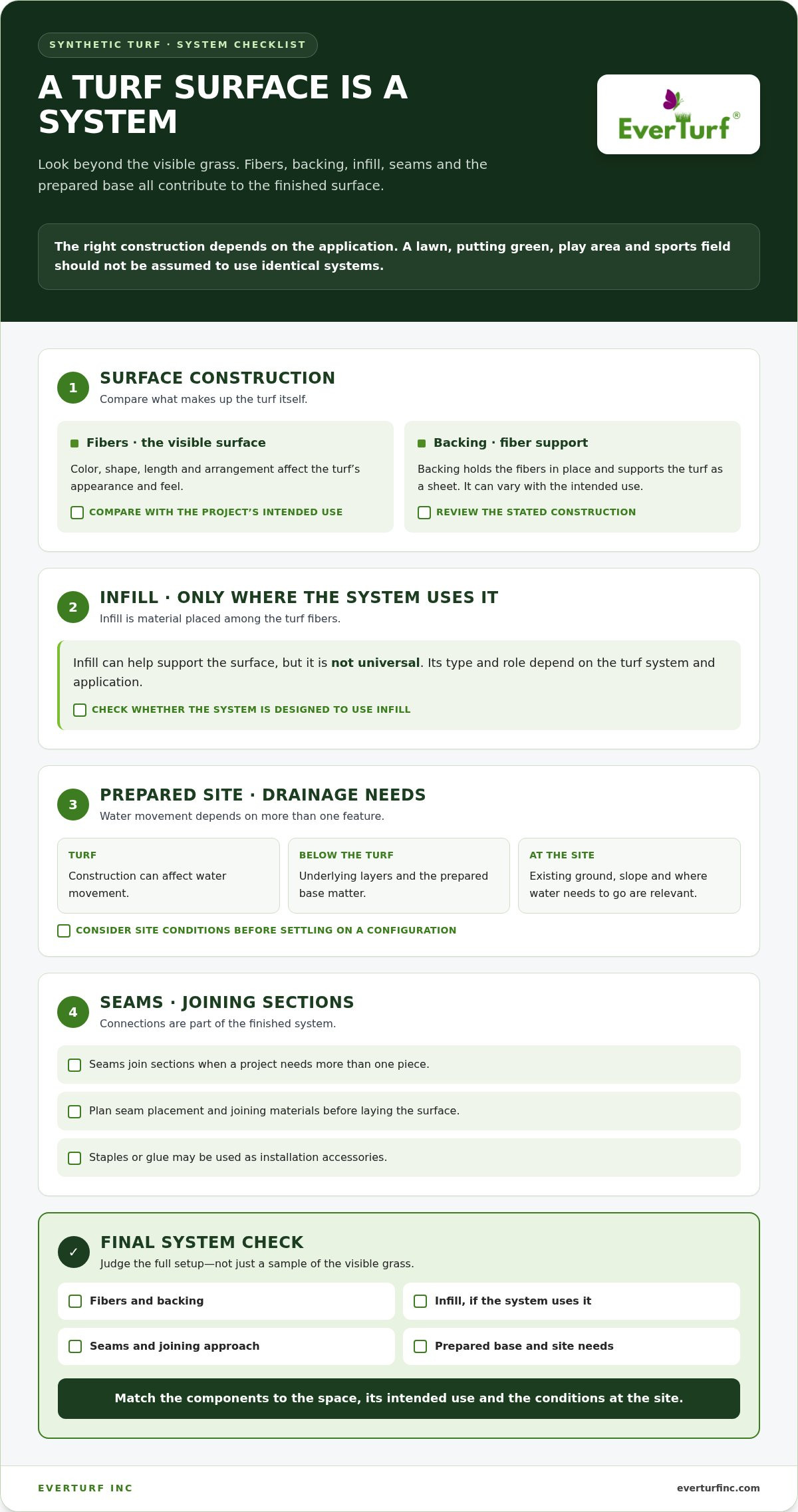
A synthetic turf surface is more than the blades you see. It’s a layered system: the turf sits over a prepared site, and its components work together to create the finished surface. Construction and materials can vary by application, so don’t assume a lawn, putting green, play area, and sports field use identical systems.
Turf performs as a system: fibers, backing, infill, seams, and the prepared base each contribute to how the finished surface looks and functions. Compare the full setup, not just a sample of the visible grass. Massachusetts provides an overview of the composition and health concerns of artificial turf, including common field layers and materials.
What do turf fibers and backing contribute?
Fibers form the visible surface. Their color, shape, length, and arrangement affect the turf’s appearance and feel. Backing holds the fibers in place and supports the turf as a sheet. Both can vary with the intended use, so compare options in the context of your project rather than assuming one construction suits every space.
A residential lawn may prioritize a grass-like look, while a putting green or sports surface serves a different purpose. Those examples point to different design goals, not automatic performance ratings. Check what the product is designed for and compare its stated construction with the way people will use the area.
What roles do infill, drainage, and the base play?
Infill is material placed among the turf fibers in systems designed to use it. It can help support the surface, but infill isn’t universal. Its type and role depend on the turf system and application. EverTurf offers infill as part of its turf project categories. For a closer look at this component, explore the turf infill guide.
Drainage depends on more than one feature. Water movement can be affected by turf construction, the layers below it, the prepared base, and conditions at the site. A surface that looks ready to install still needs a suitable foundation. Consider the existing ground, slope, and where water needs to go as part of project planning.
Seams join sections of turf when a project needs more than one piece. Their placement and joining materials are part of the finished system, just as staples or glue may be used as installation accessories. Plan these connections before laying the surface instead of treating them as an afterthought.
- Compare the whole system: Review fibers, backing, infill, joining approach, and base preparation together.
- Match components to the use: Start with the space’s purpose and the people or activities it needs to accommodate.
- Assess the site: Consider existing ground conditions and drainage needs before settling on a configuration.
With those factors in mind, compare EverTurf synthetic turf options against your project needs instead of choosing on appearance alone.
Is Astroturf Only for Sports? Compare Turf Needs by Application
No. Although sports fields helped make synthetic turf familiar, people also search for astroturf when they want a lawn, pet area, play space, or putting green. The useful question isn’t whether turf is “for sports,” but whether a particular system fits the space, its users, and the planned activities. Each application brings different priorities, so one category shouldn’t be treated as a universal solution.
| Application | Intended use | Design priorities to explore | Project-specific questions |
|---|---|---|---|
| Residential lawn | Everyday outdoor living and a grass-like landscape | Appearance, feel, layout, and how the area will be used | How much of the space is for relaxing, walking, or gathering? |
| Pet area | Space shared with household pets | Pet-focused turf and practical upkeep needs | Where will pets play and spend time, and how will the area be maintained? |
| Play area | Children’s play space | Playground-specific turf and the site’s planned activities | What play equipment or activities will the surface need to accommodate? |
| Putting green | Practice and recreational putting | Putting-green use, layout, and the intended practice experience | What shape and practice area suit the available space? |
| Sports field | Organized or recreational sports | Sport, field use, and the needs of players and activities | Which sport will the field serve, and how will it be used? |
How do residential, pet, and play surfaces differ?
A residential lawn often starts with the desired look and how the household uses its outdoor space. A pet area calls for a pet-focused category, while a playground should be planned around children’s activities and the play environment. EverTurf offers artificial grass for pets and playground turf categories. For more pet-specific considerations, see this artificial grass guide for dogs.
These priorities may overlap, but they aren’t interchangeable. A family might want one yard to serve as both a welcoming lawn and a place where a dog plays. List the different uses before comparing turf, then weigh each one rather than choosing by appearance alone. The users and activities help determine which features to assess.
What changes for putting greens and sports fields?
Putting greens and sports fields serve distinct activities, so selection starts with different questions. Plan a putting green around practice and the available space; plan a field around its sport and pattern of use. EverTurf’s putting green and sports field categories provide relevant starting points for comparing those project types.
Be specific about how the surface will be used. A backyard putting area and a sports field may both use synthetic turf, but that shared material category doesn’t mean they have the same construction or purpose. EverTurf also offers residential, pet, playground, and sports turf categories, making it easier to focus your comparison on the intended space and use.
How to Choose Astroturf: A Project-First Checklist for Buyers
Start with the job the surface needs to do, not a product photo or a single feature. A clear project brief helps you compare relevant turf categories, construction, and accessories. Select turf by application first, then compare the system features that matter for that use.
What should you assess about the space and its users?
Consider how the space works today and how you want it to function. Note who will use it, how often, and for which activities. Then assess the layout, existing surface, access for installation, drainage conditions, and the visual result you want. A product image alone can’t show whether the turf suits your site or everyday use.
- Define the use. Decide whether the project is a residential lawn, pet area, play space, putting green, or sports surface. If it serves several purposes, list each one and identify the main priority.
- Identify the users. Think about the people, pets, and activities that will share the space. A yard used for outdoor living has different priorities from an area intended for play or practice.
- Assess site conditions. Record the existing surface, layout, access, and where water needs to go. These details help shape planning for the prepared area and the complete turf system.
- Describe the desired appearance. Consider the look and feel you want, how the turf will meet paths or other surfaces, and whether the finished space should resemble a lawn or serve a more focused purpose.
- Compare application-specific construction. Review the turf category and its components in relation to the intended use. Don’t assume a surface designed for one application is automatically suited to another.
- Account for accessories. Consider whether infill, staples, glue, or pavers fit the project design. Their use depends on the system and site, so don’t assume every project needs the same components.
Which product and installation components deserve comparison?
Use your project notes to compare options against your priorities rather than judging by color or a close-up sample alone. Consider how the turf, joining approach, infill, and site preparation fit together. EverTurf offers categories for residential, pet, play, putting green, and sports applications, along with project accessories. For planning context, the artificial turf installation cost guide outlines considerations tied to installation projects.
A focused comparison turns a broad search for astroturf into a practical decision about your space. Explore EverTurf synthetic turf categories and match your project priorities to the relevant application.
Explore EverTurf Synthetic Turf for Your Project
Once you’ve identified how a space should look and function, explore turf categories designed for that kind of use. EverTurf supplies synthetic turf for residential, pet, playground, roof and deck, putting green, and sports applications. Matching the category to your project gives you a clearer starting point than searching for astroturf as though every product were interchangeable.
Which EverTurf categories fit different project types?
Use the intended activity and setting to narrow your options. A home landscape, dedicated practice area, and sports field have different purposes, so compare them as distinct project types rather than assuming one surface works for every use.
- Residential lawn: Explore artificial grass for outdoor living areas where the visual character of a lawn is a key part of the project.
- Pet area: Consider EverTurf artificial grass for pets for spaces planned around household animals and their regular use.
- Playground: EverTurf Play is a category for playground projects. Start with the planned play space and the activities it needs to accommodate.
- Roof or deck: EverTurf Roof & Deck is intended for these settings. Include the specific surface and project layout in your comparison.
- Putting green: EverTurf Putting Green and Putting Green Pro serve putting-green projects, distinct from general lawn or field use.
- Sports field: EverTurf Sports Fields, including soccer and football field categories, are aimed at sports applications. Compare them against the sport and intended field use, rather than residential lawn needs.
These categories help focus your research, but the name alone doesn’t establish every construction detail or outcome. Let your project priorities guide the comparison: who will use the surface, what activities it must serve, how the site is configured, and what appearance you want. That keeps the decision centered on your needs rather than a label or attractive sample by itself.
How can the right turf help create a more usable space?
A considered turf choice can help shape a space around how you want to use it. A residential area may be planned for relaxing or gathering, a pet space for everyday use with animals, and a putting green for recreation at home. For sports or play, focus on the intended activities and the category designed for that setting. The aim is to choose a surface that fits your plans without assuming a particular maintenance level or performance result.
Think of the project as a complete design. Depending on the system and layout, accessories such as infill, staples, glue, or pavers may be relevant. EverTurf offers these turf project accessories, so consider them alongside the selected category rather than treating them as requirements for every installation.
Explore EverTurf’s synthetic turf categories with your project’s users, setting, and priorities in mind. For broader guidance on artificial grass and landscape planning, read the complete artificial grass guide.
Shape an Outdoor Space Around the Way You Live
Picture how you want the space to feel and function in daily life. A quiet place to unwind, room for pets to play, or a dedicated area for recreation each calls for decisions based on your priorities. Let that vision guide your research, and use “astroturf” as a starting search term rather than the final answer to what your project needs.
EverTurf brings together synthetic turf options for residential, pet, playground, roof and deck, putting green, and sports projects, along with accessories such as infill, staples, glue, and pavers. Explore the categories with your intended use in mind and compare them against the space you want to create.
Explore EverTurf synthetic turf options and take the next step toward making your outdoor vision a reality.
Frequently Asked Questions
Is astroturf the same as AstroTurf?
Not exactly. AstroTurf is a brand name, while people often use lowercase “astroturf” informally to mean artificial turf in general. When comparing options, look at the product category and intended use rather than relying on the search term alone. A brand-specific search may lead to information about one manufacturer; broader terms such as “artificial grass for pets” can help narrow results to a particular project.
Does astroturf need to be watered?
Artificial turf doesn’t need watering to grow, but an occasional rinse may help remove dust or loose debris, depending on the setting. A pet area may have different cleaning needs from a decorative lawn or roof deck. Consider what lands on the surface and how you’ll keep it clean when planning a routine. Water used for cleaning is separate from irrigation for living grass, and needs vary by circumstance.
Can weeds grow through artificial turf?
Yes. Weeds can appear at edges, seams, or openings, and seeds may sprout in debris that collects on top. Turf doesn’t make every weed impossible. Keep edges and joints in view, remove leaves and other buildup, and address small growth before it spreads. Site preparation and installation details also matter, so account for them when weed control is a priority.
Can artificial turf be installed over concrete?
It may be possible, but the concrete’s condition, slope, drainage, and intended use all affect whether it’s a suitable surface. A deck-like space and a yard over soil present different planning questions. The finished system needs to account for how water will move and how the turf will be secured. Include the existing surface in project planning instead of assuming turf can go directly over any concrete.
How long does astroturf last?
There isn’t one lifespan that applies to every synthetic turf surface. Product construction, how frequently and intensively the area is used, site conditions, and care can all affect how it holds up over time. A lightly used decorative area and a regularly used activity space may face different demands. Compare the intended application and the product’s stated care guidance rather than relying on a single lifespan estimate.
Can synthetic turf be recycled?
Some synthetic turf materials may be recyclable, but recycling depends on the product’s materials, how its components are joined, and what processing options are available where it’s being removed. Infill and other parts of the system may also need separate handling. Consider eventual replacement and disposal as part of the project. Don’t assume a surface can go into standard household recycling when it reaches the end of use.
Is astroturf environmentally friendly?
It depends on which environmental factors you weigh. Synthetic turf can reduce the need to irrigate a lawn, but it also uses manufactured materials and raises questions about plastic loss and end-of-life disposal. The overall picture varies by product, installation, use, and eventual handling. If environmental impact is a priority, compare the complete system, including its resource needs during use and what may happen when the surface is replaced.