



Drought-Proof Front Yard Ideas for 2026: Create a Water-Wise Welcome
A welcoming front yard doesn’t have to depend on a broad lawn. The best drought proof front yard ideas 2026 start with a plan for how plants, paths, and groundcover work together. If you’re concerned that watering less will leave your yard looking sparse or unfinished, a cohesive design can still feel green, polished, and inviting.
Start with your climate, site conditions, and everyday needs. In this guide, you’ll learn how to assess sun, soil, and drainage; combine suitable plants with mulch and hardscape; and decide whether artificial grass fits a defined area. We’ll also cover how paths, edging, and planting zones can bring the design together. A thoughtful mix of living greenery and durable surfaces can create a welcoming entrance with less reliance on routine irrigation.
Key Takeaways
- Plan for the whole yard, since no single plant or material makes a landscape drought-proof.
- Group plants with similar sunlight and watering needs, then use paths and groundcover to organize the layout.
- Compare artificial grass and living plants by upkeep, appearance, drainage, heat, and intended use.
- Use these drought proof front yard ideas 2026 to assess your site, map zones, choose materials, and plan ongoing care.
- Explore how EverTurf synthetic grass, infill, installation accessories, and pavers can fit into a considered front-yard design.
What Makes a Front Yard Drought-Resilient? Start with the Whole Landscape
A drought-resilient front yard is designed to reduce unnecessary water use while working with the site’s sunlight, slope, soil, drainage, and everyday use. It isn’t a promise that the landscape will never need water, and no single plant or groundcover can make an entire yard drought-proof. The goal is a welcoming, coherent space that needs less routine irrigation without removing every living element.
That whole-yard perspective is central to Xeriscaping principles and benefits. Rather than treating water-wise landscaping as a gravel-only makeover, consider how plants, paths, groundcover, and practical features fit together. Strong drought proof front yard ideas 2026 begin with the conditions you have, then match plants and materials to them.
Assess sun, slope, soil, and how you use the front yard
Observe the yard at different times of day and mark areas that receive full sun, filtered light, or shade. Note slopes and where rainwater runs, collects, or drains away. Compacted soil can affect how water moves, while a persistently wet area calls for different choices than a hot, dry strip beside a walkway. These observations help you avoid choosing plants or surfaces based on appearance alone.
Next, map how people move through the space. A clear route to the front door, an easy-to-follow walkway, and visible planting near the entry can make even a modest yard feel composed. These priorities help determine where paths, planting beds, and groundcover belong, instead of letting materials compete for attention.
Set a realistic water-wise goal for the landscape
Aim to reduce routine watering, not eliminate every water need. New plants may need establishment care, and requirements vary by species and site. Check care guidance for your selections, including how their needs may change as they mature.
Drought-resilient landscaping reduces avoidable water demand by matching plants and groundcovers to local growing conditions, grouping areas by their needs, and accounting for soil, drainage, and intended use, while allowing for appropriate establishment and ongoing care.
Use that as a practical measure of success: a front yard that suits its conditions, feels finished and inviting, and asks less of your regular watering routine. Greenery can remain part of the design. The difference is that each area has a clear purpose and a better fit with the site.
Drought-Proof Front Yard Ideas That Combine Plants, Paths, and Groundcover
A cohesive water-wise yard combines planting zones suited to their conditions, paths that make movement clear, and groundcover chosen for a specific role. This layered approach gives the eye a pattern to follow and keeps the design from becoming one uninterrupted stretch of a single surface. For drought proof front yard ideas 2026, consider how materials meet and how water moves through the site.
Choose plants and planting zones for the conditions
Research native and drought-tolerant plants suited to your location, then group them by sunlight and watering needs. A sunny bed and a shaded entry corner may need different plants, even if they are close together. Defined zones make care easier to plan. A smaller bed with a clear edge can also feel more intentional and be simpler to maintain than scattered plants across the yard.
Before settling on a layout, consider mature plant size and how each bed relates to the entry and walkway. Repeating a few forms or textures across separate planting areas can make the yard feel connected without making every section identical.
Use paths, mulch, and groundcover to shape the space
Give each surface a clear job. Mulch can create a simple backdrop around plants, while pavers establish a route or a defined transition between areas. Synthetic grass may suit a designated groundcover area when a consistent green plane fits the layout. The artificial grass landscape guide offers a broader look at how synthetic grass can be considered as part of a landscape.
A path should lead naturally toward the front door and make the route easy to follow. It can also help keep foot traffic out of planting beds. Permeable surfaces may suit some sites, but performance depends on conditions such as soil and drainage. If an area collects runoff or stays wet, account for that when choosing the materials and layout rather than assuming water will drain away.
Sketch the yard and mark where you want contrasting textures, heights, and edges. For example, pair a defined walkway with a planted border, then give another area a distinct purpose with groundcover. Avoid repeating one surface everywhere. Thoughtful transitions between planting, mulch, pavers, or synthetic grass create visual structure. Explore EverTurf synthetic grass options as one component of a broader front-yard plan.
Artificial Grass or Living Plants: Compare the Trade-Offs Before You Choose
Artificial grass and living plants serve different purposes, so compare them by what each area needs to do. Plants bring seasonal change and varied forms, while synthetic grass provides consistent groundcover for a defined space. Neither makes the whole yard drought-proof, and both can be part of a design that includes other planting and surfaces.
| Consideration | Living plants | Synthetic grass |
|---|---|---|
| Water needs | Depends on species, climate, soil, and establishment stage. | The surface doesn’t need watering to grow, though nearby plants may. |
| Upkeep | May include watering, pruning, weeding, and seasonal care, depending on the planting. | Doesn’t need plant care, but may need cleaning and routine attention. |
| Appearance | Offers natural variation, seasonal interest, and different heights and textures. | Provides a more uniform green surface. |
| Heat | Varies with plant type, shade, and site conditions. | Surface temperature varies with product and exposure; assess the specific setting. |
| Drainage | Depends on soil, planting, grading, and site conditions. | Depends on the product and how the area is prepared; don’t assume a particular drainage outcome. |
| Intended use | Works well where varied planting, shade, or seasonal change is a priority. | May suit a defined area where a consistent groundcover is desired. |
When living plants are the better fit
Choose living plants where you want seasonal interest, layered height, or a planted look around the entry. Research options suited to your climate, sun exposure, soil, and drainage rather than choosing by appearance alone. Low-water plants still need care, especially as they establish, so follow guidance for the species and site conditions.
Where synthetic grass may fit, and what to consider
Synthetic grass may make sense in a defined area where a steady green surface is an important part of the design. It isn’t a substitute for every plant or landscape function, so pair it thoughtfully with living beds, paths, and clear edging. Plan for cleaning and consider how heat and water will behave in that location. Product characteristics and site preparation matter, so don’t assume every yard will have the same results.
For a broader look at planning with synthetic grass, explore this backyard turf planning guide. The best drought proof front yard ideas 2026 balance the surface you want with the care and character your whole landscape needs. Explore EverTurf synthetic grass as one element in that plan.
Plan a Water-Wise Front Yard in Five Practical Steps
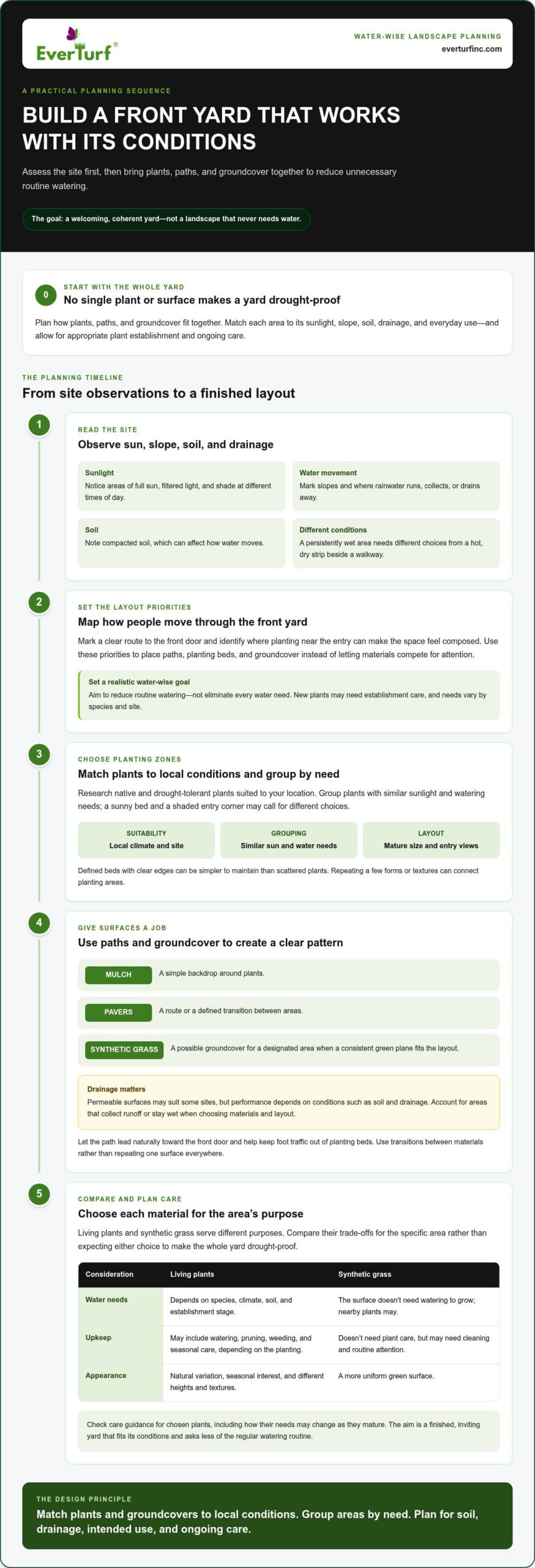
A clear sequence can turn water-wise goals into a front yard that feels purposeful rather than pieced together. These drought proof front yard ideas 2026 work best when you plan the whole space before choosing individual plants or products.
- Assess the site. Note sunny and shaded areas, slopes, drainage patterns, existing plants, and the route to your front door. Mark where water collects or soil seems compacted, since these conditions can affect planting and material choices.
- Set your priorities. Separate must-haves, such as a clear walkway or visible planting near the entry, from optional features. Prioritize changes according to the site instead of applying the same treatment everywhere.
- Map the zones. Sketch paths, planting beds, and groundcover areas before choosing specific products. Give each zone a purpose, such as guiding visitors, framing the entrance, or providing space for plants suited to its conditions.
- Choose materials and plants. Match surfaces and planting to each zone. Research plants suited to your climate and site, and consider how mulch, pavers, or synthetic grass will meet the surrounding beds and walkways. If synthetic grass is part of the plan, review the turf infill guide for information about this component.
- Plan ongoing care. Account for new plants as they establish and for the routine care each surface requires. Check current water-use rules and plant guidance from your local water agency before changing irrigation or planting plans.
Coordinate materials, planting, and irrigation
Treat each zone as part of a connected system. A walkway should lead cleanly to the entry, and planting beds should sit where their light and water needs suit the site. Plan irrigation around planted areas, using local agency guidance to inform any adjustments. Consider drainage and existing conditions as you refine the sketch, since no single material or layout works the same way on every property.
Assess the site, set priorities, map zones, choose fitting materials, then plan care. This sequence helps you make decisions in a useful order and avoid choosing a surface before you know how the space should function.
Once your sketch shows where consistent groundcover could fit, explore EverTurf synthetic grass options as one element in your broader front-yard plan.
Create a Polished, Lower-Maintenance Front Yard with EverTurf
EverTurf synthetic grass can be one element in a water-conscious front-yard plan, not a replacement for every plant or landscape function. A defined green area can sit alongside living beds, paths, and pavers, giving each part of the yard a clear role. The strongest drought proof front yard ideas 2026 consider how those elements connect, from the street view to the route leading to the front door.
Match synthetic grass to the planned area
Start with the space itself. Is the surface mainly visible from the street, beside a walkway, or set within a specific section of the yard? Its location and intended use can help determine its shape and how it meets planting beds, paths, and existing hardscape. Clean boundaries make transitions feel deliberate, while nearby plants add natural variation around the consistent green surface.
Consider color and texture alongside the rest of the landscape. A strong contrast with surrounding materials may draw attention, while a considered edge and complementary path can help the surface feel integrated. Drainage and surface temperature depend on the product and site conditions, so avoid assuming a particular outcome.
Build a cohesive design around the finished surface
Balance the uniformity of synthetic grass with varied planting, path materials, and edges. For example, a defined green area can sit beside a planting bed with different heights and textures, while pavers create a clear transition or route. Keep living plants where shade, seasonal interest, or other landscape functions matter. Synthetic grass doesn’t remove the need to plan surrounding plants or account for site drainage.
EverTurf supplies residential synthetic grass, along with infill, staples, glue, and pavers. These components can be considered as parts of a synthetic grass system and its surrounding layout. Choose them in context with the planned area, neighboring planting, and boundaries, rather than treating the surface as a standalone fix.
A polished front yard doesn’t need to be complicated. Combine materials and planting that suit your site with a care routine that fits your priorities. Explore EverTurf synthetic grass and installation accessories for your water-wise front-yard plan.
Shape a Water-Wise Welcome That Works for You
A polished, drought-resilient front yard starts with the site itself. Sunlight, slope, soil, drainage, and how you use the space should guide your choices. Group plants with similar needs, create clear paths, and combine groundcovers thoughtfully so the design feels intentional rather than stripped back.
The right balance depends on your priorities. Living plants bring variety and seasonal interest, while synthetic grass may suit a defined area where a consistent green surface fits the plan. Neither makes the whole yard drought-proof, so consider how each material works with surrounding planting and the care you’re prepared to provide. These drought proof front yard ideas 2026 can help you make informed choices for a welcoming landscape that relies less on routine watering.
EverTurf supplies residential synthetic grass, related infill and installation accessories, and pavers for landscape projects. Explore EverTurf synthetic grass and installation accessories for your water-wise plan. With a thoughtful layout, you can create a front yard that feels considered and better suited to everyday life.
Frequently Asked Questions
What is the best landscaping for a drought-prone front yard?
The best approach combines plants suited to the site, purposeful paths, and groundcover chosen for local conditions. Start by noting sun exposure, slope, soil, drainage, and how people move toward the entry. Group plants with similar light and water needs, then use clearly defined beds and surfaces to make the layout cohesive. The right balance depends on your climate, property, and priorities, so no single design suits every yard.
Can artificial grass make a front yard drought-proof?
No, artificial grass alone can’t make an entire front yard drought-proof. It doesn’t need water to grow, but living plants elsewhere may need irrigation, especially while establishing. The surface also doesn’t perform every function of a planted landscape. Treat it as a groundcover option for a defined area, and consider how it fits with planting, drainage, paths, and the care your yard still requires.
What plants are best for a drought-tolerant front yard?
The best plants are suited to your climate and the conditions in each part of the yard. Research regionally appropriate native or drought-tolerant choices, then match them to sun exposure, soil, and drainage. Group plants with similar water needs to simplify care. Even low-water plants need attention, particularly while they establish, so follow guidance for the chosen species rather than assuming all drought-tolerant plants have the same needs.
How can I landscape my front yard with less water?
Begin by mapping sunny and shaded areas, slopes, runoff, and existing plants. Set priorities, such as creating a clear walkway or retaining visible planting near the entry, then sketch beds and groundcover zones before choosing materials. Select plants suited to those conditions, group them by water needs, and consider mulch or hardscape where appropriate. Check current guidance from your local water agency before changing irrigation or planting plans.
Is artificial grass a good idea for a front yard?
Artificial grass can suit a front yard if a consistent green surface fits your priorities and the planned area. Consider how visible it will be from the street, how it meets nearby planting beds and paths, and what cleaning or other care it may need. Product and site conditions affect characteristics such as heat and drainage, so don’t assume one outcome applies to every installation. It can complement living plants, not replace every landscape function.
What is the difference between xeriscaping and drought-tolerant landscaping?
Xeriscaping describes a water-conscious landscaping approach that considers the whole design, including plant selection, grouping, soil, and efficient water use. Drought-tolerant landscaping is a broader description for landscapes using plants and materials suited to dry conditions or reduced watering. The terms overlap, but xeriscaping emphasizes planning the landscape as a system. Neither means a yard must be bare or that plants will never need water.
Does a drought-tolerant front yard need irrigation?
It may. Water needs depend on the plants, site, weather, and how established the landscape is. Newly planted vegetation often needs establishment care, while mature, climate-suited plants may need less routine watering. Plan irrigation around planted areas rather than assuming every surface has the same needs. Check local water-use rules and plant guidance from your water agency, and adjust care to the conditions in your yard.