



How to Fix a Muddy Backyard for Good: A Lasting, Step-by-Step Plan
The quickest way to cover a muddy backyard may not be the way to fix it. If water keeps pooling after rain, a new surface can hide the symptoms while poor grading, compacted soil, or downspout runoff keeps the problem alive. Learning how to fix a muddy backyard for good starts with identifying where the water comes from and where it needs to go.
It’s frustrating when mud gets tracked indoors and soggy patches put the yard off-limits. The lasting solution isn’t always a drain, and it isn’t always a different surface. The right choice depends on what’s happening in your yard, so this guide will help you identify likely causes and compare practical fixes before you commit to a project.
We’ll walk through a step-by-step plan, from observing water flow and checking grading to considering drainage improvements and suitable finished surfaces. Artificial grass may be one option after water-management needs are assessed, but it shouldn’t be treated as a drainage fix on its own. Address the cause first, then choose a surface that suits the site and how you plan to use it.
Key Takeaways
- Track where puddles form and how water moves after rain to identify likely causes before choosing a fix.
- Understand how runoff, low spots, compacted soil, and hard surfaces can each contribute to persistent mud.
- Compare regrading, downspout redirection, drainage, soil improvement, and surface changes by the problem each addresses.
- Follow a clear sequence to understand how to fix a muddy backyard for good: identify the water source, address it, then choose a finished surface.
- Consider whether artificial grass suits your yard, and assess drainage needs and product specifications first.
How to Find the Cause of a Muddy Backyard Before Fixing It
Recurring mud can make it tempting to add soil, install a drain, or cover the ground right away. But the same soggy patch can have different causes, and the wrong remedy may leave water moving through the yard as before. To understand how to fix a muddy backyard for good, first observe where water travels, where it collects, and how long the ground stays wet.
After rainfall, walk the yard safely and note puddles, soft or muddy zones, roof downspouts, slopes, and nearby patios or driveways. Watch for water flowing from a downspout, across a hard surface, or downhill from higher ground. This movement is surface runoff: water traveling over land rather than soaking in. Photos taken during and after rain can help reveal flow paths that are easy to miss once the weather clears.
What clues show where the water is coming from?
Look at both the shape of the wet area and its position. A puddle concentrated in a low spot may indicate water is collecting there, while widespread wetness can suggest runoff is crossing a larger part of the yard or the soil is slow to absorb water. Compare what happens after light rain with what happens during heavier or longer rainfall. Note whether the wet area appears near a downspout, patio, driveway, or boundary below higher ground, and whether it dries at the same pace as surrounding areas.
Is the problem grading, soil, or drainage?
Grading describes how the ground slopes and directs surface water. A depression can hold water, while a slope may carry runoff toward a problem area. Compacted or poorly draining soil can also stay wet longer because water moves through it slowly. These patterns are useful clues, not a definite diagnosis: several conditions can overlap, and a wet patch alone doesn’t confirm the cause. If the source remains unclear or the problem persists, consider asking a qualified drainage or landscape professional to assess the site before making changes.
Quick diagnostic checklist:
- Mark puddles and muddy zones on a simple yard sketch.
- Trace visible water coming from downspouts, patios, driveways, or higher ground.
- Note slopes, low spots, and hard surfaces beside or above wet areas.
- Take photos during rainfall and again as the yard dries; record the weather and timing.
- Look for recurring patterns, such as water gathering in one spot or broad areas staying soggy.
This record gives you a clearer starting point for choosing a remedy. If water approaches the home, affects neighboring ground, or keeps returning despite changes, avoid guessing at a fix and seek an expert assessment.
Why Backyards Stay Muddy: Runoff, Soil, and Drainage Explained
Persistent mud usually comes down to how much water reaches an area, how the ground directs it, and how readily the soil absorbs it. These factors can overlap. For example, a downspout may send roof water onto compacted soil in a low spot, so water arrives faster than it can soak in or drain away.
Surface runoff is water that flows over the ground instead of entering the soil. Water collecting in a low area is runoff or rainfall pooling where the ground provides no easy route onward. Slow infiltration means water enters the soil gradually. Soil infiltration is the process by which surface water enters soil pores; the rate is affected by pore space, soil texture, compaction, and how wet the ground already is.
How runoff and poor grading create recurring puddles
Water naturally moves downhill, and a slope can funnel it toward a flatter or lower section where it slows and gathers. Downspouts, patios, and driveways can add concentrated runoff to that flow. Paved surfaces don’t absorb rain, so water draining from them may put extra demand on the soil beside or below them. Any grading change should direct water to a suitable destination, not simply shift the problem onto a neighboring property.
How soil compaction and slow drainage keep ground wet
Repeated foot traffic, play, or equipment can compress soil and reduce the open spaces water moves through. Soil texture also matters, but a muddy surface alone can’t tell you exactly what soil is present or how well it drains below the surface. Before adding amendments or planning excavation, observe where and how long the ground stays wet. If the cause remains uncertain, seek a professional soil or drainage assessment.
Watering habits can contribute, too. Frequent or heavy irrigation may leave soil wetter, especially where drainage is already slow, but a soggy yard isn’t proof that irrigation is to blame. Compare wet patches with sprinkler coverage and note whether they appear after watering, rainfall, or both. That timing can help distinguish a possible watering issue from runoff or slow infiltration.
In short, a recurring wet area may reflect water flowing in, water collecting in a low spot, or water moving slowly through the soil. Understanding which process is at work helps you decide how to fix a muddy backyard for good, rather than choosing a surface or drainage measure based on appearance alone. Once water-management needs are clear, you can explore whether a different finished surface suits the yard. Explore artificial grass options as one possibility, and assess site conditions before selecting a product.
Compare Lasting Muddy Backyard Fixes by the Problem They Solve
The right fix depends on what’s keeping the ground wet. Regrading changes where surface water flows; redirecting a downspout reduces concentrated roof runoff; drainage systems collect or convey water; soil improvement may help address a confirmed soil issue; and a new surface changes how the yard looks and functions. These options can work together, but they don’t solve the same problem.
| Likely fit | What it changes | Limitations | When expert help may be appropriate |
|---|---|---|---|
| Regrading for a low spot or misdirected surface flow | Adjusts ground contours so water moves toward a suitable destination. | Won’t correct every soil or drainage issue; poor grading can shift runoff to another area. | If the slope, water destination, or effect on neighboring properties is uncertain. |
| Downspout redirection for concentrated roof runoff | Moves discharge away from the spot where it currently lands. | May not resolve pooling caused by low ground or slow-draining soil. | If water has no clear, appropriate place to flow. |
| Targeted drainage for recurring water collection | A French drain, swale, or catch basin may collect or channel water, depending on site design. | Needs a suitable outlet and won’t automatically address the source of all incoming water. | For excavation, unclear water routes, or planning a drain and its discharge point. |
| Soil improvement for a confirmed soil-related issue | Amends or otherwise addresses soil conditions that affect water movement. | Adding material without identifying the soil issue may not help and can alter levels. | Before selecting amendments or digging when the soil or cause is unclear. |
| Surface replacement after water management is considered | Changes the finished area, for example through lawn repair or artificial grass. | A new surface alone won’t control uncontrolled runoff or correct a drainage problem. | If water remains or the required base and site preparation are uncertain. |
When should you consider grading or a drainage solution?
If water runs downhill into a flat, low area, grading may help redirect it. If roof discharge repeatedly saturates one patch, consider whether the downspout can be redirected appropriately. French drains, swales, and catch basins are possible approaches, not interchangeable fixes. Each needs a site-suitable route and destination, so seek professional planning if the water path or outlet isn’t clear.
When can a new lawn surface make sense?
Reseeding or repairing a natural lawn may suit some yards once the water issue is addressed. Artificial grass can also be a finished-surface option, but it shouldn’t be treated as a standalone cure for uncontrolled water. Suitability depends on site conditions, base preparation, and verified product details. For more context, explore this artificial grass guide.
To decide how to fix a muddy backyard for good, match the intervention to the cause, then consider whether a surface change belongs in the plan. Drainage work manages water; the finished surface shapes how the space is used. The right combination depends on the property, not a one-size-fits-all recipe.
How to Fix a Muddy Backyard Step by Step and Prevent a Repeat
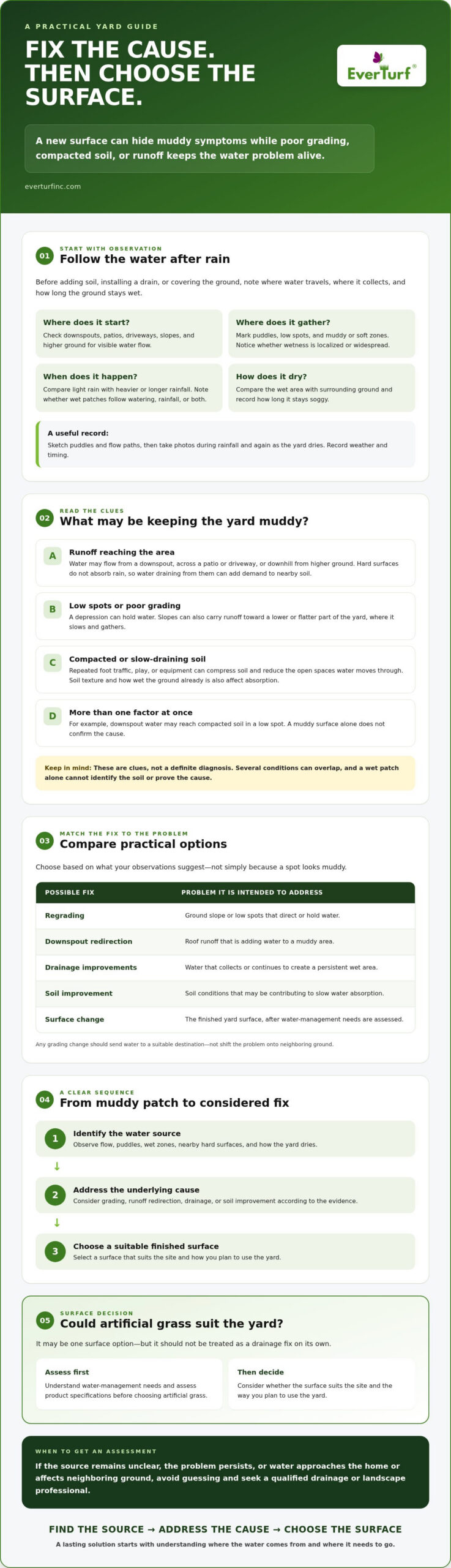
A lasting repair follows a clear order: document the wet areas, address the source of the water, then choose a finished surface. Covering standing water with soil or a new surface may hide the mud temporarily, but it won’t resolve the cause. Water can continue to collect beneath or around the repair, leaving the original issue unresolved.
What should you do before starting backyard repairs?
Start with observations, not excavation. Record where and when water collects, whether the pattern changes after rainfall or routine watering, and how long the ground stays wet. Check visible downspout outlets and watch surface flow, but don’t disturb buried utilities or drainage systems. If the plan involves major grading, excavation, or a new drainage route, get site-specific guidance from a qualified professional.
Once you have a clearer picture, work through the repair in sequence:
- Document the problem. Mark recurring puddles and soft areas, note nearby downspouts and hard surfaces, and take photos during and after rain.
- Address the water source. Depending on the cause, that may mean managing downspout discharge, improving water flow, or investigating a drainage concern. Avoid redirecting runoff toward a building or neighboring property.
- Reassess the ground. Check whether the affected area drains more appropriately and whether the soil still seems compacted or slow to absorb water. Seek professional input if the cause or next step is unclear.
- Choose the finished surface. Consider lawn repair or another surface only after addressing the water issue. Artificial grass may suit some yards, but it isn’t a substitute for managing persistent water. Confirm that the site and prepared base are appropriate.
How can you check whether the repair is working?
Observe the same spots after later rainfall and compare the size of wet areas, how long water remains, and whether muddy footprints still appear. Look beyond the original patch: a repair hasn’t solved the problem if it simply sends water toward a building, a neighbor’s yard, or another unsuitable area. If symptoms persist or move, pause and review the plan with a qualified professional rather than adding another layer or surface.
Prevention checklist: Keep an eye on downspout discharge; watch for new runoff paths after heavy rain; limit repeated traffic over soft ground where practical; and check whether wet areas change after watering or yard alterations. These observations can reveal a developing issue before it becomes a larger repair.
Taking these steps helps clarify how to fix a muddy backyard for good, with the water source addressed before the surface is chosen. If artificial grass is part of your plan, explore residential artificial grass options and consider how they fit your prepared site.
Could Artificial Grass Be the Lasting Surface for a Muddy Backyard?
Artificial grass can be a suitable finished surface for some backyards, but it doesn’t diagnose or correct an underlying drainage problem. If water continues to collect beneath or around the area, changing the surface alone may leave the cause unresolved. A lasting plan for how to fix a muddy backyard for good starts with understanding water flow, then assessing whether the ground and prepared base are appropriate for turf.
What should you know before choosing artificial grass?
Consider ground preparation and water management together before selecting a product. A yard with persistent pooling may need its water-flow issue addressed first; site conditions and the prepared base also affect whether a particular turf system is suitable. Ask for product-specific information about drainage and installation requirements rather than assuming all artificial grass performs the same way. For more on surface and design considerations, read this guide to backyard turf planning.
A synthetic surface may offer a cleaner-feeling alternative to exposed, muddy ground, but it still needs appropriate preparation and care. Consider how the space will be used, what maintenance it will need, and how water will move through or away from the area. Confirm the relevant product details before making a selection, especially if drainage is a concern.
How do infill and the installation system fit into the decision?
Infill is one component used in some synthetic turf systems; it isn’t a fix for poor grading, standing water, or an unsuitable base. The full system and site preparation matter, so ask which components are appropriate for your intended use and what specifications apply. Explore this overview of turf infill guidance to learn more about infill’s role.
Once you’ve assessed the yard’s water-management needs, you can compare available surfaces with a clearer picture of what the project requires. Explore EverTurf Inc artificial grass products as one option, and verify product-specific details before choosing a system for your backyard.
Make Your Backyard Ready for Better Days
A lasting muddy-yard solution starts with a clear diagnosis. Track where water collects and how it moves, then choose a remedy that addresses the cause before settling on a finished surface. That practical sequence is the key to understanding how to fix a muddy backyard for good without simply covering recurring wet spots.
Artificial grass may suit a residential backyard once drainage needs and site conditions have been assessed. The right choice depends on the prepared base and product-specific details, so confirm what’s appropriate for your space. EverTurf supplies residential artificial grass, along with turf infill and installation accessories, for homeowners exploring synthetic turf options.
If a new surface is part of your plan, explore EverTurf artificial grass options and review the product information as you consider what fits your backyard. With the cause understood and the surface chosen thoughtfully, you can look forward to a cleaner, more usable outdoor space and fewer muddy interruptions.
Frequently Asked Questions
Why does my backyard get muddy every time it rains?
Repeated mud often means water is collecting faster than the ground can absorb it or move it away. Possible causes include low spots, runoff from a roof or paved area, compacted soil, or ground that drains slowly. After rain, note where water enters, where puddles form, and how long wet areas remain. These observations can narrow down the cause, but persistent or extensive water problems may need a professional site assessment.
How do I fix a muddy backyard with poor drainage?
Start by tracing where water comes from and where it collects, then address the likely cause. Depending on the site, that may mean redirecting downspout discharge, adjusting grading, or assessing a designed drainage solution. The right approach depends on the yard and on where water can safely go. Simply covering standing water with a new surface may leave the underlying issue unresolved, so diagnose before choosing how to fix a muddy backyard for good.
Can artificial grass fix a muddy backyard?
Artificial grass can replace exposed soil with a finished surface, but it shouldn’t be treated as a cure for uncontrolled water or poor drainage. First identify and address how water moves through the yard. Then check whether the site and prepared base are suitable for a synthetic surface. Ask for product-specific drainage and installation information before choosing, since performance and requirements can vary between turf systems.
What is the best drainage solution for a muddy yard?
There isn’t one drainage solution that suits every yard. A grading change may help with some surface-flow problems, while a drain may be considered where water collects or follows a particular route. Soil conditions, slopes, nearby buildings, and a suitable outlet all affect the choice. Identify the source first, and get qualified, site-specific guidance before major excavation or drainage work, especially if the water’s destination is unclear.
Will adding topsoil stop my backyard from getting muddy?
Adding topsoil may change ground levels, but it won’t necessarily solve why water keeps collecting. If runoff, compaction, or a low spot remains, the yard may stay wet or the problem may shift to another area. Before adding soil, identify the likely source and consider how the change could affect grading and nearby ground. A site assessment can help determine whether soil improvement is appropriate for your yard.
How can I keep my backyard from turning muddy again?
Check downspout outlets and watch where runoff travels after rain. Note areas that stay soft, and limit repeated foot traffic or equipment over wet ground where practical. Reassess drainage if you change the yard’s use or add nearby hard surfaces. After repairs, compare the same areas following rainfall. If the original symptoms persist or move elsewhere, revisit the diagnosis rather than simply adding another surface layer.