
7 Warning Signs of a Bad Turf Installation Job: Protecting Your Investment
A flawless turf installation is a quiet engineering achievement hidden beneath a beautiful surface; if you can actually see the work, the work was done wrong. You invested in synthetic grass to reclaim your personal time and elevate your home’s aesthetic, not to stare at messy edges or uneven patches. It’s deeply frustrating when that “perfect” lawn arrives with visible seams or suspicious dips that ruin the illusion of real grass. If you’re wondering whether your new lawn looks this way because it’s settling or because of specific signs of a bad turf installation job, your intuition is likely correct. Quality should be felt in the soft texture underfoot and seen in a seamless, vibrant landscape that looks natural from every angle.
You deserve the tranquility of a perfect, year-round outdoor space without the nagging worry of craftsmanship failures. We’ll help you identify the technical red flags, from drainage issues that leave standing water after a rain to improper base compaction that causes shifting. This guide provides an actionable list for your contractor walkthroughs, ensuring you can secure a pro-grade, everlasting result. By understanding these seven warning signs, you’ll gain the peace of mind that comes with a permanent solution, moving away from maintenance headaches toward a more beautiful, stress-free version of your property.
Key Takeaways
- Identify immediate craftsmanship failures like “Mohawking” or visible seams to ensure your landscape retains its sophisticated, natural allure.
- Recognize the signs of a bad turf installation job within the sub-surface, where inadequate compaction can lead to unsightly lumps and shifting foundations.
- Secure your perimeter by learning how professional finishing touches, such as proper staple depth and EverTurf Infill, protect your lawn from wind lift and wear.
- Avoid the hidden dangers of low-quality installs, including poor drainage and odor retention, which can significantly shorten the lifespan of your synthetic grass.
- Utilize a professional standards checklist to verify contractor equipment and techniques, guaranteeing a pro-grade result that restores your personal time.
Visible Surface Defects: How to Spot Poor Craftsmanship Immediately
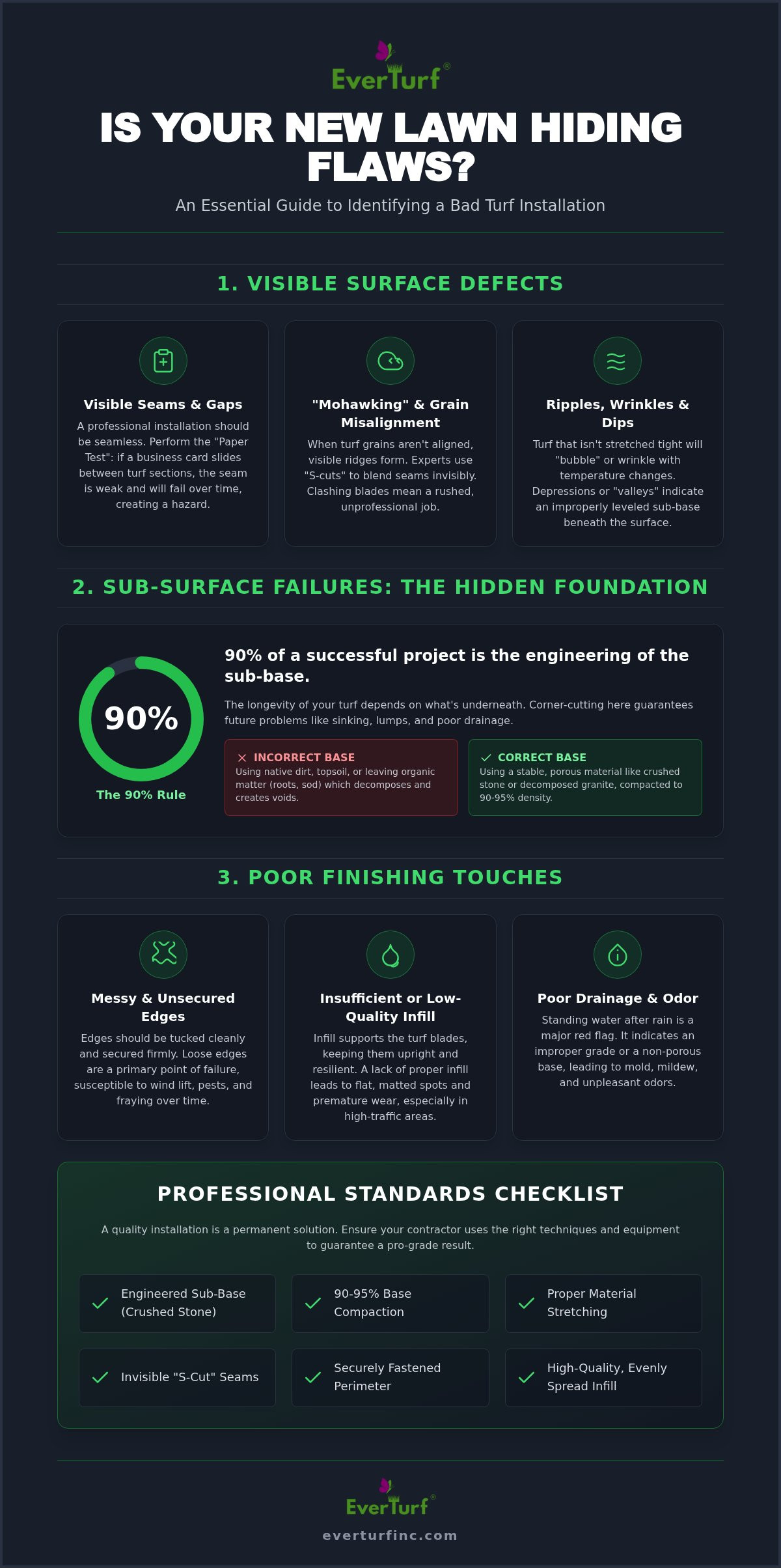
A premium synthetic lawn should look like a seamless masterpiece, not a patchwork quilt. When you first step onto your new EverTurf Artificial grass, the surface should be uniform, lush, and inviting. Unfortunately, some homeowners discover signs of a bad turf installation job within days of the crew leaving. These defects aren’t just aesthetic annoyances. They’re evidence of skipped steps that could compromise your investment’s longevity and your property’s value.
One of the most revealing tests you can perform is the “Paper Test.” Take a standard business card or a piece of cardstock and try to slide it between two sections of turf at the seam. In a professional installation, the bond created by EverTurf Staples and Glue should be so tight and integrated that the card cannot penetrate the join. If it slides through easily, the seam is weak. This gap will eventually pull apart, creating a tripping hazard and allowing debris to collect where it doesn’t belong.
Visible Seams and Grain Misalignment
Professionalism is found in the details of the “nap.” Every roll of turf has a specific grain direction, and failing to align these perfectly leads to a phenomenon known as “Mohawking.” This occurs when two pieces of turf are laid with their grains facing each other, creating a visible ridge where the blades clash. Expert installers use “S-cuts” instead of straight lines to create a wandering transition that the human eye cannot easily track. Without this precision, your lawn will look like a series of distinct strips rather than a natural, rolling expanse. If you see clashing blade directions, the craftsmanship was rushed.
Ripples, Wrinkles, and Poor Stretching
Synthetic materials naturally expand and contract with temperature shifts. If the turf isn’t stretched tight during the initial layout, you’ll soon see “bubbles” or ripples forming in the center of the lawn. These wrinkles are more than just eyesores; they become permanent weak points that catch foot traffic and wear down prematurely. A pro-grade installation ensures the turf is secured firmly at the perimeters, allowing it to remain flat and beautiful through every season. Additionally, keep an eye out for “valleys” or depressions. These dips suggest the sub-base wasn’t leveled correctly before the turf was laid. If you notice flat spots or matting shortly after the crew leaves, it often points to a lack of proper support. Using high-quality EverTurf Infill is essential for keeping blades upright and resilient, ensuring your lawn maintains its high-performance look for years to come.
Sub-Surface Failures: Why Your Turf Foundation is Sinking
The true quality of a synthetic lawn isn’t found in the green blades you see, but in the foundation you don’t. In the industry, we often refer to the “90% Rule.” This means that 90% of a successful project is the engineering of the sub-base. If a contractor cuts corners underground, the surface will inevitably fail. One of the clearest signs of a bad turf installation job is a surface that begins to resemble a topographical map after just a few months of use.
Choosing the wrong base material is a common shortcut for inexperienced installers. If a contractor uses native dirt or topsoil as a base, the lawn is doomed to shift. Soil expands and contracts with moisture, leading to instability and sinking. A professional installation requires a stable, porous base like crushed stone or decomposed granite. This provides the structural integrity needed to support daily activity while allowing water to flow freely through the system.
Inadequate Base Prep and Compaction
Achieving a pro-grade finish requires rigorous compaction. Standard residential projects typically require a base compacted to 90 or 95% of its maximum density using a vibratory plate compactor. If organic matter like roots or old sod is left beneath the stone, it will eventually rot. This decomposition creates voids that cause the turf above to sink or develop soft spots. There’s also a vital distinction between “smooth” and “level” in landscape engineering. A surface can be smooth to the touch but improperly graded, leading to structural instability over time. Ensuring a perfectly engineered base is the only way to guarantee a sophisticated, permanent solution for your property.
Drainage and Permeability Disasters
A “Water Test” is the ultimate diagnostic tool for sub-surface health. After a heavy rain, water should disappear through the turf and base almost immediately. If you see standing puddles or experience a “spongy” sensation when walking across the lawn, the drainage system has failed. This usually happens when the base depth is insufficient or if the wrong aggregate was used, trapping water between the turf backing and the ground. Poor drainage isn’t just an inconvenience; it creates a breeding ground for bacteria and ruins the tranquility of your outdoor space. Professional standards demand a base depth tailored to your specific environmental factors to ensure efficient water evacuation.
The Finishing Touches: Edges, Staples, and Proper Infill
While the sub-surface foundation provides structural integrity, the final securing of your lawn defines its daily safety and long-term elegance. You might assume the installation is complete once the green rolls are down, but the way those rolls are anchored determines if they’ll stay put for decades. One of the most glaring signs of a bad turf installation job is the presence of visible fasteners. Professional installers hide their work. If you notice silver staples glinting in the sun or deep “dimples” where a staple was driven too far into the backing, the installer lacked the patience for a pro-grade finish. These indentations create uneven spots that collect dust and disrupt the smooth, lush appearance of your EverTurf Artificial grass.
High-traffic perimeters require a dual-action approach to remain secure. Using EverTurf Staples and Glue together creates a seamless, high-strength bond that resists lifting even in high winds. Without this integrated system, edges can become loose, allowing the breeze to get underneath the turf or creating a dangerous tripping hazard for your family. A sophisticated installation should feel like a permanent part of the landscape architecture, not a loose carpet.
Loose Perimeters and Tripping Hazards
A clean edge is the hallmark of an expert’s work. If you see “scalloping,” where the turf edge pulls away from the border in a wavy pattern, the perimeter wasn’t secured with the correct spacing. Staples should be placed every few inches, and the turf should be “tucked” neatly against bender boards or concrete mow strips. This tucking technique hides the cut edge and prevents the turf from fraying. Bender boards are essential because they provide a rigid, clean guide that maintains the lawn’s shape and prevents soil from encroaching on your pristine space. If you can easily lift the edge of the turf with your fingers, it’s a safety risk that needs immediate attention.
Infill Inconsistencies and Blade Exposure
Think of infill as the “skeleton” of your lawn. Its primary job is to provide ballast and keep the individual blades standing upright. If the infill depth is inconsistent, you’ll notice areas where the grass looks matted or flat while other sections remain lush. This “infill migration” leads to premature blade wear because the fibers aren’t supported against foot traffic. Using high-quality EverTurf Infill is particularly vital in pet-friendly applications. It provides the necessary drainage and support to handle active play without trapping odors. If you can see the black backing of the turf through the blades, your infill density is dangerously low, leaving the fibers vulnerable to permanent damage. Just as you protect your lawn from the elements, you can safeguard your home’s interior from UV damage and heat with professional window film solutions from Sun Guard Tint.
While visible seams and ripples are frustrating, the most destructive signs of a bad turf installation job often lurk deep beneath the surface. A low-cost quote might seem attractive during the initial consultation, but it often masks a lack of technical expertise that turns a potential 20-year asset into a 5-year burden. When corners are cut on sub-surface engineering, you aren’t just losing aesthetic appeal. You’re compromising the structural integrity and hygiene of your entire outdoor living space.
There’s also the critical issue of manufacturer protection. Most premium turf warranties are strictly tied to professional installation standards. If a manufacturer determines that a failure was caused by poor base preparation or improper drainage, they will likely void your material protections. Investing in a pro-grade installation from the beginning is the only way to secure the everlasting result you were promised. It’s the difference between a temporary fix and a permanent upgrade to your lifestyle.
Hygiene Risks in Pet and Play Areas
Trapped moisture is the primary enemy of a healthy, long-lasting synthetic lawn. When an installer uses inadequate base materials or fails to grade the site correctly, liquid waste and rainwater have nowhere to go. This stagnation creates a permanent breeding ground for bacteria, mold, and mildew. This is exactly why artificial grass for dogs requires specific sub-surface protocols to ensure rapid, vertical drainage. Without these specialized base layers, your tranquil backyard can quickly become a source of unpleasant odors that are nearly impossible to eliminate without a complete tear-out.
Premature Wear and Structural Failure
Uneven sub-bases also lead to premature fiber failure. They create “high spots” where the turf blades are subjected to concentrated friction from foot traffic. These areas wear down significantly faster than the rest of the lawn, leading to unsightly bald patches and eventual backing delamination from constant water exposure. When calculating the true artificial turf installation cost over a decade, the financial reality of “ripping it out” and starting over is a heavy price to pay for an initially cheap labor choice. A professional foundation ensures that the weight and wear of daily life are distributed evenly, preserving the lush texture of your lawn for its intended lifespan.
Preventing a Bad Install: The Professional Standards Checklist
Securing an everlasting result begins long before the first roll of EverTurf Artificial grass is delivered to your property. While identifying the signs of a bad turf installation job after the fact is helpful, preventing these craftsmanship failures is the ultimate goal for any homeowner. A sophisticated outdoor space should be a source of tranquility, not a project that requires constant oversight. By following a rigorous professional standards checklist, you can ensure your investment is protected by high-performance engineering from the ground up.
A pro-grade installation involves three distinct phases of validation. Before the project starts, verify that your contractor is using a vibratory plate compactor rather than a simple hand roller. During the layout, walk the site to check that the grain of every roll faces the same direction and that staples aren’t creating visible dimples. Once the crew finishes, perform two final tests. The “hose test” involves soaking a specific area to confirm that water evacuates vertically within seconds. The “brush test” requires running a stiff broom against the grain to ensure the EverTurf Infill is distributed deeply enough to keep the blades standing tall and resilient.
Vetting Your Contractor and Materials
A “lowest bid” is often a glaring red flag for sub-surface corner-cutting. Ask your contractor specific questions about their base preparation process. Do they guarantee a compaction ratio of at least 90 to 95%? Do they remove all organic matter to prevent future sinking? A Reliable Visionary in the industry will be transparent about their methods and the specialized accessories they use. Insist on professional grade materials like EverTurf Infill, which is designed specifically for drainage and blade support. Choosing a partner who values quality over speed is the first step toward restoring your personal time and enjoying a worry-free landscape.
The EverTurf Advantage for a Flawless Finish
This philosophy of craftsmanship shouldn’t stop at your back door. For homeowners who want their interior spaces to reflect the same high standards as their landscape, Priority Flooring & Design offers expert guidance and premium materials to ensure every inch of your property is a masterpiece of design and durability.
The difference between a mediocre lawn and a masterpiece lies in the technology behind the materials. For those seeking the ultimate in performance, EverTurf Putting Green Pro technology ensures a professional-level ball roll that remains consistent for years. This precision is matched by the security of integrated EverTurf Staples and Glue systems, which create a seamless perimeter bond that resists wind lift and shifting. Finalizing your backyard turf project with the right materials and a committed installation partner transforms your property into a maintenance-free oasis. When engineering meets aesthetics, the result is a sophisticated, permanent solution that stands the test of time.
Securing Your Everlasting Landscape
Your outdoor space should be a sanctuary of tranquility, not a source of constant frustration. By recognizing the signs of a bad turf installation job, from inadequate base compaction to visible seams, you’ve taken the first step toward protecting your investment. A pro-grade synthetic lawn is an engineering achievement that requires precision at every level, ensuring your property remains a sophisticated, maintenance-free oasis for years to come. We believe your time is too valuable to spend on remedial repairs or lackluster results.
Our nationwide distribution of elite materials provides the logical evidence needed to justify a premium investment. Whether you’re seeking the professional-grade ball roll of EverTurf Putting Green Pro or the superior drainage of our proprietary EverTurf Infill systems, we offer a permanent solution that matches your vision for a beautiful home. Don’t settle for sub-par results. Explore EverTurf’s high-performance synthetic solutions today and rediscover the joy of a perfect, year-round landscape. You deserve a stress-free environment that stands the test of time.
Frequently Asked Questions
Can a bad artificial turf installation be fixed without starting over?
Minor surface issues like loose edges or visible staples can often be corrected by a professional without a total overhaul. However, if the foundation is sinking or the drainage has failed, these are systemic signs of a bad turf installation job that typically require a full reconstruction. Attempting to “patch” a failing sub-base often leads to higher costs later, as the underlying structural instability will continue to cause surface ripples and depressions.
Why can I see the seams in my new artificial grass?
Visible seams usually occur because the grain direction of the turf rolls wasn’t matched or the edges weren’t cut precisely. When the “nap” of the grass faces different directions, it creates a clashing ridge known as Mohawking. Professional installers avoid this by using S-cuts to blend transitions and ensuring the gap between sections is consistent. If you see straight, glinting lines across your lawn, the seam tape or adhesive was likely applied incorrectly.
How long should I wait for ripples in my turf to flatten out?
You shouldn’t wait for ripples to disappear because they are rarely a result of the turf “settling.” These bubbles usually indicate that the material wasn’t stretched tight enough during the initial layout or that the perimeter wasn’t secured properly. As temperatures fluctuate, the turf expands and contracts; if it isn’t anchored correctly, these wrinkles can become permanent trip hazards. A quality installation should be flat and smooth from the very first day.
Is it normal for artificial turf to have a slight odor after it rains?
Odors after rainfall are a major red flag indicating that water is trapped between the turf backing and the sub-base. This stagnation creates a breeding ground for mold and bacteria, especially in pet-friendly areas. A pro-grade system avoids this by using a porous base and high-quality EverTurf Infill to facilitate rapid vertical drainage. If your lawn smells, it’s a sign that the drainage protocols were likely ignored during the construction phase.
How much infill should be visible on the surface of the grass?
Infill should be almost entirely invisible, settled deep within the fibers to provide structural support at the base of the blades. You should feel the weight and stability it provides underfoot, but you shouldn’t see large piles or a “sandy” surface. If the infill is too thin, the blades will mat down quickly. If it’s too thick, it can migrate and create messy patches. Proper brushing ensures a lush, natural appearance.
What should I do if my turf contractor refuses to fix a visible mistake?
Start by documenting the defects with clear photos and comparing them against the professional standards outlined in your contract. If the contractor remains unresponsive, you may need to seek a third-party inspection from a Reliable Visionary in the industry to validate the craftsmanship failures. Many premium turf warranties require proof of professional installation, so having a documented list of errors is essential for protecting your long-term investment and property value.
How can I tell if the base layer was compacted correctly?
You can verify compaction by walking the perimeter and center of the lawn to check for soft spots or shifting. A correctly compacted base, typically reaching 90% or 95% density, should feel as firm as a well-paved path. If the ground feels “spongy” or if you notice your footprints leaving lasting indentations, the sub-base wasn’t prepared with a vibratory plate compactor. This lack of stability is one of the most common signs of a bad turf installation job.
Does the type of infill used affect the quality of the installation?
The choice of infill is critical to both the aesthetics and the longevity of your synthetic lawn. Using a proprietary EverTurf Infill system ensures that the blades remain upright while preventing the matting that occurs with cheaper, rounded sands. High-quality infill also plays a vital role in antimicrobial protection and heat reduction. Choosing the wrong material can lead to poor drainage and a shortened lifespan for even the most premium turf products.