



Synthetic Grass for Rooftop Decks: The 2026 Guide to Urban Oasis Design
What if your most underutilized square footage wasn’t a slab of hot concrete, but a private meadow overlooking the city skyline? Most urban residents look at their roof and see a wasted opportunity, yet the fear of trapped moisture or structural damage often keeps that vision out of reach. You deserve a space that invites relaxation rather than worry. By choosing high-performance synthetic grass for rooftop decks, you can finally reclaim that square footage without the stress of traditional maintenance or the weight of natural sod.
We understand that a rooftop project is a significant investment in your lifestyle, and you need the technical evidence to feel confident. This 2026 guide reveals how to transform your roof into a well-draining, fire-safe sanctuary that actually protects your property’s integrity. We’ll cover everything from the critical ASTM E108 Class A fire ratings to the new FDEP permeability standards effective as of May 19, 2026. You’ll discover how lightweight drainage mats and heat-resistant EverTurf Roof & Deck systems create a cool, lush environment that’s ready for entertaining all year long.
Key Takeaways
- Transform underutilized roof space into a lush sanctuary that expands your living area and enhances your property’s aesthetic appeal.
- Compare the advantages of traditional turf rolls versus modular EverTurf Pavers to select the most efficient drainage system for your specific environment.
- Discover the engineering behind high-performance synthetic grass for rooftop decks that ensures rapid water flow and protects your structural membrane.
- Identify the critical safety standards and heat-resistant technologies required to keep your elevated retreat cool and compliant under the intense sun.
- Follow a professional installation roadmap designed to maximize the longevity of your investment and restore your personal time through worry-free design.
Reclaiming the Skyline: Why Synthetic Grass for Rooftop Decks is the New Standard
The urban skyline is undergoing a profound transformation. For decades, rooftops were viewed as purely functional zones, housing bulky HVAC units and industrial vents. Today, that narrative has shifted toward the “lifestyle sanctuary.” Homeowners and developers are realizing that their flat roofs represent untapped potential. By installing synthetic grass for rooftop decks, you aren’t just adding a floor covering; you’re creating a high-performance ecosystem that extends your living room into the open air.
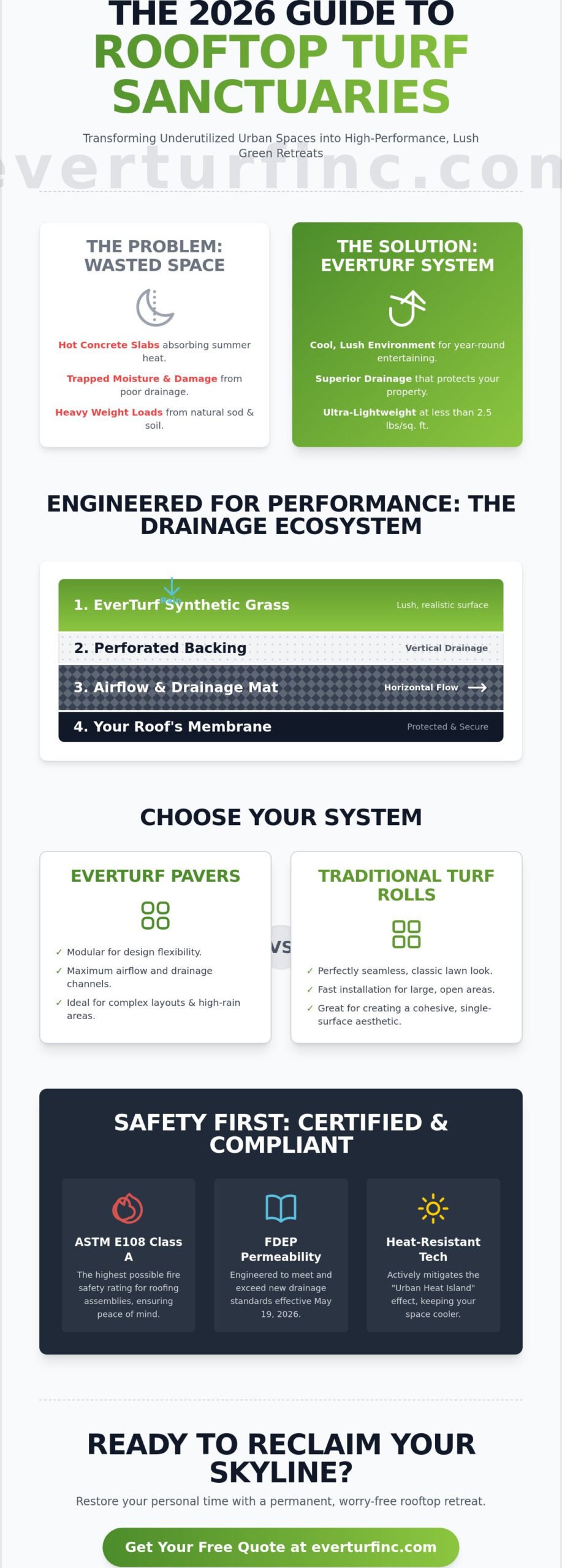
This transformation is driven by a desperate need for restorative spaces in dense, concrete-heavy environments. Looking at grey surfaces all day takes a psychological toll. Adding green textures provides a necessary visual break that lowers stress and significantly increases the perceived value of a property. While natural sod requires heavy soil, constant irrigation, and specialized structural reinforcement, it’s often physically impossible for standard roofs to support that weight. Synthetic systems provide the same lush look at a fraction of the load, with modern panels often weighing less than 2.5 pounds per square foot.
The history of artificial turf shows how far the technology has come since its early stadium applications. Modern products like EverTurf Roof & Deck are specifically engineered for these elevated environments. They don’t just sit on the roof; they facilitate vertical and horizontal drainage while mitigating the “Urban Heat Island” effect that makes city centers so stifling during the summer. By replacing heat-absorbing asphalt or concrete with breathable turf systems, you create a cooler, more inviting microclimate for your home.
The Aesthetic Shift in Modern Architecture
Modern design often relies on hard surfaces like steel, glass, and polished concrete. While these materials are sleek, they can feel cold or sterile if left unadorned. Designers now use synthetic grass for rooftop decks to soften these industrial edges and introduce organic warmth. Integrating green textures into a minimalist penthouse terrace creates a seamless transition between the interior luxury and the outdoor view. It grounds the architecture, making an elevated deck feel like a grounded garden retreat.
Commercial vs. Residential Rooftop Needs
The requirements for a private balcony differ significantly from a boutique hotel lounge. For residential owners, the focus is often on private relaxation or creating a safe, clean pet area. Commercial properties, however, prioritize amenity value and durability for high-foot-traffic social zones. EverTurf Roof & Deck systems are built to withstand the constant movement of lounge furniture and social gatherings without losing their vibrant, manicured appearance. Whether it’s a multi-family housing complex or a private residence, the goal remains the same: a permanent, worry-free retreat that restores your personal time.
The Engineering of Rooftop Drainage and Weight Loads
A high-performance rooftop turf system is far more than an aesthetic upgrade; it’s a sophisticated drainage ecosystem. Unlike ground-level projects that rely on a thick base of crushed stone, synthetic grass for rooftop decks utilizes an elevated drainage layer designed to facilitate both vertical and horizontal water movement. This system creates a vital separation between the lush surface and your roof’s waterproofing membrane. By lifting the turf, we ensure that every drop of rain or rinse water finds its way to your existing drains without creating stagnant pools.
The hierarchy of this engineering begins with a perforated backing on the turf itself, allowing water to pass through the fibers instantly. Once through the turf, the water enters a specialized drainage tile or mat. This secondary layer is the “engine room” of the project. It provides a clear channel for water to travel horizontally across the roof’s pitch. This design also introduces a critical factor often overlooked by standard landscaping: airflow. Constant air circulation beneath the turf prevents moisture from becoming trapped, which effectively eliminates the risk of mold, mildew, and rot that can plague inferior installations.
Vertical vs. Horizontal Drainage Mechanics
Understanding how water moves is essential for long-term satisfaction. Vertical drainage occurs as liquid moves through the turf’s porous backing. Once it hits the sub-base, horizontal drainage takes over. The drainage tiles create a “plenum” space that routes water toward your building’s scuppers or gutters. To ensure this works perfectly, we always verify that the underlying surface is correctly pitched. Without this pitch, even the best artificial turf installation can’t overcome the physics of standing water. Proper engineering ensures your deck remains dry and usable just minutes after a heavy downpour.
Structural Integrity and Load Bearing
Weight is the primary reason synthetic grass for rooftop decks has become the gold standard for urban design. While a traditional rooftop garden with soil and sod can weigh upwards of 30 to 50 pounds per square foot when saturated, modern turf systems are incredibly light. Most advanced panels weigh less than 2.5 pounds per square foot. This minimal load makes turf a safe and viable option for older structures or residential balconies that weren’t originally designed for heavy landscaping. Even with this lightweight profile, we recommend a structural assessment for larger projects to confirm your roof’s specific load capacity. This due diligence provides the peace of mind that your new sanctuary is as safe as it is beautiful.
EverTurf Pavers vs. Traditional Turf Rolls: Choosing Your System
Selecting the right hardware is the first step in creating your everlasting retreat. For synthetic grass for rooftop decks, the market generally splits into two sophisticated categories: continuous rolls and modular pavers. Both systems offer the visual relief of a permanent green space, but they serve different architectural goals and maintenance priorities. Your choice will ultimately depend on the geometry of your roof and how often you need to access the underlying structure.
While both options provide a high-performance surface, the installation mechanics vary significantly. Traditional rolls offer a classic, expansive look that mirrors a sprawling lawn. In contrast, modular systems focus on adaptability and ease of access. Each approach has been engineered to handle the unique challenges of elevated environments, ensuring that your urban oasis remains beautiful and functional for years to come.
When to Choose EverTurf Roof & Deck Rolls
EverTurf Roof & Deck rolls are the premier choice for achieving a seamless, sweeping landscape. These rolls mimic the expansive feel of a traditional lawn by minimizing visible joints across large, open decks. When installing rolls, we utilize a specialized drainage mat underlayment that protects the roof membrane while facilitating water flow. By integrating backyard turf design principles, you can create a sophisticated environment that feels like a ground-level garden. Professional installation is typically recommended for rolls to ensure seams are invisible and the perimeter is secured without compromising the roof’s waterproofing.
The Advantages of EverTurf Paver Systems
EverTurf Pavers represent the pinnacle of modular flexibility. These tiles are ideal for rooftops with complex geometries, numerous corners, or permanent fixtures like planters and pillars. Each paver features integrated drainage channels that elevate the turf at least 1/2 inch above the surface. This elevation maximizes horizontal water flow and airflow, which is critical for preventing moisture buildup. The snap-together design makes them a more DIY-friendly option for smaller balconies or residential projects where professional crews might not be required.
One of the most significant benefits of a modular system is accessibility. If you ever need to inspect the roof membrane or clear a clogged drain, you can simply lift the specific pavers required and snap them back into place afterward. This capability provides immense relief for property managers who prioritize long-term structural health. In commercial settings, this modularity also allows for the quick replacement of individual high-wear sections without disturbing the entire installation. This system truly restores your personal time by making even the most complex maintenance tasks simple and efficient.
Safety Standards: Fire Ratings and Heat Management
Safety is the silent architect of every successful urban retreat. While the aesthetic appeal of synthetic grass for rooftop decks is undeniable, the technical safety standards are what truly ensure long-term satisfaction and peace of mind. On an elevated surface, you’re dealing with unique environmental pressures, primarily fire risks and intense solar radiation. Choosing a product that prioritizes these factors isn’t just about building code compliance; it’s about protecting your home and your investment with professional-grade materials.
Modern rooftop systems are engineered to thrive where traditional materials fail. We focus on high-performance solutions that address the specific challenges of the urban climate, from the “heat island” effect to the stringent requirements of high-rise living. By selecting the right combination of fiber technology and safety ratings, you can transform a scorching concrete slab into a cool, secure sanctuary that invites relaxation at any hour of the day.
Fire Safety and Building Codes
Building codes for urban high-rises and multi-family dwellings are stringent for a reason. The ASTM E108 Class A Fire Rating is the non-negotiable benchmark for rooftop materials. This classification evaluates a material’s resistance to external fire exposure and its ability to prevent flame spread across the roof deck. It’s a critical distinction because standard “landscape grade” turf often only meets Class C requirements, which may be illegal for rooftop use in many jurisdictions. Always verify local fire marshal requirements before starting your project. Using an EverTurf Roof & Deck system ensures you meet these rigorous safety standards while maintaining the lush, vibrant look of a natural meadow.
Cooling Strategies for High-Exposure Decks
Rooftops are notorious for heat retention, often reaching temperatures significantly higher than ground-level yards. To combat this, we utilize “Cool Turf” technology. This involves specific fiber shapes, such as “W” or “U” profiles, designed to reflect infrared light and diffuse heat rather than absorbing it. These microscopic engineering choices result in a surface that remains comfortable to the touch even during peak solar exposure. This technology directly mitigates the Urban Heat Island effect, making your private terrace a cooler microclimate for the entire building.
The right turf infill also plays a vital role in temperature regulation. High-performance infills can facilitate evaporative cooling; when you give your deck a quick rinse, the infill captures that moisture and releases it slowly as the day warms up. This process mirrors the way natural grass stays cool through transpiration. If you want to ensure your elevated retreat remains a refreshing escape all summer long, connect with our design team for a custom rooftop assessment. By combining reflective fiber shapes with specialized infill, you create a restorative space that stands up to the most intense sun.
Installation and Long-Term Maintenance for Rooftops
The final stage of your urban oasis journey is the physical assembly of your retreat. Installing synthetic grass for rooftop decks requires a specialized approach that respects the delicate nature of your building’s waterproofing. Unlike ground-level projects, you can’t simply dig or stake into the surface. Instead, you build a sophisticated, multi-layered system that sits securely on top of your structure. This ensures your roof remains as dry and protected as it was the day it was built while giving you the lush aesthetic you desire.
The installation follows a logical, four-step progression designed for maximum durability. First, you must thoroughly clean and inspect the existing roof membrane to ensure there’s no debris or damage before it’s covered. Second, you lay the drainage tile or EverTurf Pavers base layer across the entire footprint. Third, you secure the turf using EverTurf Staples and Glue, focusing primarily on the perimeter and seams to create a tight, uniform surface. Finally, you apply EverTurf Infill to weigh down the system and protect the individual fibers from flattening under foot traffic.
Securing Turf Without Membrane Penetration
Protecting your roof’s integrity is our highest priority. We utilize a “floating floor” system that avoids any penetration of the critical waterproofing membrane. Instead of mechanical fasteners, we rely on weighted perimeters and high-strength adhesive applied only to non-critical zones or the drainage tiles themselves. The EverTurf Infill acts as a ballast, providing the necessary weight to prevent wind uplift, even on high-rise balconies. This engineering choice offers the relief of a secure installation without the risk of leaks or structural damage common with inferior methods.
Long-Term Care for Rooftop Turf
Maintaining your elevated meadow is remarkably simple, restoring your personal time for relaxation rather than chores. You should occasionally remove organic debris like leaves or twigs to prevent drainage channel clogs. If you have pets, rooftop environments are easily managed; simply rinse the area with water to move liquid waste through the drainage system. For a deeper look at keeping your space pristine, check out our Ultimate Guide to Artificial Grass for expert cleaning tips. This proactive approach ensures your synthetic grass for rooftop decks remains a vibrant, stress-free sanctuary for years to come.
Designing Your Private Skyline Sanctuary
Your rooftop is more than just a structural necessity; it’s the canvas for your next great lifestyle upgrade. By integrating synthetic grass for rooftop decks, you solve the dual challenges of urban heat and wasted space. We’ve explored how advanced engineering ensures your roof remains protected through lightweight materials and superior vertical drainage. You now understand that safety isn’t a compromise, thanks to ASTM E108 Class A Fire-Rated options that meet the most rigorous urban building codes.
Whether you choose our innovative EverTurf Paver systems for superior drainage or our seamless rolls for a classic lawn feel, the result is a worry-free environment. Our national distribution ensures high-performance projects receive the quality they deserve, regardless of location. It’s time to stop dreaming about a green retreat and start living in one. The peace of mind that comes with a permanent, low-maintenance outdoor space is finally within reach.
Elevate your lifestyle with EverTurf Roof & Deck solutions and transform your unused skyline into a lush, permanent sanctuary. You’ve done the research; now take the final step toward a more beautiful and stress-free version of your property.
Frequently Asked Questions
Does synthetic grass on a rooftop cause leaks?
No, synthetic grass does not cause leaks when installed with a professional drainage system. In fact, it acts as a protective shield for your roof’s waterproofing membrane by blocking direct UV exposure and physical wear. The system relies on a “floating floor” design that allows water to flow freely to existing drains rather than trapping it against the surface, ensuring your structure remains dry and secure.
How do you clean dog urine from rooftop artificial turf?
Cleaning pet waste is a simple process of rinsing and refreshing the surface. You can flush urine through the turf’s perforated backing and into the underlying drainage system using a standard garden hose. For persistent odors, an enzyme-based cleaner designed for synthetic surfaces will break down the organic compounds. This routine ensures your urban oasis remains a fresh and hygienic environment for both you and your pets.
Can I install synthetic grass directly over a wood deck?
You can install turf over a wood deck, but you must include a specialized drainage underlayment between the wood and the grass. This layer creates essential airflow and prevents moisture from being trapped directly against the timber, which could lead to rot or mold over time. Using synthetic grass for rooftop decks on wooden structures provides a stunning aesthetic shift while preserving the structural health of the boards underneath.
Is rooftop turf a fire hazard for high-rise buildings?
High-quality rooftop turf is not a fire hazard if it meets the ASTM E108 Class A Fire Rating. This rigorous safety standard is often required by local building codes for high-rise installations to ensure the material resists flame spread and performs under extreme heat. We prioritize these safety-rated products to provide a secure environment that complies with urban fire marshal regulations, giving you complete peace of mind.
How hot does artificial grass get on a sunny rooftop?
While all outdoor surfaces absorb solar energy, modern turf with reflective fiber technology stays significantly cooler than traditional asphalt or concrete. These advanced systems utilize “Cool Turf” shapes that diffuse infrared light rather than absorbing it. You can further manage temperatures by choosing light-colored infills and giving the surface a quick rinse with water during peak afternoon sun to trigger natural evaporative cooling.
What is the best drainage system for rooftop turf?
The most effective drainage solution for rooftops involves a combination of perforated turf backing and elevated drainage tiles. Systems like EverTurf Pavers create a clear plenum space that facilitates both vertical and horizontal water movement. This setup is superior to ground-level methods because it prevents pooling and ensures that water reaches your roof drains as quickly as possible without the need for heavy gravel bases.
How do you secure artificial grass to a roof without nails?
We secure synthetic grass for rooftop decks using a “ballasted” approach that avoids any penetration of your roof’s membrane. This involves using high-strength adhesives along the perimeter and seams, combined with the weight of the infill to keep the system firmly in place. For modular projects, interlocking tiles snap together to create a heavy, unified floor that resists wind uplift even on high-exposure penthouse levels.
Does rooftop turf increase property value?
Transforming a dead roof into a functional green space typically increases both property value and market appeal. You’re essentially adding usable square footage to the home, which is a premium asset in dense urban environments. Potential buyers and renters view a professionally installed rooftop sanctuary as a high-value amenity that offers a private, restorative escape from the city’s concrete landscape.