
Is Artificial Turf Safe for Dogs? 2026 Safety Guide
Imagine reclaiming your Saturday mornings from the relentless cycle of muddy paws and chemical-laden lawn treatments. For many homeowners, the dream of a pristine, year-round green space often feels at odds with the reality of owning a playful pet. You’ve likely wondered, is artificial turf safe for dogs, or are you simply trading one set of worries for another? It’s natural to feel a sense of hesitation when balancing the desire for a beautiful home with the absolute priority of your dog’s well-being.
This 2026 safety guide provides the clarity you need to make an informed investment in your lifestyle. We’ll uncover the truth about pet-friendly synthetic grass, focusing on the latest PFAS-free material standards and advanced antimicrobial infill systems. You’ll discover how specialized EverTurf Artificial grass solutions manage surface heat and eliminate the need for toxic pesticides. We’re moving beyond simple aesthetics to explore a sophisticated turf system that drains at over 30 inches per hour; this ensures your yard remains a fresh, odor-free sanctuary for your entire family.
Key Takeaways
- Discover how 2026 industry standards ensure your lawn is free of PFAS and heavy metals, providing a non-toxic environment as safe as a child’s playroom.
- Learn why the answer to “is artificial turf safe for dogs” depends on selecting a specialized system with antimicrobial backing and rapid drainage.
- Understand the role of high-flow drainage and EverTurf Infill in preventing bacterial buildup and neutralizing persistent urine odors for a fresh outdoor space.
- Eliminate the risks of traditional lawn care by removing the need for toxic pesticides and fertilizers while naturally deterring fleas and ticks.
- Explore how professional EverTurf Artificial grass installation creates a durable, temperature-controlled surface that protects sensitive paws during the summer months.
The Material Safety Standard: Non-Toxic and Lead-Free Turf
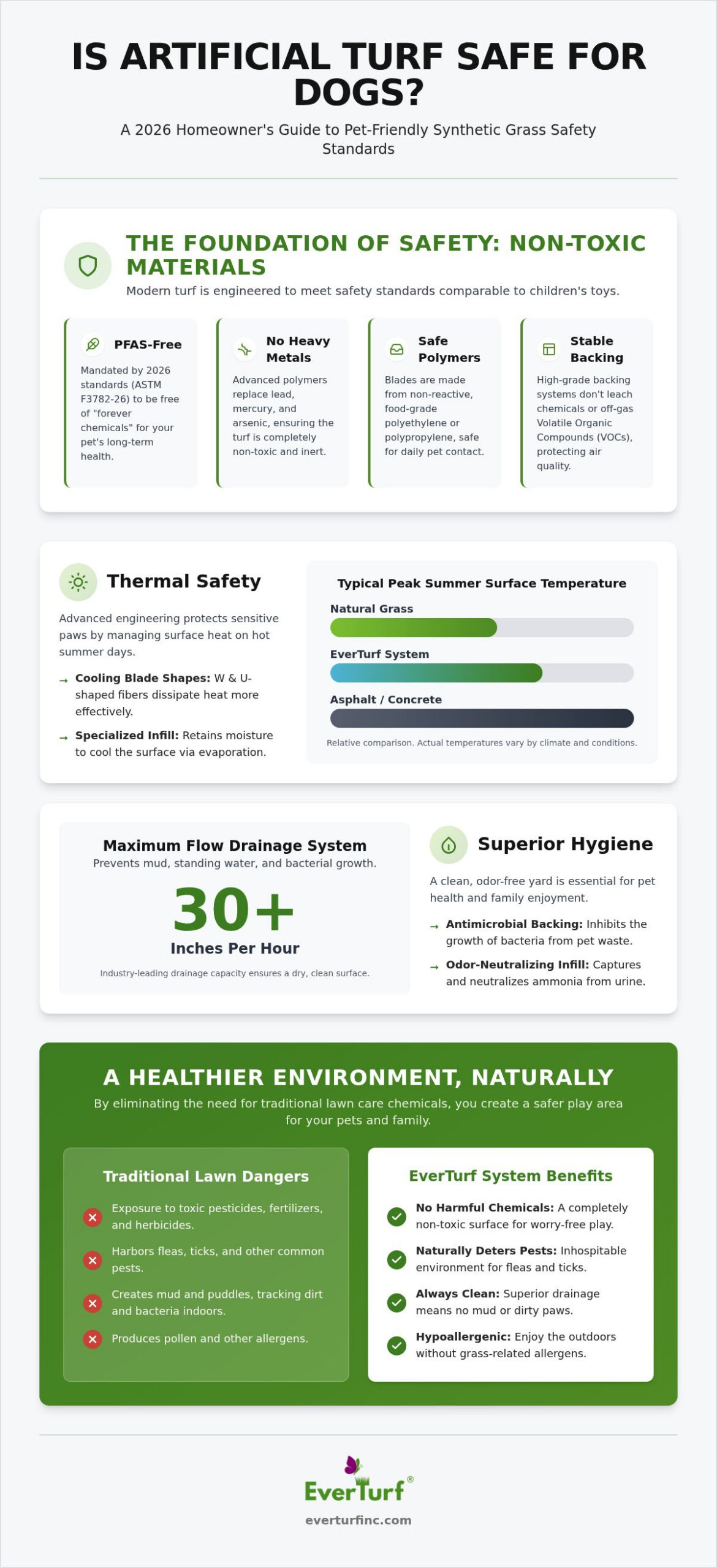
Gone are the days of scratchy, industrial-grade plastic carpets. Modern engineering has transformed synthetic grass into a high-performance surface that mirrors the safety standards of children’s plush toys. When asking is artificial turf safe for dogs, the answer lies in the manufacturing quality. Premium solutions like EverTurf Artificial grass prioritize material transparency, ensuring your pet’s playground is as healthy as it is beautiful. Choosing products manufactured in the USA provides an extra layer of security; these facilities adhere to strict environmental and quality control protocols that overseas factories often bypass.
Identifying Lead-Free and PFAS-Free Synthetic Fibers
Historically, some older synthetic products contained trace amounts of lead used as pigment stabilizers. Today, advanced polymers have entirely replaced these heavy metals. A more modern concern involves per- and polyfluoroalkyl substances (PFAS), often called “forever chemicals.” These compounds are sometimes used in manufacturing to prevent sticking, but they can persist in the environment and your dog’s body. Protecting your pet means choosing materials that explicitly exclude these additives.
As of May 2026, regulations like Florida’s House Bill 683 mandate that residential turf must be free of intentionally added PFAS. The industry now relies on the ASTM F3782-26 standard to verify these claims through rigorous testing. We recommend always requesting third-party lab results from your provider to confirm that the fibers meet these updated safety benchmarks. This data addresses many health and safety concerns of artificial turf by proving the material is chemically inert and safe for daily contact.
Non-Toxic Components: Beyond the Blades
Safety isn’t just about what you see on the surface. The primary and secondary backing materials must also be scrutinized. Inferior products might use low-quality latex or urethane backings that off-gas volatile organic compounds (VOCs), which can lead to respiratory irritation in sensitive breeds. EverTurf Artificial grass uses high-grade, non-toxic backing systems designed to remain stable even under the intense summer sun. A truly pet-safe system includes several key features:
- No Heavy Metals: Manufacturing processes that exclude mercury, arsenic, and lead.
- Food-Grade Polymers: Blades made from polyethylene or polypropylene that are non-reactive.
- Inert Backing: Materials that don’t leach chemicals into the ground or atmosphere.
Ensuring the entire system is non-reactive gives you the peace of mind that your dog can roll, play, and nap without exposure to hidden hazards. This commitment to safety is what distinguishes a premium lifestyle upgrade from a simple landscaping choice. By selecting a system engineered for the specific needs of pets, you’re investing in a permanent solution that values health as much as aesthetics.
Thermal Safety: Protecting Paws from Summer Heat
Sunlight transforms every outdoor surface, and synthetic fibers are no exception. Unlike natural grass, which uses transpiration to stay cool, synthetic materials absorb solar energy. This physical reality leads many homeowners to ask, is artificial turf safe for dogs during the peak of summer? The answer depends largely on the specific technology behind the installation. While turf can reach higher temperatures than natural sod, it remains significantly cooler than dark asphalt or concrete, which often trap and radiate heat long after the sun sets. Understanding how to manage these thermal properties ensures your yard remains a tranquil sanctuary even in July.
Heat-Reducing Technology in Modern Turf
Engineering has come a long way in managing surface temperatures. Modern blade shapes, such as W-shape or U-shape designs, aren’t chosen merely for their realistic appearance. These structures increase the surface area of each fiber, allowing for better airflow and more efficient heat dissipation. By reflecting light at different angles, these shapes prevent the blades from absorbing the full intensity of direct sunlight.
Color choice also plays a vital role in thermal safety. Lighter, more vibrant green fibers naturally reflect more solar radiation than deep, dark forest greens. Additionally, the choice of infill is a critical factor. Specialized options like EverTurf Infill are designed to help lower surface temperatures by retaining moisture from morning dew or a quick rinse, which then cools the lawn through evaporation. Investing in high-quality artificial turf installation ensures these technical advantages are properly integrated into your landscape.
Practical Tips for Hot Days
Even with advanced cooling technology, responsible pet ownership requires a few simple summer habits. The “7-second rule” is your most reliable tool: place the back of your hand firmly on the turf. If you can’t hold it there comfortably for seven seconds, the surface is too hot for your dog’s sensitive paw pads. This quick check provides immediate peace of mind before you let your pet out for afternoon play.
Managing heat is surprisingly simple with a garden hose. A quick 30-second misting can drop the surface temperature by 20 degrees or more almost instantly. When designing your outdoor space, consider incorporating “cool zones” using pergolas, umbrellas, or strategically placed trees. For more inspiration on creating a balanced environment, the Penn State Extension pet-friendly gardening guide offers excellent advice on integrating shade and safety into your yard’s layout. By combining smart material choices with these practical steps, you ensure a comfortable, year-round environment for your dog.
Hygiene and Bacteria: The Science of Drainage and Infill
A pristine lawn is only as safe as its ability to stay clean. When homeowners ask is artificial turf safe for dogs, they’re often subtly worried about hygiene. Without the natural biological processing of soil, synthetic surfaces must rely on superior engineering to manage pet waste. The secret to a healthy outdoor environment lies in a system approach that moves liquids away from the surface before bacteria can take hold. Poorly installed lawns or low-quality materials can trap moisture; this creates a breeding ground for mold, mildew, and lingering odors that compromise your dog’s health.
Antimicrobial EverTurf Infill: The First Line of Defense
The right infill serves as the primary barrier against biological growth. Unlike standard silica sand, which can trap moisture and harbor bacteria, specialized EverTurf Infill features antimicrobial properties. These coatings proactively inhibit the growth of bacteria that cause unpleasant ammonia smells. By neutralizing odors at the source, the infill ensures your yard remains a fresh, inviting space rather than a source of frustration. It’s a sophisticated solution for the modern homeowner who values both a beautiful yard and a sanitary environment.
High-Flow Drainage vs. Trapped Bacteria
The speed of liquid transit is the most critical factor in pet turf safety. Standard landscape turf often uses hole-punched backing. This can lead to “dead zones” where urine pools and stagnates. In contrast, a high-performance system utilizes 100% permeable, edge-to-edge drainage. For multi-dog households, a drainage rate of 30+ inches per hour is the gold standard. This rapid flow prevents the formation of bio-films and keeps the surface dry and hygienic.
Beneath the turf, a carefully compacted crushed stone base acts as a final filter. This layer moves liquids efficiently into the soil below, preventing any buildup near the surface. This level of technical precision is why a professional installation is vital for long-term pet safety. By prioritizing rapid drainage, you’re not just buying a green lawn; you’re investing in a permanent, low-maintenance solution that restores your personal time and provides a worry-free environment for your pets. A yard that stays dry and clean is a yard that stays safe year-round.
Health Benefits: Eliminating Pests and Harsh Chemicals
Exchange the chemical heavy burden of traditional lawn care for the clean tranquility of a synthetic sanctuary. Maintaining a lush, natural lawn often requires a complex cocktail of fertilizers, herbicides, and pesticides to stay green and pest-free. For pet owners, this creates a persistent cycle of anxiety. Every time you treat your grass for weeds or grubs, you’re introducing toxins that your dog can easily absorb through their paw pads or skin. Homeowners frequently ask, is artificial turf safe for dogs, but the more pressing question might be whether a chemically saturated natural lawn is truly safe for a family pet.
Transitioning to a high-quality synthetic system removes these hazards entirely. You’re not just choosing a low-maintenance landscape; you’re creating a chemical-free environment where your dog can roll, play, and explore without the risk of toxic exposure. This shift provides a profound sense of relief, knowing that your outdoor space is naturally resilient and requires zero harsh interventions to remain beautiful year-round.
Creating a Pest-Free Zone Without Pesticides
Pests like ticks and fleas require specific organic conditions to thrive, including moist soil and decaying plant matter. EverTurf Artificial grass creates a physical barrier that breaks the life cycle of these parasites. Because the surface is inorganic and drains so rapidly, it doesn’t provide the damp, sheltered environment that insects need to breed. You’ll enjoy a significant reduction in the local population of several common nuisances:
- Ticks and Fleas: These parasites find no organic material to hide in or lay eggs.
- Grubs and Ants: The inorganic base and turf backing prevent these insects from tunneling or nesting.
- Mosquitoes: Superior drainage eliminates the standing water that serves as a breeding ground for biting insects.
Removing Fertilizers and Herbicides from the Equation
Canine health issues are often linked to the chronic exposure of traditional lawn chemicals. Dogs that like to nibble on grass or frequently lick their paws are at a higher risk when natural sod is treated with herbicides. By installing EverTurf Artificial grass pets products, you eliminate the need for monthly chemical treatments. Your yard becomes a permanent sanctuary where the only things entering the environment are water and sunshine.
There’s also a hidden safety benefit for your indoor air quality. A mud-free environment means your dog isn’t tracking bacteria, allergens, or outdoor chemicals into your living room. This restoration of cleanliness extends from your yard into your home, providing a healthier lifestyle for the entire family. If you’re ready to transform your property into a worry-free retreat, explore EverTurf Artificial grass pets solutions to see how we can enhance your outdoor experience.
Choosing and Maintaining Your Pet Safety System
Safety isn’t a static feature; it’s the result of deliberate choices. While core materials provide the foundation, the final answer to is artificial turf safe for dogs depends on matching the specific product to your pet’s behavior. A high-energy Labrador requires a different specification than a small Terrier. Professional installation is the silent partner in this safety equation. Without a perfectly graded base and secure perimeter fastening, even the best turf can become a tripping hazard or a target for curious diggers. Investing in a professional team ensures the drainage system functions at its peak, moving waste away from the surface instantly.
Selecting the Right EverTurf Artificial Grass for Dogs
Evaluation of technical specs is essential for long-term satisfaction. We recommend a pile height between 1.25 and 1.75 inches for pet areas. This shorter, denser profile makes waste removal significantly easier and prevents the fibers from trapping organic debris. You should also verify the “pull-force” rating, which measures how much resistance a blade offers before being detached. For dogs that love to dig or play rough, a high pull-force ensures the lawn remains intact and safe. For a deeper dive into specific product comparisons, read The Best Artificial Turf for Dogs: A 2026 Review.
Maintenance for a Safe Sanctuary
Maintaining a hygienic outdoor space is remarkably simple but requires consistency. A weekly rinse with a garden hose is the most effective way to move urine through the drainage system and into the base below. This routine prevents the crystallization of uric acid, which is the primary cause of odors. If you’ve ever wondered is artificial turf safe for dogs in terms of long-term hygiene, the secret is this simple rinsing habit combined with antimicrobial infill. For deeper sanitization, use a pet-safe enzyme cleaner once a month to break down organic matter at the molecular level.
- Cross-Brushing: Use a synthetic-bristle brush to lift fibers flattened by heavy foot traffic. This prevents “trap-points” where debris can accumulate and keeps the yard looking vibrant.
- Infill Top-offs: Check your EverTurf Infill levels annually. Proper infill levels protect the turf backing and maintain the antimicrobial barrier that neutralizes odors.
- Visual Inspections: Periodically check seams and edges to ensure they remain flush and secure, preventing any curious paws from pulling at the edges.
A well-maintained system remains the safest, cleanest, and most beautiful environment for your dog to enjoy. By starting with a precision-engineered foundation, you’re not just buying a product; you’re securing a lifestyle of ease and tranquility. This proactive approach to maintenance ensures your yard remains a worry-free retreat for years to come.
Embracing a Cleaner, Safer Outdoor Lifestyle
Transforming your yard into a pristine sanctuary is about more than just aesthetics; it’s about providing a worry-free environment where your pets can thrive. You’ve seen that the answer to is artificial turf safe for dogs is a resounding yes, provided you choose a system specifically engineered for their unique needs. By prioritizing 100% lead-free and non-toxic materials, you eliminate the hidden risks of traditional lawn chemicals and create a physical barrier against pests like fleas and ticks.
Your restoration of personal time begins the moment you move away from muddy tracks and lingering odors. Sophisticated high-flow drainage systems and specialized antimicrobial infills work together to ensure your outdoor space remains fresh and hygienic year-round. With the support of our national expert installation network, you can confidently envision a more beautiful, stress-free version of your property that values quality and durability above all else. It’s time to trade the frustrations of traditional maintenance for the tranquility of an everlasting result.
Upgrade to a Safe, Pet-Friendly EverTurf Lawn Today and experience the lasting relief of a perfect, year-round landscape designed for your entire family.
Frequently Asked Questions
Is artificial turf toxic to dogs if they chew on it?
Modern EverTurf Artificial grass is completely non-toxic and manufactured using food-grade polymers that are chemically inert. While turf isn’t meant for consumption, the fibers are designed to be resilient and won’t leach harmful chemicals if your dog happens to nibble on them. Current 2026 safety standards ensure these materials are as safe as children’s toys. You’ll have peace of mind knowing your pet’s curiosity won’t lead to chemical ingestion or heavy metal exposure.
Can dogs get “turf burn” or skin abrasions from synthetic grass?
Dogs are very unlikely to get skin abrasions because high-quality polyethylene fibers are exceptionally soft and non-abrasive. Unlike older, industrial-grade products, modern pet-specific turf feels gentle against a dog’s skin and paws. This significantly reduces the risk of irritations during high-speed play or rolling. It provides a cushioned, supportive surface that protects your dog’s joints and skin while maintaining a lush, natural aesthetic for your property.
How do I clean dog urine and solid waste from artificial turf?
You can clean dog urine and solid waste easily by scooping solids and rinsing the area with a garden hose. For liquid waste, the superior drainage system moves it through the backing instantly to prevent odors. We recommend a weekly rinse to move any remaining salts through the system. Utilizing a pet-safe enzyme cleaner once a month helps break down organic compounds at the molecular level, keeping your lawn fresh.
Does artificial grass get too hot for a dog’s paws in the summer?
Surface temperatures are manageable because specialized blade shapes and cooling infills work together to dissipate heat. While synthetic materials absorb solar energy, the answer to is artificial turf safe for dogs in the summer depends on these advanced cooling technologies. On peak summer days, a brief 30-second misting can drop surface temperatures by over 20 degrees instantly. This creates a comfortable, safe environment for sensitive paws even during the hottest afternoon hours.
Will my dog try to dig through the artificial turf?
Most dogs stop digging once they realize they can’t penetrate the heavy-duty backing of a professional turf installation. The dense weave and secure perimeter provide a physical barrier that discourages destructive behavior. Because the turf eliminates the scent of dirt and grubs, the primary biological triggers for digging are removed. This helps preserve the beauty of your landscape while protecting your dog’s paws from the grit associated with natural lawns.
Does artificial grass help with dog allergies to pollen or mold?
Synthetic grass significantly helps with dog allergies because it doesn’t produce pollen or harbor mold. Since the surface is inorganic and drains rapidly, the primary triggers for seasonal sneezing and itching are removed from your yard. Your dog can enjoy the outdoors without the discomfort often caused by natural sod. It’s a lifestyle enhancement that restores your pet’s comfort and your tranquility during high-pollen seasons.
How long does pet-friendly artificial turf last with heavy use?
Pet-friendly turf is engineered for extreme durability and typically lasts between 15 and 20 years even with heavy use. The high pull-force rating of the fibers ensures the lawn can withstand the constant activity of large breeds without thinning or balding. Regular cross-brushing and occasional infill top-offs help maintain the lawn’s structural integrity over time. This long-term durability makes it a premium investment that pays dividends in time saved and property value.
Is the drainage system safe for the environment and local groundwater?
The drainage system is completely safe for the environment because it utilizes a highly porous, permeable backing. High-flow systems allow liquids to filter through a crushed stone base before entering the soil, mimicking the natural water cycle. This prevents the runoff of harmful pesticides and fertilizers into local waterways. When evaluating is artificial turf safe for dogs and the planet, you’ll find this system supports a cleaner, more sustainable local ecosystem.