


Integrating Pavers with Artificial Turf: The Professional Design and Engineering Guide
A magazine-ready backyard isn’t just a product of an eye for design; it’s the result of an invisible engineering feat that keeps every edge crisp and every stone level. You likely envision a landscape where the lush, year-round green of EverTurf Artificial grass meets the timeless structure of stone, yet the fear of shifting pavers or water pooling often holds you back. Successfully integrating pavers with artificial turf requires more than just a steady hand. It demands a sophisticated understanding of sub-base harmony and drainage to ensure your investment remains as stunning in ten years as it is on day one.
We understand that you’re looking for a permanent solution that restores your personal time while enhancing your property’s value. You’ll learn the technical and aesthetic requirements for a flawless installation, from meeting the May 2026 Florida permeability standards to selecting a 60 ounce face weight for maximum durability. We’ll walk through the precise engineering steps needed to prevent heat retention and ensure a 70% reduction in outdoor water use. This guide provides the blueprint for transforming your outdoor space into a tranquil, maintenance-free sanctuary that reflects your lifestyle and your high standards for quality.
Key Takeaways
- Discover why the “living hardscape” is the definitive 2026 design trend for blending geometric precision with lush, year-round greenery.
- Learn the “System Thinking” engineering approach that creates a unified sub-base for both stone and synthetic grass to prevent shifting over time.
- Master the professional techniques for integrating pavers with artificial turf to ensure perfectly flush transitions and efficient drainage across your entire landscape.
- Compare the structural advantages of Class II road base and decomposed granite to determine the ideal foundation for your specific project needs.
- Explore sophisticated design frameworks like turf ribbons and checkerboard patterns that elevate standard driveways and paths into high-end architectural statements.
The Aesthetic and Functional Value of Paver-Turf Integration
Modern architecture thrives on the tension between the organic and the structural. In 2026, the “living hardscape” has emerged as the definitive trend for homeowners seeking a balance of geometric precision and natural softness. Integrating pavers with artificial turf allows you to move beyond the limitations of traditional materials. It creates a high-contrast, visually striking environment that remains pristine regardless of the season. This hybrid approach turns a standard patio or driveway into a sophisticated architectural statement that increases property value and curb appeal.
To fully appreciate this evolution, it helps to understand what is artificial turf and how modern manufacturing has created fibers that mimic the multi-tonal look of real grass. Unlike natural sod, which often fails in the narrow gaps between stones due to heat and lack of nutrients, EverTurf Artificial grass provides a permanent, vibrant green. This professional integration ensures that your design remains crisp and defined for 15 to 20 years, resisting the “bleeding” effect where real grass overruns the stone edges.
Breaking the Monotony of Traditional Hardscaping
Large expanses of stone or concrete can often feel cold and sterile. By weaving lush greenery into your hardscape, you soften the harsh lines of your property’s exterior. This design choice creates a sense of aspirational warmth, turning a functional area into a tranquil retreat. Utilizing backyard turf in patterns such as ribbons or checkerboards introduces a rhythmic, calming quality to high-traffic zones. It provides the psychological benefits of a green space without the relentless cycle of mowing, edging, and fertilizing.
The Environmental Edge of Hybrid Systems
Beyond the visual allure, integrating pavers with artificial turf offers significant functional advantages. Solid concrete surfaces contribute to the “heat island” effect, radiating warmth back into your living space. In contrast, synthetic turf acts as a cooling agent, breaking up the thermal mass of the stone. These systems are also engineered for superior permeability, meeting the high standards required for modern residential drainage. With the ability to reduce outdoor water consumption by up to 70%, this hybrid model is a responsible choice for the modern environment. It allows rainwater to filter through the sub-base efficiently, preventing the pooling and runoff issues common with traditional solid paving.
Engineering the Perfect Foundation: Sub-Base and Drainage
A high-end landscape requires a “System Thinking” approach where the stone and synthetic grass function as a single, structural unit. Many homeowners make the mistake of treating the turf as a decorative filler added after the hardscape is complete. This often leads to the turf pulling away from the stone or unsightly shifting over time. For a seamless result, both elements must share a unified sub-base. Integrating pavers with artificial turf effectively means engineering a foundation that supports the weight of the stone while maintaining the permeability required for the grass to thrive.
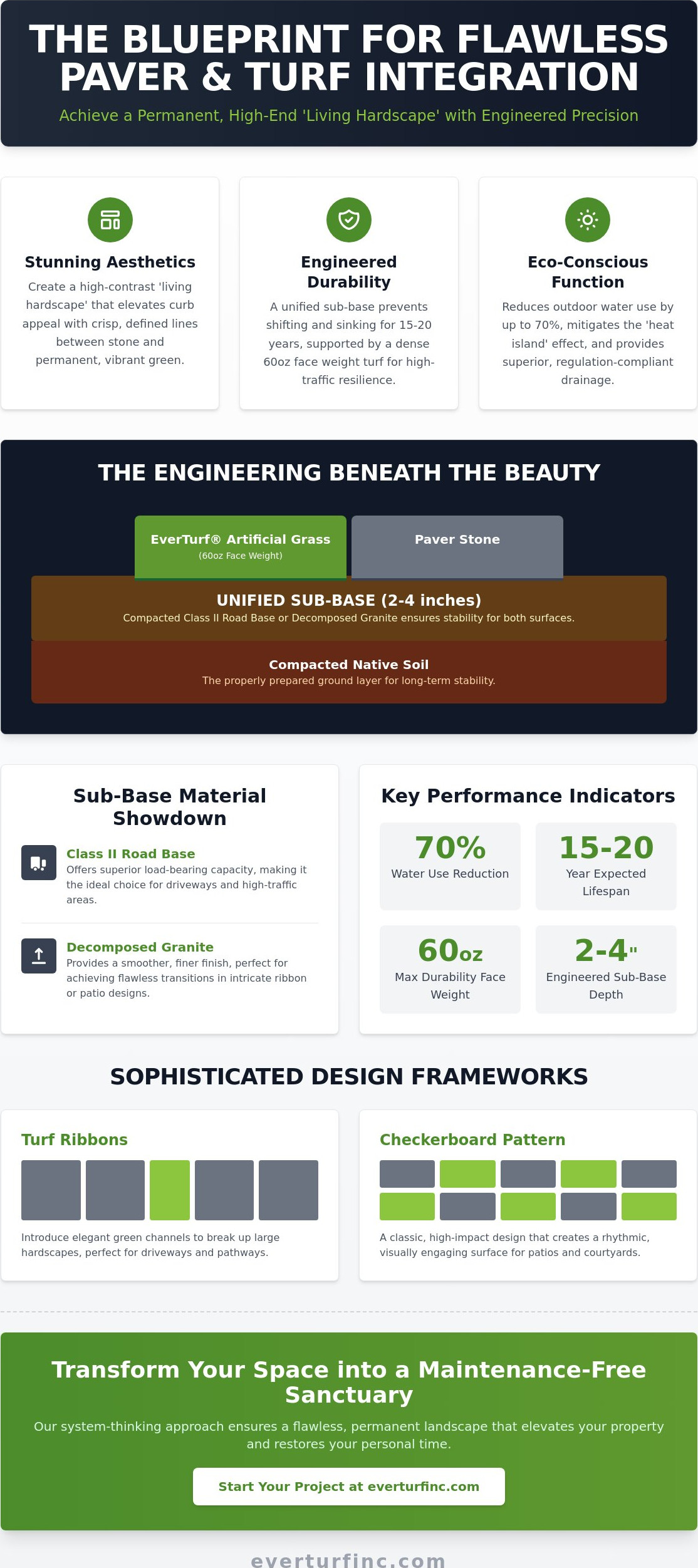
Material selection is the first pillar of stability. EverTurf Inc typically utilizes a 2 to 4 inch layer of compacted Class II road base or decomposed granite to create a rock-solid foundation. While road base offers superior load-bearing capacity for driveways, decomposed granite provides a smoother finish for intricate ribbon designs. Managing the capillary action is vital to ensure that water moves vertically through the turf and horizontally across the sub-base toward designated drainage points. Utilizing specialized turf infill is equally important. It provides the necessary ballast to keep the turf edges flush against the EverTurf Pavers, preventing the fibers from matting or flattening under heavy foot traffic.
Sub-Base Compaction Techniques for Mixed Media
Compacting narrow channels of base material between stones is a technical challenge that manual hand-tamping cannot solve. For high-traffic walkways, a vibratory plate compactor or a specialized stamp compactor is necessary to reach the required density. If the base isn’t sufficiently firm, the turf will eventually sink, creating a trip hazard. Achieving level transitions requires precise math. You must account for the thickness of the paver and the height of the turf pile to ensure the final surface is perfectly flush. If you’re unsure about the technical specs for your soil type, searching for artificial turf installation near me can connect you with experts who understand local geological conditions.
Advanced Drainage Solutions
Proper grading is the invisible hero of a beautiful backyard. We recommend a minimum 1% slope to guide water away from the home and prevent pooling in turf channels. According to the May 2026 Florida environmental standards, synthetic turf systems must maintain a permeability of up to 10 inches per hour. In areas with poor soil drainage, incorporating perforated pipes or a French drain beneath the sub-base ensures your lawn remains dry and usable immediately after a storm. For specialized projects like EverTurf Roof & Deck installations, we utilize elevated drainage mats that allow water to flow freely over the existing waterproof membrane, keeping the surface cool and pristine.
Design Frameworks: Ribbons, Checkerboards, and Stepping Stones
Selecting the right design framework is where engineering meets artistry. Your choice dictates the installation’s complexity and the project’s overall mood. Integrating pavers with artificial turf allows for three primary styles: linear ribbons, geometric checkerboards, and organic stepping stones. Each requires a specific technical approach to ensure the result is both breathtaking and durable. While a standard lawn offers a broad canvas, these integrated patterns provide a structured rhythm that guides the eye and defines the purpose of your outdoor space.
The decision between a rigid grid and a fluid path often depends on the architectural style of your home. Modern estates frequently lean toward sharp, clean lines that mirror the house’s silhouette. Conversely, transitional or Mediterranean homes benefit from the softer, randomized flow of stepping stones. Regardless of the pattern, the goal is to create a seamless transition that feels intentional and permanent. This level of design sophistication is what separates a basic DIY project from a professional, high-end landscape.
Mastering the Turf Ribbon
Linear ribbons are the hallmark of modern luxury, frequently utilized to elongate driveways or accent long walkways. We recommend ribbon widths between 4 and 8 inches. This range is wide enough to showcase the lush texture of the grass but narrow enough to maintain the structural integrity of the surrounding pavers. For driveways, the turf must be secured with high-grade EverTurf Staples and Glue to withstand the torque of turning vehicle tires. Proper ribbon design ensures that the weight of a car is distributed across the stone while the green strips remain untouched and vibrant.
The Checkerboard and Grid Logic
The checkerboard pattern offers a timeless, high-contrast look that works exceptionally well for patios and courtyards. This style uses artificial grass to create defined outdoor rooms, effectively separating a dining area from a lounge space without the need for walls. To achieve the best visual balance, aim for a 1:1 or 2:1 stone-to-turf ratio. Pairing high-performance synthetic fibers with light-colored stones like travertine or slate creates a sophisticated aesthetic that stays cool underfoot. This geometric precision requires meticulous layout planning to ensure every line is perfectly straight across the entire grid.
Achieving Organic Flow with Stepping Stones
Achieving a naturalistic flow often involves randomized stepping stones set within a sea of green. This approach breaks away from rigid lines, offering a more organic and relaxed atmosphere. It’s an ideal solution for garden paths or transitions between different landscape features. Because the stones are surrounded by turf on all sides, the sub-base must be exceptionally level to prevent any individual stone from rocking. This design maximizes the soft surface area of your yard, creating a safe and inviting space for pets and children while maintaining the high-end look of a professionally designed estate.
Critical Installation Steps for Seamless Transitions
Execution is where your architectural vision finally becomes a tangible reality. Integrating pavers with artificial turf is a dance of millimeters that requires a meticulous, multi-stage process to achieve a professional result. It begins by establishing the “fixed” elements of your design. Your pavers must be installed and secured first, as they serve as the permanent frame for the synthetic grass. This establishes a rigid perimeter, ensuring the design remains stable and defined underfoot for years to come. Once the stone is set, the focus shifts to leveling the “turf void” by fine-tuning the unified sub-base to ensure the grass sits perfectly flush with the stone surface.
Following the layout, the process moves through several technical checkpoints:
- Base Preparation: Leveling the sub-base material within the paver gaps to match the specific pile height of your EverTurf product.
- Precision Cutting: Utilizing the “scribe and trim” method to ensure the turf fits the stone like a glove.
- Securing: Applying high-grade adhesives and fasteners to prevent any edge lift.
- Final Grooming: Mechanical brushing to stand the fibers up and hide the transition points.
The Art of the Precision Cut
Achieving a high-end, magazine-ready look depends entirely on the quality of your cuts. Professionals utilize specialized turf knives rather than standard utility blades to ensure a clean, fray-free edge. We recommend leaving a 1/8-inch expansion gap at the paver edge. This tiny margin is a crucial engineering detail; it accounts for the natural expansion and contraction of the synthetic material in the intense sun, preventing the turf from bunching or pulling away from the stone. For curved paver edges, making small, incremental relief cuts allows the turf to hug the stone’s contour without creating visible gaps or tension points.
Anchoring and Edging
Stability is non-negotiable for a permanent, maintenance-free result. We utilize EverTurf Staples and Glue to create a structural bond that resists shifting, especially in narrow ribbons or high-traffic checkerboard patterns. In complex mixed-media projects, a “nailing strip” or bender board can provide additional reinforcement along the edges where the turf meets the stone. The final step involves a precise application of EverTurf Infill. This material provides the necessary ballast to keep the turf in place while protecting the backing from UV exposure at the vulnerable edges. If you’re ready to elevate your property with a professional touch, explore our artificial turf installation services to ensure every transition is masterfully executed.
Elevating Your Landscape with EverTurf Integrated Solutions
Choosing the right materials is the final step in securing a landscape that remains breathtaking for decades. EverTurf Artificial Grass is specifically engineered to handle the unique thermal and structural demands of mixed-media environments. When integrating pavers with artificial turf, the synthetic fibers are often subjected to reflected heat from the surrounding stone. Our UV-stabilized technology ensures that your vibrant green ribbons and checkerboards won’t fade or degrade, maintaining a high-contrast look that defines modern luxury. This isn’t just about aesthetics; it’s about a permanent solution that withstands the tests of time and climate.
Partnering with a seasoned expert allows you to move away from the frustrations of traditional maintenance and toward the tranquility of a perfect, year-round outdoor space. We prioritize quality and durability in every fiber, ensuring that your investment delivers long-term satisfaction. By combining our specialized products with the engineering principles discussed in previous sections, you create a seamless, high-end landscape that functions as a true lifestyle enhancer. The result is a sophisticated environment that restores your personal time and provides a worry-free backdrop for modern living.
Product Selection for Integrated Designs
Product selection is a nuanced process that dictates the final feel of your yard. Pile height is a critical variable; the grass must be tall enough to feel lush underfoot but short enough to sit flush with your chosen pavers. For narrow ribbon applications, we recommend high-density turf that resists matting even in high-traffic zones. If your vision includes a multi-functional space, EverTurf Putting Green Pro can be seamlessly integrated into patio designs. This offers a professional-grade practice surface that doubles as a sophisticated architectural feature, allowing you to customize every square inch of your property to fit your specific lifestyle needs.
Calculating Your Investment
An integrated landscape is an investment in both your property’s value and your personal peace of mind. While the complexity of these patterns requires a higher degree of technical precision, the long-term ROI is substantial. You can explore our detailed breakdown of the artificial turf installation cost to understand how labor and material choices impact your project. Although intricate designs involve more intensive preparation than a standard lawn, the result is a maintenance-free oasis that eliminates the need for mowing and edging forever. We invite you to connect with us today to transform your vision into a reality with a custom EverTurf installation.
Transform Your Property Into a High-Performance Sanctuary
Mastering the technical requirements for integrating pavers with artificial turf is the definitive path to a maintenance-free, magazine-ready backyard. You’ve seen how a unified sub-base and precision “scribe and trim” cuts ensure your landscape remains flush and functional for decades. By harmonizing structural stone with lush greenery, you eliminate the frustrations of traditional upkeep while significantly boosting your property’s year-round appeal and architectural depth.
Our premium ecosystem supports your vision with UV-Stabilized High-Performance Fibers that resist the intense heat of hardscaped areas. We provide National Distribution of Pro-Grade Infill and Accessories to secure every edge with professional-grade stability. For those seeking specialized features, our Putting Green Pro creates a seamless multi-use surface for recreation and relaxation alike. Explore EverTurf’s Premium Solutions for Your Integrated Landscape today and take the first step toward restoring your personal time. Your dream of a tranquil, stress-free outdoor oasis is well within reach; it’s time to make it a reality.
Frequently Asked Questions
Can I install artificial turf over existing pavers?
Yes, you can install synthetic grass over existing pavers, provided the surface is level and drains effectively. We often utilize a specialized drainage mat or a thin foam underlayment to prevent the underlying paver pattern from “telegraphing” through the turf surface. For the most professional and durable result, we typically recommend removing specific sections of stone to create a unified, engineered sub-base that ensures a perfectly flush transition between the two materials.
How do you prevent weeds from growing between the turf and pavers?
A high-quality geotextile weed barrier installed beneath the compacted sub-base is your primary defense against unwanted growth. Since synthetic grass doesn’t require organic soil, the environment is naturally inhospitable to most vegetation. By securing the edges with EverTurf Staples and Glue, you create a tight, permanent seal that prevents seeds from settling into the transition gaps. This multi-layer approach ensures your “living hardscape” remains pristine and maintenance-free for years.
Does the artificial turf get hotter when surrounded by stone pavers?
While synthetic materials absorb heat, integrating pavers with artificial turf actually helps mitigate the “heat island” effect compared to a solid concrete slab. The turf acts as a thermal break, and our UV-stabilized fibers are engineered to stay cooler than older synthetic products. To maximize comfort, we suggest pairing your grass with light-colored pavers. A brief, thirty-second rinse with a garden hose can also drop the surface temperature significantly during peak summer hours.
How do you clean dog urine from turf that is integrated with pavers?
Cleaning pet waste requires a simple water rinse and an occasional application of an enzyme-based cleaner to neutralize odors. The perforated backing of EverTurf Artificial grass pets is designed for rapid vertical drainage, allowing liquids to pass through the sub-base and into the soil below. This prevents moisture from trapped at the paver edges. Regular rinsing keeps the integrated system sanitary and fresh, ensuring your high-end landscape remains a pleasant environment for the whole family.
What is the best type of stone to use with artificial grass?
Flat-surfaced stones with crisp, rectified edges like travertine, slate, or architectural concrete pavers yield the most sophisticated results. These materials allow for the precision “scribe and trim” cutting required for a seamless fit. When integrating pavers with artificial turf, avoiding highly irregular or “tumbled” stones is best. Smooth surfaces ensure the turf sits flush against the stone, which eliminates tripping hazards and maintains the clean, geometric lines that define modern landscape design.
How long does it take to install a turf and paver checkerboard patio?
A standard integrated patio project typically requires three to five days for professional completion. This timeline accounts for the intensive site preparation, including excavation and the compaction of a unified sub-base. Setting the pavers individually and then meticulously cutting the turf inserts is a labor-intensive process that cannot be rushed. This disciplined approach ensures the structural integrity of the design, providing you with a magazine-ready outdoor space that stands the test of time.
Will the turf ribbons pull up if I drive a car over them?
Turf ribbons will remain perfectly secure under vehicle weight if they are installed with a structural sub-base and professional-grade adhesives. For driveway applications, we utilize EverTurf Staples and Glue to bond the narrow strips to the foundation. This prevents the torque of turning tires from shifting or lifting the material. When engineered correctly, these green accents provide a durable, high-contrast look that handles the daily rigors of a residential driveway without maintenance.
Do I need a special drainage system for integrated turf and stone?
Most residential designs rely on a properly graded sub-base with a 1% slope to guide water toward the perimeter of the yard. However, for areas with heavy rainfall or poor soil permeability, we may incorporate perforated pipes or French drains beneath the turf channels. This advanced engineering prevents water from pooling between the stones. Ensuring your system meets the May 2026 Florida permeability standards is a key part of our consultative process for every integrated project.