
How to Stop Artificial Grass from Smelling: The 2026 Professional Guide
You invested in a premium lawn to reclaim your weekends, yet a single warm afternoon can transform your backyard oasis into a source of frustration. If you’ve ever felt that sinking feeling that your beautiful turf was a mistake because of lingering pet odors, you aren’t alone. Many homeowners find themselves scrubbing for hours only to realize they still don’t know how to stop artificial grass from smelling like ammonia. It’s a common struggle that ruins outdoor relaxation and makes you question if your lawn is truly sanitary for your children and pets.
We understand that you want a pristine environment without the constant burden of heavy maintenance. This guide introduces a definitive three-pillar system designed to eliminate stubborn odors at their source. You’ll learn how to implement a professional-grade strategy using EverTurf Infill and specialized drainage techniques that take less than 15 minutes a week. We’re moving beyond temporary fixes to provide a permanent solution that restores your confidence and your home’s tranquility. We’ll explore why eliminating odor is a chemical management strategy, not just a cleaning task, ensuring your lawn remains a sophisticated extension of your home.
Key Takeaways
- Identify why standard rinsing fails to address the microscopic ammonia crystals trapped deep within your turf’s backing.
- Understand the vital role of professional-grade vertical drainage and a permeable sub-base in preventing odors from taking hold.
- Learn how to stop artificial grass from smelling by replacing ineffective household remedies with targeted bio-enzymatic cleaning strategies.
- Establish a simplified 15-minute weekly maintenance routine that preserves your lawn’s freshness and restores your leisure time.
- Explore how EverTurf Infill acts as a molecular shield to neutralize pet waste before it reaches the ground.
Understanding Why Artificial Grass Smells: The Science of Ammonia Crystals
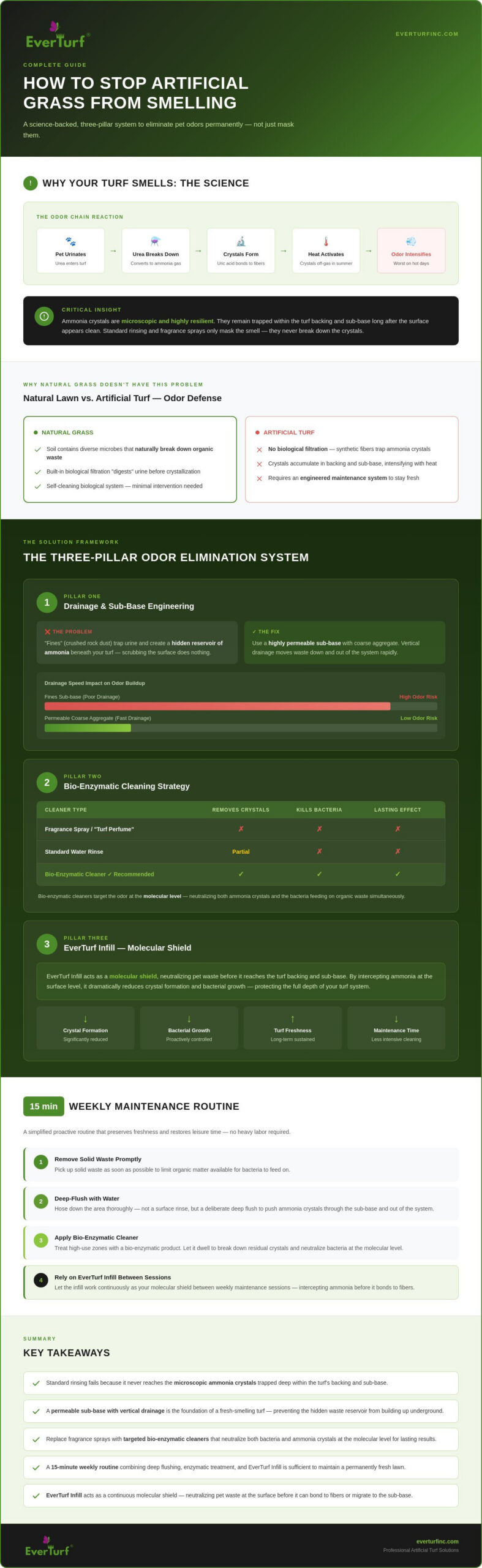
The frustration of a lingering scent often stems from a lack of understanding regarding the chemistry at play. When your pet uses the lawn, the urea in their urine begins a rapid transformation, breaking down into volatile ammonia gas. This is the sharp, stinging odor that greets you on a warm afternoon. While the liquid eventually drains or evaporates, it leaves behind a hidden enemy: ammonia crystals. Ammonia crystals are the dehydrated byproduct of uric acid that bonds to synthetic fibers and sub-base materials. Because these crystals are microscopic and highly resilient, they remain trapped within the turf backing long after the surface appears clean.
Heat and humidity act as catalysts for this process. On a sweltering day, the increase in temperature causes these trapped crystals to “off-gas” more aggressively, which explains why the scent intensifies during the summer months. If you’re researching how to stop artificial grass from smelling, you must look beyond the surface fibers. Most homeowners focus on the blades, but the true source of the problem is often embedded in the backing or the sub-base where drainage might be sluggish.
The Role of Bacteria in Odor Production
Odors aren’t just a chemical byproduct; they’re an ecological one. Naturally occurring bacteria in the environment find a rich food source in the organic components of pet waste. As these bacteria feed, they release foul-smelling gases that compound the ammonia issue. Many people reach for standard fragrance sprays or “turf perfumes” to solve the problem. These products only mask the scent temporarily, creating a cloying mix of floral notes and ammonia. To truly reclaim your space, you need to target the source at the molecular level, neutralizing the bacteria and the crystals simultaneously.
Why Traditional Grass Doesn’t Have This Issue
Natural lawns possess a built-in defense mechanism that synthetic surfaces lack. Soil is teeming with diverse microbes that naturally break down organic waste, effectively “digesting” the urine before it can crystallize. The science of artificial turf shows that while synthetic materials offer incredible durability and water savings, they don’t provide this biological filtration. This is why The Complete Guide to Artificial Grass for Dogs emphasizes the need for specialized drainage systems. Transitioning from natural sod to a synthetic solution requires a shift in mindset. You’re moving from a self-cleaning biological system to a high-performance engineered one that requires specific maintenance to stay fresh. Understanding how to stop artificial grass from smelling starts with acknowledging that your lawn now depends on you, and the right tools, to maintain its pristine state.
The Foundation of Freshness: How Drainage and Sub-Bases Impact Odor
While the surface of your lawn may look pristine, the true battle for a fresh-smelling backyard is fought several inches underground. A significant reason why homeowners struggle with how to stop artificial grass from smelling is the accumulation of waste in the sub-base. If your foundation was constructed using “fines,” which is crushed rock dust used to achieve a perfectly level look, you might’ve inadvertently created a sponge for pet waste. These tiny particles trap urine, preventing it from filtering into the soil and creating a hidden reservoir of ammonia that persists regardless of how much you scrub the fibers.
Effective management requires a highly permeable sub-base that facilitates rapid liquid movement. Scientific discussions on water quality impacts suggest that the way water interacts with synthetic systems dictates the accumulation of organic matter. By implementing a deep-flushing strategy, you can push those stubborn ammonia crystals out of the rock layers and into the ground below, effectively resetting your lawn’s scent profile. This isn’t just a surface rinse; it’s a deliberate effort to move water through the entire system to clear out the “scent reservoir” sitting beneath your feet.
Vertical vs. Lateral Drainage Systems
The speed at which liquid leaves the turf backing makes all the difference for pet owners. Many standard products use perforated backings that rely on lateral drainage. This means urine must travel across the backing to find a drainage hole, providing ample time for it to soak into the fibers or evaporate into crystals. In contrast, EverTurf Artificial grass is engineered for maximum vertical drainage. This allows liquid to pass through the entire surface area instantly, preventing the standing water that leads to mold, mildew, and stagnant odors.
Sub-Base Remediation for Existing Turf
If your current installation suffers from poor drainage, you can still achieve a beautiful, scent-free environment. Start by identifying low spots where liquid stagnates. You can use specialized base treatments designed to be watered into the ground, breaking down organic matter buried deep within the gravel. For those looking to avoid these frustrations from the start, investing in a professional artificial grass installation ensures your foundation is a high-performance system rather than a liability. Understanding how to stop artificial grass from smelling is much easier when the foundation is built to work with you, not against you.
Effective Cleaning Strategies: Bio-Enzymatic Cleaners vs. Household Remedies
Choosing the right cleaning agent is the difference between temporary relief and a permanent solution. Many homeowners initially turn to household staples like white vinegar or dish soap when researching how to stop artificial grass from smelling. While vinegar is an acetic acid that can briefly neutralize the alkaline nature of ammonia, it lacks the molecular strength to dismantle uric acid. Soap merely masks the scent with artificial fragrances, often leaving a sticky residue that attracts more dust and organic debris. To truly restore your lawn’s tranquility, you must move beyond surface-level fixes and embrace biological science.
Bio-enzymatic cleaners act as specialized biological tools that target the root of the problem. These solutions contain live bacteria cultures that produce enzymes specifically designed to “eat” the proteins and fats found in pet waste. Instead of just covering up the scent, these microbes effectively delete the odor source by breaking it down into basic, odorless components like water and carbon dioxide. This process offers the sophisticated, long-term satisfaction that traditional chemicals simply cannot provide. Because these formulas are non-toxic and biodegradable, you can feel confident that your backyard remains a sanitary sanctuary for your children and pets immediately after treatment. While focusing on hygiene, it is also wise to monitor for pests that might inhabit your lawn; accurately recognizing them through allpestandtermite.com ensures your outdoor space remains safe and comfortable for everyone.
The Proper Way to Apply Enzymatic Cleaners
Success with enzymatic solutions depends on a concept professionals call “dwell time.” Unlike traditional cleaners that you spray and immediately rinse, enzymes need time to work. Apply the solution during the cooler evening hours to prevent rapid evaporation, allowing the bacteria to remain active for as long as possible. Bio-enzymatic cleaners require a moist environment and time to biologically digest the ammonia crystals. If the turf dries too quickly, the biological process stops, leaving the odor-causing crystals intact deep within the backing.
Why You Should Avoid Bleach and Harsh Chemicals
The temptation to use bleach or industrial solvents for a “deep clean” can lead to expensive mistakes. Harsh chemicals can cause the synthetic fibers to become brittle or even melt, stripping away the multi-tonal beauty of your investment. These substances also pose a significant risk to the integrity of your EverTurf Infill and the turf’s porous backing. Beyond material damage, the health of your pets is a priority. Dogs frequently lick their paws after a romp in the yard, and any caustic residue left behind can cause chemical burns or internal distress. Sticking to pet-safe enzymatic strategies is the most reliable way to maintain a stress-free, beautiful property while learning how to stop artificial grass from smelling for good.
A Proactive Maintenance Routine for a Stench-Free Lawn
Maintaining a pristine outdoor space doesn’t require hours of labor; it simply requires a consistent, intelligent strategy. Many homeowners ask how to stop artificial grass from smelling after a long week of heavy pet use, and the answer lies in a structured maintenance calendar. A random spray with a garden hose often does more harm than good by spreading urine across the surface without actually flushing it into the sub-base. Instead, adopt a “Weekly Rinse” protocol. Focus your water pressure on the specific areas where your pets prefer to go, ensuring you use enough volume to push the liquid through the vertical drainage layers we discussed earlier. If you find it challenging to stay on top of these tasks, you can explore Recurring Residential Lawn Maintenance Fees to see how Blessed Hands Lawn Care can provide professional assistance in keeping your entire yard fresh and well-maintained.
Beyond the weekly rinse, a “Monthly Deep Clean” serves as your primary defense against long-term crystallization. This is when you apply professional-grade enzymes to the entire surface. To maximize the aesthetic appeal and hygiene of your lawn, incorporate a power brush into this routine. Matted fibers are a magnet for organic debris and trapped waste. By brushing the blades upright, you ensure that cleaning solutions can penetrate deep into the backing and that air can circulate, which naturally helps suppress anaerobic bacteria growth. If you’re ready to upgrade your backyard experience, you can explore high-performance EverTurf Artificial grass options designed for effortless maintenance.
Seasonal Adjustments for Odor Control
Your maintenance schedule should evolve with the local climate. During the peak of summer, you’ll need to increase your rinsing frequency. High temperatures cause urine to evaporate almost instantly, leaving behind concentrated ammonia crystals before they have a chance to drain. In contrast, winter presents the challenge of oversaturated ground. If the base is frozen or waterlogged, drainage slows down, requiring you to be more strategic with your enzyme applications. Be particularly mindful of the “first rain” after a dry spell. This moisture often reactivates dormant crystals, creating a sudden surge in odor that requires an immediate flush-and-neutralize treatment.
The “Flush and Neutralize” Technique
When a specific area becomes problematic, follow this three-step professional method to restore freshness and peace of mind:
- Step 1: Heavy Water Flush. Saturate the high-traffic area with plenty of water to dilute and mobilize the trapped ammonia crystals.
- Step 2: Enzyme Application. Apply your bio-enzymatic cleaner while the turf is still damp, allowing the microbes to latch onto the organic matter.
- Step 3: Infill Agitation. Use a stiff broom or brush to work the solution into the infill. This ensures the enzymes reach the very bottom of the fibers where odors hide.
Long-Term Prevention: Selecting Odor-Resistant Turf and EverTurf Infill
The most effective strategy for managing backyard hygiene is to prevent problems before they begin. While maintenance routines are essential, the ultimate answer to how to stop artificial grass from smelling lies in the materials you choose during installation. Standard residential turf often prioritizes a soft feel over drainage capacity, which can lead to trouble in pet-heavy households. In contrast, EverTurf’s artificial grass for pets is engineered with a high-performance backing that facilitates rapid vertical drainage. This ensures that liquid waste moves into the sub-base instantly rather than lingering in the thatch. For a comprehensive look at how these systems transform your property, explore The Ultimate Guide to Artificial Grass.
Beyond the turf fibers, your choice of infill acts as a critical molecular barrier. EverTurf Infill is designed to function as a sieve, trapping ammonia molecules and neutralizing them on contact. This prevents the gases from escaping into the air where you can smell them. Additionally, many high-end pet systems feature antimicrobial coatings directly on the grass blades. These coatings inhibit the growth of bacterial colonies, ensuring your lawn stays sanitary and fresh year-round. By selecting a system designed for your lifestyle, you move away from the frustration of constant cleaning and toward the tranquility of a perfect outdoor space.
The Magic of Antimicrobial Infill
Many homeowners regret using standard silica sand, which is porous and tends to trap urine like a sponge. This trapped waste eventually creates the very odors you’re trying to avoid. EverTurf Infill solves this by providing a non-porous, antimicrobial surface that doesn’t absorb liquids. It’s the most vital component of a sophisticated backyard turf pet system. It doesn’t just manage the smell; it actively works to prevent the biological breakdown that causes the stench in the first place.
Investing in the Right System from Day One
Choosing a pet-specific system offers a significant return on investment by reducing the need for expensive remediation and constant chemical treatments. You’ll spend less on enzymatic cleaners and more time enjoying your yard with your family. EverTurf Inc provides national homeowners with the expert guidance and specialized products needed to create a permanent, odor-neutralizing solution. If you want to know how to stop artificial grass from smelling for good, start with a foundation built for performance. Contact EverTurf Inc today to upgrade your lawn with odor-neutralizing technology and reclaim your peace of mind.
Reclaiming Your Outdoor Sanctuary
Your backyard should be a place of tranquility and connection, not a source of lingering frustration. By moving beyond temporary surface fixes and addressing the molecular science of ammonia crystals, you’ve discovered the path toward a permanently fresh environment. You now understand that the definitive secret of how to stop artificial grass from smelling lies in the synergy between high-performance vertical drainage and targeted bio-enzymatic breakdown. This proactive strategy ensures your lawn remains a beautiful, sanitary extension of your home for years to come.
EverTurf Inc is here to transform these maintenance challenges into long-term satisfaction. Our proprietary EverTurf Infill technology acts as a sophisticated barrier against odors, while our nationwide distribution of high-drainage turf provides the engineered foundation every pet owner deserves. With our expert support for pet-owner landscapes, you can stop worrying about the next heatwave and start enjoying the restoration of your personal time. It’s time to embrace the relief of a truly worry-free landscape.
Banish Pet Odors Forever: Explore EverTurf Pet-Friendly Systems
Frequently Asked Questions
Why does my artificial grass smell even though I rinse it daily?
Daily rinsing often fails because it doesn’t use enough water volume to push waste through the backing and into the sub-base. Instead, light moisture can reactivate dormant ammonia crystals, making the scent more noticeable. To see a real change, you need to combine deep flushing with biological cleaners that dismantle the urea at a molecular level.
Is it safe to use vinegar and baking soda on artificial turf?
You can use these household items safely, but they typically provide only a temporary mask for the problem. Vinegar is an acid that reacts with alkaline ammonia, yet it lacks the enzymes needed to digest resilient uric acid. For a permanent, stress-free solution, professional-grade enzymatic treatments are far more effective and reliable.
What is the best infill for artificial grass with dogs?
EverTurf Infill is the most effective option because it is specifically engineered to neutralize odors before they reach the base. Standard silica sand acts like a sponge for pet waste, while this specialized infill remains non-porous and antimicrobial. It is a critical component for homeowners figuring out how to stop artificial grass from smelling.
Can I use a pressure washer to clean dog urine off fake grass?
A pressure washer is effective if you use it on a wide-fan, low-pressure setting to avoid damaging the synthetic fibers. Excessive force can strip away your infill or even tear the porous backing of the turf. It is best to use the washer to aid in a deep flush rather than relying on it as your only cleaning tool.
How often should I apply enzymatic cleaners to my pet turf?
A monthly application is generally sufficient for most residential yards to maintain a fresh environment. However, if you have multiple large dogs or live in a particularly hot climate, you might prefer a bi-weekly schedule. Consistent application prevents the buildup of resilient crystals, keeping your backyard sanctuary sanitary for the whole family.
Does the sun make artificial grass smell worse?
High temperatures definitely intensify odors by accelerating the release of ammonia gas from trapped crystals. This “off-gassing” is most noticeable during the afternoon when the turf surface is at its hottest. Increasing your rinse frequency during summer months helps cool the lawn and move waste through the vertical drainage system more efficiently.
Will a power brush help with turf odors?
Power brushing is an excellent preventative tool because it prevents the fibers from matting down over trapped waste. When grass blades are upright, air can circulate more freely, which discourages the growth of anaerobic bacteria. It also ensures that your monthly enzyme treatments can penetrate all the way to the turf’s foundation.
Are there specific types of artificial grass that are naturally odor-resistant?
Selecting a product like EverTurf Artificial grass pets is the best way to ensure long-term freshness and hygiene. This specific turf type features a high-performance backing designed specifically for maximum vertical drainage. Investing in the right materials from day one is the most sophisticated strategy for how to stop artificial grass from smelling.