


How to Maintain an Artificial Putting Green: The 2026 Performance Guide
A professional-grade putting green isn’t just a landscape feature; it’s a precision instrument that requires calibration, not just cleaning. You’ve invested in a backyard oasis to shave strokes off your game, yet you’ve likely noticed how quickly debris or flattened fibers can turn a true roll into a frustrating wobble. Learning how to maintain artificial putting green surfaces is the difference between a surface that mimics a championship course and one that merely looks like one. You want effortless, high-speed performance, but wind, pets, and foot traffic often disrupt your perfect practice session.
This guide reveals professional secrets to keeping your EverTurf Putting Green Pro rolling true and pristine for years. We’ll move past basic sweeping to explore how specialized EverTurf Infill and strategic brushing restore turf integrity. You’ll discover how to eliminate pet odors and manage buildup in the fringe without damaging UV-stabilized fibers. From seasonal deep cleans to weekly checks, we’re providing a roadmap to protect your investment and restore your personal time. Prepare to transform your maintenance into a rewarding ritual that ensures your green remains the envy of the neighborhood.
Key Takeaways
- Learn why a “light touch” with leaf blowers is superior to aggressive raking for preserving high-density fibers and preventing organic buildup.
- Master how to maintain artificial putting green stimp speeds by managing EverTurf Infill depth for a consistent, professional-grade ball roll.
- Discover seasonal strategies to protect your green from summer heat and unsightly tannin stains caused by fallen autumn debris.
- Identify the specific safe cleaning agents required to treat organic or oil-based stains without compromising the integrity of UV-stabilized turf.
- Recognize the signs that your EverTurf Putting Green Pro requires a professional power-brush reset to ensure a lifetime of performance.
Mastering the Routine: Daily and Weekly Cleaning for a True Roll
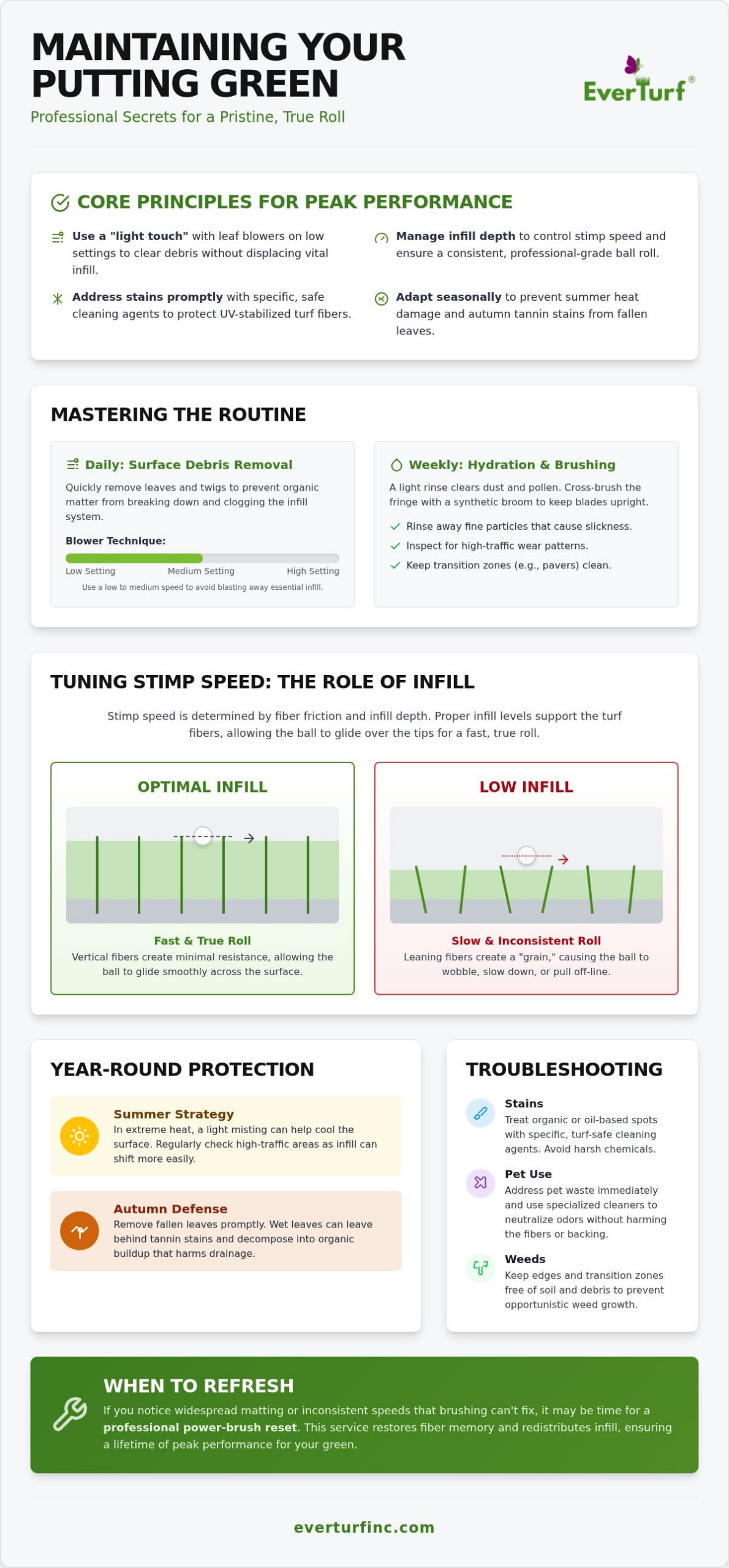
Maintaining a professional-grade green is less about labor and more about precision. When you understand how to maintain artificial putting green surfaces, you protect the integrity of your practice space and ensure every putt feels earned. Immediate debris removal is your first line of defense. Organic matter like leaves, twigs, or grass clippings might seem harmless, but they quickly break down into a fine mulch. This organic silt filters deep into your EverTurf Infill, potentially clogging the drainage system and creating a “dead” feel underfoot. A quick daily sweep prevents this buildup from compromising the ball’s trajectory and speed.
Adopt a “light touch” philosophy for your regular maintenance. While natural grass requires aggressive raking, high-density synthetic fibers respond best to gentle intervention. Use a leaf blower on a low setting to glide debris off the surface. This method clears the area without displacing the specialized infill that keeps your green rolling at peak speed. A weekly hydration session is equally vital. A light rinse with a garden hose clears away dust and pollen that can make the surface slick or abrasive. While you rinse, perform a visual inspection. Look for areas where the fibers might be leaning more than usual; these high-traffic patterns are easier to correct when caught early.
Surface Debris and the ‘Blower’ Technique
Control is everything when using power tools on your EverTurf Putting Green Pro. Set your blower to a medium or low speed to ensure you aren’t blasting the vital infill out of the turf base. Always move in a consistent direction, pushing debris toward the taller fringe or designated collection points. If you face a damp morning, wait for the sun to dry the leaves. Wet organic matter clings to the fibers and makes directional blowing far less effective, often requiring unnecessary physical force that can stress the turf structure.
Maintaining the Fringe and Surrounding Turf
The taller fibers of your fringe require a different approach than the putting surface itself. While the green needs a smooth, flat finish, the fringe benefits from periodic cross-brushing with a synthetic-bristle broom to keep the blades upright and lush. Be careful to avoid cross-contamination. You don’t want the heavier infill from your putting area migrating into the surrounding landscape turf. Pay special attention to transition zones where EverTurf Pavers meet the grass. These edges often collect grit and soil from foot traffic; keeping these borders clean ensures your EverTurf Putting Green remains a pristine, professional sanctuary for years to come.
Fiber and Infill Management: Tuning Your Green’s Stimp Speed
Tuning your green is a process of calibration that transforms a simple backyard feature into a professional practice facility. Stimp speed on artificial greens is a direct result of two primary factors: fiber friction and infill depth. When these elements are in perfect balance, the ball rolls with championship-level speed and accuracy. High-density fibers in EverTurf Putting Green Pro are engineered to stand vertical; when they do, the ball glides over the tips with minimal resistance. This is why mastering how to maintain artificial putting green systems is more about physics than aesthetics. If infill levels drop, the fibers lose their structural support and begin to lean. This creates a “grain” that pulls your ball off-line or slows its momentum, turning a birdie opportunity into a frustrating three-putt.
Identifying “low spots” is a critical skill for any dedicated golfer. These subtle depressions often occur in high-traffic areas where the infill has settled or migrated over time. You’ll notice them when the ball begins to wobble or change speed mid-roll. Addressing these areas immediately prevents the underlying fibers from matting permanently, which is essential for protecting your pro-level investment. Regular calibration ensures your practice sessions translate directly to the course, providing the long-term satisfaction of a surface that never loses its edge.
Brushing for Performance and Aesthetics
Brushing isn’t just about keeping the green looking lush; it’s about resetting the “nap” of the turf to ensure a true roll. For most weekly maintenance, a synthetic turf brush with medium-stiff bristles is your most effective tool. If you’re hosting a weekend tournament and notice significant matting from heavy foot traffic, a professional power broom can lift the fibers more deeply. Always follow a “cross-grain” brushing pattern. By brushing against the natural lean of the fibers, you stand them back up and redistribute the infill evenly. If you’re practicing intensely and averaging over 200 putts per week, a quick five-minute brush every Saturday keeps the speed consistent and prevents the fibers from “taking a set” in one direction.
Managing and Replenishing EverTurf Infill
High-quality EverTurf Infill acts as the “soil” that keeps your putting surface stable and fast. Check your infill levels monthly using a simple finger-test; you should only feel the top quarter-inch of the turf fibers. If more of the fiber is exposed, it’s time for a light top-dressing. Adding a fresh layer of infill restores the original stimp speed and protects the turf backing from UV exposure. This specialized material is superior to standard sand because it’s engineered for maximum drainage and won’t clump when it gets wet. If you notice persistent low spots that affect your roll, you can always reach out to the experts at EverTurf Inc for a professional recalibration to ensure your green remains in peak condition.
Seasonal Adaptation: Protecting Your Investment Year-Round
Your backyard practice facility is a year-round asset, but the shift in seasons demands a specialized approach to calibration. Maintaining the professional response of your EverTurf Putting Green Pro requires more than just clearing debris; it involves understanding how environmental variables impact the synthetic system. Whether you are facing the intense radiation of a mid-summer afternoon or the heavy snows of mid-winter, the goal remains the same: preserving the tranquility and performance of your outdoor space. Mastery of how to maintain artificial putting green surfaces through these transitions ensures that your investment remains a source of pride rather than a source of stress.
Autumn brings its own set of aesthetic and functional challenges. As leaves and acorns fall, they don’t just clutter the surface; they carry organic tannins that can leach out when wet, potentially staining the fibers. Promptly removing these materials prevents the buildup of organic silt that we discussed in previous sections. By adapting your routine to the local climate, you ensure a consistent roll that mirrors the finest championship courses, regardless of what the weather report says. This proactive care restores your personal time by preventing the need for intensive restorative work later in the year.
Heat Management and UV Protection
During peak summer months, synthetic surfaces can absorb significant thermal energy. Utilize the “Cooling Rinse” technique by lightly misting the turf with a garden hose for 60 seconds before your practice session. This simple action rapidly lowers the surface temperature without over-saturating the base or affecting the EverTurf Infill. While our fibers are UV-stabilized to prevent fading, keeping them free of dust and pollutants helps maintain their original luster. Be mindful of the “magnifying glass” effect; high-efficiency Low-E windows on your home can reflect concentrated sunlight onto the green, potentially creating heat spots that exceed the turf’s design limits. Adjusting your landscape or using a simple shade structure can mitigate this risk and keep your green pristine.
Winterizing Your Putting Green
When the snow begins to fall, your primary objective is to protect the delicate putting surface from mechanical damage. If you must clear the green for a winter practice session, the plastic-only rule is absolute. Metal shovels can snag and tear the high-density fibers or damage the backing. For light dustings, a leaf blower is often sufficient. Chemical de-icers and salts are strictly prohibited on synthetic turf as they can leave a residue that interferes with drainage and may degrade the infill over time. As the spring thaw approaches, ensure your surrounding landscape is clear of debris to allow the drainage system to handle the melt-off efficiently. This preparation sets the stage for a deep spring cleaning that restores your green to its peak performance speed.
Troubleshooting Common Issues: Weeds, Stains, and Pet Waste
Even the most meticulously calibrated EverTurf Putting Green Pro faces the occasional mishap. Understanding how to maintain artificial putting green fibers during a crisis prevents a minor accident from becoming a permanent blemish on your practice facility. Your “Safety First” guide begins with a strict prohibition: never use harsh oxidizing agents like bleach or high-acidity vinegar. While these are often suggested in amateur forums, they can brittle the UV-stabilized fibers and degrade the structural integrity of the turf backing. Instead, focus on identifying the specific source of the problem. Organic stains like spilled drinks require a different approach than oil-based contaminants like sunscreen or mechanical lubricants.
Edge control is another vital aspect of long-term performance. While weeds rarely penetrate the high-density backing of our professional systems, they can encroach from the surrounding landscaping at the perimeter. Regularly inspect the transition zones where your green meets the garden. Keeping these borders clear prevents root systems from finding a foothold in the fringe turf or compromising the drainage base. If you encounter a persistent issue that defies standard cleaning, contact our professional support team for a specialized restoration plan.
Removing Stains and Spills Safely
Speed is the most effective tool in your cleaning arsenal. If a spill occurs, follow this three-step protocol to protect the ball’s roll. First, blot the area immediately with a clean, white cloth; never rub, as this can smear the substance deeper into the pile. Second, apply a mild, pH-neutral soap solution to break down the residue. Finally, rinse the area thoroughly with cool water. This final step is critical because any leftover soap film can create a slick spot that alters ball speed and trajectory during your next practice session.
Pet Waste and Odor Neutralization
Many homeowners utilize their outdoor space as a shared sanctuary, but the short, dense pile of a putting green requires specific care compared to standard artificial grass for dogs. Remove solid waste immediately to prevent it from being stepped into the fibers. For liquid waste, use an enzymatic cleaner specifically designed for synthetic turf. These cleaners break down uric acid at the molecular level within the EverTurf Infill, eliminating odors at the source rather than just masking them. Follow up with a deep-rinse protocol in high-use areas to ensure the drainage system remains clear and the environment stays fresh for your morning putts.
When to Refresh Your EverTurf Putting Green Pro
Even with a dedicated routine, every professional-grade surface eventually requires a deep recalibration to maintain its elite status. While daily care protects the aesthetics, a 5-year checkup is the industry standard for ensuring championship performance. Over half a decade, even the best systems experience subtle changes. You might notice that the ball roll feels slightly less crisp or that the drainage isn’t as rapid as it was during the first season. This is often the result of compaction rather than actual fiber wear. Understanding how to maintain artificial putting green systems means recognizing that the infill deep within the pile can eventually settle or trap micro-dust that a standard leaf blower cannot reach.
EverTurf systems are engineered for the long haul, utilizing high-performance materials that resist the typical degradation seen in inferior products. However, recognizing the difference between surface compaction and fiber wear is vital. Compaction happens when the infill becomes too dense, making the green feel hard and unnaturally fast. Wear, which is rare in our UV-stabilized fibers, involves the actual thinning of the turf. Proper maintenance extends the lifespan of your EverTurf Putting Green significantly, ensuring that your investment remains a source of tranquility and pride for decades.
The Professional ‘Deep Clean’ Process
A professional refresh involves a high-powered extraction process that removes aged infill and accumulated organic silt from the base of the fibers. Once the turf is cleared and opened up with a specialized power brush, we introduce fresh EverTurf Infill. This process doesn’t just clean; it restores the original stimp speed you fell in love with on day one. It’s an opportunity to upgrade your system to the latest standards, ensuring your practice facility continues to feel like a premium lifestyle asset. This deep restoration brings the fibers back to their vertical, high-performance state, providing the logical evidence of quality you expect from a leader in synthetic solutions.
Ensuring Year-Round Perfection
Year-round perfection is achieved through a personalized maintenance calendar that accounts for your specific local climate. The “little and often” approach is your greatest financial ally; five minutes of weekly attention prevents the need for intensive restorative work later. Your final checklist for a world-class green includes a weekly rinse to manage dust, monthly infill depth checks, and immediate debris removal. By staying ahead of environmental factors, you restore your personal time and enjoy the peace of mind that comes with a perfect outdoor space. You’ve chosen a system designed for longevity, and with these professional secrets, your backyard green will remain a pristine sanctuary for years to come.
Elevate Your Game with a Pristine Practice Space
Your backyard green is more than just turf; it’s a dedicated facility where championships are won in the quiet hours of practice. Mastering how to maintain artificial putting green surfaces ensures that your stimp speed remains consistent and your ball roll stays true. By adopting a “little and often” approach to debris removal and infill calibration, you protect your investment from the elements and the rigors of daily use. You’ve moved beyond the frustrations of traditional lawn care into a world of year-round perfection and restored personal time.
When you’re ready to take your property to the next level, trust a system built for longevity. Our EverTurf Putting Green Pro is engineered for professional stimp speeds and features advanced drainage for year-round playability. These UV-protected high-density fibers provide the logical evidence of quality that discerning homeowners demand. Explore EverTurf Putting Green Pro for your backyard and experience the tranquility of a perfect roll every single morning. Your journey toward a lower handicap starts with a surface that never compromises on performance.
Frequently Asked Questions
How often should I brush my artificial putting green?
Weekly brushing is the gold standard for maintaining the vertical alignment of high-density fibers. If you practice daily or host frequent gatherings, a quick five-minute cross-brush every Saturday prevents matting and ensures a true roll. This simple ritual keeps the surface rolling at peak speed and ensures your specialized infill remains evenly distributed across the entire practice area.
Can I use a vacuum cleaner on my synthetic turf?
Avoid using household or industrial vacuums on your putting surface. The powerful suction will extract the vital EverTurf Infill along with the debris, leaving the fibers unsupported and prone to flattening. Stick to a leaf blower on a low setting to clear surface matter without compromising the system’s structural integrity or the precision of your ball roll.
Will pet urine ruin the putting surface?
Pet urine will not ruin the UV-stabilized fibers, but it can lead to odor buildup if left untreated. Use an enzymatic cleaner to break down uric acid at the molecular level and follow with a thorough water rinse. Our advanced drainage system handles the liquid efficiently, protecting the backing and ensuring your sanctuary remains a fresh environment for your morning practice.
How do I increase the stimp speed of my backyard green?
Increasing stimp speed involves precisely calibrating the relationship between fiber height and infill depth. Adding a thin, even layer of specialized infill or using a professional power broom to lift the fibers reduces friction. Learning how to maintain artificial putting green speed is about this technical “tuning” rather than just cleaning, allowing you to mimic the fast conditions of a championship course.
What is the best way to remove weeds from the edges of my turf?
Hand-pulling is the safest and most effective method for removing occasional weeds that appear at the transition zones. If encroachment persists from surrounding landscaping, apply a water-based, non-selective herbicide specifically to the perimeter. Always ensure the product is safe for synthetic materials to avoid damaging the backing or the vibrant, lush color of your fringe turf.
Does the infill need to be replaced periodically?
Infill typically requires periodic top-dressing rather than a full replacement. Heavy rain or intense foot traffic can cause minor migration or settling over several seasons. Checking levels monthly with a simple finger-test ensures you catch low spots early. A professional refresh every five years can extract old silt and fully restore the system to its original, high-performance specifications.
Can I use a pressure washer to clean my putting green?
Pressure washers are generally too aggressive for the delicate calibration of a professional green. The high-pressure stream can easily displace the infill and potentially damage the turf backing if used incorrectly. A standard garden hose with a spray nozzle provides more than enough pressure to clear dust and pollen without risking the integrity of your professional-grade practice facility.
How do I remove bird droppings without damaging the fibers?
Allow bird droppings to dry completely before attempting removal to prevent smearing. Once dry, use a stiff synthetic-bristle brush to break up the matter and a leaf blower to clear the fragments. Finish with a light rinse using a pH-neutral soap solution and water. This gentle approach protects the high-density fibers from abrasive damage while restoring the pristine beauty of your green.