
Choosing the Right Infill for Artificial Grass: The 2026 Definitive Guide
What if the secret to a flawless, year-round lawn isn’t the grass itself, but the invisible engine hidden beneath the blades? You’ve likely experienced that moment of hesitation before letting the kids play on a scorching afternoon, or the frustration of noticing your turf lose its resilient, upright posture. Choosing the right infill for artificial grass is the most critical decision you’ll make to protect your investment and your peace of mind. It’s the difference between a surface that traps heat and one that offers the cool, tranquil sanctuary your family deserves.
We understand you want more than just a green view; you want a stress-free lifestyle where maintenance is a memory and quality is a constant. This 2026 definitive guide masters the science of synthetic landscapes, showing you how to eliminate pet odors and ensure your lawn remains soft even in direct sunlight. We’ll explore the latest advancements in drainage technology and heat-reducing materials, providing a clear roadmap to a sophisticated outdoor space that finally restores your personal time.
Key Takeaways
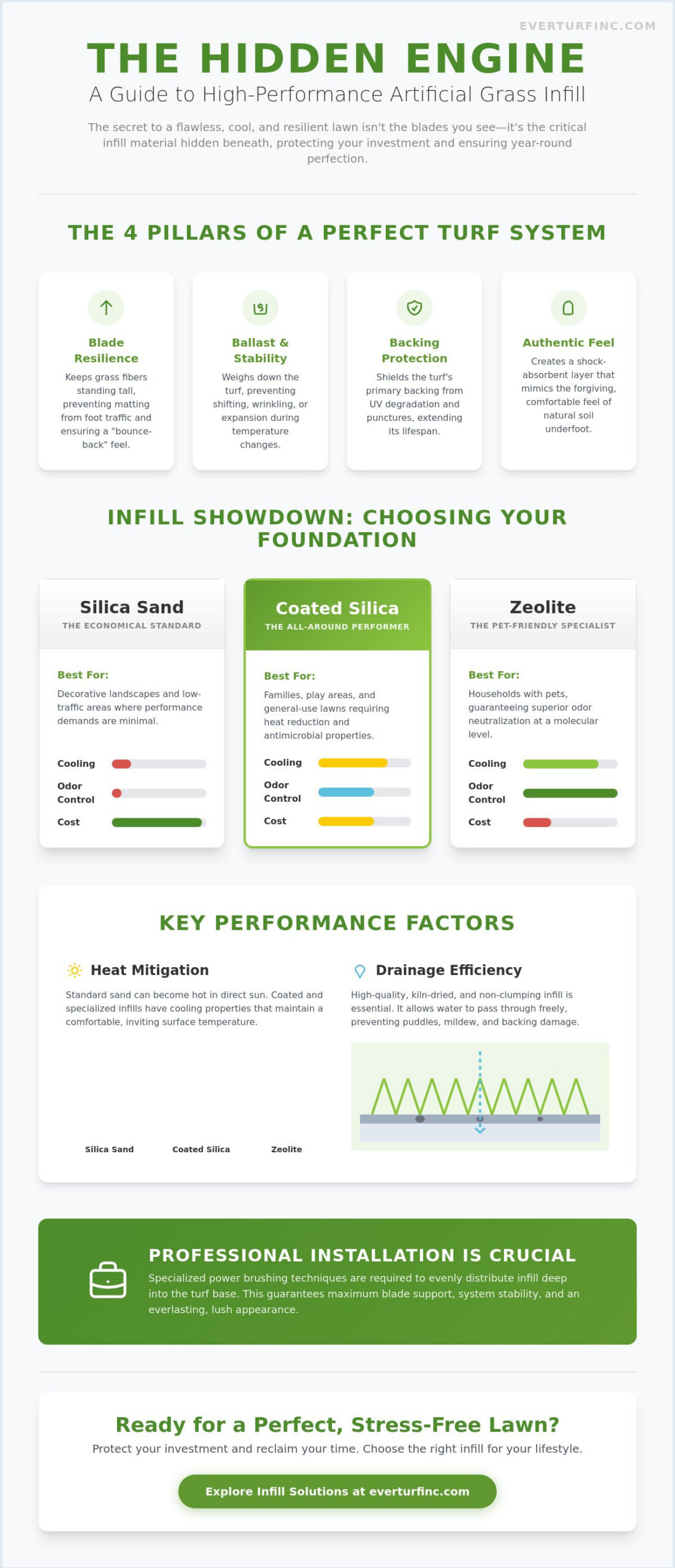
- Understand how infill serves as the essential performance engine that keeps your synthetic lawn resilient, upright, and perfectly aligned against the elements.
- Master the art of choosing the right infill for artificial grass by comparing the cooling properties of coated silica with the specialized odor-trapping structures of zeolite.
- Discover how to create a fresh, pet-friendly sanctuary by selecting materials designed to neutralize odors at a molecular level for long-term satisfaction.
- Learn the technical secrets to heat mitigation that ensure your outdoor space remains a comfortable and inviting retreat even during the height of summer.
- Gain professional insights into the installation of EverTurf Infill, including the specialized power brushing techniques required to maintain an everlasting, lush appearance.
Understanding the Role of Infill in Artificial Grass Performance
Choosing the right infill for artificial grass is the foundational step toward achieving a lawn that feels as premium as it looks. While the vibrant green blades capture your attention, it’s the granular material dispersed between those fibers that performs the heavy lifting. Think of infill as the soul of your synthetic system; it provides the weight, structure, and protection necessary to transform a simple carpet into a resilient, high-performance landscape.
The evolution of these materials is fascinating, and exploring the history of artificial turf infill reveals how modern systems have moved far beyond the basic sand layers of the past. Today, infill acts as a critical ballast. It weighs down the turf to ensure it stays exactly where it was installed, preventing the unsightly shifting or expansion that can occur during seasonal temperature swings. This weight is what gives your lawn its permanence, allowing you to enjoy a flawless surface without the worry of the turf “creeping” or lifting at the edges.
The Physics of Blade Resilience
Fiber resilience is the hallmark of a sophisticated lawn. Without proper support, even the highest quality synthetic fibers would eventually succumb to the weight of constant foot traffic, leading to a flat, matted appearance. Infill prevents this by surrounding the base of each fiber, propping them up so they remain vertical. This support is the secret to a lawn that “bounces back” after you walk across it or after the kids have spent an afternoon playing. The depth of your infill directly correlates to the longevity of this effect; a well-calibrated layer ensures the blades don’t bend at the root, which preserves the turf’s lush texture for years to come.
Protecting Your Turf Investment
Protecting the integrity of your synthetic grass means looking beneath the surface. Infill serves as a vital shield for the primary backing, the foundation of your entire installation. By filling the space between blades, it blocks harmful UV rays that can cause the backing to become brittle and degrade over time. It also acts as a durable barrier against the environment, absorbing the impact of high-heel punctures or sharp objects that might otherwise tear the turf. By choosing the right infill for artificial grass, you’re effectively installing a shock-absorbent layer that mimics the forgiving feel of natural soil. The substantial weight of a correctly applied infill layer creates the necessary tension to keep large installations perfectly flat, eliminating the risk of unsightly wrinkles and ripples that can ruin a professional finish.
Comparing Popular Infill Materials: From Silica Sand to Zeolite
Selecting the perfect foundation for your lawn requires an understanding of how different textures and chemical compositions interact with your environment. When choosing the right infill for artificial grass, you’ll find that materials range from basic mineral sands to highly engineered antimicrobial granules. Each material serves a specific purpose, whether you’re prioritizing a budget-friendly aesthetic or a high-performance surface for active pets and children.
The industry has seen a shift toward specialized materials that address specific environmental challenges. While traditional silica sand is a reliable baseline, modern options like zeolite and coated sands offer lifestyle-specific benefits that raw minerals simply cannot match. Understanding these differences is the first step in moving away from the frustrations of high-maintenance landscaping toward the tranquility of a perfect, year-round outdoor space.
The Pros and Cons of Traditional Silica
Silica sand remains the traditional standard for low-traffic areas due to its cost-effectiveness and weight. However, the shape of the grain is paramount. Professional installers prioritize rounded silica over angular sand because rounded grains lack the sharp edges that can prematurely wear down synthetic fibers. This protection ensures your turf remains lush and vibrant for its full expected lifespan. While a common myth suggests sand leads to clumping, high-quality, kiln-dried silica maintains excellent drainage by allowing water to flow freely through the granular gaps. It is the ideal choice for decorative borders or front yards where visual appeal is the primary goal.
Advanced Antimicrobial and Coated Options
For families seeking a more sophisticated solution, coated silica sand offers a significant performance upgrade. These granules are encased in a durable acrylic polymer that often includes antimicrobial agents. This coating prevents the growth of bacteria, mold, and mildew, which is essential for maintaining a hygienic environment. These high-performance materials are also “dust-free,” making them a preferred choice for homeowners with respiratory sensitivities or allergies. When compared to raw sand, coated infills offer a much longer service life because the protective layer prevents the grain from breaking down into fine particles over time. This durability ensures your investment remains resilient and beautiful for years to come.
Zeolite has become the premier choice for pet owners, utilizing a unique molecular structure to neutralize ammonia odors on contact. For high-impact areas like playgrounds or community sports fields, crumb rubber provides the necessary shock absorption to meet industry standards for turf infill. Finding the right balance between these materials is easier when you consult with an expert. If you are ready to elevate your property, exploring the possibilities of professional artificial grass installation can help you tailor these choices to your specific lifestyle needs.
Matching Infill to Your Lifestyle: Pets, Play, and Putting Greens
Your outdoor space serves as a multi-functional sanctuary. It transitions from a morning yoga retreat to an afternoon playground or a weekend social hub. Because of this versatility, choosing the right infill for artificial grass requires a lifestyle-first approach. Instead of a one-size-fits-all solution, we recommend a framework that aligns technical specifications with your primary activities. This ensures your lawn doesn’t just look spectacular but also performs exactly as you need it to for years to come.
Designing your landscape with a specific purpose in mind allows you to move away from the frustrations of generic products. Whether you’re prioritizing the hygiene of a pet-friendly area or the precision of a home practice green, the infill you select is the engine that drives that performance. It’s about more than just filling gaps; it’s about engineering an environment that enhances your daily life.
The Pet Owner’s Priority: Odor Control
For households with furry companions, the primary concern is often the persistent scent of pet urine. Traditional sands can sometimes trap moisture, but Zeolite offers a sophisticated alternative. This organic, volcanic mineral features a porous molecular structure that captures ammonia on contact. By trapping the nitrogen ions before they can turn into gas, Zeolite effectively neutralizes odors rather than simply masking them. For a deeper dive into creating a pet-friendly paradise, consult our Complete Guide to Artificial Grass for Dogs. Maintenance in these high-use zones is simple. A periodic rinse with water reactivates the mineral’s ability to absorb, keeping your sanctuary fresh and inviting.
Leisure and Aesthetics: Putting Greens and Lawns
Golf enthusiasts require a level of precision that standard infills can’t provide. When installing an EverTurf Putting Green, we utilize sub-angular sand to control the “stimpmeter” speed of the surface. This specific grain shape allows for a consistent ball roll that mimics the conditions of a professional course. By adjusting the volume of the sand, you can fine-tune the green to your preferred pace, ensuring your short game remains sharp from the comfort of home.
If your goal is a lush, maintenance-free backyard turf oasis, the focus shifts to aesthetics and comfort. Achieving that dense, vibrant look requires a precise infill volume that supports the blades without burying them. This balance creates a soft, cushioned feel underfoot, perfect for barefoot summer evenings. For playgrounds, safety is the non-negotiable standard. We prioritize non-toxic, high-impact materials that meet specific fall-height requirements, giving you the peace of mind to let the kids play freely in a secure, beautiful environment.
Critical Selection Factors: Drainage and Heat Mitigation
Beyond lifestyle preferences, your local climate dictates the technical requirements of your lawn. Choosing the right infill for artificial grass involves balancing the need for rapid drainage with the desire for a surface that stays comfortable under the summer sun. These two factors often determine the long-term satisfaction you’ll feel when stepping onto your turf. By prioritizing permeability and thermal regulation, you transform a beautiful visual into a high-performance environment that withstands the elements with ease.
While the synthetic fibers provide the aesthetic, the infill manages the environment. It acts as the primary filter for every drop of rain and the first line of defense against solar heat gain. Understanding the mechanics of these processes allows you to move away from the worry of a “hot” or “soggy” lawn toward the tranquility of a perfectly regulated outdoor space.
Engineering for Rapid Drainage
Effective drainage is non-negotiable for maintaining a hygienic and resilient landscape. The relationship between grain size and permeability is direct; larger, more uniform granules create larger “void spaces” that allow water to pass through quickly. We recommend choosing an infill that supports a vertical drainage rate of at least 30 inches of rain per hour. This high capacity ensures that even during intense seasonal downpours, your lawn remains puddle-free and ready for use. It’s vital to avoid fine, “dusty” sands that can migrate over time and clog the drainage perforations in the turf’s backing. When your infill matches the drainage efficiency of your base layer, you eliminate the risk of standing water and the biological issues that follow.
The Science of Turf Cooling
Addressing the common concern about surface temperature requires a look at thermal retention. Traditional crumb rubber can absorb significant heat, often reaching temperatures higher than the surrounding air. In contrast, rounded silica sand and organic zeolite offer much lower thermal mass. The most sophisticated solutions utilize evaporative cooling technology. These specialized infills are designed to capture microscopic amounts of moisture from the air or morning dew. As the sun hits the turf, this moisture slowly evaporates, pulling heat away from the surface in the same way natural grass stays cool. This process can significantly reduce surface temperatures, ensuring your lawn remains a comfortable retreat even during peak July afternoons. For those ready to secure a cooler, high-performance landscape, choosing a professional artificial turf installation ensures these technical factors are perfectly calibrated for your specific microclimate.
Practical steps like occasional light misting can also enhance this evaporative effect. By selecting an infill with high thermal stability, you’re not just buying a product; you’re investing in a permanent solution that prioritizes the comfort of your family and pets. This logical approach to heat mitigation is what sets a premium installation apart from a standard one.
Professional Installation and Maintenance of EverTurf Infill
Securing a world-class landscape doesn’t end with selecting your materials; it’s the precision of the installation that ensures your lawn remains a tranquil, maintenance-free retreat for the long haul. Even when you’ve mastered the science of choosing the right infill for artificial grass, the application process determines whether those materials perform to their full potential. Professional installation isn’t just about aesthetics. It’s about engineering a foundation that supports your lifestyle without the frustrations of shifting surfaces or uneven drainage.
The hallmark of a sophisticated installation is even distribution. We utilize a calibrated drop spreader to apply EverTurf Infill, ensuring a consistent depth across every square inch of your property. This meticulous approach prevents the “patchy” feel often found in DIY projects and guarantees that the weight is perfectly balanced to keep your turf secure. Following the spread, “power brushing” is an essential step. This mechanical process uses high-torque brushes to lift the synthetic fibers while vibrating the infill deep into the turf base. It’s this specific technique that locks the blades in an upright position, creating that lush, resilient look that defines a premium outdoor space.
The EverTurf Advantage
EverTurf Infill stands as the premium choice for homeowners who value quality and time above all else. Our products undergo rigorous quality control to ensure maximum purity, which translates to a more sophisticated, “everlasting” aesthetic that won’t degrade or create dust over time. This logical investment in higher-grade materials means your property maintains its value and beauty with minimal effort. We invite you to consult with a Reliable Visionary on our team to design a custom solution that perfectly matches your home’s unique environment and usage patterns.
Long-Term Care and Grooming
Maintaining the integrity of your synthetic sanctuary is remarkably simple, yet consistency is key. Periodic “cross-brushing” against the grain of the fibers helps redistribute the infill and prevents the blades from flattening in high-traffic zones. This simple act of grooming restores the lawn’s natural bounce and keeps the surface looking vibrant. When cleaning your lawn, a gentle rinse is all that’s required to remove dust or debris. It’s important to avoid high-pressure streams that could displace the material from the turf backing, as keeping the infill level consistent is vital for drainage and fiber support.
- Monitor Levels: Check high-traffic areas annually to ensure the infill hasn’t migrated or settled too deeply.
- Scheduled Top-Offs: Most lawns benefit from a professional infill “top-off” every 2-3 years to maintain peak resilience and aesthetic quality.
- Debris Removal: Use a leaf blower or plastic rake to remove organic matter before it can break down into the infill layer.
By following these professional standards, you ensure your investment remains a source of pride and relaxation. For more technical insights into the role of these materials, explore The Essential Guide to Turf Infill to understand why this invisible engine is the most important part of your synthetic lawn system. Choosing the right infill for artificial grass is the first step toward a stress-free lifestyle where your only weekend responsibility is enjoying the view.
Secure Your Everlasting Outdoor Sanctuary
Transforming your property into a high-performance retreat requires a deep understanding of the invisible technology beneath the surface. You’ve learned that infill is far more than just weight; it’s the critical engine that manages drainage, eliminates pet odors, and ensures your lawn remains cool even during the peak of summer. Choosing the right infill for artificial grass is the definitive step toward reclaiming your personal time and moving away from the frustrations of traditional landscape maintenance. By aligning your material choice with your specific lifestyle, you guarantee a surface that remains resilient and beautiful for years to come.
As a trusted national distributor of high-performance synthetic turf, we provide specialized infill solutions for pets, sports, and leisure that are specifically designed for the challenges of the 2026 climate. Our sophisticated products offer the relief and long-term satisfaction you deserve in a premium investment. It’s time to envision a more beautiful, stress-free version of your home where the only thing left to do is relax. Explore EverTurf Infill Options for Your Next Project and take the first step toward a perfect, year-round outdoor space. Your dream landscape is closer than you think.
Expert Insights: Frequently Asked Questions
Is artificial grass infill safe for children and pets?
Most modern infill materials are completely non-toxic and engineered for maximum safety. A landmark 10-year study released in March 2026 by the California Office of Environmental Health Hazard Assessment concluded that there are no significant health risks from exposure to crumb rubber infill. For those seeking even higher standards, antimicrobial coated sands provide a dust-free environment that prevents the growth of bacteria and mold.
How much infill do I need per square foot of artificial grass?
A standard installation typically requires between 1 and 3 pounds of infill per square foot. The exact amount depends on the pile height of your EverTurf Artificial grass and the intended activity level of the area. Choosing the right infill for artificial grass involves calculating this volume precisely to ensure the blades remain upright without being buried by excess material.
Can I install artificial grass without any infill?
We don’t recommend skipping infill because it serves as the essential ballast for your lawn system. Without this weight, the turf can shift, wrinkle, or expand during seasonal temperature changes. Infill also protects the primary backing from UV degradation and provides the structural support needed to prevent the synthetic fibers from matting over time.
Does the type of infill affect the warranty of my synthetic turf?
Yes, the choice of material can directly impact your coverage. Most manufacturers require specific, high-quality infills to maintain the product’s performance standards. Using unapproved materials like common construction sand can damage the fibers and may void your warranty, so it’s vital to use professional-grade EverTurf Infill during your installation to secure your investment.
How often do I need to replace or add more infill to my lawn?
You’ll typically need a professional “top-off” every 2 to 3 years to maintain peak resilience and aesthetic quality. While the material doesn’t disappear, it can settle or shift in high-traffic zones like pet areas or play spaces. Regular maintenance ensures your lawn retains its lush appearance and continues to drain effectively even after years of use.
Will sand infill track into my house or pool?
Correctly installed infill stays deep within the turf fibers and won’t track into your home or pool area. We use rounded silica grains that settle at the base of the blades rather than sitting on the surface. When combined with professional power brushing, the material remains locked in place even during heavy rain or active play.
What is the best infill to prevent dog urine smells?
Zeolite is the premier choice for neutralizing pet odors at a molecular level. Unlike standard sands that might trap scents, zeolite features a porous molecular structure that captures ammonia on contact. This organic mineral prevents gas from escaping, ensuring your lawn remains a fresh and inviting sanctuary for both you and your pets.
Does infill help with the temperature of the grass on hot days?
Yes, specialized infills are designed to significantly reduce surface heat through evaporative cooling technology. These materials capture ambient moisture and slowly release it as the sun warms the turf, pulling heat away from the blades. Choosing the right infill for artificial grass is the most effective way to keep your outdoor space comfortable during the peak of summer.