
Nylon vs. Polyethylene Artificial Grass: The Definitive 2026 Comparison
The softest, most natural-looking turf in the showroom might actually be the least equipped to handle the high-performance demands of a professional putting green or the intense heat reflected from modern windows. It’s a common dilemma for homeowners who value both beauty and longevity. You deserve a sanctuary that remains lush and pristine without the constant anxiety of maintenance or material failure. Understanding the nuances of nylon vs polyethylene artificial grass is the key to transforming your outdoor space into a permanent retreat that stands the test of time.
This definitive 2026 comparison explores the technical resilience and sensory qualities of each material to help you navigate your options with professional clarity. We’ll guide you through the critical factors of heat resistance, pet-friendly durability, and aesthetic realism. By the end, you’ll know exactly which fiber technology will restore your personal time and provide the tranquil, year-round environment your property deserves. Let’s find the sophisticated solution that matches your vision for a perfect home.
Key Takeaways
- Master the core differences between nylon vs polyethylene artificial grass to ensure your selection aligns perfectly with your property’s specific foot traffic and environmental stressors.
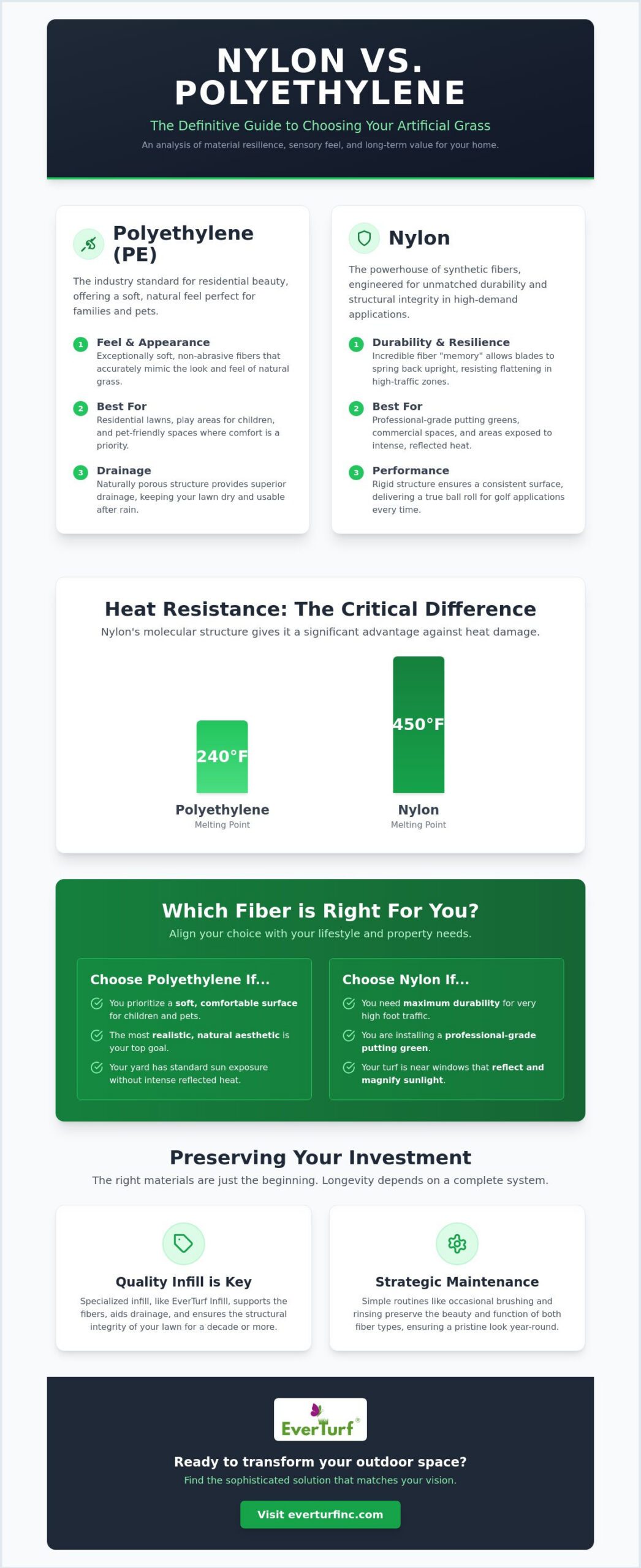
- Discover why polyethylene’s 240°F melting point makes it the gold standard for soft, residential beauty, while nylon’s 450°F threshold offers unmatched resilience against heat damage.
- Evaluate the lifestyle benefits of polyethylene for pet-friendly spaces and play areas where comfort and superior drainage are the highest priorities.
- Learn how the combination of EverTurf Infill and strategic maintenance routines preserves the structural integrity of your fibers for a decade or more.
- Access a clear decision matrix that balances the sensory appeal of a lush, maintenance-free lawn against the uncompromising performance of professional-grade surfaces.
Understanding the Core Chemistry: Nylon vs. Polyethylene Artificial Grass
Every lush, maintenance-free landscape begins at the molecular level. When we talk about the EverTurf experience, we’re discussing the marriage of advanced chemistry and aesthetic design. The debate over artificial turf materials often boils down to a comparison of nylon vs polyethylene artificial grass. This decision shapes how your lawn feels underfoot, how it handles the afternoon sun, and how long it retains its pristine appearance. Selecting the right polymer isn’t just a technical detail; it’s the foundation of your long-term return on investment.
Choosing the right material is the single most important factor in your long-term satisfaction. A mismatched product can lead to premature wear or a surface that doesn’t meet your lifestyle needs. Whether you prioritize the inviting softness of a family-friendly yard or the rigid precision of a backyard golf course, the chemistry of your turf dictates its destiny. By understanding these synthetic polymers—a field supported by industrial material experts like Plastiques Elastomères—you can move away from the frustrations of traditional maintenance and toward the tranquility of a perfect, year-round outdoor space.
The Versatility of Polyethylene (PE)
Polyethylene stands as the industry leader for residential beauty. Its molecular structure is uniquely flexible, allowing manufacturers to create soft, non-abrasive blades that mimic the delicate texture of natural sod. If you envision children playing barefoot or pets lounging in the sun, PE provides the sensory comfort you desire. Its chemical makeup allows for a high degree of realism, as the fibers can be shaped and colored to match local grass species with startling accuracy.
Beyond its feel, PE is naturally porous. This characteristic ensures superior drainage, keeping your outdoor space dry and usable even after a heavy rain. It’s the perfect choice for homeowners who want a yard that looks like a manicured estate but requires none of the traditional labor. Modern PE fibers are also treated with UV stabilizers to prevent the vibrant green from fading under the relentless summer sun, ensuring your investment stays beautiful for years.
The Resilience of Nylon
While PE excels in softness, Nylon is the undisputed powerhouse of synthetic fibers. It’s built with high-density molecular bonds that provide incredible “memory.” This means the fibers have a natural tendency to spring back to an upright position after being stepped on. You won’t find yourself needing to brush the lawn as frequently to keep it from looking flat in high-traffic zones. This material is a favorite for those who value structural integrity above all else.
This rigidity makes it less ideal for a family lawn where bare-skin contact is common, but it’s absolutely perfect for high-performance applications like an EverTurf Putting Green. On a professional-grade green, the consistency of the surface is everything. Nylon’s unwavering structure delivers a true ball roll every single time, regardless of how often you practice. It’s a premium investment for those who demand the highest level of durability and performance from their synthetic environment.
Performance Breakdown: Durability, Heat, and Longevity
Durability isn’t just a technical specification; it’s the peace of mind that comes from knowing your investment won’t falter under the summer sun or the weight of active play. When evaluating nylon vs polyethylene artificial grass, performance is measured by how well the material maintains its structural integrity over decades. While both materials offer a significant upgrade over the constant labor of natural sod, their physical limits differ greatly. Choosing between them requires a clear understanding of your local climate and how you intend to use your outdoor sanctuary.
The science of heat resistance is perhaps the most striking differentiator between these two polymers. Polyethylene (PE) typically features a melting point around 240°F, which is more than sufficient for standard environmental temperatures. However, premium Nylon boasts a staggering melting point of 450°F. When choosing materials, it’s vital to consider the long-term stability of the polymers, especially as research into the Adverse Health Effects of Plastics highlights the importance of using high-quality, stable resins that don’t degrade under extreme thermal stress. This thermal gap defines which grass is a better fit for high-intensity environments.
Traffic Tolerance: The “Spring-Back” Factor
In high-traffic areas where children run or athletes train, the ability of the grass to stand tall is paramount. Nylon is the champion of resilience due to its stiff molecular bonds. Fiber memory is the ability of a blade to return to its vertical position after compression. While PE is softer and more inviting for lounging, it may require more frequent brushing to prevent a matted appearance in heavy-use zones. Nylon maintains its upright posture with minimal intervention, ensuring your landscape looks organized and pristine even after a weekend of activity.
The Low-E Window Challenge
Modern energy-efficient windows can inadvertently create a magnifying glass effect, reflecting concentrated sunlight onto your lawn. This reflected heat can easily exceed 240°F, causing standard PE turf to curl or melt. Nylon is the essential solution for yards facing intense sun exposure or window reflections. Fortunately, EverTurf Artificial grass formulations utilize advanced UV stabilizers and cooling technologies to mitigate heat absorption, protecting your property from damage. If you’re concerned about heat, it’s wise to consult with an expert about artificial turf installation options that prioritize thermal safety.
Lifespan expectations also favor the rugged nature of Nylon. You can generally expect a high-quality PE lawn to remain beautiful for 10 to 15 years with proper care. In contrast, premium Nylon installations often exceed 20 years of service. This longevity moves you away from the cycle of replacement and toward the tranquility of a permanent, year-round outdoor space. Whether you choose the sensory comfort of PE or the uncompromising strength of Nylon, the result is a sophisticated landscape that rewards you with the restoration of your personal time.
Lifestyle Compatibility: Pets, Play, and Aesthetics
Your outdoor space is more than just a property feature; it is an extension of your home where memories are made and daily stress dissolves. When deciding between nylon vs polyethylene artificial grass, the choice ultimately dictates how you and your family interact with your environment. While technical specs matter for longevity, the sensory experience determines whether your lawn feels like a sophisticated sanctuary or a utilitarian surface. Selecting a material that aligns with your lifestyle ensures that your investment provides the long-term satisfaction and tranquility you deserve.
Aesthetic realism is where polyethylene truly shines. Its manufacturing process allows for intricate color blending and the inclusion of a “thatch” layer, which mimics the natural imperfections and varied tones of organic sod. Nylon, by contrast, often possesses a more uniform, matte appearance. This makes nylon ideal for professional applications where consistency is paramount, but it may lack the lush, multi-dimensional beauty that homeowners seek for a primary lawn. For those envisioning a backyard that invites bare-foot exploration, the soft, non-abrasive texture of polyethylene remains the gold standard for comfort.
The Pet-Friendly Verdict
For the 67% of US households that own a pet, the choice of material is a functional necessity. Polyethylene is the undisputed king of pet-friendly landscapes because it is naturally non-porous. Unlike nylon, which can absorb moisture and trap unpleasant odors over time, polyethylene fibers allow liquids to flow through to the drainage system without retention. This makes it significantly easier to maintain a fresh-smelling environment. If you are managing a high-energy dog, you can find more tailored advice in The Complete Guide to Artificial Grass for Dogs. Cleaning solid waste is also simpler on smooth polyethylene blades, as the material resists staining and allows for a quick, hygienic rinse.
Designing Your Outdoor Oasis
Creating a balanced landscape often involves utilizing the unique strengths of both materials. Most homeowners prefer the visual depth and softness of polyethylene for their main backyard turf areas. It creates an inviting space for children to play and adults to lounge without the worry of skin irritation. However, if you are a golf enthusiast, you might choose a high-performance EverTurf Putting Green crafted from nylon. Many sophisticated designs actually blend these materials, using resilient nylon for the putting surface and fringe, while surrounding the area with lush polyethylene for a seamless, natural look. This strategic approach ensures every square foot of your property serves its purpose with poise and durability.
The Role of Infill and Maintenance in Fiber Health
While your choice of nylon vs polyethylene artificial grass sets the stage for your landscape’s performance, the longevity of those fibers depends heavily on the support system beneath the surface. Think of the synthetic blades as the visible architecture and the infill as the structural foundation. Without the correct pairing, even the highest quality polymers can succumb to premature wear or aesthetic decline. At EverTurf, we view infill and maintenance not as chores, but as the essential rituals that preserve your sanctuary and protect your investment for decades to come.
The quality of the backing material also plays a vital role in fiber health. High-grade backing ensures superior fiber retention, preventing the “shedding” that plagues lower-quality products. It also dictates the efficiency of drainage, which is critical for pet-friendly polyethylene installations. Modern UV additives are now integrated directly into the resin of both materials, providing a shield against the fading effects of solar radiation. This ensures your lawn remains a vibrant, deep green regardless of the season.
Choosing the Right Infill
The relationship between fiber and turf infill is particularly important for polyethylene installations. Because PE fibers are naturally softer and more flexible, they require the physical support of infill to remain upright and resilient. For households with pets, choosing an antimicrobial infill for a PE lawn is a sophisticated way to double-down on odor prevention. Infill acts as the “ballast” that keeps fibers upright and protected from UV rays. This layer prevents the base of the blades from folding, which is the primary cause of the “matted” look in high-traffic areas.
Long-Term Maintenance Strategies
Maintaining the tranquility of your outdoor space is remarkably simple compared to the endless cycle of mowing and fertilizing. However, the schedule varies depending on your material choice. A polyethylene lawn benefits from a seasonal “blooming” or power-brushing to lift the fibers and redistribute infill. Nylon, with its inherent rigidity and fiber memory, requires this intervention much less frequently. This structural clarity mirrors the low-maintenance nature of the product itself, making your life easier.
A typical seasonal checklist for a PE lawn includes:
- Rinsing the surface to remove dust and organic debris.
- Brushing high-traffic zones to restore the lush, vertical profile.
- Checking infill levels around gates or play areas where displacement is common.
The ultimate goal of these minimal efforts is the restoration of your personal time. By choosing high-performance materials and the right support system, you move away from the frustrations of yard work and toward the relaxation of a perfect, year-round environment. If you’re ready to experience the relief of a maintenance-free lifestyle, explore our professional artificial grass installation services to find the perfect fit for your home.
Making the Choice: Your Decision Framework for 2026
Choosing between nylon vs polyethylene artificial grass isn’t just a purchase; it’s a strategic investment in your home’s future and your daily peace of mind. By now, you understand that material science dictates the rhythm of your outdoor life. While the initial artificial turf installation cost is a factor, the true value reveals itself over a decade of use. A polyethylene lawn offers immediate sensory rewards and lower upfront costs, while nylon provides an uncompromising shield against extreme heat and heavy foot traffic. Your decision should reflect the specific environmental stressors of your property and the activities that bring you joy.
Professional installation serves as the final, critical bridge between high-quality materials and long-term performance. Even the most resilient nylon or the lushest polyethylene will fail if the base preparation or drainage systems are neglected. A visionary approach to landscaping ensures that every seam is invisible and every blade is secured. This level of craftsmanship protects your ROI by preventing the common pitfalls of shifting, bunching, or poor water runoff. When you invest in expert skill, you’re securing the tranquility of a perfect, year-round environment.
The EverTurf Selection Matrix
To help you move from research to action, we’ve distilled the complex science of nylon vs polyethylene artificial grass into a quick-reference framework. Use these common scenarios to identify your ideal match:
- High Traffic + Low-E Windows: If your yard is a hub for active play and faces intense reflected heat from energy-efficient windows, Nylon is your essential solution.
- Pets + Kids + Aesthetics: For families prioritizing a soft, non-abrasive feel and superior odor control for pets, Polyethylene is the undisputed choice.
- Golf + Professional Performance: For those seeking a true ball roll and the resilience of a professional-grade course, the EverTurf Putting Green Pro (Nylon) delivers unmatched consistency.
Investing in Your Vision
The transition from a high-maintenance lawn to a synthetic sanctuary is often described as a profound relief. Imagine the restoration of your weekends, free from the noise of mowers and the frustration of brown patches. You’re not just changing your grass; you’re elevating your lifestyle and reclaiming your personal time. Whether you envision a vibrant play area or a sophisticated space for evening gatherings, the right material choice makes that vision permanent.
Every property has a unique story, and we’re here to help you write the next chapter. We invite you to connect with a Reliable Visionary from our team to discuss your specific goals and receive a custom quote. It’s time to stop managing your lawn and start enjoying your landscape. Transform your property with EverTurf Artificial grass and experience the long-term satisfaction of a beautiful, stress-free outdoor space.
Secure Your Everlasting Outdoor Sanctuary
The path to a maintenance-free lifestyle is paved with informed decisions. By mastering the differences between nylon vs polyethylene artificial grass, you’ve taken the first step toward a property that rewards you with time and tranquility. Whether you require the high-performance resilience of our professional-grade EverTurf Putting Green Pro or the lush, family-friendly comfort of polyethylene, your choice defines the future of your home. We’ve solved the most complex environmental challenges; we offer national distribution of high-performance EverTurf Infill and expert solutions for Low-E window heat challenges. This expertise ensures your landscape remains a source of pride for decades.
You don’t have to navigate these technical details alone. Our team of Reliable Visionaries is ready to help you match our advanced fiber technology to your unique property needs. Request Your Custom EverTurf Sample Kit and Quote Today to begin your transformation. It’s time to step away from the frustrations of traditional maintenance and into the beauty of an everlasting result. We look forward to helping you create a space that truly reflects your vision of perfection.
Expert Insights: Your Artificial Grass Questions Answered
Is nylon or polyethylene artificial grass better for dogs?
Polyethylene is the superior choice for pet owners because its non-porous fibers don’t absorb moisture or trap unpleasant odors. Unlike nylon, which can retain fluids within its structure, polyethylene allows for efficient drainage and a more hygienic environment. This material makes cleaning solid waste simple and effective, ensuring your outdoor sanctuary remains fresh and inviting for both you and your pets year-round.
Will my artificial grass melt if it is near a Low-E window?
Standard polyethylene turf can melt if it is exposed to the concentrated reflection of a Low-E window, which often exceeds its 240°F melting point. Nylon is the professional recommendation for these high-heat zones because it withstands temperatures up to 450°F without curling or degrading. If your property features modern energy-efficient glass, choosing nylon ensures your investment remains pristine and protected from the risk of thermal damage.
Which artificial grass material looks the most like real grass?
Polyethylene is widely considered the most realistic material because it allows for intricate color blending and the inclusion of a multi-toned thatch layer. This manufacturing flexibility creates a lush, multi-dimensional appearance that closely mimics the natural imperfections of organic sod. While nylon offers a uniform and professional look, polyethylene provides the sensory beauty and soft texture that most homeowners desire for a primary family lawn.
Is nylon artificial grass worth the extra cost?
The higher investment for nylon is justified if you prioritize extreme longevity and resilience in high-performance areas. While the material cost is generally higher than other polymers, nylon provides a lifespan of 20 years or more. This durability makes it a wise choice for professional-grade putting greens or commercial spaces where maintaining structural integrity and fiber memory is more important than initial savings. Businesses managing the import costs for such materials can often recover significant capital by working with Trump Tariff Relief to claim IEEPA tariff refunds.
Can I mix different types of artificial grass in one project?
Mixing materials is a sophisticated strategy to balance aesthetics and performance across different zones of your property. Many homeowners utilize the soft, realistic look of polyethylene for their main family lawn while incorporating resilient nylon for high-traffic pathways or backyard golf greens. This approach allows you to customize your landscape to meet the specific demands of your lifestyle without compromising on the visual harmony of your home.
Does nylon artificial grass get hotter than polyethylene?
Nylon fibers tend to retain more heat than polyethylene due to their high density and rigid molecular bonds. While both materials can become warm in direct sunlight, nylon’s superior melting point means it won’t suffer structural damage from the heat. We often recommend using specialized cooling infills or lighter fiber colors to manage surface temperatures and maintain the tranquility of your outdoor space during the peak of summer.
How long does polyethylene artificial grass last compared to nylon?
Polyethylene artificial grass typically offers a beautiful and functional lifespan of 10 to 15 years with proper maintenance. In contrast, premium nylon installations are known to last 20 years or longer because of the material’s exceptional resilience and resistance to wear. Choosing between nylon vs polyethylene artificial grass often comes down to whether you prefer a softer, mid-term solution or a permanent, high-performance surface for your property.
Do I need different infill for nylon vs. polyethylene turf?
The choice of infill should be tailored to the specific fiber material and the intended use of the area. Polyethylene requires a supportive infill to help the soft blades stay upright and protect the base from UV exposure. Nylon is more self-supporting, but it still benefits from a ballast infill to provide stability and consistent performance. For pet-heavy polyethylene lawns, we recommend antimicrobial infill to further enhance the hygiene and freshness of your environment.