
Artificial Grass vs. Gravel for Dog Run: Which Is Best for Your Pet in 2026?
Your dog’s outdoor retreat shouldn’t feel like a choice between a muddy swamp and a dusty construction site. With over 65 million dog-owning households in the U.S. this year, the search for the perfect surface has never been more urgent. When weighing artificial grass vs gravel for dog run areas, many homeowners find themselves caught between the immediate utility of stone and the long-term luxury of synthetic turf. You likely want a yard that stays vibrant and clean without the constant battle against yellow spots or the frustration of lingering odors.
It’s exhausting to watch your pet navigate uncomfortable, hard surfaces or to spend your evenings cleaning muddy tracks off the hardwood. You deserve an outdoor space that enhances your lifestyle rather than adding to your chores. This guide offers the definitive comparison to help you design a soft, odor-free sanctuary that stays green through every season. We will explore the performance of EverTurf Artificial grass against traditional gravel, looking at how modern drainage and antimicrobial infills can finally give you back your weekends and provide the tranquility of a perfect, year-round yard.
Key Takeaways
- Compare the “paw-feel” of soft synthetic blades against compacted stone to ensure your dog enjoys a safe, comfortable surface that supports joint health.
- Discover how high-flow drainage systems and specialized antimicrobial infills work together to neutralize ammonia and eliminate persistent pet odors.
- Analyze the true cost of artificial grass vs gravel for dog run spaces by weighing the time spent weeding and raking against a low-maintenance turf solution.
- Learn how to maintain a pristine, manicured aesthetic while preventing your pet from tracking mud or loose gravel into your clean home.
- Identify the specific blade heights and sub-base requirements needed to create an everlasting sanctuary that withstands high-traffic play and daily use.
Evaluating Dog Run Surfaces: Comfort, Safety, and Paw Health
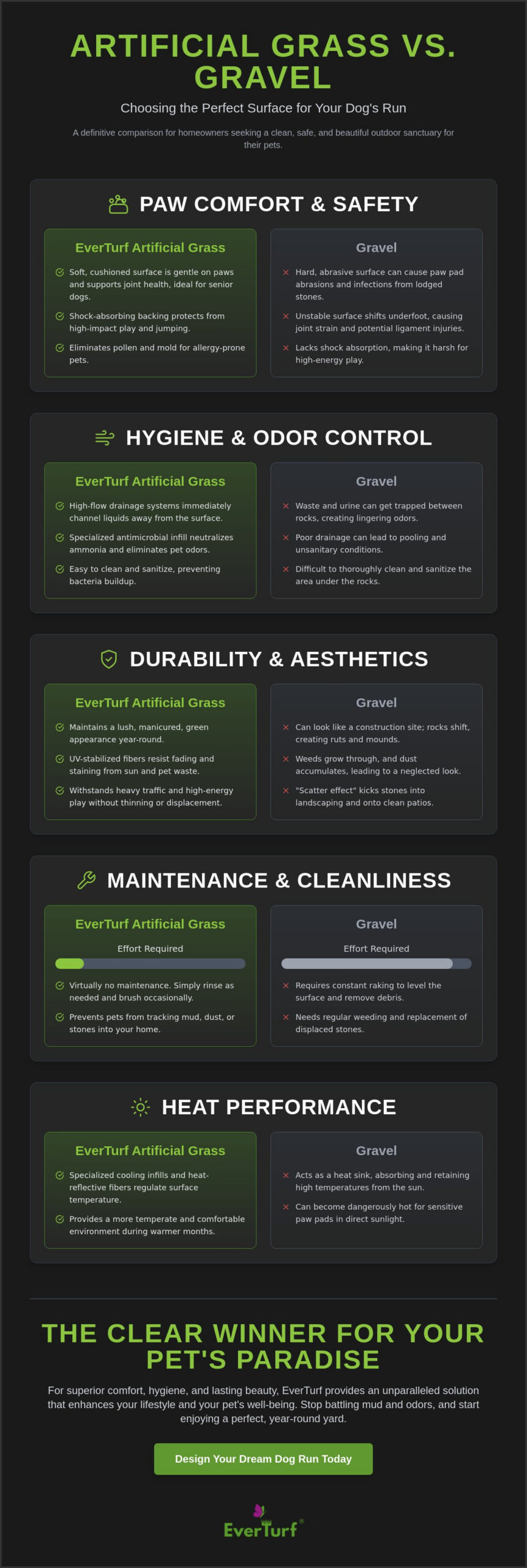
Protect your pet’s physical well-being by looking beyond the surface level of your yard. Choosing between artificial grass vs gravel for dog run areas involves more than just picking a color; it’s a decision that directly affects your dog’s skeletal health and daily comfort. High-quality Artificial turf has evolved into a sophisticated orthopedic solution that provides a consistent, predictable surface for pets of all ages.
Senior dogs particularly benefit from the stable footing of synthetic turf. Unlike loose gravel, which can shift under a dog’s weight and cause joint strain, EverTurf Artificial grass offers a firm yet forgiving foundation. This stability prevents the micro-slips that often lead to ligament injuries in aging pets. Additionally, synthetic solutions eliminate the pollen and mold spores found in natural grass, providing immediate relief for dogs suffering from seasonal skin sensitivities or respiratory allergies.
Tactile Comfort and Ergonomics
Imagine the sensation of your dog sprinting across the yard. On a gravel surface, high-energy play often leads to small stones becoming lodged between paw pads, which can cause painful abrasions or even infections if left unnoticed. Compacted stone also lacks the shock absorption necessary for jumping. In contrast, EverTurf Play systems utilize soft polyethylene fibers and a cushioned backing that mimics the natural give of earth. This design absorbs the impact of every leap, protecting your dog’s paws from the jagged edges common in crushed stone. While dogs may try to dig into gravel and scatter it across your property, the durable weave of professional turf discourages persistent scratching, keeping the environment intact and your pet’s nails safe.
Thermal Performance in Direct Sunlight
Sunlight affects every outdoor material differently. Crushed stone and pea gravel act as heat sinks, absorbing thermal energy and holding it long after the sun sets. This can make a gravel dog run uncomfortably hot for sensitive paw pads during peak afternoon hours. Modern synthetic technology addresses this through specialized cooling features. Using EverTurf Infill helps regulate the surface temperature, while heat-reflective fibers prevent the grass from reaching the extreme highs seen in older turf products. While you should always provide shaded retreats and fresh hydration, including innovative options from Torus Pet, a turf-based system offers a more temperate environment than heat-retaining rock. This ensures your dog’s sanctuary remains a place of relief rather than a source of discomfort during the warmer months.
Durability and Aesthetics: Integrating the Dog Run into Your Landscape
Transforming your yard into a cohesive sanctuary requires a surface that complements your home’s architecture rather than detracting from it. When analyzing artificial grass vs gravel for dog run zones, the visual difference is immediate and profound. Gravel often lends a rugged, utilitarian look that can quickly resemble a neglected construction site as rocks shift, dust accumulates, and weeds inevitably emerge through the stone layers. EverTurf Artificial grass, however, provides a lush, manicured appearance that remains vibrant through every season. Because these high-performance synthetic fibers are UV-stabilized, they resist the fading and unsightly staining that natural stone surfaces often suffer after prolonged exposure to the elements and pet waste.
Long-term durability is where the lifestyle benefits truly shine for active families. High-energy “zoomies” can quickly turn a gravel pit into a series of unsightly ruts and mounds, requiring constant manual raking to maintain even a basic level of functionality. Even more frustrating is the “scatter effect,” where dogs inadvertently kick loose stones into your flower beds, onto your clean patio, or even into the path of your lawnmower. A professionally installed turf system stays exactly where it’s placed. It withstands heavy traffic and intense play without thinning or displacement, ensuring your yard remains as organized and beautiful as the day it was installed.
Aesthetic Harmony with Your Home
Creating a seamless flow between your indoor living space and your pet’s play area is essential for a modern home. Integrating backyard turf allows you to extend that resort-style feel right to the edge of your property. To define these boundaries with elegance, many homeowners utilize EverTurf Pavers. This combination creates a sophisticated frame for the dog run, moving away from the scattered, messy borders typical of stone-based solutions and replacing them with clean, intentional lines.
Stability and Surface Displacement
Stability impacts both you and your pet’s daily experience. Gravel presents a “sink” factor that makes walking difficult, especially on uneven or uncompacted stone. This instability can be frustrating for homeowners trying to clean the area or play with their dogs. A secured turf perimeter prevents edge lifting and provides a flat, reliable surface for every activity. While gravel requires annual replenishment and leveling to combat the inevitable thinning, a one-time artificial turf installation offers a permanent solution that preserves your property’s value and your precious personal time.
The Hygiene Factor: Managing Drainage, Odors, and Sanitation
Hygiene is the ultimate test of any pet surface, and it’s where the comparison of artificial grass vs gravel for dog run installations becomes most clear. While gravel appears to offer natural drainage, it often functions as a physical filter that traps organic matter within its layers. Over time, liquid waste can seep into the soil beneath the rocks, creating a persistent “septic” environment that is nearly impossible to reach or clean. In contrast, professional synthetic turf is engineered to move moisture away from the surface immediately, ensuring your yard remains a clean, welcoming sanctuary rather than a source of frustration.
Maintaining sanitation on a synthetic surface is a straightforward, rewarding task that preserves your property’s value. While gravel forces you into a “treasure hunt” to find and remove solid waste hidden among the stones, turf keeps everything on the surface for easy pickup. A quick rinse with a garden hose or a pet-safe enzyme cleaner is all it takes to restore the fresh, clean scent of your yard. Since a clean environment works best when your pet is also well-cared for, read more about using organic grooming products to maintain their hygiene naturally. This ease of maintenance doesn’t just keep your home smelling better; it provides a powerful restoration of your personal time, moving you away from the exhausting cycle of deep-cleaning porous rocks.
Advanced Drainage Systems
Implementing artificial grass for dogs involves a multi-layer engineering approach that prioritizes rapid fluid transit. Unlike gravel, which can become clogged with silt and debris, high-quality turf backings are designed to be fully permeable across their entire surface. Modern pet-specific turf systems demonstrate incredible performance, often draining liquid at rates exceeding 30 inches per hour to prevent urine from pooling or stagnating. This high-flow efficiency ensures that the sub-base stays dry and stable, protecting the integrity of your landscape and the health of your pet.
Neutralizing Pet Odors
Odors are the primary concern for most homeowners, and the solution lies in the logical evidence of the surface’s composition. Gravel is inherently porous and tends to trap urine in the jagged crevices of the stones or the dirt below, leading to a buildup of ammonia that lingers in the air. You can’t easily deep-clean a ton of rock, but you can certainly manage a synthetic lawn. The strategic use of turf infill is vital here; antimicrobial-coated sand or zeolite specifically captures and breaks down odor-causing bacteria before they can become a nuisance. This leaves you with the tranquil, clean scent of a well-maintained outdoor space that you and your dog can enjoy year-round.
Maintenance and Long-Term Value: Comparing Upkeep Requirements
When weighing artificial grass vs gravel for dog run maintenance, many homeowners find that gravel carries a heavy burden of hidden labor. While stone seems like a simple utility fix, it requires constant attention to remain functional. Over time, loose rocks migrate into flower beds or thin out in high-traffic zones, requiring you to haul and spread new material every few years. Weeds inevitably find purchase in the silt that collects beneath the stones, forcing you into a frustrating cycle of pulling or spraying. These recurring tasks drain your weekends, turning what should be a peaceful outdoor retreat into a source of ongoing chores.
EverTurf systems offer a different narrative, moving you away from the frustrations of traditional upkeep toward long-term satisfaction. Instead of a surface that degrades with use, synthetic turf provides a permanent, year-round solution that stays level and lush. Maintaining that “everlasting” look is a straightforward process that involves occasional rinsing and light brushing to keep the fibers resilient. This shift from constant repair to simple care provides a profound sense of relief. A professionally installed dog run also acts as a premium lifestyle enhancer, significantly boosting home resale appeal by offering a turnkey, low-maintenance feature that pet owners prize.
Weekly and Monthly Maintenance Cycles
Your routine should focus on hygiene and aesthetics with minimal friction. For synthetic surfaces, a quick rinse prevents urine from crystallizing, ensuring the area stays fresh and odor-free. In contrast, removing organic debris like leaves from gravel is a logistical challenge; a leaf blower often displaces the stones, while a vacuum is entirely impractical. If you ever need to address minor shifts at the perimeter of your installation, using EverTurf Staples and Glue makes edge repairs quick and seamless. This structural clarity mirrors the organized nature of the product itself, making your property easier to manage than a scattered stone pit.
Calculating the True Return on Investment
When you evaluate the long-term impact of artificial grass vs gravel for dog run surfaces, the logical evidence favors a permanent investment. While the artificial turf installation cost involves a higher upfront commitment, it eliminates the recurring expenses of rock replenishment and weed control. Industry data indicates that the return on investment for high-quality turf is typically realized within 5 to 6 years through these savings. Beyond the finances, the restoration of your personal time serves as the most powerful emotional anchor. You spend less time raking stone and more time enjoying the tranquility of your yard. Ready to transform your property? Connect with an expert for a professional artificial grass installation today.
Designing Your Dream Dog Run with EverTurf Solutions
Creating a sophisticated outdoor sanctuary requires a shift in perspective from basic utility to intentional design. When you finalize your decision between artificial grass vs gravel for dog run areas, you aren’t just choosing a material; you’re engineering a lifestyle that often includes professional remote training tools from EducatorCollars.com to ensure a safe and harmonious environment. A successful design balances aesthetic beauty with the rigorous demands of a high-traffic pet environment. Selecting a turf with the correct blade height and density is the first step in this transformation. For pet-specific zones, a shorter, resilient pile height is often superior, as it resists matting and allows for more efficient waste removal and rinsing compared to longer, more decorative fibers.
The true brilliance of a professional dog run lies beneath the surface. While gravel often sinks into the mud over time, creating an uneven and messy landscape, a professional EverTurf installation utilizes a multi-layered sub-base. This engineered foundation ensures permanent stability and rapid drainage, preventing the pooling and soft spots that plague traditional yards. By working with a reliable visionary in the industry, you can customize the space with integrated stone paths, durable shade structures, or even built-in water features that turn a simple exercise area into a resort-style retreat for your pet.
Choosing the Right EverTurf Products
Not all synthetic surfaces are created equal, especially when canine health is the priority. While standard turf works well for low-traffic decorative areas, EverTurf Artificial grass pets is specifically designed with reinforced backing and antimicrobial properties to withstand heavy use. This specialized system ensures your yard remains vibrant and durable through years of play. To maximize safety and hygiene, the addition of EverTurf Infill is essential. This technical component settles into the base of the fibers to provide cushion, regulate temperature, and neutralize odors at the source. When evaluating an installation team, look for these markers of quality:
- Proven expertise in high-flow drainage systems.
- Use of non-toxic, lead-free materials certified for pet safety.
- Precision edge-securing techniques to prevent digging or lifting.
- Specific experience with antimicrobial infill applications.
Final Steps to a Mud-Free Life
The transition from a dirt or gravel pit to a pristine synthetic lawn provides an immediate sense of relief for the modern homeowner. Preparing your yard involves excavating the existing debris and leveling the ground to create a clean slate for your new sanctuary. Once the installation is complete, the impact on your home’s interior is profound. You’ll no longer find muddy paw prints tracking across your hardwood floors or stray gravel scattered in your living room. This upgrade restores your personal time and preserves the tranquility of your indoor environment. If you’re ready to move away from maintenance frustrations, we invite you to connect with our team for a professional artificial turf installation that sets a national standard for quality and beauty.
Elevate Your Pet’s Sanctuary for a Lifetime of Play
Choosing the right environment for your dog is an investment in their health and your own peace of mind. We’ve explored how a professional surface transition moves you away from the frustrations of muddy paws and persistent odors toward the tranquility of a year-round outdoor oasis. While gravel serves a basic utility, it lacks the ergonomic support and sanitary precision required for a modern home. When evaluating artificial grass vs gravel for dog run spaces, the long-term satisfaction of a lush, manicured yard far outweighs the temporary convenience of stone.
You deserve a property that reflects your commitment to quality and durability. By utilizing high-flow drainage backing systems and specialized antimicrobial EverTurf Infill, you ensure a clean, odor-free play area that remains vibrant for years. Our UV-stabilized solutions are engineered for 15+ years of performance, providing a permanent restoration of your personal time. It’s time to envision a yard that stays green and welcoming through every season without the constant battle against weeds or displacement.
Transform your pet’s play area with EverTurf Artificial grass pets today!
Step into a world where maintenance is a memory and every afternoon in the yard is a reward. Your dog’s perfect sanctuary is just one decision away, and the results will be as everlasting as the joy they bring to your home.
Frequently Asked Questions
Does artificial grass get too hot for dog paws compared to gravel?
Modern synthetic turf stays significantly more comfortable than traditional gravel, which acts as a heat sink and retains thermal energy long after the sun sets. While older turf products could become warm, today’s heat-reflective fibers and specialized infills effectively regulate surface temperatures. Providing a shaded retreat and fresh water ensures your pet’s sanctuary remains a place of relief even during the warmest summer afternoons.
How do you get the smell of dog urine out of artificial grass?
Neutralizing odors is a straightforward process that involves high-flow drainage systems and antimicrobial infills. Regularly rinsing the surface with a garden hose prevents ammonia from crystallizing, while pet-safe enzymatic cleaners break down organic matter at the source. This approach is far more effective than gravel, which often traps urine in the soil sub-layers, leading to persistent, hard-to-reach smells.
Is gravel or artificial turf better for dogs that like to dig?
Artificial turf is the superior choice for discouraging digging behavior and maintaining your yard’s manicured look. High-quality synthetic fibers are durable enough to withstand persistent scratching without thinning or displacement. In contrast, dogs easily kick gravel across your property, creating unsightly ruts and mounds that require constant manual leveling and replenishment to keep the area functional and safe.
Can dogs get ‘grass burns’ or skin irritations from synthetic turf?
Dogs actually experience fewer skin irritations on synthetic turf because it eliminates the pollen and fertilizers that trigger natural grass allergies. Professional-grade turf is non-toxic and lead-free, providing a hypoallergenic surface that is gentle on sensitive paw pads. It also removes the risk of the small abrasions and “hot spots” that often occur when dogs play on jagged or compacted stone.
What is the best way to clean solid waste off artificial grass?
Solid waste stays on the surface of the synthetic fibers, making it much easier to locate and remove than waste hidden in deep gravel beds. You can use a standard pooper-scooper for quick cleanup and follow with a brief water rinse to keep the area pristine. This simplicity prevents the “treasure hunt” frustration common with stone surfaces and ensures your yard stays hygienic for the whole family.
How long does a professional artificial grass dog run typically last?
A professionally installed dog run using UV-stabilized materials is designed to deliver high performance for 15 years or more. This longevity makes the choice of artificial grass vs gravel for dog run areas a rewarding long-term investment for your property. While gravel requires recurring costs for weeding and rock replenishment, synthetic turf provides a permanent, low-maintenance solution that enhances your lifestyle for over a decade.
Is it possible to install artificial turf over an existing gravel dog run?
Installation is possible, but it requires the existing gravel to be properly excavated or professionally leveled to serve as a stable sub-base. Simply laying turf over loose, uncompacted stone will lead to an uneven surface and poor drainage over time. A seasoned expert will ensure the foundation is correctly engineered to prevent sinking and optimize the transit of liquid waste away from the surface.
Does artificial grass drain as well as pea gravel during heavy rain?
Modern synthetic turf often outperforms pea gravel by utilizing fully permeable backing systems that can drain over 30 inches of liquid per hour. This rapid transit prevents the pooling and mud that occur when gravel becomes clogged with silt or debris. Your yard remains dry, stable, and ready for play immediately after a downpour, preserving the cleanliness of your home’s interior.