

Is Artificial Grass Environmentally Friendly? The 2026 Resource Report
What if the most sustainable choice for your home’s landscape isn’t actually growing in the soil? It’s a question that causes many homeowners to hesitate as they weigh the allure of a year-round green sanctuary against their commitment to the planet. You might find yourself asking, is artificial grass environmentally friendly, or are you simply trading high water bills for a different kind of ecological impact? It’s understandable to feel caught between the frustration of traditional lawn maintenance and the uncertainty surrounding modern synthetic materials.
At EverTurf Inc, we believe that luxury and responsibility should go hand in hand. This 2026 Resource Report provides a balanced look at the reality of synthetic turf, moving beyond the noise to explore massive water savings and the latest innovations in non-toxic, recyclable materials. You’ll gain a clear understanding of the trade-offs, from navigating new PFAS regulations to choosing high-quality options that align with a sustainable lifestyle. We’ll show how professional-grade turf can restore your personal time while acting as a sophisticated, permanent solution for the modern environment.
Key Takeaways
- Calculate the total resource savings over a 20-year lifecycle to determine if is artificial grass environmentally friendly for your specific property and local climate.
- Understand the ecological benefits of removing chemical fertilizers, which effectively stops toxic nitrogen and phosphorus runoff from entering your local groundwater.
- Discover how advanced cooling infills and permeable backing materials allow your soil to breathe while maintaining a comfortable surface temperature in the summer sun.
- Stay informed on the latest 2026 recycling innovations and legislative changes that empower homeowners to make responsible, future-proof landscaping decisions.
- See how EverTurf products prioritize long-term durability and drainage to transform your yard into a high-performance, sustainable retreat that restores your personal time.
The Environmental Equation: Balancing Materials and Resources
When homeowners ask, is artificial grass environmentally friendly, they’re often looking at a snapshot in time rather than a long-term resource balance. True environmental friendliness isn’t defined by a single material choice. Instead, it’s a calculation of the net-positive resource balance over a product’s entire lifecycle. While synthetic turf involves an initial use of polymers, its 15 to 20 year durability creates an “Environmental ROI” that traditional landscapes struggle to match. Modern manufacturing in 2026 has shifted significantly, moving toward sustainable polymers and processes that reduce the carbon footprint of production from the start. We see this as a transition from a high-maintenance burden to a sophisticated, permanent solution that respects both your time and the planet’s resources.
What is Synthetic Turf Actually Made Of?
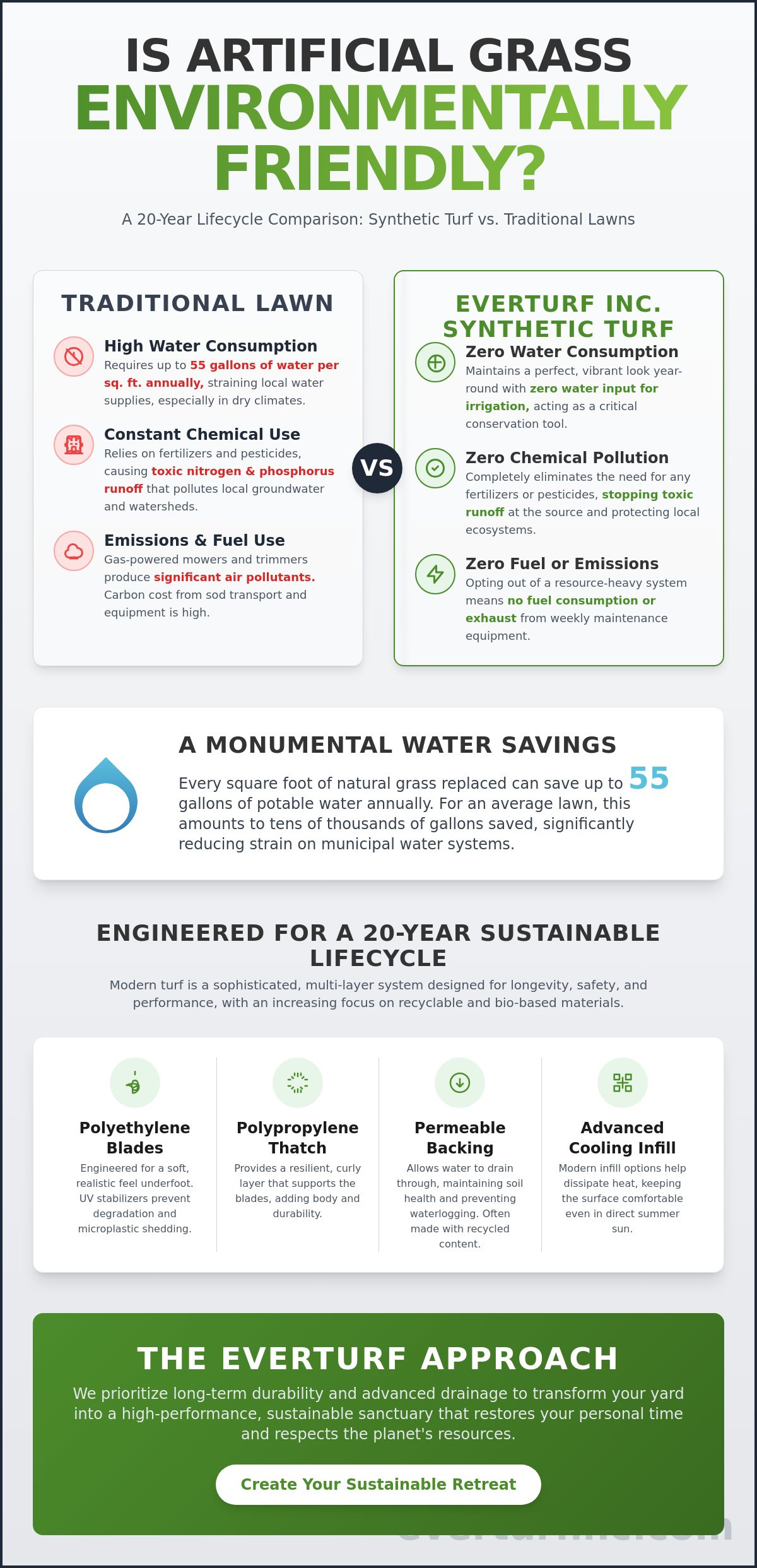
To understand the impact, we must look at the components. Most high-quality turf uses a blend of Polyethylene for soft blades, Polypropylene for a resilient thatch, and Nylon for intense durability in high-traffic areas. These materials aren’t just “plastic”; they’re engineered with sophisticated UV stabilizers that prevent material degradation and microplastic shedding over decades of sun exposure. You can find a detailed history of these developments in this overview of Artificial turf on Wikipedia. Today, the industry is seeing a vital shift toward bio-based materials and backings made from partially recycled content. This evolution ensures your landscape remains as responsible as it is beautiful, utilizing materials designed for longevity rather than obsolescence.
The True Cost of a Traditional Lawn
Compare this to the ongoing environmental “tax” of a natural lawn. Gas-powered mowers and trimmers emit significant pollutants every week, contributing to local air quality issues. Beyond emissions, the energy-intensive production of synthetic fertilizers and pesticides creates a constant cycle of chemical dependency. These chemicals don’t just stay on your grass; they often leach into local waterways and disrupt delicate ecosystems. In many regions, the carbon cost of frequent sod replacement due to heat stress or drought adds another layer of waste. Consider the following hidden impacts of traditional maintenance:
- Constant fuel consumption and exhaust from mowing and edging equipment.
- Carbon emissions from the transport and delivery of heavy sod and mulch.
- The manufacturing footprint and landfill waste of plastic pesticide containers and fertilizer bags.
When you eliminate these recurring inputs, the question of whether is artificial grass environmentally friendly becomes much clearer. You’re opting out of a resource-heavy system in favor of a permanent sanctuary that requires zero chemicals and zero fuel to remain perfect year-round.
Water Conservation and Chemical Runoff Prevention
Preserving our most precious liquid resource is where the environmental argument for synthetic turf truly shines. Every square foot of natural sod in a dry climate can demand up to 55 gallons of water annually. For a standard residential yard, that’s tens of thousands of gallons of potable water diverted from local reservoirs just to maintain a specific shade of green. When you consider the question, is artificial grass environmentally friendly, you have to look at this massive reduction in consumption. EverTurf Artificial grass acts as a critical conservation tool, especially as municipal water restrictions become the new normal across the country.
Eliminating the Need for Potable Water
The contrast in annual gallon usage between real sod and synthetic solutions is staggering. While a natural lawn requires consistent irrigation to survive summer heat, a synthetic landscape remains vibrant with zero water input. This isn’t just about saving a few dollars on your utility bill; it’s about reducing the strain on overtaxed municipal systems. Homeowners often find a sense of relief when they no longer have to monitor complicated sprinkler schedules or face fines during drought-induced water bans. This shift toward a low-maintenance exterior transforms your property into a model of efficiency, ensuring your outdoor space stays beautiful without depleting the local supply.
Protecting Local Watersheds from Chemical Pollution
Traditional lawn care relies heavily on a cocktail of nitrogen and phosphorus. These nutrients are vital for grass growth but disastrous for local ecosystems when they wash away during rainstorms. This runoff eventually reaches our groundwater and coastal regions, contributing to “dead zones” where aquatic life cannot survive. While some research, such as the University of Plymouth on artificial lawns, highlights the importance of natural soil ecosystems, the immediate prevention of chemical pollution is a significant environmental win. By choosing a maintenance-free surface, you effectively remove herbicides and pesticides from your home’s ecological footprint.
EverTurf products are designed to eliminate the chemical dependency that plagues traditional landscaping. Since the material doesn’t require fertilization or weed killers to stay pristine, your backyard stops being a source of watershed contamination. If you’re ready to see how your property can contribute to local conservation efforts, exploring the options for EverTurf Artificial grass is an excellent first step toward a more responsible lifestyle. It’s a sophisticated way to protect local water quality while enjoying a perfect, year-round sanctuary. When looking at the total resource impact, the ability to stop chemical leaching into the soil provides a powerful answer to whether is artificial grass environmentally friendly for the modern homeowner.
Addressing Biodiversity, Heat, and Soil Health
Critics often paint a binary picture of landscaping: either a high-maintenance natural lawn or a sterile plastic surface. This perspective misses the sophisticated reality of the “Hybrid Landscape.” By integrating EverTurf Artificial turf in high-traffic zones while surrounding it with native plants, flowers, and trees, you create a sanctuary that supports local pollinators and birds. This balanced approach provides the best of both worlds, offering a pristine area for your family to enjoy while dedicating the rest of your property to local biodiversity. When considering if is artificial grass environmentally friendly, it’s essential to look at how it functions as part of a larger, thoughtfully designed ecosystem.
Managing Surface Temperatures in Summer
A common concern with synthetic surfaces is their tendency to absorb heat, known as thermal mass. Because the materials don’t have the natural evaporative cooling of living blades, they can become warm during the peak afternoon sun. However, 2026 technology has largely solved this issue. Specialized cooling infills, such as EverTurf Infill, can reduce surface temperatures by up to 30 degrees compared to traditional crumb rubber. These advanced materials work by slowly releasing moisture or utilizing reflective properties to keep the area comfortable. For the best results, a quick ten-second rinse with a hose during the hottest part of the day can trigger a cooling effect that lasts for hours, ensuring your outdoor space remains an inviting retreat even in mid-July.
Soil Respiration and Micro-Organism Survival
The idea that synthetic turf “kills” the soil beneath it is a persistent myth that ignores modern installation techniques. A professional installation doesn’t involve a concrete slab; instead, it utilizes a multi-layered, crushed stone base. This porous foundation facilitates rapid vertical drainage and allows air to reach the earth below. While some studies on the environmental impact of artificial turf express concern over soil health, a permeable backing ensures that rain and oxygen still reach the ground. This structure supports continued microbial activity and prevents the soil from becoming compacted or anaerobic.
Because EverTurf Artificial turf allows for consistent water infiltration, the earth beneath remains a living system. This drainage is vital for preventing runoff and keeping the ground stable. By avoiding the heavy compaction and chemical saturation required by traditional sod, you’re actually protecting the long-term integrity of your property’s soil. When you evaluate the question, is artificial grass environmentally friendly, the ability of these modern systems to maintain soil respiration while eliminating chemical inputs provides a compelling, science-based answer for the eco-conscious homeowner.
Lifecycle Analysis: Longevity, Waste, and Recyclability
To truly evaluate if is artificial grass environmentally friendly, we must look past the day of installation and consider the next two decades. Longevity is the single most important factor in this environmental equation. A product that lasts twenty years has a significantly lower impact than one that requires replacement every five. By choosing high-quality materials, you’re effectively keeping thousands of pounds of waste out of landfills while enjoying a pristine outdoor space that restores your personal time. When a landscape solution offers such a long service life, its initial manufacturing footprint is spread across thousands of days of use, resulting in a net-positive resource balance.
Why Quality Matters for Sustainability
Selecting a premium product is a direct act of environmental stewardship. Cheap, low-grade turf often lacks the sophisticated UV stabilizers required to withstand intense sun exposure, leading to brittle fibers and premature degradation. This failure doesn’t just ruin the aesthetic of your home; it leads to early disposal and the need for a completely new installation. In contrast, EverTurf Artificial grass is engineered for extreme durability in high-traffic areas, maintaining its structural integrity and lush appearance for the long haul. Durability is the primary driver of eco-friendliness in synthetic landscaping. By investing in quality, you ensure your yard remains a permanent sanctuary rather than a recurring waste problem.
The Future of Turf Recycling
The synthetic turf industry is rapidly evolving toward a circular economy, moving away from the “single-use” misconceptions of the past. Modern manufacturing is introducing single-polymer designs that harmonize the blades, thatch, and backing. This structural unity makes the recycling process significantly more efficient, as it eliminates the need to separate different types of plastics. In the United States, specialized recycling facilities are now appearing to handle the end-of-life stage for these systems. Instead of heading to a landfill, retired turf is being repurposed into high-value items, including:
- Durable plastic lumber for decking and fencing.
- Sturdy park benches and outdoor furniture.
- Industrial flooring and high-impact mats.
- New components for future synthetic turf systems.
We encourage every homeowner to ask about the specific recyclability of their chosen model and the available end-of-life programs in their region. Choosing a product with a clear path toward repurposing is a vital step in creating a truly sustainable home. If you’re ready to invest in a landscape designed for the next twenty years, explore our premium EverTurf Artificial grass options today. It’s a sophisticated way to ensure your environmental impact remains as low as your maintenance routine. Understanding these lifecycle factors is the key to answering whether is artificial grass environmentally friendly for your long-term goals.
The EverTurf Approach: Designing a Sustainable Sanctuary
At EverTurf, we view your outdoor space as a canvas for long-term satisfaction and environmental responsibility. Our commitment goes beyond aesthetics; we prioritize high-performance, long-lasting materials that stand the test of time. When homeowners evaluate whether is artificial grass environmentally friendly, they find the most compelling answers in holistic design. By pairing EverTurf Artificial grass with native stone pathways and drought-resistant flora, you create a balanced ecosystem that requires minimal resources while offering maximum beauty. This approach transforms your property into a sophisticated sanctuary that respects the local climate and your personal time.
A successful installation relies on what lies beneath the surface. Our specialized EverTurf Infill is a cornerstone of this strategy, providing superior vertical drainage and a non-toxic foundation for your family. This system ensures that water moves efficiently through the turf and back into the earth, maintaining the soil respiration essential for a healthy ground layer. For urban dwellers, EverTurf Roof & Deck offers a unique opportunity for urban greening, turning underutilized concrete surfaces into vibrant, cooling spaces that help mitigate the heat island effect in densely populated areas.
Specialized Solutions for Every Environment
Every home has unique needs, and our product lineup reflects that diversity. For those who value a low-impact hobby, EverTurf Putting Green Pro provides a professional-grade practice surface without the intense chemical and water requirements of a natural green. Families often choose EverTurf Play for their backyard playgrounds, valuing the safe, cushiony, and chemical-free environment it provides for children. If you’re looking for more ways to integrate these solutions into your home, we invite you to explore The Ultimate Guide to Artificial Grass for expert design inspiration and technical insights.
Your Next Steps Toward a Greener Home
The journey to a worry-free, beautiful landscape starts with seeing the quality for yourself. We encourage you to request a sample of our premium turf to feel the density and texture firsthand. Seeing how the fibers catch the light and how the backing is constructed can provide the logical evidence needed to justify this investment in your property. Our team of seasoned experts is ready to help you plan a water-wise landscape that addresses the specific challenges of your local environment.
Ultimately, deciding if is artificial grass environmentally friendly comes down to the quality of the product and the intention of the design. By choosing a permanent, low-maintenance solution, you’re opting for decades of tranquility and resource savings. Take the first step toward your new outdoor lifestyle and Discover EverTurf Artificial grass solutions today. We are here to help you transition from the frustrations of maintenance to the relief of a perfect, year-round sanctuary.
Cultivate Your Sustainable Sanctuary
Transitioning to a high-performance landscape is more than a design choice; it’s a commitment to a more efficient future for your home. We’ve explored how the question of whether is artificial grass environmentally friendly depends on a product’s entire lifecycle and its ability to conserve vital resources. By choosing a solution with a 15 to 20 year life expectancy, you drastically reduce annual water consumption and completely eliminate the need for harmful lawn chemicals that threaten local watersheds.
This shift doesn’t just benefit the planet; it restores your personal time and provides a sanctuary that remains perfect year-round. You can finally move away from the frustration of constant maintenance and toward the tranquility of a sophisticated, permanent outdoor space. Explore the Eco-Benefits of EverTurf Artificial Grass and see how a professional installation can enhance your lifestyle while respecting the environment. Your vision of a beautiful, stress-free property is within reach, and we’re here to help you achieve it.
Frequently Asked Questions
Is artificial grass worse for the environment than a real lawn?
Determining if is artificial grass environmentally friendly requires looking at the total resource balance over 20 years. While natural grass provides carbon sequestration, it demands constant potable water, gas-powered mowing, and chemical fertilizers. A high-quality synthetic lawn eliminates these recurring environmental costs, offering a net-positive resource balance through long-term durability and zero-chemical maintenance. It’s a sophisticated choice for those looking to reduce their daily ecological footprint.
Does artificial turf cause microplastic pollution in my garden?
Professional-grade turf is specifically engineered with UV stabilizers to prevent the degradation that leads to microplastic shedding. Unlike low-quality alternatives that may break down in the sun, our materials maintain their structural integrity for up to two decades. This ensures your outdoor space remains a clean, sophisticated sanctuary without contributing synthetic debris to your local soil or waterways. Quality remains the best defense against environmental degradation.
Can artificial grass be recycled at the end of its life?
Recycling options for synthetic turf have expanded significantly as of 2026. Many manufacturers now utilize single-polymer designs that allow the entire system to be processed together. This retired material is often repurposed into high-value products like plastic lumber, park benches, and industrial mats. We recommend choosing a product with a clear end-of-life plan to ensure your landscape remains part of a circular economy and stays out of landfills.
Does synthetic turf kill the worms and bugs in my soil?
Soil ecosystems remain active beneath a properly installed turf system. Our installation process uses a porous, crushed stone foundation and a permeable backing that allows air and water to reach the ground. This structure supports essential soil respiration and microbial activity. By avoiding the heavy compaction and chemical saturation required by sod, you’re actually protecting the long-term health of the earth beneath your feet.
How does artificial grass impact local water drainage and runoff?
Is artificial grass safe for pets and the environment?
How much water can I actually save by switching to EverTurf?
Homeowners can save approximately 55 gallons of water per square foot annually by making the switch. This drastic reduction is a primary reason why many consider whether is artificial grass environmentally friendly in regions facing water scarcity. Over the typical 20-year lifespan of a premium lawn, this adds up to hundreds of thousands of gallons of potable water conserved for your community and significantly lower utility bills for you.
Does artificial grass contribute to global warming or heat islands?
Synthetic surfaces do absorb more heat than natural grass, but modern cooling technologies have significantly addressed this concern. Specialized infills can reduce surface temperatures by as much as 30 degrees during peak sun hours. When you combine high-quality turf with strategic shade trees and native plantings, you create a comfortable microclimate that avoids the typical heat island effects associated with urban hardscaping while maintaining year-round beauty.