
Best Artificial Grass Cleaner for Pet Owners: The 2026 Maintenance Guide
Why does that stubborn ammonia scent seem to intensify exactly when you want to enjoy your backyard the most? If you’ve noticed a lingering odor on a hot afternoon, you aren’t alone. Many homeowners find that standard rinsing simply isn’t enough to maintain a truly fresh environment. You’ve worked hard to create a private sanctuary, and learning how to get dog urine smell out of artificial turf shouldn’t involve harsh chemicals that make you worry about your pet’s safety or your lawn’s longevity.
We understand that a professional lawn is a significant investment, often ranging from $10,000 to $30,000 for a complete installation. You deserve a maintenance routine that protects that value while restoring your peace of mind. This guide provides a science-backed framework for selecting cleaners that neutralize uric acid crystals at the molecular level rather than just masking them with temporary scents. We will explore the essential three-part system of superior drainage, specialized EverTurf Inc Infill, and high-performance enzyme formulas. You’ll gain a clear, easy-to-follow schedule to keep your outdoor space pristine, safe, and inviting for your entire family throughout 2026 and beyond.
Key Takeaways
- Learn why enzyme-based cleaners are the industry standard for digesting uric acid crystals; it’s the only way to provide a permanent solution rather than a temporary fragrance.
- Master the proven framework for how to get dog urine smell out of artificial turf by choosing concentrated, non-toxic formulas that offer a superior cost-per-application.
- Establish a low-maintenance weekly routine that prevents the accumulation of organic debris and keeps your turf feeling fresh even during peak summer heat.
- Explore how specialized EverTurf Infill and high-drainage turf designs work together to neutralize odors at the base, protecting your long-term investment.
- Gain the confidence to transform your backyard into a worry-free sanctuary where it’s easy to balance pet ownership with a pristine aesthetic.
- As part of that balanced lifestyle, you can explore Premium Pet Food to find high-quality nutritional support for all your pets.
The Science of Pet Odors: Why Artificial Grass Smells
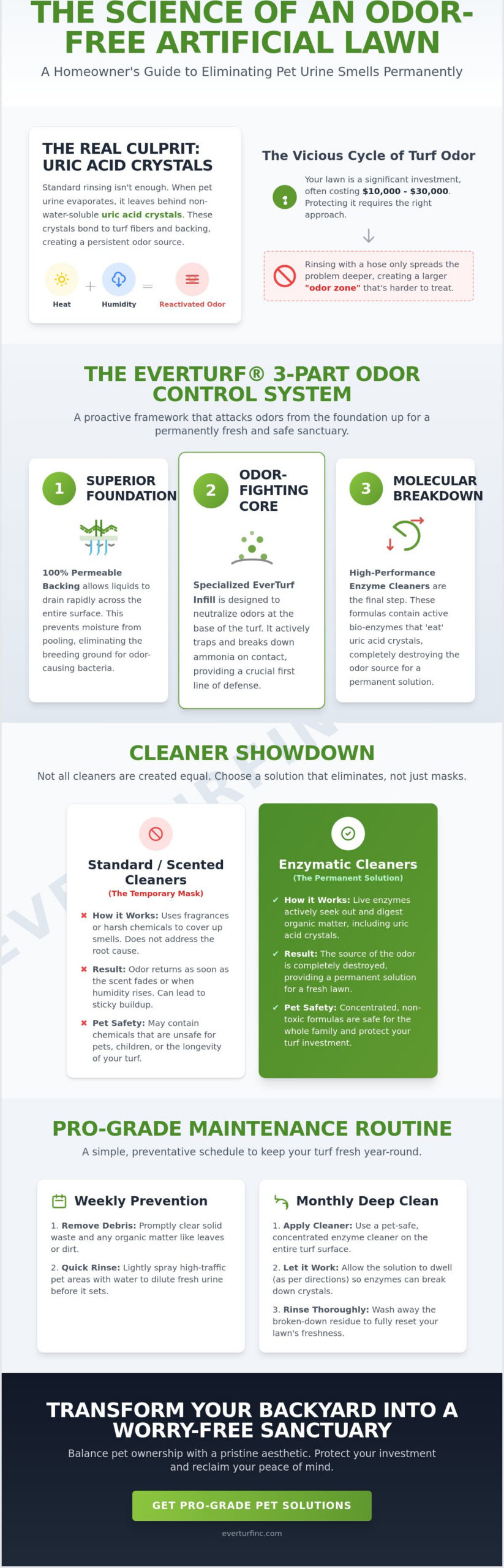
Understanding the science behind the scent is the first step in reclaiming your outdoor sanctuary. The chemical composition of urine includes water, urea, and uric acid, but it’s the latter that presents the biggest challenge for homeowners. When pets use the lawn, the liquid eventually evaporates, leaving behind concentrated uric acid crystals. These crystals aren’t water-soluble. They bond to the synthetic fibers and the backing of your turf, waiting for the right conditions to strike again.
Heat and moisture act as catalysts for these dormant molecules. On a humid afternoon, these crystals absorb moisture from the air and release that familiar, pungent ammonia scent all over again. This cycle explains why a lawn that seems clean in the morning can become overwhelming by midday. Without proper sanitation, a biological film, or biofilm, begins to develop on the turf blades. This sticky layer of bacteria feeds on the organic waste, creating a persistent odor that standard cleaning products can’t penetrate.
Many homeowners mistakenly believe that a quick spray with a garden hose is how to get dog urine smell out of artificial turf, but this often backfires. Rinsing with water alone simply dilutes the urea and spreads it deeper into the turf’s backing and the sub-base. This creates an expanded “odor zone” rather than eliminating the source. To truly refresh your space, you must address the underlying chemistry of the waste itself.
Uric Acid vs. Ammonia: Understanding the Culprits
Ammonia is the immediate, sharp scent you notice right after your dog finishes their business. It’s volatile and dissipates relatively quickly. However, uric acid crystals are the silent remnants that cause the “forever” odor. These salts remain trapped in the fibers and are incredibly difficult to dislodge with standard household detergents. In high-humidity environments, these salts are hygroscopic, meaning they actively pull water from the atmosphere to reactivate the smell. Uric acid crystallization is the primary barrier to a fresh lawn. Breaking these crystals down requires a specialized approach that goes beyond surface-level cleaning.
How Turf Backing and Drainage Impact Odor Retention
The physical structure of your lawn determines how easily liquids escape your property. Traditional hole-punched backings can sometimes allow liquids to pool in certain spots, especially if the sub-base isn’t perfectly graded. In contrast, 100% permeable backings allow for rapid vertical drainage across the entire surface, preventing “dead zones” where bacteria flourish. If the sub-base drainage is poor, it creates an underground odor reservoir where liquids stagnate and ferment. For a deeper look at the technical specifications required for a high-performance pet area, consult The Complete Guide to Artificial Grass for Dogs. Choosing the right backing is essential to prevent the buildup that makes learning how to get dog urine smell out of artificial turf so difficult in the first place.
Comparing Cleaner Chemistries: Enzymes vs. Antimicrobials
Reaching a state of outdoor tranquility requires more than a surface-level rinse. If you’re researching how to get dog urine smell out of artificial turf, you must select a cleaning agent designed for the specific biological challenges of your environment. Most homeowners oscillate between enzymatic solutions and antimicrobial sanitizers, but the most effective maintenance plan often utilizes both strategically to maintain a pristine sanctuary. The goal isn’t just to cover the scent; it’s to eliminate the organic compounds that cause it.
Before the active ingredients can work, the solution must reach the base of the turf pile. This is where surfactants play a vital role. These compounds break the surface tension of water, allowing the cleaner to penetrate deep into the fibers and the infill rather than just sitting on top. Without a high-quality surfactant, even the best enzymes might never reach the uric acid crystals trapped near the backing. Understanding these deep-penetration mechanics is a fundamental part of learning how to get dog urine smell out of artificial turf effectively.
Enzymatic Cleaners: The Organic Waste Eaters
Think of enzymatic cleaners as tiny, living workers that “eat” organic waste. These formulas typically contain protease enzymes to break down proteins and lipase enzymes for fats. Because they are biological rather than chemical, they are widely considered the safest option for households with sensitive pets or young children. They require patience, though. For these organisms to effectively digest uric acid, you must allow for a “dwell time” of at least 10 to 20 minutes before rinsing. This ensures the enzymes have enough time to finish their meal, leaving your yard scent-free and restored to its natural beauty.
Antimicrobials and Oxidizers: The Heavy Hitters
While enzymes digest waste, antimicrobial sanitizers focus on eliminating the bacteria that produce malodorous gases in the first place. Mastering how to get dog urine smell out of artificial turf in multi-dog environments often requires these heavy hitters to manage the increased biological load. It’s crucial to select non-bleach, non-toxic formulas to avoid degrading the synthetic fibers or harming the local ecosystem. Using harsh chemicals can lead to toxic chemicals in turf runoff, which impacts soil health and groundwater. Modern oxidizers provide rapid-action relief, making them the perfect choice for a quick refresh before a weekend gathering.
If you want to ensure your foundation is as high-performing as your cleaning products, consider exploring the advanced drainage capabilities of EverTurf Inc.’s artificial grass solutions for a more sophisticated, low-maintenance yard.
Key Selection Criteria for Pet-Safe Turf Cleaners
Selecting the right maintenance solution requires a discerning eye for quality and a commitment to long-term property value. While many products promise a fresh scent, the most effective strategies for how to get dog urine smell out of artificial turf focus on chemical integrity and safety. You’ve invested in a premium outdoor space, and the products you apply should reflect that same standard of excellence. Prioritize solutions that offer a sophisticated balance of power and environmental responsibility.
Concentrated formulas are the preferred choice for the savvy homeowner. These products reduce plastic waste and significantly lower your cost-per-application over the lifespan of your lawn. As of June 2026, market data indicates that the most popular pet-safe turf cleaners typically fall within the $20 to $50 price range, with high-performing concentrates leading the category. Look for integrated applicators, such as venturi-style hose-end sprayers. These tools ensure even distribution across your EverTurf Artificial grass, reaching deep into the pile where odors reside without wasting expensive product.
Safety Certifications to Look For
Verify that your chosen cleaner carries reputable biodegradable standards or labels like EPA Safer Choice. These certifications provide peace of mind that the runoff won’t harm your local ecosystem or your pets’ paws. Avoid any cleaners containing harsh alcohols, acids, or bleach. These aggressive chemicals can make synthetic fibers brittle over time, leading to premature shedding and a loss of that lush, soft texture. A professional-grade ingredient label should be transparent; look for “surfactants,” “enzymes,” or “oxidizers” rather than vague terms like “cleaning agents.”
Application Methods and Efficiency
The delivery system is just as vital as the formula itself. While manual pump sprayers offer precision for small areas, they often struggle to provide the volume needed for a full-yard refresh. Venturi-style hose attachments automatically dilute the concentrate with water, providing the heavy saturation required to flush uric acid crystals through the infill. When comparing products, check the coverage area per gallon. A high-quality concentrate should cover between 1,000 and 5,000 square feet depending on the dilution ratio. While “ready-to-use” (RTU) spray bottles are convenient for immediate spot cleaning, they aren’t a viable solution for comprehensive lawn maintenance. Mastering how to get dog urine smell out of artificial turf means having the right tools for both daily accidents and seasonal deep cleans.
The Pro-Grade Maintenance Routine for an Odor-Free Lawn
Establishing a professional maintenance rhythm is the bridge between a high-maintenance yard and a true outdoor sanctuary. While the initial setup provides the foundation, your ongoing care determines the longevity of that fresh, year-round appeal. Homeowners often ask for the secret to how to get dog urine smell out of artificial turf; the answer lies in consistency rather than intensity. By following a tiered schedule, you move away from reactive cleaning and toward a proactive lifestyle of ease.
- Step 1: Daily solid waste removal and immediate localized rinsing to prevent bacteria from bonding to the fibers.
- Step 2: Weekly “Cool Down” rinses across the entire surface to clear away dust, pollen, and surface-level urea.
- Step 3: Monthly deep-cleaning using a high-quality enzymatic neutralizer to digest trapped uric acid crystals.
- Step 4: Annual “Refresh” involving power brushing to stand the fibers back up and infill top-offs to maintain drainage.
Daily and Weekly Upkeep
Promptly removing solid waste is essential to prevent it from being smeared into the turf thatch, which can create a difficult biological mess. Once the waste is gone, a quick spray with a garden hose helps move any remaining liquids through the blades and into the turf infill layer. For these quick rinses, standard residential water pressure of approximately 40 to 60 PSI is ideal for flushing the system without displacing your infill material. This simple habit is the most effective way to manage how to get dog urine smell out of artificial turf before it becomes a lingering issue during the warmer months.
The Monthly Deep Clean Process
For your monthly treatment, start by pre-dampening the lawn with plain water. This ensures the turf fibers are hydrated, which allows your enzyme cleaner to spread more evenly and penetrate deeper into the base. Once you’ve applied the cleaner, enter the agitation phase. Use a turf rake or a power broom to gently work the solution into the pile. This mechanical action breaks up any developing biofilm and ensures the enzymes reach every hidden crystal. Finally, perform a thorough rinse to flush the digested organic matter through the drainage system. If you’re ready to upgrade your property with a system designed for this level of performance, explore our options for professional artificial grass installation to secure a permanent solution.
Designing for Cleanliness: EverTurf’s Integrated Pet Solutions
While a robust cleaning routine is essential, the ultimate secret to how to get dog urine smell out of artificial turf lies in the design of the system itself. True tranquility comes from an integrated solution where the turf, the infill, and the installation work in harmony to prevent odors from ever taking root. At EverTurf, we view your lawn as a lifestyle enhancer, not a chore list. By selecting materials engineered specifically for biological loads, you transform your backyard from a source of frustration into a pristine sanctuary that remains fresh year-round.
EverTurf Infill: The First Line of Defense
The foundation of an odor-free lawn begins beneath the surface. EverTurf Infill acts as a molecular filter, capturing ammonia before it can reach the backing and ferment. This specialized material doesn’t just manage scents; it provides a structural benefit by keeping the grass blades upright and resilient. Beyond odor control, proper infill offers significant cooling benefits for sensitive paws, making the surface comfortable even during the peak of summer. For a deeper dive into why this component is so vital, read The Essential Guide to Turf Infill.
Choosing High-Flow Turf for Pet Areas
Standard synthetic grass often relies on basic hole-punching for drainage, which can lead to slow-moving liquids and localized “hot spots” of odor. EverTurf Artificial grass pets features a high-permeability backing designed for rapid vertical flow. This ensures that urine and rinse water move through the system instantly, leaving no moisture behind for bacteria to thrive. To add another layer of protection, our pet-specific lines often incorporate antimicrobial agents directly into the synthetic fibers during the manufacturing process. This prevents the development of the biofilm discussed earlier in this guide.
Professional installation is the final piece of the puzzle. Our experts ensure the sub-base is perfectly graded to prevent the puddling that leads to permanent odors. When you combine high-flow materials with a precision-engineered base, the challenge of how to get dog urine smell out of artificial turf becomes a simple matter of routine maintenance rather than a constant battle. Take the first step toward a worry-free property and explore EverTurf Artificial grass for pets to build your sanctuary today.
Reclaim Your Pristine Outdoor Sanctuary
A fresh, odor-free backyard is more than just a maintenance goal; it’s the foundation of a tranquil home life. By shifting from reactive rinsing to a science-backed routine, you ensure that your lawn remains a beautiful asset for years. You now understand that neutralizing uric acid crystals requires specialized enzymes and that a high-flow drainage system is essential for long-term success. Once you master how to get dog urine smell out of artificial turf through consistent care and superior materials, the frustration of lingering odors becomes a thing of the past.
Your property deserves a permanent solution backed by over 8 years of synthetic turf innovation. Our high-flow drainage systems and EverTurf Infill, featuring molecular odor-neutralizing technology, provide the ultimate defense against the toughest biological loads. It’s time to stop masking smells and start enjoying the everlasting beauty of a professionally engineered landscape. Upgrade to an EverTurf Pet-Friendly System today and rediscover the joy of a perfect, year-round outdoor space. Your pets will love the soft, cool surface, and you’ll love the restoration of your personal time.
Frequently Asked Questions
Can I use vinegar and baking soda to clean my artificial grass?
You can use a 1:1 solution of white vinegar and water as a natural surface treatment for minor odors. While vinegar helps neutralize ammonia, it lacks the biological power to break down the uric acid crystals responsible for long-term smells. For a truly fresh sanctuary, use vinegar for spot treatments while relying on professional enzyme cleaners for your monthly deep maintenance.
Is it safe to use a pressure washer on my pet turf?
Using a pressure washer is safe if you maintain a respectful distance and use a wide-fan tip. High-pressure streams can accidentally displace your EverTurf Infill or fray the synthetic fibers if the nozzle is too close. Keep the pressure below 1,500 PSI and move the wand in a steady, sweeping motion to flush out debris without compromising the turf’s structural integrity.
How often should I professionally clean my artificial grass if I have two large dogs?
Homeowners with two large dogs should consider a professional deep clean every three to six months. While your weekly rinses manage surface urea, the increased biological load from larger pets can lead to a faster buildup of crystals in the backing. Professional services use high-volume extraction and industrial-grade enzymes to restore your lawn to its original, pristine condition, protecting your investment.
Will artificial grass cleaners kill my surrounding plants or real grass?
Most modern, pet-safe turf cleaners are biodegradable and won’t harm your surrounding landscape. These formulas are specifically engineered to target organic waste without using the harsh alcohols or acids that damage living foliage. Always check for the EPA Safer Choice label to ensure the runoff from your maintenance routine supports a healthy, vibrant garden environment for your entire family.
Does the “turf smell” ever go away completely?
The persistent “turf smell” can be eliminated entirely with the correct combination of high-flow drainage and molecular cleaning. Odors only linger when uric acid crystals are trapped in the backing or sub-base. By mastering how to get dog urine smell out of artificial turf through enzymatic digestion and proper infill management, you can enjoy a backyard that remains as fresh as a natural meadow year-round.
What is the best time of day to apply an enzymatic turf cleaner?
The best time to apply an enzymatic cleaner is in the early evening or on an overcast day. Enzymes require a moist environment to effectively digest organic waste, and direct midday sun can cause the solution to evaporate too quickly. Applying the treatment when temperatures are cooler allows for a longer dwell time, ensuring the biological agents have sufficient time to fully neutralize dormant odor molecules.
Can I use laundry detergent or dish soap to clean my fake grass?
Avoid using standard laundry detergents or dish soaps on your synthetic lawn. These products often contain degreasers and fragrances that leave a sticky residue on the fibers, which actually attracts more dust and pollen over time. This buildup can lead to a graying appearance and a stubborn biofilm. Stick to specialized turf cleaners that rinse away cleanly without leaving any film behind.
Do I need to replace my turf infill if the smell won’t go away?
You rarely need to replace your infill entirely if you follow a consistent maintenance schedule. If odors persist despite deep cleaning, it’s often a sign that the infill has become compacted or the drainage is blocked. In these cases, a professional refresh involving power brushing and a fresh top-off of specialized EverTurf Infill can typically resolve the issue without the need for a full, costly replacement.