

Preventing Artificial Turf From Melting: The 2026 Homeowner’s Guide to Thermal Protection
What if the energy-efficient windows designed to protect your home’s interior are the primary threat to your outdoor investment? It’s incredibly stressful to watch your premium EverTurf lawn develop mysterious, singed patches just as the summer heat peaks. You aren’t alone in your confusion; many homeowners are surprised to learn that modern glass can act like a magnifying glass. We believe your backyard should be a place of effortless relaxation, not a source of worry over “burning” grass or conflicting DIY rumors.
You deserve a definitive strategy that ensures your landscape remains pristine for years to come. This guide offers the professional blueprint for preventing artificial turf from melting by addressing the specific thermal challenges of 2026. We’ll explore how to manage solar reflections using advanced window films, the benefits of IR-reflective polymers, and how specialized infills keep your lawn comfortable even when temperatures soar. You are about to gain the technical clarity and confidence needed to secure the longevity of your beautiful outdoor space.
Key Takeaways
- Understand the thermal mechanics of concentrated solar energy and how everyday surfaces like Low-E windows can unintentionally create heat zones in your landscape.
- Discover professional techniques for preventing artificial turf from melting by identifying high-risk reflection points before they impact your investment.
- Learn how to integrate EverTurf Pavers and strategic greenery to create elegant thermal buffers that naturally shield your lawn from intense heat.
- Master the role of high-performance EverTurf Infill and specific hydration cycles in maintaining a cool, resilient surface during peak summer months.
- Explore how EverTurf’s advanced polymer technology provides a permanent, sophisticated solution for homeowners in demanding local climates.
The Science of Synthetic Turf Melting: Why It Happens in 2026
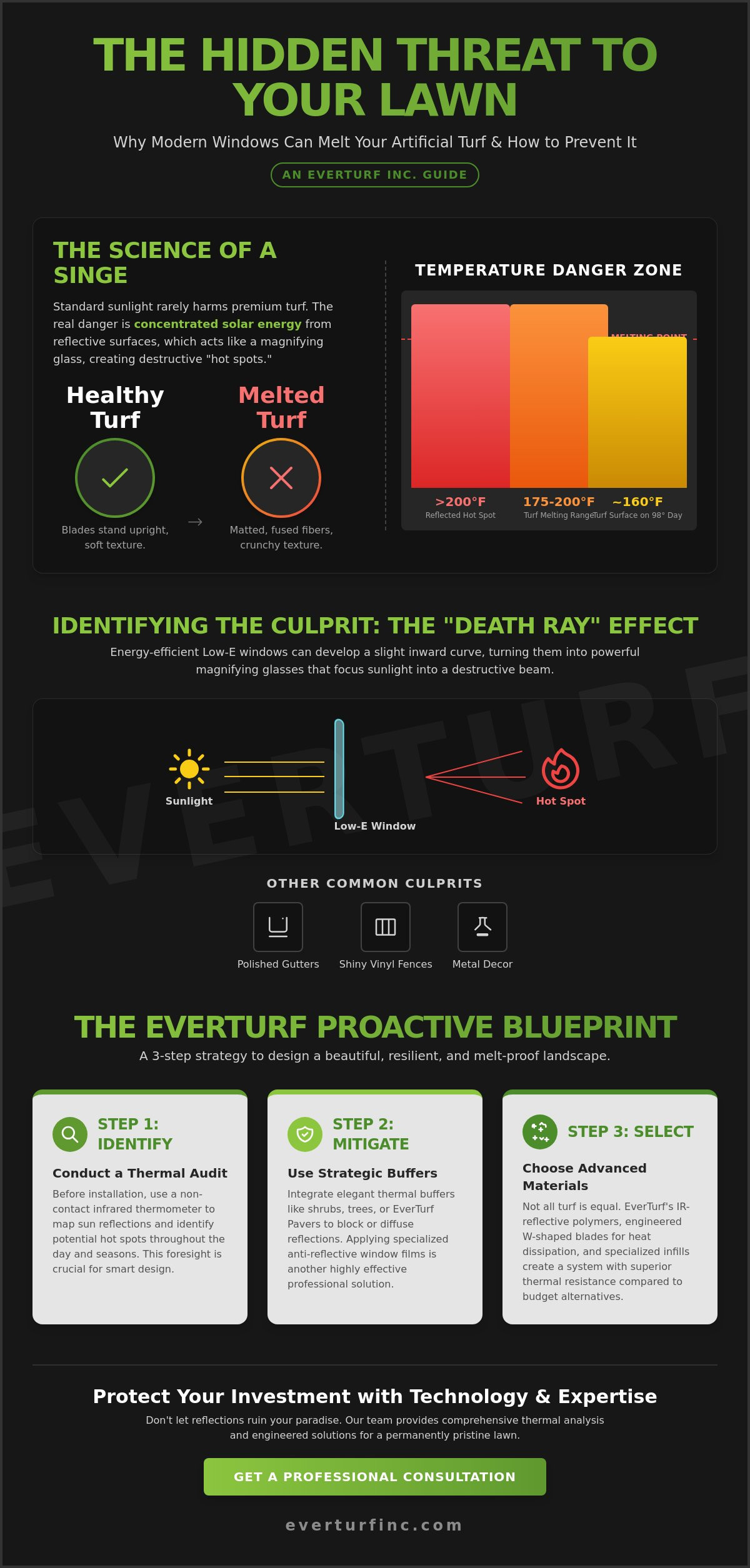
Understanding The Science of Synthetic Turf reveals why even the most stunning landscapes face thermal threats. While standard sunlight is rarely enough to compromise quality fibers, concentrated solar energy is a different beast entirely. Most high-quality polyethylene yarns have a melting point between 175°F and 200°F. On a standard 98°F day, surface temperatures can naturally reach 160°F. This is close to the danger zone but usually manageable for premium products. The real risk for 2026 homeowners lies in external factors that push these temperatures over the edge.
Thermal damage doesn’t always look like a puddle of plastic. It often starts as a subtle “matting” where the grass blades no longer stand upright despite regular brushing. As the heat intensifies, fibers may fuse together, creating a crunchy, discolored texture that ruins the soft, natural feel of your lawn. Identifying these early signs of singeing is the first step in preventing artificial turf from melting and preserving your tranquil outdoor sanctuary.
Magnification vs. Radiation
Ambient radiation warms the lawn evenly, but magnification creates localized destruction. Modern energy-efficient building standards require double-pane, Low-E windows. These windows often develop a slight concave shape due to pressure changes between the glass panes. This curve acts like a parabolic mirror, focusing a beam of intense light onto a specific patch of your lawn. These “hot spots” can easily exceed 200°F. It’s why preventing artificial turf from melting requires looking beyond the sky and toward your home’s architecture. Often, the culprit isn’t even your own home; a neighbor’s window at the right angle can reflect a destructive beam directly onto your landscape.
Material Thresholds in 2026 Turf Technology
Not all synthetic fibers are created equal. EverTurf Artificial grass is engineered with high-performance polymers that offer superior thermal resistance compared to budget alternatives. Cheap turf often uses lower-grade materials that can begin to soften or curl at much lower temperatures. The shape of the blade also plays a critical role in heat dissipation. W-shaped or ribbed fibers provide more surface area for air movement and create micro-shadows. Flat blades, by contrast, absorb and hold heat like a dark asphalt road, making them far more susceptible to damage in high-performance environments.
Identifying the Culprits: Low-E Windows and Reflective Surfaces
The quest for an energy-efficient home has created an unintended challenge for the modern landscape. Low-E (low-emissivity) glass is designed to keep your interiors cool by reflecting solar heat away from the building. While this saves on your monthly utility bills, it can turn your windows into powerful reflectors. Identifying these reflection points is the cornerstone of preventing artificial turf from melting. Beyond just windows, you must account for polished gutters, decorative mirrors, and even shiny vinyl fence panels. These surfaces can redirect intense energy onto your lawn, creating localized heat zones that standard grass simply can’t withstand.
The Low-E Window ‘Death Ray’ Explained
Physics dictates that double-pane windows aren’t perfectly static. Changes in barometric pressure often cause the glass to bow slightly inward, creating a concave surface. This curvature transforms your window into a magnifying glass. It focuses a beam of sunlight into a tight, moving spot that tracks across your yard. This phenomenon usually only occurs for a brief 20-minute window each day, but the intensity is extreme. scientific studies on turf heat have recorded these concentrated beams reaching temperatures that far exceed the melting point of synthetic fibers. You can often spot these zones by looking for unusually bright glare patterns on your home’s siding or fences during the afternoon.
Conducting a Pre-Installation Thermal Audit
Smart planning begins before a single roll of turf is delivered. We recommend conducting a thorough thermal audit to map out the sun’s path across your property during different seasons. Walk your yard during peak hours with a non-contact infrared thermometer. This tool allows you to identify “hot spots” where temperatures spike unexpectedly. Documenting these reflection points is vital before starting an artificial turf installation. It gives you the foresight to design around the heat rather than reacting to damage later.
If your audit reveals a persistent thermal zone, don’t feel discouraged. These areas often present an opportunity for creative design. You might consider installing a decorative border of EverTurf Pavers to act as a heat-resistant buffer. Mapping out these “no-turf” zones ensures your landscape remains a source of pride and tranquility. Consulting with a professional during the design phase can provide the logical evidence needed to justify these strategic choices, protecting your premium investment for the long term.
Proactive Design Strategies to Prevent Turf Singeing
Securing your landscape against thermal damage requires more than just a high-quality product; it demands a thoughtful, layered defense. While we’ve identified the sources of heat, preventing artificial turf from melting truly begins with architectural and environmental adjustments. By treating your yard as a cohesive ecosystem, you can neutralize “hot spots” before they ever touch a single blade of grass. This proactive approach ensures your outdoor space remains a sanctuary of cool tranquility rather than a maintenance headache.
A primary line of defense involves applying high-quality anti-reflective window films. These films diffuse the sun’s energy, breaking up the concentrated beams that cause singeing. Beyond the lawn itself, managing the dangers of high temperatures is a matter of safety for your family and pets. Since surface temperatures can spike rapidly, creating shaded zones through the use of awnings, pergolas, or retractable shade sails offers immediate relief for both the turf and those enjoying it. These structures don’t just protect the fibers; they extend the hours you can comfortably spend outdoors.
Architectural Interventions
Sometimes the most elegant solution is to design around the physics of your home. If your thermal audit revealed a specific “strike zone” where reflections are most intense, consider installing EverTurf Pavers in that area. These stone elements add a sophisticated texture to your landscape while acting as a heat-resistant buffer. You can also install external solar screens or mesh shades on the offending windows. These simple additions diffuse the light at the source, preventing the concave magnification effect entirely. Adjusting the pitch of your existing awnings can also provide a seasonal shield that blocks the sun precisely when it’s at its most dangerous angle.
Landscaping for Shade and Protection
Nature provides some of the most effective tools for preventing artificial turf from melting. Strategic planting involves placing tall, heat-tolerant shrubs or trees where they can break the line of sight between reflective surfaces and your lawn. Think of these plants as “solar sponges” that absorb and dissipate energy that would otherwise damage your turf. Vertical gardens or ivy-covered trellises are particularly effective at neutralizing reflections from shiny vinyl fences or metal siding. To keep your perimeter crisp and protected, use durable bender boards to separate your EverTurf from these heat-absorbing garden beds. This creates a clean aesthetic that highlights the beauty of your lawn while ensuring its long-term durability.
Maintenance and Material Choices for High-Heat Environments
Maintaining a pristine landscape in 2026 requires a deeper understanding of how materials interact with our changing climate. While the design buffers we discussed earlier mitigate external reflections, your choice of internal components is equally vital for preventing artificial turf from melting. High-performance turf systems are built on more than just aesthetics; they rely on a synergy of materials that manage thermal energy efficiently. By selecting high-melting-point polymers and a proactive maintenance routine, you transform a potential frustration into a permanent, tranquil retreat.
The Cooling Power of EverTurf Infill
The foundation of a cool lawn starts beneath the blades. The right turf infill is your primary defense against internal heat buildup. While traditional crumb rubber tends to trap and radiate heat, modern antimicrobial acrylic-coated infills stay significantly cooler under direct sun. EverTurf Infill acts as a sophisticated heat sink, pulling thermal energy away from the delicate polyethylene blades to keep the surface comfortable for feet and paws. EverTurf Infill serves as a thermal stabilizer by absorbing ambient heat and preventing it from concentrating within the individual yarn fibers.
Managing Surface Temperatures
Hydration plays a transformative role in surface temperature management through a process known as hydro-cooling. Briefly misting your lawn during the hottest part of the day provides immediate relief; as the water evaporates, it can lower surface temperatures by as much as 50 degrees. It’s a simple, elegant way to maintain comfort during a record-breaking heatwave. Don’t make the mistake of using reflective tarps or plastic covers to protect the grass. These materials often trap heat and create a greenhouse effect that can actually accelerate fiber damage rather than preventing it.
Cleanliness is another overlooked factor in preventing artificial turf from melting. Small pieces of debris, such as glass shards, shiny candy wrappers, or metallic fragments, can act as tiny magnifying lenses that focus sunlight into destructive points. Regular brushing is also essential. It keeps the blades upright, ensuring better airflow and preventing the dense matting that traps pockets of stagnant, hot air. In humid regions, proper drainage is non-negotiable because stagnant water can turn into steam during extreme heat spikes, potentially softening the turf backing. Ensure your landscape remains a worry-free sanctuary by selecting the right components from the start. Explore our premium EverTurf Infill options to enhance the longevity and comfort of your lawn.
How EverTurf Engineered Solutions Protect Your Investment
Choosing the right synthetic system is about more than just finding a vibrant shade of green; it’s about investing in a lifestyle upgrade that’s engineered to last. While understanding the physics of heat is essential, the ultimate success of your landscape depends on the quality of the materials you select. EverTurf Inc provides a sophisticated answer to the thermal challenges of the modern home. Our systems are designed to offer long-term relief from the frustrations of traditional maintenance, giving you back your personal time and the tranquility of a perfect outdoor space.
Our commitment to preventing artificial turf from melting begins at the molecular level. EverTurf Inc utilizes advanced polymer technology that raises the thermal threshold of every fiber we produce. This engineering ensures that your lawn remains resilient even when facing the concentrated reflections common in 2026 residential environments. When you choose a premium solution, you aren’t just buying grass; you’re securing a permanent environment that maintains its beauty and structural integrity year after year.
Why Quality Materials Matter
The superior thermal stability found in EverTurf Putting Green Pro and our high-end landscape lines is a result of rigorous testing and specialized manufacturing. These products are built to handle extreme temperature shifts without the curling or matting seen in budget-grade alternatives. This durability is particularly vital for our pet-friendly turf, which must remain comfortable and safe for your companions during peak summer heat. Investing in high-grade synthetic grass from EverTurf Inc offers a significant long-term ROI by eliminating the need for costly patch repairs or premature replacements. It’s a logical choice for the homeowner who values quality and time above all else.
Partner with EverTurf Professionals
While DIY projects can be rewarding, preventing artificial turf from melting often requires the seasoned eye of a professional. DIY installations frequently miss critical thermal reflection points that only become apparent after the damage is done. EverTurf Inc maintains a national network of experts who act as a Reliable Visionary for your property, identifying potential risks from neighboring windows or reflective siding before the first staple is ever driven. We take a consultative approach, mapping out your yard’s unique thermal profile to ensure every square foot is protected from concentrated solar energy. This expert foresight transforms a high-maintenance situation into a worry-free sanctuary.
You deserve an outdoor space that reflects the beauty and organization of your home. Take the first step toward a more beautiful and stress-free version of your property today. Our team is ready to help you navigate the complexities of thermal protection with a sophisticated, permanent solution. Protect your lawn with an EverTurf professional assessment and discover the peace of mind that comes with a truly resilient landscape.
Secure Your Everlasting Outdoor Sanctuary
Transforming your property into a resilient haven requires a blend of scientific foresight and premium engineering. You now understand that preventing artificial turf from melting isn’t just about the grass itself; it’s about managing the entire thermal landscape. From identifying the magnifying effects of modern windows to choosing materials that can withstand localized heat spikes, you have the blueprint for a permanent, beautiful result. Each layer of protection adds to the long-term satisfaction of your investment.
EverTurf is dedicated to this vision of longevity and leisure. We provide high-performance polymers with elevated melting points and offer expert thermal landscape consultations to identify risks before they manifest. Our national distribution of heat-dissipating EverTurf Infill ensures that your lawn remains a cool, inviting retreat even during the peak of summer. You don’t have to settle for the anxiety of a high-maintenance investment when a sophisticated, heat-resistant solution is within reach.
Take the next step toward a more tranquil and worry-free lifestyle. Design your heat-resistant oasis with EverTurf today and reclaim your personal time in a space built to endure. Your perfect, year-round landscape is finally within grasp.
Frequently Asked Questions
Can the sun alone melt my artificial turf?
Direct sunlight is rarely capable of melting high-quality synthetic fibers on its own. While standard polyethylene can reach high temperatures on a summer day, it typically requires a secondary reflective source to reach the actual melting point. Problems usually arise when sunlight bounces off a concentrated surface, such as a window or polished metal, and focuses that energy into a single spot. This is why preventing artificial turf from melting involves looking at your entire environment rather than just the air temperature.
What temperature does artificial grass start to melt?
Most premium artificial grass products, including our EverTurf lines, are engineered to withstand temperatures between 175°F and 200°F. Since ambient air temperatures rarely exceed 120°F even in the most extreme climates, the turf remains stable under normal conditions. However, concentrated reflections from Low-E windows can easily spike surface temperatures above 200°F in minutes. Understanding these thresholds helps you appreciate why managing external reflections is the most critical part of your landscape’s longevity.
Will window film really stop my grass from burning?
Anti-reflective window film is one of the most effective tools for protecting your lawn. It works by diffusing the sun’s rays as they hit the glass, preventing the “magnifying glass” effect that causes singeing. Instead of a focused beam of heat, the energy is scattered harmlessly across the area. It’s a sophisticated, low-profile solution that preserves your home’s energy efficiency while ensuring your landscape remains a pristine, worry-free sanctuary.
Are certain types of turf more resistant to melting than others?
Yes, the polymer quality and blade shape significantly impact thermal resistance. EverTurf Artificial grass is manufactured with high-performance polymers that offer superior stability compared to budget-grade options. Additionally, blade shapes like the “W” or ribbed profiles create micro-shadows and allow for better airflow than flat blades. These technical specifications are essential for preventing artificial turf from melting in high-performance environments where heat management is a priority.
How do I fix a small melted spot in my artificial grass?
Melted spots require a professional “cookie cutter” repair to restore the lawn’s seamless beauty. An expert installer carefully cuts out the damaged fibers and replaces them with a matching piece of turf from your original installation remnants. The new piece is secured using EverTurf Staples and Glue to ensure the seam is invisible and durable. While the repair itself is straightforward, it’s vital to address the heat source first to prevent the new patch from suffering the same fate.
Do I need to worry about my neighbor’s windows melting my turf?
Reflections don’t respect property lines, so a neighbor’s windows can certainly impact your lawn. If a nearby home has Low-E glass at the right angle, it can project a heat beam directly onto your landscape during specific times of the day. During a thermal audit, it’s wise to observe the sun’s path and any glares coming from surrounding structures. If a neighbor’s window is the culprit, you might consider design-based solutions like tall shrubs or a decorative pergola to block the reflection path.
Can I use a sprinkler to keep my turf from melting on hot days?
Using a sprinkler for “hydro-cooling” is an excellent way to lower the surface temperature for comfort, but it isn’t a permanent fix for reflective melting. Misting the grass can drop temperatures by 30 to 50 degrees through evaporation, making it much more pleasant for bare feet. However, a sprinkler won’t stop a concentrated “hot spot” from a window if the beam is intense enough. Think of hydration as a tool for comfort rather than a primary defense against structural thermal damage.
Is melted turf covered under my manufacturer’s warranty?
Most manufacturers consider melting to be the result of an external environmental factor rather than a product defect. Since the damage is caused by concentrated light from windows or other reflective surfaces, it typically falls outside standard warranty coverage. This is why we emphasize the importance of a professional thermal audit during your artificial grass installation. Identifying and neutralizing these risks early is the best way to protect your investment and ensure long-term satisfaction.