



How to Write a Business Plan for a Turf Installation Company in 2026
With the global artificial turf market projected to reach $4.38 billion in 2026, the shift from high-maintenance sod to specialized synthetic solutions represents a massive opportunity for growth. You’ve likely noticed that homeowners are increasingly trading the frustration of traditional lawn care for the tranquility of a pristine, evergreen outdoor space. However, navigating high inventory costs and the complexity of 2026 water conservation regulations requires more than just a passion for aesthetics. Learning how to write a business plan for a turf installation company 2026 is the essential first step toward transforming your vision into a professional, investor-ready reality.
We understand that moving away from volume-based landscaping to high-margin installations can feel overwhelming. You want a clear strategy that differentiates your brand and addresses the modern demand for eco-friendly, UV-stabilized materials. This guide provides a comprehensive blueprint to master your planning, from selecting high-performance EverTurf products to building a sustainable growth model. We’ll walk through the specific sections your document needs to secure bank funding, target profitable niches like putting greens, and help your clients finally reclaim their weekends.
Key Takeaways
- Transition from a general service provider to a high-margin industry leader by aligning your business model with the 2026 demand for eco-friendly, water-saving landscapes.
- Pinpoint high-growth niches like antimicrobial pet turf and premium putting greens to differentiate your brand from generic lawn care competitors.
- Master every phase of how to write a business plan for a turf installation company 2026 to create a professional roadmap ready for banks or private investors.
- Build a resilient operation by partnering with an expert supplier to ensure access to a diverse catalog of durable, lush, and high-performance synthetic materials.
- Implement value-based pricing and a visual-first marketing strategy that emphasizes the emotional relief of reclaiming your weekends and enjoying a year-round vibrant property.
Why a Specialized Turf Business Plan is Essential in 2026
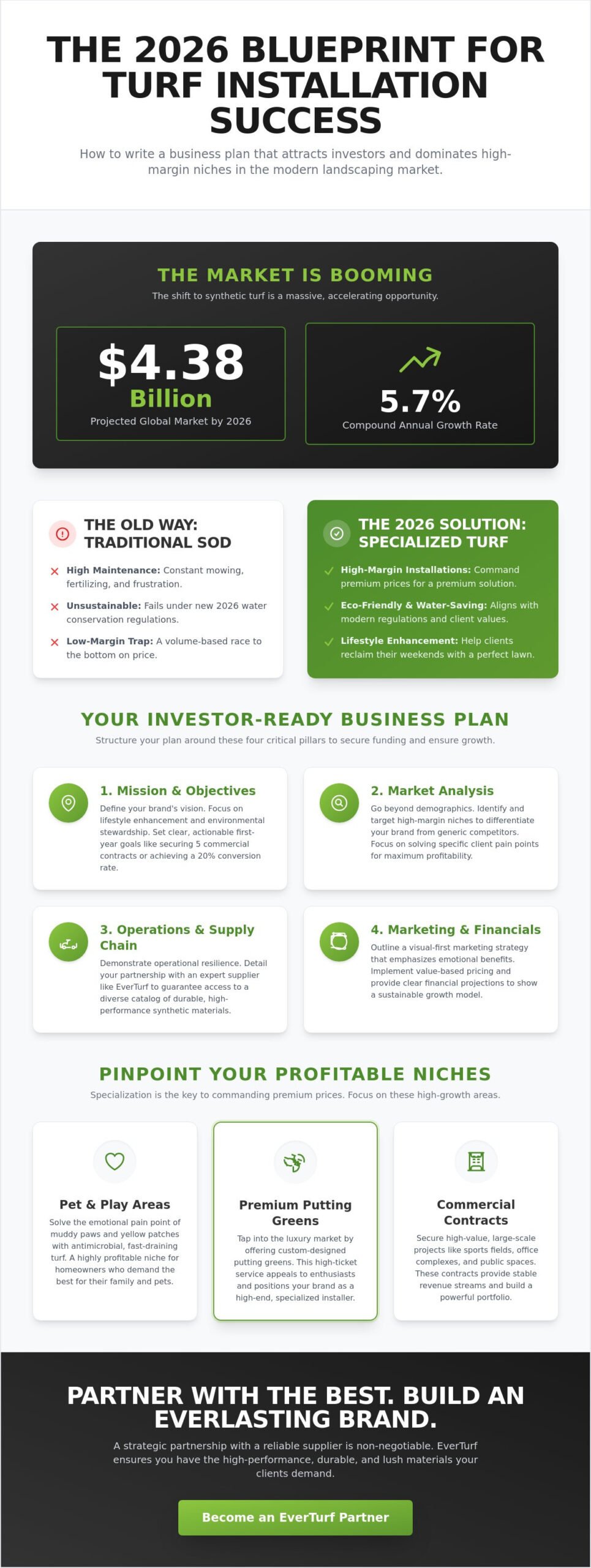
The landscaping industry is undergoing a permanent transformation. As we enter 2026, the global artificial turf market is projected to reach $4.38 billion, growing at a steady 5.7% CAGR. This isn’t just about selling a product; it’s about providing a sophisticated, water-saving solution to homeowners who are tired of the endless cycle of mowing and fertilizing. Understanding how to write a business plan for a turf installation company 2026 allows you to position your business as a visionary leader rather than just another local contractor. A formal document acts as your roadmap, helping you move away from low-margin general landscaping toward high-ticket synthetic installations that offer long-term satisfaction.
The 2026 Market Landscape
Water conservation is no longer a suggestion; it’s a regulatory reality. Local authorities across the country are tightening restrictions, making traditional sod an expensive and unsustainable liability. This shift has birthed “lifestyle landscapes,” where pristine, evergreen outdoor spaces are valued for their beauty and their ability to help clients reclaim their weekends. Unlike generic lawn care, which relies on high-volume, low-margin maintenance, specialized turf installation commands a premium. By focusing on high-performance materials like UV-stabilized and antimicrobial turf, you tap into a market that values quality and durability over the cheapest price tag.
Setting Your Mission and Objectives
Your business plan should be more than a collection of numbers. It needs to articulate a vision of permanence. When you consult this comprehensive guide to business plans, you’ll see that a strong mission statement defines your brand’s soul. For a turf company, your mission should emphasize lifestyle enhancement and environmental stewardship. Consider these objectives for your first year:
- Secure five high-value commercial contracts for sports fields or office complexes.
- Achieve a 20% lead conversion rate by highlighting specialized pet-friendly drainage features.
- Establish a strategic partnership with a reliable supplier like EverTurf to ensure a consistent inventory of premium products.
Your unique value proposition (UVP) must highlight why your installations stay lush and vibrant while others fade. Focus on the technical advantages, such as superior drainage and heat-resistant fibers, which provide the logical evidence homeowners need to justify a premium investment. Securing financing in this high-growth market requires this level of transparency. Banks and investors in 2026 look for businesses that understand their supply chain and local climate challenges. A well-crafted plan demonstrates that you’ve accounted for inventory costs and have a clear strategy for sustainable growth. It’s about building an everlasting brand that transforms how your community experiences the outdoors.
Market Analysis: Defining Your Profitable Turf Niches
To build a resilient company, you must identify where the highest margins live. Generic landscaping is often a race to the bottom on price, but specialized synthetic turf installation is a premium service that rewards expertise. When researching how to write a business plan for a turf installation company 2026, your market analysis section needs to be precise. You aren’t just selling synthetic blades; you’re selling permanent solutions for specific lifestyles. Consulting the SBA guide to writing a business plan can help you structure these demographics effectively. In 2026, the market is bifurcated between high-end residential luxury and specialized commercial utility.
Residential Pet and Play Areas
Homeowners don’t just want a lawn. They want a sanctuary. For the millions of pet owners across the country, traditional grass is often a source of daily frustration. Muddy paws and yellow patches are constant battles that natural sod simply can’t win. By offering artificial grass for dogs, you provide an antimicrobial, fast-draining surface that remains pristine year-round. This niche is highly profitable because it solves a recurring emotional pain point. Similarly, safety-rated play areas for young families represent a growing segment, as parents prioritize soft-fall surfaces that don’t require chemical fertilizers or heavy pesticides.
Specialized Athletic and Recreational Surfaces
The luxury backyard market has evolved into professional-grade recreational spaces. High-net-worth clients are increasingly investing in an EverTurf Putting Green to sharpen their short game without leaving home. This isn’t just about aesthetics; it’s about the technical performance of the roll and the durability of the fringe. Beyond backyards, urban density is driving demand for roof and deck installations. In cities where green space is scarce, transforming a concrete balcony into a lush retreat is a high-margin opportunity. For larger commercial clients, bidding on soccer and football fields requires a deep understanding of G-max ratings and high-performance infill, positioning you as a technical authority in the field.
Identifying these niches early ensures your marketing spend isn’t wasted on generic leads. If you’re ready to explore these specialized options, browsing a premium turf catalog is a great way to see what’s possible for your future clients. A clear focus on these high-value segments will make your business plan much more attractive to potential investors who want to see a specialized growth strategy.
Operations and Supply Chain: Choosing Your Strategic Partners
A supply chain is the silent backbone of any successful installation business. While many generic guides focus solely on crew management, a professional strategy for 2026 must prioritize the distributor relationship. Your chosen partner dictates the quality of the “lifestyle landscape” you provide. If you’re learning how to write a business plan for a turf installation company 2026, you need to detail how you’ll source materials that withstand heavy rainfall and intense UV exposure. Relying on a reliable visionary as a supplier ensures your projects remain vibrant and lush for decades rather than fading after a single season.
Logistics in the turf industry are complex. You aren’t just moving rolls of grass; you’re coordinating the delivery of heavy base materials and specialized components. According to this step-by-step business plan guide, operational clarity is what separates a hobby from a high-growth enterprise. Your plan should outline how you’ll manage inventory to avoid project delays, ensuring that staples, glue, and drainage layers are always on hand when the crew arrives on site.
The Importance of Premium Materials
Quality is your defense. High-performance materials are the best way to reduce costly warranty claims and build a pristine reputation. In 2026, clients expect more than just green plastic; they want high-performance systems that feel natural underfoot. This includes sourcing the right turf infill to maintain blade uprightness and improve drainage. By investing in antimicrobial and UV-stabilized products, you offer a permanent solution that justifies a premium price point. Consistent availability from your supplier prevents the scheduling nightmares that often plague smaller, unorganized contractors.
Installation Standards and Quality Control
Precision installation transforms a product into a lifestyle enhancer. Your business plan must define strict standard operating procedures (SOPs) for site preparation to ensure long-term satisfaction. Every project requires a disciplined approach to ground stabilization and drainage. Consider these essential steps for your SOPs:
- Excavation and removal of existing organic material to a depth of 3 to 4 inches.
- Installation of a stable, crushed stone base for superior drainage.
- Precise seaming using industrial-grade glue and galvanized staples.
- Final grooming and infill application to ensure an evergreen appearance.
Implementing a multi-point inspection for every completed lawn ensures the seams are invisible and the edges are secure. Training your crew in these precision techniques builds the trust and transparency that modern homeowners demand. It’s this commitment to technical excellence that allows your clients to finally reclaim their weekends in a worry-free, pristine outdoor space.
Marketing and Financial Projections for a Turf Startup
Growth isn’t just about the number of jobs; it’s about the quality of the revenue. When you’re outlining how to write a business plan for a turf installation company 2026, your financial section must reflect the premium nature of the product. The global artificial turf market is set to expand to $4.38 billion by 2026, but capturing your share requires a sophisticated pricing strategy. Moving away from simple cost-plus models toward value-based pricing allows you to charge for the tranquility and time you’re giving back to your clients. Understanding the specific artificial turf installation cost variables, such as the $4 to $9 per square foot labor average, is critical for maintaining healthy margins during high-demand spring and summer seasons.
Acquiring Your First 10 Clients
Visual evidence is your most powerful closer. In 2026, high-intent homeowners are looking for vibrant transformations they can see. Use high-resolution “before and after” galleries to showcase how a patchy, brown yard becomes a pristine sanctuary. Beyond visual social media, the 2026 landscape uses AI-driven lead generation tools to identify properties in areas with strict water regulations or high drought risk. These tools help you find customers who are already feeling the frustration of natural lawn maintenance. Building referral networks with local pool contractors and pavers is also essential; these professionals often work with clients already in a “lifestyle upgrade” mindset.
Financial Planning and ROI
Investors want to see that you’ve mastered the math of sustainability. For a typical 500-square-foot yard, which averages around $7,671 according to 2026 industry data, you must account for ground preparation, weed barriers, and high-quality infill. Your plan should clearly define your break-even point, factoring in equipment like plate compactors and turf cutters. Providing clients with clear ROI data is a persuasive tool. Highlight the significant savings on water bills and the hundreds of hours reclaimed from mowing. This logical evidence justifies the premium investment in a permanent, evergreen solution. If you’re ready to start crunching the numbers for your own venture, you can request a professional turf catalog to see current material specifications.
Launching with EverTurf: Your Strategic Supply Partner
A masterfully crafted roadmap is only the beginning of your journey. To transform a vision into a thriving reality, your business needs a supply partner that shares your commitment to technical excellence and aesthetic beauty. When you finalize how to write a business plan for a turf installation company 2026, the operational success of your venture depends on the reliability of your materials. EverTurf Inc provides that essential foundation, offering a sophisticated catalog that allows you to fulfill every specialized niche identified in your market analysis. From high-performance sports fields to antimicrobial pet areas, our products are engineered to provide the tranquility of a perfect, year-round outdoor space.
Partnering with a reliable visionary means you aren’t just buying synthetic grass; you’re investing in a supply chain that understands the specific challenges of local climates and heavy rainfall. Our professional-grade EverTurf Infill, industrial staples, and specialized glue ensure that every installation meets the high standards your clients expect. This technical evidence is what allows you to justify a premium investment and helps your customers finally reclaim their weekends. Moving from a written plan to your first installation requires a partner who can guarantee product availability even during the peak demand of the spring and summer seasons.
Why EverTurf is the Reliable Visionary Choice
Selecting a supplier is a critical decision that impacts your long-term reputation. EverTurf products are UV-stabilized and designed for superior drainage, ensuring the lawns you install remain vibrant and pristine for decades. This durability reduces costly warranty claims and builds the long-term satisfaction that drives organic referrals. By using our comprehensive range of artificial turf, you deliver on the promise of an evergreen lifestyle that traditional sod simply can’t match. Our national supply chain strength means you can confidently bid on larger commercial projects, knowing your inventory will arrive on time and as specified.
Get Started Today
Now that you’ve mastered how to write a business plan for a turf installation company 2026, it’s time to move from theory to execution. Review our extensive product line, including EverTurf Putting Green Pro and EverTurf Play, to inform the specific service offerings in your business plan. Contact our team today to discuss wholesale pricing and learn how a strategic partnership can help stabilize your startup inventory costs. Finalizing your strategy now ensures you’re ready to transform outdoor environments into maintenance-free oases the moment your first contract is signed. Take the first step toward building a permanent, high-growth business that enhances the lifestyles of your community.
Build Your Everlasting Business Legacy
Success in the synthetic landscape industry requires a transition from general labor to specialized, high-margin expertise. By focusing on profitable niches like professional-grade putting greens and antimicrobial pet zones, you differentiate your brand in a competitive 2026 market. Mastering how to write a business plan for a turf installation company 2026 ensures you have the technical roadmap and financial clarity needed to secure investment and manage high-demand seasons. Your plan acts as a promise of quality to your future clients, moving them toward a stress-free, evergreen lifestyle.
The final piece of your strategy is a supply chain that never falters. With a national distribution network and a comprehensive inventory of UV-stabilized fibers, infill, and accessories, EverTurf Inc provides the professional authority your new venture needs. You don’t have to navigate the complexities of inventory management alone. Partner with EverTurf Inc for your 2026 business launch to access high-performance turf for residential and athletic use. Transform your vision into a permanent solution that helps your community reclaim their weekends. The time to build your pristine future is now.
Frequently Asked Questions
How much does it cost to start a turf installation company in 2026?
Start-up costs typically cover essential equipment like plate compactors and turf cutters, along with initial inventory and marketing capital. While total investment varies by scale, industry data for 2026 shows the average cost to install a 500-square-foot yard is approximately $7,671. Your plan should account for these material and labor expenses to ensure you remain well-capitalized for your first six months of operations as you build your brand presence.
Do I need a special license to install artificial grass?
Licensing requirements are determined at the state and local level rather than by federal regulations. Most regions require a general contractor’s or specialty landscaping license to operate legally and pull necessary permits. You must consult your local building department or state licensing board to confirm the specific credentials needed for synthetic installations in your area. Detailing these compliance steps is a vital part of learning how to write a business plan for a turf installation company 2026.
What is the most profitable niche in the synthetic turf industry?
Premium residential projects, specifically professional-grade putting greens and antimicrobial pet turf, currently offer the highest profit margins for installers. These specialized niches solve specific lifestyle pains, such as muddy paws or the need for a pristine practice space, allowing for value-based pricing rather than a race to the bottom. Commercial sports fields also represent high-value contracts, though they require more intensive equipment and larger crews to execute properly according to technical specifications.
How do I find reliable turf distributors for my new business?
Finding a strategic supply partner involves evaluating their product specifications, such as antimicrobial properties and UV stability ratings. Reliable distributors like EverTurf provide a consistent catalog and a national distribution network, which is essential for maintaining your project schedule. You should prioritize suppliers who offer technical support and a wide range of accessories, including specialized infill and industrial-grade adhesives, to ensure your installations remain pristine for decades.
What equipment is essential for a turf installation startup?
You’ll need a reliable inventory of tools including plate compactors, power brooms, turf cutters, and carpet kickers for precision seaming. For site preparation, access to a sod cutter or skid steer is necessary to remove organic material to a depth of 3 to 4 inches. Investing in high-quality equipment from the start ensures your crew can maintain the technical standards needed for invisible seams and superior drainage on every project you complete.
Can I run a turf installation business year-round?
Year-round operations are possible in most climates, especially as homeowners seek permanent solutions to seasonal lawn maintenance frustrations. While spring and summer are peak demand seasons, winter installations are common in regions without deep ground freezes. Your business plan should include a strategy for managing cash flow during slower months and adapting installation schedules to local weather patterns, such as avoiding base preparation during heavy rainfall to ensure ground stability.
How do I price artificial turf installation projects for profit?
Profitable pricing factors in labor costs, which typically range from $4 to $9 per square foot, alongside material expenses for turf and specialized infill. When you’re determining how to write a business plan for a turf installation company 2026, emphasize the ROI your clients receive from water savings and reclaimed weekends. This approach allows you to move away from a cost-plus model and instead charge for a sophisticated, permanent outdoor solution that enhances their property value.
Is artificial turf still in high demand for 2026?
Market demand is increasing, with the global artificial turf market projected to reach $4.38 billion by 2026. The industry is seeing a 5.7% compound annual growth rate as water conservation regulations tighten across the country. This growth is driven by a desire for year-round green spaces that don’t require chemical fertilizers or excessive irrigation, making synthetic solutions a preferred choice for modern homeowners who value both aesthetics and environmental responsibility.