
Commercial Artificial Grass Cost Per Square Foot: The 2026 Business Guide
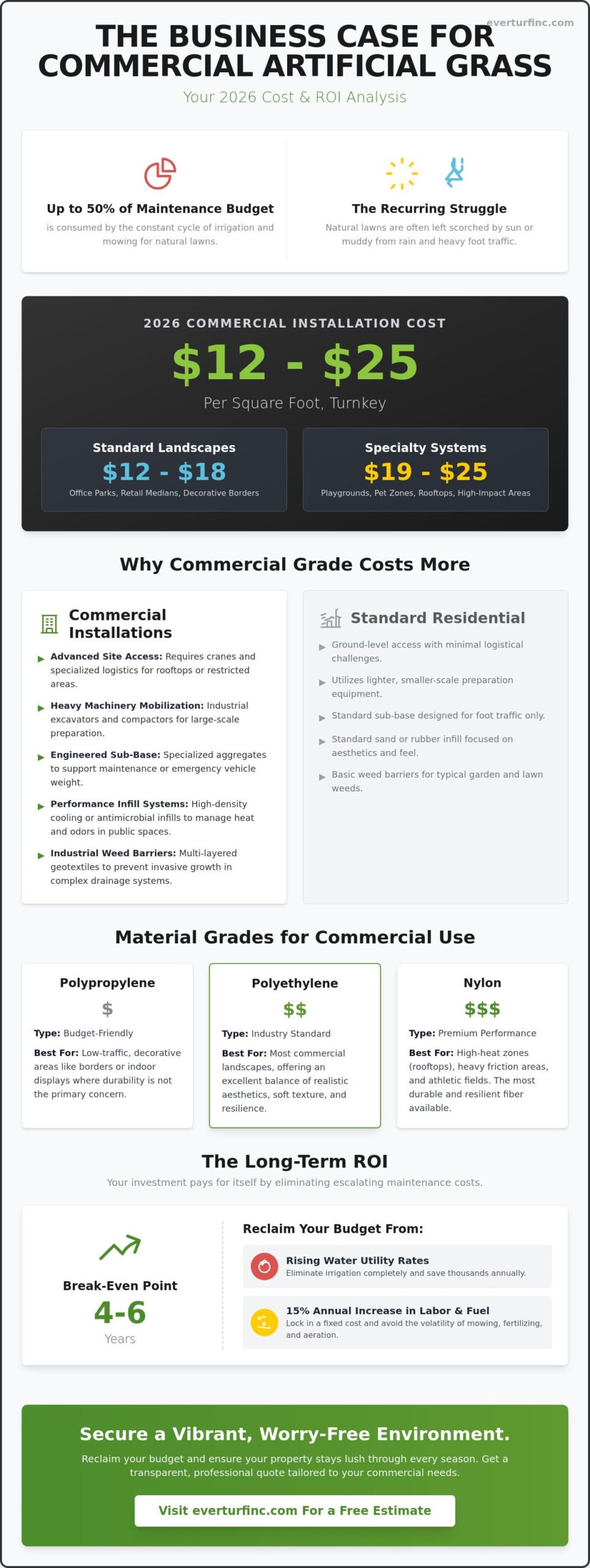
What if your landscape could pay for itself within the next 48 months? For many property owners, the constant cycle of irrigation and mowing consumes nearly 50% of their total exterior maintenance budget. You likely agree that a pristine, evergreen first impression is vital, yet the recurring struggle against humidity and heavy foot traffic often leaves your lawn looking scorched or muddy. This guide clarifies the commercial artificial grass cost per square foot for 2026, helping you distinguish between standard residential turf and the high-performance, antimicrobial systems required for professional spaces.
You’ll unlock a detailed breakdown of pricing factors, from UV-stabilized material grades to the technical labor involved in superior drainage installation. We provide a transparent look at the long-term ROI, comparing the upfront investment against the significant water savings you’ll see over the next 10 years. It’s the roadmap you need to reclaim your budget and secure a vibrant, worry-free environment that stays lush through every season. We will explore material specifications, site preparation requirements, and the specific durability markers that define a high-quality commercial installation.
Key Takeaways
- Navigate the 2026 market with a clear understanding of why the commercial artificial grass cost per square foot ranges from $12 to $25 for high-durability installations.
- Identify the critical differences between material grades and face weights to ensure your selection withstands the rigors of heavy commercial foot traffic.
- Uncover the technical requirements of professional base layers and drainage systems that protect your landscape and ensure long-term stability.
- Evaluate the true ROI of your investment by analyzing the break-even point where maintenance savings and enhanced curb appeal begin to drive property value.
- Explore specialized applications for your facility, from vibrant rooftop terraces to high-performance sports fields designed for permanent beauty and safety.
Commercial Artificial Grass Cost Per Square Foot in 2026
Transforming a commercial property into a vibrant, evergreen sanctuary requires a strategic understanding of modern budgeting. In 2026, the national average commercial artificial grass cost per square foot sits between $12 and $25 for a professional, turnkey installation. This investment represents a shift toward EverTurf permanence, a solution that eliminates the unpredictable volatility of rising natural lawn care labor and water utility rates. While wholesale materials might appear cheaper on a spec sheet, the all-in price ensures your project withstands the unique pressures of high-traffic business environments.
Businesses are increasingly viewing synthetic turf as a capital improvement rather than a simple maintenance expense. By locking in a fixed cost today, property managers can reclaim their budgets from the 15% annual increase in fuel and labor costs associated with traditional mowing crews. Our Florida-specific expertise shows that high-durability systems pay for themselves within 4 to 6 years, providing a pristine aesthetic that never fades under the intense Southern sun.
The 2026 Pricing Landscape for Synthetic Solutions
The price you’ll pay depends heavily on the intended use of the space. Standard commercial landscapes, such as office park perimeters or retail median strips, typically range from $12 to $18 per square foot. If your project requires specialty systems, such as high-impact playground surfacing or antimicrobial pet zones, expect quotes between $19 and $25. These 2026 figures reflect the current scarcity of skilled trade labor and the increased logistics costs for site preparation. For a baseline comparison of how these figures scale against smaller projects, consult our artificial turf installation cost guide.
Why Commercial Quotes Differ from Residential Estimates
Commercial installations involve complexities that residential projects simply don’t face. The “accessibility factor” is a primary driver of cost. Installing a lush, green courtyard on a 15th-floor rooftop or a restricted-access hospital terrace requires specialized cranes and rigorous safety compliance. Additionally, the scale of mobilization for heavy machinery like industrial excavators and base-compactors impacts the final commercial artificial grass cost per square foot.
The technical requirements for public-facing spaces are also more demanding. Since the history of artificial turf moved from professional stadiums into the mainstream, the industry has developed higher-grade components specifically for heavy foot traffic. Commercial projects utilize:
- Advanced Infill Systems: Higher-density cooling or antimicrobial infills that prevent odors and heat retention in public plazas.
- Industrial Weed Barriers: Multi-layered geotextiles designed to prevent invasive growth in large-scale drainage systems.
- Sub-Base Engineering: Specialized rock aggregates that can support the weight of maintenance vehicles or emergency equipment.
Choosing a professional installation ensures these technical layers work in harmony, delivering the long-term satisfaction and relief that comes with a truly maintenance-free landscape.
Material Selection: Why High-Traffic Commercial Grade Costs More
The longevity of your landscape depends entirely on the raw polymers used to create each blade. While residential lawns prioritize soft textures, commercial environments demand structural integrity. Selecting the wrong material can lead to premature wear, which ultimately inflates the commercial artificial grass cost per square foot over the life of the installation. Most business applications utilize one of three primary materials: Polypropylene, Polyethylene, or Nylon.
Polypropylene is the budget-friendly option, often used for low-traffic decorative borders where aesthetics matter more than durability. Polyethylene serves as the industry standard, offering a balance of realistic aesthetics and resilience. For high-heat zones or areas prone to heavy friction, Nylon stands as the premium choice. It withstands temperatures that would melt lesser fibers, making it the go-to for Florida rooftops and intense athletic zones. When evaluating these options, it is helpful to consider the pros and cons of synthetic turf compared to natural grass, especially regarding long-term maintenance cycles and heat retention in urban centers.
To ensure your investment remains vibrant under the intense Southern sun, we utilize UV-stabilized fibers. This specialized manufacturing process prevents “sun-bleach” and fiber degradation in large, open commercial plazas that lack natural shade. For businesses looking to add high-end amenities, the EverTurf Putting Green Pro offers a specialized high-density configuration designed specifically for corporate recreation and professional-grade performance.
Polyethylene vs. Nylon in Commercial Environments
Polyethylene provides the lush, vibrant feel that most property managers desire for common areas and entryways. However, Nylon remains the superior choice for resilience in high-friction zones because its molecular structure resists “crushing” better than any other polymer. Pile height refers to the length of the grass blades from the backing to the tip, and choosing a taller, more luxurious profile typically accounts for a $2 to $3 per foot price variance due to the increased material volume required. If you are designing a space for heavy public use, Nylon ensures an evergreen appearance that won’t flatten over time.
The Importance of Face Weight and Density
Commercial projects require a minimum 60-80 oz face weight to ensure the surface can withstand thousands of footsteps monthly. Face weight measures the actual ounces of yarn per square yard; higher numbers indicate a thicker, more durable product. This density is your primary defense against “matting,” where fibers lay flat and lose their natural look. To understand how specific blade geometries contribute to this strength, you can view our ultimate guide to artificial grass which details the science of fiber shapes. High-density turf keeps your property looking pristine and professional, allowing you to reclaim your weekends from the constant worry of landscape repairs. If you are ready to elevate your business exterior, consider how our premium turf solutions can create a lasting first impression for your clients.
Installation Complexity: Factors Driving Square Foot Pricing
Transforming a commercial property into an evergreen sanctuary begins with what lies beneath the surface. The foundation of your project dictates the longevity and aesthetic appeal of the final result. When calculating the commercial artificial grass cost per square foot, you’re investing in a complex engineering process that starts with excavation. Crews must remove 3 to 4 inches of existing soil to create a blank canvas. This phase involves heavy machinery and significant dumping fees, as hauling away tons of earth requires specialized logistics and disposal permits.
Once the site is clear, installers build the base layer. A mix of Class II road base or decomposed granite provides the stability needed for a commercial environment. This isn’t just about leveling the ground; it’s about creating a permanent structure that won’t buckle under heavy foot traffic. To keep the perimeter secure, professionals use landscape edging or bender boards. These borders act as an anchor, ensuring the turf doesn’t shift or fray at the edges over time. Finally, the application of turf infill serves as the finishing touch. It protects the turf backing from UV degradation and acts as a cooling agent, which is essential for maintaining a comfortable surface temperature during peak summer months.
Sub-Base and Drainage: The Invisible Cost
Florida’s heavy rainfall makes sophisticated drainage a non-negotiable requirement for any business. Vertical drainage systems allow water to pass directly through the turf backing, while lateral systems direct moisture toward specific runoff points. According to technical standards shared by the Synthetic Turf Council, a well-constructed sub-base is what prevents the dipping and bubbling seen in inferior installations. These specialized drainage layers typically represent $1.50 to $3.00 of the total price per foot. Investing in this invisible infrastructure ensures your property remains pristine and puddle-free, regardless of the weather.
Labor and Operations Overhead
Skilled labor and specialized machinery account for a significant percentage of every quote. The logistical reality of your site can shift the commercial artificial grass cost per square foot quickly. If your property has narrow gates, steep stairs, or requires elevator access, labor costs often increase by 10% to 20%. Our teams use industrial-grade staples and high-strength adhesives to secure seams, a step where many low-bid contractors cut corners. Skipping these high-quality fasteners leads to premature failure in commercial zones. Choosing an expert team means you’re paying for precision, safety, and the peace of mind that comes with a truly permanent outdoor solution.
The Business Case: ROI and Maintenance Savings
Investing in synthetic surfacing isn’t just a design choice; it’s a strategic financial pivot. When analyzing the commercial artificial grass cost per square foot, savvy property owners look past the initial capital expenditure to the break-even point. On average, commercial installations pay for themselves within 3 to 6 years. This timeline is driven by the immediate cessation of monthly landscaping fees and irrigation costs. Beyond the balance sheet, a vibrant, evergreen lawn provides a curb appeal premium. Real estate studies indicate that high-quality landscaping can boost property value by as much as 7 percent. For boutique retailers or small office complexes, a tailored backyard turf approach creates an intimate, maintenance-free oasis that attracts foot traffic and high-end tenants alike.
Eliminating Recurring Operational Expenses
Traditional lawn care is a perpetual drain on company resources. A standard commercial mowing contract often requires 32 to 40 visits per year, with costs scaling as fuel and labor prices climb. Switching to a zero-mow model eliminates these invoices entirely. Additionally, municipal water rates in Florida increased by approximately 5 percent in several districts last year, making irrigation a growing utility risk. For the independent business owner, this transition means you finally reclaim your weekends from managing vendors and troubleshooting broken sprinkler heads. You’re trading a variable, rising expense for a fixed asset with predictable value.
LEED Certification and Sustainability Goals
Sustainability is a core pillar of modern commercial development and corporate responsibility. EverTurf products contribute directly to LEED certification, specifically under the Water Efficiency category where projects can earn up to 4 points for eliminating potable water use for irrigation. You also reduce your carbon footprint by removing gas-powered equipment. According to the EPA, a push mower emits as much hourly pollution as 11 cars. Our UV-stabilized, 15 to 20 year solutions ensure your investment remains a “buy it once” sustainable asset that withstands the intense Florida sun without the need for toxic pesticides or fertilizers. This longevity validates the commercial artificial grass cost per square foot as a one-time investment in a permanent, eco-friendly landscape.
Designing Your Commercial Space with EverTurf
Creating a signature outdoor environment requires a partner who sees the potential in every square inch. EverTurf transforms underutilized urban spaces into vibrant, high-value assets. Our Roof & Deck solutions are specifically engineered for high-rise developments where weight and drainage are critical factors. According to EPA data, urban surfaces can reach temperatures 50 degrees higher than the surrounding air; our heat-reflective technology helps mitigate this heat island effect, making rooftops habitable and comfortable year-round.
For large-scale athletic facilities, EverTurf Sports Fields provide the consistent ball roll and shock absorption necessary for professional-grade soccer and football play. We also offer EverTurf Pavers, which combine the structural integrity of hardscaping with the lush aesthetics of synthetic grass. This hybrid approach is perfect for multi-functional courtyards that must balance heavy foot traffic with a high-end, welcoming feel. When calculating your commercial artificial grass cost per square foot, consider how these specialized surfaces reduce long-term maintenance labor by up to 90%.
Specialized Solutions for Every Commercial Niche
Safety and wellness are non-negotiable in modern commercial design. EverTurf Play provides schools and daycare centers with a cushioned surface that meets ASTM F1292 standards for critical fall heights. This ensures that play areas remain safe and compliant while maintaining an evergreen appearance that doesn’t turn into a mud pit after a storm. For corporate campuses and boutique hotels, an EverTurf Putting Green serves as a sophisticated amenity that encourages social interaction and relaxation, a key factor in employee retention and guest satisfaction.
In public parks and pet-friendly retail centers, hygiene is the priority. Our pet-specific turf features antimicrobial agents integrated into the blades and a 100% permeable backing. This system handles heavy rainfall and high-volume use without retaining odors or bacteria. This level of specialization ensures that your commercial artificial grass cost per square foot translates into a durable, pristine environment that serves your specific community needs for years to come.
The EverTurf Advantage: Professional Partnership
We operate as a Reliable Visionary for every client. Our process begins with a comprehensive site assessment where we analyze local Florida weather patterns, including heavy seasonal downpours and intense UV exposure. This localized expertise allows us to recommend the exact specifications for your project’s success. We maintain a robust national supply chain; this ensures that even for projects exceeding 100,000 square feet, product availability remains consistent and timelines stay on track.
Your transition to a worry-free landscape starts with a detailed, custom estimate. We provide transparent data and technical support to help you justify the investment to stakeholders. Reclaim your property’s potential and enjoy the tranquility of a perfect outdoor space.
Invest in a Permanent Vision of Professional Excellence
Choosing the right surfacing for your property is a strategic decision that impacts your 2026 bottom line. High-traffic zones require the resilience of our EverTurf Putting Green Pro, a professional-grade amenity that elevates any commercial environment. While the commercial artificial grass cost per square foot accounts for advanced UV-stabilized and antimicrobial fibers, the investment pays for itself through drastic reductions in water usage and labor costs. You’ll move away from the constant frustration of brown patches and irrigation leaks toward a lush, pristine aesthetic that remains vibrant through the intense Florida heat. Our national distribution network manages the logistics for large-scale installations, ensuring your project stays on schedule and within scope. It’s time to reclaim your resources and provide your visitors with a tranquil, evergreen space that reflects your commitment to quality. Transform your commercial property with an EverTurf consultation today. We look forward to helping you create an outdoor space that works as hard as you do.
Frequently Asked Questions
Is commercial artificial grass more expensive than residential turf?
Commercial artificial grass typically requires a higher initial investment than residential products, often ranging from 15% to 25% more per square foot. This price difference reflects the heavy duty construction required to withstand constant foot traffic and meet strict fire safety codes like the ASTM E648 Class 1 rating. While the initial commercial artificial grass cost per square foot is higher, the industrial grade materials prevent the matting and fiber degradation common in standard home turf.
How long does a commercial synthetic turf installation actually last?
You can expect a high quality commercial installation to remain vibrant and functional for 15 to 20 years. Modern UV stabilized fibers are engineered to resist the intense Florida sun, which maintains the structural integrity of the blades over two decades. Most premium manufacturers provide a 15 year warranty to protect your investment against premature fading or backing failure. This longevity ensures your property stays pristine without the need for periodic sod replacement.
What is the average ROI for a business switching to artificial grass?
Most businesses reach a full return on investment within 3 to 5 years after the initial installation. By eliminating monthly landscaping fees, irrigation costs, and chemical treatments, companies often reduce their outdoor maintenance expenses by 70% annually. A 2023 study by the Synthetic Turf Council highlights that properties also see an immediate boost in curb appeal. This permanent greenery enhances property value while freeing up capital for other business operations.
Can commercial turf handle heavy traffic from pets and people?
Commercial grade turf is specifically engineered to endure thousands of footfalls daily without losing its lush appearance. High density pile heights and reinforced backing systems prevent the fibers from flattening under the weight of pedestrians or pets. For high traffic zones like hotel courtyards or dog parks, we utilize specialized resilient yarns. These fibers bounce back instantly, ensuring your landscape remains evergreen and inviting even during peak business hours.
Does commercial artificial grass get too hot in the summer sun?
Synthetic surfaces naturally absorb heat, but modern cooling technologies can reduce surface temperatures by up to 15%. Products featuring specialized IR reflective pigments and breathable infill help dissipate thermal energy more efficiently than older generations of turf. In the humid Florida climate, adding a simple misting system or choosing lighter colored fibers keeps the area comfortable for guests. This ensures your outdoor space remains a usable asset during the hottest afternoon hours.
What kind of maintenance does a commercial synthetic lawn require?
Maintenance is remarkably simple and involves occasional debris removal and power brushing to keep the fibers upright. Most facilities schedule a deep cleaning once every 6 months to refresh the infill and ensure the drainage system remains clear. This minimal upkeep replaces the daily grind of mowing and watering. It allows your staff to focus on customer service and helps you reclaim your time while maintaining a professional environment.
Are there financing options available for large-scale commercial turf projects?
Many commercial enterprises utilize specialized financing programs like PACE (Property Assessed Clean Energy) to fund their landscape transformations. These programs allow businesses to spread the commercial artificial grass cost per square foot over 10 to 20 years through their property tax assessments. Private equipment leasing and traditional business lines of credit are also common paths for upgrading your exterior. These options preserve your cash flow while allowing you to enjoy a pristine landscape immediately.
How do I choose the right infill for a public-facing commercial area?
Choosing the right infill depends on your specific use case, but antimicrobial coated acrylic sand is the industry standard for public safety. This material prevents the growth of bacteria and neutralizes odors in pet friendly zones. For playgrounds or high traffic walkways, rounded silica sand provides excellent stability without being abrasive. Selecting a high quality infill ensures your synthetic lawn stays cool, drains effectively, and maintains its vibrant aesthetic for the long term.