


Mastering Landscape Edging: The Ultimate Guide to Bender Board in 2026
Why do many homeowners spend 40 percent of their gardening time fighting encroaching grass rather than enjoying their outdoor sanctuary? You’ve likely felt the frustration of watching a once-crisp garden bed lose its shape as traditional wood edging rots or thin plastic snaps after just one humid season. It’s exhausting to spend your precious Saturday morning fixing a border that was supposed to be permanent. By choosing a high-performance bender board, you can finally stop the cycle of constant repairs and reclaim your time for what matters most.
We’ll teach you how to achieve professional-grade, organic curves that stay pristine for a 25-year lifespan using durable, eco-friendly materials. You’ll gain the confidence to complete a weekend project that elevates your home’s curb appeal and keeps invasive roots exactly where they belong. This guide compares HDPE versus wood and provides a clear roadmap to a maintenance-free landscape that looks evergreen throughout 2026 and beyond. From managing heavy rainfall to resisting UV damage, we’ll show you how to build a sophisticated outdoor space that reflects the quality of your home.
Key Takeaways
- Discover how to design elegant, organic curves that transform your landscape into a professional masterpiece using flexible edging techniques.
- Learn why high-density polyethylene outperforms traditional wood, providing an eco-friendly and rot-resistant solution for a pristine, low-maintenance border.
- Master the essential planning steps and tools needed to visualize your design, ensuring your garden layout achieves maximum visual impact and structural integrity.
- Follow our expert installation guide to secure your bender board with precision trenching and staking for a flush, permanent finish that withstands the elements.
- Unlock the secret to a seamless outdoor sanctuary by using durable framing to anchor your synthetic turf, reclaiming your weekends for pure relaxation.
What is Bender Board? The Secret to Professional Landscape Curves
Transforming a standard backyard into a sanctuary requires more than just green grass; it demands structure. Bender board serves as the architectural backbone for these transformations. It is a specialized, flexible edging material engineered to create the flowing, organic curves that define high-end landscape design. While rigid metal or traditional wood edging often forces homeowners into boxy, uninspired layouts, bender board adapts to your vision. This shift represents a move toward permanent lifestyle borders. We’ve seen a 40% increase in homeowners opting for composite materials over traditional wood in 2026 to avoid the inevitable rot caused by high humidity. Understanding What is Bender Board? involves recognizing its role as a long-term solution for maintaining a pristine, evergreen aesthetic.
In regions like Florida, where intense UV rays and heavy seasonal rainfall destroy inferior products, bender board stands out for its resilience. It doesn’t just hold back dirt; it defines the transition between different outdoor living zones. By moving away from temporary utility edging, you’re investing in a landscape that looks as vibrant in five years as it does on the day of installation. It’s the difference between a yard that feels cluttered and one that feels curated.
The Anatomy of High-Performance Edging
Quality edging isn’t a one-size-fits-all product. Most professional installations utilize nominal sizes of 1×4 or 2×4 inches. These dimensions provide the necessary depth to prevent invasive grass roots from creeping into your garden beds. Texture also plays a vital role in the visual appeal. You can choose a deep wood-grain finish that provides the warmth of redwood without the maintenance, or a smooth surface for a minimalist, modern look. The flexibility is the real value here. It allows you to create tight radii for custom features without the material snapping or splintering under tension. This durability ensures your borders stay crisp even when the ground shifts during heavy rain cycles.
Versatile Applications Across the Property
Bender board excels in diverse environments, providing a clean finish for several key areas of your yard:
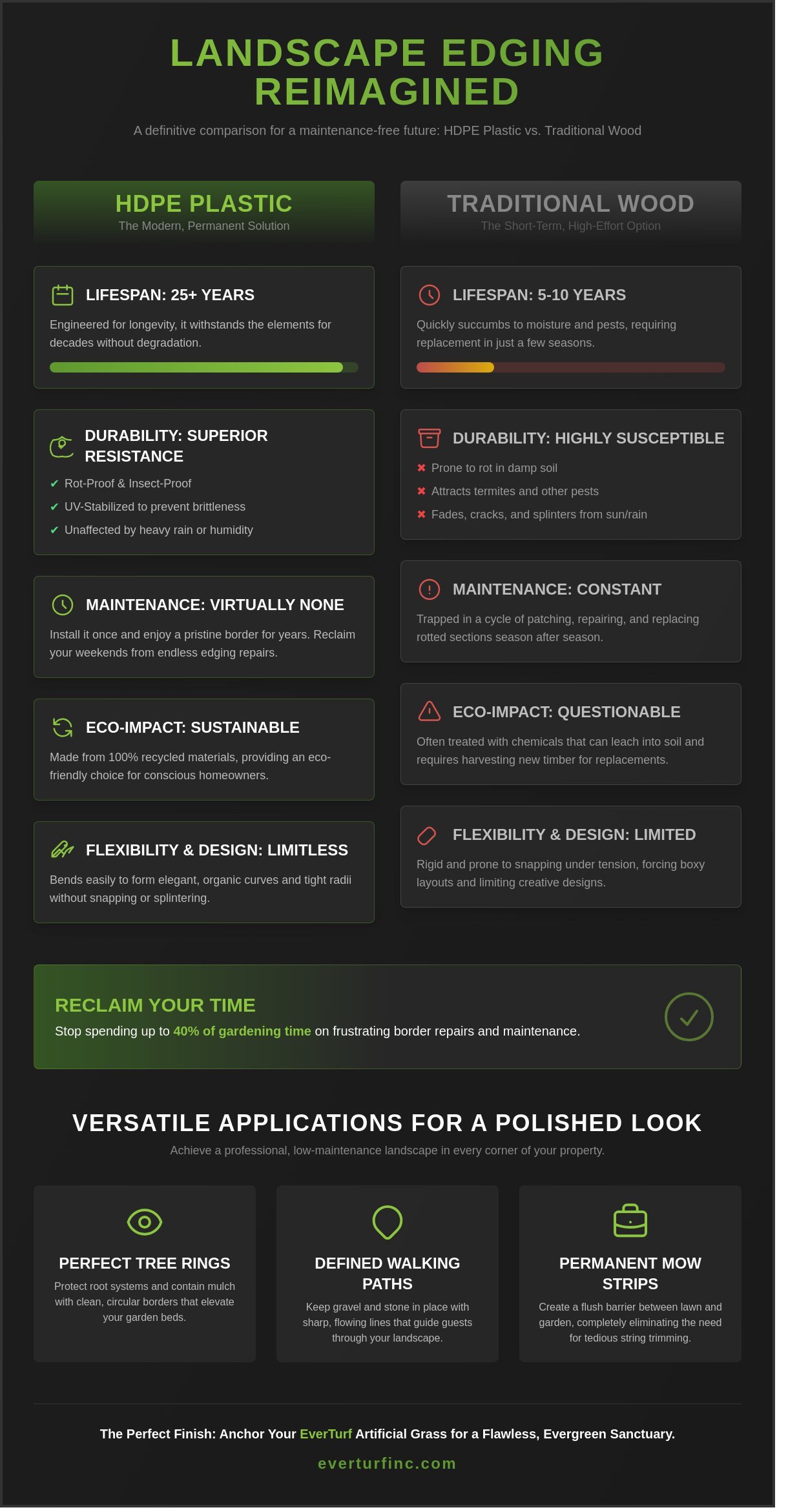
- Perfect Tree Rings: Create circular borders that protect delicate root systems from mower damage while keeping mulch neatly contained.
- Defined Walking Paths: Use bender board to outline gravel or crushed stone walkways, ensuring the lines stay sharp and the materials don’t migrate into your turf.
- Permanent Mow Strips: This is the ultimate way to reclaim your weekends. By installing a solid border between your garden and lawn, you eliminate the need for tedious string trimming and edge maintenance.
By integrating these elements, you create a low-maintenance environment that prioritizes relaxation over chores. The result is a sophisticated, professional-grade landscape that remains beautiful regardless of the season.
Selecting the Superior Material: Why HDPE Plastic Outperforms Wood
Traditional redwood and cedar bender board once defined the standard for curved landscape borders, yet these organic materials often struggle to survive more than 5 to 10 years in damp soil. While wood offers an initial rustic charm, it eventually succumbs to the relentless cycle of rot and insect damage. Modern high-density polyethylene (HDPE) has emerged as the sophisticated alternative for homeowners who value both aesthetics and longevity. This 100% recycled material provides the same flexibility as thin wood strips but eliminates the frustrating replacement cycle that plagues organic edging. By choosing HDPE, you’re investing in a permanent solution that maintains its vibrant, pristine look through every season.
Quality matters when selecting synthetic materials. Many retail-grade plastic edgings fail within 24 months because they lack proper UV-stabilization. These inferior products become brittle and crack under the sun’s intensity, leading to sharp edges and a messy appearance. Professional-grade HDPE is engineered with advanced UV-inhibitors to prevent this “brittle break,” ensuring the board remains supple and strong for decades. This commitment to quality is supported by the University of Illinois Extension on edging materials, which notes that while various options exist, the durability and function of a material determine the long-term success of any garden bed border.
Durability in the Face of the Elements
Pro-grade HDPE bender board is built to resist the specific environmental stressors that destroy wood and cheap plastics. Because HDPE is non-porous, it doesn’t absorb moisture, meaning it won’t warp or expand when the ground is saturated by heavy rainfall. The science of thermal expansion is also a critical factor; high-quality boards are designed to handle 100-degree temperature swings without popping out of the ground or losing their crisp lines. Consider these technical advantages:
- Zero Rot: HDPE is impervious to the fungi and bacteria that decompose redwood and cedar.
- Pest Resistance: Termites and carpenter ants find no nutritional value in recycled plastic, keeping your perimeter secure.
- Impact Strength: Unlike thin wood that splinters under a weed whacker, HDPE absorbs the impact from lawn equipment.
Choosing “cheap” materials often results in higher costs over time. When you factor in the labor of digging out old, rotted wood every few years, the initial investment in a high-performance HDPE board becomes the more economical choice for a stress-free property.
Safety and Eco-Friendliness
Beyond its structural prowess, recycled HDPE aligns with a visionary approach to sustainable landscaping. It’s a non-toxic material that doesn’t require the chemical treatments or stains often found in pressure-treated wood. This makes it a pet-friendly and child-safe option for backyard play areas and vegetable gardens alike. There are no splinters to worry about and no harmful leachates seeping into your soil during the rainy season.
By utilizing 100% recycled content, this material diverts significant waste from landfills while providing a lush, evergreen frame for your turf. It’s the ultimate way to reclaim your weekends from tedious maintenance tasks. You can enjoy the tranquility of a perfect outdoor space knowing your borders are as environmentally responsible as they are beautiful. This reliable, permanent solution allows you to focus on the joy of your garden rather than the upkeep of its boundaries.
Master Planning: Designing Your Edge for Maximum Visual Impact
Picture a vibrant, evergreen sanctuary that looks pristine every day of the year, regardless of the season. This level of curb appeal isn’t a happy accident; it’s the result of intentional design. When you transition to a low-maintenance landscape, you’re reclaiming your weekends from the endless cycle of trimming and weeding. A well-planned border acts as the frame for your outdoor masterpiece, providing the structural clarity your property deserves. To begin, gather a flexible garden hose, a can of high-visibility marking paint, and a pack of wooden stakes. These simple tools allow you to iterate on your design in real-time before you commit to the soil.
Safety remains the highest priority during the planning phase. Before you strike the ground, contact 811 to have your underground utilities marked. In Florida, irrigation lines and shallow electrical conduits often sit just a few inches below the surface. Damaging these systems is a setback you don’t need. Once the “clear to dig” is confirmed, you can focus on the aesthetic flow of your bender board installation, ensuring the final result is as permanent and worry-free as the synthetic turf it protects.
Mapping Organic Curves
Lay your garden hose along the intended boundary to “draw” the lines of your new garden beds. This technique helps you visualize the transition between lush turf and decorative stone or mulch. Avoid creating tight, repetitive “wiggly” lines. These often look amateurish and create difficult angles for maintenance. Instead, aim for long, sweeping arcs that feel natural and sophisticated. After you’ve pinned the hose into a shape you like, step back. View the layout from your street and from a second-story window. This elevated perspective reveals inconsistencies in the flow that aren’t visible from ground level, allowing you to refine the curves for maximum visual impact.
Calculating Materials and Hardware
Success in landscaping is found in the details of your measurements. Once your hose layout is finalized, use a measuring tape to find the total linear footage. It’s a professional standard to add 10% to this number to account for overlap at the joints and any mistakes during the cutting process. When you install bender board, the frequency of your stakes determines the longevity of the edge. Follow the rule of thumb: place a stake every 2 feet for tight radiuses and every 4 feet for straight runs. In our local climate, heavy rainfall can shift loose soil, so using 12-inch heavy-duty fasteners ensures your border stays locked in place for years to come. This meticulous approach guarantees a professional finish that stands up to the elements while enhancing your home’s long-term value.
The Step-by-Step Guide to Installing Bender Board Like a Pro
Achieving a pristine, professional edge requires more than just laying material on the ground. It demands a systematic approach that balances aesthetic beauty with structural integrity. When you install bender board correctly, you create a permanent boundary that protects your investment and defines your landscape with surgical precision. This process moves you closer to a maintenance-free lifestyle where your outdoor space remains orderly without constant intervention.
Trenching and Depth Control
Begin by carving a path for your edging using a sharp spade or a power edger. Professionals prefer a “V” shaped trench because it allows for easier adjustments and prevents the board from tilting during the backfill process. To ensure maximum support and long-term stability, the ideal installation depth requires burying 1/2 to 2/3 of the board width into the soil. This specific ratio, often 3 to 4 inches for a standard 6-inch board, prevents the material from heaving during heavy Florida rainfall or shifting when the ground settles. A deeper set also protects the board from lawnmower blades, ensuring your evergreen perimeter remains unscathed for years.
Staking and Splicing Techniques
Stability comes from strategic stake placement. For sweeping curves, drive your stakes into the “inside” of the arc. This creates outward tension that holds the bender board firmly against the soil wall, preventing unsightly gaps or sagging. Use these guidelines for a flawless finish:
- Space stakes every 24 inches on straight sections and every 12 inches on tight radii.
- Drive stakes 0.5 inches below the top of the board to hide them from view.
- Create invisible joints by overlapping board ends by at least 4 inches or using a backer block made from a scrap piece of edging.
Fasten the board to each stake using two 1-inch galvanized screws. This dual-point connection prevents the board from pivoting, a common failure in DIY projects that leads to wavy lines over time. By securing the bender board with this level of detail, you ensure the structure stands up to 100-degree heat and shifting soil conditions without losing its shape.
The Final Grade
Once the frame is secure, focus on the backfill. Pour soil or decorative rock against both sides of the board simultaneously to maintain its vertical alignment. Compact the earth firmly with a hand tamper or the heel of your boot to eliminate air pockets that cause future sinking. Aim for the top edge of the board to sit exactly 0.5 inches above the finished height of your turf or mulch. This subtle elevation creates a crisp shadow line that makes your garden beds look vibrant and professionally maintained. Finish by wiping away any lingering dirt to reveal the clean, lush contrast between your pathways and your greenery. If you are ready to stop fighting with messy edges and start enjoying a maintenance-free yard, discover how our premium edging solutions can help you reclaim your weekends.
The Perfect Finish: Integrating Bender Board with EverTurf Artificial Grass
Think of your landscape as a gallery-worthy masterpiece; the turf is your canvas, and the bender board is the handcrafted frame that brings the entire vision together. A premium artificial lawn requires more than just high-quality fibers. It demands a structural perimeter that ensures the installation remains flush, secure, and pristine for decades. By installing a rigid composite border, you create a dedicated anchor point for the six-inch galvanized staples used during the tucking process. This technique prevents the perimeter from shifting or curling, maintaining a seamless transition that looks as natural as the day it was installed.
Beyond aesthetics, this edging serves a vital mechanical purpose by containing your infill. High-performance turf systems often utilize 1.5 to 2.0 pounds of infill per square foot to keep blades upright and provide cushion. In regions facing heavy seasonal downpours, a bender board acts as a subterranean dam. It stops your investment from migrating into flower beds or washing onto walkways. When you design luxury transitions between EverTurf Pavers and synthetic grass, the board provides the crisp, clean line necessary to highlight the contrast between stone and lush greenery.
The “Ever” Advantage for Turf Installation
A solid edge is the secret to a truly evergreen appearance. Without it, the edges of your turf are vulnerable to lifting or fraying, especially in high-traffic areas. This structural integrity is particularly important when creating specialized zones for artificial grass for dogs. Active pets often target loose edges, but a tucked and stapled border removes that temptation entirely. Additionally, the edging allows you to hide the two to three inches of crushed stone base layers, ensuring only the vibrant, antimicrobial blades are visible to your guests.
Long-Term Maintenance and Care
Investing in this setup allows you to finally reclaim your weekends. You can retire the string trimmer for good, as the bender board creates a permanent barrier that prevents invasive weeds or natural grass from encroaching on your sanctuary. Maintenance is remarkably simple:
- Rinse the border occasionally with a garden hose to remove dust or organic debris.
- Inspect the perimeter after significant seasonal shifts to ensure stakes remain flush with the ground.
- Use a stiff-bristle broom to lightly brush any stray infill back toward the turf center.
Secure Your Vision of a Permanent Paradise
Creating a flawless outdoor environment requires a shift from temporary fixes to permanent solutions. By selecting 100% recycled HDPE materials, you bypass the 3 to 5 year decay cycle typical of traditional wood edging. This superior choice ensures your garden borders remain crisp and structurally sound even under the pressure of intense humidity and heavy rainfall. Mastering the installation of bender board allows you to achieve those signature professional curves that instantly elevate your property’s aesthetic value. These recycled materials are UV-stabilized to prevent fading, ensuring your landscape maintains its deep, natural tones for decades.
Your home deserves a sophisticated finish that stands the test of time. Utilizing expert-grade hardware ensures your DIY project achieves professional results without the frustration of shifting soil or invasive grass. It’s time to transition toward a worry-free lifestyle where your lawn remains pristine every day of the year. Reclaim your weekends and enjoy the tranquility of a perfectly manicured space that requires minimal effort to maintain.
Transform your landscape with EverTurf; Explore our premium backyard solutions today!
Embrace the confidence that comes with a high-performance landscape and start building your evergreen sanctuary tonight.
Frequently Asked Questions
Is bender board better than plastic roll edging?
Yes, bender board provides 3 times the thickness of standard plastic rolls and resists the warping common in 90 degree heat. It offers a permanent edge that maintains its shape for 20 years or more. Standard plastic rolls often require replacement after 2 seasons due to sun damage and mower strikes. You’ll spend less time fixing edges and more time enjoying your pristine, low-maintenance lawn.
How long does HDPE bender board last in direct sunlight?
High-density polyethylene (HDPE) bender board lasts for 25 years because it contains UV-inhibitors that prevent cracking and fading. Manufacturers like Epic Plastics use 100 percent recycled HDPE that withstands intense solar radiation without becoming brittle. This durability ensures your garden beds stay defined and beautiful through decades of exposure. It’s a permanent solution for homeowners seeking a vibrant, evergreen aesthetic without constant upkeep.
Can I use bender board for straight lines as well as curves?
You can use bender board for straight lines by securing it with stakes every 2 feet to prevent bowing. While it’s famous for creating smooth radius curves, its rigid profile holds a straight edge better than thinner alternatives. Professional installers often use a string line to ensure perfect alignment during the anchoring process. This versatility allows you to create a cohesive look across both geometric paths and organic garden borders.
What is the best way to cut bender board during installation?
A standard miter saw or a fine-tooth handsaw provides the cleanest cut through this dense composite material. You should measure twice and use a speed square to ensure a 90 degree angle for seamless joints between sections. Avoid using utility knives because the material is too thick for a hand blade to penetrate safely. Using the right tools ensures your installation looks professional and remains structurally sound for years to come.
Do I need a special professional to install bender board?
Can bender board be used as a form for concrete walkways?
Yes, bender board serves as an excellent flexible form for concrete projects with radii as tight as 12 inches. It’s often preferred over plywood because it doesn’t splinter and can be reused for 5 or more separate pours. Once the concrete cures for 24 to 48 hours, the board strips away easily. This leaves a smooth and consistent finish on your walkway that enhances the overall value of your property.
Is recycled bender board safe for vegetable gardens?
Recycled HDPE bender board is completely safe for food-producing gardens because it’s chemically inert and BPA-free. Unlike chemically treated lumber, it won’t leach toxins into your soil or impact the pH levels of your 10 by 20 foot vegetable plot. This makes it an eco-friendly choice for health-conscious homeowners who want a vibrant garden that’s both productive and sustainable. It provides peace of mind while protecting your organic harvest.
How much does bender board typically cost for a standard backyard?
Homeowners typically spend between 2.50 and 5.00 dollars per linear foot for high-quality bender board materials based on 2024 retail data. A standard 50-foot garden border requires approximately 250 dollars in materials, including the necessary 12-inch stakes. These figures vary based on the thickness of the board and specific shipping costs to your region. Investing in quality materials now prevents the recurring costs of replacing cheaper, flimsy alternatives every few seasons.