



Turf Installation Payment Schedules and Best Practices for 2026
A well-planned turf project has a payment schedule tied to clear, documented progress. Before work begins, you should know what is due, when it is due, and which part of the project each payment covers. Understanding turf installation payment schedules and best practices helps you compare proposals and keep costs aligned with the written scope.
Common approaches include an initial payment followed by a balance, progress payments tied to completed work, or payments at named project phases. The right structure depends on the project and agreement. Compare proposals by identifying what each milestone means, what must be complete before payment is due, and how progress will be recorded.
This guide explains common schedule formats and how to review them consistently. It also shows how to align the written scope, material list, payment terms, and project records, from turf and infill to components such as staples, glue, and pavers. Clear documentation makes it easier to understand each invoice and follow the project from planning through closeout.
Key Takeaways
- Understand how deposit-plus-completion, progress-payment, and phase-based schedules connect payments to project milestones.
- Compare proposals by asking what work triggers each payment and when it becomes due.
- Match the written scope, material quantities, included tasks, and payment milestones before comparing project terms.
- Keep signed agreements, receipts, and approved changes together, and review progress against the documented milestone.
- Use turf installation payment schedules and best practices to plan for turf, components, labor, and site preparation.
Why turf installation payment schedules deserve a closer look
Before work begins, you should be able to answer three questions: what is due, when is it due, and which defined work does each payment cover? A payment schedule lists agreed amounts or percentages and ties them to calendar dates, project milestones, or both. Clear terms connect the written scope to project progress, so each invoice has an understandable basis.
No single schedule suits every turf project. The agreement should make the relationship between scope, payment timing, and documented progress easy to follow. Contract structure also affects how work and payment obligations are organized. This overview of types of construction contracts provides general context for different agreements.
What a turf installation payment schedule should make clear
Read the schedule alongside the scope, not as a standalone list of dates. The documents should identify included and excluded work, state each payment amount or percentage, and connect it to a due date or clearly described milestone. They should also explain accepted payment methods. If a change is approved, document its effect on the scope, timing, and payment schedule before treating it as part of the project. Keeping one written record helps everyone work from the same expectations.
Why turf projects can have different payment milestones
Project sequencing can vary based on the area’s size, site access, preparation needs, and required materials. One plan may separate site preparation from turf placement; another may group tasks differently. A proposal might also list turf and components, such as infill, staples, glue, or pavers, separately from preparation and installation labor. Itemization shows what a milestone covers instead of leaving you to guess which work or materials are included.
Compare each milestone with the actual sequence of work. If a payment is tied to preparation, for example, the agreement should describe the preparation tasks for that project and what record will show they are complete. This makes the payment trigger specific without assuming every installation follows the same stages. For broader budgeting context, see the artificial turf installation cost guide.
These turf installation payment schedules and best practices start with alignment: the scope describes the work, the schedule explains when payments are due, and project records help track progress. When those pieces match, you can compare proposals more clearly and plan the work with fewer payment surprises.
Common turf installation payment schedules, explained by milestone
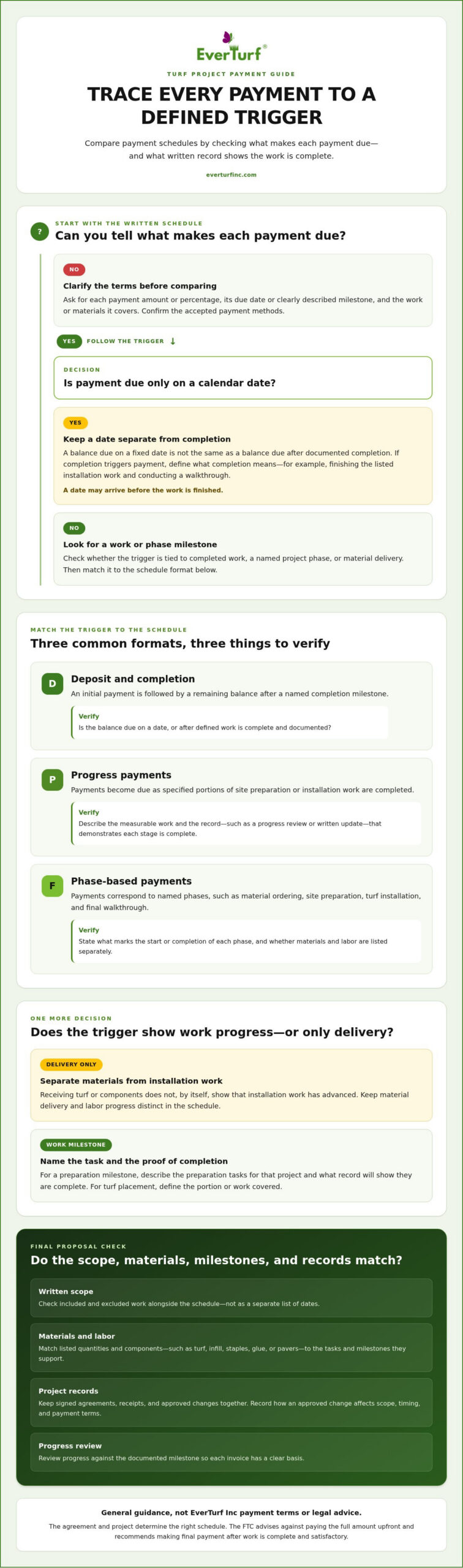
Payment schedules often follow a few formats. The key is to define each trigger clearly, so you can tell whether payment is due because a date arrived, materials were delivered, or a specific stage of work was completed.
| Schedule format | How a trigger could be written | What to clarify |
|---|---|---|
| Deposit and completion | An initial payment is due at a stated point, with the remaining balance due after a named completion milestone. | Is the balance due on a calendar date, or after defined work is complete and documented? |
| Progress payments | Payments become due as specified portions of site preparation or installation work are completed. | Describe the measurable work and record that will demonstrate each stage is complete. |
| Phase-based payments | Payments correspond to named phases, such as material ordering, site preparation, turf installation, and final walkthrough. | State what marks the start or completion of each phase, and whether materials and labor are separate. |
Deposit and completion payment structure
An initial payment followed by a balance can be simple, but both triggers need precise wording. A balance due on a fixed date is different from one due after documented completion. If completion triggers the balance, the agreement should explain what that means, such as finishing the listed installation work and conducting a walkthrough. A date alone may arrive before work is finished, so don’t treat the two triggers as interchangeable.
Progress payments tied to defined work
Progress payments can follow observable stages, such as completing specified site preparation or installing a defined portion of the turf. Before signing, agree on what record will show that each milestone has been reached, such as a progress review or written update. Material delivery and labor progress are separate events: receiving turf or components does not, by itself, show that installation work has advanced.
A phase-based sequence might distinguish ordering materials from preparing the site, placing and securing turf, and completing a final walkthrough. The agreement can name the work attached to each phase and state when payment becomes due. The Federal Trade Commission’s consumer protection advice offers general guidance on home improvement payments, including avoiding full payment upfront and making final payment after work is complete and satisfactory.
These examples explain schedule formats; they aren’t EverTurf Inc payment terms or legal advice. The right structure depends on the project and its agreement. As you map out the work, explore EverTurf Inc turf and installation components as materials to itemize alongside the tasks they support.
How to compare payment terms without overlooking project scope
A payment schedule may look straightforward until you compare it with the proposal’s full scope. Before weighing payment timing, check that you’re comparing equivalent work, materials, and quantities. A lower total or earlier milestone may reflect a different scope, rather than a better payment arrangement.
Use this review process for each proposal:
- 1. Match the scope. Check that the project area, turf type, material quantities, preparation tasks, installation labor, and included components are clearly described. Note exclusions too.
- 2. Match each milestone to work. Identify the specific scope item or completed stage tied to each payment. “Installation progress” is less useful than a description of the work that must be complete.
- 3. Check the due date or trigger. Confirm whether payment is due on a calendar date, after a measurable event, or once work is documented as complete.
- 4. Identify the supporting record. Note what will show that the milestone has been reached, such as a written progress update, delivery record, or completion review.
Match every payment to a written scope item
Check the turf type and project area, then confirm whether relevant components are listed. Infill, staples, glue, and pavers may appear as separate items rather than being grouped under materials. If a proposal itemizes them, compare their quantities and categories consistently across proposals. The turf infill guide provides context for understanding infill as a distinct project material.
Site preparation, installation labor, and materials may also be listed separately. That breakdown helps clarify what each payment covers. Treat phrases such as “complete installation” as a prompt to check which tasks are included. Without those details, it’s difficult to connect a payment to completed work.
Compare milestones and change-order terms
For every trigger, look for a date, measurable event, or completion record. Then review how the agreement handles scope changes. Document and approve a change before it alters the work, timing, or payment terms, so both sides have the same written reference.
Compare exclusions, cleanup responsibilities, and closeout steps alongside the schedule. Two proposals may use similar milestone names but define different finished results. These turf installation payment schedules and best practices help you compare the work behind each payment, not just the payment dates.
Best practices for deposits, progress checks, and final payment
A clear schedule is easier to manage when each payment leaves a simple paper trail. Keep the signed scope and payment schedule with invoices, receipts, progress notes, and approved change records. This lets you trace each payment to the work or project stage it covers instead of relying on memory or scattered messages.
Document deposits and progress payments
For each payment, record the date, amount, purpose, and related milestone. Keep the invoice or receipt with the agreement, and save written approvals for scope changes. Use consistent milestone wording across the contract, invoice, and project updates. If the agreement says “site preparation complete,” an invoice that says only “progress payment” makes the connection harder to verify.
Before a progress payment is due, compare visible work with the milestone as written. If the trigger is preparation, review the agreed preparation tasks; if it’s installation progress, check the specified installation work. A dated note or project update can record what you observed and any questions to resolve. This creates a useful record for routine payments and final closeout.
Make the final payment milestone understandable
Define “completion” in the signed agreement before work begins. It might mean finishing the listed installation tasks and conducting a final walkthrough, but the contract should specify what applies to your project. During the review, compare the finished work with the agreed scope, note cleanup responsibilities, and record any outstanding items that both sides have identified. Keep that record with the agreement and payment documents.
Final payment timing depends on the signed terms and applicable requirements. Because contract and consumer-protection rules can vary by location, consult relevant official sources for requirements that apply to your project rather than assuming one rule fits everywhere. Clear documentation doesn’t replace legal guidance, but it makes the agreed work and payment history easier to understand.
Keep the turf installation payment schedules and best practices in one project file: the signed scope, schedule, payment records, progress notes, and approved changes. This simple habit makes milestones easier to review and helps keep project details aligned from the first payment through the final walkthrough.
As you organize your project plan, explore EverTurf turf and installation components to identify materials that belong in a clearly documented scope.
Plan a clearer turf project with EverTurf materials and components
A well-organized project starts with a clear picture of the finished space and the work needed to create it. Before agreeing to payment terms, bring the scope, material list, milestones, and project records into one plan. This makes it easier to see how each payment connects to the work and which details still need to be documented.
Build a project checklist before agreeing to payment terms
Use this worksheet to align project planning with the written agreement:
- Application and scope: Note the intended use, project area, turf type, included tasks, and exclusions.
- Materials and components: List the turf and relevant items, such as infill, staples, glue, or pavers. Record quantities where the plan specifies them.
- Milestones: Name each payment trigger and describe the work or event that marks it, from material ordering or site preparation through installation and closeout.
- Project records: Decide where to keep approvals, invoices, receipts, delivery records, progress updates, and completion notes.
Keep wording specific and consistent across the scope, payment schedule, invoices, and updates. This checklist can help organize a project, while local contract requirements may differ. For guidance on those requirements, consult authoritative sources for your location.
Connect product planning to a smoother project
Choosing turf for its intended application helps shape a complete materials list. EverTurf offers options for residential areas, pets, playgrounds, putting greens, roofs and decks, and sports fields. Supporting components can be listed alongside the turf, while preparation and installation tasks are described separately when the project plan itemizes them. This level of detail makes the scope easier to understand and gives each milestone a clearer context.
For more product and application context, explore the complete artificial grass guide. Then use the details that fit your project to organize materials and work before reviewing the agreement. The goal of turf installation payment schedules and best practices is clarity: a defined scope, understandable milestones, and records that stay aligned as the project moves forward.
Explore EverTurf synthetic turf as you plan a well-documented project and create an outdoor space that gives more of your time back.
Make your next turf project easier to plan
A clear payment schedule links each amount due to a defined date or project milestone. Compare proposals by matching the written scope, materials, payment triggers, and supporting records. Keep receipts and approved changes together as work progresses. Because schedules vary by project and agreement, focus on clear terms instead of assuming one format fits every installation.
These turf installation payment schedules and best practices can help you plan with fewer unanswered questions and a clearer view of what each stage covers. A documented material list can include synthetic turf for residential, commercial, or athletic applications, as well as components such as infill, staples, glue, and pavers.
Explore EverTurf synthetic turf and project components as you shape a scope for your space and intended use. Start planning your project with EverTurf’s turf options and components, and keep the scope and payment milestones clear from the outset.
Frequently Asked Questions
What is a typical payment schedule for turf installation?
No single schedule fits every turf project; terms depend on the written scope and agreement. Common formats include an initial payment followed by a balance at a defined completion milestone, or payments tied to stages such as preparation and installation progress. The agreement should state each amount, due date or trigger, and the work it covers. These turf installation payment schedules and best practices are planning guidance, not a universal rule. Check applicable requirements for your location.
Should I pay a deposit before turf installation begins?
A deposit may be part of an agreement, but its terms depend on the written contract and applicable requirements. Before paying, understand what the deposit covers, when it’s due, and how it relates to materials, scheduled work, or another stated purpose. Make sure the amount and trigger are recorded in the agreement, and keep the receipt. Don’t assume one deposit amount or rule applies to every turf project.
Can turf installation payments be tied to project milestones?
Yes. An agreement can tie payments to defined project stages when the triggers are documented. For example, a milestone might relate to specified site preparation or a described portion of installation progress. The agreement should explain what work marks completion and how that progress will be recorded. It should also state how approved scope changes affect the schedule, so payment triggers remain clear if project details change.
What should a turf installation payment agreement include?
A clear agreement should describe the project scope, listed materials, preparation or labor items, and payment dates or milestone triggers. It should also explain how changes are documented and approved, and how payments are recorded with invoices or receipts. Define the final payment trigger before work begins, including what completion means for the agreed scope. Review applicable local requirements through authoritative sources; this overview isn’t legal advice.
When is the final payment for artificial turf installation due?
The signed agreement determines whether final payment is due on a stated date or after a defined completion milestone. Before work starts, make sure the agreement explains what completion means. At closeout, compare the finished work with the written scope and document any outstanding items that have been agreed upon. Payment timing depends on the contract and applicable requirements, so there isn’t one final-payment rule for every project.
How do I compare two turf installation payment schedules?
Compare proposals after aligning the scope, material list, milestone definitions, due dates, exclusions, and change-order process. A lower initial payment alone doesn’t show which schedule is clearer or how much work it covers. Put the details side by side, including what evidence supports each milestone and what happens if the scope changes. Keep both written proposals so you can review payment triggers against the work described.
Are turf materials and installation labor paid on the same schedule?
They may be combined or listed separately, depending on the proposal and project agreement. Check how turf, infill, other accessories, site preparation, and installation labor appear in the written scope, then match each payment date or milestone to those terms. Material delivery and completed installation work are different events. Don’t assume every project separates these items or uses the same payment schedule.