
Common Turf Installation Scams and How to Avoid Them
Could the lowest turf quote leave you with the most expensive problems? A low price can conceal missing materials, limited ground preparation, or vague promises about turf quality. Understanding common turf installation scams and how to avoid them doesn’t mean assuming every installer is dishonest. It means checking that the products, work, and terms are clear before the project begins.
This guide explains how to assess misleading offers, compare written scopes, and review details such as preparation, drainage, seams, infill, staples, glue, and pavers. Use the checklists to spot gaps, document decisions, and understand what a proposal includes before moving forward.
Key Takeaways
- Learn how to recognize common turf installation scams and how to avoid them without treating every warning sign as proof of fraud.
- See how surface turf, the base, drainage, seams, and specified infill work together, and where a vague quote may leave important details unclear.
- Compare broad sales promises with written descriptions of materials, maintenance guidance, and project exclusions.
- Use a pre-project checklist to keep estimates, product details, payment schedules, and change approvals organized.
- Understand how clearly described synthetic grass and installation components can make project plans easier to review and compare.
Common Turf Installation Scams: Warning Signs Homeowners Should Recognize
A polished sales pitch can sound reassuring while leaving the project itself unclear. A useful estimate identifies what will be supplied and what work is included, so you can compare the offer with the actual plan. A warning sign deserves attention, but it doesn’t prove fraud on its own. Compare claims with the written details before deciding.
A turf project may include the turf, site preparation, base work, drainage, seams, edge treatment, accessories such as infill or adhesives, and installation labor. When everything appears under one broad line item, it’s hard to tell what’s included or excluded. For basic terminology, this neutral overview explains what artificial turf is.
What makes a turf installation offer difficult to trust?
Review estimates for a defined project area, an identified turf product, preparation details, a seam approach, and clear exclusions. These specifics define the proposed work, not just the finished appearance. For instance, “complete turf installation” doesn’t say whether existing material will be removed, what base preparation is included, or which accessories are part of the price.
Pressure to commit quickly is another reason to slow down, particularly if the sales pitch discourages you from reading the scope, reviewing product information, or understanding payment terms. Verbal assurances are difficult to compare or rely on later if they aren’t written down. Make sure important claims and project details appear in the documented scope and agreement.
A turf installation red flag is a claim or quote that leaves important product or project details unclear enough to prevent a homeowner from understanding what’s included.
Which turf promises deserve a closer look?
Absolute claims about drainage, odor, durability, or maintenance should be tied to specific product and project details. “It drains perfectly” doesn’t explain the turf product or the planned site preparation and drainage approach. Similarly, “built to last” doesn’t identify the material or the conditions to which the claim applies.
Separate product information from descriptions of installation work. Product literature may describe turf or infill, but it doesn’t document how a particular site will be prepared or how seams will be made. Look for a project-specific explanation instead of assuming a product description guarantees a particular result.
A missing detail, confident wording, or low quote alone doesn’t establish a scam. Treat each as a reason to compare the written scope with the claims, identify unclear line items, and keep the answers with your project records. A documented scope makes the offer easier to evaluate before work begins.
How Turf Scams Work: Follow the Materials, Base, Drainage, and Seams
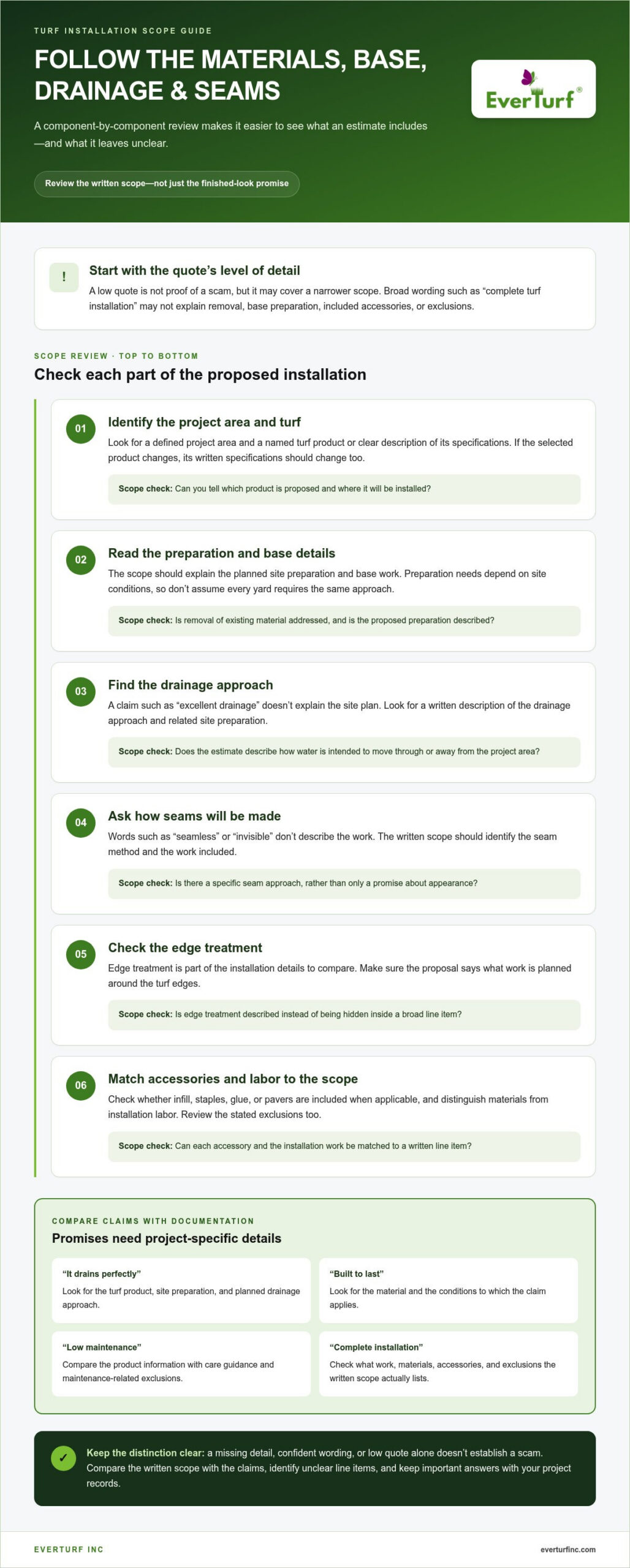
The turf surface is only one part of an installation. The finished project also depends on the selected product, site preparation, base, drainage, seams, edge treatment, and infill when specified. When reviewing an estimate, look for these items in the written scope rather than relying on a general promise of a complete installation.
A low quote isn’t proof of a scam, but it may cover a narrower scope. One estimate might include site preparation and seam materials, while another leaves some work or accessories unspecified. Preparation needs also depend on site conditions, so don’t assume every yard requires the same approach. A clear scope shows what the proposed work addresses and what it leaves out.
Which installation details should appear in the project scope?
Look for a named turf product or a clear description of its specifications, as well as an explanation of the planned installation work. The written scope should describe base preparation, the drainage approach, seam method, and edge treatment. It should also state which accessories are included, such as infill, staples, glue, or pavers when applicable.
These details make estimates easier to compare. If the selected product changes, the written specifications should change too, so the material and project plan remain aligned. The Federal Trade Commission also offers guidance to help homeowners avoid a home improvement scam, including the value of understanding home-improvement agreements before committing.
How can missing components affect the finished lawn?
Without a described drainage approach, it’s difficult to understand how water is intended to move through or away from the project area. If seams are described only as “seamless” or “invisible,” the scope may not explain how the joins will be made or what work is included. That can leave expectations unclear if a join is visible after installation.
A turf surface alone doesn’t describe a complete installation; the materials beneath and around it, and the work connecting them, shape the project scope.
Match each product and accessory to a written line item, and check that preparation, drainage, seams, and edges are described. EverTurf supplies synthetic grass and installation components, including infill, staples, glue, and pavers, so the materials can be identified separately from installation labor.
Compare Turf Installation Claims Against the Written Scope
Broad benefits sound appealing, but they’re difficult to assess until an estimate connects them to specific products, work, and terms. Compare each claim with the written scope to identify gaps without treating a confident sales statement as proof of a problem. Homeowners can compare claims only when the project scope identifies what’s included.
| Sales claim | Written detail to look for | Follow-up record |
|---|---|---|
| “Low maintenance” | Turf product description, care guidance, and any maintenance-related exclusions | Save the product information and written care instructions |
| “Excellent drainage” | Planned drainage approach and any site-preparation work related to water movement | Keep the scope notes describing the approach for your project |
| “Seamless finish” | How seams will be joined and which seam materials or labor are included | Retain the written seam description and any approved changes |
| “Everything is included” | Whether infill, edging, staples, glue, or pavers are included or excluded | Save the itemized estimate and the final scope |
How do you check turf product and accessory claims?
Compare the product description on the estimate with the product information. Check the name or specifications instead of relying on broad phrases such as “premium turf.” Then review accessory line items. Infill, seam materials, edging, or pavers may be relevant to the project, but the scope should state what’s included and what isn’t.
If a product or accessory is substituted, keep a record of the change and its effect on the written scope. That gives you a clear record of what was selected and lets you compare the revised plan with the original estimate. Site and project details also affect estimates, and the artificial turf installation cost guide explains why a clearly defined scope matters when reviewing estimates.
What does a warranty or performance promise actually cover?
Distinguish product coverage from commitments about workmanship. A product warranty, when provided, may have its own written duration, exclusions, care requirements, and responsible party. Don’t assume it also covers base preparation, drainage, seams, or every site-specific result. Review the written terms and keep any separate statements about installation work with the project documents.
These checks are central to understanding common turf installation scams and how to avoid them: connect each benefit claim to a product detail, scope item, or written term. If a promise has no clear counterpart in the documents, note the gap before treating it as part of the project.
A Practical Checklist to Protect Your Turf Project Before Work Begins
Organizing project details before a deposit, material delivery, or installation makes decisions easier to track and questions easier to resolve. Payment arrangements and contract rules vary, so don’t assume one schedule or process applies to every project. Read the written terms and keep a current record of what you’ve approved.
- Save the complete estimate and scope. Keep the project area, selected turf description, preparation work, included components, and exclusions together. A broad label such as “complete installation” shouldn’t replace details about what the project covers.
- Record payment milestones and timing. File the payment schedule alongside any stated dates for material delivery and installation. Note what each payment relates to and keep a copy of the agreed terms before paying a deposit.
- Document product selections. Save product descriptions and information for specified accessories, such as infill, staples, glue, or pavers. If a material changes, retain the revised description and written approval so your records reflect the current plan.
- Keep decisions and contacts in one place. Store change approvals, project messages, receipts, and the names of the people responsible for communication in the same digital or physical folder. This helps prevent an earlier estimate from being confused with a later revision.
- Take dated site and delivery photos. Photograph the project area before work begins and record delivered materials as they arrive. Images add context to your written records and help you compare the site and materials with the approved scope.
How can you respond when the work differs from the scope?
If you notice a difference, document it clearly. Photograph the area or material, note what appears different, and compare it with the latest approved scope. Keep the discussion focused on the specific item, such as a product description or visible seam detail. Save replies, receipts, and revised project documents together so the record shows what was discussed and agreed.
These habits help you apply what you’ve learned about common turf installation scams and how to avoid them without treating every change or delay as proof of wrongdoing. For more context on turf types and applications, see the complete artificial grass guide.
For help organizing your material choices, review EverTurf’s synthetic grass and installation components.
Choose Clearly Specified Turf Materials for a More Confident Project
Clear records turn turf selection into a project plan you can understand and compare. Once the intended application and material choices are written down, you can check whether product descriptions match the estimate and listed components align with the agreed scope. This makes the next step clearer and less dependent on broad promises about the finished lawn.
Which EverTurf materials can be specified for a turf project?
EverTurf supplies artificial grass for residential and commercial applications, along with installation components such as EverTurf Infill, staples, glue, and pavers. Identify these material categories in the project’s written specifications, without treating them as guarantees of a particular installation outcome.
Keep the selected turf description and specified components consistent across the estimate, product information, and approved scope. If the project includes infill, for example, record which product is specified and whether it appears in the materials list. For a closer look at its role, read the turf infill guide.
How can clear product choices support the next step?
Start with the intended use, then make sure the written material list reflects the products selected for that application. Residential lawn areas, pet spaces, play areas, putting greens, and sports applications may call for different turf choices. The scope should identify the selected material rather than rely on a general label such as “artificial grass.” List relevant accessories separately so it’s easy to see what the material plan includes.
This brings the article’s guidance on common turf installation scams and how to avoid them down to one practical habit: compare what’s promised with what’s documented. Clear product descriptions don’t guarantee how a project will perform, but they make the selection and scope easier to review together.
EverTurf offers synthetic grass and installation components for a range of applications. Reviewing product options can help you build a clearer material list for your project.
Move Forward With a Clearer Turf Plan
The most useful way to approach common turf installation scams and how to avoid them is to match important claims with written details. Review the scope for the selected turf, preparation, drainage, seams, accessories, and exclusions, then keep approved changes and payment terms together. A warning sign calls for a closer look, not an automatic conclusion.
Clear product descriptions also make it easier to understand what a project specifies. EverTurf supplies and installs synthetic grass for residential, commercial, pet, playground, putting-green, and sports applications, along with components such as infill, staples, glue, and pavers. Recording material choices separately from the installation work helps keep the project scope organized from the start.
Explore EverTurf artificial grass and installation components to find materials for your project and take the next step toward a clearer turf plan.
Frequently Asked Questions
What are common turf installation scams?
Warning signs include pressure to commit quickly, a vague written scope, unclear turf descriptions, unexplained material substitutions, and promises that never appear in writing. These can help you assess common turf installation scams and how to avoid them, but a single concern doesn’t prove fraud. Compare the estimate, product information, payment schedule, and approved changes, and keep copies of project communications and records.
How can I tell if a turf installation quote is misleading?
A quote is difficult to assess if it doesn’t identify the turf, preparation, drainage approach, seams, accessories, exclusions, or payment milestones. Compare the written scopes rather than relying on headline totals. One quote may list infill and seam materials while another leaves them unspecified. If details change, keep the updated scope with the original estimate for reference.
Can artificial turf be installed without proper drainage or base preparation?
Turf needs site preparation and drainage planning suited to the property and its intended use, so there isn’t one base design for every yard. If an estimate doesn’t explain preparation or water movement, make sure those details are documented before proceeding. Missing information warrants clarification, but it doesn’t prove a scam by itself. A project-specific plan helps set expectations for the proposed work.
What should a turf installation contract or estimate include?
For clarity, look for the project area, turf product description, preparation work, drainage approach, seam method, included accessories, exclusions, schedule, payment milestones, and a process for documenting changes. These details help you understand what the proposal covers and compare revisions. Contract requirements can vary by location and project, so treat this as a practical review checklist, not legal advice or a universal list of mandatory terms.
How much should I pay upfront for turf installation?
There isn’t one upfront amount that applies to every turf project. Payment terms depend on the project and its written agreement, so review the full schedule and understand what each payment covers before paying. Keep receipts and copies of the terms. Be cautious about pressure to pay before receiving clear project documentation, and consult relevant local consumer guidance if you have questions about payment practices.
What happens if the installed turf does not match the agreed materials?
Document the difference promptly with dated photographs and a written description. Compare the delivered or installed materials with the approved product description and latest project scope, then request a written explanation and proposed resolution. Keep the response, receipts, and revised documents with your project records. The available remedy depends on the agreement and applicable consumer protections, so don’t assume a particular outcome is guaranteed.
Are unusually low turf installation offers always scams?
No. A low offer alone doesn’t prove fraud because project scope, materials, and site conditions can differ. Compare written details instead of relying only on the headline figure. Check whether each proposal describes the turf, preparation, drainage, seams, accessories, exclusions, and how changes will be documented. A lower offer may cover less work, so identify gaps before deciding what the estimates include.