
How to Clean Artificial Turf: The Definitive 2026 Maintenance Guide
What if your outdoor sanctuary could maintain its vibrant, emerald glow and fresh scent for twenty years without a single drop of traditional lawn fertilizer or a noisy mower? You likely invested in synthetic grass to reclaim your personal time and eliminate the constant frustration of a muddy, patchy yard. It’s a choice that reflects a desire for a more beautiful, stress-free lifestyle. However, as the summer heat intensifies, lingering pet odors or flattened fibers in high-traffic zones can make you feel uncertain about how to clean artificial turf effectively while preserving your warranty.
We understand that you want a yard that feels as good as it looks. Mastering the art of synthetic lawn care is the definitive way to protect your investment and ensure a safe, hygienic environment for your children and pets. This guide provides professional-grade techniques to keep your EverTurf products lush and odorless for decades. We will explore the best methods for restoring fiber resilience and the vital role of EverTurf Infill in maintaining superior drainage. By the end of this article, you will have the confidence to sustain a pristine, brand-new look year-round with minimal effort.
Key Takeaways
- Understand how the advanced vertical drainage systems in EverTurf products naturally prevent moisture buildup and debris accumulation.
- Implement a simple three-step maintenance routine that teaches you how to clean artificial turf to sustain its vibrant, lush appearance year-round.
- Apply the “Blot, Don’t Scrub” rule to effectively manage common spills and stains without compromising the integrity of the synthetic fibers.
- Discover why specialized sanitization and high-performance drainage are the essential secrets to maintaining an odorless, pet-friendly outdoor environment.
- Recognize the critical role of EverTurf Infill in providing structural support for turf fibers and acting as a filter for long-term cleanliness.
Understanding the Science of Artificial Turf Cleanliness
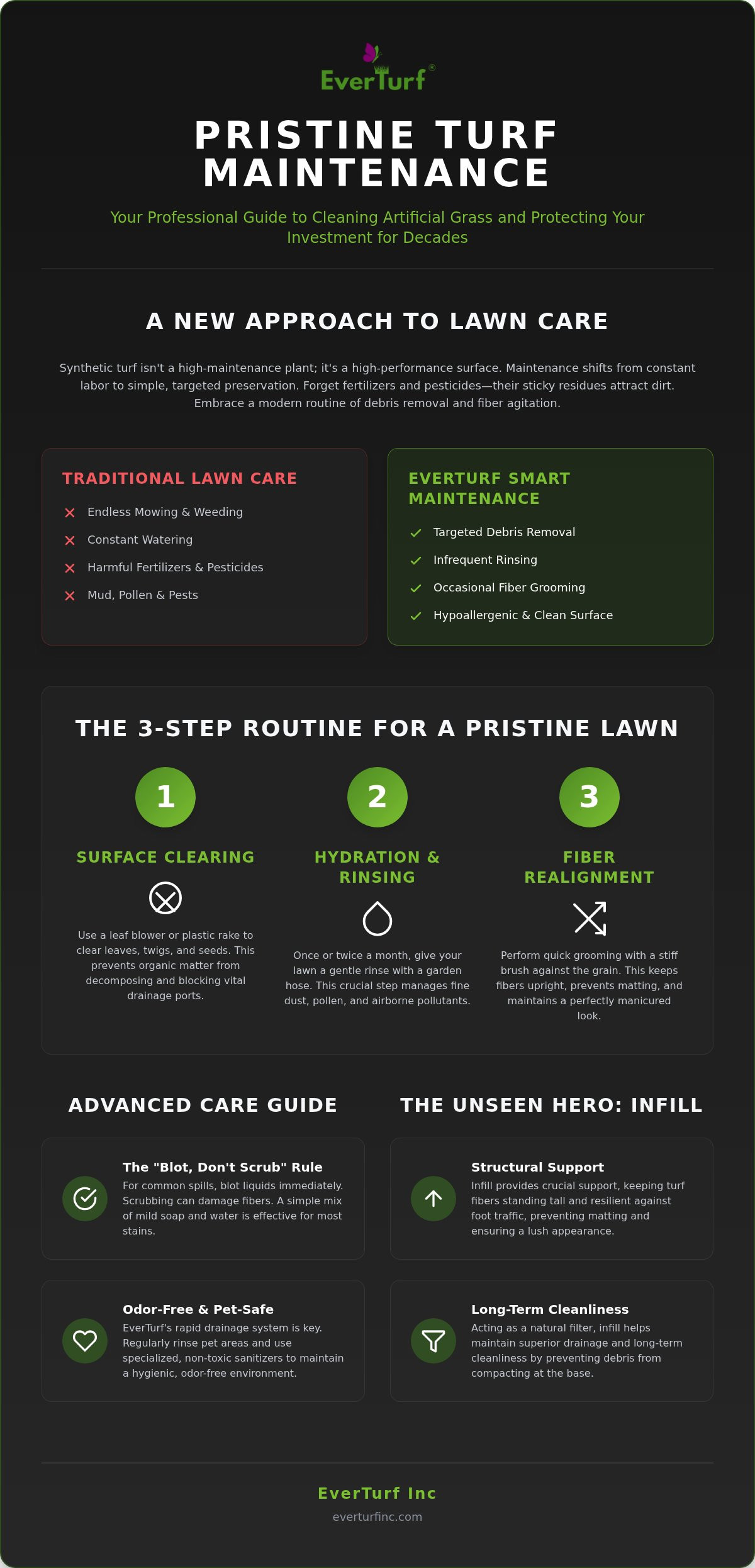
Maintaining a flawless landscape requires a shift in mindset. Unlike organic grass that thrives on biological cycles, synthetic surfaces rely on mechanical preservation. Maintenance is primarily a process of debris removal and fiber agitation. By regularly lifting the blades through grooming, you prevent the matting that can trap dust and organic matter. This proactive approach ensures your yard remains a sanctuary rather than a chore. For those seeking a comprehensive overview of artificial turf components, understanding the base layer is just as vital as the blades themselves.
High-quality EverTurf Artificial grass features sophisticated vertical drainage systems. These ports allow water and liquid waste to pass through the backing at a rapid rate, preventing the puddling that leads to bacterial growth. Combined with UV-stabilized fibers that resist the porous absorption of grime, the science of how to clean artificial turf becomes remarkably simple. You aren’t fighting nature; you’re simply managing the surface of a high-performance material. This engineering ensures that your lawn stays vibrant even under intense sun exposure, as the fibers are designed to repel rather than hold onto environmental pollutants.
Traditional maintenance for natural sod is an endless cycle of mowing, weeding, and watering. It’s a high-maintenance relationship that demands your weekends and constant attention. In contrast, cleaning synthetic grass is a targeted, infrequent task that restores your personal time. You move from being a laborer to a curator of your outdoor space, enjoying a permanent solution that looks pristine with a fraction of the effort required by traditional lawns.
Why Traditional Lawn Rules Do Not Apply
Forget the heavy bags of fertilizer and toxic pesticides. These traditional chemicals are obsolete and can actually damage synthetic systems by leaving behind sticky residues that attract dirt. Because the blades are non-porous, they don’t absorb nutrients or harbor the pests that plague organic lawns. Choosing artificial grass eliminates mud and pollen issues at the source, providing a hypoallergenic environment that stays clean regardless of the weather. You don’t have to worry about tracking brown patches or dirt into your home after a rainstorm.
The Impact of Environment on Your Cleaning Schedule
Your local climate dictates your maintenance rhythm. In arid regions, your primary focus is dust management. A quick rinse prevents fine particulates from settling into the infill and keeps the colors looking sharp. Conversely, those in high-humidity zones must watch for organic growth like moss in shaded areas. High-traffic zones, such as paths to the pool or pet runs, require more frequent grooming to keep fibers upright. Seasonal checks are essential to ensure drainage ports remain clear of silt or leaf debris, guaranteeing your lawn’s performance for decades. Knowing how to clean artificial turf according to your specific environment ensures the long-term tranquility of your property.
The 3-Step Routine for a Pristine Synthetic Lawn
Reclaim your weekend and enjoy the tranquility of a perfect yard without the labor. Knowing how to clean artificial turf properly is the secret to a space that stays brand new year-round. The beauty of EverTurf is that it’s designed for long-term durability with minimal intervention. By following this simple three-step routine, you ensure your investment remains a beautiful, stress-free asset for decades.
- Step 1: Surface Clearing: Begin by removing organic matter before it has a chance to break down. Use a leaf blower or a plastic rake to clear away fallen leaves, twigs, and seeds. If organic materials are allowed to decompose, they can create a fertile ground for weeds or block the drainage ports.
- Step 2: Hydration and Rinsing: Use a garden hose to give your lawn a gentle rinse once or twice a month. This step is crucial for managing fine dust, pollen, and airborne pollutants that settle on the blades. Understanding how to clean artificial turf through regular rinsing ensures your yard remains a hygienic, dust-free sanctuary for your family.
- Step 3: Fiber Realignment: Perform a quick session of grooming to restore the structural integrity of the lawn. This final step keeps the fibers upright and maintains that “Reliable Visionary” look of a perfectly manicured estate. This entire process often takes less than fifteen minutes, reinforcing the restoration of your personal time.
Essential Tools for Every Turf Owner
Choosing the right equipment is vital for the health of your lawn. Plastic-bristled rakes or specialized synthetic turf brushes are the only safe options for grooming. Metal rakes or stiff wire brushes can tear the UV-stabilized fibers and void your warranty. For larger residential or commercial landscapes, power brooms offer a mechanical advantage, lifting fibers with professional precision. An academic review of turf maintenance highlights that proper tool selection directly impacts the surface’s safety and performance over time.
Mastering the Art of Cross-Brushing
Brush against the natural grain of the turf to “fluff” the blades back to their upright position. This technique prevents the unsightly matting effect that occurs in high-traffic zones like walkways or play areas. Regular grooming keeps the fibers looking lush and prevents the EverTurf Infill from compacting under foot traffic. Cross-brushing is the primary method for maintaining an upright, natural aesthetic.
If you’re ready to upgrade your outdoor experience, explore our range of EverTurf Artificial turf solutions designed for effortless beauty.
Advanced Stain Removal and Deep Cleaning Techniques
Life is meant to be lived outdoors; that means occasional spills are inevitable. Whether it’s a splash of red wine during a sunset dinner or a dropped plate of appetizers, knowing how to clean artificial turf during these “life happens” moments is essential. The key is acting quickly to maintain the pristine beauty of your EverTurf surface. Prompt attention prevents minor accidents from becoming permanent marks on your landscape.
Adopt the “Blot, Don’t Scrub” rule for all liquid spills. Scrubbing can fray the synthetic fibers and push the contaminant deeper into the backing. Instead, use a clean, absorbent cloth to lift the liquid. For most food and beverage spills, a solution of warm water and a mild household detergent works wonders. While household soaps are effective for daily life, specialized turf cleaners offer a more sophisticated finish for those who value a professional-grade result.
Avoid the temptation to use bleach, highly acidic cleaners, or caustic chemicals. These substances can discolor the UV-stabilized blades and compromise the structural integrity of the lawn. Stick to pH-neutral soaps to preserve the long-term tranquility of your outdoor space. Using the wrong chemicals could void your warranty and damage the specialized fibers that give your yard its lush, natural feel.
Handling Stubborn Contaminants
Some messes require a more strategic approach. If you find chewing gum or tree sap on your lawn, don’t panic. Use ice cubes to freeze the substance until it becomes brittle, then gently scrape it away with a dull knife or plastic spatula. This method protects the fibers from being pulled or torn. For oil or grease spills near outdoor kitchens, a degreasing dish soap is your best ally. Warm, but not boiling, water is incredibly effective at loosening dried debris without damaging the EverTurf Infill. This careful attention ensures your property remains a sophisticated, clean haven for your guests.
Deep Cleaning for Longevity
A simple rinse might not always suffice, especially after hosting a large gathering. If you notice a slight dullness in the color or a lingering scent, it’s time for a deep clean. Refreshing your backyard turf after a major event restores the aspirational warmth and hygiene of your environment. This process involves a more thorough application of turf-safe cleaners that penetrate the fiber layers to remove deep-seated dust. Understanding how to clean artificial turf at this level guarantees that your yard remains a permanent solution for a stress-free lifestyle, looking as flawless as the day it was installed. Regular deep cleaning preserves the logic of your premium investment by extending the life of the turf backing and infill system.
Specialized Care for Pets and High-Performance Surfaces
High-performance surfaces like athletic fields and dedicated pet zones require a more nuanced understanding of how to clean artificial turf. While a general rinse keeps a decorative lawn looking sharp, surfaces that endure daily canine activity or professional-grade golf practice demand specialized attention to maintain their technical integrity and aesthetic beauty. Integrating these habits into your pet-friendly turf lifestyle ensures that your home remains a pristine sanctuary for every member of the family. By focusing on the science of sanitation and the mechanics of fiber support, you protect the long-term tranquility of your outdoor space.
Pet-friendly turf faces the unique challenge of managing nitrogen and bacteria from animal waste. The secret weapon in maintaining an odor-free environment is the sophisticated vertical drainage system inherent in EverTurf designs. Without efficient drainage, liquids can stagnate, leading to persistent smells and unhygienic conditions. A proactive approach to how to clean artificial turf in these high-use areas prevents bacteria from taking hold, ensuring your yard remains a safe, inviting place for children and pets alike.
Eliminating Pet Odors for Good
Enzymatic cleaners are the gold standard for homeowners who value a fresh environment. These solutions work at a molecular level to break down uric acid and bacteria rather than simply masking the scent with artificial perfumes. For high-use pet relief stations, a weekly application of these cleaners followed by a thorough rinse is recommended to keep the area sanitized. Odors live in the infill, not the blades, necessitating a deep-penetrating rinse. This process flushes contaminants through the backing and into the sub-base, leaving the surface fresh and ready for your next outdoor gathering.
Maintaining EverTurf Putting Green Pro
For the dedicated golfer, the EverTurf Putting Green is a crown jewel that requires specific grooming to remain tournament-ready. Unlike longer landscape fibers, the short-pile Putting Green Pro demands delicate brushing to ensure a true ball roll and a consistent stimp rating. Fine debris like sand, seeds, or small pebbles can alter the trajectory of a putt, making daily clearing with a soft-bristled brush or a light blower essential. Maintaining the precision of your green with minimal effort is a simple way to protect your performance and the aspirational value of your property. If you are ready to transform your backyard into a professional-grade retreat, contact EverTurf for a custom consultation on our athletic solutions.
Protecting the Investment: The Role of Infill and Grooming
While regular surface cleaning is vital, the true longevity of your yard depends on the foundation beneath the blades. EverTurf Infill does more than just hold the fibers upright; it acts as a sophisticated filter for your entire landscape. By trapping fine particulates and preventing them from reaching the primary backing, it makes the process of how to clean artificial turf significantly more manageable. Adopting a proactive maintenance mindset is the hallmark of a Reliable Visionary. It’s about preserving the tranquility and beauty of your property through consistent, small actions rather than waiting for reactive repairs.
Maintaining proper infill levels is essential for both fiber support and drainage. Over time, heavy traffic or extreme weather can displace small amounts of infill, especially in transition zones near patios or play structures. Identifying when it’s time to top off your lawn is simple: look for blades that lean persistently or areas where the turf feels slightly less cushioned. Keeping these levels consistent ensures that your lawn continues to perform at a professional grade for decades, providing a permanent solution for a stress-free outdoor life.
The Relationship Between Infill and Hygiene
High-quality infill is your first line of defense against environmental contaminants. Antimicrobial infill options are particularly effective, as they actively reduce the need for frequent chemical sanitizers by creating a surface that’s inhospitable to bacteria. You must prevent infill compaction to ensure continuous vertical drainage. When infill remains loose and evenly distributed, it allows water and pet waste to flush through the system effortlessly. This technical advantage directly reduces the labor involved in how to clean artificial turf, as it prevents the buildup of organic “sludge” at the base of the fibers. For a deeper look into technical specifications and product selection, consult our essential guide to turf infill.
When to Call a Professional
Even with a dedicated home routine, your lawn benefits from an expert touch every 12 to 24 months. Signs that your turf requires a professional “re-bloom” include persistent matting that home brushing cannot lift or a noticeable slowdown in drainage after heavy rain. A professional maintenance check-up involves deep-grooming equipment that extracts deep-seated dust and replenishes the EverTurf Infill to its original specifications. This service is a logical step in protecting your initial artificial turf installation cost. Professional care secures the aspirational warmth of your environment, ensuring your investment remains as flawless and inviting as the day it was installed.
Secure Your Everlasting Outdoor Sanctuary
For homeowners who wish to maintain their entire grounds with this same level of expertise, learn more about Estevez Lawn Services and their full range of property care solutions.
Transitioning from the endless labor of natural sod to a synthetic lawn is a lifestyle choice that values your time and your property’s aesthetic. By implementing a simple three-step routine of clearing, rinsing, and grooming, you protect the structural integrity of your investment. Understanding how to clean artificial turf ensures that your yard remains a hygienic, odorless, and lush retreat for decades. From the specialized drainage of pet-friendly zones to the precision of a professional putting green, proactive care is the key to long-term satisfaction.
Our systems are engineered for maximum drainage and durability, using UV-stabilized and pet-safe materials that stand up to the most demanding environments. It’s why we are trusted by homeowners and professional athletes nationwide to provide a permanent solution for a stress-free property. Reclaim your weekends and step into a more beautiful version of your home today. Explore EverTurf’s High-Performance Maintenance Solutions and discover the tranquility of a perfect, year-round outdoor space.
Frequently Asked Questions
Can I use a pressure washer to clean my artificial turf?
Yes, you can use a pressure washer, provided you maintain a distance of at least one foot from the surface and use a wide-angle nozzle. High-pressure streams applied too closely can dislodge the EverTurf Infill or damage the backing material. It’s an excellent tool for removing deep-seated dust and stubborn grime, but a gentle approach ensures you maintain the structural integrity of your lawn while restoring its vibrant, pristine appearance.
How often should I clean my artificial grass if I have dogs?
Rinse pet relief areas at least once a week to prevent nitrogen buildup and lingering odors. For a truly hygienic environment, apply an enzymatic cleaner once a month to break down bacteria at the molecular level. This routine ensures your yard remains a fresh, safe sanctuary for your family. Understanding how to clean artificial turf effectively in high-use pet zones is the secret to a permanent, odor-free solution for your property.
Will a vacuum cleaner work on synthetic turf?
Avoid using a standard household vacuum cleaner on your synthetic lawn. Vacuums can accidentally suck up the essential infill that supports the fibers and provides drainage. Instead, use a leaf blower to clear surface debris or a specialized power broom to lift the blades. These tools are designed to preserve the foundation of your yard while keeping the surface immaculate, ensuring your investment remains beautiful and functional for decades.
What is the best way to remove moss or mold from fake grass?
Apply a solution of equal parts water and hydrogen peroxide to the affected area to safely neutralize moss or mold. Once the growth has turned brown, gently brush it away with a plastic-bristled rake and rinse the area thoroughly with a garden hose. Ensuring your drainage ports remain clear is the best long-term prevention strategy, as moss typically only appears in areas where moisture is allowed to stagnate over time.
Is it safe to use vinegar to disinfect my turf?
A mixture of 50% white vinegar and 50% water is a safe, eco-friendly option for spot-disinfecting your lawn. While this solution is effective for minor spills, we recommend using professional-grade enzymatic cleaners for persistent pet odors. Vinegar is a wonderful household alternative that won’t discolor your UV-stabilized fibers. It provides a quick, non-toxic way to maintain hygiene without the harsh chemicals found in traditional lawn care products.
How do I keep my artificial grass cool during the summer?
Give your lawn a light misting with a garden hose to provide immediate evaporative cooling during peak afternoon heat. This simple action can lower the surface temperature significantly within minutes, making the space comfortable for bare feet and paws. Additionally, using high-quality EverTurf Infill helps manage heat retention compared to older, darker infill materials. This proactive step allows you to enjoy the tranquility of your outdoor space even on the warmest days.
What happens if I never clean my artificial turf?
Neglecting maintenance leads to compacted fibers, clogged drainage ports, and the accumulation of organic debris. Over time, this creates a surface that feels hard underfoot and may develop unpleasant odors or weed growth. Learning how to clean artificial turf is essential for protecting your long-term investment. Regular care prevents these issues from escalating into permanent damage, ensuring your property maintains its aspirational warmth and sophisticated look for its entire lifespan.
How do I remove ice and snow from my synthetic lawn?
Let snow and ice melt naturally whenever possible to avoid any mechanical stress on the fibers. If you must clear a path, use a plastic shovel rather than a metal one to prevent tearing the turf blades. Avoid using salt or chemical de-icers, as these can leave a residue that interferes with the drainage system’s efficiency. A gentle approach during winter months preserves the lush, brand-new look of your lawn for the spring.