

Sand vs. Rubber Infill for Artificial Turf: 2026 Guide
The most important part of your new luxury lawn isn’t actually the grass itself; it’s the hidden layer tucked beneath the blades. While you might focus on the vibrant green color, the foundation determines whether your yard remains a cool, soft oasis or becomes a heat-trapping frustration. When weighing sand infill vs rubber infill for artificial turf, you are choosing the long-term character of your outdoor living space.
It’s natural to feel overwhelmed by technical specs when you simply want a safe place for your children to play and a pet-friendly surface that doesn’t hold onto odors. You deserve a lawn that stays lush and upright for over 15 years without the burden of constant repairs. This 2026 guide promises to clarify the critical differences between sand and rubber, ensuring your synthetic lawn delivers the perfect balance of comfort and durability. We will explore how different EverTurf Inc Infill options handle everything from summer heat to high-traffic drainage, giving you the confidence to transform your property into a stress-free sanctuary.
Key Takeaways
- Understand the fundamental differences in sand infill vs rubber infill for artificial turf to select the foundation that best supports your home’s unique traffic and aesthetic needs.
- Learn why silica sand remains the premier choice for achieving a firm, natural-looking lawn that provides the stable feel of real earth underfoot.
- Discover how the elastic properties of crumb rubber provide the essential shock absorption and “G-Max” protection required for high-impact sports and active play areas.
- Compare critical factors like heat retention and odor control to ensure your outdoor space remains a cool, inviting sanctuary for pets and family during the summer.
- Identify how specialized solutions like EverTurf Infill bridge the gap between beauty and performance by addressing common pain points like bacterial growth and drainage.
The Foundation of Performance: Why Infill Choice Matters
Think of infill as the particulate material nestled deep between the synthetic blades of your lawn. It’s the mechanical heart of any high-performance installation; providing the weight and structural integrity required for a permanent outdoor retreat. Choosing between sand infill vs rubber infill for artificial turf involves more than just picking a material. It’s about selecting the invisible engine that drives your lawn’s comfort, aesthetics, and longevity.
One of the most vital roles infill plays is the “ballast” effect. Synthetic fibers naturally react to environmental changes; expanding in the heat and contracting in the cold. Without sufficient infill weight, your turf can develop unsightly wrinkles or shift across the sub-base. Beyond stability, this layer shields the turf’s backing from harsh UV rays, preventing the structural breakdown that often leads to a shorter lifespan. Today, two primary contenders dominate the market: Silica Sand and Crumb Rubber.
The Mechanical Protection of Turf Blades
Infill acts as a sophisticated shock absorber for the base of each synthetic fiber. By surrounding the blades, it prevents them from being crushed or matted down by foot traffic or heavy patio furniture. There is a direct relationship between your infill depth and that coveted, lush, upright look. If the infill is too shallow, the blades will eventually lay flat, losing their natural appearance. Blade support serves as the primary defense against premature turf wear. By maintaining the vertical position of the fibers, you ensure your investment looks as vibrant in year ten as it did on day one.
Drainage and Aeration Dynamics
A beautiful lawn must also be a functional one. High-quality infill facilitates the vertical flow of water, guiding rain or cleaning spray directly through the turf backing and into the sub-base. If you choose an improper material or fail to maintain it, you risk standing water and mold growth, which can ruin the tranquility of your space. This is especially important for pet owners. Proper aeration within the infill layer prevents pet odors from becoming trapped, ensuring your yard remains a fresh sanctuary for the whole family. Many homeowners find that specialized solutions like EverTurf Infill offer the precise drainage rates needed to preserve a healthy, odor-free environment.
Understanding these mechanical requirements is essential for protecting your warranty. Many manufacturers specify infill types and depths because they know that the right choice prevents the structural degradation that leads to claims. By prioritizing a high-performance foundation, you’re not just buying grass; you’re securing 15 plus years of worry-free luxury.
Sand Infill: The Naturalist’s Choice for Aesthetics
Silica sand is the time honored standard for residential lawn transformations. It remains the most common and cost effective choice for homeowners who want to balance beauty with a sensible budget. When comparing sand infill vs rubber infill for artificial turf, silica sand provides a distinct advantage in how the ground feels beneath your feet. It offers a firm, stable walk that closely mimics the sensation of well compacted natural earth. This makes it an ideal selection for those who view their garden as a tranquil extension of their home’s interior design.
Practicality is another major draw for sand based systems. Because silica sand is widely available, it’s often the preferred material for DIY enthusiasts looking to simplify their installation process. However, you should be aware of the “compaction” risk. Over time, raw sand grains can settle and wedge together, especially in high moisture environments. This can lead to a surface that feels slightly harder than intended if you don’t perform occasional light maintenance with a power brush. Despite this, for many, the organic aesthetic and ease of access make sand a compelling foundational choice.
Silica Sand vs. Coated Sand
Not all sand is created equal. Raw silica sand features jagged edges that can, over time, act like tiny saws against the base of your turf blades. In contrast, rounded, polymer coated sands offer a much gentler experience for the synthetic fibers. These coated options are particularly vital for artificial grass for dogs. The non porous coating prevents the sand from absorbing pet waste, which significantly reduces the risk of bacterial growth and lingering odors. Additionally, the washing and coating process eliminates the fine dust often associated with raw sand, ensuring your family breathes cleaner air while enjoying the outdoors.
Ideal Use Cases for Sand-Based Systems
Sand infill shines brightest in environments where visual perfection is the priority. It’s the gold standard for low traffic ornamental lawns that serve as a lush backdrop for your property. For enthusiasts of the short game, EverTurf Putting Green Pro requires specific sand gradations to ensure a true, consistent ball roll that rivals the finest professional courses. You’ll also find sand to be an excellent partner for pool surrounds and decorative landscapes. Its natural weight keeps the turf perfectly flat against the ground, while its clean profile complements the sophisticated lines of modern stonework. If you’re ready to elevate your landscape, selecting the right EverTurf Infill can make all the difference in your project’s final polish.
Rubber Infill: The Athlete’s Cushion for High Impact
Crumb rubber is the performance-driven alternative to traditional silica sand. Derived from recycled tires, these granules possess inherent elastic properties that transform a synthetic surface into a resilient athletic arena. When evaluating sand infill vs rubber infill for artificial turf, the primary differentiator is the “G-Max” rating. This measurement tracks shock absorption; lower G-Max scores in rubber-based systems indicate that the surface is absorbing the energy of a fall, protecting the athlete’s joints and muscles. Unlike sand, rubber granules don’t compact or wedge together over time. This ensures the surface remains forgiving and soft even under heavy, repetitive use, sparing you the frustration of a lawn that feels like concrete after a few seasons of play.
Resilience and Injury Prevention
For homeowners designing active spaces or backyard play zones, rubber infill is often the non-negotiable choice. It significantly reduces the risk of impact injuries on EverTurf Sports Fields, providing a “bounce back” effect that maintains surface uniformity across the entire field. This elasticity is crucial for high-traffic zones where children or athletes are constantly pivoting and running. Professional installations often adhere to strict ASTM standards for fall heights, particularly in playground applications where safety is paramount. It ensures that every sprint, jump, and tumble is supported by a foundation engineered for physical protection.
Addressing the ‘Tire Smell’ and Heat
While rubber offers superior cushioning, it does present unique environmental considerations. Black rubber granules are known for thermal absorption, meaning they can become significantly warmer than sand in direct summer sunlight. However, modern homeowners use smart thermoregulation strategies to keep their spaces comfortable. Light irrigation or specialized cooling coatings can effectively manage these temperatures, turning a hot surface back into a cool retreat. You might also notice a faint “tire smell” during the first few weeks of a new installation. This off-gassing is temporary and typically dissipates quickly as the material settles into the local climate. Choosing recycled rubber is a sustainable way to repurpose industrial materials while creating a high-performance play zone that stands the test of time. By understanding these performance metrics, you can transform a simple backyard into a professional-grade environment that prioritizes safety without sacrificing the beauty of a year-round green space.
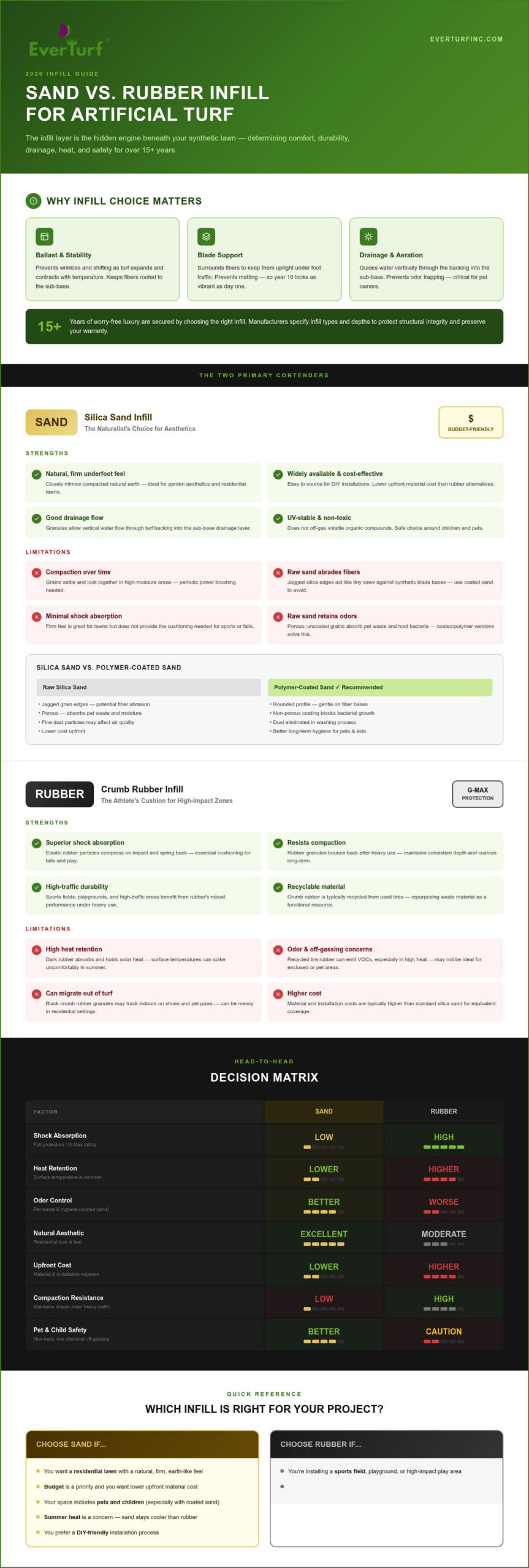
The Decision Matrix: Sand vs. Rubber Comparison
Choosing between sand infill vs rubber infill for artificial turf is ultimately a lifestyle decision that shapes how you interact with your outdoor space. While previous sections detailed the technical mechanics, this matrix helps you weigh the daily sensory experience against long term investment. Sand remains the premier choice for those prioritizing a cool, odor free environment, whereas rubber caters to those needing high impact resilience. Your decision should reflect how you plan to spend your time; whether that involves quiet morning coffees or energetic afternoon soccer matches.
The “Pet Factor” is often the deciding point for modern homeowners. For families with four legged members, the choice usually leans toward sand. Rubber granules are porous and can trap urine, which, when combined with high heat, leads to persistent odors that are difficult to neutralize. Sand, specifically when polymer coated, doesn’t absorb liquids, making it much simpler to maintain a fresh sanctuary. Maintenance styles also differ significantly. Sand based systems require occasional raking to prevent compaction, while rubber systems may require periodic “top offs” as granules can migrate or be kicked out during intense play. While sand offers a lower initial price point, rubber can actually extend the life of your turf blades by providing a non abrasive cushion, potentially delaying your next replacement cycle.
- Comfort: Rubber provides superior cushion; sand offers firm stability.
- Heat: Sand stays noticeably cooler in direct sunlight.
- Cost: Sand is more budget-friendly for initial installation.
- Maintenance: Sand needs raking; rubber needs occasional replenishment.
- Odor: Coated sand is far superior for managing pet waste.
Lifestyle Impact: Heat and Odor Comparison
On a standard 90 degree summer afternoon, the difference in surface temperature can be startling. While silica sand naturally reflects solar energy to maintain a cooler surface, black crumb rubber absorbs thermal radiation, leading to significantly higher temperatures during peak summer hours. This thermal gap affects how often you can use your lawn barefoot or let pets roam freely. If you prioritize a yard that stays fresh and inviting, it’s essential to understand how to disinfect and clean your system to prevent organic buildup.
Visual Longevity and Blade Health
Rubber infill is the clear winner for keeping blades standing upright without the abrasive friction caused by raw sand grains. It acts as a soft buffer that protects the integrity of the turf fibers over thousands of footsteps. However, the total cost of artificial turf installation is often higher for rubber systems due to the material’s premium nature. You’re essentially paying for “blade insurance” that keeps your lawn looking lush and youthful for years. Ready to find the perfect balance for your home? Explore our specialized EverTurf Infill solutions to see which foundation fits your unique vision.
EverTurf Infill: The Sophisticated Solution for Modern Landscapes
EverTurf Infill represents the pinnacle of synthetic lawn technology, acting as a high performance alternative designed for homeowners who refuse to compromise. While the traditional debate of sand infill vs rubber infill for artificial turf often forces a choice between stability and cushion, our specialized solution bridges that gap. It provides the firm, natural feel of a classic landscape while incorporating the resilient, low maintenance properties required for modern living. By choosing a system where the grass and the foundation are engineered to work in perfect synergy, you secure the maximum warranty protection for your investment and ensure a result that remains pristine for decades.
Calculating the exact amount of material for your project is the first step toward a successful transformation. Most residential installations require approximately 1.5 to 2 pounds of infill per square foot to achieve the ideal balance of blade support and weight. This foundation doesn’t just hold the turf in place; it restores your personal time by eliminating the need for the constant patching and leveling associated with inferior materials. Your outdoor space should be a sanctuary of tranquility, not another item on a weekend to do list.
Why EverTurf Infill Outperforms Generic Alternatives
Generic materials often lack the precision required for long term satisfaction. EverTurf Infill features a strictly uniform grain size, which is essential for maintaining high performance drainage and preventing the compaction that turns other lawns into hard surfaces. This precision engineering is particularly vital for pet-friendly turf. Our infill incorporates specialized antimicrobial properties that actively inhibit bacterial growth and neutralize odors at the source. Additionally, every grain is treated with UV stabilized coatings to prevent the material from breaking down under the intense heat of the summer sun, ensuring your lawn remains cool and vibrant for 15 plus years.
Professional Installation vs. DIY Infill Application
The beauty of your lawn depends heavily on how the infill is distributed. While many homeowners consider a DIY approach, professional installation using a power spreader is the only way to guarantee a perfectly even layer. If you over fill the system, you risk burying the lush blades you’ve invested in; if you under fill, the fibers will eventually mat down and lose their natural luster. This balance is the secret to a world class backyard turf installation. For a personalized recommendation based on your specific usage profile and local climate factors, contact our team to ensure your project begins with the expert guidance it deserves.
Securing Your Forever Lawn with the Right Foundation
Choosing the right foundation is the final step in reclaiming your personal time and creating a year round sanctuary. Whether you prioritize the firm stability of silica sand or the athletic resilience of crumb rubber, your decision shapes the sensory experience of your home for the next 15 years. Balancing the trade-offs between sand infill vs rubber infill for artificial turf doesn’t have to be a compromise. By selecting a system expertly engineered for high performance drainage and durability, you ensure your space remains a cool, odor free retreat for family and pets alike.
EverTurf provides specialized solutions tailored to your lifestyle, from the precision required for EverTurf Putting Green Pro to the safety needs of active play zones. With our national distribution expertise, we bring premium quality directly to your project, guaranteeing a result that mirrors the tranquility of nature without the burden of traditional maintenance. It’s time to stop worrying about heat and odors and start enjoying the lush, maintenance free landscape you’ve always envisioned.
Explore EverTurf Infill Solutions for a Perfect Finish
Frequently Asked Questions
Can I mix sand and rubber infill for my artificial turf?
You can certainly mix sand and rubber infill to create a hybrid system that captures the benefits of both materials. Often, a layer of silica sand is placed at the base for weight and stability, while a top layer of rubber provides a softer, more resilient surface for play. This layered approach helps prevent the rubber from migrating too deep into the turf while ensuring the blades remain upright and cushioned.
Which infill is safest for households with large dogs?
Antimicrobial coated sand is the superior choice for homes with large dogs due to its non-porous nature. Unlike crumb rubber, which can trap heat and absorb liquids, high-quality coated sand prevents pet urine from soaking into the granules. This significantly reduces bacterial growth and lingering odors. When comparing sand infill vs rubber infill for artificial turf in pet areas, sand’s cooling properties and ease of cleaning make it the more hygienic sanctuary.
How often do I need to add more infill to my synthetic lawn?
Most residential lawns require a minor infill top-off every one to three years to maintain optimal blade support. High-traffic zones or areas where children play vigorously may see granules migrate or settle more quickly, necessitating more frequent attention. Regularly checking the depth of your EverTurf Infill ensures the backing remains protected from UV rays and the grass continues to look lush and vibrant for its entire 15 plus year lifespan.
Does rubber infill really get too hot for kids to play on?
Black rubber granules absorb a high amount of solar radiation, which can make the surface uncomfortably warm during peak summer hours. On a 90 degree day, the temperature of a rubber-filled lawn can rise significantly higher than the ambient air temperature. To keep the area safe for children, we recommend using light irrigation to cool the surface or choosing a lighter-colored sand-based infill that naturally reflects heat to maintain a comfortable outdoor environment.
Is silica sand infill dangerous to breathe during installation?
Raw silica sand can produce fine dust during the pouring process, which is why professionals often wear masks and recommend using washed or coated varieties. These premium options have been processed to remove the “fines” that cause respiratory irritation. Once the material is brushed into the turf and settled, it no longer poses an inhalation risk, allowing your family to enjoy a clean, dust-free environment immediately after the installation is complete.
What happens if I don’t use any infill at all for my turf?
Skipping infill altogether leads to premature turf failure as the blades will quickly mat down and lay flat. Without the weight of the infill acting as a ballast, your synthetic grass is likely to wrinkle or shift during temperature fluctuations. Additionally, the turf backing remains exposed to direct UV sunlight, which accelerates structural breakdown. Infill is the essential mechanical heart that keeps your lawn looking beautiful and performing reliably over the long term.
Can I use playground sand as a cheaper alternative for my turf?
Playground sand is not a suitable substitute because its fine, irregular grains can pack together too tightly, choking off your lawn’s drainage system. This compaction often leads to standing water and a surface that feels as hard as concrete. Specialized turf infill is kiln-dried and features specific grain shapes designed to allow water to flow vertically through the sub-base. Investing in the correct material protects your warranty and ensures a soft, natural feel.
Does infill help with the drainage of pet urine?
High-performance infill is critical for maintaining the vertical flow of liquids through the turf backing and into the sub-base. When weighing sand infill vs rubber infill for artificial turf in pet zones, sand is often preferred because it doesn’t absorb moisture. This allows urine to pass through quickly rather than being trapped in the granules. Specialized antimicrobial infills further enhance this by neutralizing odors, keeping your outdoor space fresh and inviting for everyone.