
The Essential Guide to Turf Infill: Why Your Synthetic Lawn Needs It
What if the secret to a pristine, 20 year landscape isn’t the grass itself, but the hidden layer tucked between the blades? Most homeowners don’t realize that the specific type of turf infill they choose determines whether their lawn stays vibrant and upright or becomes a flat, odorous disappointment within 18 months. It’s the silent workhorse that ensures your outdoor space remains a source of pride rather than a technical headache.
You’ve likely felt the frustration of researching synthetic options only to worry about trapped pet smells or the artificial look of matted fibers after a summer of heavy use. You deserve an evergreen sanctuary that offers total relief from the chores of a traditional yard. This guide shows you how the right materials transform a simple synthetic carpet into a high-performance landscape that protects your investment for decades. We’ll compare antimicrobial options and high-flow drainage systems to help you build a stress-free backyard that looks perfect every single day.
Key Takeaways
- Understand how high-quality turf infill functions as the essential foundation for a lush, upright lawn that maintains its natural beauty for decades.
- Explore the technical advantages of specialized granules that regulate surface temperatures and ensure rapid drainage even during heavy rainfall.
- Compare premium materials like antimicrobial coated sand to find the perfect solution for a pristine, odor-free environment tailored to your family’s specific needs.
- Unlock pro-level installation tips, including the “1-3 lbs rule,” to reclaim your weekends with a low-maintenance, professional-grade landscape.
What is Turf Infill and How Does It Work?
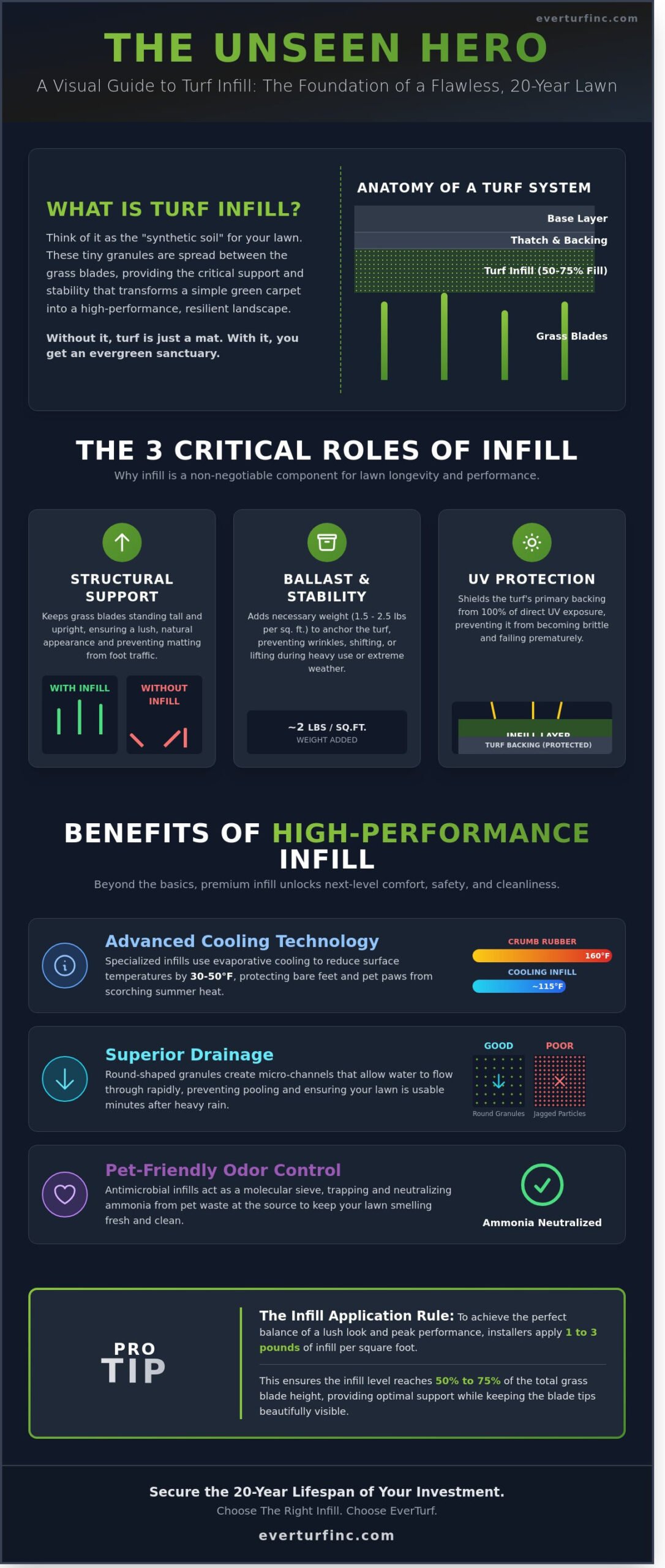
Your synthetic lawn is a sophisticated masterpiece of engineering, designed to provide a pristine landscape without the relentless cycle of mowing and watering. At the heart of this system lies turf infill. These tiny granules are dispersed between the synthetic grass blades, acting as the “synthetic soil” that transforms a simple green mat into a functional, high-performance outdoor environment. Without these granules, the fibers would lack the necessary support to maintain their beauty and structural integrity over time.
Infill serves three critical roles that ensure your investment remains evergreen. First, it provides the structural support needed to keep blades standing upright, preventing the matted, flat look common in neglected installations. Second, it acts as ballast. By adding 1.5 to 2.5 pounds of weight per square foot, the infill prevents the turf from shifting, wrinkling, or lifting during heavy use. Finally, it acts as a protective shield. It covers the primary backing material, blocking 100% of direct UV exposure that would otherwise cause the backing to become brittle and fail prematurely.
The Anatomy of a Synthetic Turf System
A professional turf installation is far more complex than a standard outdoor rug. The system begins with a base layer, followed by the turf itself, which features a “thatch” layer of curly fibers designed to trap the infill at the base. This relationship is precise; installers typically maintain a ratio where the infill fills roughly 50% to 75% of the pile height. This specific depth ensures the tips of the blades remain visible and lush while the base stays anchored and protected.
Why Infill is Non-Negotiable for Performance
Many homeowners mistakenly view synthetic grass as a simple carpet, but an empty lawn is a failing lawn. Without turf infill, the synthetic fibers lose their resilience. When you walk across the grass, the infill provides the rebound needed for the fibers to spring back into place. This resilience is what allows an EverTurf lawn to maintain its 20-year lifespan even in high-traffic areas. By choosing the right material, you aren’t just buying grass; you are securing the permanence of your sanctuary and reclaiming your weekends from the demands of traditional yard work.
- Structural Integrity: Keeps blades vertical for a natural, multidimensional appearance.
- Thermal Regulation: Certain infill types can reduce surface temperatures by up to 20 degrees.
- Drainage Support: Facilitates the flow of water through the backing to prevent pooling after Florida storms.
The Functional Benefits of Quality Infill
Quality turf infill serves as the backbone of your synthetic lawn, providing the structural integrity and performance needed for long-term satisfaction. It’s the difference between a surface that simply looks green and one that functions as a high-performance landscape. By choosing the right material, you ensure your investment remains lush and resilient through years of heavy use.
Superior Drainage and Moisture Control
Florida homeowners face unique challenges, specifically an average of 54 inches of rainfall annually. Round-shaped granules are essential here. Unlike jagged particles that compact over time, spherical infill creates tiny channels that allow water to flow freely to the sub-base. This permeability prevents the standing water issues seen in low-quality installs, ensuring your yard is ready for use minutes after a tropical downpour. To understand how this fits into the broader installation process, explore The Ultimate Guide to Artificial Grass.
Cooling Technology for High-Heat Climates
Traditional crumb rubber can reach temperatures 40 degrees higher than natural grass, often peaking at 160 degrees on summer afternoons. Modern turf infill solutions utilize evaporative cooling technology to mitigate this heat. These specialized materials absorb moisture from dew or light rinsing and release it slowly through transpiration. This process can reduce surface temperatures by 30 to 50 degrees, protecting bare feet and sensitive pet paws during peak summer heat.
Beyond drainage and temperature, premium infill provides critical lifestyle benefits that enhance the safety and longevity of your outdoor space:
- Impact Absorption: Quality infill adds a layer of cushioning that helps meet G-max safety ratings, creating a forgiving surface for children’s play areas and backyard sports.
- Odor Management: For pet owners, high-performance infill acts as a molecular sieve. It captures ammonia from pet waste at the source and neutralizes it before it can off-gas, keeping your pristine lawn smelling fresh.
- Fiber Support: Proper turf infill levels keep individual blades standing upright, preventing the matted, flat look that plagues neglected synthetic lawns.
Selecting the right components today means you’ll spend less time on maintenance and more time enjoying your evergreen sanctuary. If you’re ready to upgrade your outdoor experience, consider a professional consultation to find the perfect material for your lifestyle.
Comparing Common Types of Turf Infill
Selecting the right turf infill transforms a standard synthetic lawn into a high-performance lifestyle asset. While the blades provide the initial visual appeal, the infill serves as the functional foundation for safety, hygiene, and durability. Homeowners must weigh their specific needs against the unique properties of each material to ensure long-term satisfaction.
- Silica Sand: This is the traditional, cost-effective choice for residential landscapes. It provides the necessary weight to prevent turf shifting but can be abrasive to fibers over time.
- Antimicrobial Coated Sand: This premium solution is the gold standard for pet owners. The specialized coating prevents the growth of bacteria, mold, and mildew, keeping your lawn fresh and safe for children.
- Zeolite: A natural, volcanic mineral with a honeycomb structure. It’s specifically engineered for extreme odor neutralization by trapping ammonia molecules from pet waste.
- Crumb Rubber: Primarily used in professional sports fields, this material offers maximum impact protection. However, it can reach temperatures 30 degrees higher than other options, making it less ideal for Florida backyards.
Silica Sand vs. Coated Infill Options
Raw silica sand is a functional choice for low-traffic decorative areas. It’s inexpensive, but its angular edges can act like sandpaper on synthetic blades during heavy use. In contrast, EverTurf Infill provides superior longevity because the smooth, rounded coating protects the turf structure from internal wear. Texture also plays a role in performance. A 12/20 grit size features larger granules that facilitate rapid drainage during heavy 3-inch tropical downpours, whereas a 16/30 grit offers a finer, more luxurious feel underfoot for bare-chest relaxation.
Specialized Solutions for Unique Needs
Eco-conscious projects may utilize organic infill like cork or coconut husks, which can lower surface temperatures by up to 20 degrees compared to rubber. However, performance requirements vary wildly based on the “Job to be Done.” For example, EverTurf Putting Green installations require a very specific, high-density infill to ensure a consistent Stimpmeter speed and a true ball roll. Whether you’re reclaiming your weekends from lawn chores or building a professional-grade short game area, matching the turf infill to your specific activity ensures your investment remains evergreen and pristine for years to come.
Selecting the Best Infill for Your Specific Project
Choosing the right turf infill isn’t just a technical step; it’s the final touch that defines how you’ll experience your outdoor sanctuary for the next 15 years. Every backyard serves a unique purpose. A golfer practicing their short game requires a different foundation than a family with three energetic Golden Retrievers. By matching the material to your specific lifestyle, you ensure your investment remains a source of pride rather than a maintenance burden.
The Pet Owner’s Checklist
For 85% of pet owners, the primary concern with synthetic grass is the lingering scent of ammonia. When pet waste breaks down, it traps gases within the turf fibers. Standard sand can actually hold these odors, leading to a frustrating experience during Florida’s humid 90-degree afternoons. To combat this, look for materials with antimicrobial coatings that neutralize 99% of odor-causing bacteria and prevent mold growth. These specialized granules keep your lawn smelling fresh and looking pristine. You can find detailed comparisons of these options in our Infill for Synthetic Grass: The 2026 Buyer’s Guide.
High-Traffic and Multi-Use Areas
Stability is the secret to a lawn that looks evergreen even after a neighborhood barbecue. For high-traffic family zones, we recommend a heavy-duty application of 2.0 to 3.0 pounds of turf infill per square foot. This weight keeps the turf backing flat and prevents the blades from matting down under heavy footfall. High-quality rounded granules also prevent migration, which is the annoying process of infill sticking to shoes and ending up in your living room. Modern non-clumping materials ensure the surface remains permeable and soft for years.
- Family Lawns: Prioritize non-toxic, cooling materials that stay 15% cooler than standard crumb rubber during peak summer months.
- Backyard Sports: Choose high-density silica or coated sands to ensure a consistent ball roll for putting greens or soccer drills.
- Aesthetic Upgrades: Select green or tan coated infills that blend with the thatch layer to create a seamless, natural look that mimics traditional sod.
If you want your lawn to stay resilient and beautiful through every season, it’s time to choose a professional-grade foundation. Contact EverTurf for a personalized infill recommendation today to start your transformation.
Installation and Long-Term Care for Your Infill
Achieving a flawless aesthetic requires precision during the final stages of your project. Most residential installations require between 1 and 3 pounds of turf infill per square foot to ensure the blades remain upright and the backing stays protected. For a standard 750-square-foot backyard, this equates to roughly 1,500 pounds of material. Using a drop spreader is the secret to a professional finish. It prevents the uneven clumping that often occurs with hand-broadcasting, ensuring every square inch receives a consistent layer of support. This uniform distribution is vital for maintaining the cooling properties and structural balance of your synthetic lawn.
The Professional Installation Process
Timing is everything. You must apply infill when the synthetic fibers are completely dry. Moisture causes the granules to stick to the blades instead of settling at the base. Before spreading, use a power brush to “open up” the turf. This mechanical agitation pulls the fibers into a vertical position, creating the necessary space for the material to drop deep into the thatch. DIY installers often skip this step, leading to surface-level granules that wash away during the first 2-inch rainstorm. Avoid overfilling; you should always see the top 0.5 inches of the green blades to maintain that lush, natural look.
Reclaiming Your Weekends with Low Maintenance
A properly weighted lawn stays beautiful with minimal effort. You’ll spend less time adjusting shifted turf and more time enjoying your pristine outdoor sanctuary. To keep your landscape performing at its peak, follow these simple steps:
- Annual Re-grooming: Use a stiff-bristled synthetic broom every 12 months to redistribute material that may have shifted due to high foot traffic or heavy pets.
- Strategic Replenishing: Check your levels every 24 months. If you notice the fibers leaning or the backing becoming visible, add a light “top-off” layer to restore structural integrity.
- Simple Rinsing: Use a garden hose to clear dust and organic debris, which keeps the drainage ports clear and the antimicrobial properties effective.
Investing in high-quality turf infill today is the ultimate commitment to a worry-free future. By following these professional standards, you guarantee an evergreen landscape that stands up to the intense heat and humidity of the local climate. You aren’t just installing a lawn; you’re securing a permanent retreat where you can finally reclaim your weekends from the demands of traditional yard work. Trusting the process ensures your investment remains vibrant and functional for the next 15 years.
Secure the Future of Your Evergreen Oasis
Your synthetic lawn is a significant investment in your home’s value and your personal peace of mind. Selecting the right turf infill serves as the critical foundation for a lawn designed to last 15 years or longer. High-quality infill does more than just support the blades; it provides a vital shield against UV degradation and facilitates superior drainage. Our specialized antimicrobial materials are engineered to neutralize 99% of bacteria and odors, ensuring a safe, fresh environment for both pets and athletes.
At EverTurf, we combine technical expertise with a passion for beautiful spaces. We offer nationwide distribution of professional-grade accessories and provide expert guidance tailored to your specific sports or residential needs. By choosing UV-stabilized components, you’re protecting your property from the harsh effects of the sun and reclaiming your weekends for the things that truly matter. It’s time to transition from the frustration of constant maintenance to the lasting tranquility of a pristine outdoor retreat.
Explore the EverTurf Infill Collection for a Pristine, Permanent Lawn
Your journey toward a stress-free, vibrant landscape starts today; we’re here to help you build something that lasts forever.
Frequently Asked Questions
Is turf infill safe for my children and pets?
Yes, modern turf infill options are specifically engineered for the safety of your family and pets. We recommend acrylic-coated silica sand because it’s non-toxic and often features antimicrobial coatings that prevent the growth of 99% of bacteria or mold. This material meets rigorous ASTM F1292 safety standards, ensuring your children can play on a surface that remains pristine and sanitary throughout the year.
How many pounds of infill do I need per square foot of artificial grass?
Most residential installations require between 1.5 and 2.5 pounds of turf infill per square foot to ensure lasting stability. The exact amount depends on your turf’s pile height; for example, a 1.75-inch blade typically needs 2 pounds to keep the fibers upright. This weight provides the necessary ballast to prevent wrinkles and protects the backing from UV degradation over its 15-year lifespan.
Can I install artificial turf without using any infill?
You shouldn’t install synthetic grass without infill because it serves as the structural foundation of your lawn. Without these granules, the blades will flatten within 3 months of regular foot traffic, and the backing becomes vulnerable to expansion from Florida’s 90-degree heat. Infill acts as a protective shield that preserves the evergreen beauty of your investment while providing a comfortable, cushioned feel underfoot.
How often do I need to replace or add more infill to my lawn?
You typically only need to top off your infill every 12 to 24 months to account for natural settling and heavy use. High-traffic areas near play sets or pet runs might require a minor refresh of 0.25 pounds per square foot once a year. This simple maintenance task ensures your lawn maintains its lush appearance and continues to drain efficiently even during intense tropical storms.
Does turf infill wash away during heavy rain or storms?
High-quality infill does not wash away because it settles deep into the thatch layer and provides significant weight. Even when Florida experiences 3 inches of rain in a single hour, the granules remain trapped within the turf fibers rather than flowing into your drainage system. This stability is why professional installers rely on rounded grains that lock into place without clogging the perforated backing.
Which infill is best for stopping dog urine odors in synthetic grass?
Zeolite or antimicrobial acrylic-coated sand is the most effective solution for neutralizing pet odors. Zeolite is a natural mineral with a 100% porous structure that captures ammonia on a molecular level before it turns into a gas. When you use this specialized turf infill, it creates a sanitary environment that stays fresh, allowing you to reclaim your weekends without worrying about unpleasant smells.
Will infill track into my house on shoes or paws?
You won’t experience tracking into your home when the material is properly brushed into the base of the grass. The grains are designed to sit at the bottom 50% of the blade height, where they remain tucked away from shoes and paws. Because we use rounded, dust-free granules, your interior floors stay clean while your outdoor space remains perfectly manicured and ready for entertaining.
Does infill help keep my artificial grass cooler in the summer?
Specialized cooling infills can reduce the surface temperature of your lawn by 30 to 50 degrees Fahrenheit through evaporative cooling. When you lightly mist the surface, the infill retains moisture and slowly releases it as the sun hits the blades, mimicking the natural cooling process of real grass. This technology ensures your backyard remains a comfortable sanctuary even when summer temperatures climb above 95 degrees.