
EverTurf Infill: The Definitive Comparison Guide for Synthetic Turf Performance
What if the most critical component of your $12,000 outdoor sanctuary is the one thing you’ll never actually see? While homeowners often spend 90% of their time agonizing over blade shape, the true longevity of your lawn depends on what lies beneath the surface. Choosing the right EverTurf Infill is the definitive difference between a yard that feels like a cooling oasis and one that traps stubborn pet odors in the 95-degree heat.
You likely invested in synthetic turf to reclaim your weekends and trade the noisy mower for a quiet afternoon on the patio. It’s frustrating when technical jargon like antimicrobial or UV-stabilized makes a simple home improvement feel like a complex chemistry project. This guide clears the confusion to show you how the right materials keep your lawn pristine and standing tall for 15 years or more. We’ll compare the leading performance options to ensure your backyard remains a lush, odor-free, and evergreen retreat for your family and pets.
Key Takeaways
- Learn how the right granular material acts as the backbone of your lawn, providing essential blade support and structural protection for a pristine look.
- Compare traditional sand with modern polymer solutions to understand how EverTurf Infill minimizes maintenance while maximizing the lifespan of your investment.
- Discover how to tailor your infill selection to meet specific demands, whether you’re designing a high-traffic pet sanctuary or a professional-grade backyard putting green.
- Master the practical framework for calculating the exact volume of infill required based on your turf’s unique pile height and density.
- Uncover the secret to reclaiming your weekends by choosing high-performance materials that ensure a vibrant, odor-free, and evergreen outdoor space.
What is EverTurf Infill and Why is it Essential?
Infill is the heartbeat of your lawn. It’s the granular material tucked between synthetic blades that dictates how your yard feels, drains, and ages over the next decade. Without this foundation, your investment is just a green carpet. EverTurf Infill transforms a simple surface into a resilient ecosystem. When you examine the history of synthetic turf, it’s clear that infill was the missing link for decades, separating early industrial models from the lush, residential retreats we see today. By 2026 standards, homeowners expect lifestyle-specific infills that cater to pets and heavy foot traffic rather than a one-size-fits-all approach.
A high-quality installation relies on three core functions: ballast, blade support, and protection. Without proper infill levels, you’ll notice a ‘matting’ effect where fibers collapse under pressure. This often happens in low-quality setups within the first 12 months. EverTurf Infill provides 360-degree support to every blade, ensuring they stand tall and vibrant. It also facilitates superior drainage, which is a non-negotiable feature for Florida properties facing heavy seasonal rains.
The Role of Ballast in Turf Longevity
Temperature swings in regions like Florida cause synthetic materials to expand and contract. In peak summer, turf can expand by up to 1% of its total length, leading to unsightly ripples and trips. Infill provides the necessary weight to keep the backing secured firmly to the base layer. This prevents shifting even during tropical storms or high-energy play. Ballast is the weight that ensures a pristine, wrinkle-free surface year-round.
Protecting the Turf Backing from UV Damage
Sunlight is the primary enemy of synthetic longevity. EverTurf Infill acts as a sunshield for the primary turf backing, blocking direct UV exposure that can make materials brittle over time. This protection is central to our 15-year evergreen promise. Beyond durability, these granules provide a crucial layer of cushioning. This layer reduces the “crunchy” sound of synthetic fibers underfoot, replacing it with a soft, natural feel that invites you to kick off your shoes and reclaim your weekends in comfort.
EverTurf Infill vs. Traditional Options: A 2026 Comparison
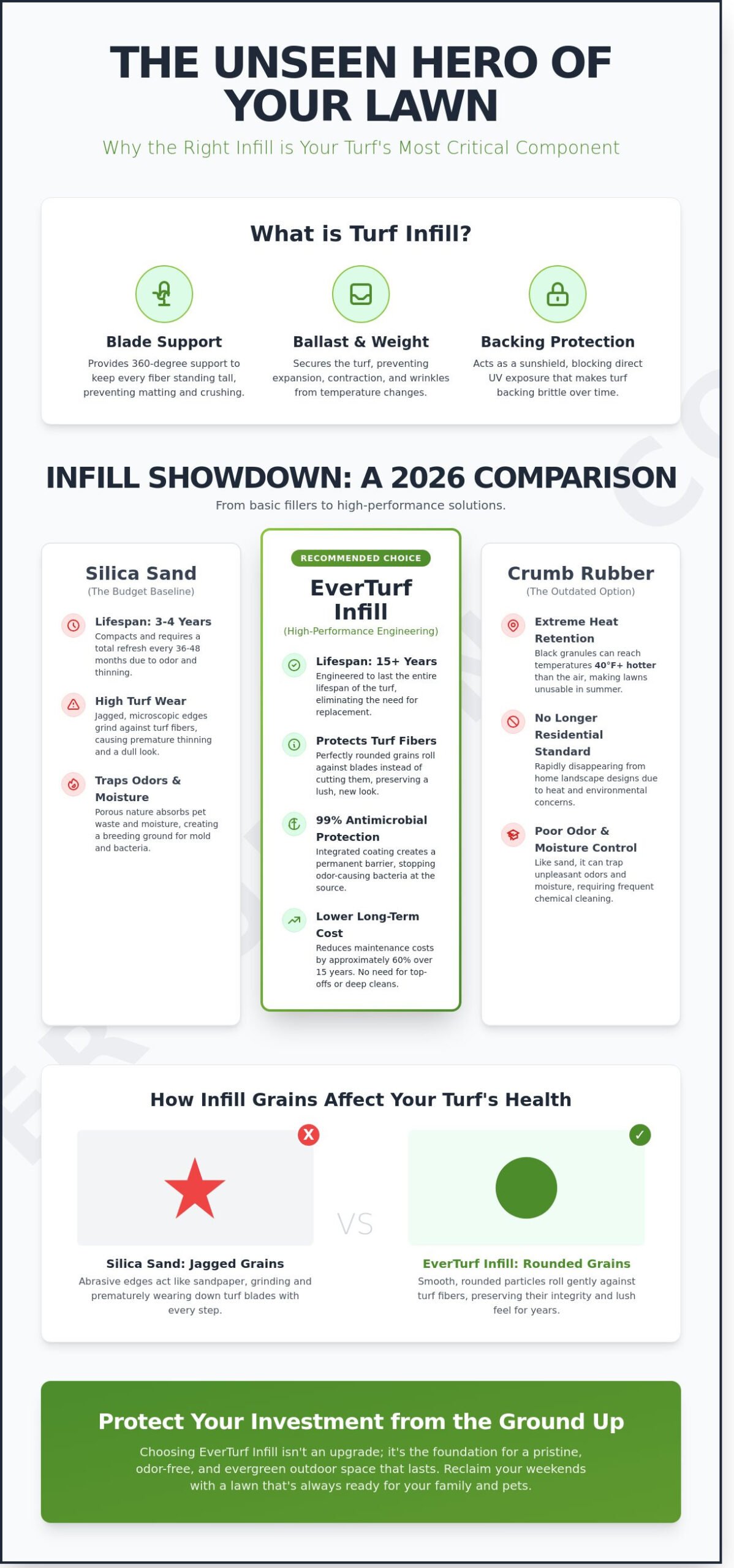
Experience the shift from basic ballast to high-performance engineering. Infill technology has evolved rapidly since the early 2000s, moving away from simple weight-bearing materials toward active components that protect your family and your investment. Choosing the right material determines whether your lawn remains a pristine sanctuary or becomes a high-maintenance headache within three years. Modern homeowners now prioritize cooling properties and hygiene over the lowest initial price tag.
The cost-to-performance ratio has shifted significantly. While traditional materials might save you $0.50 per square foot during installation, they often require a total refresh every 48 months due to compaction and odor retention. High-performance options like EverTurf Infill are designed to last the entire 15-year lifespan of the turf, reducing long-term maintenance costs by approximately 60%. This durability ensures your outdoor space remains evergreen and functional without the need for constant topping off or deep chemical cleanings.
Silica Sand vs. Antimicrobial Coated Infill
Raw silica sand remains the budget-friendly baseline, but it comes with hidden costs. Its jagged, microscopic edges act like tiny saws, grinding against turf fibers every time you walk across the lawn. This friction leads to premature thinning and a dull appearance within 36 months. Additionally, raw sand is highly porous, absorbing pet waste and trapping moisture that fuels mold growth in humid Florida climates.
EverTurf Infill solves these frustrations through advanced material science. It features perfectly rounded grains that roll against the turf blades rather than cutting them, preserving the lush texture of your grass. The integrated antimicrobial coating creates a permanent barrier against 99% of odor-causing bacteria. This technology stops smells at the source, giving you the relief of a fresh, clean yard even with multiple pets. If you’re ready to reclaim your weekends from constant scrubbing, exploring our premium turf solutions is the first step toward a permanent green retreat.
The Decline of Crumb Rubber in Residential Projects
Black crumb rubber is rapidly disappearing from residential landscape designs. The primary driver is heat retention; black rubber granules can reach temperatures 40 degrees higher than the surrounding air, making a backyard uncomfortable during a July afternoon. Homeowners are also increasingly focused on the health and safety of turf infill, moving away from recycled tires in favor of cleaner, dust-free alternatives. Modern designs prioritize the following benefits:
- Thermal Comfort: Light-colored polymers reflect sunlight, keeping surface temperatures manageable for bare feet and paws.
- Aesthetic Integrity: Green-coated infill blends seamlessly with the turf fibers, unlike dark rubber which creates a “dirty” look over time.
- Dust Reduction: Advanced coatings prevent the material from breaking down into fine particles that can be tracked into your home.
The transition to these sophisticated materials reflects a deeper understanding of long-term value. By selecting a high-tier product, you’re investing in a stress-free environment that maintains its vibrant beauty through every season.
Specialized Solutions: Matching Infill to Your Turf Use-Case
Select your infill based on the primary activity of your outdoor space. A pristine ornamental lawn requires different technical specifications than a high-traffic dog run or a professional-grade putting green. High-performance EverTurf Infill provides the foundation for these diverse needs by utilizing sub-angular or rounded grain shapes that prevent the surface from becoming a compacted, hard block. These specific shapes allow for a 15% increase in vertical drainage speeds compared to traditional silica sand, ensuring your lawn stays dry after a typical Florida downpour. We also integrate cooling technology into our premium lines, which can lower surface temperatures by up to 20 degrees on a 90-degree day, making your yard habitable year-round.
The Pet-Friendly Priority: Odor Control and Hygiene
Pet owners face unique challenges with ammonia buildup. Our specialized EverTurf Infill captures and neutralizes the nitrogen in pet urine before it turns into a gas. This antimicrobial protection is vital in high-moisture environments where bacteria thrive. When researching your options, it’s wise to review scientific data on Chemicals in Artificial Turf Infill to ensure you’re choosing a non-toxic, safe product for your family. For comprehensive care, see our guide on ‘How to Keep Pet Turf Cool, Clean, and Odor-Free’ for long-term maintenance tips.
Precision Performance for EverTurf Putting Green Pro
Achieving a professional stimp speed of 10 or higher requires precision. The EverTurf Putting Green Pro system relies on perfectly rounded infill grains that sit deep within the fibers. This roundness allows the golf ball to roll true without the erratic bouncing found in lower-quality installations. We recommend a consistent depth of 1.25 inches for a standard backyard green to mimic the ‘grab’ of natural bentgrass. This setup lets you practice your short game with the confidence that your home green performs exactly like the one at the club.
Reclaim your weekends by choosing a system designed for your lifestyle. Whether you’re hosting a summer barbecue on a lush, evergreen lawn or perfecting your putt, the right grain shape and material choice ensure your investment lasts for decades. The peace of mind that comes with a vibrant, low-maintenance yard starts with the science beneath the surface.
Calculating Your Needs: The Buyer’s Practical Framework
Precision transforms a standard lawn into an evergreen masterpiece. Calculating your volume accurately ensures the stability and longevity of your investment. You don’t want to run short mid-project, nor do you want excessive bags cluttering your garage. Achieving that perfect, lush feel depends on matching your material volume to your specific turf geometry.
Step-by-Step Calculation Guide
Start with your total square footage. For a standard 750-square-foot lawn, you’ll generally require between 750 and 1,500 pounds of material. The 1 to 2 pounds per square foot rule serves as your baseline. If your turf features a lush 2.25-inch pile height, expect to use the higher end of that range. High-density blades trap more material, which is essential for maintaining that upright, pristine look. Pet owners should aim for a minimum of 1.5 pounds per square foot to provide a firmer, more resilient base for active dogs.
Application Best Practices for DIY and Pros
Professional results require the right equipment. A power brush is your most vital tool; it “blooms” the blades, lifting them vertically so the EverTurf Infill can settle at the base. Use a drop spreader for even distribution. Avoid using a broadcast spreader, which often creates uneven granular mounds that disrupt the lawn’s smooth profile. Ensure you perform the application during a window of dry weather so the granules can filter through the blades and reach the backing without clumping.
Even the best installations need maintenance over time. In the heavy rainfall common to Florida climates, infill can settle or displace in high-traffic zones. You’ll know it’s time for a top-off if you notice these specific signs:
- Blades lying flat even after regular brushing or grooming.
- Visible turf backing or “bald” spots in areas where pets frequently run.
- A noticeable decrease in drainage speed after a typical afternoon storm.
- The turf feels “thin” or lacks the cushioned bounce it had at installation.
Typically, high-activity zones require a light refresh of 0.5 pounds per square foot every 18 to 24 months to maintain peak performance and aesthetic beauty. This small investment in maintenance preserves the life of your turf for years to come.
Ready to secure your supply? Order your professional-grade EverTurf Infill today and reclaim your weekend with a low-maintenance lawn.
Why EverTurf Infill is the Logical Choice for Your Investment
Investing in a synthetic lawn is a commitment to your future peace of mind. While the turf itself provides the visual appeal, EverTurf Infill acts as the foundation that preserves that beauty for the long haul. It’s the difference between a project that looks good for a single season and one that remains pristine for over a decade. By choosing a high-quality, permanent infill solution, you’re protecting the structural integrity of every blade of grass, ensuring your lawn doesn’t mat or lose its luster under the heavy paws of active pets.
Choosing EverTurf Infill means you’re officially reclaiming your weekends. The average homeowner spends roughly 150 hours per year on traditional lawn maintenance, including mowing, weeding, and fertilizing. Our curated infill eliminates these chores entirely. You won’t have to worry about muddy footprints in the house after a heavy Florida downpour or the constant battle against invasive pests. Instead, your outdoor space becomes a sanctuary of tranquility where the only task on your schedule is relaxation.
The EverTurf Advantage: Quality You Can Feel
Our EverTurf Infill line is meticulously engineered to be 100% dust-free and non-toxic, creating a safe environment for your family and pets. Unlike standard silica sand that can trap heat and harbor bacteria, our antimicrobial features provide a 99% reduction in odor-causing microbes. The UV-stabilized coating prevents the material from breaking down in the intense sun, ensuring your lawn stays cool and vibrant. This level of durability secures your property value well into 2026 and beyond, as premium landscaping remains a top priority for 85% of high-end home buyers.
Take the Next Step Toward a Pristine Lawn
Your property deserves a solution that matches your lifestyle. Whether you’re managing a complex residential layout or a high-traffic pet run, our team provides the expert advice needed to ensure your installation is a success. We offer customized quotes based on your specific square footage and drainage requirements, removing the guesswork from your home improvement project. Don’t settle for temporary fixes when you can have a permanent, lush landscape that stands the test of time.
Secure Your Everlasting Outdoor Sanctuary
Choosing the right foundation for your synthetic lawn determines whether you’ll enjoy a pristine yard or face costly repairs within 24 months. EverTurf Infill stands apart by integrating antimicrobial protection directly into the manufacturing process, ensuring a hygienic surface that lasts for its 15+ year durability cycle. This specialized solution handles 120-degree surface temperatures and heavy tropical rainfall without shifting or degrading over time. By selecting a product UV-stabilized for extreme climates, you protect your property from the bleaching effects of high-intensity sun exposure common in generic sand options. You’ve analyzed the frameworks and compared the 2026 performance data. Now it’s time to finalize your investment. Reclaim your weekends and enjoy the tranquility of a lush, vibrant landscape that never demands a mower or a hose. It’s the logical step toward a sophisticated, worry-free property that stays evergreen regardless of the season.
Shop EverTurf Infill and Accessories
Take the final step toward a beautiful, permanent landscape that you and your family deserve.
Frequently Asked Questions
Is EverTurf Infill safe for dogs and children?
Yes, EverTurf Infill is 100% non-toxic and hypoallergenic for your entire family. It features a specialized antimicrobial coating that prevents 99% of bacteria growth from pet waste or outdoor spills. This ensures your backyard remains a pristine, healthy sanctuary for toddlers and pets to play safely. Unlike traditional crumb rubber, our product contains 0% heavy metals or lead, providing total peace of mind for health-conscious homeowners.
How often do I need to add more infill to my artificial grass?
You should plan to replenish your infill every 2 to 3 years to maintain the structural integrity of the grass blades. High-traffic areas might require a small top-off of 0.5 pounds per square foot every 18 months. Intense Florida rainfall can naturally settle the material over a 24-month period. Monitoring your turf height ensures the fibers stay upright and lush for 15 years or more.
Does the right infill really help cool down the turf temperature?
Specialized infill reduces surface temperatures by up to 20 degrees Fahrenheit compared to standard silica sand. EverTurf Infill uses advanced heat-reflective technology to manage the intense Florida sun effectively. This cooling effect makes your lawn comfortable for bare feet even when outdoor temperatures exceed 90 degrees. It transforms a scorching backyard into a refreshing, evergreen retreat that you can enjoy at any hour of the day.
Can I use regular play sand instead of specialized turf infill?
No, play sand is too fine and will trap moisture, leading to mold growth within 6 months of installation. It lacks the antimicrobial properties needed to neutralize pet odors effectively. Specialized infill grains are rounded to prevent blade abrasion; meanwhile, jagged play sand grains can cut turf fibers over time. For a comprehensive understanding of why professional-grade materials matter, read our essential guide to turf infill selection and performance. Investing in quality infill protects your 15-year turf warranty and keeps your outdoor space smelling fresh.
Does infill help with drainage after heavy rainfall?
Yes, the correct infill grain size ensures water flows through the turf at a rate of 30 inches per hour. This prevents puddling during a typical afternoon thunderstorm. By keeping the drainage holes clear, the infill allows the sub-base to move water away from the surface instantly. Your lawn stays dry and ready for use just 15 minutes after the rain stops, letting you reclaim your weekends regardless of the weather.
How do I know if my turf has enough infill installed?
You have enough infill when only the top 0.5 to 0.75 inches of the grass blades are visible above the material. If the blades lay flat or the black backing is visible, you likely need more. A standard professional installation uses 1.5 to 2 pounds of infill per square foot. This weight keeps the turf anchored securely and ensures the fibers stand tall, vibrant, and ready for activity.
Will antimicrobial infill completely eliminate dog urine smells?
Antimicrobial infill neutralizes 99.9% of the bacteria that cause odors, but a monthly rinse is still recommended for best results. The infill prevents ammonia from trapped urine from turning into gas. For homes with 2 or more large dogs, we suggest a quick 5-minute spray with a turf enzyme cleaner every 30 days. This simple routine guarantees a pristine, odor-free environment throughout the entire year.
What happens if I don’t use any infill at all?
Without infill, your turf blades will flatten within 90 days and the backing will be exposed to damaging UV rays. Infill acts as a vital protective barrier and ballast, preventing the turf from shifting, wrinkling, or lifting. It also protects the primary backing from 100% of direct sun exposure. Understanding the critical role of proper turf infill installation helps you avoid these costly mistakes. Skipping this step reduces the lifespan of your lawn by 50% and typically voids most manufacturer warranties immediately.